

P0203 on 2016-2021 Honda Civic: Injector Circuit Malfunction Cylinder 3 Causes and Fixes
This code means there's an electrical problem with the fuel injector in cylinder 3. On the 1.5L Turbo engine, this is very often a failed fuel injector. On the 2.0L engine, it can be the injector or a wiring issue. Expect to pay $90-$130 for a single OEM 2.0L injector or around $450-$550 for a set of four for the 1.5T.
- P0203 means the injector circuit for cylinder 3 has an electrical fault.
- The most likely cause is a bad fuel injector, especially on the 1.5L Turbo engine.
- A simple way to confirm a bad injector is to swap it with another cylinder and see if the code follows (e.g., P0203 becomes P0202).
- Always check the wiring and use a noid light to confirm the injector is receiving a signal before replacing parts.
- Driving with a flashing check engine light can cause expensive damage to your catalytic converter.
What's Unique About the 2016-2021 Honda Civic
The 2016-2021 Honda Civic (10th generation) primarily uses two engines: the 2.0L naturally aspirated (K20C2) and the 1.5L direct-injection turbo (L15B7). While P0203 can occur on either, the 1.5L turbo engines are known to have issues with fuel injectors failing, which can lead to this code and related misfires. Honda has issued service bulletins (like 18-137 and 19-033) and warranty extensions for misfire-related problems on the 1.5T engine that are often traced back to injector performance and fuel dilution issues, particularly in cold weather states.
Symptoms You May Notice
- Check Engine Light is on
- Engine misfire, which may feel like a shudder or jerking, especially during acceleration
- Rough or erratic idle
- Reduced engine power and sluggish acceleration
- Worse than normal fuel economy
- Smell of gasoline from the engine bay if an injector is leaking externally
- Replacing the spark plug or ignition coil. While these parts cause misfires (P0303), the P0203 code specifically points to an electrical circuit issue with the injector, not the ignition system. A P0203 will almost always cause a P0303, but a P0303 can happen for many other reasons.
Most Likely Causes
- Faulty Cylinder 3 Fuel Injector 🔴 High Probability → Shop Fuel Injector The fuel injectors on the 1.5L Turbo engine are a known failure point, often leading to misfires and related codes. Injectors can fail from internal electrical shorts, open circuits, or become clogged. A shorted injector is particularly dangerous as it can damage the PCM.
How to confirm: Swap the cylinder 3 fuel injector with another cylinder (e.g., cylinder 2). If the code changes to P0202, the injector is faulty. Alternatively, check the resistance of the injector with a multimeter. For many Honda models, the spec is around 10-13 Ohms. A reading of just 2-3 Ohms, for example, would indicate a shorted injector. If it's significantly higher or shows an open circuit (OL), it's also bad.
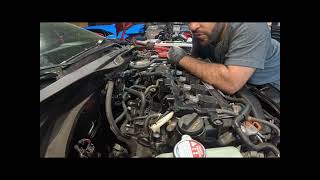
Typical fix: Replace the faulty fuel injector. For the 1.5L Turbo direct-injection engine, it is highly recommended to replace all four injectors 🎬 See this walkthrough for replacing 1.5L Turbo fuel injectors. as a matched set to ensure balanced fuel delivery and prevent future failures of the other original injectors.
Est. part cost: $90-$600 - Wiring Harness or Connector Issue 🟡 Medium Probability The injector wiring harness is located in a high-temperature environment, which can cause wires to become brittle, cracked, or corroded over time. Pins in the connector can also become loose or corroded, leading to an open or shorted circuit.
How to confirm: Visually inspect the wiring and connector for cylinder 3's injector for any signs of damage, melting, or corrosion. Use a noid light plugged into the injector connector; if it flashes when the engine is cranked, the wiring and ECM are likely okay. If it doesn't flash, check for continuity between the ECM and the connector. A load test using a bulb is more effective than a simple continuity test to ensure the wire can carry the necessary current.
Typical fix: Repair the damaged section of wire or replace the injector pigtail connector. Clean any corrosion from the connector pins with electrical contact cleaner.
Est. part cost: $10-$50
Rare But Worth Checking
- Powertrain Control Module (PCM) Failure: → Shop Engine Control Module (ECM) This is the least likely cause, but it's a known issue. A shorted fuel injector can overload and damage the injector driver circuit inside the PCM, requiring PCM replacement. Always confirm the injector and wiring are good before condemning the PCM. If a new PCM is installed without replacing a shorted injector, the new PCM will also be damaged.
Diagnosis Steps
- Scan for Codes: Confirm P0203 is the primary code. Note any other codes, especially P0303 (misfire) or P0172 (rich condition).
- Visual Inspection: Carefully inspect the wiring harness and electrical connector going to the cylinder 3 fuel injector. Look for any obvious signs of damage, corrosion, or loose connections.
- Check for Injector Pulse: Disconnect the cylinder 3 injector and plug a 'noid light' into the connector. Crank the engine. If the light flashes, the ECM is commanding the injector to fire, and the wiring is likely intact. If it does not flash, the problem is likely in the wiring or the PCM itself.
- Test the Injector Resistance: If the noid light flashes, the injector is the next suspect. Turn the vehicle off. Set a multimeter to Ohms (Ω) and measure the resistance across the two pins on the fuel injector. Compare this reading to the manufacturer's specification (typically 10-13 Ohms for many Hondas). Also, test the other injectors to get a baseline comparison. A reading that is significantly lower (shorted) or infinite (open) indicates a failed injector.
- Swap the Injector: As a definitive test, swap the cylinder 3 injector with an adjacent one (like cylinder 2). Clear the codes and run the engine. If the trouble code moves to the new cylinder (e.g., P0202), you have confirmed the fuel injector is the faulty part.
- Check Wiring Continuity and Load Capacity: If the noid light did not flash, or if the code did not move after swapping the injector, you must check the wiring. Disconnect the battery and the PCM connector. Check for continuity on the signal wire between the PCM connector and the injector connector. For a more thorough test, perform a voltage drop test or use a headlamp bulb to load the circuit and ensure it can carry current, not just show continuity.
- Check the PCM: If the injector and wiring are confirmed to be good, the issue may be a failed injector driver inside the PCM. This is rare but can be caused by a previously shorted injector.
Parts You'll Likely Need
- Fuel Injector Kit (1.5L Turbo)
(OEM #06160-5PA-305 (supersedes 16010-5PA-305))— This is the most common failure part for this code on the 1.5T engine. The original part number was superseded, and the new part is sold as a kit of four injectors, indicating Honda's recommendation to replace them as a set.
Trusted brands: Honda (OEM)
OEM price range: $550-$850 (for a set of 4)
Aftermarket price range: $200-$400 (for a set of 4, remanufactured) - Fuel Injector (2.0L Engine)
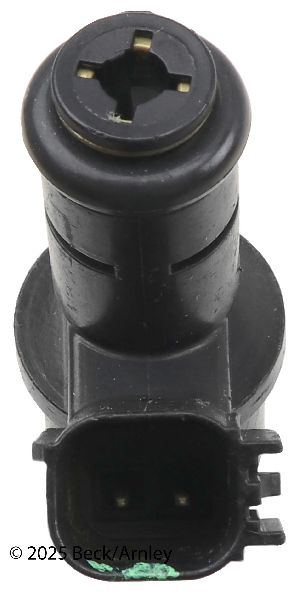
(OEM #16450-5BA-A01)— The most common cause for P0203 on the 2.0L engine if wiring is confirmed to be good. These are typically replaced individually. 🎬 Watch: How to replace fuel injectors on the 2.0L engine.
Trusted brands: Honda (OEM), Keihin (OEM supplier), Denso, Delphi
OEM price range: $90-$130 (for one)
Aftermarket price range: $50-$80 (for one)
Related Codes That Often Appear With This One
- P0303 — P0303 means 'Cylinder 3 Misfire Detected'. The injector circuit malfunction (P0203) prevents proper fueling of cylinder 3, which directly causes it to misfire.
- P0172 — P0172 means 'System Too Rich'. This can sometimes accompany injector issues on the 1.5T engine, as noted in Honda TSBs 18-137 and 19-033 for related problems. A leaking or malfunctioning injector can cause a rich condition.
- P0300, P0301, P0302, P0304 — Misfire codes on other cylinders. This can happen if the underlying cause, such as a failing set of injectors on the 1.5T, begins to affect multiple cylinders.
Technical Service Bulletins (TSBs) & Recalls
- TSB 18-137: Addresses engine oil dilution and misfire DTCs (P0300-P0304, P0172) on 2016-18 Civics with the 1.5T engine, particularly in cold-weather states. The fix involves ECU/TCU software updates and replacing the A/C control unit.
- TSB 19-033: A warranty extension and updated repair procedure for the issues described in TSB 18-137, covering misfires and rich conditions on 2016-18 1.5L Civics.
- Warranty Extension (A19-033): Extends powertrain warranty to 6 years/unlimited miles for certain components like camshafts and spark plugs affected by the conditions leading to misfires.
Platform-Specific Known Issues
- On 2016-2018 models with the 1.5L Turbo engine, Honda issued warranty extensions and service bulletins (like A19-033 and A18-137) to address issues like oil dilution and misfires, which can be related to fuel injector performance. These bulletins involve software updates for the ECU and A/C control unit to manage engine temperatures and fuel trim, especially in cold climates.
- Honda also extended the warranty on fuel injectors for some 1.5T models to 10 years or 150,000 miles due to known failure rates. Owners experiencing misfire codes should check with a dealer for potential coverage before paying for repairs.
Mechanic-Grade Diagnostic Values
- Fuel Injector Resistance (2.0L K20C2 Engine) — expected: 10-13 Ohms. Failure: A reading significantly outside this range, or showing an open (OL) or shorted (near 0 Ohms) circuit, indicates a faulty injector.
- Fuel Injector Resistance (1.5L L15B7 Direct Injection Engine) — expected: 1.5 - 2.5 Ohms. Failure: Direct injectors have much lower resistance than port injectors. A reading outside this narrow range points to a failure. A short is harder to detect with a basic multimeter but will often be near zero.
- Injector Pulse Width (at idle, warm engine) — expected: 1-5 milliseconds (ms). Failure: A scan tool showing a pulse width of 0 ms for cylinder 3 while others are pulsing indicates the PCM is not commanding the injector. An unusually high or low pulse width compared to other cylinders suggests a compensation strategy for a mechanical injector or cylinder issue.
- Injector Circuit Voltage (at connector, key on, engine off) — expected: 12 Volts (Battery Voltage). Failure: No voltage on the power feed wire at the injector connector indicates a problem upstream, such as a blown fuse, faulty relay, or a break in the power wire.
Hidden / Shadow Codes Worth Checking
- 73-5 (Honda-specific): This is the Honda-specific DTC that corresponds to the generic OBD-II code P0203. It means 'No. 3 Injector Circuit Malfunction'. Seeing this on a Honda HDS scanner confirms the same fault. (see via Honda Diagnostic System (HDS) or a professional-grade scan tool with Honda-specific software.)
Scan Tool Commands That Help
- Honda Diagnostic System (HDS): INJECTOR TEST (in INSPECTION MENU) — This is a bidirectional test that allows the technician to command each injector to fire individually while monitoring the engine's response (RPM drop). If commanding the cylinder 3 injector causes no change in RPM, while other cylinders do, it confirms the fault is isolated to cylinder 3. This is a powerful tool to use before physically swapping parts.
- Professional Scan Tool (e.g., Autel, Snap-on): Power Balance Test — Similar to the HDS injector test, a power balance test measures the contribution of each cylinder to the engine's speed. It can quickly identify a non-contributing cylinder (like cylinder 3 in this case) to confirm the misfire location without getting hands dirty.
Wiring & Ground Locations
- G101 — On the thermostat housing, where the main engine harness grounds to the engine block.. This is the primary ground for the ECU/PCM. A loose or corroded G101 ground can cause a host of bizarre electrical issues, including intermittent injector circuit codes. While not the most likely cause for a single injector code, it should be checked if the wiring and injector test good, as it can cause erratic voltage and signal problems for all engine sensors and actuators.
- PCM Connector No. 1 (96P) — The main large connector at the Powertrain Control Module (PCM), typically located in the engine bay near the battery or firewall.. This is the termination point for the injector wiring. To perform a definitive continuity or short-to-ground test on the injector circuit, you must test from the injector connector pin back to the specific pin on this PCM connector.
- Cylinder 3 Injector Pin 14 (PCM Connector) — Pin #14 on the PCM Connector No. 1 (96P).. This is the specific pin for the cylinder 3 injector control wire (ground side) on the PCM. A continuity test should be performed between this pin and the corresponding pin at the injector connector to rule out a broken wire.
Real Owner Repair Stories
- CivicX.com forum user (2018 Honda Civic Si (1.5T)) — P0203 and P0303 codes, rough idle, engine shaking.
❌ Tried (didn't work) Swapped spark plugs, Swapped ignition coils, Replaced the cylinder 3 fuel injector
✅ What actually fixed it The wiring harness going to the cylinder 3 injector was found to have a break inside the insulation near the connector. The break was not visible externally. The technician performed a 'wiggle test' on the harness while the engine was running, which caused the misfire to change, leading to the discovery. The pigtail connector was replaced, which resolved the codes.
OEM Part Supersession History
16010-5PA-305→06160-5PA-305— The original injectors for the 1.5T engine had a high failure rate. The new part number is a kit that includes all four injectors and a new fuel feed pipe, reflecting Honda's recommendation to replace them as a matched set to address the known issue comprehensively.
Heads up: The new kit (06160-5PA-305) is the correct and only available replacement from Honda for vehicles that used the original part. The original part number is discontinued and was frequently on backorder.
Model Year Variations Within This Range
- 2019-2021: Models from 2019 onwards received software updates from the factory that were part of the fix for the earlier 2016-2018 models' oil dilution and misfire issues (covered in TSBs 18-137/19-033). While they can still suffer from injector failure, the diagnostic path may differ slightly as the baseline software is more robust. A dealer may still need to apply the latest PCM software update as a first step.
Diagnostic Flowchart
Real Owner Stories
Aggregated from forums and TSBs cited above. Mileages and costs reflect what owners reported in those sources.
2018-2022 Honda Accord / CR-V (1.5T L15B7 engine)
Symptoms: Widespread injector failure across the 1.5T platform requiring replacement, with original parts being heavily backordered.
What fixed it: Replaced original injectors with the newly superseded kit (part number 06160-5PA-305) after the original part (16010-5PA-305) was discontinued.
Source hint: Reddit r/accord - Injector Set, Fuel - Honda (16010-5PA-305) backordered discontinued
2016-2018 Honda Civic 1.5T
Symptoms: Engine oil dilution and misfire codes (P0300-P0304, P0172) occurring, particularly in cold-weather states.
What fixed it: ECU/TCU software updates and replacement of the A/C control unit.
Source hint: TSB 18-137
Related OBD-II Codes
Frequently Asked Questions
Is there a warranty extension for fuel injectors on the 1.5L Turbo Civic?
Does TSB 18-137 apply to my P0203 code?
Should I replace just the cylinder 3 injector or all of them on my 1.5T Civic?
What is the correct resistance specification for the fuel injectors on this Honda?
I heard the original fuel injectors for the 1.5T were discontinued. Is this true?
Helpful Videos

We Have This Part in Stock

The information in this article is provided for general reference and educational purposes only. Vehicle specifications, procedures, and part compatibility can vary by production date, trim level, and region. Always consult your vehicle's factory service manual and verify part numbers before purchasing or performing repairs. Safety-critical components such as airbags, seat belts, and braking systems should be installed by a qualified professional.
- Honda Civic:
- 🧭 Diagnostic Flowchart
- 🎬 Helpful Videos
- 🛍️ Shop This Part
- What's Unique About the 2016-2021 Honda Civic
- Symptoms You May Notice
- Most Likely Causes
- Rare But Worth Checking
- Diagnosis Steps
- Parts You'll Likely Need
- Related Codes That Often Appear With This One
- Technical Service Bulletins (TSBs) & Recalls
- Platform-Specific Known Issues
- Mechanic-Grade Diagnostic Values
- Hidden / Shadow Codes Worth Checking
- Scan Tool Commands That Help
- Wiring & Ground Locations
- Real Owner Repair Stories
- OEM Part Supersession History
- Model Year Variations Within This Range
- Real Owner Stories
- 2018-2022 Honda Accord / CR-V (1.5T L15B7 engine)
- 2016-2018 Honda Civic 1.5T
- Related OBD-II Codes
- Frequently Asked Questions
- 🎟️ Get 5% Off