

P0204 on 2008-2016 Audi A4 2.0T: Causes and Fixes for Injector Circuit Malfunction
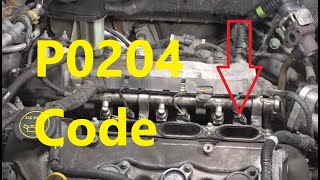
Code P0204 on a 2008-2016 Audi A4 2.0T indicates an electrical circuit fault for the cylinder 4 fuel injector. The most common causes are a failed fuel injector or a damaged wiring harness/connector. Expect to pay $50-$150 for an aftermarket injector or $150-$250 for an OEM part. A noid light test can quickly confirm if the control circuit is working.
- P0204 specifically points to an electrical circuit problem for the cylinder 4 injector, not a mechanical issue like a clog (though a failed injector is a common cause).
- Always check the wiring and connector to the #4 injector before buying a new injector. A simple connection issue could be the fix.
- The easiest way to confirm a bad injector is to swap it with one from another cylinder and see if the fault code 'follows' the injector.
- If you remove a fuel injector for any reason, you MUST replace the Teflon seal with a new one using a special tool to prevent leaks.
- This code is often accompanied by a P0304 misfire code, which is a direct symptom of the injector circuit failure.
What's Unique About the 2008-2016 Audi A4
On the Audi A4 with the EA888 2.0L TFSI engine, the fuel injector wiring harness is a known point of failure. The harness is routed across the top of the engine, where constant exposure to high heat cycles and vibration makes the wires and plastic connectors brittle. This can lead to broken internal wires or poor pin connections, causing an open circuit. While the fuel injector itself can fail, it's crucial to inspect the wiring harness carefully, as it's a frequent culprit for this specific platform. Sometimes this code can appear after related work, like an intake manifold replacement, if the injector harness isn't reconnected properly or if the connector lock tab breaks during removal.
Generation note: The 2008-2016 year range covers the entire Audi A4 B8 generation, including the 2013 facelift (B8.5). The causes and fixes for P0204 are generally the same across this generation as they share the EA888 Gen 2 engine architecture. VW/Audi later issued a Tech Tip (01-20-02TT) for 2018+ models with similar EA888 engines, advising to replace the injector wiring harness if codes P0201-P0204 are present. This TSB points to a known, persistent issue with the harness design in the EA888 family, even in later generations. A warranty extension for this issue on later VW models further confirms the known weakness of the harness design.
Symptoms You May Notice
- Check Engine Light is on
- Rough, unstable idle
- Engine misfiring, which may feel like shaking or stumbling
- Noticeable loss of power and poor acceleration
- Increased fuel consumption
- Engine may hesitate or stall
- Smell of unburnt gasoline from the exhaust
- Replacing the spark plug or ignition coil for cylinder 4. While these parts can cause a misfire (P0304), they will not cause an injector circuit code like P0204. The P0204 code is specifically an electrical fault, not a combustion fault, although a P0204 will cause a P0304.
Most Likely Causes
- Failed Cylinder 4 Fuel Injector 🔴 High Probability → Shop Fuel Injector Direct injection (TFSI) fuel injectors operate under high pressure and are a common failure item. The internal electronic coil can fail, causing an open circuit (infinite resistance) or a short circuit.
How to confirm: The most reliable method is to swap the cylinder 4 fuel injector with one from another cylinder (e.g., cylinder 3). Clear the codes and run the engine. If the fault code changes to P0203 (Injector Circuit/Open - Cylinder 3), the injector is confirmed to be faulty. You can also test the injector's internal resistance with a multimeter. A good high-impedance injector should measure between 10-18 Ohms. An open circuit (OL) or near-zero reading confirms its failure.
Typical fix: Replace the faulty fuel injector. It is mandatory to replace the injector's single-use Teflon seal and retaining clip at the same time using special installation tools to prevent leaks. It is also recommended to code the new injector to the ECM for optimal performance.
Est. part cost: $50-$250 - Damaged Fuel Injector Wiring or Connector 🟡 Medium Probability → Shop Fuel Injector The injector wiring harness sits on top of the engine and is exposed to constant heat cycles, which can make the wiring and plastic connectors brittle and prone to failure. A VW/Audi Tech Tip (01-20-02TT) for later EA888 engines identified a specific faulty harness part number, indicating a history of this issue.
How to confirm: Visually inspect the wiring harness and the connector for cylinder 4. Look for any signs of cracked insulation, chafed wires, or corrosion on the connector pins. Perform a 'wiggle test' on the harness and connector with the engine running to see if it affects the idle. Use a noid light plugged into the injector connector; if the light flashes steadily while cranking, the wiring and ECM driver are likely good. If the light is off or stays on solid, there is a problem in the circuit.
Typical fix: If the connector is damaged, a new connector pigtail can be spliced in. If the wiring itself is damaged, the entire fuel injector sub-harness (VAG Part No. 06H971627 or updated 06L971627AB) should be replaced.
Est. part cost: $20-$120
Rare But Worth Checking
- Faulty Engine Control Module (ECM): → Shop Engine Control Module (ECM) This is very rare. The ECM contains driver circuits for each injector. While a driver can fail, this should only be considered after thoroughly ruling out the injector and wiring. This is an expensive last resort and requires professional diagnosis.
Diagnosis Steps
- Read the fault codes with an OBD-II scanner to confirm P0204 and note any other codes present, such as P0304.
- Clear the codes and start the engine. See if the code returns immediately. This helps determine if the fault is constant or intermittent.
- Visually inspect the electrical connector and wiring going to the fuel injector on cylinder 4 (the rearmost cylinder on the 2.0T engine). Look for any visible damage, corrosion, or loose connections. Perform a wiggle test on the harness.
- Use a noid light to test the injector connector. Disconnect the injector and plug in the noid light. Crank the engine. A rhythmic flashing light indicates the ECM and wiring are sending the signal correctly, pointing towards a bad injector. No flash or a solid light points to a wiring or ECM issue.
- If the noid light test passes, perform an injector swap test. Label and swap the fuel injector from cylinder 4 with the injector from cylinder 3. Clear the codes again and run the engine.
- Re-scan for codes. If the code has moved to P0203, the fuel injector is the problem. If P0204 returns, the issue is intermittent and likely in the wiring.
- If the noid light test fails, use a multimeter to check for continuity on the ground and signal wires from the injector connector back to the ECM. If the wiring is confirmed to be good, the problem may lie with the ECM's injector driver, which requires professional diagnosis.
Parts You'll Likely Need
- Fuel Injector (Cylinder 4)
(OEM #06H906036G / 06H906036P (verify by VIN))— This is the most common component to fail and cause a P0204 code. The internal coil windings can fail, creating an open or short circuit.
Trusted brands: Bosch (OEM supplier), Hitachi
OEM price range: $150-$250
Aftermarket price range: $50-$150 - Fuel Injector Wiring Harness
(OEM #06L971627AB (verify by VIN, this is an updated part number for similar engines))— The harness is a known weak point due to engine heat causing brittle wires and connectors, leading to an open or short circuit. VW/Audi has issued TSBs and warranty extensions for this part on similar engines.
Trusted brands: Genuine VW/Audi
OEM price range: $80-$120
Aftermarket price range: $45-$70 - Fuel Injector Seal Kit
(OEM #06J998907B)— The Teflon seals on TFSI injectors are single-use and must be replaced anytime an injector is removed to prevent fuel and compression leaks. Special tools are required for proper installation.
Trusted brands: Bosch, Elring
OEM price range: $15-$25
Aftermarket price range: $10-$20
Related Codes That Often Appear With This One
- P0304 — P0304 means 'Cylinder 4 Misfire Detected'. Since the P0204 code indicates a problem with fuel delivery to cylinder 4, a misfire in that same cylinder is a direct and very common consequence.
- P0201, P0202, P0203 — If multiple injector circuit codes appear at once, it is highly indicative of a problem with the shared wiring harness or a faulty ECM, rather than multiple injectors failing simultaneously.
- P0300 — This 'Random/Multiple Cylinder Misfire' code can appear alongside P0204 if the fueling issue on cylinder 4 is intermittent or causing broader engine instability that the ECM interprets as misfires on other cylinders.
Technical Service Bulletins (TSBs) & Recalls
- 01-20-02TT - A VW/Audi Tech Tip for 2018-2020 models with similar EA888 engines advises replacing the T8 fuel injector harness (Part No. 06L971627AB) if codes P0201-P0204 are present, indicating a known issue with the harness design that is relevant to the B8 platform's similar architecture.
- 97-18-02 - An earlier VW Tech Tip from 2018 also pointed to injector circuit faults (P0201-P0204) being caused by harness connection issues, instructing technicians to inspect for bent or loose connections before replacing the entire engine harness.
Platform-Specific Known Issues
- Injector Connector Brittleness: Owners on forums like Audizine frequently report that the plastic locking tab on the injector electrical connector becomes extremely brittle from heat and breaks off during removal. This can lead to a poor connection even after re-assembly, forcing the replacement of the connector pigtail or the entire harness.
- Intermittent Faults from Harness: A common owner experience is that the P0204 code will appear intermittently. Wiggling the injector harness may temporarily resolve the issue, confirming a break in the wire or a loose pin in the connector rather than a completely failed injector. This often leads to a misdiagnosis of the injector itself.
Mechanic-Grade Diagnostic Values
- Fuel Injector Internal Resistance — expected: 10 - 18 Ohms (for high-impedance injectors). Failure: A reading of infinity (OL) indicates an open circuit. A reading near zero indicates a short circuit.
- Fuel Injector Connector Voltage (Power Pin) — expected: ~12V (Battery Voltage) with Key On, Engine Off.. Failure: No voltage indicates a problem with the power supply circuit, potentially a fuse or relay.
- Engine-to-Chassis Ground Voltage Drop — expected: Less than 0.15 Volts at idle.. Failure: Readings higher than 0.15V indicate a degraded or corroded main engine ground strap, which can cause various electrical faults.
- Alternator Ground Path Voltage Drop — expected: No more than 0.2 Volts (measured from alternator case to battery negative post with engine running).. Failure: Readings above 0.4V signal excessive resistance in the main ground circuit, often due to corroded chassis ground points.
Scan Tool Commands That Help
- VCDS (VAG-COM): Engine -> Measuring Blocks (e.g., Groups 013, 014 for injector quantity deviation on TDI, similar function for TFSI fuel trims) — While not a direct circuit test, this allows a technician to observe the engine's reaction to the fueling issue on cylinder 4. Large fuel trim adjustments or misfire counts isolated to cylinder 4 can help confirm the impact of the fault before and after a repair.
- VCDS (VAG-COM) / ODIS: Output Tests (Selective Output Test) — This function allows a technician to command specific components to activate. While it may not be able to cycle a single injector on this engine, it can be used to cycle related components in the fuel system to check for responses, helping to isolate the fault.
Wiring & Ground Locations
- Engine Control Module (ECM/ECU) — Located in the engine bay plenum chamber, under the plastic rain tray/cowl cover, typically on the driver's side. Access requires removing the wiper arms and cowl cover.. The ECM contains the driver that sends the pulse signal to the fuel injector. All wiring for the injector circuit terminates at the ECM, making it a critical point for continuity and short-circuit testing.
- G105 (Engine-to-Chassis Ground) — A primary ground strap connecting the engine block to the firewall.. A degraded engine ground can cause unstable voltage references for all engine sensors and actuators, including the injector drivers in the ECM. This can lead to intermittent and hard-to-diagnose electrical faults, including injector circuit codes.
- Injector Connector (Cylinder 4) — A 2-pin electrical connector plugged directly into the top of the fuel injector for the rearmost cylinder (cylinder 4).. This is the primary point of failure for wiring issues. One pin receives constant power (~12V) with the ignition on, and the other pin is pulsed to ground by the ECM to fire the injector. Testing is done at this connector.
Real Owner Repair Stories
- Reddit user, r/Volkswagen (2018 VW Beetle (similar EA888 engine architecture)) — Car would suddenly start misfiring and shaking with low power (EPC light). Pulling over and restarting the car would temporarily resolve the issue. The fault was intermittent.
❌ Tried (didn't work) Restarting the car was only a temporary fix.
✅ What actually fixed it The dealership confirmed a short in the fuel injector wiring harness. The entire harness was replaced, which permanently resolved the P0204 code. The issue was common enough that VW later issued a warranty extension covering the repair for free within 10 years/120k miles.
OEM Part Supersession History
06H906036G (Fuel Injector)→Bosch P/N 0261500621— The original VAG part number has been superseded by the OEM manufacturer's (Bosch) own part number as the primary replacement.
Heads up: While other injectors may fit, using the correct index/revision is critical for proper flow and spray pattern. Always replace with the specified part or a direct supersession.06H971627 (Fuel Injector Harness)→06L971627AB (Also supersedes 06L971627T, 06L971627P)— The original harness design was prone to failure from heat and vibration. The updated part number is part of a technical service bulletin for related engines, indicating a revised, more durable design.
Model Year Variations Within This Range
- 2008-2016: While the P0204 fault is common across the B8/B8.5 generation, the underlying cause (wiring harness failure) became so well-documented on later EA888 engines (Gen 3, 2017+) that VW issued a warranty extension for some models. This provides strong evidence that the harness is a systemic weak point, even if B8 models are not officially covered by the same extension.
Diagnostic Flowchart
Other Known Issues on This Vehicle
Issues unrelated to this code that are worth knowing about as an owner of this generation:
- Excessive Oil Consumption 🔴 High — Very common on 2009-2012 models. Caused by defective piston rings. Can consume over 1 quart of oil per 1,000 miles. Led to a class-action lawsuit. (Ref: Class-action lawsuit settlement (PistonSettlement.com) provided warranty extensions and reimbursements.)
- Timing Chain Tensioner Failure 🔴 High — Common on early EA888 engines (approx. 2008-2013). The original tensioner design can fail without warning, allowing the timing chain to jump, leading to catastrophic engine damage (bent valves). (Ref: An updated tensioner (P/N 06K109467K) was released to fix the issue. Visual inspection through a plug on the timing cover is possible to check which version is installed.)
- PCV Valve Failure 🟠 Medium — The diaphragm in the PCV / oil separator is made of rubber and frequently tears, causing a large vacuum leak, rough idle, lean/rich codes (P0171/P0172), and a whistling noise. (Ref: Audi released multiple revisions of the PCV valve (e.g., part numbers ending in AK, AE, etc.) to improve durability.)
- Water Pump Failure 🟠 Medium — The plastic housing of the water pump and/or thermostat is prone to cracking and leaking coolant. Failure can occur at any mileage, often identified by a slow coolant leak near the intake manifold. Oil leaks from the cam bridge can also drip onto the pump's seals, causing them to swell and fail. (Ref: No recall, but aftermarket all-aluminum water pump housings are a popular and more durable replacement option.)
- Intake Manifold Runner Flap Failure 🟠 Medium → Shop Engine Intake Manifold — The plastic intake manifold on earlier models (or the plastic runner flaps on later metal manifolds) can fail, causing fault codes (e.g., P2015), rough running, and loss of power. The actuator arm can also break. (Ref: An extended warranty was offered for this component on some vehicles. Aftermarket metal repair kits are available for the actuator arm.)
Used vs. New Parts: Buying Guide for This Vehicle
When a used part is the smart pick: A used fuel injector wiring harness can be a good value if it is sourced from a low-mileage, rear-ended donor vehicle. It is critical to verify it is the updated part number (06L971627AB) and to inspect it for any signs of brittleness or cracking before purchase.
Donor-vehicle mileage cap: roughly under 60000 miles for the part to have meaningful remaining life.
What to inspect on the donor part:
- For a wiring harness, bend the wires gently to feel for any internal crunchiness, which indicates brittle insulation.
- Check that all connector locking tabs are intact and not broken.
- Ensure there is no corrosion on the electrical pins inside the connectors.
- Source from a late-model-year donor (e.g., 2015-2016) if possible, as the plastics may be newer.
OEM-only on this vehicle (don't cheap out):
- Fuel Injector: Due to the high pressures and precision required for direct injection, and the risk of internal electronic failure, a new OEM (Bosch) or OEM-quality aftermarket part is strongly recommended over a used one.
- Engine Control Module (ECM): A used ECM will have component protection and be coded to the donor vehicle's VIN and options, making it unusable without specialized and expensive reprogramming. It is far safer to have your original ECM repaired if it is found to be faulty.
Aftermarket brands forum-validated for this vehicle:
- Bosch (for Fuel Injectors - they are the OEM supplier)
Real Owner Stories
Aggregated from forums and TSBs cited above. Mileages and costs reflect what owners reported in those sources.
Audi A4 2.0T
Symptoms: The owner confirmed via multimeter that all injectors had the same resistance, which led to a deeper investigation into whether the fault was a mechanical failure within the injector or a wiring issue.
What fixed it: Discussion pointed toward a potential mechanical fault or wiring issue after electrical resistance testing was inconclusive.
Source hint: Audi-Sport.net: A user with a P0204 code on a 2.0T engine confirmed via multimeter that all injectors had the same resistance
2009-2016 Audi A4/A5 B8
Symptoms: Chasing P020x codes where the fault remained on the same cylinder even after swapping the fuel injector to a different position.
What fixed it: Traced the fault to a broken wire within the injector harness, specifically located near the electrical connector.
Source hint: Audizine/Audiworld: Multiple threads for B8 A4/A5 models describe chasing P020x codes.
Audi 2.0T EA888
Symptoms: Code P0204 (Injector Circuit Open) was present, but the owner was unsure if the injector was actually bad.
What fixed it: Testing the injector resistance with a multimeter; an 'OL' (Open Line) reading was identified as the definitive sign of a failed injector.
Source hint: r/MechanicAdvice: In a thread about P0204, a technician advises checking the injector resistance first.
Related OBD-II Codes
Frequently Asked Questions
Does VW/Audi Tech Tip 01-20-02TT regarding the T8 fuel injector harness apply to my 2.0L TFSI engine?
What is the correct resistance for a fuel injector on an Audi A4 2.0T?
Can I just replace the injector, or do I need other parts for my Audi?
Why does my P0204 code disappear when I touch the engine wiring?
Is there a specific harness part number I should look for if my wiring is damaged?
Could my P0204 code be related to the Audi oil consumption class-action lawsuit?
Helpful Videos
We Have This Part in Stock

The information in this article is provided for general reference and educational purposes only. Vehicle specifications, procedures, and part compatibility can vary by production date, trim level, and region. Always consult your vehicle's factory service manual and verify part numbers before purchasing or performing repairs. Safety-critical components such as airbags, seat belts, and braking systems should be installed by a qualified professional.
- Audi A4:
- 🧭 Diagnostic Flowchart
- 🎬 Helpful Videos
- 🛍️ Shop This Part
- What's Unique About the 2008-2016 Audi A4
- Symptoms You May Notice
- Most Likely Causes
- Rare But Worth Checking
- Diagnosis Steps
- Parts You'll Likely Need
- Related Codes That Often Appear With This One
- Technical Service Bulletins (TSBs) & Recalls
- Platform-Specific Known Issues
- Mechanic-Grade Diagnostic Values
- Scan Tool Commands That Help
- Wiring & Ground Locations
- Real Owner Repair Stories
- OEM Part Supersession History
- Model Year Variations Within This Range
- Other Known Issues on This Vehicle
- Used vs. New Parts: Buying Guide for This Vehicle
- Real Owner Stories
- Audi A4 2.0T
- 2009-2016 Audi A4/A5 B8
- Audi 2.0T EA888
- Related OBD-II Codes
- Frequently Asked Questions
- 🎟️ Get 5% Off