

P0204 on 2010-2014 Chevrolet Equinox: Injector Circuit Malfunction Causes and Fixes
P0204 on a Chevy Equinox means a fault in the cylinder 4 fuel injector circuit. The most common causes are a failed #4 fuel injector or a chafed/damaged wire in the engine harness, a known issue on this platform. Before replacing parts, thoroughly inspect the wiring near the ECM. Expect to pay $80-$150 for an OEM part and 1-2 hours of labor.
- P0204 points specifically to an electrical problem with the cylinder 4 injector circuit, not a spark or compression issue.
- The most likely cause is a failed fuel injector, which can be confirmed by testing its resistance or swapping it with another cylinder.
- Before buying parts, always check that the injector's electrical connector is securely fastened, as a loose connection can trigger this code.
- Driving with this code can damage your catalytic converter, so it should be addressed promptly.
- On the 2.4L engine, accessing the injectors requires removing the intake manifold, making it a moderately difficult DIY job.
What's Unique About the 2010-2014 Chevrolet EQUINOX
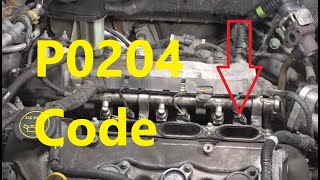
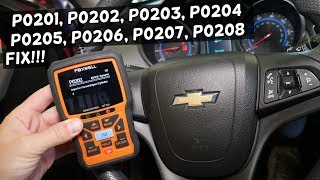
For the 2010-2014 Equinox and its platform-mate GMC Terrain, injector circuit codes are a well-documented issue. While individual injector failure is common, GM has issued multiple Technical Service Bulletins (e.g., PIP4924D, 21-NA-149) across various models that point to a high probability of the engine wiring harness chafing against other components, like the ECM bracket or cylinder head, causing a short or open circuit. Therefore, a thorough harness inspection is critical 🎬 Watch: Real-world diagnostic walkthrough of a cylinder 4 circuit fault. before condemning the injector.
Diagnostic Flowchart
Tap your situation to follow the diagnostic path that matches what you're seeing on this vehicle.
Symptoms You May Notice
- Check Engine Light is on
- Rough or shaking idle
- Engine misfire (may feel like a stumble or hesitation)
- Poor acceleration and loss of power
- Reduced fuel economy
- A smell of gasoline from the exhaust
- Engine may stall intermittently
- Replacing the spark plug or ignition coil for cylinder 4. While these can cause a misfire (P0304), they will not cause an injector circuit code (P0204). The P0204 code is specifically for an electrical fault in the injector circuit, not a combustion fault.
Most Likely Causes
- Wiring Harness or Connector Issue 🔴 High Probability This is a very common issue on this platform. GM TSBs for similar engines point to specific problem areas where the harness can rub through its insulation, causing a short or open circuit. Common chafe points are against the ECM bracket, the corner of the cylinder head, or where the harness is pinched.
How to confirm: Visually inspect the wiring harness leading to the cylinder 4 injector. You may need to unwrap the protective loom to find the damage. Pay close attention to any point where the harness touches or is tightly routed against a metal bracket or engine part. Check that the connector is securely clipped onto the injector and inspect for corrosion or bent pins. Use a 'noid light' to test for a pulse signal at the connector; if the light flashes when the engine is cranked, the wiring and ECM driver are likely okay. If it does not flash, the problem is upstream in the wiring or ECM.
Typical fix: Repair the damaged section of wire using solder and heat shrink, or by crimping in a new section of wire. Protect the repaired area with high-quality electrical tape or loom. If the connector is damaged, replace the injector pigtail connector (ACDelco PT2160).
Est. part cost: $10-$40 - Failed Fuel Injector (Cylinder 4) 🔴 High Probability → Shop Fuel Injector Injectors are wear-and-tear components. The internal electronic coil can fail over time, creating an open or short circuit. The GDI injectors on the 2.4L engine operate under high pressure and can be susceptible to failure.
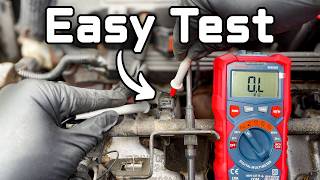
How to confirm: After confirming the wiring is good, test the injector. Measure the resistance of the injector with a multimeter. For the 2.4L GDI engine, it should be between 1.1 and 2.0 ohms. A reading of infinity (OL) indicates an open circuit, while a reading near zero indicates a short. An easier method is to swap the cylinder 4 injector with an adjacent one (e.g., cylinder 3). Clear the codes and run the engine. If the code changes to P0203, the injector is confirmed bad.
Typical fix: Replace the faulty fuel injector. It is often recommended to replace all injectors at the same time, especially on higher mileage vehicles, as they tend to fail around the same time.
Est. part cost: $50-$150 - Faulty Engine Control Module (ECM) ⚪ Low Probability → Shop Engine Control Module (ECM) While not common, the internal driver circuit in the ECM that controls the injector can fail. This should only be considered after all other possibilities are exhausted.
How to confirm: This is diagnosed by exclusion. If the injector and the entire wiring harness between the ECM and injector have been tested and confirmed to be good (no opens, no shorts to ground or power), the ECM is the likely culprit. A professional shop can perform advanced diagnostics to confirm an ECM fault.
Typical fix: Replace and reprogram the Engine Control Module.
Est. part cost: $400-$900
Rare But Worth Checking
- Loose Injector Connector: In at least one documented case on a 2012 Equinox, the P0204 code was caused simply by the injector's electrical connector not being fully seated. Always check this first as it's a free fix. The locking tab must be fully engaged.
Diagnosis Steps
- Verify the code with an OBD-II scanner. Note any other codes present, especially P0304.
- Locate cylinder 4. On the 2.4L I4 engine, it is the cylinder on the far right (passenger side), furthest from the belts. On the 3.0L/3.6L V6 engines, it is the middle cylinder on the rear bank, closest to the firewall.
- Visually inspect the electrical connector and wiring at the cylinder 4 fuel injector. Ensure it is plugged in securely and the locking tab is engaged. Wiggle the connector with the engine running to see if it affects the idle.
- Follow the wiring harness from the injector back toward the main loom, looking for any signs of chafing, melting, or pinching, especially where it passes near metal brackets like the one for the ECM.
- Use a noid light to test the signal at the injector connector. Disconnect the injector and plug in the noid light. Crank the engine. The light should flash steadily. If it does not flash, the problem is in the wiring or the ECM. If it does flash, the problem is likely the injector itself.
- If the noid light flashes, test the injector. Turn off the vehicle. Unplug the injector and measure its resistance using a multimeter set to Ohms. For the 2.4L GDI engine, compare the reading to the factory specification of 1.1-2.0 Ohms. An out-of-spec reading confirms a bad injector.
- If you do not have a multimeter, a common DIY method is to swap the cylinder 4 injector with another one (e.g., cylinder 3). Clear the codes and run the engine. If the code returns as P0203, the injector is faulty. If P0204 returns, the issue is in the wiring or ECM.
- If the noid light test fails, perform a continuity test on both wires from the ECM connector to the injector connector to rule out a broken wire. If the wiring is good, the ECM may be faulty.
Parts You'll Likely Need
- Fuel Injector (2.4L I4 GDI)
(OEM #12633784)— This is a common failure point for a P0204 code on the 2.4L engine. The internal coil fails, causing an electrical fault.
Trusted brands: ACDelco (OEM), Hitachi, Bosch, Standard Motor Products
OEM price range: $90-$150
Aftermarket price range: $50-$100 - Fuel Injector (3.0L/3.6L V6)
(OEM #12669384)— The likely OEM injector for the V6 engine options. Failure is less documented than the 2.4L but follows the same principles. Always verify by VIN.
Trusted brands: ACDelco (OEM)
OEM price range: $100-$170
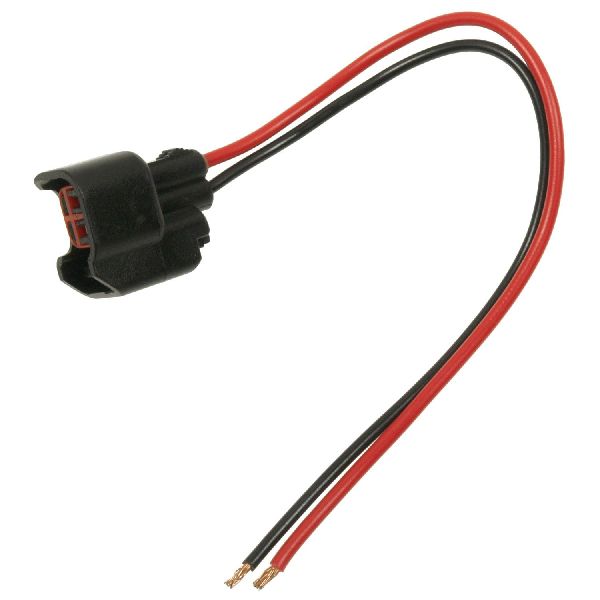
Aftermarket price range: $60-$120 - Fuel Injector Pigtail Connector
(OEM #ACDelco PT2160 / Standard Motor Products S-824)— If the plastic connector or its locking tab is broken, or if the terminals inside are corroded or loose, replacing the pigtail is the correct repair.
Trusted brands: ACDelco (OEM), Standard Motor Products, Dorman
OEM price range: $20-$40
Aftermarket price range: $10-$25 - Fuel Injector Wiring Harness (2.4L)
(OEM #12649565 (superseded by 12690915))— In cases of extensive or non-repairable damage to the injector sub-harness, replacing the entire assembly is the most robust fix.
Trusted brands: ACDelco (OEM)
OEM price range: $70-$120
Aftermarket price range: N/A
Related Codes That Often Appear With This One
- P0304 — P0304 means 'Cylinder 4 Misfire Detected'. Since the P0204 code indicates a problem with the fuel supply to cylinder 4, a misfire is an almost guaranteed mechanical symptom and the most common accompanying code.
- P0201, P0202, P0203 — If multiple injector circuit codes are present at once, it strongly points towards a shared problem like a damaged wiring harness at a common point, a blown fuse for the injector bank, or a faulty ECM, as noted in TSB PIP4924D.
Technical Service Bulletins (TSBs) & Recalls
- PIP4924D: Mentions that vehicles may experience a Service Engine Soon light, a misfire, and a range of DTCs including P0201-P0206, pointing to potential injector circuit issues.
- 21-NA-149: While for a different
Platform-Specific Known Issues
- A Technical Service Bulletin (TSB #PIP4924D) exists for 2012 models that mentions a list of injector circuit codes, including P0204, that can appear with a misfire. This indicates a known pattern of potential electrical issues in the fuel injection system.
- Other GM TSBs (like #21-NA-149) for different models with similar engine architecture detail common wiring harness chafe points. These serve as a valuable diagnostic guide, highlighting areas near the ECM bracket and where the harness crosses the cylinder head as likely spots for damage.
Mechanic-Grade Diagnostic Values
- Fuel Injector (2.4L GDI) Internal Resistance — expected: 1.1 to 2.0 Ohms. Failure: A reading of infinity (OL) indicates an open circuit; a reading near 0 Ohms indicates a short circuit.
- Fuel Injector (Port Injection, e.g., V6) Internal Resistance — expected: 11 to 14 Ohms. Failure: A reading outside this range indicates a faulty injector coil.
- Injector Circuit Harness Resistance — expected: < 0.5 Ohms. Failure: A reading higher than 0.5 Ohms indicates excessive resistance in the wire, often due to corrosion or a partial break.
- Low-Side Fuel Pressure (Key On, Engine Off) — expected: 345-690 kPa (50-100 psi). Failure: Pressure below this range can indicate a weak fuel pump or a leak, though it won't directly cause a P0204 circuit code.
- Injector Control Circuit (at ECM, backprobed) — expected: Should show a square wave voltage pulse when the engine is running.. Failure: A flat line at 0V or battery voltage indicates a failed ECM driver or a problem in the wiring.
Scan Tool Commands That Help
- GDS2 (GM Dealer Software): Injector Balance Test — This test is used to identify a mechanically faulty or clogged injector, rather than an electrical one. The tool commands each injector to open for a set duration and measures the corresponding drop in fuel rail pressure. An injector that causes a significantly different pressure drop than the others may be faulty.
- GDS2 (GM Dealer Software): Injector Control Circuit Status — While diagnosing, a technician can monitor this parameter. It should display 'OK'. If a fault occurs, it may change to 'Open' or 'Fault', which can help identify intermittent wiring issues when wiggling the harness.
Wiring & Ground Locations
- ECM X1 Connector (2.4L) — The main engine control module, located in the engine bay.. For the 2.4L engine, the cylinder 4 injector high voltage supply circuit is on Pin 50 (Light Blue wire) and the control circuit is on Pin 74 (Light Blue/White wire). These are the specific pins to test for continuity and shorts when diagnosing a P0204.
- G101 — Located at the front left of the engine, on the lower block.. This is a primary ground for the Engine Control Module (ECM) and Transmission Control Module (TCM). A poor connection here can cause a wide range of erratic engine management codes, including injector circuit faults.
- G103 — Located at the left rear of the engine compartment on the cowl, above the brake booster.. This ground serves the Body Control Module (BCM) and the Data Link Connector (DLC). While not directly tied to the injector circuit, a fault here can cause communication issues with scan tools during diagnosis.
- Underhood Fuse Block — Located in the engine compartment, on the driver's side, near the brake fluid reservoir.. Contains multiple fuses related to the engine management and fuel injection systems, including Fuses 20, 21, 37, 38, 41, 42, and 52, which should be checked before diagnosing a circuit fault.
Real Owner Repair Stories
- Forum user on a GM truck forum (2015 GM Truck with 5.3L L83 engine (similar DFI system and wiring principles)) — Recurring P0300 (random misfire) and P0204 codes.
❌ Tried (didn't work) Replacing the fuel injectors for the affected cylinders.
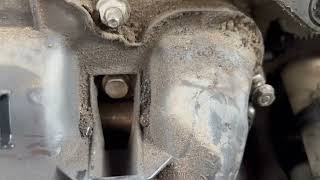
✅ What actually fixed it The wiring harness that feeds the injector bank was found pinched and chafed against the transmission bell housing at the rear of the engine. Repairing the exposed and cut wires resolved the codes permanently. - YouTube video by 'Best Car Fixes' (2012 Chevrolet Equinox (V6 engine)) — P0204 code, misfire, and knock sensor codes.
❌ Tried (didn't work) Swapping ignition coils.
✅ What actually fixed it After removing the intake manifold to access the V6 injectors, the technician discovered the electrical connector for the cylinder 4 injector was not fully seated and locked. Clipping it in securely fixed the issue.
OEM Part Supersession History
12649565→12690915— Part has been updated by the manufacturer.
Heads up: This is the part number for the fuel injector wiring harness for the 2.4L engine. Always verify with a VIN, but the newer part number should be a direct replacement for the original.12604896, 12634207→12633784— Part consolidation and design updates by GM.
Heads up: These are older part numbers for the 2.4L GDI fuel injector that have been superseded by 12633784.
Helpful Videos

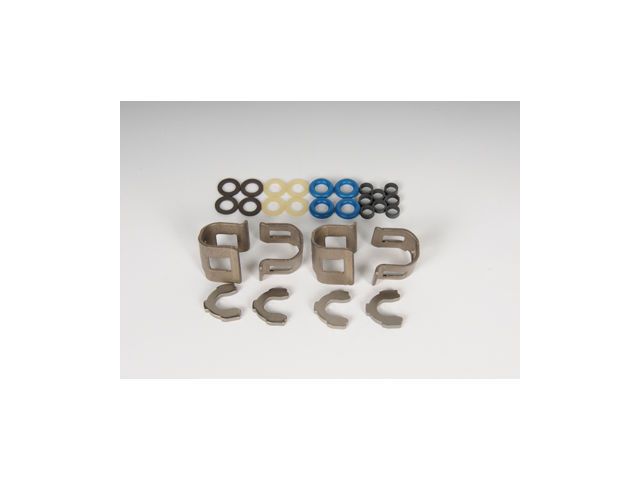
We Have This Part in Stock


The information in this article is provided for general reference and educational purposes only. Vehicle specifications, procedures, and part compatibility can vary by production date, trim level, and region. Always consult your vehicle's factory service manual and verify part numbers before purchasing or performing repairs. Safety-critical components such as airbags, seat belts, and braking systems should be installed by a qualified professional.
- Chevrolet EQUINOX:
- 🧭 Diagnostic Flowchart
- 🎬 Helpful Videos
- 🛍️ Shop This Part
- What's Unique About the 2010-2014 Chevrolet EQUINOX
- Symptoms You May Notice
- Most Likely Causes
- Rare But Worth Checking
- Diagnosis Steps
- Parts You'll Likely Need
- Related Codes That Often Appear With This One
- Technical Service Bulletins (TSBs) & Recalls
- Platform-Specific Known Issues
- Mechanic-Grade Diagnostic Values
- Scan Tool Commands That Help
- Wiring & Ground Locations
- Real Owner Repair Stories
- OEM Part Supersession History
- 🎟️ Get 5% Off