

P0204 on 2017-2024 Chrysler Pacifica 3.6L: Injector Circuit Malfunction Causes and Fixes
P0204 on a Chrysler Pacifica indicates an electrical fault with the fuel injector in cylinder #4. The most common cause is a failed fuel injector. Accessing it requires removing the upper intake manifold, so expect a repair cost of $400-$700 at a shop, or around $150-$250 for a DIY replacement of the injector and gaskets.
- P0204 is an electrical circuit code for the cylinder #4 fuel injector, not a mechanical or ignition code.
- The most likely cause is a failed fuel injector, which can be definitively diagnosed by swapping it with an adjacent cylinder.
- Accessing the injector requires removing the upper intake manifold, so replacing intake gaskets is mandatory.
- A flashing Check Engine Light means stop driving to prevent expensive catalytic converter damage.
What's Unique About the 2017-2024 Chrysler Pacifica
On the 3.6L Pentastar V6 engine in the Pacifica, the cylinders are arranged with the odd numbers (1, 3, 5) against the firewall and the even numbers (2, 4, 6) toward the radiator. Cylinder #4 is the middle cylinder on the front bank, which is easier to access than the rear bank. However, replacing it still requires removing the upper intake manifold, a moderately involved job. While this engine is known for some mechanical top-end issues (like rocker arms and oil cooler housing leaks), the P0204 code is specifically electrical and almost always points to the injector or its wiring, not a mechanical engine failure.
Symptoms You May Notice
- Check Engine Light is on (may be flashing in severe cases)
- Rough or shaky idle
- Engine stumbling or hesitating during acceleration
- Noticeable loss of engine power
- Poor fuel economy
- Engine may stall at low speeds
- Smell of raw fuel from the exhaust
- Replacing the spark plug or ignition coil. While these parts can cause a misfire (P0304), they will not cause an injector circuit code (P0204). P0204 is an electrical fault, not an ignition or mechanical one.
Most Likely Causes
- Failed Fuel Injector (Cylinder 4) 🔴 High Probability → Shop Fuel Injector Fuel injectors are a common wear-and-tear component. The internal electronic coil can fail, creating an open circuit (infinite resistance) or, less commonly, a short. This is the most frequent cause of P0204 on the Pentastar engine.
How to confirm: Swap the fuel injector from cylinder #4 with an adjacent one (e.g., cylinder #2 or #6). Clear the codes and run the engine. If the code changes to P0202 or P0206, the injector is faulty. Alternatively, use a multimeter to test the injector's resistance. A good Pentastar injector should measure between 12 and 14 ohms. A reading of infinity (OL), near zero, or double the normal resistance (around 24 ohms) indicates a failed injector.
Typical fix: Replace the failed fuel injector. Since the intake manifold must be removed, it is often recommended to replace all three front injectors (2, 4, 6) or all six at the same time to save on future labor and ensure balanced fueling.
Est. part cost: $40-$180 - Wiring Harness or Connector Fault 🟡 Medium Probability Engine bay heat and vibration can make wiring and plastic connectors brittle over time. A wire can chafe through its insulation and short to ground, or the locking tab on the connector can break, causing a poor connection. On some Chrysler products, the injector harness is known to melt if it comes into contact with the exhaust manifold.
How to confirm: Visually inspect the wiring going to the cylinder #4 injector. Check for melted insulation, chafing, or corrosion on the connector pins. Use a 'noid light' on the injector connector; it should flash when the engine is cranked, indicating the PCM is sending a signal. If it doesn't flash, the problem is in the wiring or PCM.
Typical fix: Repair the damaged section of wire or replace the injector connector pigtail. In some cases, a specific harness repair kit (like Mopar P/N 05017114AA for older models) may be available.
Est. part cost: $15-$30
Rare But Worth Checking
- Powertrain Control Module (PCM) Failure: → Shop Engine Control Module (ECM) This is rare, but if the injector and wiring have been tested and are confirmed to be good, the internal driver circuit within the PCM may have failed. This should be the last item to consider after exhausting all other possibilities.
Technical Service Bulletins (TSBs) & Recalls
- TSB Bulletin #18-014-14: A manufacturer service bulletin notes that for some vehicles, a P0204 code may be resolved by selectively erasing and reprogramming the Powertrain Control Module (PCM) with new software.
- TSB Bulletin #1810216: This bulletin describes instances where P0204 occurs alongside other codes like P113E or P0108. In these cases, the customer may also notice a clunk or bump during 1-2 or 4-5 upshifts.
Diagnosis Steps
- Scan the vehicle for all stored trouble codes. Confirm P0204 is present and note any other codes like P0304 or P219B.
- Locate cylinder #4. On the Pacifica, it is the middle cylinder on the engine bank closest to the radiator.
- Disconnect the electrical connector from the cylinder #4 fuel injector. Inspect the connector and injector pins for corrosion or damage.
- Use a noid light to test the connector. Plug the noid light into the harness-side connector, start the engine, and check if the light flashes. A steady flash means the PCM and wiring are sending the signal to fire the injector.
- If the noid light flashes, the injector is the likely culprit. To confirm, measure the resistance of the fuel injector using a multimeter set to ohms. A reading between 12-14 ohms is typical for a good injector. A reading of infinity (OL) or near zero indicates a failed injector.
- A definitive test is to swap the #4 injector with the #2 or #6 injector. This requires removing the upper intake manifold. Clear the codes. If the fault code moves to P0202 or P0206, you have confirmed a bad injector.
- If the noid light does not flash in step 4, check for continuity on both wires from the injector connector back to the PCM. Repair any open or shorted wires.
- If the wiring and injector are confirmed good, the issue may be a rare failure of the PCM's injector driver circuit.
Parts You'll Likely Need
- Fuel Injector
(OEM #5281427AA)— This is the most common failure point for a P0204 code. The internal coil winding fails, causing an electrical fault. This part number fits a wide range of Chrysler vehicles with the 3.6L engine.
Trusted brands: Mopar, Bosch, Delphi, Standard Motor Products
OEM price range: $35-$50
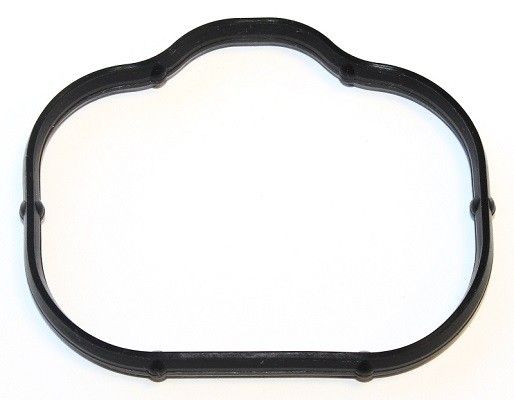
Aftermarket price range: $40-$90 - Upper and Lower Intake Manifold Gaskets
(OEM #5184562AC (Upper), 5184331AC (Lower))— These must be removed to access the fuel injectors on the front bank and are considered a one-time-use part. They should always be replaced to prevent vacuum leaks.
Trusted brands: Mopar, Fel-Pro, Mahle
OEM price range: $40-$70
Aftermarket price range: $20-$40
Related Codes That Often Appear With This One
- P0304 — P0304 means 'Cylinder 4 Misfire Detected'. Since P0204 indicates an electrical problem with the fuel supply to cylinder 4, the cylinder cannot fire correctly, which the PCM detects as a misfire. This pairing is extremely common.
- P0300 — If the wiring issue is intermittent or causing erratic fueling, it can sometimes lead to instability that the PCM interprets as a random/multiple cylinder misfire.
- P219B — This code indicates an 'Air-Fuel Ratio Imbalance' on Bank 2. Since cylinder 4 is on the front bank (Bank 2), a non-firing injector causes that entire bank to run lean, which is detected by the oxygen sensor.
Platform-Specific Known Issues
- Rodent Damage to Wiring: A Reddit user noted that on Pentastar engines, rodents can build nests under the engine cover and chew on the injector wiring harness, which is located under the intake manifold. Before disassembly, it's worth checking for signs of rodent activity like chewed foam or droppings.
Mechanic-Grade Diagnostic Values
- Fuel Injector Coil Resistance — expected: 12.0 to 12.5 Ohms. Failure: A reading of infinity (OL) indicates an open circuit. A reading near zero indicates a short. Some failures show a reading double the normal resistance (~24 Ohms).
- Injector Power Supply Wire Voltage (Key On, Engine Off) — expected: Battery Voltage (approx. 12.6V). Failure: Significantly low or no voltage points to a problem with the power feed from the ASD relay or TIPM/fuse box.
- Injector Control Wire Signal (via Noid Light) — expected: A steady, rhythmic flash when the engine is cranking or running.. Failure: No flash indicates an open in the control wire or a failed PCM driver. A constantly lit noid light indicates a short to ground in the control circuit.
- Injector Control Wire Signal (via Oscilloscope) — expected: A square wave pattern showing voltage pulling to ground from battery voltage, followed by a sharp inductive spike of 35-65V when the injector field collapses.. Failure: Absence of the pattern indicates no signal from the PCM. A missing or low inductive spike can indicate a shorted injector coil.
Hidden / Shadow Codes Worth Checking
- Mode $06, Test ID $0D: This is not a trouble code but a raw data monitor for misfire counts on cylinder 4. Viewing this data can help confirm if the misfire is consistent or intermittent, even before the full P0304 code is set. (see via Most professional-grade OBD-II scan tools can access Mode $06 data.)
Scan Tool Commands That Help
- wiTECH (Chrysler Dealer Tool) or equivalent professional scanner: Injector Kill / Actuator Test — This function allows a technician to command the cylinder 4 injector to stop firing while the engine is idling. If the engine's RPM and smoothness do not change, it confirms that cylinder 4 was not contributing, validating the fault lies within that injector's circuit.
- wiTECH (Chrysler Dealer Tool) or equivalent professional scanner: View Misfire Counters — This allows for real-time monitoring of misfires on each specific cylinder. It is useful for confirming that the misfire is isolated to cylinder 4 and for verifying the repair after a part has been replaced.
Wiring & Ground Locations
- PCM Connector C2, Pin 14 — The Powertrain Control Module (PCM) is located in the engine bay, near the front of the vehicle. C2 is one of the main connectors.. This is the specific pin for the 'INJECTOR CONTROL 4' wire. The wire color is typically Brown/Light Blue (BN/LB). A continuity test should be performed from this pin to the injector connector to rule out a broken wire.
- Injector Power Feed (Common) — The power wire at the injector connector, typically Dark Green/Orange (DG/OR).. All injectors on a bank share a common power source from the Auto Shut Down (ASD) relay. This wire should have battery voltage with the key on. A loss of voltage here would typically cause codes for multiple injectors (e.g., P0202, P0206), not just P0204.
Real Owner Repair Stories
- Go-Parts Repair Forum Summary (2009 Chrysler Town & Country 3.6L) — P0204 code and misfire would only appear when the engine was fully warmed up. The engine ran perfectly when cold.
❌ Tried (didn't work) Initial diagnosis was difficult because the injector tested good when cold.
✅ What actually fixed it The owner tested the injector's resistance when cold (12.4 ohms, which is normal) and then heated it with a hairdryer. When hot, the resistance reading went to an open circuit (OL). This confirmed a heat-sensitive internal failure of the injector coil. Replacing the fuel injector resolved the issue. - Jeep Cherokee Forum (Jeep Cherokee (engine not specified, but same code behavior)) — Persistent P0204 code and misfire on cylinder 4.
❌ Tried (didn't work) Replaced #4 spark plug, Replaced #4 fuel injector, Replaced #4 fuel injector connector pigtail
✅ What actually fixed it The user confirmed with a noid light that the signal was reaching the connector. The final resolution was not posted in the thread, but the user was advised that the next logical step after confirming the wiring and injector were good would be a faulty PCM injector driver, which is a rare but possible cause.
OEM Part Supersession History
05184085AC→5281427AA— Standard part number update and consolidation by Mopar.
Heads up: The Bosch OEM part number is 0280158233. Both Mopar numbers refer to this same Bosch injector. No incompatibility issues are known.
Diagnostic Flowchart
Other Known Issues on This Vehicle
Issues unrelated to this code that are worth knowing about as an owner of this generation:
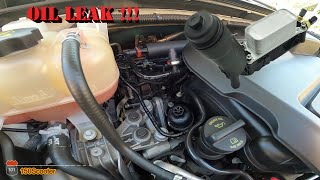
- Cracked Oil Filter Adapter / Cooler Housing Leak 🔴 High — Very common. Can occur at low mileage (e.g., 26k miles) but is frequent on engines over 60k miles. Often discovered due to the smell of burning oil or a visible leak in the engine valley.
- Rocker Arm / Lifter Failure ('Pentastar Tick') 🔴 High — Common, particularly on earlier Pentastar models but still reported on the Pacifica. Often presents as a distinct ticking noise from the top of the engine and can lead to misfire codes. (Ref: TSB 09-010-21 addresses rough running and misfires by replacing exhaust rocker arms on some 2021 models. A class-action lawsuit was also filed over this issue.)
- Engine Start-Stop (ESS) System Faults 🟠 Medium — Frequently reported by owners. The system may become unavailable or cause rough restarts. Often linked to a weakening secondary/auxiliary battery.
- Variable Valve Lift (VVL) Solenoid Failure 🟠 Medium — Commonly causes rough idle, hesitation, and codes like P1072. The system is very sensitive to oil level and condition; low or dirty oil is a primary trigger.
- Cylinder Head / Head Gasket Failure 🔴 High → Shop Engine Cylinder Head — Less common than the oil cooler leak or rocker arms, but a known catastrophic failure. Often presents as a persistent misfire on one cylinder (e.g., P0303) combined with unexplained coolant loss. (Ref: Customer Satisfaction Notification ZD2 was issued for some Pacificas for misfires that could require cylinder head replacement.)
- False Camshaft Position Sensor Codes 🟡 Low — The PCM can be overly sensitive and set intermittent camshaft sensor codes like P0369. A software update was issued to make the fault detection less sensitive. (Ref: TSB #18-002-19 REV A was issued to change the fault from a 'one-trip' to a 'two-trip' light, reducing false positives.)
Used vs. New Parts: Buying Guide for This Vehicle
When a used part is the smart pick: A used wiring harness from a junkyard can be a cost-effective solution if your original harness is damaged by rodents or melting, provided it is from a low-mileage, non-wrecked donor. Used fuel injectors are generally not recommended due to unknown history and the high labor cost to replace them if they fail.
Donor-vehicle mileage cap: roughly under 60000 miles for the part to have meaningful remaining life.
What to inspect on the donor part:
- For a wiring harness, inspect for any signs of chewing, melting, or brittle/cracked insulation.
- Ensure all connector locking tabs (especially the red ones) are intact and not broken.
- Verify the donor vehicle has a clean history and was not involved in a front-end collision or engine fire.
OEM-only on this vehicle (don't cheap out):
- While not strictly 'OEM-only', using OEM (Mopar/Bosch) or reputable OEM-supplier (Delphi) fuel injectors is highly recommended. The labor involved in the replacement is significant enough that saving a small amount on cheap, unbranded injectors is a poor risk.
Aftermarket brands forum-validated for this vehicle:
- Bosch (OEM manufacturer)
- Delphi
- Standard Motor Products (SMP)
- Fel-Pro (for intake gaskets)
- Mahle (for intake gaskets)
Brands owners have reported issues with on this vehicle:
- Unnamed, no-brand 'sets of 6' from online marketplaces like Amazon or eBay. These are often poorly manufactured, not flow-matched, and have a high failure rate, leading to future misfires and drivability problems.
Real Owner Stories
Aggregated from forums and TSBs cited above. Mileages and costs reflect what owners reported in those sources.
2015 Dodge Grand Caravan 3.6L
Symptoms: Getting codes P219B, P0304, and P0204 simultaneously.
What fixed it: Checking for rodent damage to the wiring harness under the intake manifold was the recommended diagnostic path for these specific codes.
Source hint: Reddit r/Cartalk - 2015 Dodge Grand Caravan getting code p219b, p0304, and p0204.
Jeep Grand Cherokee 3.6L Pentastar
Symptoms: Codes P0204 and P0304 occurring together along with a flashing check engine light.
What fixed it: A swap test was recommended to confirm if the issue was a bad fuel injector or a wiring problem.
Source hint: Reddit r/mechanic - What does P0304 and P0204 code together mean needs to fixed on Jeep Grand Cherokee?!
3.6L Pentastar V6 (General)
Symptoms: The injector was tested using a multimeter and found to be out of spec.
What fixed it: Replacing the fuel injector after confirming it had double the normal resistance (around 24 ohms).
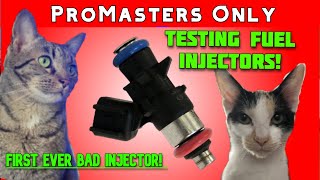
Source hint: YouTube - 'Testing Fuel Injectors Pentastar 3.6'
Related OBD-II Codes
Frequently Asked Questions
Where is cylinder #4 located on my Chrysler Pacifica 3.6L Pentastar V6?
What is the correct resistance for a fuel injector on the 3.6L Pentastar engine?
Is there a specific TSB for rough running or misfires on newer Pacifica models?
Should I replace just the one faulty injector or all of them?
Can rodents cause the P0204 code on my Pacifica?
Is there a specific repair kit for the injector wiring harness?
Helpful Videos
We Have This Part in Stock


The information in this article is provided for general reference and educational purposes only. Vehicle specifications, procedures, and part compatibility can vary by production date, trim level, and region. Always consult your vehicle's factory service manual and verify part numbers before purchasing or performing repairs. Safety-critical components such as airbags, seat belts, and braking systems should be installed by a qualified professional.
- Chrysler Pacifica:
- 🧭 Diagnostic Flowchart
- 🎬 Helpful Videos
- 🛍️ Shop This Part
- What's Unique About the 2017-2024 Chrysler Pacifica
- Symptoms You May Notice
- Most Likely Causes
- Rare But Worth Checking
- Technical Service Bulletins (TSBs) & Recalls
- Diagnosis Steps
- Parts You'll Likely Need
- Related Codes That Often Appear With This One
- Platform-Specific Known Issues
- Mechanic-Grade Diagnostic Values
- Hidden / Shadow Codes Worth Checking
- Scan Tool Commands That Help
- Wiring & Ground Locations
- Real Owner Repair Stories
- OEM Part Supersession History
- Other Known Issues on This Vehicle
- Used vs. New Parts: Buying Guide for This Vehicle
- Real Owner Stories
- 2015 Dodge Grand Caravan 3.6L
- Jeep Grand Cherokee 3.6L Pentastar
- 3.6L Pentastar V6 (General)
- Related OBD-II Codes
- Frequently Asked Questions
- 🎟️ Get 5% Off