

P0204 on 2006-2008 Dodge Ram 1500 4.7L: Injector Circuit Causes and Fixes
On the 4.7L V8, code P0204 is most often caused by a faulty wiring harness that passes through the passenger-side valve cover, not the injector itself. The fix is to replace the valve cover gasket which includes a new wiring loom. A faulty injector is the second most likely cause.
- For the 2006-2008 Ram 1500 with the 4.7L V8, P0204 is very often a wiring problem, not a bad injector.
- The specific issue is the wiring harness that is built into the passenger side valve cover gasket, which is a known failure point covered by a TSB.
- Before buying a new injector, test the circuit. Use a noid light to check for a signal at the injector connector. No signal strongly points to the known wiring issue.
- The correct repair for the common wiring failure is replacing the entire valve cover gasket assembly (Mopar P/N 53022158AH), which includes the new harness.
What's Unique About the 2006-2008 Dodge Ram 1500
For this specific 4.7L PowerTech V8 engine, there is a well-documented and common failure point that does not affect other engines like the 5.7L HEMI. A Technical Service Bulletin (TSB 18-004-08) was issued because the injector wiring harness, which is integrated into the passenger side valve cover gasket, is prone to failure. Heat and oil cause the wires to become brittle and break, leading to an open circuit and a P0204 code. This makes a wiring fault more likely than a failed injector on this particular engine.
Symptoms You May Notice
- Check Engine Light is on
- Rough or shaking idle
- Engine misfire, which may feel like a stumble or hesitation.
- Reduced power and poor acceleration.
- Decreased fuel economy
- Engine may backfire
- Replacing the fuel injector without first testing the wiring. On the 4.7L V8, the wiring harness inside the valve cover is a more common failure point than the injector itself.
Most Likely Causes
- Faulty Injector Wiring Harness in Valve Cover Gasket 🔴 High Probability → Shop Engine Wiring Harness A known issue documented by TSB 18-004-08. The wiring loom is integrated into the valve cover gasket, and constant exposure to engine heat and oil causes the wires to degrade, become brittle, and break internally, creating an open circuit. This is a widely acknowledged failure point on 4.7L V8 engines. Manufacturer TSB Bulletin #9002688 specifically warns technicians that before replacing injectors for DTC P0204, they must ensure the wiring loom or connector in the valve cover gasket is not the root cause.
How to confirm: After confirming no signal with a noid light at the injector connector, perform a continuity test on the wiring between the PCM and the injector connector. An open circuit points to this internal harness failure. A visual inspection of the harness where it enters the valve cover may reveal damage, but often the break is internal.
Typical fix: Replace the passenger side valve cover gasket assembly, which includes the new integrated wiring loom. The Mopar part number for the gasket with harness is 53022158AH.
Est. part cost: $70-$150 - Faulty Fuel Injector 🟡 Medium Probability → Shop Fuel Injector Fuel injectors can fail electrically (internal coil opens or shorts) or become clogged over time. While less common than the wiring issue on this engine, it is still a frequent cause.
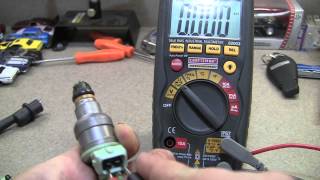
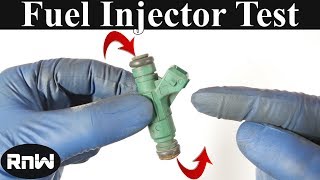
How to confirm: Swap the cylinder 4 injector with an injector from another cylinder (e.g., cylinder 2). Clear the codes and drive the truck. If the code changes to P0202, the injector is confirmed to be faulty. You can also test the injector's resistance with a multimeter; a typical reading should be between 11-16 Ohms. An infinite reading (OL) means the injector's internal coil is open.
Typical fix: Replace the faulty fuel injector. It is often recommended to replace all injectors as a set on high-mileage vehicles to ensure balanced fuel delivery.
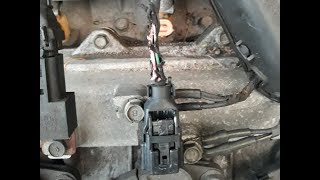
Est. part cost: $40-$130 - Damaged External Wiring or Connector ⚪ Low Probability The plastic connector at the injector can become brittle from heat cycles and crack, or wires can chafe against other engine components. The locking tab on the connector is especially prone to breaking.
How to confirm: Visually inspect the wiring harness and the connector leading to the cylinder 4 fuel injector for any signs of cracking, melting, or frayed wires. Wiggle the connector while the engine is running to see if it affects the misfire. Check for corroded or bent pins inside the connector.
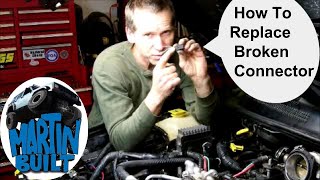
Typical fix: If the connector is damaged, splice in a new injector connector pigtail. Common aftermarket pigtails are made by Dorman or Standard Motor Products.
Est. part cost: $15-$50
Rare But Worth Checking
- Faulty Powertrain Control Module (PCM): → Shop Engine Control Module (ECM) This should be the last item to check. The internal driver circuit in the PCM that fires the injector can fail. This is a diagnosis of exclusion, performed only after confirming the injector and all wiring are in good condition. A failing injector can sometimes short out and damage the PCM driver circuit.
Diagnosis Steps
- Connect an OBD-II scanner to confirm the P0204 code and check for any other codes, like P0304.
- Locate cylinder 4. On the 4.7L V8, the cylinders on the passenger side are 2, 4, 6, and 8, from front to back. Cylinder 4 is the second one back on the passenger side.
- Visually inspect the external wiring and connector for injector #4. Look for any obvious signs of damage, melting, or corrosion.
- Use a noid light to test for a signal at the injector connector. Disconnect the injector and plug the noid light into the connector. Start the engine. If the noid light flashes, the PCM and wiring are likely good, and the injector is likely faulty. If it does not flash, there is a problem with the wiring or the PCM.
- If the noid light did not flash, the next step is to suspect the common valve-cover wiring issue. You can confirm this with a multimeter by checking for continuity on the control wire between the PCM connector and the injector connector. An open circuit (infinite resistance) confirms the wire is broken.
- If the noid light did flash, perform an 'injector swap'. Swap the injector from cylinder 4 with the one from cylinder 2. Clear the codes and drive the vehicle. If the code returns as P0202, the injector is bad. If the code remains P0204, the problem is in the wiring.
- As an alternative to the swap, test the injector resistance. Disconnect the injector and use a multimeter to measure resistance across its two pins. It should be between 10.8-13.2 ohms. Compare it to a known good injector.
- If all wiring and the injector have been proven to be good, the Powertrain Control Module (PCM) may be faulty, but this is rare and should be the last consideration.
Parts You'll Likely Need
- Valve Cover Gasket with Integrated Wiring Loom
(OEM #53022158AH)— This is the most common cause of P0204 on the 4.7L V8, as documented in TSB 18-004-08. The integrated wiring fails, and the entire assembly must be replaced.
Trusted brands: Mopar, Fel-Pro
OEM price range: $100-$150
Aftermarket price range: $70-$120 - Fuel Injector
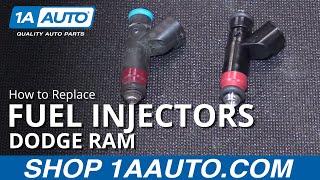
(OEM #53032704AB)— If the wiring is confirmed to be good, the fuel injector itself is the next most likely part to have failed. The OEM part number is 53032704AB, which may also be cross-referenced with Bosch part number 0280155849. This part number was later superseded by 53032704AC.
Trusted brands: Bosch, Standard Motor Products, Denso, Mopar
OEM price range: $80-$130
Aftermarket price range: $40-$90
Related Codes That Often Appear With This One
- P0304 — P0304 means 'Cylinder 4 Misfire Detected'. Since the P0204 code indicates an electrical fault preventing fuel from being injected into cylinder 4, a misfire is the direct result.
Technical Service Bulletins (TSBs) & Recalls
- 18-004-08: Addresses engine misfires and injector circuit codes caused by a faulty injector wiring harness that passes through the valve cover. The fix is to replace the valve cover gasket assembly which contains the new wiring.
- TSB Bulletin #9002688: Advises that before replacing fuel injectors for codes P0201 through P0206, technicians must verify that the wiring loom and/or connector in the valve cover gasket is not the root cause of the concern.
Platform-Specific Known Issues
- TSB 18-004-08 was released for the 4.7L engine due to the high failure rate of the injector wiring harness that passes through the passenger side valve cover gasket, causing injector circuit codes like P0204.
- Owner Experience on DodgeForum.com: A user with a P0204 code and backfiring on a similar Dodge truck confirmed the injector was good by swapping it with another cylinder. The problem persisted, pointing towards a wiring or PCM issue, which is consistent with the common failure modes for this platform.
Mechanic-Grade Diagnostic Values
- Fuel Injector Coil Resistance — expected: 10.8 - 13.2 Ohms. Failure: A reading of infinity (OL) indicates an open coil; a reading near zero indicates a shorted coil.
- Injector Pulse Width (at warm idle) — expected: 2.0 - 4.0 milliseconds (ms). Failure: A reading of 0 ms on cylinder 4 while others are in spec indicates no signal is being sent or received.
- Injector Control Wire at PCM — expected: The control wire for injector #4 is Tan/Light Green on the NGC (Next Generation Controller) PCM, typically found in Connector C2.. Failure: An open circuit (no continuity) when testing this wire from the injector connector to the PCM connector pin points to a break in the harness, likely inside the valve cover.
- Fuel Pressure (Key On, Engine Running) — expected: 44 - 54 PSI. Failure: While not a direct cause for a P0204 circuit code, low fuel pressure would affect all cylinders and cause other performance issues.
Scan Tool Commands That Help
- Professional Scan Tool (e.g., DRB III, WiTech): Injector Actuator Test / Output Control — This function allows a technician to command the PCM to fire a specific injector on demand. If the injector clicks during the test, it confirms the PCM driver and wiring are capable of firing it, pointing towards an intermittent issue or a flow problem rather than a hard electrical fault.
Wiring & Ground Locations
- Main Engine Ground Strap — Connects from the passenger-side cylinder head to the firewall or chassis, often near the battery tray.. Corrosion or a break in this main ground can cause unstable voltage and erratic behavior in engine electronics, including the PCM's injector drivers. A poor ground can cause a host of phantom electrical issues.
- PCM (Powertrain Control Module) — Located on the passenger-side firewall in the engine bay.. This is the source of the command signal for the injector. The relevant connector for the injector drivers on the 4.7L NGC PCM is typically C2 (often a Black or Gray connector).
- Driver's Side Engine Block Ground — A ground cable bolted to the side of the engine block on the driver's side, accessible from the top of the engine bay.. Ensures the engine block itself has a solid ground reference, which is critical for all sensors and actuators mounted to it.
Real Owner Repair Stories
- DodgeForum.com user (2011 Dodge Ram 1500 4.7L) — P0201 (Cylinder 1, but same diagnostic principle)
❌ Tried (didn't work) Replaced the fuel injector for the affected cylinder., Replaced the PCM with a refurbished unit.
✅ What actually fixed it The problem returned after three weeks. The user was advised the cause was almost certainly a wiring issue between the PCM and the injector, as all major components had been swapped. This highlights that even a PCM replacement may not be a permanent fix if the root cause is a damaged wire. - RamForum.com user (2012 Ram 1500 5.7L (different engine, but same code and intermittent symptom)) — Intermittent P0204 code that appears every few months with no noticeable driving symptoms (no rough idle, no loss of power).
❌ Tried (didn't work) Cleaned the injector connector and applied dielectric grease., Verified harness and injector tested good when the code first appeared.
✅ What actually fixed it The user reported the issue as a random, intermittent hiccup. This represents cases where a hard fault cannot be found, possibly indicating a very early stage failure of a component (like the PCM driver or a wire breaking down internally) that only fails under specific conditions.
OEM Part Supersession History
53032704AB→53032704AC— Standard part revision by the manufacturer.
Model Year Variations Within This Range
- 2006-2007 vs. 2008: The 4.7L V8 engine was significantly updated for the 2008 model year, increasing horsepower from ~235 to 310. Changes included a new intake manifold, improved cylinder heads, and two spark plugs per cylinder. The TSB (18-004-08) for the failing valve cover harness specifically lists models up to 2007, so the 2008 model may have a revised design and may not be as prone to this specific failure, making a faulty injector or external wiring a more likely cause on 2008 models.
Diagnostic Flowchart
Other Known Issues on This Vehicle
Issues unrelated to this code that are worth knowing about as an owner of this generation:
- Dropped Intake Valve Seats 🔴 High — Common, especially after an overheating event. The powdered metal seats can fall out of the aluminum cylinder heads. The issue was reportedly addressed in post-2008 engine revisions.
- Engine Oil Sludge Buildup 🟠 Medium — Common if oil change intervals are extended or incorrect oil is used. A TSB was issued regarding sludge-like appearance in the oil fill tube due to its design, but internal sludge is a known issue from poor maintenance. (Ref: Yes (related to appearance in oil fill tube))
- Faulty Totally Integrated Power Module (TIPM) 🔴 High — A well-known issue across many Chrysler products of this era. Can cause a wide range of bizarre electrical problems, including issues with fuel pump, lights, wipers, and power windows.
- Broken Exhaust Manifold Bolts 🟠 Medium — The bolts holding the exhaust manifold to the cylinder head are prone to breaking, causing an exhaust leak (ticking noise when cold).
- Coolant Leaks 🟠 Medium — Leaks can develop from the water pump, thermostat housing, and intake manifold gaskets, leading to overheating which can cause more severe engine damage like dropped valve seats.
Used vs. New Parts: Buying Guide for This Vehicle
When a used part is the smart pick: A used fuel injector from a reputable salvage yard with a known low-mileage donor vehicle can be a cost-effective option. However, given the labor involved, a professionally remanufactured injector is often a better value. A used valve cover with the integrated harness should be avoided, as it is likely to have the same age- and heat-related degradation as the part being replaced.
Donor-vehicle mileage cap: roughly under 80000 miles for the part to have meaningful remaining life.
What to inspect on the donor part:
- For a fuel injector, check for physical damage, cracks in the plastic body, and severe corrosion on the electrical pins.
- Ensure the donor vehicle was not in a fire or flood.
- Ask for the VIN of the donor vehicle to verify its year and mileage.
OEM-only on this vehicle (don't cheap out):
- Valve Cover Gasket with Integrated Wiring Loom: While aftermarket options exist (e.g., Fel-Pro), the OEM Mopar part is the most reliable fix for the TSB-related issue.
Aftermarket brands forum-validated for this vehicle:
- Fuel Injectors: Bosch, Denso, Standard Motor Products (SMP), Fuel Injector Clinic.
Brands owners have reported issues with on this vehicle:
- Unbranded, 'no-name' fuel injectors from online marketplaces like Amazon or eBay are frequently reported on forums to be counterfeit, have incorrect flow rates, or fail prematurely.
Real Owner Stories
Aggregated from forums and TSBs cited above. Mileages and costs reflect what owners reported in those sources.
2006-2008 Dodge Ram 1500 4.7L V8
Symptoms: The owner experienced a P0204 code accompanied by engine backfiring. They attempted to diagnose the issue by swapping the injector with another cylinder and performing a compression test.
What fixed it: The diagnostic process pointed toward a wiring or PCM issue after the injector was confirmed good by swapping it to another cylinder, consistent with the known valve cover harness failure.
Source hint: DodgeForum.com - 'Code P0204 and backfiring...help please'
Related OBD-II Codes
Frequently Asked Questions
Does TSB 18-004-08 apply to my 2006-2008 Dodge Ram 1500 with the 4.7L V8?
Where is the cylinder 4 fuel injector located on my Ram 1500 4.7L engine?
What is the specific Mopar part number for the valve cover gasket with the integrated wiring loom?
What should the resistance reading be for a healthy fuel injector on this truck?
Can I just replace the injector connector if the locking tab is broken?
Is there a way to confirm if the P0204 code is caused by the injector itself or the wiring without buying parts?
Helpful Videos
We Have This Part in Stock


The information in this article is provided for general reference and educational purposes only. Vehicle specifications, procedures, and part compatibility can vary by production date, trim level, and region. Always consult your vehicle's factory service manual and verify part numbers before purchasing or performing repairs. Safety-critical components such as airbags, seat belts, and braking systems should be installed by a qualified professional.
- Dodge Ram 1500:
- 🧭 Diagnostic Flowchart
- 🎬 Helpful Videos
- 🛍️ Shop This Part
- What's Unique About the 2006-2008 Dodge Ram 1500
- Symptoms You May Notice
- Most Likely Causes
- Rare But Worth Checking
- Diagnosis Steps
- Parts You'll Likely Need
- Related Codes That Often Appear With This One
- Technical Service Bulletins (TSBs) & Recalls
- Platform-Specific Known Issues
- Mechanic-Grade Diagnostic Values
- Scan Tool Commands That Help
- Wiring & Ground Locations
- Real Owner Repair Stories
- OEM Part Supersession History
- Model Year Variations Within This Range
- Other Known Issues on This Vehicle
- Used vs. New Parts: Buying Guide for This Vehicle
- Real Owner Stories
- 2006-2008 Dodge Ram 1500 4.7L V8
- Related OBD-II Codes
- Frequently Asked Questions
- 🎟️ Get 5% Off