

P0205 on 2009-2013 Chevrolet Malibu: Injector Circuit Malfunction Fixes
This code indicates an electrical fault in the cylinder 5 fuel injector circuit. The most common causes are a faulty fuel injector or damaged wiring. A GM Technical Service Bulletin (TSB) points to wiring harnesses rubbing through as a known issue on these vehicles.
- P0205 on a 2009-2013 Malibu 3.6L V6 points to an electrical fault in the cylinder 5 injector circuit.
- Before buying any parts, thoroughly inspect the fuel injector wiring harness for damage, as this is a known issue documented in GM TSB PIP4924C.
- A faulty fuel injector is the next most likely cause after wiring.
- Diagnosis can be performed with basic tools like a multimeter and a noid light to test the circuit and the injector's resistance.
- Driving with this code is not recommended as it can cause expensive damage to the catalytic converter.
What's Unique About the 2009-2013 Chevrolet MALIBU
For this generation of Malibu with the 3.6L V6 engine, General Motors issued a Technical Service Bulletin (TSB #PIP4924C) that directly addresses code P0205, among other injector codes. The bulletin specifically calls out the fuel injector wiring harness for potential rub-through or internal wire opens, making wiring inspection a critical first step. The TSB notes several specific chafe points to inspect, including against the intake plenum, valve cover bolts, and fuel lines. This suggests that wiring issues may be more common on this platform than on other vehicles where the injector itself is the primary point of failure.
Diagnostic Flowchart
Tap your situation to follow the diagnostic path that matches what you're seeing on this vehicle.
Generation note: The 2009-2013 year range covers the seventh generation (2008-2012) and the first year of the eighth generation (2013). Both generations offered the 3.6L V6 engine (LLT or LFX) to which this code applies. The known wiring issues noted in TSB PIP4924C apply to the entire 2009-2012 range for the Malibu and are relevant for the 2013 model as well due to engine similarity. A key difference is the 2009-2011 models use the LLT engine, while 2012-2013 models use the updated LFX engine, which features a different intake manifold, integrated exhaust manifolds, and a different ECM (Delphi instead of Bosch).
Symptoms You May Notice
- Check Engine Light (Malfunction Indicator Lamp) is on
- Rough or shaking engine idle, which may worsen as the engine warms up
- Engine misfire, sometimes felt as a "popping" or stumble
- Reduced engine power and poor acceleration
- Decreased fuel economy
- Engine may stall or be hard to start
- Replacing the spark plug or ignition coil for cylinder 5 without testing the injector circuit. While these can cause a misfire (P0305), P0205 is an electrical circuit code, not a combustion or ignition code. A P0205 will almost always cause a P0305, but a P0305 can exist without a P0205.
Most Likely Causes
- Damaged Fuel Injector Wiring Harness 🔴 High Probability → Shop Engine Wiring Harness A GM TSB (#PIP4924C and its predecessors) specifically identifies that the fuel injector wiring harness can rub against engine components, causing wires to chafe or break. Common rub spots are against the intake plenum, at valve cover bolts, against the fuel line, and on the side of the cylinder head under the plenum.
How to confirm: Carefully inspect the entire wiring harness leading to the cylinder 5 fuel injector. Pay close attention to the specific areas mentioned in the TSB. A 'wiggle test' (gently moving the harness with the engine running) may cause the misfire to change, indicating a wiring issue.
Typical fix: Repair the damaged section of the wire by splicing in a new piece of wire with weatherproof connectors or replace the injector connector pigtail. In severe cases, the entire injector sub-harness may need replacement.
Est. part cost: $15-$50 - Faulty Fuel Injector (Cylinder 5) 🟡 Medium Probability → Shop Fuel Injector Injectors are wear items and can fail electrically (internal short/open) or mechanically. This is a common failure on many vehicles, not just the Malibu.
How to confirm: Use a multimeter to check the resistance of the injector; it should be within the manufacturer's specified range. For the 3.6L LFX/LLT direct injectors, this is a very low 1.2 - 1.8 Ohms. You can also swap the cylinder 5 injector with another one (e.g., cylinder 1), clear the codes, and see if the fault code follows the injector (e.g., changes to P0201).
Typical fix: Replace the faulty fuel injector. On this direct-injection engine, this also requires replacing the Teflon seal with a special tool.
Est. part cost: $60-$150 - Bad Electrical Connector ⚪ Low Probability
How to confirm: Visually inspect the connector at the fuel injector for corrosion, bent or backed-out pins, or a loose fit. The plastic locking tabs can become brittle. Wiggle the connector with the engine running to see if it affects the misfire.
Typical fix: Clean or replace the fuel injector electrical connector pigtail.
Est. part cost: $15-$30
Rare But Worth Checking
- Faulty Powertrain Control Module (PCM): → Shop Engine Control Module (ECM) This is the least likely cause. The internal driver circuit for the injector can fail. All other possibilities, especially wiring and the injector itself, should be exhaustively ruled out before considering PCM replacement.
Diagnosis Steps
- Visually inspect the wiring harness and connector for cylinder 5's fuel injector. Pay close attention to areas mentioned in TSB PIP4924C, such as where the harness may rub against the intake, valve covers, or fuel lines. Look for a hidden zip tie securing the harness that may need to be cut for full inspection.
- Use a 'noid light' to test the injector connector. Plug it in and crank the engine. A flashing light indicates the ECM is correctly sending a pulse signal. If there is no flash or a steady light, the problem is in the wiring or the ECM.
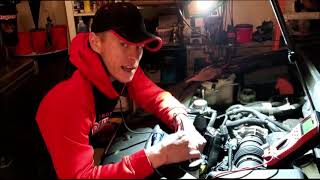
- If the noid light flashes correctly, check the fuel injector itself. Use a multimeter to measure the resistance across the injector's two pins. Compare the reading to the OEM specification (1.2 - 1.8 Ω for these direct injectors) or to a known good injector on the same engine. 🎬 Watch: How to test injector resistance and circuit design. An out-of-spec reading (including an open circuit) means the injector is bad.
- If the injector resistance is good, perform an injector swap. Move the cylinder 5 injector to another cylinder (e.g., cylinder 3). Clear the codes and run the engine. If the code changes to P0203, the injector is faulty. If P0205 returns, the problem is in the wiring or ECM.
- For this 3.6L engine, the injectors and harness are often removed as a single assembly. Be aware that the injector harness clips can be fragile.
- If wiring and the injector are confirmed good, the final step is to suspect a faulty injector driver in the ECM. This is rare and requires professional diagnosis.
Parts You'll Likely Need
- Fuel Injector
(OEM #12638530 (Also compatible with 12611545, 12632255, 12669384))— The injector itself can fail internally, causing an open or short in the circuit. This is a common fix if wiring is confirmed to be intact.
Trusted brands: ACDelco, Bosch, Standard Motor Products
OEM price range: $90-$140
Aftermarket price range: $50-$90 - Fuel Injector Connector Pigtail — If the wiring is damaged right at the connector, replacing the pigtail is the standard repair. This is often necessary due to chafing or corrosion.
Trusted brands: ACDelco, Dorman
OEM price range: $25-$40
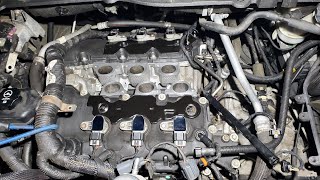
Aftermarket price range: $15-$25 - Fuel Injector Seal Kit — Because this is a direct injection engine, the fuel injectors have Teflon seals that are single-use and must be replaced if the injector is removed. 🎬 See this walkthrough for active fuel testing and injector removal. Special tools are required to install and size the new seal correctly.
Trusted brands: ACDelco, Fel-Pro
OEM price range: $10-$20 per injector
Aftermarket price range: $5-$15 per injector
Related Codes That Often Appear With This One
- P0305 — P0305 means 'Cylinder 5 Misfire Detected'. Since P0205 indicates a problem with the fuel injector circuit for cylinder 5, that cylinder isn't getting the proper amount of fuel, which directly causes a misfire.
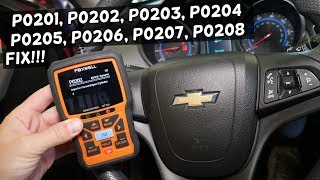
- P0201, P0202, P0203, P0204, P0206 — The TSB for this vehicle lists all injector codes together, suggesting a wiring harness issue could affect multiple injector circuits simultaneously 🎬 Watch: How to fix multiple injector codes on GM engines. if the chafe point is on a shared part of the harness.
- P216A, P0273, P0274 — These are related injector circuit codes for cylinder 5. P0273 indicates 'Circuit Low' and P0274 indicates 'Circuit High', while P216A is 'Injector High Control Circuit'. Seeing these alongside P0205 can further point to an electrical issue rather than a completely failed injector.
Technical Service Bulletins (TSBs) & Recalls
- PIP4924C: Addresses a Service Engine Soon light and misfire with various injector codes (including P0205) and directs technicians to inspect the fuel injector wiring harness for rub-through or internal opens.
Platform-Specific Known Issues
- TSB PIP4924C: This bulletin is a critical piece of information for this specific vehicle and code. It notes that the fuel injector wiring harness is prone to rubbing through against engine components, causing shorts or open circuits. Technicians are advised to carefully inspect the harness at the intake plenum, valve cover bolts, against the fuel line, and on the side of the head under the plenum.
Mechanic-Grade Diagnostic Values
- Fuel Injector Resistance (3.6L LLT/LFX) — expected: 1.2 - 1.8 Ohms (Ω). Failure: A reading of 0 Ω (short), OL (open), or significantly outside this narrow range indicates a failed injector coil.
- Injector Circuit Voltage (Initial Pulse) — expected: ~65 Volts DC. Failure: Absence of this high-voltage spike when testing with an oscilloscope indicates a problem with the ECM's boost capacitor or driver circuit.
- Injector Circuit Voltage (Hold Phase) — expected: ~12 Volts DC. Failure: After the initial 65V pulse, the voltage should drop to a 12V signal to hold the injector open. An incorrect voltage here points to an ECM or wiring issue.
- High-Pressure Fuel Rail Pressure (at idle) — expected: 350-600 PSI (2.4-4.1 MPa). Failure: While not a direct cause of P0205, pressure that is extremely low or high could indicate a failing high-pressure fuel pump (HPFP), which can sometimes be misdiagnosed as an injector issue.
Scan Tool Commands That Help
- GDS2 (GM Dealer Tool) or high-end bidirectional scanner: Injector Balance Test — This is a definitive functional test. The tool commands each injector to fire for a set duration while monitoring the pressure drop on the fuel rail. If cylinder 5 shows a significantly different pressure drop than the others, the injector is mechanically faulty (clogged or leaking), even if its resistance is correct. The expected pressure drop difference between injectors should be less than 1.5 PSI.
- GDS2 (GM Dealer Tool): Injector Control Circuit Status — In the live data list, this parameter will display the status of each injector circuit (e.g., 'OK', 'Open', 'Short to Ground'). If the status for cylinder 5 shows a fault, it confirms the ECM is detecting an electrical problem on that specific circuit, guiding diagnosis toward wiring or the injector itself.
Wiring & Ground Locations
- G107 — Center rear of the engine on the 3.6L V6.. This is a primary engine ground. A loose or corroded G107 can cause a host of intermittent electrical issues, including erratic behavior from sensors and injectors. While it would likely affect more than just one injector, it's a critical check for any electrical fault code.
- Injector Fuse (Odd Bank) — In the underhood fuse block, labeled 'INJ/COIL ODD' (Fuse 43, 15A in some diagrams).. This fuse provides power to the odd-numbered injectors (1, 3, 5). While a blown fuse would typically cause codes for all three cylinders (P0201, P0203, P0205), an intermittent short on one circuit could potentially cause the fuse to fail.
- Cylinder 5 Injector Connector Pins — The two-wire connector at the fuel injector for cylinder 5.. One pin is the High Voltage Supply circuit (often Pink wire), and the other is the High Voltage Control circuit (color varies by year/harness). Testing for voltage and the pulse signal must be done at these specific pins.
Real Owner Repair Stories
- ScannerDanner Forum (2012 GMC Acadia 3.6L (shared engine and wiring architecture)) — Engine runs for 30-45 minutes, then goes into open loop with a misfire. Codes P0300, P0202, P0204, and P0206 set simultaneously.
❌ Tried (didn't work) Initial diagnosis pointed towards a wiring harness issue, but the specific location was elusive.
✅ What actually fixed it The underhood fuse box itself was damaged. A bracket holding a wiring harness to the fuse box had broken, causing the harness to rub and short out multiple injector control wires internally within the fuse box assembly. Repairing the bracket and securing the harness resolved the issue. The technician noted that the fuse box may have been disassembled incorrectly during a previous timing chain service, leading to the failure.
OEM Part Supersession History
12638530→12669384— Standard part revision for improved reliability or manufacturing process change.
Heads up: The original part number 12638530 is primarily associated with the 2009-2011 LLT engine. While physically similar, always verify compatibility by VIN, as there can be minor differences in flow rates or connectors for the LFX engine.
Model Year Variations Within This Range
- 2009-2011: These models use the 3.6L LLT engine, which has an aluminum upper intake manifold and a Bosch ECM.
- 2012-2013: These models use the updated 3.6L LFX engine. Key differences include a lighter composite (plastic) intake manifold, cylinder heads with integrated exhaust manifolds (no separate header), and a Delphi ECM. While the P0205 diagnostic process is nearly identical, these component changes mean some parts (like intake gaskets or ECMs) are not interchangeable between LLT and LFX versions.
Helpful Videos
We Have This Part in Stock



The information in this article is provided for general reference and educational purposes only. Vehicle specifications, procedures, and part compatibility can vary by production date, trim level, and region. Always consult your vehicle's factory service manual and verify part numbers before purchasing or performing repairs. Safety-critical components such as airbags, seat belts, and braking systems should be installed by a qualified professional.
- Chevrolet MALIBU:
- 🧭 Diagnostic Flowchart
- 🎬 Helpful Videos
- 🛍️ Shop This Part
- What's Unique About the 2009-2013 Chevrolet MALIBU
- Symptoms You May Notice
- Most Likely Causes
- Rare But Worth Checking
- Diagnosis Steps
- Parts You'll Likely Need
- Related Codes That Often Appear With This One
- Technical Service Bulletins (TSBs) & Recalls
- Platform-Specific Known Issues
- Mechanic-Grade Diagnostic Values
- Scan Tool Commands That Help
- Wiring & Ground Locations
- Real Owner Repair Stories
- OEM Part Supersession History
- Model Year Variations Within This Range
- 🎟️ Get 5% Off