

P0206 on 1998-2005 Audi A4: Injector Circuit Malfunction Cylinder 6 Causes and Fixes
P0206 on a 1998-2005 Audi A4 indicates an electrical problem with the fuel injector in cylinder 6. The most common cause is a failed fuel injector, followed by wiring issues. Expect to pay $50-$100 for a new Bosch injector and consider replacing it yourself with moderate difficulty (3/5).
- P0206 is an electrical fault for the cylinder 6 injector, not a mechanical one.
- The most likely cause is a failed fuel injector, which can be confirmed by swapping it with another cylinder's injector and seeing if the fault code 'follows' the part.
- Always inspect the wiring and connector for damage before replacing parts, as brittle wires are common on older vehicles.
- Do not confuse this with a P0306 misfire code; while they appear together, P0206 points specifically to the injector circuit as the cause.
- Driving with a flashing Check Engine Light can cause expensive damage to your catalytic converter.
What's Unique About the 1998-2005 Audi A4
For the Audi A4 in this year range, which covers the B5 and B6 generations, the V6 engines are generally reliable, but age can lead to brittle wiring and connectors in the hot engine bay. The P0206 code is a straightforward electrical fault, and unlike some other codes, it's not typically caused by platform-specific software glitches or complex mechanical systems. The main challenge is physically accessing the injector, as some components may need to be removed. The cylinder 6 location is on the driver's side (Bank 2), closest to the firewall, which can make it the most difficult to reach.
Generation note: This guide covers two Audi A4 generations: the B5 (1998-2001 with the 2.8L V6 AHA/ATQ) and the B6 (2002-2005 with the 3.0L V6 AVK). The fundamental cause and diagnosis for P0206 are the same for both. However, part numbers for fuel injectors and access procedures may differ slightly between the 2.8L and 3.0L engines.
Symptoms You May Notice
- Check Engine Light is on, may be flashing
- Rough idle and engine shaking
- Noticeable loss of power and poor acceleration
- Engine misfires, which may be more obvious under load
- Reduced fuel economy
- In severe cases, the engine may stall
- Strong fuel smell from the exhaust
- Replacing the spark plug or ignition coil for cylinder 6. While these parts can cause a misfire code (P0306), they will not cause an injector circuit code (P0206). P0206 is specifically an electrical fault in the fuel injector circuit, whereas P0306 is a more general misfire detection. A P0206 will almost always be accompanied by a P0306, but the reverse is not true.
Most Likely Causes
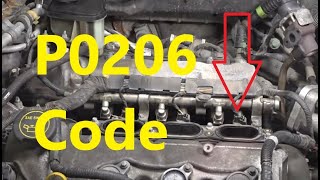
- Failed Cylinder 6 Fuel Injector 🔴 High Probability → Shop Fuel Injector After many years and heat cycles, the internal coil windings of the injector can fail, creating an open circuit. This is a common failure mode for older electronic components and is the most likely cause of P0206, with some estimates suggesting it accounts for 60% of cases. 🎬 Watch: A breakdown of P0206 causes and common fixes.
How to confirm: Swap the fuel injector from cylinder 6 with an adjacent one (e.g., cylinder 5). Clear the codes and drive the vehicle. If the code changes to P0205, the injector is confirmed as the faulty part. Alternatively, use a multimeter to check the resistance of the injector; it should be within the 12-16 ohm range. An open circuit (infinite resistance) or a short (<10 ohms) indicates a bad injector.
Typical fix: Replace the faulty fuel injector. It is often recommended to replace the full set of injectors on a high-mileage vehicle to ensure balanced fuel delivery and prevent future failures.
Est. part cost: $50-$100 - Wiring Harness or Connector Issue 🟡 Medium Probability The engine wiring harness, particularly the section for the rear-most cylinder, is exposed to significant heat and vibration. Over time, the plastic connector can become brittle and break, and wires can chafe or corrode, leading to an open or short circuit. The locking tab on the connector is notoriously fragile.
How to confirm: Visually inspect the wiring and connector for cylinder 6's injector for any signs of damage, melting, or corrosion. Wiggle the connector while the engine is idling to see if it affects the misfire. Use a 'noid light' plugged into the injector connector; it should flash when the engine is cranked, indicating the ECM is sending a signal. If the noid light does not flash, there is a problem in the wiring or the ECM.
Typical fix: Repair the damaged section of wire or replace the injector connector pigtail. The connector itself is a common replacement part.
Est. part cost: $10-$30
Rare But Worth Checking
- Faulty Powertrain Control Module (PCM/ECM): → Shop Engine Control Module (ECM) This is a rare cause, estimated at around 5% of cases. The internal driver circuit in the PCM that controls the injector can fail. All other possibilities, such as the injector and wiring, should be exhaustively tested before considering PCM replacement, as it is expensive and requires programming.
Diagnosis Steps
- Use an OBD-II scanner to confirm the P0206 code and check for any other related codes like P0306.
- Locate cylinder 6. On Audi V6 engines, it is on the driver's side (Bank 2), closest to the firewall. 🎬 Watch: How to access the difficult cylinder 6 location.
- Visually inspect the wiring harness and electrical connector at the cylinder 6 fuel injector. Look for any obvious damage, corrosion, or loose connections. Gently wiggle the connector with the engine running to see if the idle changes.
- Disconnect the injector and test the injector's internal resistance using a multimeter. It should measure between 12-16 Ohms. Compare the reading to an adjacent injector. A reading of infinite resistance (OL) or very low resistance (<10 Ohms) means the injector is bad and needs replacement.
- To definitively test the injector vs. the circuit, perform an 'injector swap'. Swap the cylinder 6 injector with the cylinder 5 injector. Clear the codes, run the engine, and re-scan. If the code moves to P0205 ('Injector Circuit / Open - Cylinder 5'), the injector is faulty. If the code remains P0206, the problem is in the wiring or ECM.
- If the injector swap points to a wiring issue, use a 'noid light' on the cylinder 6 connector. Crank the engine. A rhythmic flashing light indicates the wiring and ECM are sending a signal. No light or a steady light indicates a wiring or ECM problem.
- If the noid light test fails, check for 12V power on one pin of the connector with the key on. Then, check the continuity of the ground pulse wire from the other pin on the connector back to the corresponding pin on the ECM. Repair any breaks found in the harness.
- If the wiring and injector are confirmed to be good, the fault may lie with the ECM, but this is extremely rare and should be the last resort.
Parts You'll Likely Need
- Fuel Injector
(OEM #2.8L V6 (AHA/ATQ): 078133551BA; 3.0L V6 (AVK): 06C133551)— This is the most common failure point for a P0206 code, where the internal coil of the injector fails.
Trusted brands: Bosch (OEM), Hitachi
OEM price range: $120-$180
Aftermarket price range: $50-$100 - Fuel Injector Connector Pigtail
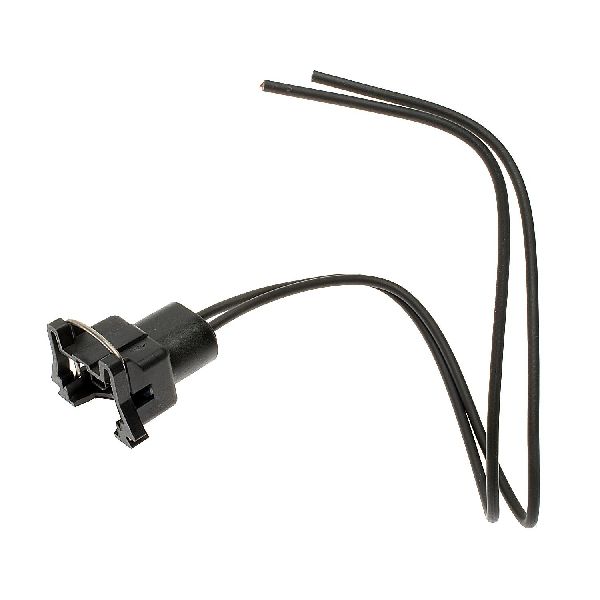
(OEM #06A973722 (often a 2-pin EV1 style connector))— If the wiring connector is brittle, cracked, or corroded, it must be replaced to ensure a solid electrical connection to the new injector. The plastic locking tab frequently breaks on these older models.
Trusted brands: Standard Motor Products, Dorman, Holstein
OEM price range: $25-$40
Aftermarket price range: $10-$20
Related Codes That Often Appear With This One
- P0306 — P0306 means 'Cylinder 6 Misfire Detected'. Since a P0206 fault prevents the injector from firing, the cylinder will inevitably misfire, logging both codes. The P0206 code is the root cause.
- P0300 — This indicates a 'Random/Multiple Cylinder Misfire'. If the injector issue is intermittent, or if other fuel system problems exist, the ECM may log this code in addition to the specific cylinder code.
- P0431 — P0431 means 'Warm Up Catalyst Efficiency Below Threshold (Bank 2)'. A persistent misfire from P0206 can dump unburnt fuel into the exhaust, damaging the catalytic converter on Bank 2 (the driver's side), which can trigger this efficiency code.
Platform-Specific Known Issues
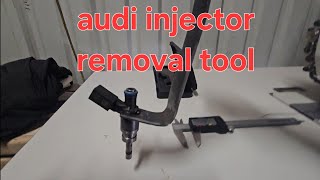
- Cylinder 6 Access Difficulty: Cylinder 6 is located on the driver's side (Bank 2) at the very rear of the engine bay, close to the firewall. Access can be tight, especially on the 3.0L V6, potentially requiring removal of some intake components for better access to the fuel rail and injector. 🎬 See this walkthrough for removing Audi fuel injectors.
- Real-World Repair Story: A user on Reddit with a 2002 Audi A4 3.0L V6 experienced severe misfiring and shaking, pulling codes P0206, P0306, and P0431. The community advised focusing on the P0206 first, suggesting checking the injector wiring and connector on cylinder 6 as the primary step before suspecting other issues. This confirms the diagnostic priority of addressing the specific circuit fault first. URL: https://www.reddit.com/r/Audi/comments/1d1x3o3/injector_circuit_open/
Mechanic-Grade Diagnostic Values
- Fuel Injector Internal Resistance — expected: 12.0 to 20.0 Ohms at ~20°C (68°F). A reading of 16 Ohms is common.. Failure: A reading of infinite resistance (Open Loop) or below 10 Ohms indicates a failed injector.
- Injector Harness Continuity to ECM — expected: Less than 1.5 Ohms.. Failure: A reading higher than 1.5 Ohms indicates excessive resistance in the wire, and infinite resistance (Open Loop) indicates a break in the wire.
- Injector Pulse Signal (with Noid Light) — expected: A rhythmic flashing from the noid light when cranking the engine.. Failure: No light, or a steady, non-flashing light, indicates a problem with the wiring or the ECM driver circuit.
Scan Tool Commands That Help
- VCDS (VAG-COM): Engine -> Output Tests -> Select Fuel Injector Cylinder 6 (N84) — Use this with the engine OFF to command the ECM to activate the injector. You should hear an audible 'click' from the injector. This confirms the ECM driver, wiring, and injector coil are all capable of functioning. Failure to click, when a noid light also fails, points strongly to a wiring or ECM issue. Note: On some ECUs, you may need to press the accelerator pedal to activate the test.
Wiring & Ground Locations
- N84 — Fuel injector for cylinder 6, located on the driver's side (Bank 2) of the engine, closest to the firewall.. This is the component the P0206 code refers to. All electrical testing for the circuit begins at its connector.
- D95 — A wire connection splice for the injectors located within the engine compartment wiring harness for the 3.0L AVK engine.. Factory splices within a harness can corrode over time, creating high resistance or an open circuit. If the wiring looks good at the injector and the ECM, this hidden splice point could be the source of the fault.
- Ground Connection (Engine Harness) — There are multiple key ground points. One is on the left (driver's) side in the engine compartment; another is in the plenum chamber near the ECU box.. A poor engine ground can cause a variety of electrical issues and floating voltages, potentially causing the ECM to misinterpret the injector circuit's status. Ensuring clean, tight grounds is a critical step.
Real Owner Repair Stories
- YouTube user ChrisFixit (pseudonym) (Vehicle unspecified, but demonstrating a common P020X fault pattern) — P0206 code, misfire.
❌ Tried (didn't work) Considered swapping injectors between cylinders., Considered replacing the ignition coil.
✅ What actually fixed it The problem was a poor ground connection for the ignition coils. The user removed the coils, cleaned the grounding points on the engine where the coils bolt down, reinstalled them securely, and the P0206 code was resolved without replacing any parts.
OEM Part Supersession History
078133551L→078133551BA— Standard part revision by the manufacturer.
Heads up: The parts are cross-compatible. 078133551BA is the correct current replacement for the 2.8L V6.
Model Year Variations Within This Range
- 1998-2005: The injector wiring harness that runs across the engine is a known failure point due to heat and age. The insulation becomes brittle, cracks, and flakes off, leading to shorts between wires. While the injector itself may be fine, the harness connecting it may need to be replaced. Aftermarket repair kits and replacement harnesses are available for this specific issue.
Diagnostic Flowchart
Other Known Issues on This Vehicle
Issues unrelated to this code that are worth knowing about as an owner of this generation:
- Timing Belt & Water Pump Failure 🔴 High — This is a critical maintenance item. The recommended replacement interval is around 75,000 miles. Failure is catastrophic, leading to bent valves and severe engine damage.
- Valve Cover Gasket & Cam Tensioner Seal Oil Leaks 🟠 Medium → Shop Engine Valve Cover — Very common on both 2.8L and 3.0L V6 engines. Leaks often drip onto the hot exhaust manifold, creating a burning oil smell.
- Ignition Coil Pack Failure 🟠 Medium — A frequent issue on both engines, leading to misfires (e.g., P030x codes). There was a recall/service campaign for some B6 models. Easy to replace. (Ref: Recall or Service Campaign for some B6 models)
- Plastic Coolant Flange & PCV System Leaks 🟠 Medium — The plastic components in the cooling and crankcase ventilation systems become brittle with age and heat, leading to coolant leaks (rear flange) and vacuum leaks (PCV hoses).
- Clogged Oil Pickup Tube Screen (3.0L V6) 🔴 High — Some 3.0L engines can suffer from oil sludge, leading to a clogged oil pickup screen and low oil pressure, potentially causing major engine damage if ignored.
- Multi-Link Front Suspension Control Arm Wear 🟠 Medium — The complex multi-link front suspension uses numerous bushings that wear out, typically after 60,000-100,000 miles, causing clunking noises and imprecise handling.
Used vs. New Parts: Buying Guide for This Vehicle
When a used part is the smart pick: A used injector connector pigtail or a section of the engine wiring harness can be a cost-effective fix if the donor part is from a lower-mileage vehicle and shows no signs of brittleness, cracking, or corrosion. Visually inspect the flexibility of the wires and the integrity of the plastic connectors.
Donor-vehicle mileage cap: roughly under 80000 miles for the part to have meaningful remaining life.
What to inspect on the donor part:
- For wiring, bend the harness slightly to ensure the outer insulation doesn't crack.
- Check connector locking tabs to ensure they are present and not broken.
- Look for any signs of green or white corrosion on the metal pins inside the connectors.
- Avoid parts that are covered in oil, as it can degrade the wiring insulation over time.
OEM-only on this vehicle (don't cheap out):
- Powertrain Control Module (PCM/ECM) - Must be replaced with a genuine or specialist-remanufactured unit and requires VIN-specific programming to function.
Aftermarket brands forum-validated for this vehicle:
- Bosch (This is the Original Equipment Manufacturer for the fuel injectors)
Brands owners have reported issues with on this vehicle:
- Unnamed or 'white-box' fuel injectors from online marketplaces. These often have inconsistent flow rates and high failure rates, which can cause persistent performance issues even after resolving the P0206 code.
Real Owner Stories
Aggregated from forums and TSBs cited above. Mileages and costs reflect what owners reported in those sources.
2002 Audi A4 3.0L V6
Symptoms: The owner experienced severe misfiring and shaking, and the vehicle stored trouble codes P0206, P0306, and P0431.
What fixed it: The owner was advised by the community to focus on diagnosing the P0206 code first, specifically by checking the injector wiring and connector on cylinder 6 before investigating other potential issues.
Source hint: Reddit thread for a B6 3.0L cited in vehicle_specific_issues
Audi A4 2.8L 30v
Symptoms: The owner was trying to diagnose a misfire and had already replaced ignition components without success.
What fixed it: After the new ignition parts failed to solve the misfire, the fuel injector was identified as the next logical component to test and likely replace.
Source hint: AudiForums.com - A user with a 2.8L 30v engine details their misfire diagnosis
Audi A4 30v V6
Symptoms: Owners reported experiencing P0206 along with related engine misfires.
What fixed it: Forum members confirmed that a bad fuel injector is the most common cause and that performing an 'injector swap' with an adjacent cylinder is the key diagnostic step to confirm the failure.
Source hint: AudiWorld Forums - Multiple threads discuss P0206 and related misfires on the 30v V6 engines
Related OBD-II Codes
Frequently Asked Questions
Where is cylinder 6 located on my 1998-2005 Audi A4 V6?
What is the most likely cause of a P0206 code on this specific Audi A4?
I have both P0206 and P0306 codes. Which problem should I address first?
How can I test the fuel injector on my A4 without expensive tools?
What should the resistance of a good fuel injector be for my 2.8L or 3.0L V6?
If the injector is good, what else could cause P0206 on this car?
I'm replacing the bad injector on my high-mileage A4. Should I replace all six?
Helpful Videos
We Have This Part in Stock


The information in this article is provided for general reference and educational purposes only. Vehicle specifications, procedures, and part compatibility can vary by production date, trim level, and region. Always consult your vehicle's factory service manual and verify part numbers before purchasing or performing repairs. Safety-critical components such as airbags, seat belts, and braking systems should be installed by a qualified professional.
- Audi A4:
- 🧭 Diagnostic Flowchart
- 🎬 Helpful Videos
- 🛍️ Shop This Part
- What's Unique About the 1998-2005 Audi A4
- Symptoms You May Notice
- Most Likely Causes
- Rare But Worth Checking
- Diagnosis Steps
- Parts You'll Likely Need
- Related Codes That Often Appear With This One
- Platform-Specific Known Issues
- Mechanic-Grade Diagnostic Values
- Scan Tool Commands That Help
- Wiring & Ground Locations
- Real Owner Repair Stories
- OEM Part Supersession History
- Model Year Variations Within This Range
- Other Known Issues on This Vehicle
- Used vs. New Parts: Buying Guide for This Vehicle
- Real Owner Stories
- 2002 Audi A4 3.0L V6
- Audi A4 2.8L 30v
- Audi A4 30v V6
- Related OBD-II Codes
- Frequently Asked Questions
- 🎟️ Get 5% Off