

P0206 on 2015-2020 Ford F-150: Injector Circuit Open Fixes for Cylinder 6
On a 2015-2020 F-150, P0206 almost always means the cylinder 6 fuel injector has failed internally. A wiring issue is the next most likely cause. Expect to pay $70-$150 for a new Motorcraft injector, and it's a DIY-friendly fix for those with basic tools.
- P0206 is an electrical code for the cylinder 6 injector circuit; do not waste money on spark plugs or coils to fix it.
- The most likely cause is a failed fuel injector with an internal open circuit. Test its resistance with a multimeter.
- The second most likely cause is a damaged wire or connector right at the injector.
- Swapping the suspect injector with one from an adjacent cylinder is a definitive, no-cost diagnostic test.
What's Unique About the 2015-2020 Ford F-150
For the 2015-2020 F-150 (13th generation), the P0206 code is a straightforward electrical fault, most commonly a failed injector. Unlike some other platforms with known wiring harness chafing issues covered by TSBs for this code, the 2015-2020 models are more likely to suffer a simple injector failure due to heat and age. The diagnosis is typically direct, focusing on testing the injector's resistance and the circuit's integrity. Be aware that some engines in this generation, like the later 5.0L V8 (2018+) and 3.5L EcoBoost, use a dual-injection system (both port and direct injection). P0206 almost always refers to the more accessible port fuel injector, as the high-pressure direct injectors are controlled by a separate driver module and typically set different codes.
Symptoms You May Notice
- Check Engine Light is on (may be flashing)
- Engine runs rough, shakes, or vibrates, especially at idle
- Noticeable loss of power and sluggish acceleration
- Engine misfires, which can feel like a stumble or hesitation
- Reduced fuel economy
- Engine may be hard to start
- Replacing the spark plug or ignition coil for cylinder 6. While these parts can cause a misfire (P0306), they will not cause an injector circuit code like P0206. P0206 is strictly an electrical fault.
Most Likely Causes
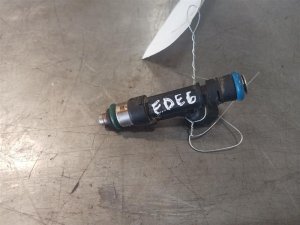
- Faulty Cylinder 6 Fuel Injector 🔴 High Probability → Shop Fuel Injector Fuel injectors are subject to intense heat and pressure cycles. The internal coil winding can fail over time, creating an open circuit, which is the most common reason for this code on F-150s.
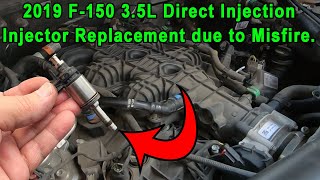
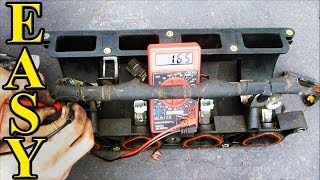
How to confirm: Disconnect the injector and measure the resistance across its two terminals with a multimeter. A healthy port injector should read between 11-18 ohms. If it reads infinite resistance (OL), the injector is open internally and must be replaced.
Typical fix: Replace the cylinder 6 fuel injector.
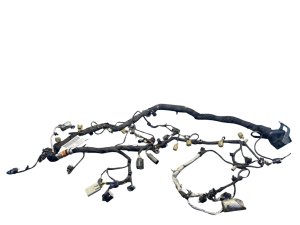
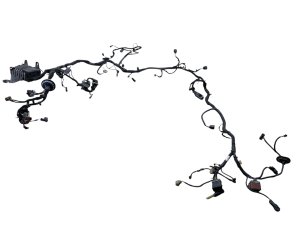
Est. part cost: $70-$150 - Wiring Harness or Connector Issue 🟡 Medium Probability Engine vibrations and heat can cause wires to break, chafe against other components, or lead to corrosion in the connector pins. The plastic connector itself can become brittle and fail.
How to confirm: Visually inspect the wiring harness and connector for cylinder 6 for any signs of damage, melting, or corrosion. Use a 'noid light' plugged into the injector connector; it should flash when the engine is cranked, indicating the PCM is sending a signal. If the noid light doesn't flash, check for 12V power on one wire and then check the continuity of the ground (signal) wire back to the PCM.
Typical fix: Repair the damaged section of wire or replace the injector connector pigtail.
Est. part cost: $15-$40
Rare But Worth Checking
- Faulty Powertrain Control Module (PCM): → Shop Engine Control Module (ECM) This is the least likely cause. The internal driver circuit for the injector can fail, but you should exhaust all other possibilities before condemning the PCM. Swapping the injector with another cylinder is a good way to rule out the PCM; if the code moves with the injector (e.g., to P0205), the PCM is good.
- Rodent Damage: Rodents are known to chew on the soy-based wiring insulation used in many modern vehicles. A visual inspection of the engine bay may reveal nests or chewed wires leading to the fuel injectors.
Diagnosis Steps
- Confirm the presence of P0206 with an OBD-II scanner. Note any other codes, such as P0306.
- Locate cylinder 6. On V8 engines like the 5.0L, it's the second cylinder from the front on the driver's side (Bank 2). On V6 engines like the 3.5L and 2.7L EcoBoost, it's the rearmost cylinder on the passenger's side (Bank 2).
- Visually inspect the wiring and connector for the cylinder 6 fuel injector. Look for any obvious signs of damage, melting, corrosion, or rodent chew marks.
- Disconnect the injector connector. Test for a signal using a 'noid light'. Plug the light into the connector and crank the engine. The light should flash steadily. If it does, the wiring and PCM are likely okay, and the injector is the problem.
- If the noid light does not flash, use a multimeter to check for ~12 volts on one of the pins in the connector with the key in the 'on' position. If power is missing, you have a wiring issue on the power side.
- If the noid light test passes, test the injector itself. Set a multimeter to measure resistance (Ohms). A good port injector will have a resistance between 11-18 Ohms. An 'OL' or infinite reading means the injector's internal coil is broken (open) and it needs to be replaced.
- As a final confirmation, you can swap the cylinder 6 injector with an adjacent injector (e.g., cylinder 5). Clear the codes and run the engine. If the code changes to P0205 (Injector Circuit/Open - Cylinder 5), you have definitively proven that the injector 🎬 Watch: 5.0L Coyote spark plug and fuel injector swap guide. is the faulty part.
Parts You'll Likely Need
- Cylinder 6 Fuel Injector
(OEM #Varies by engine. For 2018-2020 5.0L V8 (Direct Injector): JR3Z-9F593-A / CM-5265. For 2017-2020 3.5L EcoBoost (Upper/Port Injector): Motorcraft CM-5253. For 2015-2016 3.5L EcoBoost: BL3Z-9F593-B / CM-5202. Always verify with VIN.)— This is the most common failure point for a P0206 code. The internal coil winding fails, creating an open circuit.
Trusted brands: Motorcraft, Bosch
OEM price range: $100-$150
Aftermarket price range: $70-$120 - Fuel Injector Connector Pigtail
(OEM #Motorcraft WPT-1051 (Service P/N: 5U2Z-14S411-ZB).)— The connector can become brittle from heat cycles and break, or the wiring right at the connector can fail, causing an open circuit. This pigtail allows for a clean repair.
Trusted brands: Motorcraft, Dorman
OEM price range: $25-$40
Aftermarket price range: $10-$20
Related Codes That Often Appear With This One
- P0306 — This code means 'Cylinder 6 Misfire Detected'. It is a direct and immediate result of P0206, as the electrical fault prevents fuel from being delivered, which causes the cylinder to misfire.
- P0316 — This code means 'Misfire Detected on Startup (First 1000 Revolutions)'. It often appears with a hard fault like P0206 because the misfire is present from the moment the engine starts.
Mechanic-Grade Diagnostic Values
- Port Fuel Injector Coil Resistance — expected: 11-18 Ohms. Failure: A reading of infinite resistance (OL) indicates an open circuit. A reading near 0 Ohms indicates a shorted injector.
- Injector Power Wire Voltage (Key On, Engine Off) — expected: ~12V (Battery Voltage). Failure: Low or no voltage indicates a problem with the power supply wire from the fuse/relay to the injector.
- Injector Control Wire Resistance to PCM (Internal Test Circuit) — expected: ~10,000 Ohms (10k Ohms). Failure: A significantly different reading when testing the control wire (with injector disconnected) back to the PCM suggests a harness issue or a fault in the PCM's internal monitoring circuit.
Hidden / Shadow Codes Worth Checking
- Mode $06, TID $53: This is not a DTC, but a test result within the OBD-II system's Mode $06 data. Test ID (TID) $53 tracks the misfire rate for each individual cylinder. While P0306 tells you a misfire happened, TID $53 can show you the raw misfire counts for cylinder 6 (CID $06), which can help identify an intermittent issue before it's bad enough to set a hard code. (see via A professional scan tool or advanced DIY tool like FORScan that can display Mode $06 data.)
Scan Tool Commands That Help
- Ford IDS / FORScan: Power Balance Test — This bidirectional test allows the technician to command the PCM to shut off each fuel injector one by one while the engine is running. When the cylinder 6 injector is commanded off, there should be no change in RPM, confirming that it wasn't contributing to begin with. This is a powerful way to confirm a dead cylinder without getting your hands dirty.
- Ford IDS / FORScan: Injector Buzz Test — This test commands the PCM to cycle all the injectors with the key on, engine off. The technician can listen with a stethoscope to each injector. A healthy injector will produce an audible, sharp clicking sound. A silent cylinder 6 injector during this test points to an open circuit (bad injector or wiring) or a faulty PCM driver.
Wiring & Ground Locations
- PCM Grounds — On the firewall, typically near the center or on the passenger side where the main harness passes through. There may be one or two ground studs.. The PCM relies on a clean, solid ground to accurately control and monitor circuits like the fuel injectors. A corroded or loose PCM ground can cause erratic behavior and false codes for multiple components, including injectors.
- Injector #6 Control Wire — This wire runs from a specific pin on the PCM connector directly to the fuel injector connector for cylinder 6. For example, on a 1999 4.6L V8, it is a White/Yellow wire at Pin 99 of the PCM. Colors and pin numbers vary by year and engine, requiring a specific wiring diagram.. This is the signal wire that the PCM pulses to ground to fire the injector. An open or short on this specific wire is a direct cause of P0206. Continuity must be checked between the PCM connector and the injector connector to rule out a wiring break.
- Injector Power Supply Wire — This wire provides 12V+ to one side of all fuel injectors on a bank. It originates from the PCM Power Relay/Central Junction Box. The color is consistent across the bank (e.g., often a Red wire).. While a failure here would typically cause codes for all injectors on the bank (e.g., P0204, P0205, P0206), a break in the wire close to the cylinder 6 injector could uniquely affect only that cylinder.
Real Owner Repair Stories
- YouTube user video (2014 Ford F-150 w/ 3.7L V6) — Engine was running rough, shaking, and missing. Codes P0306 and P0206 were present. The user also found fuel residue inside the electrical connector for the injector.
❌ Tried (didn't work) Replaced the ignition coil, Replaced the spark plug
✅ What actually fixed it Testing the fuel injector with a multimeter revealed it had an open circuit (zero continuity). Replacing the faulty fuel injector resolved the issue.
OEM Part Supersession History
HL3Z-9F593-A→Motorcraft CM-5253— Standard part number update and branding change from Ford to Motorcraft service part.
Heads up: This applies to the 3.5L EcoBoost upper/port injector.JR3E-9G929-BA→JR3Z-9F593-A (Motorcraft CM-5265)— Part number revision for the direct injector used on the 2018+ 5.0L V8.
Heads up: This is the LOWER direct injector. It is not interchangeable with the upper port injector. P0206 typically refers to the port injector, but on a 2018+ 5.0L, a wiring issue could theoretically affect either.
Model Year Variations Within This Range
- 2018-2020: F-150s equipped with the Gen 3 5.0L V8 and the second-generation 3.5L EcoBoost feature a dual-injection system (port and direct injection). P0206 almost always refers to the port injector circuit, which is easier to access and test. The high-pressure direct injectors use different part numbers (e.g., JR3Z-9F593-A for the 5.0L) and are controlled by a separate driver module, which would typically set different diagnostic codes.
Diagnostic Flowchart
Other Known Issues on This Vehicle
Issues unrelated to this code that are worth knowing about as an owner of this generation:
- Excessive Oil Consumption on 5.0L V8 🟠 Medium — Common on 2018-2020 models. Ford addressed this with TSB 19-2365, which involves a PCM reprogram to reduce engine vacuum on deceleration and, on earlier builds, a new dipstick. (Ref: TSB 19-2365)
- Harsh or Delayed Shifting on 10R80 10-Speed Transmission 🔴 High — Widespread on 2017-2020 models. Can range from rough shifts to delayed engagement. Multiple TSBs have been issued over the years (e.g., TSB 23-2123, 24-2046) involving software updates and sometimes valve body or CDF drum replacement. (Ref: TSB 23-2123, TSB 24-2046)
- Frozen Door Latches in Cold Weather 🟠 Medium — Very common on 2015-2018 models. Water can enter the door and freeze the latch mechanism, preventing the door from opening or latching shut. Ford issued Customer Satisfaction Program 18N03 to address this. (Ref: Customer Satisfaction Program 18N03)
- Warped Dashboard 🟡 Low — Common on XL and XLT trims from 2015-2020, where the dash deforms and lifts near the windshield defrost vents. Ford issued TSB 19-2041 to guide replacement, though owners report mixed results with replacement parts also warping. (Ref: TSB 19-2041)
Used vs. New Parts: Buying Guide for This Vehicle
When a used part is the smart pick: A used fuel injector from a low-mileage, reputable junkyard can be a cost-effective option, especially if you are on a tight budget. It is a gamble, as you risk getting a part that is also near failure or has a different flow rate.
Donor-vehicle mileage cap: roughly under 60000 miles for the part to have meaningful remaining life.
What to inspect on the donor part:
- Check for a clean, undamaged electrical connector.
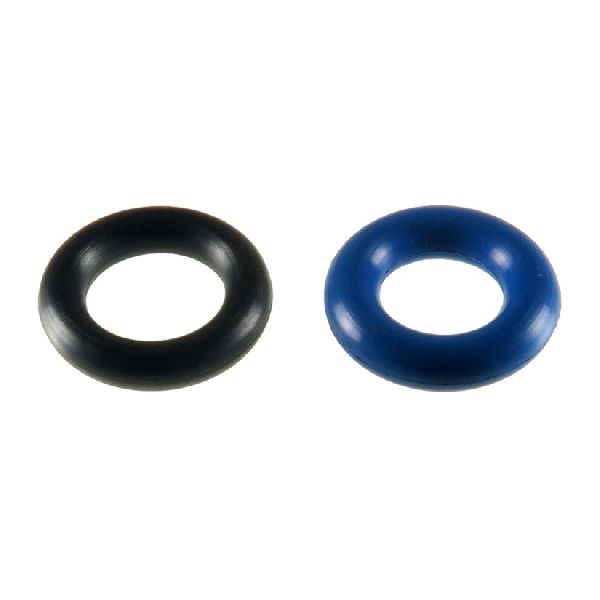
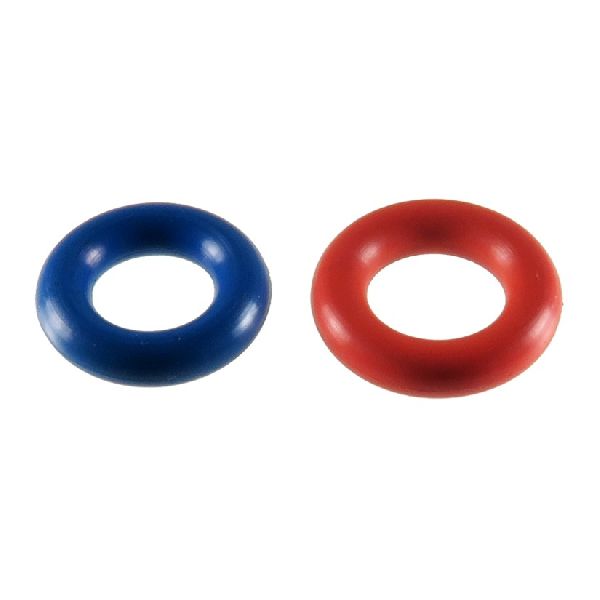
- Ensure the O-rings are present and not cracked (though you should always replace them anyway).
- Avoid injectors that show heavy corrosion or signs of fuel leakage around the body.
- If possible, test the resistance with a multimeter before purchase; it should be within the 11-18 ohm range.
OEM-only on this vehicle (don't cheap out):
- While not strictly required, using an OEM Motorcraft injector is highly recommended for guaranteed fitment, flow rate, and longevity.
Aftermarket brands forum-validated for this vehicle:
- Bosch (often the OEM supplier)
- Standard Motor Products (SMP)
Brands owners have reported issues with on this vehicle:
- Unnamed, no-brand injectors from online marketplaces are a significant risk. They often have inconsistent flow rates which can cause subtle performance issues, poor fuel economy, or even lean conditions in one cylinder.
Real Owner Stories
Aggregated from forums and TSBs cited above. Mileages and costs reflect what owners reported in those sources.
2019 Ford F-150 XLT 2.7L — 74000 miles
Symptoms: Engine sounded horrible and was running really rough immediately after starting, with the Check Engine Light on.
What fixed it: A squirrel had chewed through the wiring harness for the bank 2 fuel injectors. The fix was to replace the damaged harness.
Cost: $1040
Source hint: f150forum.com - '2019 XLT Rough Idle, CEL and 3 bad injectors - Ford F150 Forum'
2017 Ford F-150 3.5L EcoBoost — 155000 miles
Symptoms: A persistent Check Engine Light with codes P0206 and P0306, but the truck drove perfectly with no felt misfire.
What fixed it: The owner had not yet found a fix. Replacing the coil pack and all spark plugs did not resolve the issue, and the next step was to investigate the fuel injector.
Source hint: reddit.com/r/f150 - '3.5L EcoBoost CEL - 0206 and 0306 : r/f150 - Reddit'
2020 Ford F-150 5.0L — 14700 miles
Symptoms: The truck experienced a violent shake and the Check Engine Light came on with a P0206 code.
What fixed it: The issue was determined to be a bad fuel injector.
Source hint: f150forum.com - Thread: 'Service Engine Soon Warning- Possible Fuel Injector Problem'
Related OBD-II Codes
Frequently Asked Questions
Where is cylinder 6 on my 2015-2020 F-150?
What resistance should a good fuel injector have on my F-150?
My truck is showing both P0206 and P0306. Is this common?
Can I swap the cylinder 6 injector with another one to be sure it's the problem?
What is a 'noid light' and do I need one to diagnose P0206?
My 2020 F-150 has low miles. Can the fuel injector fail this early?
Helpful Videos

Used OEM Parts in Stock
New Aftermarket Parts Available



The information in this article is provided for general reference and educational purposes only. Vehicle specifications, procedures, and part compatibility can vary by production date, trim level, and region. Always consult your vehicle's factory service manual and verify part numbers before purchasing or performing repairs. Safety-critical components such as airbags, seat belts, and braking systems should be installed by a qualified professional.
- Ford F-150:
- 🧭 Diagnostic Flowchart
- 🎬 Helpful Videos
- 🛍️ Shop This Part
- What's Unique About the 2015-2020 Ford F-150
- Symptoms You May Notice
- Most Likely Causes
- Rare But Worth Checking
- Diagnosis Steps
- Parts You'll Likely Need
- Related Codes That Often Appear With This One
- Mechanic-Grade Diagnostic Values
- Hidden / Shadow Codes Worth Checking
- Scan Tool Commands That Help
- Wiring & Ground Locations
- Real Owner Repair Stories
- OEM Part Supersession History
- Model Year Variations Within This Range
- Other Known Issues on This Vehicle
- Used vs. New Parts: Buying Guide for This Vehicle
- Real Owner Stories
- 2019 Ford F-150 XLT 2.7L — 74000 miles
- 2017 Ford F-150 3.5L EcoBoost — 155000 miles
- 2020 Ford F-150 5.0L — 14700 miles
- Related OBD-II Codes
- Frequently Asked Questions
- 🎟️ Get 5% Off