

P0206 on 2011-2017 Ford Mustang 3.7L: Injector Circuit Open Fixes for Cylinder 6
On a 2011-2017 Mustang with the 3.7L V6, code P0206 almost always points to a failed fuel injector for cylinder #6. Cylinder #6 is on the driver's side, closest to the firewall. A wiring problem is the second most likely cause. Expect to pay around $50-$90 for a quality OEM injector and plan for 1-2 hours of labor.
- P0206 is an electrical code for the cylinder 6 fuel injector circuit; do not start by replacing spark plugs or ignition coils.
- The most likely cause is a failed fuel injector. You can confirm this by testing its resistance with a multimeter; it should be around 11-18 ohms.
- Always inspect the wiring harness leading to the injector for damage, especially from heat or rodents, before replacing parts.
- If the Check Engine Light is flashing, pull over immediately to prevent expensive damage to your catalytic converter.
- Cylinder 6 is located on the passenger side of the engine, closest to the firewall.
What's Unique About the 2011-2017 Ford Mustang
The 3.7L Cyclone V6 is a reliable engine, but like many V6 platforms, access to certain components can be tight. Cylinder #6 is on the driver's side, closest to the firewall, making it the most difficult injector to access. Owners often report this code appearing alongside a P0306 (Cylinder 6 Misfire) code, which is a direct result of the injector circuit failing. While injector failure is the most common culprit, it's worth noting that rodents chewing on the soy-based wiring insulation used in modern Fords can also cause this specific electrical fault.
Generation note: This guide covers the 2011-2017 Ford Mustang, which includes two generations: the S197 (2011-2014) and the S550 (2015-2017). Both generations used the 3.7L Cyclone V6, and the causes, diagnosis, and fixes for P0206 are consistent across this entire year range. No significant engine changes were made to the V6 between these generations.
Symptoms You May Notice
- Check Engine Light is on (may be flashing)
- Rough, shaking idle
- Noticeable loss of engine power and poor acceleration
- Engine hesitation or stumbling
- Reduced fuel economy
- Strong smell of unburnt fuel from the exhaust
- Replacing the spark plug or ignition coil. While these parts can cause a misfire code (P0306), they will not cause an injector circuit code like P0206. The P0206 code is specifically for an electrical fault in the injector circuit. A user on Reddit with a 2014 V6 confirmed that changing plugs and swapping coils did not fix their P0206 and P0306 codes.
Most Likely Causes
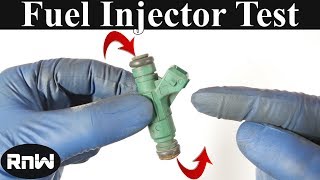
- Failed Cylinder 6 Fuel Injector 🔴 High Probability → Shop Fuel Injector The internal coil windings of the injector can fail over time, creating an open circuit. This is the most common failure mode for this code on the 3.7L Cyclone engine family, sometimes occurring intermittently when the engine is cold. 🎬 Watch: Diagnostic test of a 3.7L V6 fuel injector
How to confirm: Disconnect the injector and measure the resistance across its two terminals with a multimeter. A good injector will have a specific resistance, typically between 11 and 18 ohms. An open circuit (infinite resistance or 'O.L.') or a reading far out of spec confirms the injector is bad. You can also swap the cylinder 6 injector with an adjacent one (e.g., cylinder 5) and see if the code follows to the new cylinder (e.g., P0205).
Typical fix: Replace the faulty fuel injector. It is often recommended to replace all six injectors as a set, especially on higher mileage vehicles, as the others may be nearing the end of their service life.
Est. part cost: $50-$100 - Wiring Harness or Connector Issue 🟡 Medium Probability The engine wiring harness can be susceptible to damage from heat, vibration, or rodents chewing on the wires. The plastic connector at the injector can also become brittle and crack, leading to a poor connection.
How to confirm: Visually inspect the wiring leading to the cylinder 6 injector for any signs of chafing, melting, or breaks. Unplug the connector and check for corrosion or damage on the pins. Use a 'noid light' on the connector; it should flash as the engine is cranked, confirming the PCM is sending a signal. If the noid light does not flash, check for 12V power on one pin and check the continuity of the other wire back to the PCM.
Typical fix: Repair the damaged section of wire or replace the injector connector pigtail.
Est. part cost: $10-$35
Rare But Worth Checking
- Faulty Powertrain Control Module (PCM): → Shop Engine Control Module (ECM) This is the least likely cause. The internal driver circuit for the injector can fail, but this is rare. All other possibilities, especially the injector and wiring, should be exhaustively ruled out before considering PCM replacement.
Diagnosis Steps
- Read the codes with an OBD-II scanner to confirm P0206 and any other related codes like P0306.
- Locate cylinder #6. On the 3.7L V6, it is the rearmost cylinder on the DRIVER'S side (Bank 2), near the firewall.
- Visually inspect the wiring harness and connector for the cylinder 6 fuel injector. Look for any obvious signs of damage, melting, or rodent activity.
- Disconnect the injector connector. Use a 'noid light' to test the circuit. Plug the noid light into the connector and crank the engine. The light should flash steadily. If it flashes, the wiring and PCM driver are likely good, and the injector itself is the problem. If it does not flash or stays on constantly, there is a problem in the wiring or PCM.
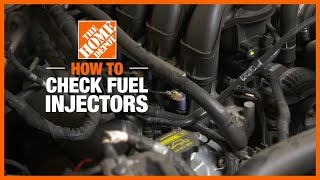
- If the noid light test passes, test the injector itself. Set a multimeter to measure resistance (Ohms). Touch the probes to the two pins on the fuel injector. 🎬 Watch: How to test fuel injectors using a screwdriver and multimeter A good injector should read between 11 and 18 ohms. If the reading is infinite (OL) or zero, the injector has failed internally and must be replaced.
- (Optional) If you don't have a multimeter, you can swap the cylinder 6 injector with the cylinder 5 injector (the one in front of it). Clear the codes and run the engine. If the code changes to P0205, you have confirmed the injector is the faulty part.
- If the noid light test fails, check for 12 volts at one of the pins on the injector connector with the key on. If power is present, check the continuity of the other wire (the ground/signal wire) from the connector back to the PCM. Repair any breaks found in the wire.
- If all wiring and the injector test good, the issue may be a rare failure of the PCM's injector driver. This should be confirmed by a professional.
Parts You'll Likely Need
- Fuel Injector
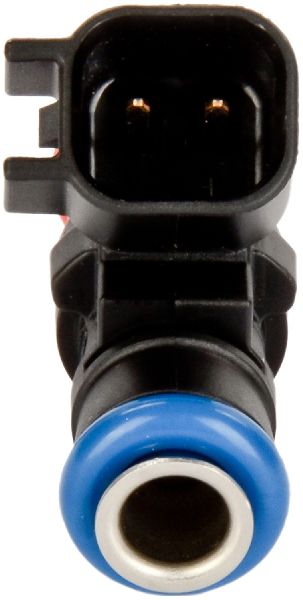
(OEM #BR3Z-9F593-A (Ford Base PN), Motorcraft CM-5188 (Service PN))— This is the most common cause of a P0206 code due to internal electrical failure of the injector's solenoid coil.
Trusted brands: Motorcraft, Bosch, Standard Motor Products
OEM price range: $70-$100
Aftermarket price range: $40-$80 - Fuel Injector Connector Pigtail
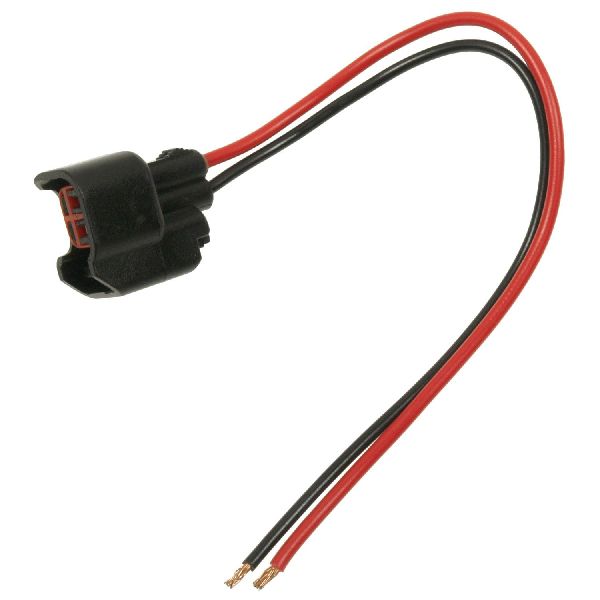
(OEM #Motorcraft WPT-1051)— If the wiring inspection reveals a damaged or corroded connector at the injector, replacing the pigtail is the standard repair. The locking tab is also known to become brittle and break.
Trusted brands: Motorcraft, Dorman
OEM price range: $25-$35
Aftermarket price range: $10-$20
Related Codes That Often Appear With This One
- P0306 — P0306 means 'Cylinder 6 Misfire Detected.' Since P0206 indicates the fuel injector for cylinder 6 isn't working, that cylinder can't combust properly, which the PCM detects as a misfire. P0206 is the cause, and P0306 is the effect. 🎬 Watch: Step-by-step guide to fixing a Ford P0306 code
- P0300 — This code means 'Random/Multiple Cylinder Misfire Detected.' While less common than P0306, a severe issue with the cylinder 6 injector can sometimes cause vibrations and imbalances that the PCM interprets as misfires on other cylinders as well.
- P0316 — Indicates a misfire was detected within the first 1,000 engine revolutions at startup. This often appears alongside a specific cylinder misfire code like P0306 when the injector fails to fire from the moment the engine starts.
Technical Service Bulletins (TSBs) & Recalls
- TSB 16-0074: This TSB addresses coolant pump leaks on 2011-2014 3.7L Mustangs. It is not related to P0206 but is a critical known issue for the platform, involving the replacement of the water pump and a revised degas hose to prevent air from entering the cooling system.
Platform-Specific Known Issues
- Access to Cylinder 6 Injector: Cylinder 6 is the most difficult to access as it is on the driver's side against the firewall. While it is tight, removal of the upper intake manifold is not strictly required to access the injector connector and the injector itself, though it can make the job easier for those with larger hands.
Mechanic-Grade Diagnostic Values
- Fuel Injector Coil Resistance — expected: 11 - 18 Ohms. Failure: A reading of infinity (O.L.) for an open circuit or close to zero for a shorted injector.
- Fuel Injector Connector Voltage (Power Pin) — expected: 12V+ (Battery Voltage) with key on, engine off.. Failure: No voltage or low voltage indicates a problem with the power supply wire or a blown fuse.
- Mode $06 Misfire Count (Cylinder 6) — expected: A value of 0 or a very low number.. Failure: A high or rapidly incrementing value under Test ID (TID) $A8 for Component ID (CID) $06 confirms the PCM is actively counting misfire events on that cylinder.
Scan Tool Commands That Help
- Ford IDS (or equivalent high-end scanner): Injector Buzz Test / Actuator Activation — With the engine off, this command individually fires each injector, creating an audible click. If cylinder 6 is silent while others click, it helps confirm the injector itself is mechanically or electrically failed internally, assuming the wiring is intact.
- Ford IDS (or equivalent high-end scanner): Power Balance Test — While the engine is running, this function allows the technician to disable each cylinder one by one. When a healthy cylinder is disabled, the engine RPM will drop noticeably. If disabling cylinder 6 causes no change in RPM, it confirms that cylinder was not contributing in the first place, pointing to the injector/circuit issue.
Wiring & Ground Locations
- G104 — On the driver's side front fender apron or radiator support, often near the battery.. This is a primary ground point for the PCM and various engine sensors. A corroded or loose G104 ground can cause a host of intermittent electrical issues, including erratic sensor readings and potential false codes, although a specific injector circuit code is more likely a direct wiring or component issue.
- Cylinder 6 Injector Connector — On the fuel injector for the rearmost cylinder on the driver's side (Bank 2).. This is the direct connection point. The power wire should have battery voltage with the key on, and the other wire is the ground-side pulse from the PCM. All electrical tests (noid light, multimeter) start here.
Real Owner Repair Stories
- YouTube - 'P0206, P0306, P0316 Fuel Injector Issue Ford F150 2015-2020' (2015-2020 Ford F-150 (with 3.7L Cyclone V6)) — Check Engine Light with codes P0206, P0306, and P0316.
❌ Tried (didn't work) Visual inspection of the wiring harness showed no obvious damage.
✅ What actually fixed it Used a multimeter to test the resistance of the cylinder 6 fuel injector and found it had no continuity (open circuit). Replacing the faulty fuel injector resolved all codes and symptoms.
OEM Part Supersession History
BR3Z-9F593-A→BR3Z-9F593-B— Standard part revision by the manufacturer. No specific reason is publicly documented, but it usually involves minor improvements in materials or manufacturing.
Heads up: The parts are interchangeable for this application. BR3Z-9F593-A is specified for the 5.0L engine in some catalogs, while BR3Z-9F593-B is listed for the 3.7L, but both are physically and electrically compatible EV14-style injectors for this platform.
Model Year Variations Within This Range
- 2015-2017 (S550 generation): While the 3.7L engine and its components are identical to the 2011-2014 S197 models, the chassis is different. The S550 has a different front K-member and body structure, which could slightly alter wiring harness routing and ground point locations compared to the earlier models. However, for this specific P0206 fault, the diagnostic process on the engine itself remains the same.
Diagnostic Flowchart
Other Known Issues on This Vehicle
Issues unrelated to this code that are worth knowing about as an owner of this generation:
- External Water Pump Failure 🔴 High — Common failure between 60,000 and 120,000 miles. Unlike transverse 3.7L engines with internal pumps, the Mustang's is external but still a frequent issue. (Ref: TSB 16-0074 was issued for coolant pump leaks on 2011-2014 models due to air entering the system.)
- MT82 Manual Transmission Problems 🟠 Medium — Widespread owner complaints of high-RPM lockout (especially shifting into 3rd), grinding shifts, and premature failure of synchronizers. A class-action lawsuit was filed against Ford regarding these issues. (Ref: Multiple TSBs and SSMs were released to dealers, but no recall was issued.)
- Intake Manifold Gasket Vacuum Leaks 🟡 Low → Shop Engine Intake Manifold — The upper and lower intake manifold gaskets can become brittle with age and heat cycles, causing vacuum leaks that lead to lean codes (P0171/P0174) and a rough idle.
Used vs. New Parts: Buying Guide for This Vehicle
When a used part is the smart pick: For this repair, a used wiring harness pigtail from a junkyard is a very smart choice if only the connector is broken. It's an OEM part for a fraction of the cost. A used PCM is a viable last resort, but it's rarely the cause and will require professional reprogramming (PATS key matching), adding significant cost and complexity.
Donor-vehicle mileage cap: roughly under 80000 miles for the part to have meaningful remaining life.
What to inspect on the donor part:
- For a wiring pigtail, ensure the plastic isn't brittle, the locking tab is intact, and there's at least 6 inches of clean wire to splice.
- For a fuel injector, look for one from a lower-mileage, front-end collision vehicle (suggests the engine was running fine). Avoid injectors from cars that have been sitting for years, as they can get stuck internally.
OEM-only on this vehicle (don't cheap out):
- Fuel Injector. While some aftermarket brands are acceptable, the cost savings are often minimal compared to the risk of a poor spray pattern or premature failure. Given the labor to access cylinder 6, using a new OEM Motorcraft injector is highly recommended to ensure reliability.
Aftermarket brands forum-validated for this vehicle:
- Bosch (often the OEM manufacturer for Ford)
- Standard Motor Products (SMP)
Brands owners have reported issues with on this vehicle:
- Unbranded, no-name injectors from online marketplaces. These often have poor quality control, leading to incorrect flow rates, bad spray patterns, and a high failure rate, which will cause persistent performance issues.
Real Owner Stories
Aggregated from forums and TSBs cited above. Mileages and costs reflect what owners reported in those sources.
2014 Ford Mustang V6
Symptoms: Coming to a stop light, the car started to have a weird shake and vibration. Upon acceleration, there was a big difference in power and the check engine light started flashing.
What fixed it: Replacement of the faulty fuel injector.
Source hint: Reddit r/MechanicAdvice - '2014 Mustang V6 p0206 and p0306 code reading'
2011-2014 Ford F-150 (3.7L V6)
Symptoms: Owner experienced codes P0206 and P0306. Diagnostic testing showed the injector had an open circuit.
What fixed it: Replacement of the cylinder 6 fuel injector after confirming failure with a multimeter.
Source hint: YouTube - '09-14 F150 V6 3.7L NA fuel injector diagnostic test...'
Related OBD-II Codes
Frequently Asked Questions
Where is the cylinder 6 fuel injector located on my 3.7L Mustang?
Does TSB 16-0074 explain why I have a P0206 code?
Can I just clean the fuel system to fix the P0206 and P0306 codes?
What is the specific resistance I should look for when testing the Mustang's 3.7L injectors?
Do I need to remove the upper intake manifold to replace the cylinder 6 injector?
Is it better to replace just the one faulty injector or all six?
Helpful Videos

Used OEM Parts in Stock
New Aftermarket Parts Available


The information in this article is provided for general reference and educational purposes only. Vehicle specifications, procedures, and part compatibility can vary by production date, trim level, and region. Always consult your vehicle's factory service manual and verify part numbers before purchasing or performing repairs. Safety-critical components such as airbags, seat belts, and braking systems should be installed by a qualified professional.
- Ford Mustang:
- 🧭 Diagnostic Flowchart
- 🎬 Helpful Videos
- 🛍️ Shop This Part
- What's Unique About the 2011-2017 Ford Mustang
- Symptoms You May Notice
- Most Likely Causes
- Rare But Worth Checking
- Diagnosis Steps
- Parts You'll Likely Need
- Related Codes That Often Appear With This One
- Technical Service Bulletins (TSBs) & Recalls
- Platform-Specific Known Issues
- Mechanic-Grade Diagnostic Values
- Scan Tool Commands That Help
- Wiring & Ground Locations
- Real Owner Repair Stories
- OEM Part Supersession History
- Model Year Variations Within This Range
- Other Known Issues on This Vehicle
- Used vs. New Parts: Buying Guide for This Vehicle
- Real Owner Stories
- 2014 Ford Mustang V6
- 2011-2014 Ford F-150 (3.7L V6)
- Related OBD-II Codes
- Frequently Asked Questions
- 🎟️ Get 5% Off