

P0206 on 2007-2016 GMC Acadia 3.6L: Cylinder 6 Injector Circuit Fixes
This code indicates an electrical fault in the cylinder 6 fuel injector circuit. The most common causes are a failed fuel injector or a damaged wiring harness. Accessing the injector requires removing the intake manifold, making it a labor-intensive job. Inspecting the wiring harness for chafing, a known issue covered by a GM TSB, is a critical first step.
- P0206 on a GMC Acadia is an electrical circuit problem for the cylinder 6 injector, not a spark or compression issue.
- Always inspect the wiring harness for chafing damage before buying parts, as this is a known issue (TSB #PIP4924D).
- Cylinder 6 is in the front bank (near the radiator), on the passenger's side of the engine.
- Accessing the fuel injectors requires removing the intake manifold, so replacing intake gaskets is mandatory for this repair.
- To save on future labor, consider replacing all three injectors on the front bank if one has failed and they are high-mileage.
What's Unique About the 2007-2016 GMC Acadia
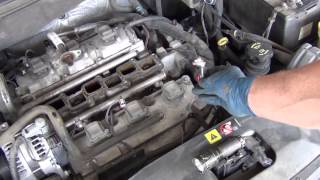
On the GMC Acadia's transversely mounted 3.6L V6, the fuel injectors are located under the upper intake manifold. This design makes a seemingly simple part replacement a much more involved and labor-intensive job compared to engines 🎬 Watch: Step-by-step fuel injector replacement for 2007-2011 models. with easily accessible fuel rails. GM has also issued a Technical Service Bulletin (TSB #PIP4924D) that specifically points to the injector wiring harness chafing against other engine components as a common cause for this and other injector circuit codes. Common chafe points include the intake plenum, valve cover bolts, and fuel lines.
Symptoms You May Notice
- Noticeable engine misfire or rough running
- Flashing or solid Check Engine Light
- Reduced engine power and poor acceleration
- Decreased fuel economy
- Vehicle may enter 'limp mode'
- Delayed cold start
- Black smoke from exhaust
- Replacing the spark plug or ignition coil for cylinder 6. While these parts can cause a misfire (P0306), they will not set a P0206 injector circuit code. P0206 is strictly an electrical/fuel injector circuit fault.
Most Likely Causes
- Damaged Fuel Injector Wiring Harness 🔴 High Probability → Shop Engine Wiring Harness GM issued TSB #PIP4924D specifically for this issue across many models with the 3.6L engine. The harness for the front bank of cylinders (Bank 2) is known to rub against the intake plenum, fuel lines, or valve cover bolts, causing an open or short circuit. Engine vibration over time wears through the wire insulation.
How to confirm: Visually inspect the entire length of the wiring harness leading to the cylinder 6 injector. On this engine, cylinder 6 is in the bank closer to the radiator, on the passenger's side. Look for any signs of chafing, melting, or broken wires, especially where the harness is routed near sharp metal edges or secured by clips. A wiggle test on the harness while the engine is running may induce the misfire, confirming a wiring integrity issue.
Typical fix: Repair the damaged wire(s) by splicing in a new section and using heat-shrink tubing. Re-secure the harness away from sharp edges using zip ties or protective conduit. In severe cases or if damage is at the connector, a new connector pigtail may be needed.
Est. part cost: $10-$25 - Failed Fuel Injector 🟡 Medium Probability → Shop Fuel Injector The direct injection (SIDI) injectors operate under high pressure and can fail electrically over time due to heat and stress on the internal coil windings.
How to confirm: Swap the cylinder 6 injector with an injector from another cylinder (e.g., cylinder 4). Clear the codes and run the engine. If the code changes to P0204, the injector is faulty. Alternatively, use a multimeter to check the resistance of the injector. A good injector for the LFX engine should have a resistance between 1.2 - 2.5 ohms, while the LY7 and LLT engines use injectors with 11-14 ohms of resistance. A reading of 0 ohms indicates a short, while an infinite ('OL') reading indicates an open circuit.
Typical fix: Replace the faulty fuel injector. It is often recommended to replace all injectors on the same bank, or all six, if they are high-mileage, due to the high labor cost of accessing them. 🎬 See this walkthrough for fuel rail removal on 2012+ engines.
Est. part cost: $40-$120
Rare But Worth Checking
- Faulty Powertrain Control Module (PCM): → Shop Engine Control Module (ECM) This is the least likely cause. The PCM's internal driver for the cylinder 6 injector can fail, but this should only be considered after all wiring and the injector itself have been definitively ruled out.
- Corroded Ground Connection: A corroded engine or chassis ground can cause intermittent electrical issues across multiple components. A forum post on ScannerDanner for a 2008 Acadia noted that a bad ground on the cylinder head for Bank 2 caused multiple injector codes (P0202, P0204, P0206) simultaneously.
- Damaged Fuse Box or Main Harness: In a case documented on the ScannerDanner forum, a 2008 Acadia with intermittent P0202, P0204, and P0206 codes was traced to a broken bracket under the fuse box, which allowed the main engine harness to be routed incorrectly and sustain damage from previous repairs.
Diagnosis Steps
- Read the codes with an OBD-II scanner and confirm P0206 is present. Note any other codes, especially P0306 or other injector codes (P0202, P0204).
- Locate cylinder 6. On the transverse 3.6L V6, the cylinder bank closer to the radiator is Bank 2, which contains cylinders 2, 4, and 6, arranged from passenger side to driver side.
- CRITICAL FIRST STEP: Visually inspect the wiring harness for Bank 2. Per TSB #PIP4924D, pay close attention to areas where it might rub against the intake plenum, valve cover bolts, or fuel lines. Perform a 'wiggle test' on the harness with the engine idling to see if it affects the misfire.
- Test the circuit signal. Disconnect the cylinder 6 injector connector and plug in a 'noid' light. Crank or start the engine. The light should flash rhythmically, indicating the PCM is sending a signal. 🎬 Watch: How to use a noid light to check injector pulse. If it does not flash, or if it stays on continuously, the problem is in the wiring or the PCM.
- If the noid light flashes, the problem is likely the injector itself. Turn the engine off and disconnect the battery. Use a multimeter to test the resistance of the fuel injector. For the LFX engine (2012+), it should be between 1.2 and 2.5 ohms. For LY7/LLT engines (2007-2011), it should be 11-14 ohms. An open (OL) or shorted (near 0) reading confirms a bad injector.
- To be 100% certain before performing the labor-intensive replacement, swap the cylinder 6 injector with another one (e.g., cylinder 4). Reassemble, clear the codes, and restart the engine. If P0204 appears, the injector you moved is bad. If P0206 returns, the problem is definitively in the wiring to that specific cylinder.
- If the noid light did not flash, use a multimeter to check for 12V power at one pin of the connector with the key on. Then, check for continuity on the signal (ground) wire back to the PCM connector.
- If all wiring and the injector test good, the PCM is the final, though unlikely, suspect.
Parts You'll Likely Need
- Fuel Injector
(OEM #12638530 (superseded by 12669384))— This is one of the two most common failure points for this code. If the injector fails internally, it must be replaced. The original part number has been updated by GM.
Trusted brands: ACDelco, Bosch, Standard Motor Products
OEM price range: $80-$120
Aftermarket price range: $40-$75 - Upper and Lower Intake Manifold Gaskets
(OEM #ACDelco 12673301 (Upper Set), Fel-Pro MS 96916 (Lower Set))— These must be replaced anytime the intake manifold is removed to access the fuel injectors. They are single-use gaskets and are critical for preventing vacuum leaks after the repair.
Trusted brands: Fel-Pro, ACDelco, Mahle
OEM price range: $50-$80
Aftermarket price range: $25-$50 - Fuel Injector Connector Pigtail
(OEM #ACDelco PT2183)— If the wiring is damaged right at the connector, or the connector's locking tab is broken, replacing the pigtail is the most effective repair. This requires cutting and splicing wires.
Trusted brands: ACDelco, Dorman
OEM price range: $25-$40
Aftermarket price range: $10-$20
Related Codes That Often Appear With This One
- P0306 — This code for 'Cylinder 6 Misfire Detected' is almost always present with P0206. The injector circuit fault prevents fuel delivery, which directly causes the misfire.
- P0300 — If the engine is running very poorly due to the cylinder 6 issue, it can cause timing imbalances that lead the PCM to log a 'Random/Multiple Cylinder Misfire' code.
- P0202, P0204 — If the wiring harness is damaged at a point that affects the entire bank, you may see circuit codes for cylinders 2, 4, and 6 simultaneously. This strongly points to a wiring or ground issue rather than an individual injector failure.
- P2152 — This code for 'Fuel Injector Group C Supply Voltage Circuit' can appear if the power feed wire common to injectors 2 and 5 is compromised. A related TSB, PIP4924D, covers this scenario, often caused by the same harness chafing issues.
Technical Service Bulletins (TSBs) & Recalls
- PIP4924D: This TSB (and its revisions A, B, C) addresses diagnostic procedures for multiple injector circuit codes (P0201-P0206) and points to inspecting the wiring harness for chafing and open circuits against the intake plenum, valve cover bolts, and fuel lines.
- 11340C: While not directly for P0206, this is a well-known Special Coverage Adjustment for premature timing chain wear on 2007-2009 models, a major issue for this platform.
- 14404B: A Special Coverage Adjustment for 2007-2009 models for a fractured 3-5-R transmission wave plate, another common major failure on this platform.
Platform-Specific Known Issues
- The primary vehicle-specific issue is the high probability of the injector wiring harness chafing on other components, as documented in GM TSB #PIP4924D. This should be the first inspection point.
- A ScannerDanner forum thread for a 2008 Acadia highlighted a case where a broken fuse box mounting bracket led to harness damage, causing intermittent injector codes for the entire bank.
Mechanic-Grade Diagnostic Values
- Fuel Injector Resistance (2012-2016 LFX Engine) — expected: 1.2 - 2.5 Ohms. Failure: A reading of 0 Ohms (short), OL/infinity (open), or a value significantly outside the expected range.
- Fuel Injector Resistance (2009-2011 LLT Engine) — expected: 11.0 - 14.0 Ohms. Failure: A reading of 0 Ohms (short), OL/infinity (open), or a value significantly outside the expected range.
- Fuel Injector Resistance (2007-2008 LY7 Engine) — expected: 11.0 - 14.0 Ohms. Failure: A reading outside this range indicates a faulty injector coil.
- Injector Driver Voltage (at injector connector) — expected: A boosted voltage pulse up to 65V (for SIDI engines), supplied by a capacitor in the ECM.. Failure: Absence of this pulse, or a steady/incorrect voltage, indicates a problem with the ECM driver or the wiring.
- Low-Side Fuel Pressure (Key On, Engine Off) — expected: 50–60 psi (345–414 kPa). Failure: Pressure below this range can indicate a weak in-tank fuel pump or a failing Fuel Pump Control Module (FPCM).
Hidden / Shadow Codes Worth Checking
- P124D: Injector 6 Positive Voltage Control Circuit Shorted to Control Circuit. This is a manufacturer-specific code that can provide more detail than the generic P0206. (see via Professional grade scan tools like the GM GDS2/Tech2 can read these manufacturer-specific DTCs.)
Scan Tool Commands That Help
- GM GDS2 / Tech2: Fuel Injector Balance Test — This bidirectional test individually disables each injector and monitors RPM drop, or measures fuel pressure drop as each injector is pulsed. If cylinder 6 shows no change or a significantly different pressure drop, it helps confirm a fault in that specific injector or circuit without physical swapping.
- GM GDS2 / Tech2: Injector Kill / Disable — To actively disable the cylinder 6 injector while the engine is running. If there is no change in how the engine runs, it confirms cylinder 6 was not contributing, pointing the diagnosis toward that cylinder's fuel or ignition system.
Wiring & Ground Locations
- X160 / X161 — Multi-way harness connectors located at the rear of the intake manifold.. These are critical test points for isolating the injector harness from the ECM. Technicians can test the circuit from the ECM side or the injector side of these connectors to determine where a wiring fault lies.
- G105 / G106 — Main engine block ground points bolted to the block and cylinder heads.. A poor or corroded engine ground can cause intermittent and difficult-to-diagnose electrical issues across multiple systems, including the injector circuits for an entire bank.
- Fuel Pump Control Module (FPCM) — On SUVs like the Acadia, it is often located on a frame crossmember, either in front of the gas tank near the transfer case or above the spare tire.. While not a direct cause of a single injector code, a failing FPCM can cause fuel pressure issues that might be misdiagnosed. It's a key component of the overall fuel delivery system.
Real Owner Repair Stories
- ScannerDanner Forum (2008 GMC Acadia 3.6L) — Engine runs fine for 30-45 minutes, then develops a severe misfire. Codes P0300, P0202, P0204, and P0206 appear all at once.
❌ Tried (didn't work) Cleaning a corroded ground on the cylinder head, Cleaning VVT solenoids, Swapping O2 sensors, Cleaning MAF sensor
✅ What actually fixed it The technician noted a broken mounting bracket under the fuse box had allowed the main engine harness to be routed incorrectly and become damaged from previous repairs. A 'wiggle test' of the harness would likely have revealed the issue. The final fix involved repairing the harness and the fuse box bracket. - acadiaforum.net user report (2011 GMC Acadia) — Engine misfiring with codes P0202, P0204, P0206, and P2149 (Injector Group B fault).
❌ Tried (didn't work) The user went straight to wiring inspection based on the combination of codes for the entire bank.
✅ What actually fixed it A broken wire was found inside the main engine harness that runs across the front of the engine. Repairing the single broken wire resolved all codes simultaneously. - YouTube User Report (Chevy Traverse) (2011 Chevrolet Traverse 3.6L (platform mate)) — Misfire on cylinders 2, 4, and 6.
❌ Tried (didn't work) Cleaning throttle body and MAF sensor, Checking grounds
✅ What actually fixed it The problem was a bad electrical connection at the main connector block underneath the underhood fuse box. The plastic locking tabs had failed, causing a loose connection that would get worse with vibration. Tightening the bolts on the connector block restored the connection and fixed the misfire on all three cylinders.
OEM Part Supersession History
12638530→12669384— Standard manufacturer revision for design improvement or manufacturing changes. The full chain is 12611545 -> 12632255 -> 12638530 -> 12669384.
Heads up: This part number is for the high-impedance (~12 Ohm) injectors used in 2009-2011 LLT engines. It is NOT compatible with 2012+ LFX engines, which use a low-impedance (~1.5 Ohm) injector (PN 12634126). Using the wrong type can cause immediate circuit faults or damage the ECM.
Model Year Variations Within This Range
- 2007-2008: These models use the port-injected LY7 3.6L V6. The fuel injectors are high-impedance (11-14 Ohms) but are a different design from the later SIDI engines. They are not susceptible to the same type of intake valve carbon buildup as the direct injection engines.
- 2009-2011: These models use the direct-injected (SIDI) LLT 3.6L V6. The injectors are high-impedance (~12 Ohms, PN 12638530 or supersession). These engines are highly susceptible to intake valve carbon buildup causing misfires.
- 2012-2016: These models use the updated direct-injected (SIDI) LFX 3.6L V6. The injectors are a different, low-impedance design (~1.5 Ohms, PN 12634126). The resistance value is critically different for diagnosis. Mixing LLT and LFX injectors will cause faults.
Diagnostic Flowchart
Other Known Issues on This Vehicle
Issues unrelated to this code that are worth knowing about as an owner of this generation:
- Premature Timing Chain Stretch 🔴 High — Very common, especially on 2007-2012 models. Often occurs between 70,000 and 120,000 miles. Exacerbated by extended oil change intervals. (Ref: TSB #12-06-01-009F, Special Coverage Adjustment #11340C (expired))
- Cracked 3-5-R Transmission Wave Plate 🔴 High — Common on 2007-2009 models with the 6T70/6T75 transmission. Results in loss of 3rd, 5th, and Reverse gears. Typically occurs under 100,000 miles. (Ref: TSB #09-07-30-012F, Special Coverage Adjustment #14404B (expired))
- Excessive Oil Consumption 🟠 Medium — Frequently reported on higher mileage 3.6L engines. GM's acceptable rate is 1 quart per 2,000 miles, but many owners report higher consumption. Can be caused by worn piston rings.
- Power Steering Pump/Rack/Hose Failure 🟠 Medium — Common complaint involving whining noises, difficulty steering, or fluid leaks from the power steering system. (Ref: Multiple recalls for power steering issues on various years.)
- Water Pump Failure 🟠 Medium — The water pump is internal and driven by the timing chain. A failure can cause coolant to mix with engine oil, leading to catastrophic engine damage if not caught early.
Used vs. New Parts: Buying Guide for This Vehicle
When a used part is the smart pick: For this specific repair, a used wiring harness pigtail or a complete engine harness from a junkyard can be a smart choice, especially if the damage is to a connector that is not sold separately. A used underhood fuse box assembly could also be a cost-effective fix if the issue is traced to its internal connections or mounting brackets.
Donor-vehicle mileage cap: roughly under 80000 miles for the part to have meaningful remaining life.
What to inspect on the donor part:
- For wiring, inspect for any signs of previous repair, brittleness, or chafing in the same known-bad spots.
- Ensure all connector locking tabs are intact and not broken.
- Verify the donor vehicle is the same engine type (LY7, LLT, or LFX) as the parts are not always interchangeable.
- Check for corrosion on fuse box terminals or harness connectors.
OEM-only on this vehicle (don't cheap out):
- Fuel Injectors: Due to the extremely high labor cost to access the injectors (intake manifold removal), installing used injectors is a major gamble. A single used injector failure would require repeating the entire expensive job. New OEM (ACDelco) or reputable aftermarket (Bosch) is strongly recommended.
- Intake Manifold Gaskets: These are single-use items and must always be replaced with new parts to prevent vacuum leaks.
Aftermarket brands forum-validated for this vehicle:
- Injectors: Bosch (often the OEM supplier), Standard Motor Products
- Gaskets: Fel-Pro, Mahle
Brands owners have reported issues with on this vehicle:
- Unbranded, no-name fuel injectors from online marketplaces. The quality control is often poor, and failure rates are high, making the labor-intensive job a high risk.
Real Owner Stories
Aggregated from forums and TSBs cited above. Mileages and costs reflect what owners reported in those sources.
2008 GMC Acadia 3.6L V6
Symptoms: Intermittent misfire with codes P0202, P0204, and P0206 appearing together for the entire front bank of cylinders.
What fixed it: The problem was a damaged engine wiring harness. A broken fuse box bracket from a previous repair had allowed the harness to rub and short out.
Source hint: ScannerDanner Forum: A thread titled '[FIXED] Bank two miss' on a 2008 Acadia
GMC Acadia 3.6L V6
Symptoms: Check Engine Light with P020x codes.
What fixed it: Owners confirmed that either a wiring repair or replacing all six injectors at once (due to the high labor cost of accessing them) was the final solution.
Source hint: acadiaforum.net: Multiple threads discuss P020x codes
Related OBD-II Codes
Frequently Asked Questions
What is the very first thing I should check for a P0206 code on my 2009 Acadia?
Where is cylinder 6 located on the 3.6L V6 engine in my Acadia?
How can I confirm the fuel injector is bad before paying for the labor-intensive replacement?
What is the correct resistance for the fuel injector on my 2013 Acadia?
My scanner shows P0202, P0204, and P0206 all at once. What could cause that?
Does TSB #PIP4924D apply to my vehicle?
Helpful Videos
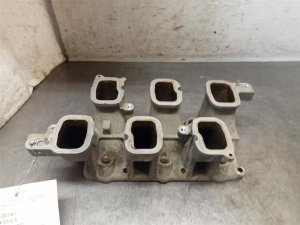
Used OEM Parts in Stock
New Aftermarket Parts Available



The information in this article is provided for general reference and educational purposes only. Vehicle specifications, procedures, and part compatibility can vary by production date, trim level, and region. Always consult your vehicle's factory service manual and verify part numbers before purchasing or performing repairs. Safety-critical components such as airbags, seat belts, and braking systems should be installed by a qualified professional.
- GMC Acadia:
- 🧭 Diagnostic Flowchart
- 🎬 Helpful Videos
- 🛍️ Shop This Part
- What's Unique About the 2007-2016 GMC Acadia
- Symptoms You May Notice
- Most Likely Causes
- Rare But Worth Checking
- Diagnosis Steps
- Parts You'll Likely Need
- Related Codes That Often Appear With This One
- Technical Service Bulletins (TSBs) & Recalls
- Platform-Specific Known Issues
- Mechanic-Grade Diagnostic Values
- Hidden / Shadow Codes Worth Checking
- Scan Tool Commands That Help
- Wiring & Ground Locations
- Real Owner Repair Stories
- OEM Part Supersession History
- Model Year Variations Within This Range
- Other Known Issues on This Vehicle
- Used vs. New Parts: Buying Guide for This Vehicle
- Real Owner Stories
- 2008 GMC Acadia 3.6L V6
- GMC Acadia 3.6L V6
- Related OBD-II Codes
- Frequently Asked Questions
- 🎟️ Get 5% Off