

P0222 on 2016-2019 Ford E-450 6.8L V10: Throttle Position Sensor Circuit Low Causes and Fixes
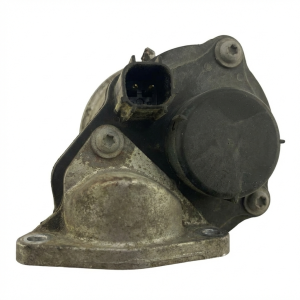
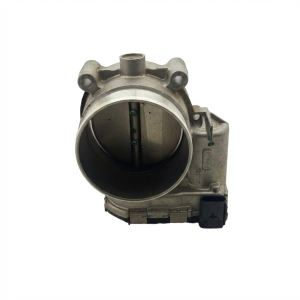
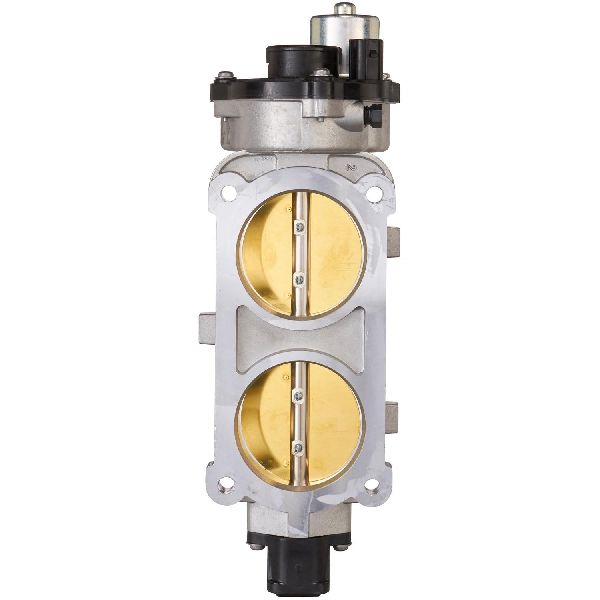
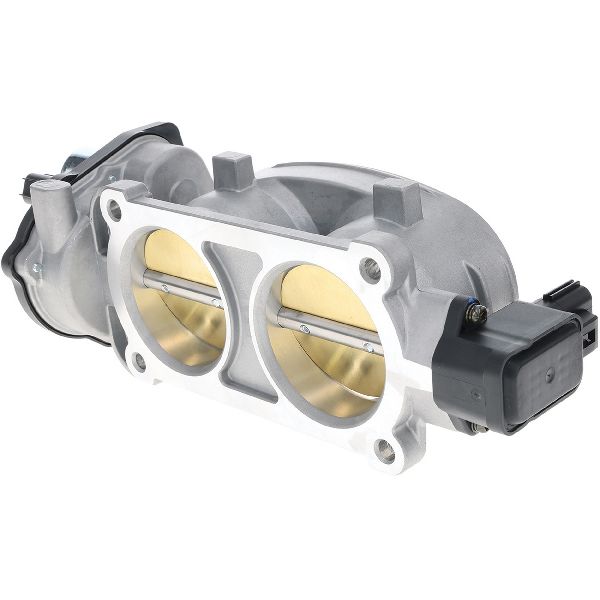
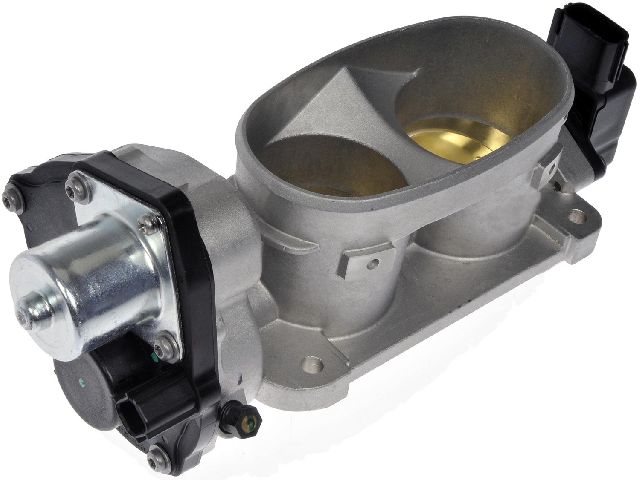
For a 2016-2019 Ford E-450 with the 6.8L V10, code P0222 almost always means the entire electronic throttle body assembly has failed. The throttle position sensors (TPS) are built-in and not sold separately. A new Motorcraft throttle body costs around $150-$250, and replacement is a common DIY fix that takes about an hour.
- P0222 on your E-450 V10 almost certainly means the throttle body's internal sensor has failed.
- Do not replace the gas pedal; the problem is at the engine's throttle body.
- The fix is to replace the entire throttle body assembly and then perform a KAM reset and idle relearn procedure.
- Always check for the companion code P0122, as they usually appear together in this failure scenario.
What's Unique About the 2016-2019 Ford E-450
The Ford E-450 with the 6.8L V10 is a workhorse, often used for RVs and commercial cutaways. These vehicles can experience long periods of sitting, which can be hard on electronic components, followed by periods of very heavy use. While Ford has a history of electronic throttle body (ETB) issues across many models, the E-450's is particularly prone to failure of the internal sensors. The key thing to know is that for this vehicle, the P0222 code points directly to a fault on the throttle body itself; the sensors are integrated and the entire assembly must be replaced as one unit. Owner forums for E-450 based RVs confirm this is a very common failure.
Symptoms You May Notice
- Check Engine Light and 'Wrench' light are illuminated.
- Engine goes into 'limp mode' with drastically reduced power.
- No response or delayed response from the accelerator pedal.
- Rough or unstable idle, sometimes surging.
- Vehicle may stall or be hard to start.
- Hesitation during acceleration.
- Replacing the accelerator pedal assembly. The P0222 code on this Ford specifically relates to the sensor on the throttle body ('B' circuit), not the pedal. Pedal-related codes are different (e.g., P2122, P2127).
Most Likely Causes
- Faulty Electronic Throttle Body (ETB) Assembly 🔴 High Probability → Shop Fuel Injection Throttle Body The internal throttle position sensors (TPS) are a known failure point on the 6.8L V10 platform. The resistive strips inside the sensor wear out or develop dead spots, causing the voltage signal to drop out. The sensors are not serviced separately, requiring replacement of the entire ETB. This is the most common fix reported by E-450 and F-53 RV owners. 🎬 Watch: How a bad throttle body disables an F53 RV
How to confirm: Using an OBD-II scanner with live data, monitor the PIDs for TPS1 and TPS2 voltage (may be labeled TP_A/TP_B or similar). With the key on, engine off, the voltage for TPS 'B' will be stuck low (e.g., under 0.5V) and will not change when the accelerator is pressed. The other sensor, TPS 'A', may read normally. This confirms an internal sensor fault.
Typical fix: Replace the entire electronic throttle body assembly. After replacement, perform a KAM (Keep Alive Memory) reset. This can be done by disconnecting the negative battery terminal for at least 15 minutes or using a scan tool's 'Clear KAM' function. Then, perform the throttle relearn procedure.
Est. part cost: $150-$250 - Wiring or Connector Issue 🟡 Medium Probability The E-450 is a commercial chassis, and its wiring can be exposed to harsh conditions, engine heat, and vibration. The engine harness can chafe where it passes over the valve covers or other brackets, potentially shorting the sensor signal wire to ground. Rodent damage is also a possibility, especially on RVs that are stored for long periods.
How to confirm: Visually inspect the wiring harness leading to the throttle body for any signs of chafing, melting, or rodent damage. Pay close attention to where the harness routes over the engine. Disconnect the connector and check for corrosion, moisture, or bent/backed-out pins. Use a multimeter to check for the 5V reference voltage and a good ground at the connector with the key on.
Typical fix: Repair the damaged section of the harness with solder and heat shrink, or replace the connector pigtail if it is corroded. Use protective wire loom to prevent future chafing.
Est. part cost: $20-$50 - Dirty/Sticking Throttle Body ⚪ Low Probability → Shop Fuel Injection Throttle Body Carbon and oil vapor from the PCV system can build up in the throttle bore, causing the plate to stick. This is more common on vehicles that idle frequently or sit for long periods, like RVs.
How to confirm: Remove the air intake hose and visually inspect the throttle plate and bore for heavy carbon buildup. Manually move the plate to feel for any sticking or binding. However, a pure circuit code like P0222 is an electrical fault, and cleaning is very unlikely to resolve it, though it is good maintenance.
Typical fix: Clean the throttle body thoroughly with a dedicated throttle body cleaner and a soft cloth or brush. This is a good first step before replacing parts but is not the likely solution for a circuit-low code.
Est. part cost: $10-$15
Rare But Worth Checking
- Powertrain Control Module (PCM) Failure: → Shop Engine Control Module (ECM) This is very rare. The PCM should only be considered after all other possibilities (throttle body, wiring) have been definitively ruled out. A PCM failure would likely present with multiple other unrelated codes and would fail a module communication test on a high-end scanner.
Diagnosis Steps
- Connect an OBD-II scanner and confirm P0222 is present. Check for other codes like P0122, P2104, or P2112, as they strongly point to the throttle body.
- Using the scanner's live data, view the parameters for 'TP_B' or 'TPS2_VOLT'. The voltage should be very low, likely under 0.5V, and possibly as low as 0.17V.
- Turn the ignition to 'ON' (engine off). Slowly press the accelerator pedal to the floor. The voltage for TPS 'B' should remain stuck low and not change. This points to a sensor or wiring issue, not the pedal.
- Turn the ignition off. Disconnect the electrical connector at the throttle body.
- Inspect the connector pins and wiring harness for any signs of corrosion, moisture, or physical damage. Pay special attention to where the harness may rub against the engine.
- If the wiring looks good, the electronic throttle body is almost certainly the faulty component.
- As a preliminary step, you can try cleaning the throttle body bore and plate, but a true 'Circuit Low' code is an electrical fault that cleaning is unlikely to fix.
- Replace the electronic throttle body assembly.
- After replacement, perform a KAM (Keep Alive Memory) reset. The simplest way is to disconnect the negative battery terminal for at least 15 minutes. A more thorough method is to disconnect the negative cable and jump it to the positive cable for 10 seconds to drain any residual power from the PCM's capacitors.
- Perform the idle relearn procedure: Start the engine and let it idle until it reaches operating temperature, then let it idle for at least one more minute. Turn the A/C on and let it idle for another minute. Place the transmission in Drive (with foot on the brake) and let it idle for a final minute before test driving. 🎬 Watch: Throttle body replacement and relearn process walkthrough
Parts You'll Likely Need
- Electronic Throttle Body Assembly
(OEM #9C2Z-9E926-A)— This is the primary failure point for code P0222 on this vehicle. The internal, non-serviceable Throttle Position Sensors fail, requiring the replacement of the entire unit. This part number appears to be for earlier models, and the correct part may vary. Always verify with VIN. Other possible numbers include 5C3Z9E926BA.
Trusted brands: Motorcraft, Standard Motor Products (SMP), Hitachi, Cardone (Remanufactured)
OEM price range: $180-$280
Aftermarket price range: $120-$200
Related Codes That Often Appear With This One
- P0122 — P0122 is 'Throttle/Pedal Position Sensor/Switch 'A' Circuit Low Input'. Seeing P0122 and P0222 together strongly indicates a failure of the throttle body assembly 🎬 See this video on fixing Ford P0122 and P0223 codes or its main connector, as both internal sensors are failing simultaneously. This is a very common combination for this fault.
- P2104 — This code means 'Throttle Actuator Control System - Forced Idle'. It's a companion code set by the PCM when it detects a critical throttle body fault (like P0222) and forces the engine into a safe idle-only mode to protect the engine and driver.
- P2112 — This code means 'Throttle Actuator Control System - Stuck Closed'. It can sometimes appear with sensor circuit codes if the internal failure affects both the sensors and the motor that moves the throttle plate.
Platform-Specific Known Issues
- RV Failure After Storage: A common owner story involves the P0122/P0222 codes appearing on an E-450 based motorhome after it has been in storage for a month or more. The vehicle starts but has no throttle response. This points to the electronic components in the throttle body failing during the period of inactivity.
Mechanic-Grade Diagnostic Values
- ETCREF (Electronic Throttle Control Reference Voltage) at Throttle Body Connector — expected: 5.0 Volts ± 0.5V. Failure: Voltage below 4.5V or above 5.5V indicates a problem in the PCM or wiring, not the sensor.
- TPS 'B' Signal Voltage Sweep (Key On, Engine Off) — expected: Smoothly rises from ~0.5V at closed throttle to ~4.5V at wide-open throttle.. Failure: Voltage is stuck below 0.5V and does not change when the accelerator pedal is pressed.
- Live Data PIDs: Desired vs. Actual Throttle Plate Position Angle — expected: The values should track each other closely, within 3 degrees.. Failure: A difference greater than 5 degrees between the desired and actual angle will set a fault code.
Scan Tool Commands That Help
- Ford IDS (Integrated Diagnostic Software): Self-Test > All CMDTCs (Continuous Memory Diagnostic Trouble Codes) — To retrieve all stored fault codes from every module, which may provide more context than a generic OBD-II scan.
- Ford IDS (Integrated Diagnostic Software): Datalogger > Graphing TP1/TP2 and APP1/APP2 voltages — To visually identify voltage dropouts or glitches from the throttle body and pedal sensors during operation, which confirms an electronic failure.
- Ford IDS (Integrated Diagnostic Software): Toolbox > Powertrain > PCM Reset — This function clears the Keep Alive Memory (KAM) after replacing the throttle body to erase old adaptive learning values before performing the idle relearn procedure.
- Ford IDS (Integrated Diagnostic Software): Toolbox > Powertrain > Throttle Body Relearn — After a KAM reset, this function commands the PCM to sweep the throttle plate to learn its new closed and open positions.
Wiring & Ground Locations
- Powertrain Control Module (PCM) — In the engine compartment on the passenger side, mounted to the cowl.. The PCM supplies the 5V reference and ground to the throttle body and interprets the return signal. All wiring tests ultimately lead back to the PCM connector.
- Throttle Body Electrical Connector — On the front of the electronic throttle body assembly. It is a 6-pin connector.. This is the primary point for testing voltage, ground, and signal continuity. It has a red locking tab that must be pulled out before the connector can be disconnected. A poor connection here can cause the P0222 code.
- PCM Power Ground (PWR GND) — The main power ground circuit for the PCM connects directly to the negative terminal of the battery.. A poor main ground for the PCM can cause a variety of incorrect sensor readings, including a low voltage fault for the TPS circuit.
Real Owner Repair Stories
- Ford Truck Enthusiasts Forum (2016 Ford E-450 with 6.8L V10 (RV)) — After sitting in storage for a month, the engine starts but the accelerator pedal does nothing. The wrench and check engine lights are on. Codes P0122 and P0222 are present. The engine idles a little rough.
❌ Tried (didn't work) The owner visually inspected for wiring damage and found none. They checked the accelerator pedal connector and found it clean and secure. The resolution was not posted, but the symptoms and codes are a classic presentation of throttle body failure.
✅ What actually fixed it The forum community consensus was that the symptoms and dual codes (P0122/P0222) pointed directly to a failed electronic throttle body assembly requiring replacement.
OEM Part Supersession History
9W7Z-9E926-B→9W7Z-9E926-A— Part revision by manufacturer.
Heads up: This part number series appears to be associated with many 6.8L V10 applications over a long period, but always verify with VIN.3L5Z-9E926-AD→9W7Z-9E926-A— Part revision by manufacturer.
Heads up: This shows a long history of supersession for the V10 throttle body.5C3Z9E926BA→Unknown— Aftermarket equivalent or alternative OEM number.
Heads up: Listed as fitting 2004-2019 E-450 6.8L models by aftermarket sellers.
Diagnostic Flowchart
Other Known Issues on This Vehicle
Issues unrelated to this code that are worth knowing about as an owner of this generation:
- Broken Exhaust Manifold Studs 🔴 High — Extremely common, especially on the rear-most cylinders. Often occurs after 80,000 miles. The primary symptom is a ticking noise from the engine bay, especially when cold. (Ref: Ford has released updated stainless steel studs (Part #W703902-S403) to mitigate repeat failures.)
- Cracked PCV Hose/Elbow 🟡 Low — Common failure as the vehicle ages. The plastic hose or rubber elbow, often located under the throttle body, becomes brittle and cracks, causing a vacuum leak.
- Spark Plug Ejection (2-Valve V10) 🔴 High — This was a major issue on earlier 2-valve Triton engines (pre-2005) due to insufficient thread engagement in the aluminum heads. While less common on the later 3-valve engines used from 2005-2019, care must still be taken during spark plug service.
- Spark Plug Breakage During Removal (3-Valve V10) 🟠 Medium — The 3-valve engines (2005+) used a two-piece spark plug design that was prone to separating during removal, leaving the lower portion stuck in the cylinder head. This was more prevalent in the early 3-valve years (pre-2008), but can still be a concern. (Ref: Ford later redesigned the spark plug to a one-piece design to solve this.)
Used vs. New Parts: Buying Guide for This Vehicle
When a used part is the smart pick: For this specific failure, a used part is NOT recommended. The P0222 code is most often caused by the failure of internal electronic components that wear out over time. A used throttle body from a salvage yard carries a high risk of having the same issue or failing shortly after installation.
What to inspect on the donor part:
- If buying used is unavoidable, visually inspect the electrical connector for bent or corroded pins.
- Check the throttle bore for deep scoring or damage, although this is not related to the electronic failure.
- Ask for the donor vehicle's mileage, but be aware that low mileage does not guarantee the electronic sensors are good.
OEM-only on this vehicle (don't cheap out):
- Electronic Throttle Body Assembly
Aftermarket brands forum-validated for this vehicle:
- Motorcraft (OEM)
- Standard Motor Products (SMP)
- Bosch
Brands owners have reported issues with on this vehicle:
- Unnamed or 'white-box' remanufactured units have been reported by technicians to have a higher rate of immediate or premature failure.
Real Owner Stories
Aggregated from forums and TSBs cited above. Mileages and costs reflect what owners reported in those sources.
2016 Ford E-450 6.8L V10
Symptoms: The vehicle starts fine, but there is no accelerator response. Both the 'wrench' light and check engine light are illuminated.
What fixed it: Replacement of the electronic throttle body assembly.
Source hint: Ford Truck Enthusiasts: 'Throttle position sensor problems. P0122 and P0222'
2016 Ford E-450 RV 6.8L V10
Symptoms: Codes appeared after the motorhome had been in storage for a month or more; the vehicle starts but has no throttle response.
What fixed it: Replacement of the electronic throttle body.
Source hint: vehicle_specific_issues: 'RV Failure After Storage'
Related OBD-II Codes
Frequently Asked Questions
My 2016 E-450 RV has no throttle response after sitting in storage for the winter. Is this common?
Can I just replace the sensor on my 6.8L V10 throttle body to fix P0222?
Is there a specific part number for the exhaust manifold studs if I find them broken while fixing my throttle issues?
What is the 'relearn procedure' I need to do after replacing the throttle body on my E-450?
Could a vacuum leak cause P0222 on my 2017 Ford E-450?
Helpful Videos
Used OEM Parts in Stock
New Aftermarket Parts Available



The information in this article is provided for general reference and educational purposes only. Vehicle specifications, procedures, and part compatibility can vary by production date, trim level, and region. Always consult your vehicle's factory service manual and verify part numbers before purchasing or performing repairs. Safety-critical components such as airbags, seat belts, and braking systems should be installed by a qualified professional.
- Ford E-450:
- 🧭 Diagnostic Flowchart
- 🎬 Helpful Videos
- 🛍️ Shop This Part
- What's Unique About the 2016-2019 Ford E-450
- Symptoms You May Notice
- Most Likely Causes
- Rare But Worth Checking
- Diagnosis Steps
- Parts You'll Likely Need
- Related Codes That Often Appear With This One
- Platform-Specific Known Issues
- Mechanic-Grade Diagnostic Values
- Scan Tool Commands That Help
- Wiring & Ground Locations
- Real Owner Repair Stories
- OEM Part Supersession History
- Other Known Issues on This Vehicle
- Used vs. New Parts: Buying Guide for This Vehicle
- Real Owner Stories
- 2016 Ford E-450 6.8L V10
- 2016 Ford E-450 RV 6.8L V10
- Related OBD-II Codes
- Frequently Asked Questions
- 🎟️ Get 5% Off