

P0222 on 2010-2013 Kia Soul: Throttle Position Sensor Causes and Fixes
On a 2010-2013 Kia Soul, code P0222 is most often caused by a failed electronic throttle body assembly. The fix is to replace the entire unit, as the sensor is integrated. Before replacing, a thorough cleaning of the throttle body is recommended as a first step, as carbon buildup can cause the plate to stick and trigger the code.
- P0222 on a 2010-2013 Kia Soul points to a low voltage signal from the secondary throttle position sensor.
- The most likely cause is a faulty electronic throttle body assembly, which contains the non-replaceable sensor.
- Before replacing the expensive throttle body, always perform a thorough cleaning, as carbon buildup can sometimes trigger this code.
- Diagnosis involves using a scan tool to watch the live voltage data from both throttle position sensors ('A' and 'B') to confirm the 'B' circuit is failing.
- Do not drive the vehicle extensively with this code, as it can enter a low-power 'limp mode' at any time, creating a hazardous driving situation.
What's Unique About the 2010-2013 Kia Soul
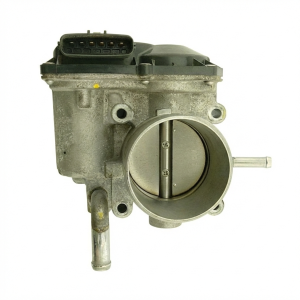
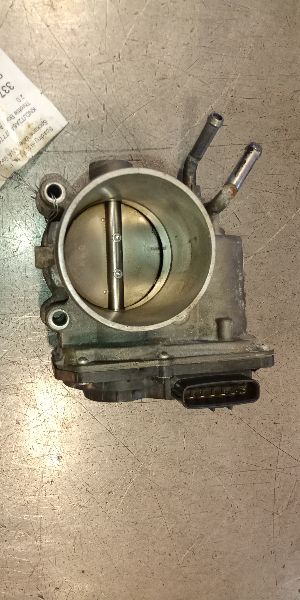
For the first-generation (2010-2013) Kia Soul, the throttle position sensor (TPS) is not a separate, replaceable part. It is integrated directly into the electronic throttle body assembly. This design choice by Kia and its partner Hyundai means that when the internal sensor circuit fails and triggers a P0222 code, the entire throttle body unit must be replaced, rather than just a small, less expensive sensor. This is a common failure mode for this component.
Symptoms You May Notice
- Check Engine Light is on
- Reduced engine power or 'limp mode'
- Hesitation or jerky acceleration
- No response or delayed response from the accelerator pedal
- Rough or unstable idle
- Difficulty starting the engine or stalling
- Engine RPM limited to 1800-2000 RPM
- Replacing the accelerator pedal assembly without first verifying the throttle position sensor live data. The code specifically points to the throttle body circuit, making it the primary area of concern.
- Confusing the P0222-induced limp mode with the limp mode caused by the P1326 Knock Sensor Detection System (KSDS) fault. Both result in reduced power, but P1326 is related to a separate engine software update and potential engine wear issue.
Most Likely Causes
- Faulty Electronic Throttle Body Assembly 🔴 High Probability → Shop Fuel Injection Throttle Body The throttle position sensor is integrated into the assembly and is a common failure point across Kia and Hyundai vehicles of this era. The internal electronic circuits for the sensor wear out over time, leading to a low voltage signal.
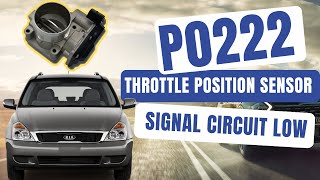
How to confirm: Using a scan tool with live data, monitor the voltage for Throttle Position Sensor 'B' (sometimes labeled TPS2). With the key on and engine off, the voltage should be stuck low (e.g., under 0.2V) and not change as the accelerator pedal is pressed. If wiring is confirmed to be good, the throttle body is faulty. 🎬 Watch: How to test and replace the electronic throttle body
Typical fix: Replace the entire electronic throttle body assembly. A relearn procedure is often required after installation, which can sometimes be completed by letting the car idle for several minutes or through specific pedal sequences, though a dealer tool may be needed in some cases.
Est. part cost: $250-$400 - Dirty or Sticking Throttle Body 🟡 Medium Probability → Shop Fuel Injection Throttle Body Carbon and grime can build up in the throttle bore over time, preventing the throttle plate from closing correctly or moving smoothly. This can cause the sensor to report a value that the PCM interprets as a fault.
How to confirm: Visually inspect the throttle body bore and plate for heavy carbon buildup after removing the intake hose. The plate may feel sticky or not move smoothly when moved by hand (with the engine off).
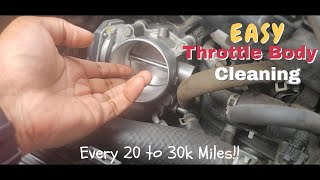
Typical fix: Clean the throttle body bore and plate thoroughly with a dedicated throttle body cleaner and a soft brush or cloth. Do not spray directly into the electronic components. 🎬 See this step-by-step throttle body cleaning guide
Est. part cost: $10-$20 - Wiring Harness or Connector Issue ⚪ Low Probability Engine vibrations and heat can cause wires to break or insulation to fray over time, especially near the throttle body connector. Rodents have also been known to chew on the soy-based wire coatings used in some Kia vehicles.
How to confirm: Visually inspect the wiring harness leading to the throttle body for any signs of damage, melting, or corrosion. Unplug the connector and check for bent, loose, or corroded pins. Use a multimeter to check for continuity and proper voltage (typically a 5V reference) and ground at the connector according to the service manual.
Typical fix: Repair the damaged section of wiring or replace the connector pigtail.
Est. part cost: $15-$50
Rare But Worth Checking
- Faulty Powertrain Control Module (PCM): → Shop Engine Control Module (ECM) This is very rare. The PCM should only be considered after all other possibilities, including the throttle body and wiring, have been exhaustively tested and ruled out.
- Faulty Accelerator Pedal Position (APP) Sensor: → Shop Accelerator Pedal Assembly While possible, a fault in the pedal sensor would typically set different codes (e.g., P2138). It's an unlikely cause for P0222 but can present similar symptoms. Check for loose floor mats interfering with the pedal first.
Diagnosis Steps
- Connect an OBD-II scanner and confirm P0222 is the primary code. Check for any other related codes like P0122 or P2135.
- Access live data on the scanner. Monitor the voltage readings for both 'Throttle Position Sensor A' and 'Throttle Position Sensor B'.
- With the ignition on but the engine off, have an assistant slowly press and release the accelerator pedal. The voltage for sensor 'A' should rise smoothly, while sensor 'B' voltage should decrease smoothly (or vice-versa, but they should be proportional). For P0222, you will likely see the 'B' sensor voltage stuck at a very low value (e.g., <0.2V) or not responding at all.
- If the data confirms a fault with the 'B' circuit, turn the vehicle off and inspect the throttle body wiring harness and connector for any visible damage, corrosion, or loose pins. Check for 5V reference and good ground at the connector with a multimeter.
- If the wiring appears okay, remove the air intake duct to access the throttle body. Inspect for heavy carbon buildup that could be impeding the throttle plate's movement.
- As a first measure, thoroughly clean the throttle body plate and bore using throttle body cleaner and a soft cloth. Do not spray directly into the electronics. Clear the codes and see if the issue is resolved.
- After cleaning, clear the codes and perform a test drive. If the code returns immediately or soon after, the electronic throttle body assembly is almost certainly faulty.
- Replace the electronic throttle body assembly. After installation, perform a throttle body relearn procedure. This may involve turning the key to the 'ON' position for 10 seconds, then 'OFF' for 10 seconds before starting, or letting the engine idle for 5-10 minutes to self-calibrate.
Parts You'll Likely Need
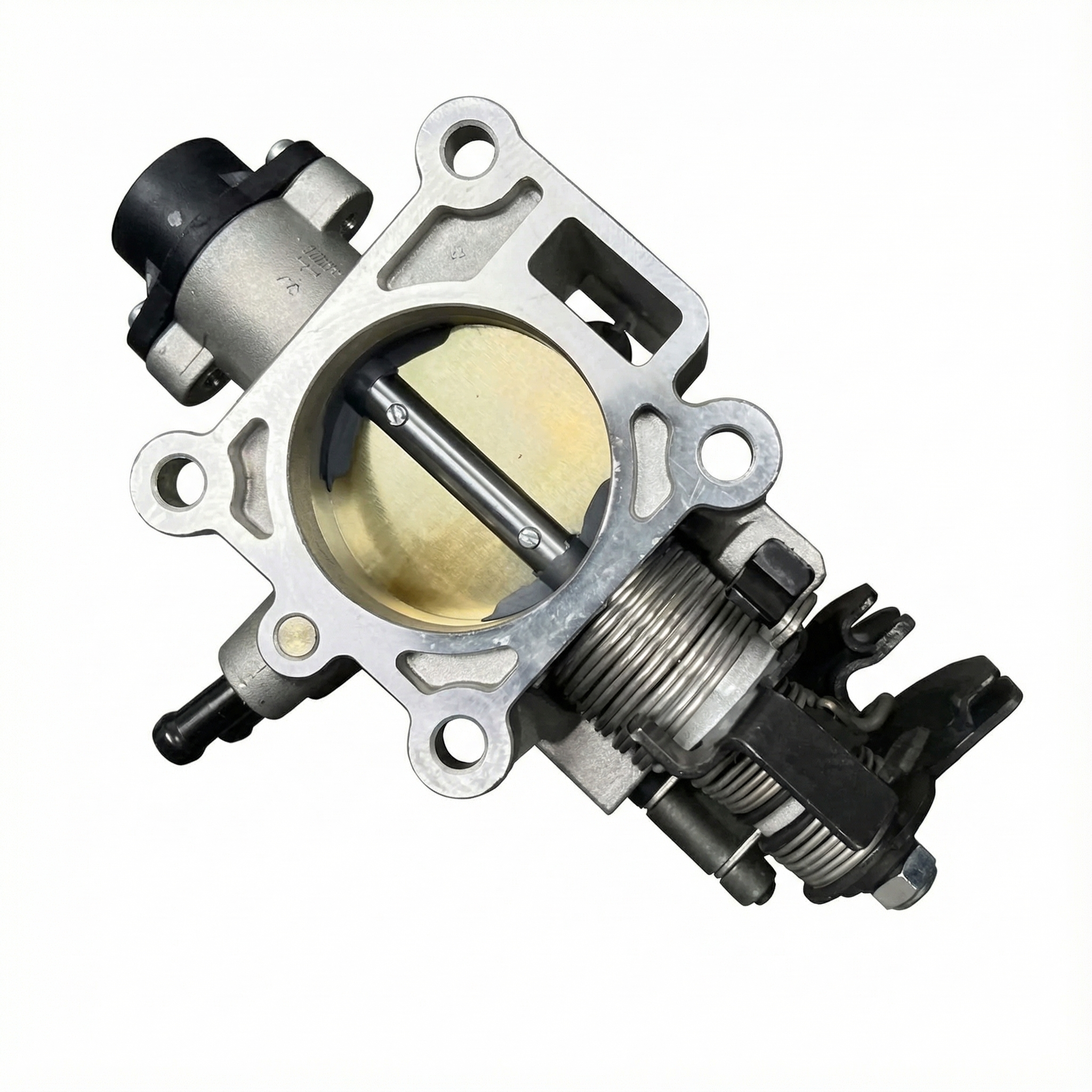
- Electronic Throttle Body Assembly
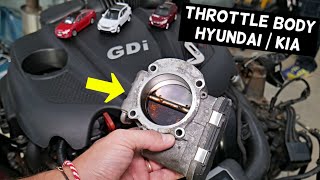
(OEM #35100-2B150 (1.6L) / 35100-23700 (2.0L Beta) / 35100-2E000 (2.0L Nu) - Note: Verify with VIN)— This is the most common cause, as the non-serviceable throttle position sensor fails internally, requiring replacement of the entire assembly.
Trusted brands: Kia (OEM), Cardone (Remanufactured), Dorman, Standard Motor Products (SMP)
OEM price range: $350-$450
Aftermarket price range: $200-$350
Related Codes That Often Appear With This One
- P0122 — This is the corresponding code for 'Throttle/Pedal Position Sensor/Switch 'A' Circuit Low Input'. Seeing both together strongly points to a problem with the throttle body assembly or its main connector/power supply.
- P2135 — This code for 'Throttle/Pedal Position Sensor/Switch 'A'/'B' Voltage Correlation' indicates the PCM sees a disagreement between the two sensor signals, which is a direct consequence of one sensor failing and reporting a low voltage.
- P1326 — This code for the Knock Sensor Detection System (KSDS) can also force the vehicle into limp mode. While it's a separate issue related to an ECU software update to detect bearing wear, the primary symptom (limp mode) is the same, which can cause confusion during diagnosis.
Platform-Specific Known Issues
- Owner on a Kia Soul forum reported that cleaning the throttle body only fixed the P0222 code for a few days before it returned, confirming the internal sensor was the root cause and requiring a full replacement.
- A common owner experience shared on YouTube and forums is the sudden onset of limp mode while driving, with the accelerator becoming completely unresponsive, highlighting the safety risk of this fault code.
Mechanic-Grade Diagnostic Values
- Throttle Position Sensor (TPS) 'B' Circuit Voltage — expected: Should sweep smoothly, often inverse to Sensor 'A', for example from ~4.5V at closed throttle to ~0.5V at wide-open throttle.. Failure: Voltage is stuck low, typically below 0.5V or even 0.2V, and does not change when the accelerator pedal is pressed.
- Throttle Position Sensor (TPS) 'A' Circuit Voltage — expected: Should sweep smoothly from a low voltage (~0.5V) at closed throttle to a high voltage (~4.5V) at wide-open throttle.. Failure: While not the direct cause of P0222, an erratic reading here could point to a shared power or ground issue.
- PCM 5V Reference Voltage (VCC) at Throttle Body Connector — expected: A steady 5 volts with the key on, engine off.. Failure: No voltage or significantly low voltage indicates a wiring issue or a fault in the PCM.
- Ground Circuit at Throttle Body Connector — expected: Should have excellent continuity to a known good ground (near 0 ohms resistance).. Failure: High resistance or an open circuit indicates a broken or corroded ground wire, which can cause low voltage codes.
Scan Tool Commands That Help
- Kia GDS (Global Diagnostic System): Actuation Test for ETC Motor — This bidirectional control allows a technician to command the throttle body motor to open and close while observing live data for TPS1 and TPS2. If the command is sent but the TPS2 voltage doesn't respond correctly, it helps confirm the fault is within the throttle body assembly itself, assuming wiring is good.
- Kia GDS (Global Diagnostic System): Resetting Adaptive Values — After replacing the throttle body, this function in the 'Vehicle S/W Management' menu can be used to clear the old learned values from the PCM, forcing it to recalibrate to the new part. This is the dealer-level equivalent of a manual relearn procedure.
Wiring & Ground Locations
- Throttle Body Connector (6-Pin) — Directly on the electronic throttle body assembly, where the engine wiring harness connects.. This is the primary connection point for both throttle position sensors (A and B), the throttle motor, the 5V reference, and the ground. A loose connection, corroded pins, or oil contamination in this connector is a common cause of intermittent or low voltage codes like P0222.
- PCM Connector E (80-Pin) — At the Powertrain Control Module (PCM), which is typically located in the engine bay.. The signal wire for TPS 'B' (THL2) runs from the throttle body directly to a specific pin on this connector (e.g., Pin E51 in some diagrams). Testing for continuity and shorts between the throttle body connector and this PCM connector pin is a definitive way to rule out a wiring problem.
Real Owner Repair Stories
- KBB User 'Yardman' (Kia (model/year not specified, but behavior is identical)) — Check engine light on, lack of engine power, unresponsive accelerator pedal.
❌ Tried (didn't work) Initial diagnosis pointed towards replacing the throttle body.
✅ What actually fixed it The main electrical connector on the throttle body was found to be loose and not fully seated. Pushing the connector in until it clicked and locked resolved the P0222 code and restored normal operation.
Model Year Variations Within This Range
- 2010-2011 vs 2012-2013 (2.0L Engine): The 2.0L engine was changed for the 2012 model year. 2010-2011 models used the 2.0L Beta II engine, while 2012-2013 models received the updated 2.0L Nu engine, which produced more power (164 hp vs 142 hp). This change requires a different throttle body assembly (Part No. 35100-23700 for Beta vs. 35100-2E000 for Nu). Using the wrong part will result in incompatibility.
- 2012-2013: For the 2012 model year refresh, Kia introduced new 6-speed manual and automatic transmissions, replacing the older 5-speed manual and 4-speed automatic. While not directly related to the P0222 code, this is a significant powertrain difference within the 2010-2013 generation.
Diagnostic Flowchart
Other Known Issues on This Vehicle
Issues unrelated to this code that are worth knowing about as an owner of this generation:
- Motor Driven Power Steering (MDPS) Coupler Failure 🔴 High — Very common; typically occurs between 70,000 and 120,000 miles. Results in a prominent 'clunking' or 'clicking' noise when turning the steering wheel. (Ref: Kia extended the warranty for this part to 10 years/unlimited miles for 2012-2013 models.)
- Engine Failure / Knocking (related to KSDS update) 🔴 High — Significant issue, particularly for the 2.0L Nu engine. Can lead to catastrophic engine failure. A software update (KSDS) was issued to detect early signs of bearing wear. (Ref: Product Improvement Campaign PI1806 (and others) for KSDS ECU update; extended warranty (15yr/150k miles) for related engine failures.)
- Catalytic Converter Failure 🟠 Medium — A recall was issued for some models due to the catalytic converter overheating, which could lead to engine damage or fire risk. (Ref: NHTSA Campaign Number: 18V907000)
- Faulty Stop Lamp Switch 🟠 Medium — Common across many Kia models of this era. Can cause brake lights to not work, or stay on, and may prevent shifting out of Park. (Ref: Recall SC098 / NHTSA Campaign Number: 13V114000.)
- Headliner Plate Detachment (Sunroof models) 🟡 Low — Affects 2010-2013 models with a sunroof. The headliner plate can detach during side curtain airbag deployment. (Ref: Recall SC112 / NHTSA Campaign Number: 14V822000.)
Used vs. New Parts: Buying Guide for This Vehicle
When a used part is the smart pick: A used throttle body from a low-mileage donor vehicle can be a cost-effective option, as the part is a simple bolt-on replacement. However, since the failure is often electronic and age-related, it carries a significant risk of premature failure.
Donor-vehicle mileage cap: roughly under 60000 miles for the part to have meaningful remaining life.
What to inspect on the donor part:
- Check the throttle plate for excessive carbon buildup, which might suggest a poorly maintained engine.
- Inspect the electrical connector pins for any signs of corrosion, bending, or moisture.
- If possible, bring a multimeter to the junkyard and check the resistance between the TPS sensor pins to ensure they are not open or shorted (though this is not a definitive test).
- Ensure the part number on the used unit exactly matches the required part for your engine (1.6L, 2.0L Beta, or 2.0L Nu).
OEM-only on this vehicle (don't cheap out):
- While not strictly OEM-only, using a new OEM or a reputable remanufactured part is highly recommended for the electronic throttle body. The reliability of this critical component directly impacts vehicle safety and drivability.
Aftermarket brands forum-validated for this vehicle:
- Dorman (often improves on OE design flaws)
- Cardone (remanufactured, a common cost-effective alternative)
- Standard Motor Products (SMP)
Brands owners have reported issues with on this vehicle:
- Unbranded, no-name parts from online marketplaces should be avoided due to inconsistent quality control and high failure rates for electronic components.
Real Owner Stories
Aggregated from forums and TSBs cited above. Mileages and costs reflect what owners reported in those sources.
2012 Kia Soul 2.0L
Symptoms: The car started knocking and codes appeared even without a check engine light initially; confusion regarding the KSDS recall and engine health.
What fixed it: Discussion of various engine issues and the KSDS ECU update (PI1806).
Source hint: Reddit r/KiaSoulClub - Thread titled '2012 Kia Soul 2.0L started knocking'
2010-2013 Kia Soul
Symptoms: Sudden onset of limp mode while driving, with the accelerator becoming completely unresponsive.
What fixed it: Replacement of the electronic throttle body assembly after cleaning failed to provide a permanent fix.
Source hint: vehicle_specific_issues
2012 Kia Soul
Symptoms: Owner performing DIY repairs including fixing a steering coupler; noted the DIY nature of the community for common failures.
What fixed it: Manual repair/replacement of the steering coupler.
Source hint: Reddit - A user fixing a steering coupler on their 2012 Soul
Related OBD-II Codes
Frequently Asked Questions
My 2012 Kia Soul 2.0L is knocking and now has a P0222 code; is this covered under the KSDS recall?
Can I just clean the throttle body on my Kia Soul to fix the P0222 code?
Is there a recall for the throttle body on the 2010-2013 Kia Soul?
Do I need a special tool to perform the relearn procedure after replacing the throttle body?
Why did my Kia Soul suddenly lose power and limit RPM to 2000?
Helpful Videos

We Have This Part in Stock

The information in this article is provided for general reference and educational purposes only. Vehicle specifications, procedures, and part compatibility can vary by production date, trim level, and region. Always consult your vehicle's factory service manual and verify part numbers before purchasing or performing repairs. Safety-critical components such as airbags, seat belts, and braking systems should be installed by a qualified professional.
- Kia Soul:
- 🧭 Diagnostic Flowchart
- 🎬 Helpful Videos
- 🛍️ Shop This Part
- What's Unique About the 2010-2013 Kia Soul
- Symptoms You May Notice
- Most Likely Causes
- Rare But Worth Checking
- Diagnosis Steps
- Parts You'll Likely Need
- Related Codes That Often Appear With This One
- Platform-Specific Known Issues
- Mechanic-Grade Diagnostic Values
- Scan Tool Commands That Help
- Wiring & Ground Locations
- Real Owner Repair Stories
- Model Year Variations Within This Range
- Other Known Issues on This Vehicle
- Used vs. New Parts: Buying Guide for This Vehicle
- Real Owner Stories
- 2012 Kia Soul 2.0L
- 2010-2013 Kia Soul
- 2012 Kia Soul
- Related OBD-II Codes
- Frequently Asked Questions
- 🎟️ Get 5% Off