

P0222 on 2013-2018 Nissan Altima: Causes, Fixes, and Throttle Body Issues
On a 2013-2018 Altima with the 2.5L engine, code P0222 almost always means the electronic throttle body has failed internally. The fix is to replace the entire throttle body assembly, as the sensor is not sold separately. The most common OEM part is 16119-3TA0A, with Hitachi being a trusted aftermarket supplier. After replacement, a mandatory three-part 'relearn' procedure is required.
- P0222 on a 2013-2018 Altima almost always points to a failed electronic throttle body.
- Do not drive the vehicle; it is unsafe due to a severe lack of power ('limp mode').
- The fix is to replace the entire throttle body assembly; the internal sensors cannot be replaced separately.
- After replacement, you MUST perform the Idle Air Volume Learning procedure to prevent idling problems.
- Always replace the throttle body gasket at the same time to avoid vacuum leaks.
What's Unique About the 2013-2018 Nissan Altima
For the fifth-generation Altima (2013-2018) with the QR25DE engine, the dual throttle position sensors are integrated directly into the electronic throttle body assembly (Part No. 16119-3TA0A) and are not sold separately. While the code's definition is generic, the solution for this specific platform is almost always the replacement of the entire throttle body unit. Unlike some vehicles where cleaning or wiring repairs are common fixes, on the Altima, an internal sensor failure within the sealed unit is the most frequent point of failure, a well-documented issue across many Nissan models using this type of throttle body.
Symptoms You May Notice
- Check Engine Light is on
- Vehicle enters 'limp mode' with severely limited engine power
- No or very slow acceleration, even with the gas pedal pressed down
- Hesitation or stumbling during acceleration
- Rough or erratic idle
- Engine may stall at stops
- Unresponsive or jerky throttle response
- Replacing the Accelerator Pedal Position (APP) sensor. While the APP sensor also relates to throttle control, P0222 specifically points to the 'B' circuit on the throttle body itself, not the pedal.
- Assuming a simple cleaning will fix the electronic fault. While cleaning is good maintenance, it does not repair the failed internal sensor circuit that triggers this specific code.
Most Likely Causes
- Failed Electronic Throttle Body Assembly 🔴 High Probability → Shop Fuel Injection Throttle Body The throttle position sensors (TPS) are integrated into the throttle body. The internal electronics of the sensor fail over time, which is a common issue on this platform. The non-contact position sensor's circuitry fails, leading to the low voltage reading.
How to confirm: Using a scan tool, monitor the live data for TPS1 and TPS2 voltages while manually opening the throttle (with the engine off). If TPS2 voltage remains flat and near zero while TPS1 voltage changes, the throttle body assembly has failed. This is the definitive diagnostic step. 🎬 See how to test and replace the electronic throttle body.
Typical fix: Replace the entire electronic throttle body assembly (OEM Part: 16119-3TA0A) and the associated gasket. After replacement, an 'Idle Air Volume Learning' procedure must be performed.
Est. part cost: $150-$450 - Wiring or Connector Issue ⚪ Low Probability While less common than throttle body failure, the harness connector can suffer from corrosion, backed-out pins, or chafing. A specific TSB (NTB14-013) addresses a grounding wire issue that can cause electrical noise, though not directly linked to P0222, it highlights wiring sensitivity in this area.
How to confirm: Visually inspect the wiring harness and 6-pin connector at the throttle body for any signs of damage, corrosion, or loose pins. Use a multimeter to perform a pin-out test, checking for 5V reference, ground, and signal wire continuity back to the ECM.
Typical fix: Repair the damaged section of the wiring harness or clean/reseat the connector. In some cases, replacing the connector pigtail is necessary.
Est. part cost: $10-$50 - Dirty Throttle Body Very-Low Probability → Shop Fuel Injection Throttle Body Carbon can build up behind the throttle plate, but this is unlikely to cause a 'Circuit Low' code. A dirty throttle body typically causes sticking, high idle, or different codes related to performance, not a specific sensor circuit failure. Cleaning is often attempted but rarely solves P0222 on this platform.
How to confirm: Remove the air intake hose and visually inspect the throttle plate and bore for significant carbon buildup.
Typical fix: Clean the throttle body bore and plate with a dedicated throttle body cleaner and a soft cloth. An 'Idle Air Volume Learning' procedure is required after cleaning. However, this is not a reliable fix for P0222.
Est. part cost: $5-$15
Rare But Worth Checking
- Faulty Engine Control Module (ECM): → Shop Engine Control Module (ECM) Extremely rare, but possible. This should only be considered after a new throttle body and verified wiring do not solve the code. Often, an ECM failure will be accompanied by other codes, such as P0605 (Internal Control Module ROM Error). A diagnostic YouTuber, Pine Hollow Auto Diagnostics, documented a case on a Nissan where P0222 and P0605 appeared together, confirming an ECM failure. 🎬 Watch this diagnostic case study on the P0222 and P0605 codes.
Diagnosis Steps
- Connect an OBD-II scanner and confirm P0222 is the primary code. Check for any other related codes like P0122 or P2135.
- Turn the ignition ON (engine OFF). Using the scanner's live data function, observe the voltage readings for both Throttle Position Sensor 1 and Throttle Position Sensor 2.
- Have an assistant slowly press and release the gas pedal. The two sensor voltages should change smoothly. Sensor 1 typically sweeps from low to high voltage, while Sensor 2 sweeps from high to low. They should be mirror images.
- If Sensor 2's voltage is stuck at a very low value (e.g., under 0.5V) and does not change, the problem is isolated to that circuit.
- Visually inspect the throttle body's electrical connector for looseness, corrosion, or backed-out pins. Check the wiring harness leading to it for any visible damage.
- If the wiring and connector look good, the electronic throttle body assembly is the most likely culprit and should be replaced.
- After replacement, perform the three mandatory relearn procedures in order: 'Accelerator Pedal Released Position Learning', 'Throttle Valve Closed Position Learning', and 'Idle Air Volume Learning'. This is a precise, timed sequence of key cycles and pedal presses, often called the 'pedal dance', and is critical for proper operation. 🎬 Watch: Step-by-step Nissan throttle body relearn procedure.
Parts You'll Likely Need
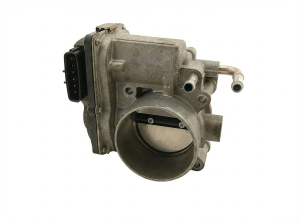
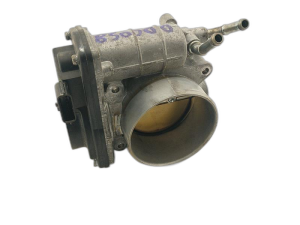
- Electronic Throttle Body Assembly
(OEM #16119-3TA0A)— This is the most common failure point for code P0222, as the internal throttle position sensor fails and is not serviceable separately.
Trusted brands: Nissan (OEM), Hitachi (ETB0012 - often the OEM supplier), Bosch, Dorman
OEM price range: $400-$640
Aftermarket price range: $150-$350 - Throttle Body Gasket
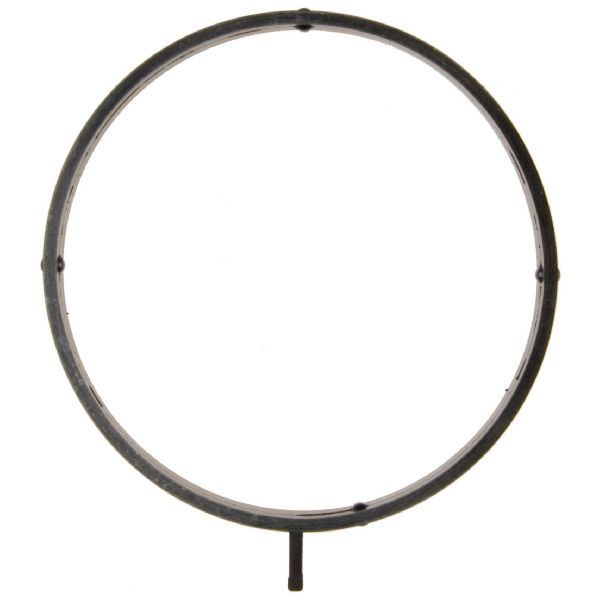
(OEM #16175-3TA0A)— The gasket should always be replaced when the throttle body is removed to prevent vacuum leaks. The Hitachi aftermarket part often includes a new gasket.
Trusted brands: Nissan (OEM), Fel-Pro, Mahle
OEM price range: $10-$20
Aftermarket price range: $5-$15
Related Codes That Often Appear With This One
- P0122 — This code is for 'Throttle Position Sensor 'A' Circuit Low'. If both P0122 and P0222 are present, it strongly suggests a problem with the throttle body assembly or its connector/power/ground, as both sensors are failing.
- P2135 — This code indicates 'Throttle/Pedal Position Sensor/Switch 'A'/'B' Voltage Correlation'. It means the signals from the two sensors don't match, which is a direct result of one sensor failing (as indicated by P0222). This is a very common companion code.
- P0605 — This code points to an internal error in the Engine Control Module (ECM). If seen with P0222, it could indicate the ECM is the root cause, not the throttle body.
Technical Service Bulletins (TSBs) & Recalls
- NTB14-013: Addresses a hiss/whine noise from a ground wire near the transmission on 2013-2014 Altimas. While not directly for P0222, it points to the importance of proper grounding in this area.
- NTB14-077: Service information bulletin clarifying that only Genuine Nissan NS-3 CVT fluid should be used in the transmission.
Platform-Specific Known Issues
- Failure of the internal sensors in the electronic throttle body is a well-documented weak point on this and other Nissan models of the era using the QR25DE engine.
- A mandatory, multi-step 'relearn' procedure is required after replacing the throttle body or disconnecting the battery. Failure to perform this procedure, which requires precise timing, will result in an unstable or high idle.
- Owner Story: A user on a Maxima forum (with a similar throttle system) experienced limp mode with code P2135. After replacing the gas pedal and cleaning grounds to no avail, the final fix was a new Hitachi throttle body, confirming the common failure pattern.
Mechanic-Grade Diagnostic Values
- Throttle Position Sensor 'B' (TPS2) Voltage — expected: Approximately 4.5V at closed throttle, sweeping down smoothly to ~0.5V at wide-open throttle. It should be a mirror image of TPS1.. Failure: Voltage is stuck below 0.5V and does not change as the throttle plate moves.
- Throttle Position Sensor 'A' (TPS1) Voltage — expected: Approximately 0.5V at closed throttle, sweeping up smoothly to ~4.5V at wide-open throttle.. Failure: While not the direct cause of P0222, a failure here would set P0122. If both are stuck, it indicates a power, ground, or major component failure.
- 5V Reference Voltage at Throttle Body Connector — expected: Approximately 5.0 volts at Pin 5 (and Pin 2 for the other sensor) with key on, engine off.. Failure: Voltage significantly lower than 5.0V or absent indicates a wiring issue or a fault in the ECM's 5V reference circuit.
- Ground Circuit at Throttle Body Connector — expected: Near 0 ohms resistance between Pin 4 (and Pin 1) and a known good chassis ground.. Failure: High resistance (more than a few ohms) indicates a poor ground connection, which can cause low voltage readings.
Scan Tool Commands That Help
- Nissan CONSULT-III / CONSULT-III Plus: Work Support > Idle Air Vol Learn — This is a mandatory function to be performed after replacing the throttle body or cleaning it. It calibrates the base idle airflow for the ECM.
- Nissan CONSULT-III / CONSULT-III Plus: Active Test > Power Balance — While not directly for P0222, this test can be used to check for underlying engine performance issues that might be confused with a throttle problem by individually cutting fuel to each cylinder to check for an RPM drop.
- Nissan CONSULT-III / CONSULT-III Plus: Data Monitor — Used to view live data streams for 'THRTL SEN 1' and 'THRTL SEN 2' to confirm if the sensor voltage is dropping out, which is the primary diagnostic step.
Wiring & Ground Locations
- F24 — The 6-pin connector at the electronic throttle body itself, located on the front of the engine.. This is the primary connection point for the throttle position sensors and throttle motor. Checking for 5V reference, ground, and signal voltage at these pins is a key diagnostic step. Pin 3 is the signal wire for TPS2, Pin 6 is the signal for TPS1, Pins 1 and 4 are grounds, and Pins 2 and 5 are the 5V reference supplies.
- Engine Grounds (General) — Key ground points for the engine harness are typically located on the topside of the upper intake manifold and on the cylinder head.. A poor engine ground can introduce electrical noise or cause a voltage drop across all sensors, potentially leading to erroneous low input codes like P0222.
- ECM Connector — The Engine Control Module (ECM) is located behind the glove box.. This is the termination point for the throttle body wiring. A continuity test from connector F24 to the corresponding pins at the ECM connector can rule out a wiring harness break.
Real Owner Repair Stories
- Kelley Blue Book User Review (Nissan Frontier V6 (similar electronic throttle system)) — Vehicle set code P0222 and had lack of engine power.
❌ Tried (didn't work) Initial diagnosis pointed towards sensor failure.
✅ What actually fixed it The main electrical connector at the throttle body was not fully seated. Pushing the connector in until it clicked and locked resolved the issue completely. The code was cleared and did not return.
OEM Part Supersession History
16119-3TA0A→None, this is the current and most widely used part number for this application.— N/A
Heads up: This part number is also used on the 2014-2020 Nissan Rogue with the same QR25DE engine, making it a widely available part.
Model Year Variations Within This Range
- 2016-2018: The Altima received a facelift for the 2016 model year. While the QR25DE engine's power output remained the same at 182 hp, it received minor internal changes to reduce friction and the compression ratio was increased from 10.0:1 to 10.3:1. However, these changes did not affect the throttle body part number or the diagnosis for code P0222.
Diagnostic Flowchart
Other Known Issues on This Vehicle
Issues unrelated to this code that are worth knowing about as an owner of this generation:
- Catastrophic CVT Transmission Failure 🔴 High — Extremely common, often occurring between 60,000-100,000 miles. Symptoms include shuddering, whining, and loss of power. (Ref: Multiple class-action lawsuits led to warranty extensions, but no universal recall was issued.)
- Rear Lower Control Arm Corrosion Failure 🔴 High — Common in 'Salt Belt' states, leading to cracks and potential separation of the arm from the subframe. Typically occurs after 100,000+ miles. (Ref: Nissan issued a voluntary service campaign (P9324) for 2013 models, but NHTSA closed its investigation without a full recall.)
- Failing A/C Compressor or Internal Relay (IPDM) 🟠 Medium — Widespread complaints of A/C blowing warm air. The cause can be the compressor clutch coil, or a non-serviceable relay inside the Intelligent Power Distribution Module (IPDM). (Ref: TSB NTB16-112a addresses A/C clutch coil failure.)
- Excessive Oil Consumption (QR25DE) 🟠 Medium — Some engines may consume oil due to issues with piston rings, requiring frequent top-offs to prevent engine damage.
- Water Leaking into Passenger Footwell 🟡 Low — Can be caused by clogged sunroof drains or improperly sealed body seams, leading to wet carpets and potential mold. (Ref: TSB NTB14-105a addresses a similar issue on the Nissan Rogue, indicating a potential design pattern.)
Used vs. New Parts: Buying Guide for This Vehicle
When a used part is the smart pick: Buying a used throttle body for a P0222 code on this Altima is NOT recommended. The failure is electronic and internal to the sealed sensor unit. A used part from a junkyard has an unknown history and is likely to have the same wear-related failure or fail soon after installation.
Donor-vehicle mileage cap: roughly under 40000 miles for the part to have meaningful remaining life.
What to inspect on the donor part:
- If buying used is unavoidable, source from the lowest-mileage donor vehicle possible.
- Visually inspect the connector pins for any corrosion or damage.
- Ensure the throttle plate moves freely without sticking (though this does not guarantee electronic integrity).
Aftermarket brands forum-validated for this vehicle:
- Hitachi: Hitachi is widely reported to be the original equipment manufacturer (OEM) for Nissan. The Hitachi ETB0012 is often identical to the genuine Nissan part but at a lower cost.
- Bosch
- Standard Motor Products (SMP)
Brands owners have reported issues with on this vehicle:
- Unbranded, no-name parts from online marketplaces should be avoided. Forum users and mechanics report a high failure rate with cheap copies that may not perform the relearn procedure correctly or fail prematurely.
Real Owner Stories
Aggregated from forums and TSBs cited above. Mileages and costs reflect what owners reported in those sources.
2012 Nissan Altima 2.5L
Symptoms: The vehicle had codes P0222 and P0605. The technician confirmed signals from the throttle body were reaching the ECM, but the ECM data was incorrect.
What fixed it: Replacement of the ECM (Engine Control Module).
Source hint: YouTube/PineHollowAutoDiagnostics
Nissan Maxima (Similar Throttle System)
Symptoms: Experienced a classic limp mode event on the freeway where the car suddenly decelerated and the gas pedal became completely unresponsive.
What fixed it: Replacement of the throttle body assembly.
Source hint: maxima.org forum citation
Nissan Maxima (Similar Throttle System)
Symptoms: Vehicle entered limp mode with code P2135. The owner tried replacing the gas pedal and cleaning grounds, but the issue persisted.
What fixed it: Installation of a new Hitachi throttle body.
Source hint: vehicle_specific_issues owner story
Related OBD-II Codes
Frequently Asked Questions
Does TSB NTB14-013 explain why my 2013 Altima has code P0222?
Can I just clean the throttle body on my 2015 Altima to fix this code?
What is the specific replacement part number for the 2013-2018 Altima throttle body?
I replaced the throttle body on my 2.5L Altima but now the idle is high. Did I get a bad part?
Is the P0222 code related to the common CVT transmission failures on this generation of Altima?
Does the Nissan Rogue share this same throttle body issue?
Helpful Videos


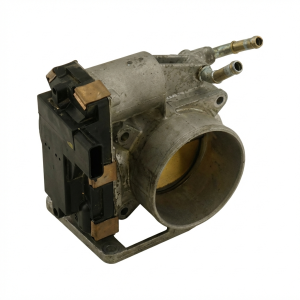
Used OEM Parts in Stock
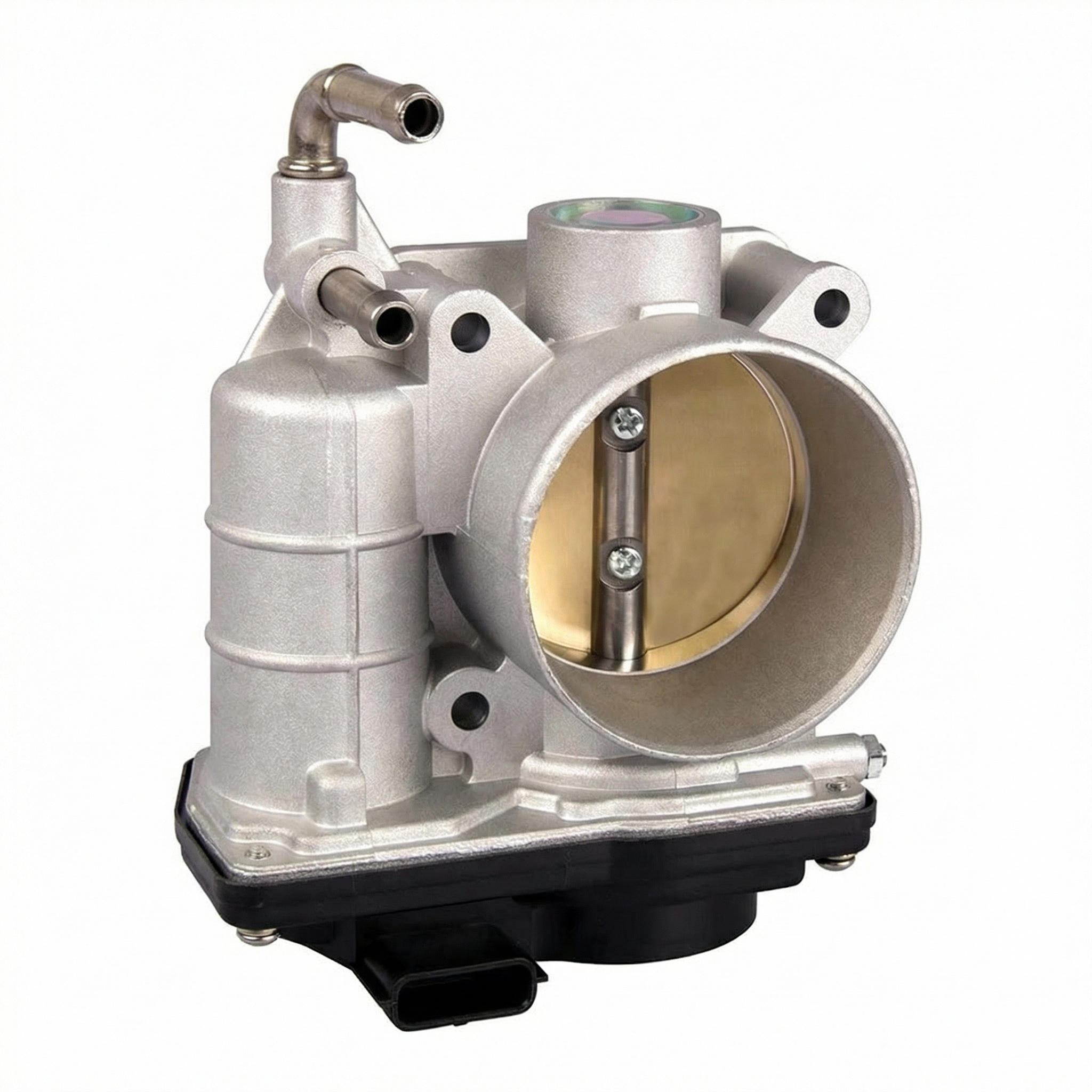
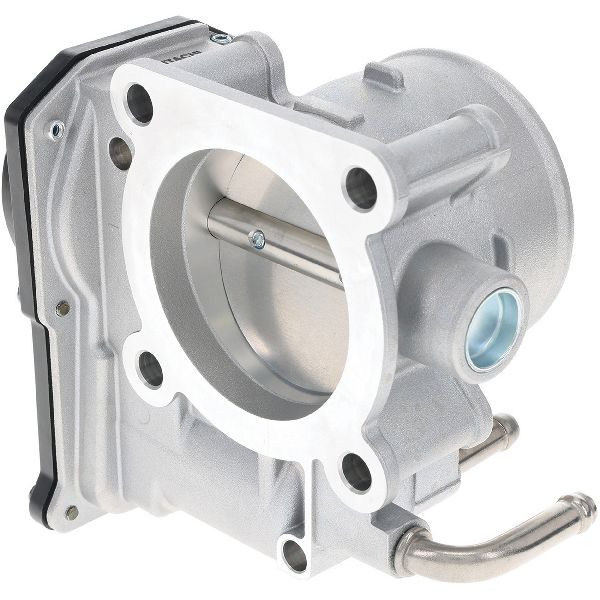
New Aftermarket Parts Available



The information in this article is provided for general reference and educational purposes only. Vehicle specifications, procedures, and part compatibility can vary by production date, trim level, and region. Always consult your vehicle's factory service manual and verify part numbers before purchasing or performing repairs. Safety-critical components such as airbags, seat belts, and braking systems should be installed by a qualified professional.
- Nissan Altima:
- 🧭 Diagnostic Flowchart
- 🎬 Helpful Videos
- 🛍️ Shop This Part
- What's Unique About the 2013-2018 Nissan Altima
- Symptoms You May Notice
- Most Likely Causes
- Rare But Worth Checking
- Diagnosis Steps
- Parts You'll Likely Need
- Related Codes That Often Appear With This One
- Technical Service Bulletins (TSBs) & Recalls
- Platform-Specific Known Issues
- Mechanic-Grade Diagnostic Values
- Scan Tool Commands That Help
- Wiring & Ground Locations
- Real Owner Repair Stories
- OEM Part Supersession History
- Model Year Variations Within This Range
- Other Known Issues on This Vehicle
- Used vs. New Parts: Buying Guide for This Vehicle
- Real Owner Stories
- 2012 Nissan Altima 2.5L
- Nissan Maxima (Similar Throttle System)
- Nissan Maxima (Similar Throttle System)
- Related OBD-II Codes
- Frequently Asked Questions
- 🎟️ Get 5% Off