

P0222 on 2014-2020 Nissan Rogue: Throttle Position Sensor Circuit Low Causes and Fixes
On a 2014-2020 Nissan Rogue, code P0222 is almost always caused by a failed electronic throttle body assembly. The vehicle will enter 'limp mode' with severely reduced power. The fix is to replace the entire throttle body, as the internal sensor is not sold separately, and then perform an 'Idle Air Volume Learning' procedure.
- P0222 on a 2014-2020 Rogue indicates a low voltage signal from the secondary throttle position sensor.
- This code will put the vehicle into a 'limp mode' with drastically reduced power, and it is unsafe to drive.
- The most likely cause is a failed electronic throttle body assembly, which must be replaced as a complete unit.
- After replacing or cleaning the throttle body, an 'Idle Air Volume Learning' procedure is mandatory to restore correct idle speed.
What's Unique About the 2014-2020 Nissan Rogue
The 2014-2020 Nissan Rogue (T32 generation) is known to have issues with its electronic throttle body. Unlike some vehicles where the sensor can be replaced independently, on the Rogue the sensors are integrated into the throttle body assembly, meaning the entire unit must be replaced when a sensor fails. It is also critical that after cleaning or replacing the throttle body, a specific 'Idle Air Volume Learning' procedure is performed to prevent high or erratic idle speeds, a common issue on these Nissans if the step is skipped.
Symptoms You May Notice
- Check Engine Light illuminated
- Severely reduced engine power (fail-safe or 'limp mode')
- Hesitation or stumbling on acceleration
- Unstable or rough idle
- Engine stalling, especially at low speeds or when stopping
- Difficulty starting the engine
- Replacing the accelerator pedal position (APP) sensor. While the APP sensor is part of the throttle control system, P0222 specifically points to the sensor at the throttle body ('B' circuit), not the pedal.
Most Likely Causes
- Faulty Electronic Throttle Body Assembly 🔴 High Probability → Shop Fuel Injection Throttle Body The internal throttle position sensors are a common failure point and are integrated into the assembly, making them non-serviceable individually. This is a well-documented issue on Nissan vehicles from this era.
How to confirm: With a diagnostic scan tool, observe the live data for 'TPS B' voltage. If it reads near zero or well below the 0.5V specification and does not change with throttle input, the sensor has failed.
Typical fix: Replace the entire electronic throttle body assembly. 🎬 Watch: How to test and replace the electronic throttle body An 'Idle Air Volume Learning' procedure must be performed immediately after replacement.
Est. part cost: $250-$1100 - Dirty or Clogged Throttle Body 🟡 Medium Probability → Shop Fuel Injection Throttle Body Carbon and oil vapor from the PCV system can build up around the throttle plate, causing it to stick or not close properly, which can lead to incorrect sensor readings at idle.
How to confirm: Visually inspect the throttle bore and plate for significant black carbon buildup that could restrict movement.
Typical fix: Clean the throttle body thoroughly with a dedicated throttle body cleaner and a soft cloth. An 'Idle Air Volume Learning' procedure is required after cleaning.
Est. part cost: $10-$20 - Wiring or Connector Damage ⚪ Low Probability
How to confirm: Visually inspect the wiring harness and connector at the throttle body for any signs of damage, corrosion, or loose pins. Use a multimeter to check for a stable 5-volt reference and good ground at the connector.
Typical fix: Repair the damaged section of the wiring harness or clean/replace the connector.
Est. part cost: $5-$50
Rare But Worth Checking
- Engine Control Module (ECM) Failure: → Shop Engine Control Module (ECM) While rare, a faulty ECM can fail to correctly process the signal from a perfectly good sensor. This is sometimes seen with code P0605 alongside P0222. This should only be considered after the throttle body and wiring have been confirmed to be in good condition.
Diagnosis Steps
- Connect an OBD-II scanner and confirm P0222 is the primary code. Check for any other related codes like P0122 or P2101.
- Using the scanner's live data function, monitor the voltage readings for Throttle Position Sensor 'B' (and 'A' for comparison).
- With the key on but the engine off, slowly press the accelerator pedal. The voltage for TPS 'B' should sweep smoothly from low (around 0.5V) to high (around 4.5V). If it stays at or near 0V, the sensor has likely failed.
- If the sensor reading is erratic, the next step is to inspect the physical components.
- Remove the intake boot and visually inspect the throttle body bore and plate for heavy carbon buildup. If dirty, clean it thoroughly with appropriate cleaner.
- Inspect the electrical connector and wiring harness leading to the throttle body. Look for any frayed wires, loose pins, or signs of corrosion.
- If the wiring is good and cleaning does not resolve the issue, the throttle body assembly is faulty and needs to be replaced.
- After cleaning or replacement, perform the 'Idle Air Volume Learning' procedure. This is a mandatory step. A manual procedure exists for those without a high-end scan tool. 🎬 Watch: How to perform the idle relearn using a scan tool
Parts You'll Likely Need
- Electronic Throttle Body Assembly
(OEM #16119-3TA0A (or superseding part numbers))— This is the most common cause of P0222, as the internal throttle position sensor fails and is not sold separately.
Trusted brands: Hitachi (OEM supplier, part ETB0023), Bosch, Nissan Genuine
OEM price range: $800-$1100
Aftermarket price range: $250-$500
Related Codes That Often Appear With This One
- P0122 — This code is for 'Throttle Position Sensor 'A' Circuit Low'. Since both sensors (A and B) are in the same housing, a failure of the assembly can sometimes trigger faults for both circuits simultaneously.
- P2101 — This code means 'Throttle Actuator Control Motor Circuit Range/Performance'. It often appears with sensor codes because if the ECM can't trust the sensor data, it may also flag a fault with the motor's performance as a secondary consequence.
- P0605 — This code indicates an 'Internal Control Module Read Only Memory (ROM) Error'. In some Nissan cases, an internal ECM fault can manifest as a false P0222 code. If both are present, the ECM is a more likely suspect.
Technical Service Bulletins (TSBs) & Recalls
- NTB16-081: While this TSB is for a different model (Titan), it shows a pattern of Nissan addressing drivability issues like RPM fluctuations, which are related to the electronic throttle control system.
- NTB16-027 / NTB16-021a: These TSBs for other models (Sentra/Altima) show that Nissan has issued ECM reprogramming updates to fix issues like P0101 which can be related to incorrect sensor data interpretation. This establishes a precedent for software fixes affecting engine management.
Platform-Specific Known Issues
- Manual Idle Air Volume Learning Procedure: For DIYers without a Nissan CONSULT scan tool, a manual relearn procedure can be performed by following a specific sequence of key turns and pedal presses. The steps involve warming the engine, turning the ignition on/off in a timed sequence, and then pressing/releasing the accelerator pedal five times, followed by holding it down until the Check Engine Light blinks and then goes solid. This procedure is crucial to avoid a high or surging idle after service. 🎬 See this manual idle relearn procedure walkthrough
Mechanic-Grade Diagnostic Values
- TPS 'B' (Sensor 2) Signal Voltage — expected: Nissan TPS sensors often work in opposition. While Sensor 'A' sweeps from ~0.5V to ~4.5V, Sensor 'B' may sweep from ~4.5V down to ~0.5V. The key is a smooth, consistent change without dropouts.. Failure: A P0222 is set when the voltage is below the minimum threshold (e.g., < 0.2V - 0.5V) and does not change, or is stuck low.
- 5V Reference Voltage at Throttle Body Connector — expected: Approximately 4.8V - 5.2V with key on, engine off.. Failure: No voltage or significantly low voltage indicates a wiring issue or a problem with the ECM's 5V reference circuit.
- Sensor Ground at Throttle Body Connector — expected: Near 0V, with very low resistance to chassis ground (less than 1 ohm).. Failure: Voltage present on the ground wire or high resistance to ground indicates a bad ground connection.
- Bias Voltage on Signal Wire (Connector Disconnected) — expected: With the throttle body connector unplugged and key on, probing the signal wire terminal on the HARNESS side may show a 'bias voltage' from the ECM, often around 5V. This is used by the ECM to check circuit integrity.. Failure: This is a test for the harness and ECM, not the sensor. The absence of this bias voltage could point to a wiring or ECM issue.
Scan Tool Commands That Help
- Nissan CONSULT or equivalent professional scan tool: Throttle Valve Closed Position Learning — This function erases the previous learned value for the throttle valve's closed position from the ECM's memory. It must be performed before the 'Idle Air Volume Learning' when the throttle body is replaced or cleaned.
- Nissan CONSULT or equivalent professional scan tool: Idle Air Volume Learning (IAVL) — This is a mandatory function used to teach the ECM the precise throttle plate position that corresponds to the target idle RPM. It must be run after cleaning or replacing the throttle body to prevent high idle, stalling, or erratic idle speed.
- Bi-directional Scan Tool: Throttle Actuator Control (TAC) Active Test — This allows the technician to command the throttle plate to open and close, verifying the function of the internal motor. If the plate doesn't respond to commands but the wiring tests good, it confirms a failed throttle body.
Wiring & Ground Locations
- Engine Ground (Main) — There is a primary ground strap going from the intake manifold area to the battery negative terminal or nearby chassis point.. A poor main engine ground can introduce electrical noise and voltage offsets, potentially affecting the sensitive low-voltage signals from the throttle position sensors.
- Engine Ground (Firewall) — A secondary ground strap is often located from the exhaust side of the cylinder head to the vehicle's firewall.. Redundant grounds ensure system stability. If the main ground is compromised, this one becomes critical. Corrosion or looseness here can cause intermittent electronic issues.
- ECM Connector F50 (Example) — This is the harness connector at the Electric Throttle Control Actuator (the throttle body itself).. All voltage and resistance tests are performed at the pins of this connector. A service manual diagram is needed to identify the specific pin numbers for TPS1 Power, TPS1 Signal, TPS2 Power, TPS2 Signal, Motor Control, and Ground.
Real Owner Repair Stories
- KBB User Comment (Nissan Frontier V6 (Similar ETC System)) — P0222 code present.
❌ Tried (didn't work) Initial diagnosis pointed towards sensor or component failure.
✅ What actually fixed it The main electrical connector on the throttle body was not fully seated and locked. Pushing the connector in until it clicked and clearing the code resolved the issue completely.
OEM Part Supersession History
16119-3TA0A→This part number is listed as fitting the entire 2014-2020 Rogue range with the 2.5L engine. While newer numbers may exist, 16119-3TA0A is the widely recognized baseline part.— Standard part lifecycle updates.
Model Year Variations Within This Range
- 2017-2020: The Nissan Rogue received a mid-cycle refresh for the 2017 model year, which included updated styling, new wheel designs, and interior changes like a new steering wheel. While the core 2.5L QR25DE engine and throttle system remained the same, there were software and electronic module changes, such as making forward emergency braking standard in a mid-year '2017.5' update. These changes do not alter the fundamental diagnosis of P0222 but mean that ECM software updates could be a relevant factor on later models.
Diagnostic Flowchart
Other Known Issues on This Vehicle
Issues unrelated to this code that are worth knowing about as an owner of this generation:
- CVT Transmission Failure 🔴 High — Extremely common, with failures often occurring between 60,000 and 120,000 miles. Symptoms include shuddering, hesitation, whining, and complete failure. (Ref: Multiple class-action lawsuits and warranty extensions have been issued, but no universal recall. TSBs like NTB16-110L address related symptoms.)
- AC Compressor Failure 🟠 Medium — Commonly reported issue where the AC blows warm air due to a failed compressor clutch or internal compressor failure.
- Clogged Sunroof Drains 🟠 Medium — The front sunroof drain tubes are prone to clogging with debris, causing water to back up and leak into the cabin through the A-pillars and headliner. (Ref: No recall, but it is a widely documented problem with DIY and professional cleaning solutions available.)
- Automatic Emergency Braking (AEB) Malfunctions 🔴 High — Some model years experience 'phantom braking,' where the AEB system engages unexpectedly without an obstacle, posing a safety risk. (Ref: Subject of a class-action lawsuit and NHTSA investigation.)
Used vs. New Parts: Buying Guide for This Vehicle
When a used part is the smart pick: Given the high failure rate of the internal sensors, buying a used throttle body is a significant gamble. It should only be considered as a last resort for a short-term fix if budget is the absolute primary constraint. A used part with a clear warranty and return policy from a reputable dismantler is essential.
Donor-vehicle mileage cap: roughly under 50000 miles for the part to have meaningful remaining life.
What to inspect on the donor part:
- Check for a clean throttle plate and bore; excessive carbon may indicate a high-mileage or poorly maintained engine.
- Ensure the electrical connector pins are straight, clean, and free of corrosion.
- Verify the part number (16119-3TA0A) matches exactly.
- Ask for the donor vehicle's mileage if possible.
OEM-only on this vehicle (don't cheap out):
- While not strictly 'OEM-only', the OEM supplier (Hitachi) is the most recommended choice for reliability. Nissan Genuine parts are identical but cost more.
Aftermarket brands forum-validated for this vehicle:
- Hitachi: As the Tier 1 OEM supplier, their aftermarket part (e.g., ETB0023, ETB0025) is considered equivalent to the genuine Nissan part and is the most trusted option.
- Bosch: Generally a reputable supplier of automotive electronics.
Brands owners have reported issues with on this vehicle:
- Unbranded/white-box parts: Forum discussions and mechanic experience suggest that ultra-low-cost, unbranded throttle bodies have a high rate of premature failure or calibration issues.
- Cardone (Remanufactured): While A1 Cardone is a major brand, some users express caution with remanufactured electronic parts compared to new units from an OEM supplier like Hitachi.
- Dorman: Dorman is known for creating improved-over-OE designs, but for critical electronic components like this, sticking with the OEM supplier (Hitachi) is often the safer bet for plug-and-play compatibility.
Real Owner Stories
Aggregated from forums and TSBs cited above. Mileages and costs reflect what owners reported in those sources.
2018 Nissan Rogue SV
Symptoms: Car went into 'malfunction mode' with AEB and check engine lights on, shut off while driving, and then would not start or stay started for more than a minute.
What fixed it: The owner identified multiple codes including P0222, P0123, and P2138, though the final successful repair was not confirmed in the snippet.
Source hint: r/NissanRogue
2011 Nissan Pathfinder
Symptoms: Experienced the P0222 code and confirmed symptoms of limp mode.
What fixed it: The issue was identified as a throttle position sensor failure, a commonality across Nissan's lineup.
Source hint: Reddit r/AutoCodesCom: P0222 2011 NISSAN PATHFINDER
Nissan Altima
Symptoms: No-throttle response and P0222 code.
What fixed it: Testing with an oscilloscope revealed the ECM was the root cause, not the throttle body.
Source hint: YouTube: 'Nissan Altima No-Throttle P0222/P0605'
Related OBD-II Codes
Frequently Asked Questions
Can I fix the P0222 code on my Nissan Rogue by just replacing the sensor inside the throttle body?
Do I need a professional scan tool to fix the high idle after cleaning my Rogue's throttle body?
Is there a TSB for the P0222 code specifically for the Rogue?
What should the voltage reading be for TPS 'B' on my Rogue?
Could my Rogue's P0222 code be caused by the ECM instead of the throttle body?
Helpful Videos
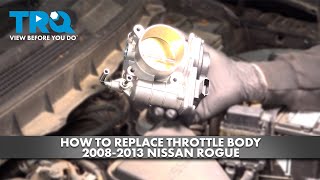

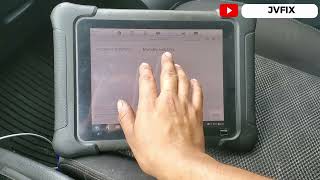

Used OEM Parts in Stock
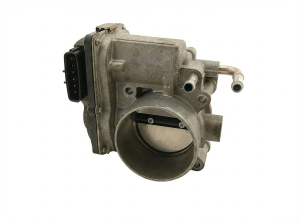
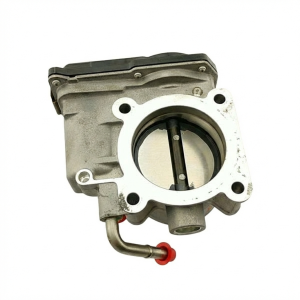
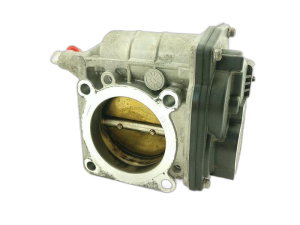
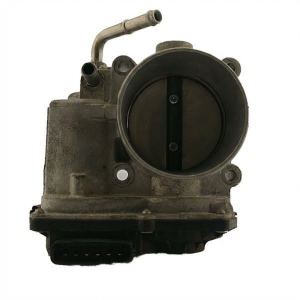
New Aftermarket Parts Available

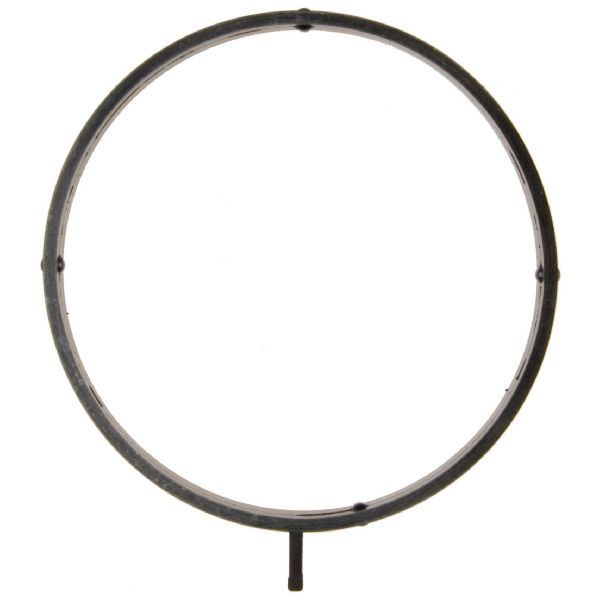

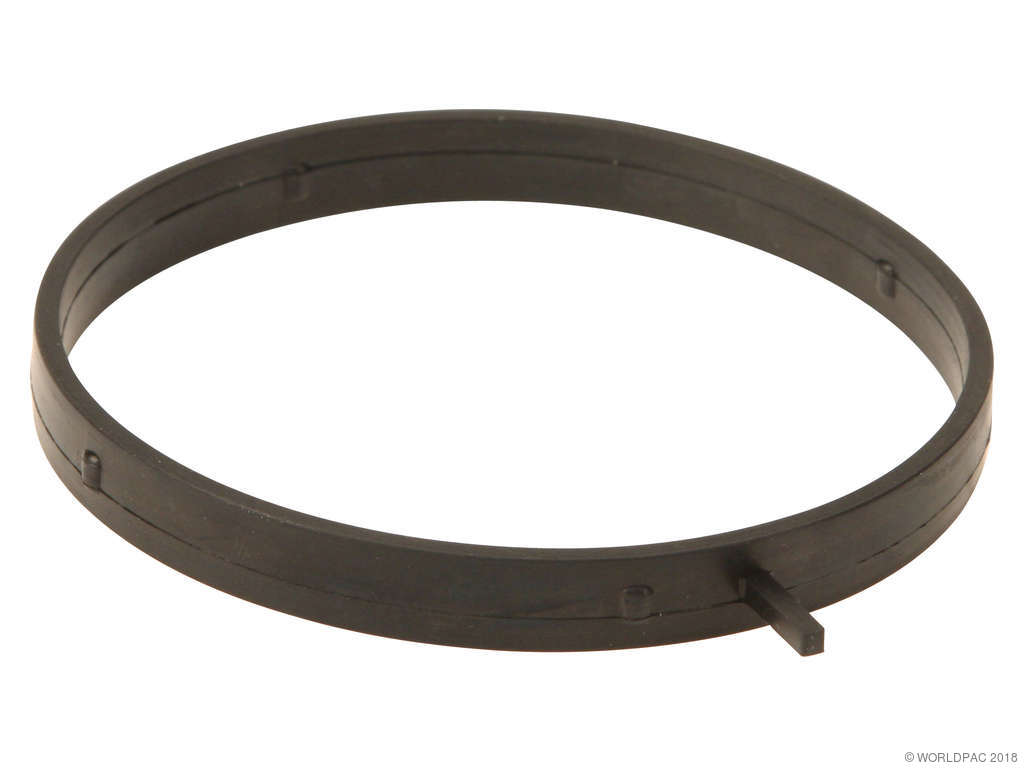

The information in this article is provided for general reference and educational purposes only. Vehicle specifications, procedures, and part compatibility can vary by production date, trim level, and region. Always consult your vehicle's factory service manual and verify part numbers before purchasing or performing repairs. Safety-critical components such as airbags, seat belts, and braking systems should be installed by a qualified professional.
- Nissan Rogue:
- 🧭 Diagnostic Flowchart
- 🎬 Helpful Videos
- 🛍️ Shop This Part
- What's Unique About the 2014-2020 Nissan Rogue
- Symptoms You May Notice
- Most Likely Causes
- Rare But Worth Checking
- Diagnosis Steps
- Parts You'll Likely Need
- Related Codes That Often Appear With This One
- Technical Service Bulletins (TSBs) & Recalls
- Platform-Specific Known Issues
- Mechanic-Grade Diagnostic Values
- Scan Tool Commands That Help
- Wiring & Ground Locations
- Real Owner Repair Stories
- OEM Part Supersession History
- Model Year Variations Within This Range
- Other Known Issues on This Vehicle
- Used vs. New Parts: Buying Guide for This Vehicle
- Real Owner Stories
- 2018 Nissan Rogue SV
- 2011 Nissan Pathfinder
- Nissan Altima
- Related OBD-II Codes
- Frequently Asked Questions
- 🎟️ Get 5% Off