

P0223 on 2011-2016 Chevrolet Cruze: Throttle Position Sensor 'B' High Voltage Causes and Fixes
On a 2011-2016 Chevy Cruze, code P0223 almost always means the entire electronic throttle body assembly has failed. The internal sensors are a known weak point. The fix is to replace the complete throttle body, which costs around $100-$200 for an aftermarket part or $170-$300 for an OEM part. This is a common DIY repair that requires a simple 'throttle relearn' procedure afterward.
- P0223 on a 2011-2016 Cruze is a very common code that almost always points to a failed throttle body.
- Symptoms are severe and include 'Reduced Engine Power' mode and poor acceleration, making the car unsafe to drive in traffic.
- Do not replace the accelerator pedal; the fault is located at the engine.
- Replacing the throttle body is a straightforward DIY job for most home mechanics. A 'throttle relearn' procedure is required after installation, which can often be done without special tools.
What's Unique About the 2011-2016 Chevrolet Cruze
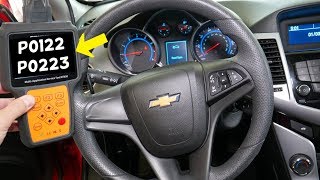
The first-generation Chevrolet Cruze (and its platform-mate, the Chevy Sonic) has a well-documented history of premature throttle body failures. The internal, non-serviceable throttle position sensors are the common point of failure, often leading to a P0223 code, sometimes accompanied by P0122 (TPS 'A' Circuit Low) and P2135 (TPS 'A'/'B' Voltage Correlation). While on other vehicles this code could point to wiring or the accelerator pedal, on the 2011-2016 Cruze, the throttle body assembly itself is the overwhelming cause. The issue is so common that numerous repair videos and forum discussions are dedicated to this specific failure on this platform.
Symptoms You May Notice
- Check Engine Light is on
- "Reduced Engine Power" message on the instrument cluster
- "Service Stabilitrak" message may appear
- Very slow or sluggish acceleration
- Unstable or rough idle
- Vehicle may stall
- In some cases, the traction control light may also illuminate
- Replacing the Accelerator Pedal Position (APP) Sensor. While the APP sensor can cause similar symptoms, the P0223 code on a Cruze is almost always related to the throttle body at the engine, not the pedal assembly inside the car. 🎬 Watch: How to diagnose pedal vs throttle body sensor codes. The codes specifically point to the throttle body sensors ('A' and 'B'), not the pedal sensors.
Most Likely Causes
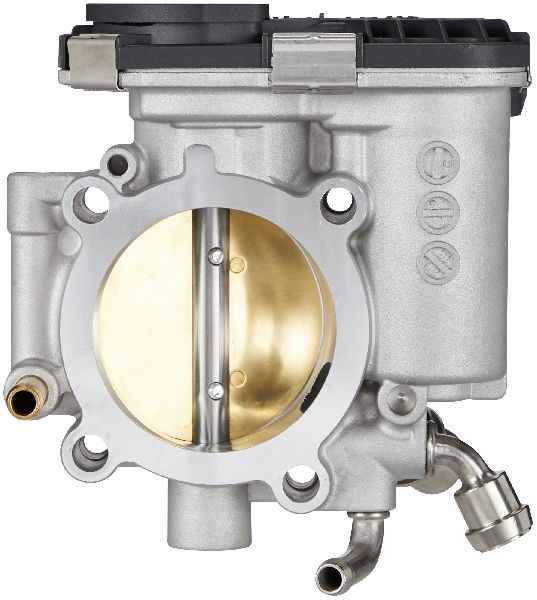
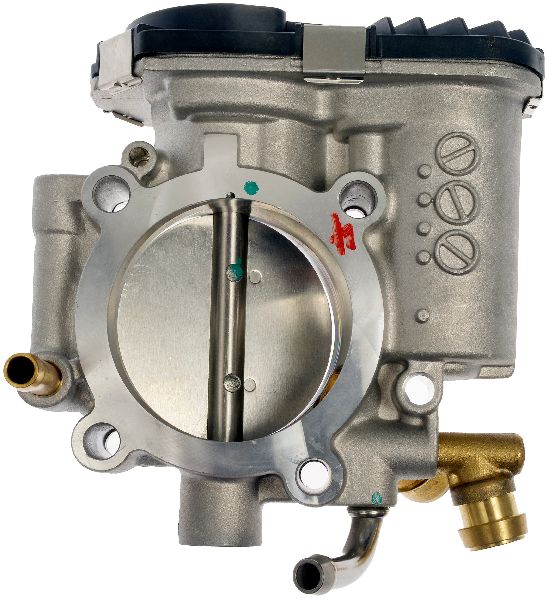
- Failed Electronic Throttle Body Assembly 🔴 High Probability → Shop Fuel Injection Throttle Body The internal throttle position sensors (TPS) are a known high-failure part on this platform. The sensors are integrated into the assembly and cannot be replaced individually. The failure can sometimes be intermittent, occurring more frequently in cold weather. The plastic gears or wiper contacts inside the assembly can wear out or get contaminated.
How to confirm: With a scan tool, observe the live data for TPS Sensor 1 and TPS Sensor 2. With the key on and engine off, slowly press the accelerator. The voltages should move smoothly and in opposite directions. For P0223, you will likely see TPS 2 voltage stuck at a high value (e.g., >4.7V) regardless of throttle plate position. TPS 1 may simultaneously show a very low voltage, triggering a P0122 code.
Typical fix: Replace the entire throttle body assembly. 🎬 See this step-by-step guide for replacing the throttle body. After replacement, a throttle relearn procedure must be performed. This can often be done without a scan tool by following a specific sequence of ignition on/off and idling periods.
Est. part cost: $100-$300 - Wiring Harness or Connector Issue ⚪ Low Probability While less common than throttle body failure, the wiring harness connector can develop issues. A poor connection can cause high resistance, leading to an incorrect high voltage reading. Some owners on forums have noted that wiggling the connector can temporarily fix the issue, pointing to a bad connection or a wiring fault near the plug.
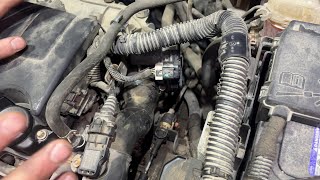
How to confirm: Visually inspect the wiring harness and electrical connector going to the throttle body. Look for any signs of chafing, corrosion, bent pins, or loose connections. With the engine running, carefully perform a 'wiggle test' on the harness and connector to see if it affects the idle or triggers the code. Check for 5V reference and good ground at the connector pins.
Typical fix: Repair the damaged section of the wiring harness or replace the connector pigtail.
Est. part cost: $10-$40 - Faulty Negative Battery Cable ⚪ Low Probability The first-gen Cruze is subject to a special coverage program (GM Bulletin 14311B) for an insufficient crimp on the negative battery cable. This can cause a host of seemingly unrelated electrical issues and warning lights due to unstable system voltage, including Stabilitrak errors and, in rare cases, could contribute to sensor voltage reading errors.
How to confirm: Check for other electrical symptoms like a flickering radio display, random warning lights (ABS, Traction, Steering), or a no-start condition. Inspect the negative battery cable for looseness at both the battery and chassis ground points.
Typical fix: Replace the negative battery cable with the updated part. This was covered under a special warranty for 10 years/120,000 miles.
Est. part cost: $20-$50
Rare But Worth Checking
- Faulty Engine Control Module (ECM): → Shop Engine Control Module (ECM) This is extremely rare. The ECM should only be considered after definitively ruling out the throttle body and all related wiring. A faulty ECM could theoretically send out an incorrect voltage reading even with a good sensor.
Diagnosis Steps
- Connect an OBD-II scanner and confirm P0223 is the active code. Note any other codes present, such as P0122 or P2135, which strongly point to the throttle body.
- Using the scanner's live data function, monitor the voltage readings for 'Throttle Position Sensor 1' and 'Throttle Position Sensor 2'.
- With the key in the 'On' position (engine off), observe the baseline voltages. They should be at opposite ends of their range (e.g., one near 0.5V, one near 4.5V).
- Slowly press the accelerator pedal to the floor. The voltage readings should change smoothly in opposite directions without any dropouts or spikes.
- If TPS 2 voltage is stuck high (typically >4.7V) and does not change, or if it's erratic, the throttle body is almost certainly faulty.
- As a final check, turn the vehicle off and inspect the electrical connector and wiring at the throttle body for any visible damage, corrosion, or looseness. Perform a wiggle test on the connector and harness.
- If the wiring appears intact and the sensor data points to a fault, replace the throttle body assembly.
- After replacement, perform a throttle relearn procedure. A common manual method is: Turn ignition ON for 3 minutes, turn OFF for 60 seconds, start the engine and let it idle for 3 minutes, then turn OFF for 60 seconds again. The idle should now be stable. 🎬 Watch: How to perform the manual throttle relearn procedure. Driving the vehicle may also allow the ECM to relearn on its own.
Parts You'll Likely Need
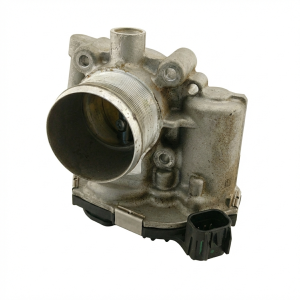
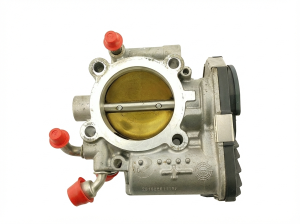
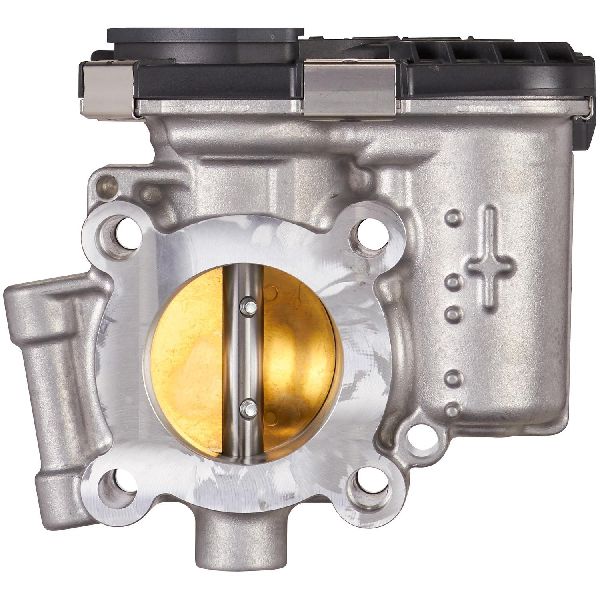
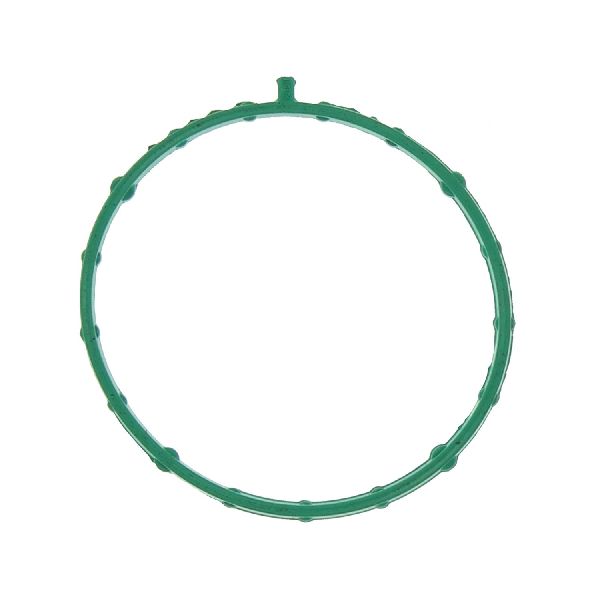
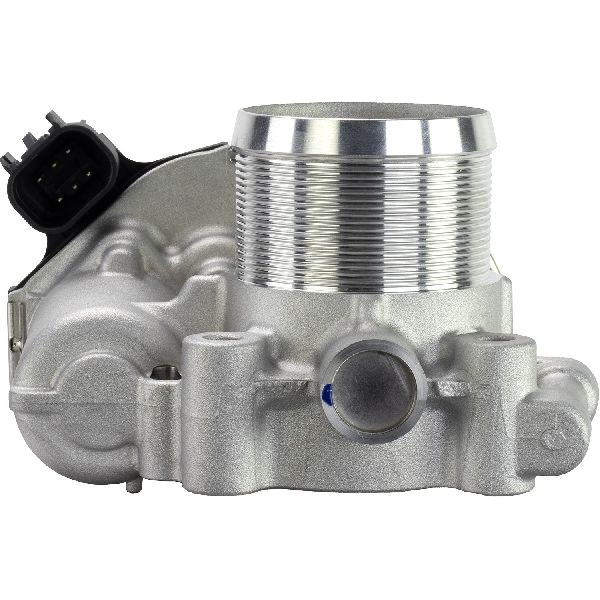
- Electronic Throttle Body Assembly
(OEM #55561495 (supersedes 55577375))— This is the primary cause of code P0223 on the 2011-2016 Cruze due to the failure of its integrated, non-serviceable position sensors. Part number 55561495 is the updated replacement for the original 55577375.
Trusted brands: ACDelco (OEM), Bosch, Dorman
OEM price range: $170-$300
Aftermarket price range: $100-$220
Related Codes That Often Appear With This One
- P0122 — This code indicates 'TPS 'A' Circuit Low'. It's common to see P0122 and P0223 together, indicating a complete internal failure of both position sensors within the throttle body, as they are designed to read opposite to each other.
- P2135 — This code means 'Throttle/Pedal Position Sensor/Switch 'A'/'B' Voltage Correlation'. It sets when the ECM sees that the signals from TPS 'A' and TPS 'B' do not agree with each other, which is a direct result of one sensor failing high (P0223) or low (P0122).
Technical Service Bulletins (TSBs) & Recalls
- While no TSB is specific to P0223, GM Special Coverage Bulletin 14311B addresses a faulty negative battery cable on 2011-2015 Cruzes, which can cause widespread electrical issues and is a potential, though unlikely, contributing factor.
Platform-Specific Known Issues
- On CruzeTalk.com forums, numerous owners of 2011-2016 models describe the sudden onset of 'Reduced Engine Power' mode, with codes P0223 and P0122, which was resolved by replacing the throttle body assembly.
- A Reddit user with a 2016 Cruze Limited reported P0122 and P0223 codes appearing despite the car driving normally at first; other users immediately pointed to the common throttle body failure or a less common bad battery ground cable.
Mechanic-Grade Diagnostic Values
- Throttle Position Sensor 1 (TPS1) Voltage — expected: Should move smoothly from ~4.5V (idle/closed) to ~0.5V (wide open).. Failure: A reading stuck low (triggering P0122) or erratic movement.
- Throttle Position Sensor 2 (TPS2) Voltage — expected: Should move smoothly from ~0.5V (idle/closed) to ~4.0-4.5V (wide open).. Failure: A reading stuck high, typically above 4.5V, confirms a P0223 fault.
- 5-Volt Reference at Throttle Body Connector — expected: Steady 5 volts with key on, engine off.. Failure: Voltage that is significantly higher or lower indicates a wiring or ECM issue, not a sensor failure.
- Throttle Body Mounting Bolt Torque — expected: 71 in-lbs (approx. 8 Nm). Failure: N/A
Scan Tool Commands That Help
- GDS2 / Professional Scan Tool: Throttle/Idle Learn Reset — This function should be used after replacing the throttle body to force the ECM to perform a sweep and learn the new sensor's closed, open, and intermediate positions. This is more reliable than the manual relearn and can resolve issues if the manual procedure fails.
- GDS2 / Professional Scan Tool: Throttle Actuator Test — This bidirectional control allows you to command the throttle plate to open and close while observing live TPS voltage data. If the plate moves correctly but the TPS 'B' voltage remains high, it definitively confirms a sensor failure within the throttle body assembly.
Wiring & Ground Locations
- G105 — On the frame rail, located under the battery tray or at the left front of the engine compartment.. This is a primary engine compartment and ECM ground. A loose or corroded connection here can cause unstable system voltage and erratic sensor readings across multiple systems, potentially contributing to sensor fault codes.
- G107 — On the lower left rear of the engine block.. This is a key engine block ground. The ECM and its sensors, including the throttle body, rely on a solid engine ground path. A poor connection here can affect the ground reference for the TPS, leading to incorrect voltage readings.
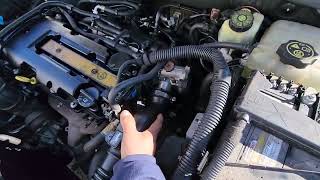
- Throttle Body Connector — Directly on the electronic throttle body assembly, where the engine air intake tube connects.. This is the most common location for a wiring-related fault. A wiggle test on this connector can reveal intermittent shorts or open circuits. Pins to test are the 5V reference, ground, and the two signal wires for TPS1 and TPS2.
- ECM Connector X1 / X2 — The Engine Control Module (ECM) is located on the left side of the engine compartment, near the strut tower.. Testing for voltage and continuity at the ECM pins can definitively rule out a wiring break between the throttle body and the control module.
Real Owner Repair Stories
- Reddit user in r/MechanicAdvice (2014 Chevrolet Cruze) — Car went 'completely haywire and died,' with various electrical issues.
❌ Tried (didn't work) Dealership diagnosed a bad alternator.
✅ What actually fixed it The owner identified that the vehicle still had the original faulty negative battery cable, which is covered under GM Special Coverage 14311B. Forcing the dealership to address the known battery cable issue resolved the widespread electrical problems that were being misdiagnosed as a failed alternator. - YouTube - 'Repairs and Reviews' (2013 Chevrolet Cruze 1.4L Turbo) — Reduced engine power message, no throttle input, code P2135 (TPS Correlation).
❌ Tried (didn't work) Initial diagnosis pointed to a standard throttle body failure.
✅ What actually fixed it The root cause was a pinhole leak in the plastic coolant reservoir that was spraying coolant directly onto the throttle body's electronics, causing it to short out. After replacing the throttle body, the technician noticed it was wet and traced the leak. The final fix required replacing both the throttle body AND the leaking coolant reservoir to prevent a repeat failure.
OEM Part Supersession History
55577375→55561495— GM updated the part to improve reliability and address the common internal sensor failures.
Heads up: The new part number (55561495) is a direct replacement for the old one and is fully compatible with all specified 2011-2016 Cruze models with the 1.8L engine.
Model Year Variations Within This Range
- 2011-2016: The throttle body part number and failure mode are consistent for the 1.8L engine across this generation. However, the 1.4L Turbo engine uses a different throttle body (PN 55565489). While it can also fail, the diagnosis and parts are not interchangeable. The negative battery cable issue (Bulletin 14311B) applies to 2011-2015 models.
Diagnostic Flowchart
Other Known Issues on This Vehicle
Issues unrelated to this code that are worth knowing about as an owner of this generation:
- PCV System Failure 🔴 High — Very common. A check valve in the intake manifold fails, and/or a diaphragm in the valve cover ruptures. Can cause oil leaks, rough idle, and other engine codes (P0171, P1101). (Ref: GM extended warranty coverage for some vehicles to replace the valve cover and/or intake manifold.)
- Water Pump Leak 🔴 High — Common failure, especially on the 1.4L Turbo engine. Coolant leaks from the pump weep hole or shaft seal, leading to overheating if not addressed. (Ref: Special Coverage Adjustment 14371 provided a 10-year/150,000-mile extended warranty for this part.)
- Negative Battery Cable Failure 🟠 Medium — Widespread issue due to an insufficient crimp on the cable end. Causes various electrical problems, warning lights, and potential stalling. (Ref: Special Coverage Adjustment 14311B provided a 10-year/120,000-mile extended warranty.)
- Coolant Leaks (Outlet/Thermostat Housing & Reservoir) 🟠 Medium — Plastic coolant components like the outlet housing and the expansion tank are prone to cracking and leaking over time.
- Valve Cover Oil Leak 🟠 Medium — Often occurs as a result of the PCV system failure increasing crankcase pressure, but the gasket can also fail on its own. Causes oil to leak onto the exhaust manifold.
- Automatic Transmission Failure/Harsh Shifting 🔴 High — Reported more frequently in earlier model years (2011-2012). Can include slipping, harsh shifts, or complete failure.
Used vs. New Parts: Buying Guide for This Vehicle
When a used part is the smart pick: A used throttle body can be a cost-effective option if sourced from a very low-mileage donor vehicle. However, given that this is a high-failure part, the risk of the used part failing soon is significant. It only makes sense if the cost is extremely low and you are comfortable with the risk and potential for repeat labor.
Donor-vehicle mileage cap: roughly under 50000 miles for the part to have meaningful remaining life.
What to inspect on the donor part:
- Verify the part number on the used unit is the updated version (55561495), not the original (55577375).
- Inspect the electrical connector pins for any signs of corrosion, moisture, or damage.
- Look at the throttle plate and bore; it should be relatively clean with minimal carbon buildup.
- Ask for the donor vehicle's VIN to check its mileage and confirm it's from a compatible year/engine.
Aftermarket brands forum-validated for this vehicle:
- ACDelco (OEM)
- Bosch (Often the OE manufacturer for GM)
- Dorman
- SKP
Brands owners have reported issues with on this vehicle:
- Avoid unbranded, no-name parts from online marketplaces, as their internal electronics are of unknown quality and may fail prematurely or not calibrate correctly during the relearn procedure.
Real Owner Stories
Aggregated from forums and TSBs cited above. Mileages and costs reflect what owners reported in those sources.
2011-2016 Chevrolet Cruze
Symptoms: Sudden onset of 'Reduced Engine Power' mode, with codes P0223 and P0122.
What fixed it: The issue was resolved by replacing the throttle body assembly.
Source hint: CruzeTalk.com forums
2016 Chevrolet Cruze Limited
Symptoms: P0122 and P0223 codes appeared, though the car was driving normally at first.
What fixed it: Other owners pointed to the common throttle body failure or a less common bad battery ground cable as the likely fix.
Source hint: Reddit r/cruze
Related OBD-II Codes
Frequently Asked Questions
My 2014 Cruze is showing 'Reduced Engine Power' and 'Service Stabilitrak' along with code P0223. Are these related?
Can I just replace the throttle position sensor (TPS) on my Cruze instead of the whole throttle body?
After replacing the throttle body on my Cruze, do I need a special scan tool for the relearn procedure?
I heard about a bad battery cable causing electrical problems on the Cruze. Could that be the reason for my P0223 code?
My scanner is showing both P0223 and P0122. What does this mean?
Is this P0223 throttle body issue common on other GM vehicles?
Helpful Videos
Used OEM Parts in Stock
New Aftermarket Parts Available


The information in this article is provided for general reference and educational purposes only. Vehicle specifications, procedures, and part compatibility can vary by production date, trim level, and region. Always consult your vehicle's factory service manual and verify part numbers before purchasing or performing repairs. Safety-critical components such as airbags, seat belts, and braking systems should be installed by a qualified professional.
- Chevrolet Cruze:
- 🧭 Diagnostic Flowchart
- 🎬 Helpful Videos
- 🛍️ Shop This Part
- What's Unique About the 2011-2016 Chevrolet Cruze
- Symptoms You May Notice
- Most Likely Causes
- Rare But Worth Checking
- Diagnosis Steps
- Parts You'll Likely Need
- Related Codes That Often Appear With This One
- Technical Service Bulletins (TSBs) & Recalls
- Platform-Specific Known Issues
- Mechanic-Grade Diagnostic Values
- Scan Tool Commands That Help
- Wiring & Ground Locations
- Real Owner Repair Stories
- OEM Part Supersession History
- Model Year Variations Within This Range
- Other Known Issues on This Vehicle
- Used vs. New Parts: Buying Guide for This Vehicle
- Real Owner Stories
- 2011-2016 Chevrolet Cruze
- 2016 Chevrolet Cruze Limited
- Related OBD-II Codes
- Frequently Asked Questions
- 🎟️ Get 5% Off