

P0223 on 2011-2016 Hyundai Elantra: Throttle Position Sensor 'B' Circuit High Fixes
On a 2011-2016 Elantra, code P0223 is almost always caused by a failing throttle body assembly. Since the sensor is integrated, the entire unit must be replaced. Cleaning the throttle body first is a wise, low-cost diagnostic step. The correct OEM part number is typically 35100-2E000.
- P0223 on a 2011-2016 Elantra points to a high voltage signal from the throttle position sensor 'B'.
- The most likely cause is a failed throttle body assembly, as the sensor is built-in and not sold separately. The OEM part number is 35100-2E000.
- Before replacing parts, inspect the wiring and perform a thorough cleaning of the throttle body, as this can sometimes resolve the issue.
- After cleaning or replacing the throttle body, a simple ignition-cycle relearn procedure is necessary to prevent idle problems.
- Driving with this code is not advised due to severe power reduction ('limp mode') and the risk of stalling.
What's Unique About the 2011-2016 Hyundai Elantra
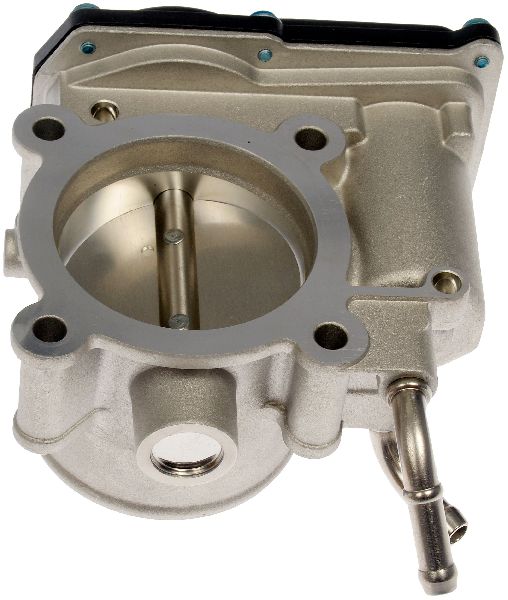
For the fifth-generation (MD/UD) Elantra with the 1.8L or 2.0L Nu engine, the throttle position sensor (TPS) is not a separate, replaceable part. It is integrated directly into the electronic throttle body assembly. This means that if the sensor itself fails—a common cause for P0223—the entire throttle body must be replaced. This differs from older vehicles where the TPS could be unbolted and replaced independently.
Symptoms You May Notice
- Check Engine Light is on
- Vehicle enters 'limp mode' with drastically reduced power
- Poor, hesitant, or no acceleration
- Rough or unstable idling
- Engine stalling, especially when coming to a stop or at low speeds
- Cruise control may not work
- Harsh or delayed shifting in automatic transmissions
- Unresponsive accelerator pedal
- Replacing the accelerator pedal position sensor (APPS). The P0223 code specifically refers to the sensor at the throttle body ('B' circuit), not the one connected to the gas pedal.
- Replacing the throttle body without first checking for simple wiring issues or attempting to clean the unit.
- Assuming an aftermarket throttle body will perform as well as OEM. Some owners report premature failure with non-OEM parts.
Most Likely Causes
- Faulty Throttle Body Assembly 🔴 High Probability → Shop Fuel Injection Throttle Body The internal electronics of the integrated Throttle Position Sensor (TPS) are a common failure point on this platform. The potentiometer within the sensor can wear out or short internally, causing it to send a constant high-voltage signal to the PCM.
How to confirm: After confirming wiring is intact, the most definitive test is to replace the throttle body. A diagnostic scan tool can monitor the TPS 'B' voltage; if it's stuck high (near 5V) and doesn't change when the throttle plate is moved, the assembly is faulty. A multimeter can also be used to test for a smooth change in resistance across the sensor pins as the throttle plate is manually moved; jumps or dead spots indicate failure.
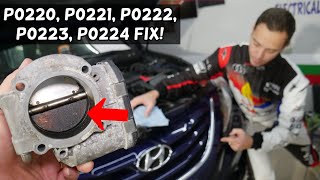
Typical fix: Replace the entire throttle body assembly. The sensor is not sold separately. The common OEM part number is 35100-2E000. 🎬 Watch: Understanding P0223 and throttle sensor codes on your Hyundai.
Est. part cost: $150-$400 - Wiring or Connector Issue 🟡 Medium Probability The engine bay environment can cause wiring to become brittle or connectors to corrode over time. A short to power on the signal wire, an open in the ground circuit, or a poor connection at the throttle body or PCM can cause a high voltage reading.
How to confirm: Visually inspect the wiring harness and connector at the throttle body for damage, corrosion, or loose pins. Use a multimeter to check for 5V reference voltage, a good ground, and test the signal wire for a short to voltage. Wiggling the harness while monitoring the voltage can help identify intermittent connection problems.
Typical fix: Repair the damaged section of the wiring harness or clean/replace the connector.
Est. part cost: $10-$50 - Dirty Throttle Body ⚪ Low Probability → Shop Fuel Injection Throttle Body Carbon and gunk can build up around the throttle plate, causing it to stick or move slowly. While this more commonly causes idle issues or other codes, it can sometimes lead to erratic sensor readings if the plate cannot return to its expected position, indirectly causing a sensor circuit fault.
How to confirm: Remove the air intake hose and visually inspect the throttle bore and plate for significant carbon buildup.
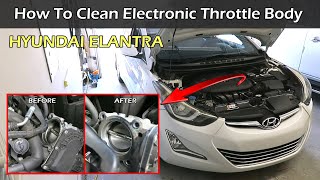
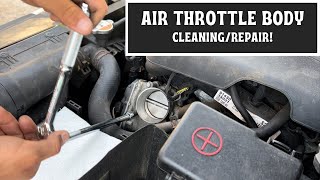
Typical fix: Clean the throttle body thoroughly with a dedicated throttle body cleaner and a soft cloth. A relearn procedure is required afterward. 🎬 See a step-by-step guide to cleaning your Elantra throttle body.
Est. part cost: $10-$15
Rare But Worth Checking
- Faulty Powertrain Control Module (PCM): → Shop Engine Control Module (ECM) This is very rare. The PCM should only be considered after all other possibilities, including the throttle body and wiring, have been exhaustively tested and ruled out.
Diagnosis Steps
- Read the fault codes with an OBD-II scanner to confirm P0223 is present and note any other codes.
- Check for any Technical Service Bulletins (TSBs). TSB 13-FL-002 suggests cleaning the throttle body 🎬 Watch: How to safely clean an electronic throttle body. to resolve rough idle and related issues before replacement.
- Visually inspect the wiring harness and electrical connector at the throttle body. Look for any signs of damage, corrosion, frayed wires, or loose connections.
- Using a scan tool with live data, monitor the voltage for TPS Sensor 1 and TPS Sensor 2. Confirm that Sensor 2 ('B') is reading abnormally high (e.g., > 4.8V) and does not change appropriately as the accelerator is pressed.
- Remove the intake boot and inspect the throttle body for heavy carbon buildup. If dirty, clean it using throttle body cleaner and a soft rag. Do not push the throttle plate open manually; have a helper turn the key to 'ON' (engine off) and press the gas pedal.
- After cleaning or replacement, perform the throttle relearn procedure. A common method is: Turn the ignition to 'ON' (engine off) for 15 seconds, then 'OFF' for 10 seconds. Start the car and let it idle for several minutes to allow the PCM to learn the new idle position.
- If the code returns, use a multimeter to test the sensor circuit at the connector. Check for the correct reference voltage (usually 5V) and a solid ground. Test the signal wire for a voltage that is stuck high.
- If wiring is confirmed to be good and the signal is incorrect, the throttle body assembly has failed and needs to be replaced.
- If all else fails, consider the possibility of a faulty PCM, though this is highly unlikely.
Parts You'll Likely Need
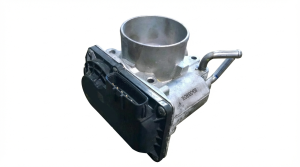
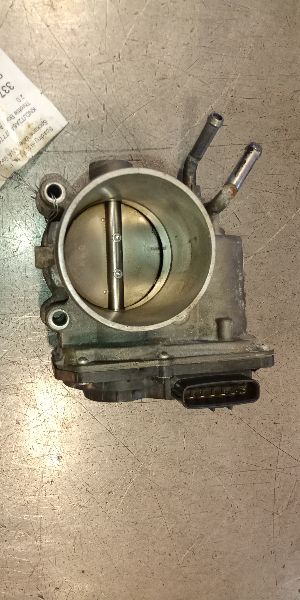
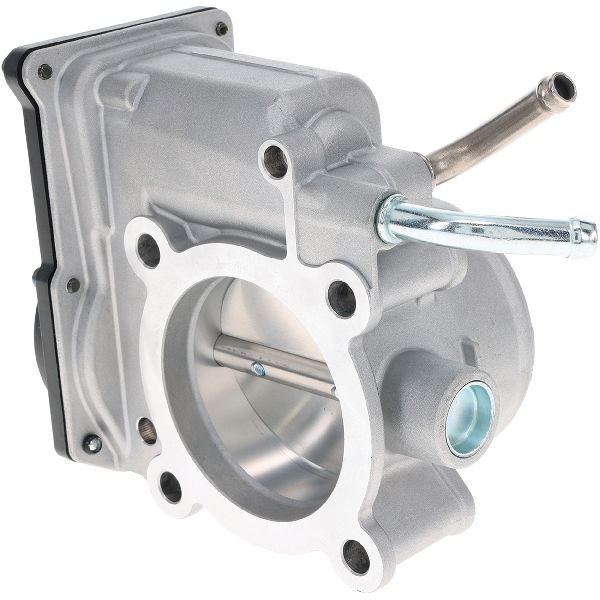
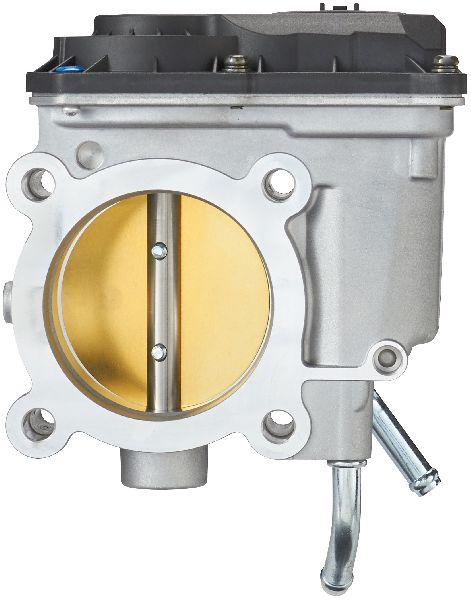
- Electronic Throttle Body Assembly
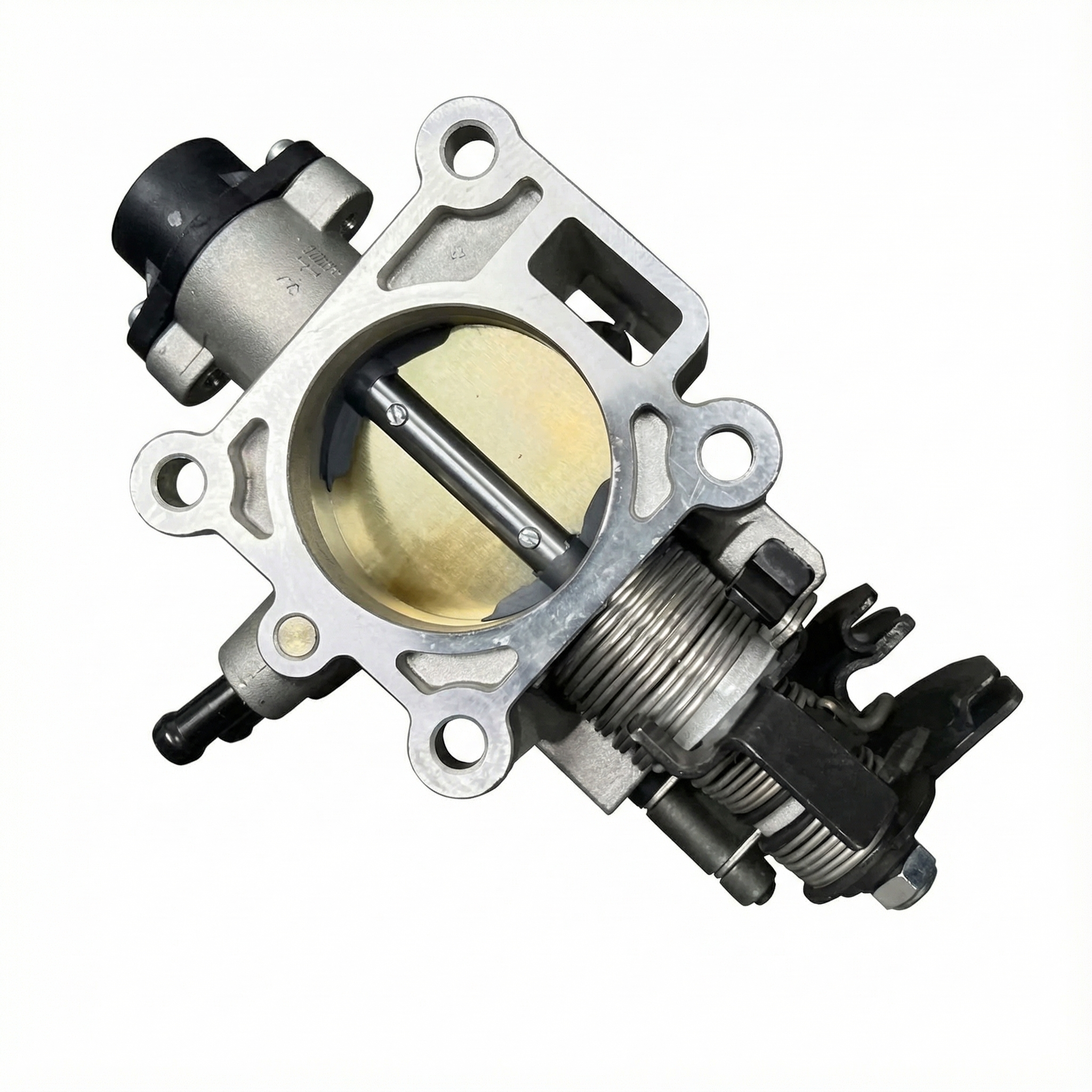
(OEM #35100-2E000)— This is the most common fix because the failure is typically the integrated, non-replaceable Throttle Position Sensor (TPS). The entire assembly must be replaced to fix the faulty sensor. This part number fits many 2011-2016 Elantras with the 1.8L and 2.0L engines.
Trusted brands: Hyundai (OEM), Bosch, Cardone (Remanufactured), Standard Motor Products
OEM price range: $300-$450
Aftermarket price range: $150-$250
Related Codes That Often Appear With This One
- P0123 — This code is for 'Throttle/Pedal Position Sensor/Switch 'A' Circuit High'. Since the throttle body has two redundant sensors (A and B), it's common for a failing throttle body to trigger faults on both circuits simultaneously.
- P2135 — This code indicates 'Throttle/Pedal Position Sensor/Switch 'A'/'B' Voltage Correlation'. It is often set alongside P0223 when the PCM sees that the signals from the two throttle position sensors do not agree with each other, which is a classic symptom of a failing throttle body assembly.
Technical Service Bulletins (TSBs) & Recalls
- TSB 13-FL-002: Recommends cleaning the Electronic Throttle Control (ETC) throttle body for rough idle and other performance issues before replacing the part.
Platform-Specific Known Issues
- Hyundai issued TSB 13-FL-002, which advises technicians to clean the throttle body to resolve rough idle issues before resorting to replacement, indicating that carbon buildup is a recognized issue on this platform that can cause throttle-related symptoms.
- Owner forums frequently cite immediate limp mode and the check engine light as the first sign of this failure. The consensus is that replacing the entire throttle body assembly is the definitive fix after a quick wiring check.
Mechanic-Grade Diagnostic Values
- TPS Sensor 'B' (TPS2) Voltage - Code Trigger Threshold — expected: < 4.75V. Failure: Voltage reading is stuck above 4.75V or 4.9V for more than 0.1 seconds.
- TPS Sensor 'A' (TPS1) Voltage vs. Throttle Angle — expected: Increases from ~0.0V (0°) to ~4.5V (100°).. Failure: Voltage is erratic, does not change, or is outside the expected range.
- TPS Sensor 'B' (TPS2) Voltage vs. Throttle Angle — expected: Decreases from ~5.0V (0°) to ~0.5V (100°).. Failure: Voltage is stuck high, erratic, or does not change inversely to TPS1.
- Sensor Reference Voltage at Throttle Body Connector — expected: ~5.0V. Failure: Voltage is significantly lower or higher than 5.0V, indicating a PCM or wiring issue.
- Sensor Ground Circuit at Throttle Body Connector — expected: < 0.1V (Good continuity to chassis ground). Failure: Voltage reading is high, indicating an open or high-resistance ground circuit.
Scan Tool Commands That Help
- Hyundai GDS (or equivalent professional scanner): Active Test: ETC Motor — This bidirectional command allows the technician to command the throttle plate to open and close, verifying the function of the throttle motor and allowing observation of the TPS sensor readings in response. It helps distinguish between a sensor failure and a motor/mechanical failure.
- Hyundai GDS (or equivalent professional scanner): Reset Functions -> Adaptive Values Reset — After replacing the throttle body, this function can be used to clear the old learned values from the PCM, forcing it to relearn the new sensor's idle and range parameters. While a manual relearn often works, this is the dealer-level method.
Wiring & Ground Locations
- Throttle Body Connector (ETC Module) — On the electronic throttle body itself, where the main engine harness connects.. This 6-pin connector contains the power, ground, and signal wires for both TPS1 and TPS2, as well as the two wires for the throttle plate motor. A poor connection, corrosion, or damaged pin here is a primary cause of P0223.
- ECM/PCM Connector — The main Engine Control Module, typically located in the engine bay.. The signal from TPS2 travels from the throttle body directly to a specific pin on the ECM connector. A bad connection or corrosion at the ECM side can mimic a sensor failure.
- Engine Control Ground — There are several key grounds for the engine control system. One important one is often located on the driver's side of the engine compartment, on the cowl or inner fender.. The TPS sensors share a sensor ground that is provided by the ECM. If the ECM itself has a poor ground to the chassis, it can cause floating ground issues, leading to incorrect and high voltage readings from various sensors, including the TPS.
Real Owner Repair Stories
- Hyundai-Forums.com user (2012 Hyundai Elantra) — Car went into limp mode, check engine light on with code P0223.
❌ Tried (didn't work) Initial diagnosis pointed to the throttle body.
✅ What actually fixed it The user replaced the entire throttle body assembly, which resolved the P0223 code and the limp mode issue. This confirms the common diagnosis that the integrated sensor fails and requires a full assembly replacement.
Documented NHTSA Reports
- NHTSA ODI #10845644: In a report involving a similar Hyundai powertrain, an owner noted active codes P0223, P0445, and P2106. In that specific instance, further mechanical testing revealed low compression in multiple cylinders, though the P0223 code itself remained an active electronic fault.
OEM Part Supersession History
35100-2E000→No official supersession found, this part number remains current.— N/A
Heads up: This part number (35100-2E000) is widely listed as compatible for the 2011-2016 Elantra 1.8L and some 2.0L models, as well as other Hyundai/Kia vehicles. Always verify fitment with the vehicle's VIN before purchasing.
Model Year Variations Within This Range
- 2011-2016: While the 1.8L Nu was standard, the 2.0L Nu engine became available in later years of this generation (e.g., Elantra Sport, GT). Both engines use a similar electronic throttle body design, and the OEM part number 35100-2E000 is often listed for both, but slight variations in harness routing or software calibration could exist.
- All: Some throttle bodies for this platform have two coolant lines running through them to prevent icing in cold climates. Many aftermarket replacements and performance versions omit these ports. If bypassing them, the two coolant hoses must be connected to each other.
Diagnostic Flowchart
Used vs. New Parts: Buying Guide for This Vehicle
When a used part is the smart pick: A used throttle body is a significant gamble for this vehicle. Because the integrated electronic sensor is the primary failure point, a used part from a junkyard may have the same issue or fail shortly after installation. It should only be considered as a last resort if on an extreme budget and the donor vehicle's history and mileage are known to be low.
Donor-vehicle mileage cap: roughly under 50000 miles for the part to have meaningful remaining life.
What to inspect on the donor part:
- Check for minimal carbon buildup inside the throttle bore.
- Ensure the electrical connector pins are clean, straight, and free of corrosion.
- Verify the throttle plate moves freely by hand (if power is off) without any gritty or binding feeling.
- Ask for a warranty, even if it's only 30-90 days.
OEM-only on this vehicle (don't cheap out):
- While not strictly 'OEM-only', many mechanics strongly advise using a genuine Hyundai OEM throttle body for longevity and to avoid repeat repairs, as some aftermarket units have a higher premature failure rate.
Aftermarket brands forum-validated for this vehicle:
- Standard Motor Products
- Bosch (if available)
- Dorman (often includes design improvements over OE)
Brands owners have reported issues with on this vehicle:
- Unbranded, 'white box' parts from online marketplaces with no warranty or brand reputation should be avoided, as quality control is often non-existent.
Real Owner Stories
Aggregated from forums and TSBs cited above. Mileages and costs reflect what owners reported in those sources.
Hyundai Elantra — 82000 miles
Symptoms: Owner was experiencing issues consistent with those described in TSB 13-FL-002, such as rough idle, which had previously required a throttle body cleaning at 49,000 miles.
What fixed it: The owner was inquiring if a second throttle body cleaning was necessary, indicating that cleaning the throttle body is a known maintenance item for this issue.
Source hint: Hyundai-Forums.com - Thread 'Tsb 13 - fl - 002'
Hyundai Elantra
Symptoms: The vehicle had no acceleration even though the engine RPMs were rising.
What fixed it: The owner was advised to perform an output test on the throttle body and thoroughly check the wiring for signal, power, and ground before condemning the throttle body or the ECM.
Source hint: Reddit r/askcarguys - Thread 'Got a P0223 code. How should i start diagnosing this problem?'
Hyundai Elantra
Symptoms: The car was exhibiting symptoms of being in 'limp mode' with severely reduced power.
What fixed it: Forum users suggested that a dirty throttle body could be the cause, as carbon buildup can cause the ECU to enter a protective mode that feels like limp mode.
Source hint: Reddit r/Elantra - Thread 'Is my car in limp mode?'
Related OBD-II Codes
Frequently Asked Questions
Is cleaning the throttle body a good first step for P0223 on my 2011-2016 Elantra?
My Elantra went into 'limp mode' with no power. Is this a common symptom of P0223?
Do I have to replace the entire throttle body, or can I just replace the Throttle Position Sensor (TPS)?
What is the OEM part number for the throttle body on my Elantra?
After replacing the throttle body, is there a special procedure I need to do?
My mechanic checked the wiring and it's fine. What is the most likely problem?
Helpful Videos

Used OEM Parts in Stock
New Aftermarket Parts Available




The information in this article is provided for general reference and educational purposes only. Vehicle specifications, procedures, and part compatibility can vary by production date, trim level, and region. Always consult your vehicle's factory service manual and verify part numbers before purchasing or performing repairs. Safety-critical components such as airbags, seat belts, and braking systems should be installed by a qualified professional.
- Hyundai Elantra:
- 🧭 Diagnostic Flowchart
- 🎬 Helpful Videos
- 🛍️ Shop This Part
- What's Unique About the 2011-2016 Hyundai Elantra
- Symptoms You May Notice
- Most Likely Causes
- Rare But Worth Checking
- Diagnosis Steps
- Parts You'll Likely Need
- Related Codes That Often Appear With This One
- Technical Service Bulletins (TSBs) & Recalls
- Platform-Specific Known Issues
- Mechanic-Grade Diagnostic Values
- Scan Tool Commands That Help
- Wiring & Ground Locations
- Real Owner Repair Stories
- Documented NHTSA Reports
- OEM Part Supersession History
- Model Year Variations Within This Range
- Used vs. New Parts: Buying Guide for This Vehicle
- Real Owner Stories
- Hyundai Elantra — 82000 miles
- Hyundai Elantra
- Hyundai Elantra
- Related OBD-II Codes
- Frequently Asked Questions
- 🎟️ Get 5% Off