

P0223 on 2007-2012 Hyundai Santa Fe: Throttle Position Sensor 'B' Circuit High Fixes
This code almost always means the entire electronic throttle body assembly has failed. The internal Throttle Position Sensor (TPS) is faulty and not sold separately. Expect to pay $350-$700 for an OEM replacement part, or $80-$150 for aftermarket. It is a DIY-friendly repair.
- P0223 on a 2007-2012 Santa Fe points directly to a problem with the electronic throttle body on the engine.
- The most likely fix is replacing the entire throttle body assembly, as the sensor that causes the code is built-in.
- Before replacing, always inspect the wiring connector for damage and clean the throttle body of any carbon buildup, as this can sometimes resolve the issue.
- After installing a new throttle body, a simple key-on, key-off relearn procedure is required to calibrate the new part with the vehicle's computer.
- Do not drive the vehicle extensively with this code, as it can stall or have dangerously low power at any time.
What's Unique About the 2007-2012 Hyundai Santa Fe
The 2007-2012 Santa Fe (CM generation) uses an electronic throttle body where the dual throttle position sensors (TPS1 and TPS2) are integrated and cannot be replaced individually. While many issues can theoretically cause this code, the most common failure point on this specific platform is the electronic throttle body assembly itself. Unlike some other vehicles where a pedal sensor is the likely culprit, for the Santa Fe, the problem is almost always located at the engine's air intake.
Symptoms You May Notice
- Check Engine Light is illuminated
- Vehicle enters 'limp mode' (also called 'limp home mode') with drastically reduced engine power and acceleration.
- Engine stalls, especially when coming to a stop or at idle.
- Rough, surging, or unstable idle
- Hesitation or complete lack of response when pressing the gas pedal.
- Harsh or delayed automatic transmission shifting.
- Cruise control becomes inoperative.
- Replacing the accelerator pedal position sensor (APPS). While the code definition includes 'Pedal Position Sensor', on this Hyundai model, P0223 almost always points to the throttle body on the engine, not the pedal assembly inside the car. A failure in the APPS would typically set codes like P0221 or P0224.
Most Likely Causes
- Failed Electronic Throttle Body Assembly 🔴 High Probability → Shop Fuel Injection Throttle Body The internal potentiometers of the integrated Throttle Position Sensor (TPS) wear out over time, leading to an internal short or failure that sends a constant high voltage signal. This is a well-documented failure point on this platform.
How to confirm: Using a scan tool with live data, monitor the voltage for TPS1 and TPS2. As you slowly press the accelerator pedal (with the engine off, key on), TPS1 voltage should rise smoothly from ~0.5V to ~4.5V, and TPS2 voltage should fall smoothly from ~4.5V to ~0.5V. If TPS2 is stuck at a high voltage (e.g., >4.7V) and does not change, the throttle body has failed.
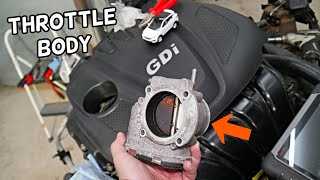
Typical fix: Replace the entire electronic throttle body assembly. 🎬 Watch: Step-by-step guide to removing and replacing the throttle body. Perform a throttle relearn procedure after installation.
Est. part cost: $350 - $750 (OEM), $80 - $250 (Aftermarket). - Wiring Harness or Connector Issue 🟡 Medium Probability The wiring harness near the engine is exposed to heat and vibration, which can lead to chafed wires or corrosion in the connector pins over time. Corrosion at the sensor connector is a frequent culprit for high voltage signals.
How to confirm: Visually inspect the wiring harness going to the throttle body for any signs of damage, melting, or fraying. Unplug the connector and check for corrosion (green or white powder) or bent/loose pins. Use a multimeter to check for a short to power on the signal wire and verify a good ground (<0.1V).
Typical fix: Repair the damaged section of the wiring harness or clean/replace the connector.
Est. part cost: $5 - $50 - Heavy Carbon Buildup in Throttle Body ⚪ Low Probability → Shop Fuel Injection Throttle Body Over time, carbon from the PCV system can build up around the throttle plate, causing it to stick or not close properly. While this usually causes performance codes, it can sometimes lead to a circuit code if the plate cannot return to its proper closed position, causing the sensor to read an incorrect value. Hyundai issued a TSB (13-FL-002) advising technicians to clean the throttle body before considering replacement.
Typical fix: Clean the throttle body thoroughly with a dedicated throttle body cleaner and a soft cloth or brush. Do not use brake cleaner.
Est. part cost: $10 - $20 (for cleaner)
Rare But Worth Checking
- Failed Powertrain Control Module (PCM): → Shop Engine Control Module (ECM) This is very uncommon and should only be considered after all other possibilities, including the throttle body and wiring, have been definitively ruled out.
Diagnosis Steps
- Read the fault codes with an OBD-II scanner to confirm P0223 is present, and note any other codes like P2135, P0123, P1295, or P2106.
- Visually inspect the throttle body connector and its wiring harness for any obvious damage, corrosion, or loose connections. Pay close attention to where the harness might rub against other components.
- With the key on and engine off, use a scan tool to observe the live data for TPS Sensor 1 and TPS Sensor 2 voltage. The reading for Sensor 2 (TPS B) will likely be stuck high (above 4.7V). Confirm that TPS 1 (TPS A) reads normally (around 0.5V at idle).
- If you have access to wiring diagrams, disconnect the throttle body and use a multimeter to check for the 5V reference voltage and a good ground at the connector.
- Remove the air intake tube and inspect the throttle body bore for heavy carbon buildup. Per Hyundai TSB 13-FL-002, cleaning the throttle body is a recommended first step before replacement, especially if drivability issues like rough idle are also present.
- If the wiring is confirmed good and cleaning does not resolve the stuck high voltage reading on TPS2, the throttle body assembly has an internal fault and must be replaced.
- After replacement, perform the throttle relearn procedure. There are several methods: a) The simplest is to turn the ignition to ON (do not start) for 10-15 seconds, then OFF for 10-15 seconds. Repeat this a few times. b) A more thorough method involves disconnecting the battery for 15-20 minutes to reset the ECU, reconnecting, turning the key to ON for 3 minutes, then OFF for 1 minute before starting the engine and letting it idle for 10-15 minutes. c) Driving the vehicle for 10-15 minutes may also allow the ECU to adapt automatically.
Parts You'll Likely Need
- Electronic Throttle Body Assembly
(OEM #35100-3C700 (3.5L V6, 2010-12), 35100-3C200 (3.3L V6, 2007-09), 35100-3E100 (2.7L V6, 2007-09), 35100-25400 (2.4L I4, 2010-12))— This is the most common failure. The internal throttle position sensors are integrated into this part and are not available separately.
Trusted brands: Hyundai (OEM), Bosch, Hitachi, Standard Motor Products (S20230), Dorman, Spectra Premium (TB1228)
OEM price range: $450 - $700.
Aftermarket price range: $80 - $250. - Throttle Body Gasket
(OEM #35101-3C100 (for 3.3L/3.5L V6))— It is best practice to replace the gasket whenever the throttle body is removed to prevent vacuum leaks. Some new throttle bodies include one, but it's wise to verify.
Trusted brands: Fel-Pro, Mahle, Hyundai (OEM)
OEM price range: $10 - $25
Aftermarket price range: $5 - $15
Related Codes That Often Appear With This One
- P0123 — This code is for 'Throttle/Pedal Position Sensor/Switch A Circuit High'. Since both sensors (A and B) are in the same assembly, an internal failure can sometimes affect both circuits, causing them to both read high.
- P2135 — This code indicates 'Throttle/Pedal Position Sensor/Switch A/B Voltage Correlation'. The PCM constantly compares the signals from TPS1 and TPS2; if they don't match its expected opposing values (e.g., one is stuck high while the other is normal), this code will be set along with P0223. This is a very common companion code.
- P1295 — Indicates 'ETC System Malfunction - Power Management'. This is a secondary code set by the PCM when it detects a critical fault in the Electronic Throttle Control system (like P0223) and decides to engage limp mode.
- P2106 — Indicates 'ETC System Malfunction - Forced Limited Power'. Similar to P1295, this code confirms the PCM has actively limited engine power as a safety response to the primary throttle sensor fault.
Technical Service Bulletins (TSBs) & Recalls
- TSB 13-FL-002: This bulletin advises technicians to thoroughly clean the Electronic Throttle Control (ETC) throttle body before replacing it. It applies to multiple Hyundai models, including the 2010-2012 Santa Fe with the 2.4L engine. It is intended to address issues like rough idle or no-start conditions caused by carbon deposits, which could potentially be misdiagnosed as a sensor failure.
Platform-Specific Known Issues
- Intermittent Limp Mode on Cold Start: A user on Reddit with a 2008 Santa Fe (2.7L V6) reported experiencing limp mode and associated throttle codes (P2135, P1295, P2106) primarily on the first cold start of the day. Shutting the car off and restarting it would often clear the issue temporarily. This points to a marginal electronic failure in the throttle body that is sensitive to temperature or initial voltage.
- Aftermarket Sensor vs. Full Assembly Replacement: Another Reddit user with a 2007 Santa Fe (3.3L V6) encountered limp mode with codes P161B, P2106, and P1295. A mechanic advised them that for these vehicles, replacing just the sensor (if one could even be sourced) is often ineffective and that replacing the entire throttle body assembly is the correct and reliable repair, even if using an aftermarket assembly.
Mechanic-Grade Diagnostic Values
- TPS2 (Sensor B) Signal Voltage — expected: Decreases from ~5.0V to ~0.5V as throttle opens.. Failure: Stuck high, above 4.75V for more than 0.1 seconds.
- TPS1 (Sensor A) Signal Voltage — expected: Increases from ~0.0V-0.5V to ~4.0-5.0V as throttle opens.. Failure: While not the direct cause of P0223, a non-responsive or erratic TPS1 would trigger other codes like P0123 or P2135.
- Sensor Reference Voltage at Connector — expected: Steady 5.0V.. Failure: Voltage that is significantly higher or lower, or is unstable, points to a wiring or PCM issue.
- Sensor Ground Circuit at Connector — expected: Less than 0.1V (100mV) when tested against battery ground.. Failure: Higher voltage indicates a poor ground connection, which can cause the sensor signal to read artificially high.
Scan Tool Commands That Help
- Hyundai GDS (Global Diagnostic System) or equivalent: ETC System Test — This function allows the technician to command the throttle motor to open and close, while observing the live data from TPS1 and TPS2 to verify their response throughout the entire range of motion. It can confirm if the sensor is truly stuck or if there's a mechanical bind.
- Hyundai GDS (Global Diagnostic System) or equivalent: Throttle Position Sensor Reset / Relearn — This is the most reliable method to perform the throttle relearn procedure after replacing the throttle body. It forces the PCM to immediately learn the new closed and wide-open throttle positions, preventing potential idle or drivability issues that can occur with manual relearn methods.
Wiring & Ground Locations
- G-05 — At the left front of the engine compartment, on the inner fender panel.. This is a primary engine compartment ground. A loose or corroded G-05 can cause a floating ground for various engine sensors, including the throttle body, leading to incorrect voltage readings and codes like P0223.
- G-06 — At the right front of the engine compartment, near the power steering fluid reservoir.. Similar to G-05, this is another critical engine bay ground point. Verifying both G-05 and G-06 are clean and tight is a crucial step in diagnosing any electronic sensor circuit fault.
- Throttle Body Connector (Varies by Engine) — Directly on the Electronic Throttle Body assembly, where the engine air intake tube connects.. This is the primary point for testing. A wiring chart indicates the TPS signal wire color is GREEN for the 2008-2009 3.3L V6, RED for the 2009 2.7L V6, and GREEN for the 2010-2012 3.5L V6. This is the wire to probe to confirm the 'high input' voltage.
Real Owner Repair Stories
- Hyundai-Forums user (2008 Hyundai Santa Fe 2.7L V6) — Car went into limp mode, Check Engine Light on with codes P2135, P1295, P2106, and P0223.
❌ Tried (didn't work) Initially, the owner was unsure of the cause and sought advice.
✅ What actually fixed it The user replaced the entire throttle body assembly. After replacement and clearing the codes, the vehicle returned to normal operation, confirming the internal failure of the original throttle body. - NHTSA ODI #10845644 — An owner reported active codes P0223, P0445, and P2106. Upon inspection, a compression and leak down test revealed low compression in 3 out of 4 cylinders, with air reportedly blowing towards the valve cover, leading to a suspicion of failed piston rings.
OEM Part Supersession History
35100-3C200→N/A, still an active part number.
Heads up: This part number is specific to the 3.3L V6 engine used in the 2007-2009 Santa Fe, as well as other Hyundai models like the Azera and Veracruz. It is not interchangeable with the throttle bodies for the 2.7L, 3.5L, or 2.4L engines.
Model Year Variations Within This Range
- 2007-2009: These years primarily used the 2.7L V6 (PN: 35100-3E100) and the 3.3L V6 (PN: 35100-3C200). The wiring color for the TPS signal wire may differ, with the 2.7L using a RED wire and the 3.3L using a GREEN wire in some model years.
- 2010-2012: These facelift years introduced the 2.4L I4 (PN: 35100-25400) and the 3.5L V6 (PN: 35100-3C700) engines. These engines use different throttle bodies and associated part numbers that are not backward compatible with the earlier engines.
Diagnostic Flowchart
Used vs. New Parts: Buying Guide for This Vehicle
When a used part is the smart pick: A used throttle body is a risky choice for this repair. Because the failure is due to electronic wear of the internal potentiometers, a used part from a junkyard has an unknown amount of remaining life and could fail soon after installation. It is generally not recommended unless for a very short-term, budget-constrained fix.
Donor-vehicle mileage cap: roughly under 60000 miles for the part to have meaningful remaining life.
What to inspect on the donor part:
- Verify the part number on the donor part exactly matches the one being replaced.
- Look for a donor vehicle with the lowest possible mileage.
- Inspect the connector pins for any signs of corrosion or damage.
- Check the throttle plate for excessive carbon buildup, which might indicate a poorly maintained engine.
Aftermarket brands forum-validated for this vehicle:
- Bosch (often the OEM supplier)
- Standard Motor Products (SMP)
- Hitachi
Brands owners have reported issues with on this vehicle:
- Dorman: While Dorman offers an 'OE FIX' with a non-contact Hall Effect sensor to improve durability, owner and mechanic reviews are mixed, with some reporting immediate or premature failures. It is often considered a lower-tier option compared to Bosch or SMP.
Real Owner Stories
Aggregated from forums and TSBs cited above. Mileages and costs reflect what owners reported in those sources.
2008 Hyundai Santa Fe (2.7L V6)
Symptoms: Vehicle experienced limp mode and throttle codes (P2135, P1295, P2106) primarily on the first cold start of the day. Shutting the car off and restarting would often clear the issue temporarily.
What fixed it: The discussion pointed towards a failing throttle body as the root cause of the intermittent electronic failure.
Source hint: Reddit r/MechanicAdvice - '2008 Hyundai Santa Fe frequently starts up with CEL and limp-mode'
2007 Hyundai Santa Fe (3.3L V6)
Symptoms: The vehicle went into limp mode and displayed codes P161B, P2106, and P1295.
What fixed it: A mechanic advised that replacing the entire throttle body assembly is the correct and reliable repair, rather than attempting to replace only the sensor.
Source hint: Reddit r/MechanicAdvice - '2007 Hyundai Santa Fe- Throttle body sensor vs entire throttle body replacement.'
NHTSA Reported Incident
Symptoms: An owner reported active codes P0223, P0445, and P2106. A subsequent compression and leak down test indicated low compression in three out of four cylinders.
What fixed it: While the throttle codes were present, the technician suspected internal engine damage, specifically piston rings, as air was observed blowing toward the valve cover.
Source hint: NHTSA ODI #10845644
Related OBD-II Codes
Frequently Asked Questions
My 2007 Santa Fe went into limp mode. My mechanic says I need to replace the entire throttle body, not just the sensor. Is this correct?
Does Hyundai TSB 13-FL-002 apply to my 2011 Santa Fe, and what does it recommend for throttle issues?
My Santa Fe only goes into limp mode on cold mornings. What could cause this?
Is it better to use an OEM or an aftermarket throttle body for my Santa Fe?
After replacing the throttle body on my Hyundai, what is the correct relearn procedure?
Are other vehicles like the Kia Sorento known for this same P0223 throttle body problem?
Helpful Videos
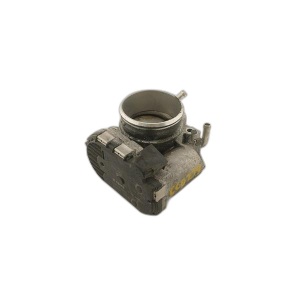
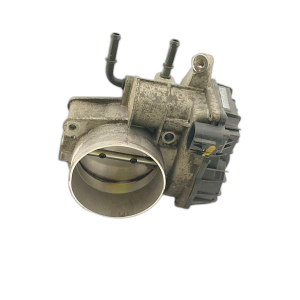
We Have This Part in Stock

The information in this article is provided for general reference and educational purposes only. Vehicle specifications, procedures, and part compatibility can vary by production date, trim level, and region. Always consult your vehicle's factory service manual and verify part numbers before purchasing or performing repairs. Safety-critical components such as airbags, seat belts, and braking systems should be installed by a qualified professional.
- Hyundai Santa Fe:
- 🧭 Diagnostic Flowchart
- 🎬 Helpful Videos
- 🛍️ Shop This Part
- What's Unique About the 2007-2012 Hyundai Santa Fe
- Symptoms You May Notice
- Most Likely Causes
- Rare But Worth Checking
- Diagnosis Steps
- Parts You'll Likely Need
- Related Codes That Often Appear With This One
- Technical Service Bulletins (TSBs) & Recalls
- Platform-Specific Known Issues
- Mechanic-Grade Diagnostic Values
- Scan Tool Commands That Help
- Wiring & Ground Locations
- Real Owner Repair Stories
- OEM Part Supersession History
- Model Year Variations Within This Range
- Used vs. New Parts: Buying Guide for This Vehicle
- Real Owner Stories
- 2008 Hyundai Santa Fe (2.7L V6)
- 2007 Hyundai Santa Fe (3.3L V6)
- NHTSA Reported Incident
- Related OBD-II Codes
- Frequently Asked Questions
- 🎟️ Get 5% Off