

P0223 on 2012-2021 Volkswagen Golf: Throttle/Pedal Sensor 'B' Circuit High Fixes
On a 2012-2021 VW Golf, code P0223 will cause the EPC light and a severe loss of power ('limp mode'). The most likely cause is a faulty accelerator pedal assembly. Replacing the pedal is a simple DIY fix with the part costing between $100 and $200. Before replacing parts, use a scan tool to confirm the 'B' sensor voltage is stuck high, as wiring issues can also cause this code.
- P0223 on a VW Golf will immediately put the car into a dangerous, low-power 'limp mode' and should be addressed immediately.
- The most probable cause is a failed accelerator pedal assembly, which is a relatively inexpensive and easy part to replace for a DIYer.
- Before buying parts, use a scan tool to watch live data from the pedal sensors to confirm the failure.
- Always inspect the wiring and connectors at both the pedal and the throttle body, as damaged wiring is another common cause.
What's Unique About the 2012-2021 Volkswagen Golf
While P0223 is a universal code, on Volkswagen and Audi platforms of this era (including the Mk6 and Mk7 Golf), the fault is very frequently traced to the accelerator pedal assembly itself, rather than the throttle body. This is a widely reported failure pattern in owner forums and by technicians. Additionally, a known issue documented in a Technical Service Bulletin (TSB 2018652) points to stressed wiring and high contact resistance at the throttle body connector, making a thorough inspection of the harness a critical diagnostic step before replacing any major components.
Generation note: This guide covers the Volkswagen Golf Mk6 (2012-2014) and Mk7 (2015-2021). The common causes and diagnostic procedures for P0223 are broadly similar across both generations, as they both utilize a drive-by-wire throttle system. The most common failure point—the accelerator pedal assembly—is a known issue for VWs in this entire period. Part numbers for the pedal assembly may differ between generations.
Symptoms You May Notice
- Drastic reduction in engine power (Limp Mode)
- EPC (Electronic Power Control) light is illuminated
- Check Engine Light is on
- Poor or no throttle response
- Hesitation or stumbling during acceleration
- Engine may stall, especially at idle
- Hard starting or failure to start
- Engine idle raised to around 1,200 RPM after the fault occurs
- Replacing the throttle body when the actual fault is in the accelerator pedal assembly. On VWs, the pedal is the more common failure point for this code.
- Replacing a sensor without first testing the wiring harness and connectors for damage, corrosion, or poor connections.
Most Likely Causes
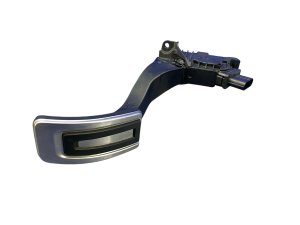
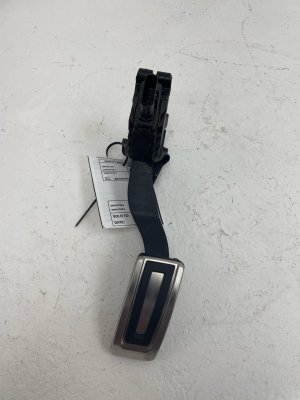
- Faulty Accelerator Pedal Assembly 🔴 High Probability → Shop Accelerator Pedal Assembly This is a widely reported failure point on VW/Audi vehicles from this period. The integrated electronic sensors (G79/G185) within the pedal assembly wear out over time, leading to incorrect voltage signals. Numerous forum discussions confirm that replacing the pedal assembly is the most common and successful fix.
How to confirm: Use a scan tool (like VCDS or OBDeleven for VWs) to monitor live data for the accelerator pedal position sensors (G79 and G185). The voltage for sensor 1 should sweep from ~0.7V to ~4.3V, while sensor 2 sweeps from ~0.4V to ~2.2V. If the 'B' sensor's voltage is stuck high (near 5.0V) and does not change when you press the pedal, the assembly is faulty.
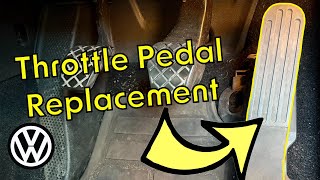
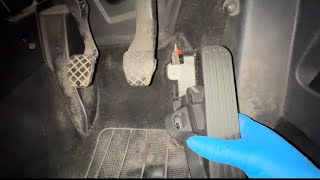
Typical fix: Replace the entire accelerator pedal assembly. It is a single unit held in place by one 10mm nut and two clips in the driver's footwell. The electrical connector has a slide-and-lock mechanism. This is a common DIY repair that can be done in under 30 minutes. 🎬 Watch: Step-by-step Mk6 accelerator pedal replacement guide
Est. part cost: $100-$250 - Wiring Harness or Connector Issue 🟡 Medium Probability VW issued a TSB (01-09-04 / 2018652) for some engines regarding wiring at the 6-pin throttle body connector being too short, causing stress and high resistance over time. Corrosion or pushed-out pins at the connectors for either the pedal or throttle body can also cause this fault.
How to confirm: Visually inspect the wiring and connectors at the accelerator pedal and the throttle body. Perform a 'wiggle test' on the harness while observing live data on a scan tool to see if the voltage signal fluctuates. Check for continuity and resistance on the signal, 5V reference, and ground wires between the sensor and the ECM.
Typical fix: Repair the damaged section of wiring. If the issue is at the throttle body connector, a repair kit with a new connector and pigtail wires may be required per the TSB. Ensure all connections are clean and secure.
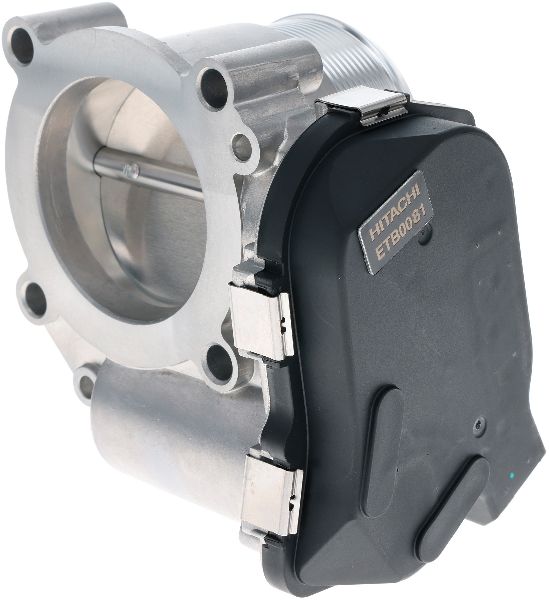
Est. part cost: $20-$60 - Faulty Throttle Body Assembly ⚪ Low Probability → Shop Fuel Injection Throttle Body The throttle position sensors (G187/G188) are integrated into the throttle body and are not separately replaceable. Internal failure of the sensor's electronics can occur, though it is less common than the pedal assembly failing for this specific code.
How to confirm: If the accelerator pedal sensors and wiring test good, the next step is to test the throttle position sensors using a scan tool. If the 'B' sensor voltage is stuck high and does not respond to throttle commands, the throttle body is likely faulty. 🎬 See this Mk7 throttle body replacement walkthrough
Typical fix: Replace the entire throttle body assembly. A throttle body alignment procedure using a capable scan tool (like VCDS) is required after replacement.
Est. part cost: $200-$450
Rare But Worth Checking
- Faulty Engine Control Module (ECM): → Shop Engine Control Module (ECM) This is the least likely cause. The ECM should only be suspected after all other possibilities, including sensors and wiring, have been exhaustively tested and ruled out.
- Torn or Jammed Floor Mats: An improperly placed or bunched-up floor mat can physically obstruct the accelerator pedal, preventing it from returning to its resting position. This can sometimes cause the sensor readings to be abnormal, although it's a less common cause for a 'Circuit High' code.
Diagnosis Steps
- Check for any Technical Service Bulletins (TSBs) related to P0223 for your specific year and engine. TSB 2018652 is particularly relevant for throttle body wiring.
- Connect an OBD-II scanner and confirm P0223 is present. Check for other related codes like P0123, P0221, or P2135.
- Using the scanner's live data function, monitor the voltage readings for both accelerator pedal position sensors (APP1/G79 and APP2/G185) and both throttle position sensors (TPS1/G187 and TPS2/G188).
- With the engine off and key on, slowly press and release the accelerator pedal. The voltage for both pedal sensors should sweep smoothly with no spikes or drop-offs. If sensor 'B' (APP2/G185) is stuck high (near 5V), the pedal assembly is likely bad.
- If pedal sensors appear normal, visually inspect the wiring harness and connectors at the accelerator pedal and the throttle body for any signs of damage, corrosion, or looseness.
- Perform a 'wiggle test' on the wiring harnesses while watching the live data to see if you can induce a fault.
- Use a multimeter to verify the sensor circuits have a stable 5-volt reference and a good ground (less than 0.1 volts).
- If the pedal and wiring are confirmed to be good, the fault likely lies within the throttle body assembly.
- If the throttle body is replaced, perform a Throttle Body Adaptation (TBA) using a compatible scan tool. 🎬 Watch: How to perform a throttle body adaptation
Parts You'll Likely Need
- Accelerator Pedal Assembly
(OEM #1K1721503AS (Mk5/Mk6), 5Q1723503F (Mk7))— This is the most frequent cause of P0223 on this generation of Volkswagen Golf. The entire assembly, with its integrated sensors, is replaced as a single unit.
Trusted brands: Bosch, Vemo, Genuine VW
OEM price range: $150-$250
Aftermarket price range: $100-$180 - Throttle Body — If the accelerator pedal and wiring are confirmed to be good, the integrated throttle position sensors in the throttle body are the next most likely cause.
Trusted brands: Bosch, VDO, Genuine VW
OEM price range: $300-$450
Aftermarket price range: $200-$350 - Throttle Body Connector Repair Kit — Needed if the wiring at the throttle body connector is found to be stressed or damaged, as described in TSB 2018652.
Trusted brands: Genuine VW
OEM price range: $30-$60
Related Codes That Often Appear With This One
- P0123 — This is the 'Circuit High' code for the 'A' sensor. Seeing both P0123 and P0223 together strongly suggests a shared problem, like a bad 5-volt reference wire, a faulty ground connection, or a complete internal failure of the component (pedal or throttle body).
- P2135 — This code means 'Throttle/Pedal Position Sensor 'A'/'B' Voltage Correlation'. It sets when the ECM sees that the signals from the two redundant sensors do not agree with each other. A P0223 fault, where one sensor is stuck high, will almost always trigger a correlation code like P2135.
- P0221 — This code indicates a 'Range/Performance' problem with the 'B' circuit. It can appear alongside P0223 if the signal is erratic before becoming permanently stuck high.
Technical Service Bulletins (TSBs) & Recalls
- TSB 01-09-04 / 2018652 / 01 16 12: Addresses high contact resistance and stressed wiring in the harness connector for the throttle body on some 2.0L engines, which can cause throttle-related fault codes including P0123 and P0221/P0222. While P0223 is not explicitly listed, the root cause is highly relevant.
Platform-Specific Known Issues
- Owner Experience: Intermittent Limp Mode: A common owner complaint is that the EPC light and limp mode will appear intermittently, especially after coasting downhill or during certain weather conditions. The car may return to normal after a restart, only for the fault to return later. This intermittent behavior often points towards a failing accelerator pedal sensor or a wiring issue that is sensitive to vibration or temperature changes.
Diagnostic Flowchart
Other Known Issues on This Vehicle
Issues unrelated to this code that are worth knowing about as an owner of this generation:
- Timing Chain Tensioner Failure (EA888 Gen1/Gen2 Engines) 🔴 High — Common on 1.8TSI and 2.0TSI engines, typically from 2012-2015, before an updated tensioner was factory-installed. Failure can occur without warning, often between 60k-100k miles. (Ref: A class-action lawsuit led to warranty extensions, but many vehicles are now outside that coverage.)
- Water Pump / Thermostat Housing Leaks (TSI Engines) 🟠 Medium — The plastic water pump and thermostat housing assembly is a very common failure point across all TSI engines in this period. Leaks can start as early as 40k miles and are a frequent repair.
- DSG Mechatronic Unit Failure 🔴 High — Affects vehicles with the Direct-Shift Gearbox (DSG). Symptoms include harsh/jerky shifting, flashing PRNDS indicator, and loss of drive. More common on earlier models, especially the 7-speed dry clutch (DQ200). (Ref: Recalls were issued in some markets for specific DSG issues.)
- Carbon Buildup on Intake Valves (TSI Engines) 🟠 Medium — As direct-injection engines, the intake valves are not cleaned by fuel spray. Significant carbon buildup can occur over 60k-80k miles, leading to misfires, rough idle, and reduced performance.
- PCV Valve Failure (TSI Engines) 🟡 Low — The Positive Crankcase Ventilation (PCV) valve can fail, leading to excessive oil consumption, a rough idle, and a whistling noise from the engine bay. It's a relatively common and straightforward repair.
Real Owner Stories
Aggregated from forums and TSBs cited above. Mileages and costs reflect what owners reported in those sources.
2012 Volkswagen Golf Mk6
Symptoms: The EPC light and limp mode appeared intermittently, especially after coasting downhill or during certain weather conditions. The car would return to normal after a restart but the fault would return later.
What fixed it: Replacement of the accelerator pedal assembly or repair of wiring sensitive to vibration/temperature.
Source hint: vehicle_specific_issues: Owner Experience: Intermittent Limp Mode
2012 Volkswagen Golf Mk6
Symptoms: Throttle pedal position sensor G185 implausible signal.
What fixed it: Replacing the accelerator pedal assembly.
Source hint: https://www.golfmk6.com/forums/index.php?threads/p0221-throttle-pedal-position-sensor-g185-implausible-signal.258833/
Related OBD-II Codes
Frequently Asked Questions
Does TSB 2018652 apply to my Volkswagen Golf if I have throttle-related fault codes?
My Golf's EPC light is on and the idle is stuck at 1,200 RPM. Is this normal for P0223?
Can I replace just the sensor in my Golf's accelerator pedal to fix P0223?
Do I need any special tools to calibrate a new throttle body on my Mk7 Golf?
Is the P0223 code on my Golf likely caused by the throttle body or the pedal?
Helpful Videos

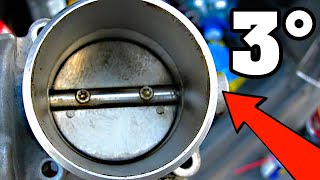
Used OEM Parts in Stock
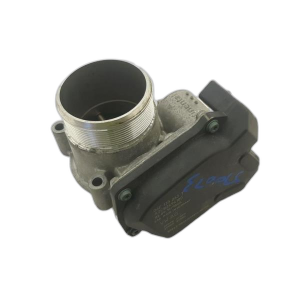
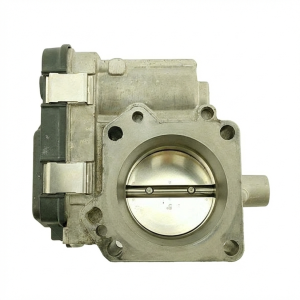
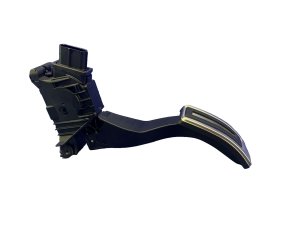
New Aftermarket Parts Available

The information in this article is provided for general reference and educational purposes only. Vehicle specifications, procedures, and part compatibility can vary by production date, trim level, and region. Always consult your vehicle's factory service manual and verify part numbers before purchasing or performing repairs. Safety-critical components such as airbags, seat belts, and braking systems should be installed by a qualified professional.
- Volkswagen Golf:
- 🧭 Diagnostic Flowchart
- 🎬 Helpful Videos
- 🛍️ Shop This Part
- What's Unique About the 2012-2021 Volkswagen Golf
- Symptoms You May Notice
- Most Likely Causes
- Rare But Worth Checking
- Diagnosis Steps
- Parts You'll Likely Need
- Related Codes That Often Appear With This One
- Technical Service Bulletins (TSBs) & Recalls
- Platform-Specific Known Issues
- Other Known Issues on This Vehicle
- Real Owner Stories
- 2012 Volkswagen Golf Mk6
- 2012 Volkswagen Golf Mk6
- Related OBD-II Codes
- Frequently Asked Questions
- 🎟️ Get 5% Off