

P0234 on 2020-2023 Buick Encore GX: Engine Overboost Causes and Fixes
Code P0234 on a Buick Encore GX means the turbocharger is creating excessive pressure. Common causes include a sticking wastegate, a faulty boost pressure sensor, or charge air cooler icing in cold weather. In some cases, especially after a turbo replacement, the fix is a simple electronic reset of the intake system's learned values using a dealer-level scan tool.
- P0234 on an Encore GX indicates the turbo is creating too much pressure, which will cause the engine to enter a protective 'limp mode'.
- Before replacing expensive parts, consider the specific issues for this vehicle: charge air cooler icing in winter and the need for an electronic reset after a turbo replacement.
- A sticking wastegate is a very common cause, but this often requires replacing the entire turbocharger assembly.
- Owners of 2020 1.2L models should check with a GM dealer to see if their vehicle is covered by Special Coverage N232407740 for turbocharger failure.
What's Unique About the 2020-2023 Buick ENCORE GX

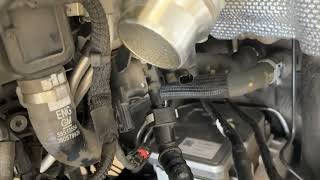
On the 2020-2023 Encore GX and its platform-mate, the Chevrolet Trailblazer, P0234 is often linked to specific, documented issues. General Motors has issued Technical Service Bulletins (TSBs) that point to charge air cooler (CAC) icing in extremely cold weather as a cause for this code (along with P0299, underboost). Another key issue, detailed in TSB PIP5892B, is the code appearing after a turbocharger replacement. This is often resolved not by replacing more parts, but by performing an "Intake System Learned Values Reset 🎬 Watch: How to perform the intake system reset procedure." with a GM-specific scan tool. Furthermore, a Special Coverage program (N232407740) exists for the 1.2L engine in 2020 models 🎬 Watch: 1.2L turbocharger removal and diagnostic testing walkthrough. due to a risk of premature turbo failure.
Diagnostic Flowchart

Tap your situation to follow the diagnostic path that matches what you're seeing on this vehicle.
Symptoms You May Notice
- Check Engine Light is on
- Reduced engine power (limp mode)
- Sluggish acceleration
- A message on the dash indicating reduced engine power
- Abnormal whooshing or hissing sounds from the engine bay
- Whining or siren-like noise from the turbo.
- Replacing the turbocharger when only an ECM calibration reset is needed after a prior replacement.
- Replacing sensors without first checking for charge air cooler icing in cold climates.
- Replacing the entire turbocharger when only the wastegate control solenoid has failed.
Most Likely Causes

- Sticking or Failed Turbocharger Wastegate 🔴 High Probability → Shop Turbocharger The wastegate regulates boost by diverting exhaust. If it sticks closed, it cannot bypass the turbine, leading to uncontrolled boost. This is a common failure mode for many turbocharged vehicles, and on these engines, the actuator arm or internal valve can fail.
How to confirm: With the engine off, attempt to move the wastegate actuator arm by hand or with a vacuum pump. It should move freely without binding. A scan tool can also be used to command the wastegate solenoid to check for response. A visual inspection may reveal excessive wear on the wastegate lever arm where it enters the turbo housing, causing it to bind.
Typical fix: In many cases, the wastegate actuator is integral to the turbocharger assembly and the entire turbo must be replaced. Sometimes the controlling solenoid or vacuum lines can be replaced separately.
Est. part cost: $50-$150 for a solenoid, $800-$1500+ for a turbocharger assembly. - Charge Air Cooler (CAC) Icing 🟡 Medium Probability → Shop Intercooler GM has identified this as an issue in extremely cold weather conditions (0°F / –18°C or less). Moisture from the positive crankcase ventilation (PCV) system can freeze within the charge air cooler, creating a blockage. This restriction can cause erratic pressure, leading to both overboost (P0234) and underboost (P0299) codes. TSB #21-NA-293 directly addresses this by providing an updated ECM calibration to change transmission shift patterns in cold weather, reducing the likelihood of ice buildup.
How to confirm: This issue is diagnosed by checking for the code primarily in freezing temperatures and inspecting the charge air cooler and its piping for ice, sludge, or excessive moisture. The condition may appear in the first 10-15 minutes of driving and then improve as the engine warms up.
Typical fix: The official fix per TSB #21-NA-293 is to reprogram the ECM with an updated calibration. TSB #20-NA-028 also recommends installing a grille winter cover to manage underhood temperatures in extreme cold. In some cases, clearing the ice and ensuring the PCV system is functioning correctly is required.
Est. part cost: $50-$100 for a grille cover. ECM reprogramming is a labor-only cost at a dealership. - Faulty Boost Pressure Sensor (MAP Sensor) 🟡 Medium Probability The sensor provides the primary boost pressure reading to the ECM. If it reads lower than the actual pressure, the ECM will command the wastegate to close further, creating a real overboost condition. It can also fail by providing erratic readings.
How to confirm: Use a scan tool to compare the boost pressure sensor reading to the barometric pressure sensor reading with the key on and engine off. They should be nearly identical. Check the sensor's voltage and reading under vacuum and pressure.
Typical fix: Replace the boost pressure sensor. The sensor is located on the intake manifold.
Est. part cost: $40-$100 - Intake System Learned Values Not Reset ⚪ Low Probability TSB #PIP5892B specifically calls this out for the Encore GX and Trailblazer. After replacing a turbocharger or wastegate solenoid, the ECM's learned values for controlling the wastegate must be reset. If not, the ECM may operate the new part with old, incorrect parameters, causing an overboost code to set immediately or soon after the repair.
How to confirm: This cause is confirmed if the P0234 code appears immediately or shortly after the turbocharger has been replaced. The code will often reappear quickly after being cleared.
Typical fix: Use a GM-specific GDS2 scan tool to perform the "Intake System Learned Values Reset" procedure. This is typically a dealer or specialty shop repair.
Est. part cost: $0 (labor cost only, typically 0.5-1.0 hours)
Rare But Worth Checking
- Restricted Exhaust: A clogged catalytic converter or modified exhaust can increase backpressure, affecting how the turbocharger spools and how the wastegate functions, potentially leading to overboost. This would usually be accompanied by other codes and more severe performance loss.
- Leaking Wastegate Control Hose: If the vehicle uses a vacuum-actuated wastegate, a cracked or disconnected hose can prevent the wastegate from opening when commanded, causing boost to build excessively.
- Increased Crankcase Pressure from CAC Icing: A side effect of severe Charge Air Cooler icing can be increased crankcase pressure, which may lead to oil leaks from seals and gaskets. While not a direct cause of the code, it's a related symptom to be aware of during diagnosis.
Diagnosis Steps
- Read the fault codes with an OBD-II scanner and document the freeze frame data to see the conditions under which the code was set (e.g., ambient temperature, engine load).
- Inspect all intake and charge air cooler piping for cracks, loose connections, or damage.
- If in a cold climate or if freeze frame data shows low ambient temps, inspect the charge air cooler for signs of icing or oily sludge, per TSB #21-NA-293.
- Check the wastegate actuator arm for free movement. It should not be seized or stuck. Visually inspect the linkage for wear.
- Using a scan tool, monitor the boost pressure sensor (MAP) reading. Compare it to the barometric pressure with the key on, engine off. They should match.
- If possible with your scan tool, command the wastegate solenoid on and off to verify its function and listen for a click.
- If the turbocharger was recently replaced, perform the "Intake System Learned Values Reset" as described in TSB #PIP5892B.
- Inspect the exhaust system for any restrictions or modifications, such as a clogged catalytic converter or aftermarket exhaust.
- If all other components check out, the turbocharger itself may have an internal failure, such as a seized wastegate valve.
Parts You'll Likely Need
- Turbocharger Assembly
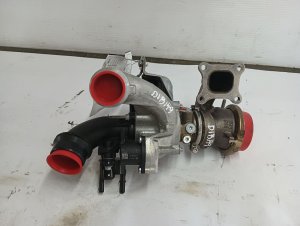
(OEM #25204082 (for 1.2L LIH engine))— Often the wastegate actuator is integral to the turbocharger. A sticking wastegate is a primary cause of P0234. A special coverage program (N232407740) exists for potential turbo failure on some 2020 1.2L models, extending the warranty to 15 years/150,000 miles. This part number supersedes 55513088, 55514781, 55515879, and 55515934.
Trusted brands: ACDelco (GM Genuine)
OEM price range: $1200-$1800
Aftermarket price range: $700-$1200 - Boost Pressure Sensor (MAP Sensor)
(OEM #12644228)— An inaccurate sensor can provide false readings to the ECM, causing it to command too much boost. This is a relatively inexpensive and easy part to replace. Note: The previously listed part number 12715140 is for the Crankcase Pressure Sensor, not the MAP sensor.
Trusted brands: ACDelco (GM Genuine), Bosch, Delphi
OEM price range: $40-$80
Aftermarket price range: $25-$60 - Turbocharger Wastegate Solenoid
(OEM #55512160)— This solenoid, often called a bypass valve, controls the wastegate. If it fails, it can't properly regulate boost pressure. The previously listed part 55587751 is for older 1.4L engines; this part is associated with the 1.2L/1.3L turbo assembly. Fitment should always be verified with the vehicle's VIN.
Trusted brands: ACDelco (GM Genuine)
OEM price range: $60-$120
Aftermarket price range: $40-$90
Related Codes That Often Appear With This One
- P0299 — Turbocharger/Supercharger Underboost Condition. This code can appear with P0234 in cases of charge air cooler icing, where the blockage causes erratic pressure spikes and drops.
- P0236 — Turbocharger/Supercharger Boost Sensor 'A' Circuit Range/Performance. This often points towards a problem with the sensor itself or its wiring, which can be a root cause of P0234.
- P00C7 — Intake Air Pressure Measurement System - Barometric Pressure/Turbocharger Inlet Pressure Not Plausible. This code can also be set along with P0234 and P0299 due to CAC icing.
Technical Service Bulletins (TSBs) & Recalls

- PIP5892B: Malfunction Indicator Lamp Illuminated with DTC P0234 post Turbocharger Replacement.
- 21-NA-293: Poor Engine Performance in Extremely Cold Weather Conditions, Charge Air Cooler Icing - Malfunction Indicator Lamp (MIL) Illuminated, DTC P0299, P0234, P0236, P00C7 Set.
- 20-NA-028: Mentions the need for a grille winter cover to prevent charge air cooler icing issues.
Platform-Specific Known Issues
- Special Coverage N232407740: GM issued a special coverage for 14,416 specific 2020 Encore GX models with the 1.2L (LIH) engine for a condition that could cause the turbocharger to fail. This extends the warranty for this component to 15 years or 150,000 miles.
- Charge Air Cooler Icing: TSB #21-NA-293 notes that in extremely cold weather (below 0°F/-18°C), moisture can freeze in the charge air cooler, causing erratic boost and setting codes P0234, P0299, and others. The fix is an ECM re-calibration to alter cold-weather transmission shifting.
- Post-Repair Calibration: TSB #PIP5892B highlights that after replacing the turbocharger, the "Intake System Learned Values Reset" must be performed with a GDS2 scan tool to prevent an immediate P0234 code.
- Grille Cover for Cold Weather: TSB #20-NA-028 advises the installation of a grille winter cover during pre-delivery inspection for vehicles sold in cold climates to help prevent the CAC icing issue.
Mechanic-Grade Diagnostic Values
- Turbocharger Commanded vs. Actual Boost Pressure Differential — expected: Less than 14 kPa (2.0 PSI) difference during a GDS2 Turbocharger Boost Control Test.. Failure: A difference greater than 14 kPa (2.0 PSI) suggests a mechanical or control issue with the turbo system.
- Wastegate Solenoid Function Test — expected: An audible click and/or physical movement of the wastegate actuator rod.. Failure: No click or movement when 12V is applied to the solenoid's connector pins, indicating a failed solenoid.
Scan Tool Commands That Help
- GDS2 (GM): Intake System Learned Values Reset — This must be performed after replacing the turbocharger or wastegate solenoid to prevent the ECM from using old, incorrect parameters which can cause P0234 to set on a new part, as noted in TSB PIP5892B.
- GDS2 (GM): Turbocharger Boost Control Test — To diagnose a suspected turbocharger issue. This function graphs the commanded boost pressure versus the actual boost pressure, allowing a technician to visually identify discrepancies that indicate a problem.
- GDS2 (GM): Wastegate Actuator / Solenoid Bidirectional Test — To test the functionality of the wastegate control solenoid without removing it. The command will attempt to cycle the solenoid, and the technician can observe for proper mechanical response.
Wiring & Ground Locations
- BCM (Body Control Module) — Located in the center console, on the front passenger side.. The BCM processes various inputs and communicates with the ECM. A wiring issue at the BCM could potentially cause communication errors related to engine control. A known 12V power input is at the blue 27-pin plug, pin 4 (Red/Yellow wire).
- G103 (Common GM Ground) — Typically located at the left rear of the engine compartment on the cowl, above the brake booster.. This is a major ground point for the ECM and other critical modules. A poor connection here can cause a wide range of difficult-to-diagnose electronic issues, including faulty sensor readings that could trigger a P0234.
- G105 (Common GM Ground) — Typically located at the left front of the engine compartment, behind the cooling fan relays.. Provides ground for various engine-related components. While not a primary ECM ground, ensuring all engine grounds are clean and secure is a critical step in diagnosing any electronic fault code.
OEM Part Supersession History
55513088, 55514781, 55515879, 55515934→25204082— Part revision and consolidation by the manufacturer.
Heads up: Using one of the older, superseded part numbers may result in installing a part with a known issue that the newer part was designed to fix. Always use the latest revision.
Model Year Variations Within This Range
- 2020-2023: The Encore GX is available with two different engines. The 1.2L LIH Turbo I3 is standard on FWD models and is paired with a CVT. The 1.3L L3T Turbo I3 is optional on FWD models (with CVT) and standard on AWD models, where it is paired with a 9-speed automatic transmission. Diagnostic procedures and parts, such as the turbocharger itself, may differ between the two engines.
Helpful Videos

We Have This Part in Stock


The information in this article is provided for general reference and educational purposes only. Vehicle specifications, procedures, and part compatibility can vary by production date, trim level, and region. Always consult your vehicle's factory service manual and verify part numbers before purchasing or performing repairs. Safety-critical components such as airbags, seat belts, and braking systems should be installed by a qualified professional.
- Buick ENCORE GX:
- 🧭 Diagnostic Flowchart
- 🎬 Helpful Videos
- 🛍️ Shop This Part
- What's Unique About the 2020-2023 Buick ENCORE GX
- Symptoms You May Notice
- Most Likely Causes
- Rare But Worth Checking
- Diagnosis Steps
- Parts You'll Likely Need
- Related Codes That Often Appear With This One
- Technical Service Bulletins (TSBs) & Recalls
- Platform-Specific Known Issues
- Mechanic-Grade Diagnostic Values
- Scan Tool Commands That Help
- Wiring & Ground Locations
- OEM Part Supersession History
- Model Year Variations Within This Range
- 🎟️ Get 5% Off