

P0234 on 2015-2018 Ford Edge 2.7L EcoBoost: Turbo Overboost Causes and Fixes
For a 2015-2018 Ford Edge with the 2.7L EcoBoost, code P0234 is most often caused by a faulty turbocharger wastegate control solenoid. This is an affordable part (around $50-$100) and a relatively straightforward DIY replacement. Before replacing, check the related fuse in the under-hood fuse box. Ignoring this code can lead to serious engine damage.
- P0234 on your 2.7L Edge means the engine is experiencing dangerously high turbo boost pressure.
- The most likely cause is a failed wastegate control solenoid, an inexpensive and accessible part with OEM part number FL3Z-9E882-B.
- Before replacing any parts, always check the related fuse first.
- Do not ignore this code; driving for an extended period can lead to severe and costly engine damage.
- A faulty turbocharger is a possible but less likely cause compared to the control solenoid and its vacuum lines.
What's Unique About the 2015-2018 Ford Edge
The 2.7L EcoBoost V6 in the 2015-2018 Edge Sport uses a twin-turbo setup with vacuum-actuated wastegates controlled by a single electronic solenoid. Unlike some other engines that use electronic actuators directly on the turbo (like the 2017+ 3.5L EcoBoost or the Gen 2 2.7L from 2018+ in other platforms), this system relies on vacuum lines and a remote solenoid. This design makes the control solenoid and its associated vacuum hoses common failure points for boost control issues like P0234, rather than a failure of the turbocharger itself.
Symptoms You May Notice
- Check Engine Light illuminated
- Wrench light may appear on the dashboard
- Significant loss of engine power and acceleration (vehicle enters 'limp mode')
- Loud or unusual hissing, whooshing, or whistling noises from the engine or turbocharger area
- Harsh or erratic transmission shifting
- Engine may run rough, surge, or misfire
- Hesitation or stumbling during acceleration
- Replacing the entire turbocharger assembly when only the inexpensive control solenoid or a vacuum line has failed. One owner reported a professional diagnosis and solenoid replacement cost under $150, while a turbo replacement can cost thousands.
Most Likely Causes
- Faulty Turbocharger Wastegate Control Solenoid 🔴 High Probability → Shop Turbocharger The solenoid manages vacuum to both turbo wastegates and is a well-documented, common failure point on the 2.7L EcoBoost engine, leading to improper boost regulation. It is an electro-mechanical part exposed to high heat and vibration, causing internal failure over time.
How to confirm: First, check the associated fuse (often a 10-amp fuse) in the under-hood fuse box. If the fuse is good, you can test the solenoid's function using a vacuum pump and multimeter (check for resistance between 10-40 Ohms), or by commanding it with a capable scan tool. Given the low cost, replacement is a common and effective diagnostic step.
Typical fix: Replace the wastegate control solenoid (sometimes called a boost control solenoid or, confusingly by Ford, an 'EGR control solenoid valve').
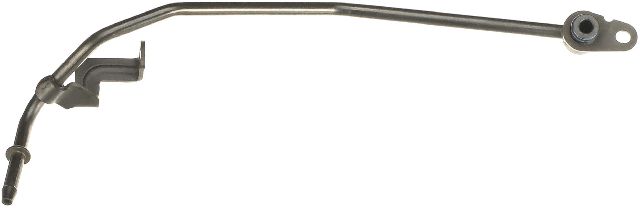
Est. part cost: $50-$100 - Leaking, Cracked, or Disconnected Vacuum Hoses 🟡 Medium Probability → Shop Vacuum Hose The system relies on a harness of rubber and plastic vacuum lines running from the solenoid to the turbo wastegate actuators. These lines can become brittle and crack or disconnect due to engine bay heat and age.
How to confirm: Visually inspect all vacuum lines connected to the wastegate control solenoid and running to the turbocharger actuators. Check for cracks, loose fittings, or breaks. A smoke test or using a hand-held vacuum pump on the harness can also reveal hidden leaks.
Typical fix: Replace the damaged section of vacuum hose or the entire vacuum harness assembly. Re-secure any loose connections.
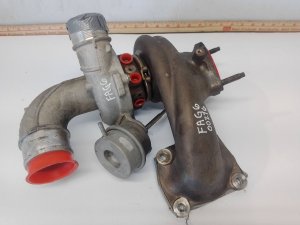
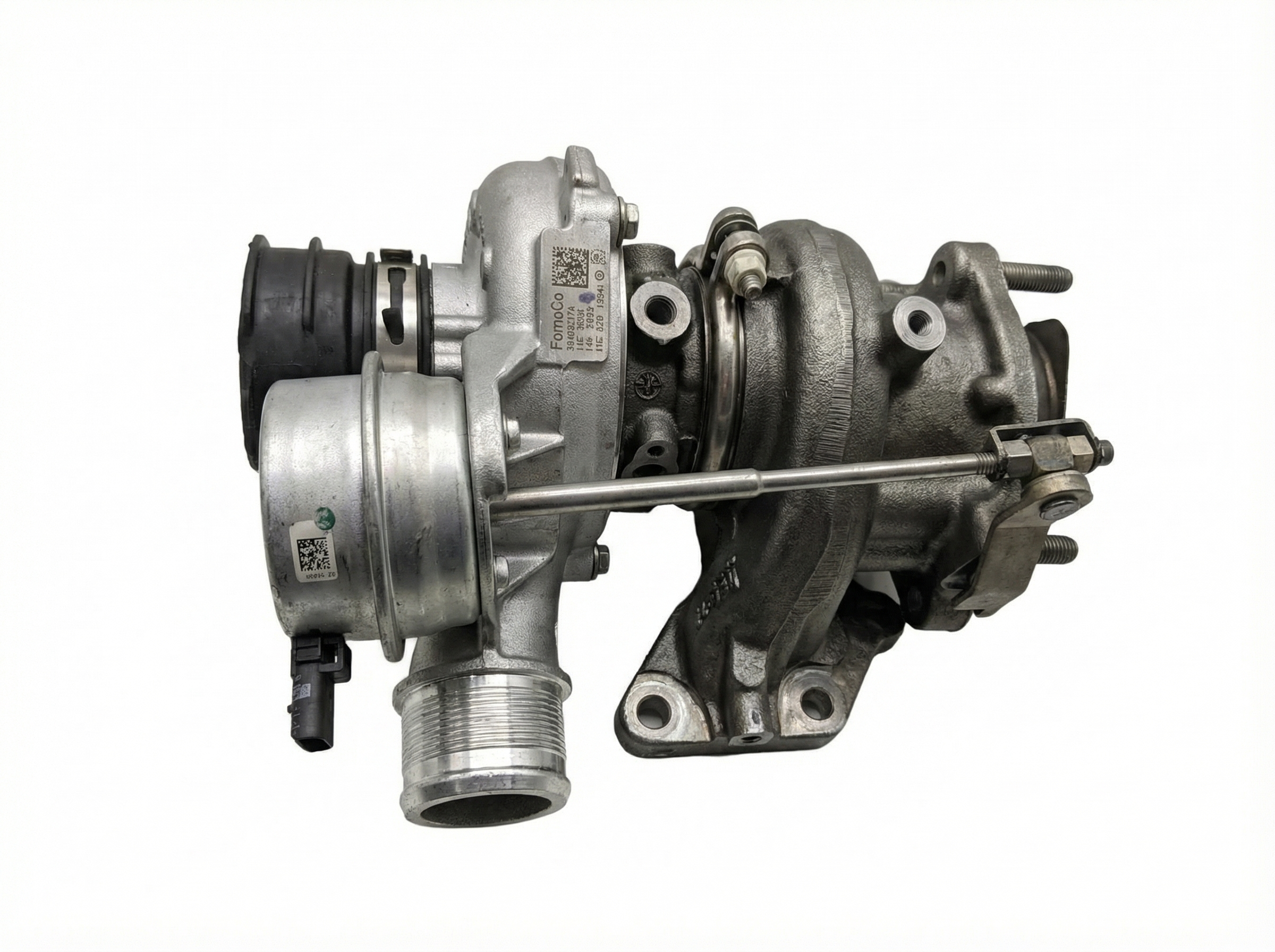
Est. part cost: $10-$50 - Sticking or Seized Turbocharger Wastegate ⚪ Low Probability → Shop Turbocharger The wastegate arm, which is a mechanical component on the turbocharger housing, can seize due to carbon buildup or corrosion, preventing it from opening to relieve excess boost pressure.
How to confirm: Once the engine is cool, manually attempt to move the wastegate actuator arm on each turbocharger. It should move freely with some spring resistance. If it is stuck or binding, the wastegate is the issue. You can also use a hand-held vacuum pump on the actuator diaphragm to see if it moves the arm; it should begin moving around 7-8 inHg and be fully actuated by 17-18 inHg.
Typical fix: In some cases, the linkage can be freed up with penetrating oil and manipulation. More often, this requires replacement of the entire turbocharger assembly as the wastegate is typically an integral part.
Est. part cost: $800-$1500+
Rare But Worth Checking
- Faulty MAP (Manifold Absolute Pressure) Sensor: → Shop Manifold Absolute Pressure Sensor A faulty MAP sensor can send incorrect pressure readings to the PCM, leading to a miscalculation of boost and triggering an overboost code even if the mechanical system is working correctly. NHTSA ODI #11688277 notes that P0234 can appear alongside catalyst efficiency codes like P0420, which may impact overall system accuracy.
- Aftermarket Engine Tuning: Aggressive aftermarket tunes that increase boost pressure beyond the factory safety limits can trigger this code if not properly calibrated or if they push the stock components beyond their capability.
Diagnosis Steps
- Scan the vehicle's computer to confirm P0234 is the active code and check for any other related codes like P0299 or P0236. A manufacturer service bulletin, TSB Bulletin #SSM 53328, notes that P0234 often appears with a lack of power and excessive turbo noise.
- Check the fuse for the wastegate control solenoid in the under-hood fuse box (typically a 10A fuse).
- Visually inspect all vacuum lines between the control solenoid and the turbocharger wastegate actuators. Look for any cracks, breaks, or loose connections.
- If vacuum lines appear intact, test the wastegate control solenoid. Disconnect it and measure resistance across the pins with a multimeter (should be 10-40 Ohms).
- With the engine cool, physically check that the wastegate actuator arms on both turbochargers move freely and are not seized.
- Use a hand-held vacuum pump to test the wastegate actuators directly to ensure they hold vacuum and actuate the arm smoothly.
- If all other components check out, investigate the MAP sensor for correct readings by comparing its data to atmospheric pressure with the engine off.
Parts You'll Likely Need
- Turbocharger Wastegate Control Solenoid
(OEM #FL3Z-9E882-B (supercedes FL3E-9E882-BA))— This solenoid is the most common failure point for boost control issues on the 2.7L EcoBoost, directly causing the P0234 code when it fails to properly regulate the wastegates.
Trusted brands: Motorcraft, Pierburg (often the OE supplier), Dorman, Sorensen
OEM price range: $70-$120
Aftermarket price range: $40-$80
Related Codes That Often Appear With This One
- P0299 — This is the 'underboost' code. It can appear if the wastegate or control system is failing erratically. NHTSA ODI #11561976 describes a situation where an owner obtained both P0234 and P0299 codes, which persisted even after the turbocharger overboost solenoid was replaced.
- P0236 — This code for 'Turbocharger Boost Sensor 'A' Circuit Range/Performance' can sometimes accompany P0234, indicating a potential issue with the sensor that measures boost, which could be the root cause or a related symptom.
- P1016 — This Ford-specific code for 'Wastegate control pressure higher than expected' points directly to the same overboost condition and is often caused by the same faulty solenoid or binding wastegate.
- P0365 / P0369 — In severe cases of mechanical failure, P0234 has been seen alongside camshaft sensor codes and internal motor damage, as documented in NHTSA ODI #11427314.
Technical Service Bulletins (TSBs) & Recalls
- TSB 15-0182: Issued for some early 2015 models with GTDI engines, including the 2.7L, specifically to address DTCs P0234 and/or P0299 with drivability symptoms like surging or noises.
- TSB Bulletin #SSM 53328: Identifies P0234 as a code associated with a malfunction indicator lamp (MIL), lack of power, and excessive turbo noise during operation.
Platform-Specific Known Issues
- Confusing Part Nomenclature: Owners and even dealer parts departments have reported confusion when ordering the wastegate control solenoid. Ford's internal system sometimes refers to the part as an 'EGR control solenoid valve' or even mislabels it as a 'vacuum hose', which can complicate finding the correct part. It is best to search by the OEM part number (FL3Z-9E882-B) or provide a picture to the parts counter.
Mechanic-Grade Diagnostic Values
- Wastegate Control Solenoid Internal Resistance — expected: 10 - 40 Ohms. Failure: A reading of 'OL' (open circuit) or near-zero Ohms (short circuit) indicates a failed solenoid.
- Wastegate Control Solenoid Connector Voltage (KOEO) — expected: ~12V (Battery Voltage) on the power supply pin.. Failure: A reading significantly below battery voltage points to a wiring or fuse issue upstream of the solenoid.
- Wastegate Actuator Vacuum Test — expected: Actuator arm begins to move at ~7-8 inHg and is fully extended by ~17-18 inHg.. Failure: Arm does not move, does not hold vacuum, or requires significantly more vacuum to move, indicating a ruptured diaphragm or seized arm.
- MAP Sensor Signal Voltage (KOEO) — expected: ~1.0V - 1.5V at sea level, should match BARO sensor reading.. Failure: Voltage is significantly outside this range or doesn't correlate with the BARO sensor, suggesting a faulty sensor.
- MAP Sensor Supply Voltage (KOEO, sensor unplugged) — expected: ~5.0V on the reference wire pin.. Failure: Significantly lower or no voltage indicates a wiring problem from the PCM or a faulty PCM.
Scan Tool Commands That Help
- FORScan / Ford IDS: Wastegate Control Solenoid (WCS) Duty Cycle — This bidirectional control allows you to command the solenoid's duty cycle from 0% to 100%. While commanding changes, you can monitor the vacuum level at the wastegate actuators to confirm the solenoid is physically working and regulating vacuum correctly. This tests the solenoid's functionality beyond a simple resistance check.
- FORScan / Ford IDS: Live Data Monitoring for PIDs: TC_WG_DC, BOOST_P, MAP, BARO — During a test drive, monitoring these Parameter IDs (PIDs) is crucial. You can compare the PCM's commanded wastegate duty cycle (TC_WG_DC) against the actual boost pressure being produced (BOOST_P / MAP). If the PCM is commanding the wastegate to open (high duty cycle) but boost continues to climb, it points to a mechanical failure (stuck wastegate) or a faulty solenoid not responding to the command.
Wiring & Ground Locations
- G108 — Typically located on the left side of the engine compartment, on the inner fender or frame rail.. This is a primary engine and PCM ground point. A loose or corroded connection here can cause erratic sensor readings and unpredictable behavior from various engine controls, including the boost control system, potentially leading to incorrect boost readings or solenoid operation.
- C175B — One of the main connectors for the Powertrain Control Module (PCM), often located on the passenger side firewall.. Signals from the MAP sensor and the control signal to the wastegate solenoid pass through this large connector. In cases of persistent or hard-to-diagnose electrical faults, checking for corrosion, moisture, or pin damage here is a valid advanced diagnostic step.
- Wastegate Solenoid Harness — The wiring runs from the solenoid, which is mounted on top of the engine, back towards the main engine harness.. This harness is exposed to significant heat and vibration. Wires can become brittle and break internally, or the insulation can chafe against engine components, causing an intermittent short or open circuit that can be difficult to find with a simple visual inspection. A 'wiggle test' while monitoring resistance is often effective.
Real Owner Repair Stories
- YouTube Commenter on '312Drive' channel (2015 Ford F-150 King Ranch 3.5L EcoBoost (similar vacuum control system)) — P0234 code would appear anytime the throttle was applied hard. The truck would run fine after a reset until the next hard acceleration.
❌ Tried (didn't work) Replaced the boost solenoid, Cleaned all related sensors (MAP, etc.)
✅ What actually fixed it While replacing a leaking vacuum pump, the owner discovered a squirrel had chewed small holes in the plastic vacuum line going from the boost solenoid to the wastegate. The damage was on the bottom side of the line and was not visible during normal inspections. Replacing the damaged vacuum line resolved the P0234 code. - NHTSA ODI #11062911 — An owner reported that their vehicle lost power and displayed a "See Manual" light. A dealership identified code P0234 for turbocharger overboosting but simply reset the computer without performing further repairs.
OEM Part Supersession History
FL3E-9E882-BA→FL3Z-9E882-B— Part revision and update by Ford. The newer part is considered the correct service replacement.
Heads up: There is significant confusion in parts catalogs, which sometimes list this part as an 'EGR control solenoid' or show it as incompatible with the 2.7L engine, even though it is the correct part. Always verify by the part number, not the description.
Model Year Variations Within This Range
- 2015-2018: The 2.7L EcoBoost in the 2015-2018 Edge Sport is the 'Gen 1' version, which uses a vacuum-actuated wastegate system controlled by the solenoid discussed here. Starting in the 2018 model year for other platforms (like the F-150) and 2019 for the Edge ST, the 'Gen 2' 2.7L was introduced. The Gen 2 engine uses electronic wastegate actuators, eliminating the vacuum solenoid and lines as a cause for this code. Therefore, this diagnosis is specific to the Gen 1 engine.
Diagnostic Flowchart
Other Known Issues on This Vehicle
Issues unrelated to this code that are worth knowing about as an owner of this generation:
- Leaking Oil Pan Seal 🔴 High — Very common on 2015-2017 models with the original RTV-sealed composite oil pan. Can occur at various mileages. (Ref: Multiple TSBs issued, including 19-2219, 23-2338, and 19-2387, which detail a complex replacement procedure and, for later models, an updated pan design with a press-in-place gasket.)
- Internal Coolant Leak (White Smoke from Exhaust) 🔴 High — Reported by numerous owners, often manifesting as white, acrid-smelling smoke from the exhaust, especially on a cold start. The issue is often a cracked cylinder head in the integrated exhaust manifold. (Ref: TSB 19-2188 and SSM 47557 address white/blue/grey smoke on F-150s with the same engine, often leading to turbocharger replacement to fix oil seals, but owner forums suggest a cracked head is also a common, more severe cause.)
- Electronic Throttle Body (ETB) Failure 🟠 Medium → Shop Fuel Injection Throttle Body — A well-documented issue across many Ford models, including the Edge. Failure can be sudden, causing the vehicle to enter 'limp mode' with a wrench light, creating a safety hazard. (Ref: SSM 46085 revised diagnostic procedures for ETBs, but no widespread recall exists for this specific Edge generation, though warranty extensions were offered for other models.)
- Carbon Buildup on Intake Valves 🟡 Low — A common characteristic of all Gen 1 direct-injection engines, including the 2.7L EcoBoost. Over time (typically 60k-100k miles), buildup can cause rough idle, hesitation, or reduced performance. The Gen 2 engine (2018+) added port injection to mitigate this.
Used vs. New Parts: Buying Guide for This Vehicle
When a used part is the smart pick: For this repair, using a used part is generally not recommended for the electronic and rubber components. The primary failure parts (solenoid, vacuum lines) are inexpensive to buy new, and their failure is related to heat cycles and age, meaning a used part has limited remaining life. A used turbocharger assembly from a low-mileage, verified donor vehicle could be an option if the failure is a seized wastegate, but it carries significant risk.
Donor-vehicle mileage cap: roughly under 50000 miles for the part to have meaningful remaining life.
What to inspect on the donor part:
- For a turbocharger: Verify the wastegate arm moves freely with no binding.
- Check for excessive shaft play in the turbo's impeller and turbine wheels.
- Ensure there are no cracks on the exhaust housing.
- Look for signs of oil leaks from the center housing rotating assembly (CHRA).
OEM-only on this vehicle (don't cheap out):
- Turbocharger Assembly: While aftermarket turbos exist, OEM (or the original supplier, BorgWarner) is strongly recommended for proper fitment, performance, and longevity. Many aftermarket units fail to meet OEM calibration standards.
Aftermarket brands forum-validated for this vehicle:
- Pierburg: Often the original equipment manufacturer (OEM) for the wastegate control solenoid. Buying a Pierburg-branded part is often identical to the Motorcraft part without the dealer markup.
- Dorman / Sorensen: Offer reliable aftermarket replacements for the wastegate control solenoid that meet or exceed OEM specifications.
Brands owners have reported issues with on this vehicle:
- Unnamed/white-box parts from online marketplaces: These often have high failure rates, incorrect resistance values, or use substandard materials that cannot withstand engine bay temperatures, leading to a repeat failure in a short time.
Real Owner Stories
Aggregated from forums and TSBs cited above. Mileages and costs reflect what owners reported in those sources.
2015 Ford F-150 2.7L EcoBoost
Symptoms: The owner experienced an overboost condition and was troubleshooting whether the wastegates were holding vacuum, eventually identifying the solenoid as the likely culprit.
What fixed it: Replacement of the wastegate control solenoid, though the owner noted significant difficulty finding the correct part number due to Ford's confusing naming conventions.
Source hint: Ford F150 Forum (f150forum.com) thread titled 'P0234 troubleshooting'
2015-2018 Ford F-150 2.7L EcoBoost
Symptoms: Owner reported an 'Overboost Condition Error Code P0234'.
What fixed it: A professional technician diagnosed and replaced a bad vacuum solenoid.
Cost: $100-$150
Source hint: Ford F150 Forum (f150forum.com) thread titled 'Overboost Condition Error Code P0234'
Related OBD-II Codes
Frequently Asked Questions
I'm looking for the wastegate control solenoid for my 2.7L Edge, but the dealer is giving me a different name. What is the correct part?
Does TSB 15-0182 apply to my 2015 Ford Edge with the P0234 code?
My Edge is surging and making a whistling noise. Could this be related to the P0234 code?
How can I tell if the wastegate itself is seized on my 2.7L EcoBoost?
Is there a simple electrical check for the boost control solenoid?
Could a bad MAP sensor cause a false P0234 overboost code?
Used OEM Parts in Stock
New Aftermarket Parts Available


The information in this article is provided for general reference and educational purposes only. Vehicle specifications, procedures, and part compatibility can vary by production date, trim level, and region. Always consult your vehicle's factory service manual and verify part numbers before purchasing or performing repairs. Safety-critical components such as airbags, seat belts, and braking systems should be installed by a qualified professional.
- Ford Edge:
- 🧭 Diagnostic Flowchart
- 🛍️ Shop This Part
- What's Unique About the 2015-2018 Ford Edge
- Symptoms You May Notice
- Most Likely Causes
- Rare But Worth Checking
- Diagnosis Steps
- Parts You'll Likely Need
- Related Codes That Often Appear With This One
- Technical Service Bulletins (TSBs) & Recalls
- Platform-Specific Known Issues
- Mechanic-Grade Diagnostic Values
- Scan Tool Commands That Help
- Wiring & Ground Locations
- Real Owner Repair Stories
- OEM Part Supersession History
- Model Year Variations Within This Range
- Other Known Issues on This Vehicle
- Used vs. New Parts: Buying Guide for This Vehicle
- Real Owner Stories
- 2015 Ford F-150 2.7L EcoBoost
- 2015-2018 Ford F-150 2.7L EcoBoost
- Related OBD-II Codes
- Frequently Asked Questions
- 🎟️ Get 5% Off