

P0234 on 2016-2018 Land Rover Range Rover: Turbo Overboost Causes & Fixes
On a 2016-2018 Range Rover with the 3.0L TDV6 diesel, code P0234-77 is almost always caused by a sticking intake air shutoff throttle body. The plastic flap inside the throttle body housing can warp or get gummed up with carbon, causing it to stick. This prevents proper DPF regeneration, leading to a clogged DPF that creates exhaust backpressure and triggers the turbo overboost code. Replacing the throttle body is the definitive fix.
- P0234-77 on a 2016-2018 Range Rover 3.0L TDV6 is most often a symptom, not the root problem.
- The primary cause is usually a sticking intake air shutoff throttle body, which is a known issue covered by TSBs.
- This throttle issue prevents DPF regeneration, leading to a clogged DPF (codes P2463, P246B) and exhaust backpressure that causes the turbo overboost.
- Do not replace the turbocharger until the throttle body and intake system have been thoroughly inspected.
- Fixing the throttle body and performing a forced DPF regeneration is the standard, manufacturer-recommended repair.
What's Unique About the 2016-2018 Land Rover RANGE ROVER

For the 3.0L TDV6 diesel engine in the L405 Range Rover and its platform mates, code P0234 is uniquely and overwhelmingly tied to a cascading failure starting with the intake air shutoff throttle. This throttle is crucial for creating the right conditions for Diesel Particulate Filter (DPF) regeneration. When it fails to operate correctly (sticks), the vehicle's software explicitly prohibits DPF regeneration. This guarantees that the DPF will become clogged with soot, creating excessive exhaust backpressure that prevents the turbocharger's wastegate from regulating boost properly, thus logging the P0234 overboost code. This sequence of events is documented in numerous Land Rover Technical Service Bulletins.
Diagnostic Flowchart

Tap your situation to follow the diagnostic path that matches what you're seeing on this vehicle.
Symptoms You May Notice

- Check Engine Light (Malfunction Indicator Lamp) is on.
- "Restricted Performance" message displayed on the instrument cluster.
- Red "DPF Full" warning light on the instrument cluster.
- Noticeable loss of engine power and sluggish acceleration.
- Erratic acceleration or surging.
- Vehicle unable to accelerate past a certain speed (e.g., 50-60 mph).
- Replacing the turbocharger assembly. Many owners and shops replace the entire turbo, which is very expensive, when the root cause is the much cheaper intake air shutoff throttle or a simple leak. Multiple owner accounts describe being quoted for new turbos before finding the true throttle body cause.
Most Likely Causes

- Sticking/Failing Intake Air Shutoff Throttle Body 🔴 High Probability → Shop Fuel Injection Throttle Body This is a well-documented issue on the 3.0L TDV6 engine, as outlined in multiple manufacturer TSBs. The plastic flap inside the housing can warp from heat exposure from the nearby EGR inlet or carbon buildup can cause the throttle flap to stick shut or open.
How to confirm: A technician can use a diagnostic scan tool to command the throttle body and observe if it moves correctly. A simple physical check is often sufficient: remove the main intake pipe leading to the throttle body and manually press the flap. If it sticks in the closed position and does not spring back, it is faulty. The presence of code P2101-77 (Throttle Actuator Commanded Position Not Reachable) is a strong confirmation.
Typical fix: Replacement of the intake air shutoff throttle body is the recommended and most reliable solution. Some owners and mechanics have attempted cleaning or filing down the plastic flap, but this is often a temporary fix with a high rate of recurrence (50-60% success rate). After replacement, a calibration or 're-learn' procedure must be performed with a compatible diagnostic tool.
Est. part cost: $400-$600 - Clogged Diesel Particulate Filter (DPF) 🔴 High Probability This is a direct and guaranteed consequence of the failing throttle body, which prevents the DPF regeneration process. The vehicle's ECU is programmed not to initiate a regen cycle while P0234-77 is active.
How to confirm: Confirmed by the presence of codes P2463-00 (DPF Restriction – Soot Accumulation) and P246B-00 (Vehicle Conditions Incorrect for DPF Regeneration) alongside P0234. A technician can also measure DPF backpressure with a scan tool; one example showed 20 mbar at idle and 150 mbar at 3,000 RPM, which was considered slightly high.
Typical fix: Once the root cause (the throttle body) is fixed, a forced regeneration of the DPF using a diagnostic tool is required. In severe cases where a red 'DPF Full' warning is present, the DPF may need professional off-car cleaning or replacement. Some diagnostic tools have a function to 'reset' the DPF, tricking the ECU into thinking a new one has been fitted, which can allow a regeneration to proceed.
Est. part cost: $0 (for forced regen) - $2000+ (for DPF replacement) - Leaking Air Intake System 🟡 Medium Probability Hoses and intercooler pipes can develop cracks or splits over time, causing unmetered air to enter or boost pressure to escape, confusing the boost control logic. TSB LTB01204NAS1 specifically calls for a smoke test as a primary diagnostic step.
How to confirm: A smoke test of the entire intake and charge air system is the most effective way to find leaks. A visual inspection may also reveal obvious cracks, oil misting around connections, or loose clamps.
Typical fix: Replace the leaking hose, pipe, or intercooler.
Est. part cost: $50-$500 - Faulty Turbocharger Wastegate Actuator or Solenoid ⚪ Low Probability → Shop Turbocharger While less common than the throttle body issue on this specific platform, any failure in the wastegate control system can cause overboost. On the 3.0L TDV6, which has a sequential twin-turbo setup, this could involve the compressor shut-off valve for the secondary turbo.
How to confirm: A technician can apply vacuum or pressure directly to the actuator to check for physical movement and its ability to hold vacuum. The control solenoid can be tested for correct electrical response with a scan tool and by applying voltage to see if it operates. A user on a Jaguar forum found a sticking compressor shut-off valve vacuum actuator was the cause.
Typical fix: Replacement of the faulty wastegate actuator or control solenoid. On some turbos, the actuator is an integral part of the turbocharger assembly.
Est. part cost: $150-$400
Rare But Worth Checking
- Faulty Boost Pressure Sensor (MAP Sensor): A sensor that reads incorrectly high could falsely trigger an overboost code. The new throttle body assembly often includes a new MAP sensor. This is less common than mechanical failures.
- Sticking Turbocharger Vanes (VNT): → Shop Turbocharger Carbon buildup can cause the variable geometry vanes inside the turbo to stick, preventing them from adjusting to regulate boost pressure. This is more common on vehicles with high mileage or poor maintenance history.
- Blocked Crankcase Oil Separator (PCV): A blocked oil separator can affect crankcase pressures and has been noted in some cases to contribute to the P0234 code after the throttle body has been addressed.
Diagnosis Steps
- Read all Diagnostic Trouble Codes (DTCs) from the Powertrain Control Module (PCM). Note the presence of P0234-77 and any accompanying codes like P2463, P246B, or P2101.
- Check for relevant Technical Service Bulletins (TSBs). TSBs LTB01204NAS1, LTB01204NAS2, and LTB01204NAS3 directly address this issue and recommend checking for intake leaks first, then replacing the throttle body.
- Perform a physical inspection of the intake air shutoff throttle body. Remove the intake pipe and manually actuate the flap. If it sticks or is slow to return, it has failed.
- Perform a smoke test on the entire air intake system, from the air filter to the engine, including the intercooler and all hoses, to check for leaks as per TSB LTB01204NAS1.
- Using a capable scan tool, monitor live data for the boost pressure (MAP) sensor to ensure its readings are plausible at idle and under load. Expect ~4.5V at key-on-engine-off and ~1.0-1.8V at idle.
- If no other cause is found, inspect the turbocharger wastegate actuator for free movement. Test the control solenoid and vacuum lines associated with it.
- Check DPF soot levels and backpressure using the scan tool to confirm the extent of the blockage and determine if a forced regeneration or cleaning is necessary after the primary repair.
Parts You'll Likely Need
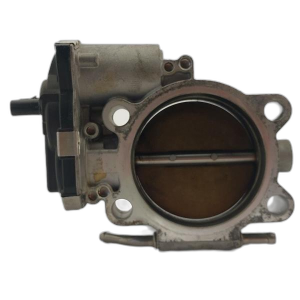
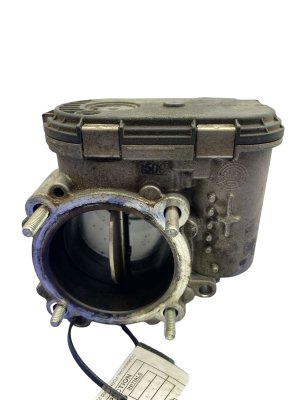
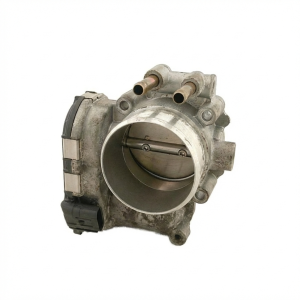
- Intake Air Shutoff Throttle Body
(OEM #LR078546)
Related Codes That Often Appear With This One
- P2463-00 — This code indicates 'Diesel Particulate Filter Restriction - Soot Accumulation.' It appears because the primary fault (often the throttle body) prevents the DPF from regenerating, causing it to clog with soot.
- P246B-00 — This code means 'Vehicle Conditions Incorrect for Diesel Particulate Filter Regeneration.' It is set when the PCM determines it cannot initiate a DPF cleaning cycle, often due to the faulty throttle body and the active P0234-77 code.
- P2101-77 — This code for 'Throttle Actuator Commanded Position Not Reachable' directly points to the common root cause of the entire chain of faults: the sticking intake air shutoff throttle.
Technical Service Bulletins (TSBs) & Recalls
- LTB01204NAS3: 'The MIL is illuminated on the IPC with Diagnostic Trouble Code(s) (DTC) P0234-77 stored in the Powertrain Control Module (PCM) which may be accompanied with DTCs P2463-00 and P246B-00.'
- LTB01204NAS2: 'The engine MIL (Malfunction Indicator Lamp) may be illuminated on the Instrument Panel Cluster with DTC (Diagnostic Trouble Code) P0234-77 stored in the Powertrain Control Module (PCM). DTC P2463-00 and P246B-00 may also be stored.'
- LTB01204NAS1: 'The engine Malfunction Indicator Lamp (MIL) may be illuminated on the Instrument Cluster with Diagnostic Trouble Code (DTC) P0234-77 stored in the Powertrain Control Module (PCM). DTCs P2463-00 and P246B-00 may also be stored.'
Platform-Specific Known Issues
- TSB #LTB01204NAS3: States that the Malfunction Indicator Lamp (MIL) can be illuminated with DTC P0234-77 stored, which may be accompanied by DPF codes P2463-00 and P246B-00. The cause is listed as 'Component failure' and the recommended action, after checking for leaks, is to replace the intake air shutoff throttle.
- TSB #Tech_RS_NOV19_79: Notes that 3.0L TDV6 equipped vehicles may experience a MIL and a 'Restricted Performance' message on the instrument cluster with P0234-77 stored in the PCM.
- The vehicle's software logic prevents DPF regeneration while code P0234-77 is active. This guarantees that the DPF will become blocked if the primary throttle body fault is not fixed, compounding the problem.
Mechanic-Grade Diagnostic Values
- MAP Sensor Voltage (Key On, Engine Off) — expected: ~4.5 V. Failure: Significantly lower voltage may indicate a sensor or wiring issue.
- MAP Sensor Voltage (Engine at Idle) — expected: ~1.0 V to 1.8 V. Failure: Higher voltage at idle suggests a vacuum leak or a faulty sensor.
- DPF Backpressure — expected: Typically below 15 mbar at idle and under 100 mbar at 3,000 RPM.. Failure: Readings of 20 mbar at idle and 150 mbar at 3,000 RPM were noted on a vehicle with a clogged DPF.
- Turbo Wastegate Actuator Vacuum Test — expected: Actuator arm should move smoothly and hold vacuum.. Failure: The actuator fails to move, moves partially, or does not hold vacuum (e.g., 20 inHg).
Scan Tool Commands That Help
- JLR SDD/Pathfinder, Launch, iCarsoft, etc.: Throttle Valve Actuator Routine Adaption — This is a required step after replacing the intake air shutoff throttle body to calibrate the new part with the ECU.
- JLR SDD/Pathfinder, iCarsoft, Foxwell, etc.: DPF Regeneration (Static or Dynamic) — After the root cause of the P0234 code (like the throttle body) is fixed, a forced regeneration is needed to burn the accumulated soot out of the DPF.
- JLR SDD/Pathfinder, iCarsoft, etc.: Reset DPF Sensor Data / Soot Content — This function tricks the ECU into thinking a new DPF has been installed. It can be a useful step to enable a forced regeneration when the system is otherwise locked out due to high soot levels.
Wiring & Ground Locations
- Throttle Body Connectors — There are two connectors on the assembly: one on the front-left side of the throttle body itself, and one on the integrated MAP sensor on top.. Corrosion or damage to these connectors can interrupt signals for throttle position or boost pressure, directly causing faults.
- ECM Connector C1E116A — This is one of the main connectors at the Engine Control Module (ECM).. A wiring diagram shows pins C1E116A-72 (Green/Violet) and C1E116A-96 (Brown) are associated with the throttle body, making this connector a key point for electrical diagnosis.
- Engine/Chassis Grounds — General locations include straps from the engine block/cylinder heads to the chassis/firewall, and from the battery negative terminal to the frame. Specific points are often on threaded bosses on the cylinder heads.. A poor ground for the ECM or its sensors can cause erratic voltage readings, leading to incorrect calculations and false fault codes.
Real Owner Repair Stories
- Land Rover Forums user (2016 Range Rover Sport L494 SDV6, 142,700 miles) — Persistent P0234-77 fault code.
❌ Tried (didn't work) Replacing the DPF (twice), Replacing the right-hand turbocharger, Replacing various switches and pipe clusters
✅ What actually fixed it The cable for the DPF temperature sensor was found to be corroded, causing an incorrect high temperature reading. Repairing the corroded cable resolved the issue permanently. - YouTube channel 'Baz The Mechanic' (2017 Land Rover Discovery (L462)) — P0234 (Turbo Overboost) and P2463 (DPF Soot Accumulation).
❌ Tried (didn't work) Initial diagnosis was confusing as live data and DPF pressure (8 mibars) seemed normal.
✅ What actually fixed it Physically checking the intake throttle flap revealed it was sticking. Replacing the throttle body and performing a 'Throttle Valve Actuator Routine Adaption' with a scan tool fixed the problem. - Jaguar Forums user (2017 Jaguar F-PACE 3.0D (shared engine)) — Recurring P0234-77 code.
❌ Tried (didn't work) Replacing the throttle body and sensor, Cleaning the DPF, Replacing the DPF sensor, Replacing the DPF temperature sensor
✅ What actually fixed it Another user suggested the actual cause was a faulty/blocked crankcase oil separator (PCV system), a cheap part that was overlooked. - Australian Land Rover Owners forum user (2011 Discovery 4 SDV6 (similar engine/logic)) — Intermittent 'Restricted Performance Mode' that would clear on restart.
❌ Tried (didn't work) Engine software upgrade, Replacing MAF sensor, Smoke testing the intake system
✅ What actually fixed it The problem only occurred in gusty wind conditions after fitting a Safari snorkel with a ram-air head. The final fix was turning the snorkel head 180 degrees to face backward, preventing gusting wind from creating pressure spikes in the intake that the ECU flagged as a fault.
"I Checked Everything" — The Actual Cause
- A confirmed repair case found that after passing a smoke test and replacing the turbo and DPF, the true cause of P0234-77 was a corroded wire on the DPF temperature sensor, which sent faulty data to the ECU.
- In another case, a vehicle passed all mechanical checks, but the P0234 code was triggered by gusty wind conditions interacting with an aftermarket snorkel's ram-air head. The fix was purely external (turning the snorkel head backward), as the system itself had no leaks or faults.
OEM Part Supersession History
LR061957→LR078546— The original part is prone to the plastic flap warping or sticking. The supersession is likely an updated design or material to mitigate this issue.
Helpful Videos



Used OEM Parts in Stock

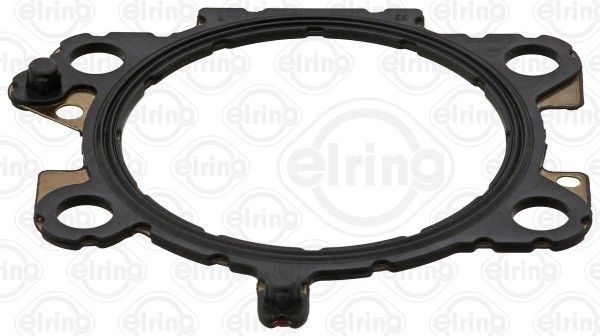
New Aftermarket Parts Available



The information in this article is provided for general reference and educational purposes only. Vehicle specifications, procedures, and part compatibility can vary by production date, trim level, and region. Always consult your vehicle's factory service manual and verify part numbers before purchasing or performing repairs. Safety-critical components such as airbags, seat belts, and braking systems should be installed by a qualified professional.
- Land Rover RANGE ROVER:
- 🧭 Diagnostic Flowchart
- 🎬 Helpful Videos
- 🛍️ Shop This Part
- What's Unique About the 2016-2018 Land Rover RANGE ROVER
- Symptoms You May Notice
- Most Likely Causes
- Rare But Worth Checking
- Diagnosis Steps
- Parts You'll Likely Need
- Related Codes That Often Appear With This One
- Technical Service Bulletins (TSBs) & Recalls
- Platform-Specific Known Issues
- Mechanic-Grade Diagnostic Values
- Scan Tool Commands That Help
- Wiring & Ground Locations
- Real Owner Repair Stories
- "I Checked Everything" — The Actual Cause
- OEM Part Supersession History
- 🎟️ Get 5% Off