

P0236 on 2018 Audi A5 2.0L Turbo: Boost Sensor Circuit Causes and Fixes
On a 2018 Audi A5 2.0T, code P0236 is most often caused by a damaged wire at the boost pressure sensor (G31) connector due to engine vibration. An official Audi TSB confirms this issue, specifically pointing to a broken yellow wire. Before replacing the sensor, a thorough inspection and probable repair of this wiring is the first and most critical step, often providing a permanent fix for significantly less cost than replacing other parts.
- First, inspect the wiring at the boost pressure (G31) sensor connector; this is a known failure point on your Audi and the most likely cause of P0236.
- Do not immediately replace the sensor without checking the wiring, as you may be replacing a good part.
- If the wiring is intact, check for boost leaks using a smoke test before condemning the sensor.
- A torn turbo diverter valve is another possible, though less common, cause for this code.
- The vehicle may enter a low-power 'limp mode' as a safety measure, so expect poor performance until the issue is resolved.
What's Unique About the 2018-2018 Audi A5
For this specific generation of Audi's 2.0L Turbo engine (EA888 Gen3), there is a well-documented issue that directly causes the P0236 code. Audi released a Technical Service Bulletin (TSB 01 24 11 2062323/3) for the A5 and related models, identifying that engine vibrations can fatigue and break the wiring harness leading to the boost pressure sensor (G31). The TSB specifically calls out the yellow wire as the common point of failure right at the connector. This makes a wiring fault a much higher probability on this platform compared to other vehicles, where a failed sensor might be the first assumption. Owners on forums like Audizine frequently report sudden power loss and confirm that repairing this single wire resolves the P0236 and associated P0106 codes.
Symptoms You May Notice
- Check Engine Light is illuminated, often accompanied by an EPC (Electronic Power Control) light
- Significant loss of engine power or entering 'limp mode'
- Hesitation, bucking, or jerking when accelerating.
- Poor or sluggish acceleration.
- Increased fuel consumption
- Hissing or whistling sounds from the engine bay if a boost leak is present
- Erratic or harsh transmission shifting as the TCU receives incorrect torque data
- Replacing the boost pressure sensor (G31) without first thoroughly inspecting the wiring harness. The TSB for this platform makes the wiring the primary suspect, and many owners have replaced the sensor only to have the code return.
Most Likely Causes
- Damaged Wiring or Connector at Boost Pressure Sensor (G31) 🔴 High Probability An official Audi TSB (01 24 11 2062323/3) documents that engine vibration can fatigue and break the wires, specifically the yellow wire, at the sensor's electrical connector. The wiring harness routing lacks sufficient slack, causing the wire to break internally, sometimes without visible damage to the insulation.
How to confirm: Visually inspect the wiring harness at the G31 sensor, located on the charge pipe near the throttle body. Gently pull on each individual wire (especially the yellow one) to check for breaks inside the insulation. Wiggle the connector with the engine running while monitoring live sensor data on a scan tool; a jumpy or flat-lined reading indicates a wiring fault.
Typical fix: Repair the broken wire(s) using a wiring repair kit. The TSB specifies using a gold-plated repair wire (Audi part # 000 979 025 EA) to ensure a durable connection. After repairing, wrap the harness with textile tape (N 105 920 02) to prevent a recurrence.
Est. part cost: $10-$40 - Faulty Boost Pressure Sensor (G31) 🟡 Medium Probability These sensors operate in a high-heat, high-pressure environment and can fail over time. Oil contamination from a failing PCV system can also coat the sensor element and cause incorrect readings.
How to confirm: If wiring is confirmed to be intact, use a scan tool to monitor the sensor's live data. With the key on and engine off, the pressure reading should be close to atmospheric pressure (approx. 970-1000 hPa at sea level). The voltage should increase smoothly as the engine builds boost. If the reading is stuck, erratic, or doesn't change, the sensor is likely faulty.
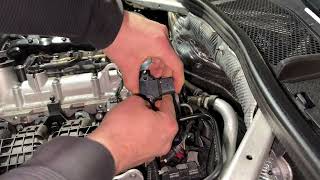
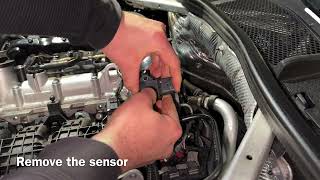
Typical fix: Replace the boost pressure sensor. It is held in by one or two Torx screws and is easily accessible on the charge pipe. 🎬 Watch: How to replace the boost pressure sensor yourself.
Est. part cost: $40-$90 - Boost Leak in Charge System 🟡 Medium Probability Plastic and rubber charge pipes, couplers, and o-rings can crack, tear, or loosen over time, especially at connection points to the intercooler and throttle body.
How to confirm: Perform a smoke test on the intake and charge pipe system. Smoke will be visible escaping from any leaking hoses, clamps, or from the intercooler itself. A hissing or whistling sound may also be audible from the engine bay while the engine is running under load.
Typical fix: Tighten loose clamps or replace the cracked hose, coupler, or damaged intercooler.
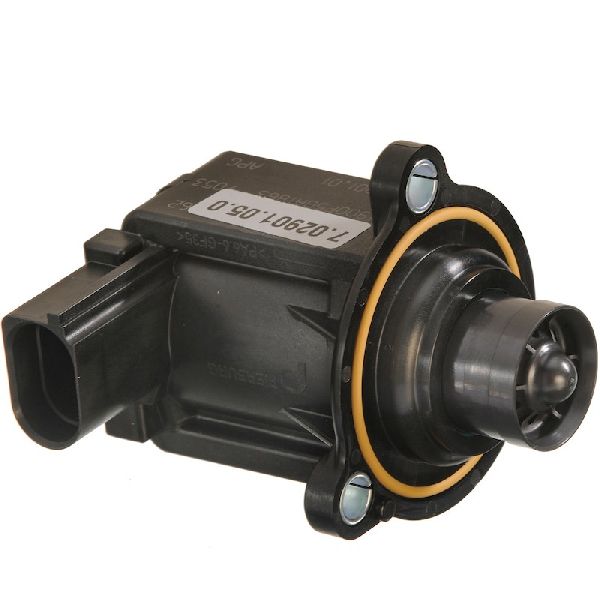
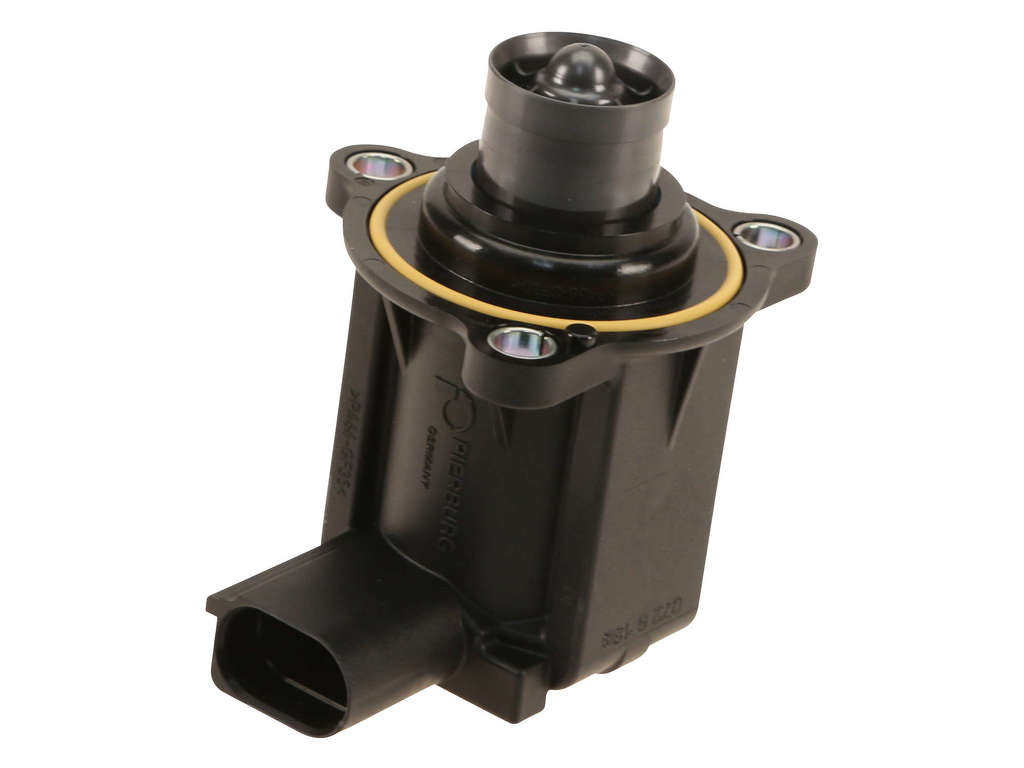
Est. part cost: $20-$300 - Failed Turbocharger Diverter Valve (or Bypass Valve) ⚪ Low Probability → Shop Turbocharger The factory diverter valve uses a rubber diaphragm that is a known weak point on the EA888 engine family. It can tear, causing a loss of boost pressure that the G31 sensor will detect as a performance problem, though this more commonly sets a P0299 underboost code.
How to confirm: Remove the diverter valve from the turbocharger housing for visual inspection. Look for tears or holes in the rubber diaphragm. Many aftermarket replacements use a more durable piston design.
Typical fix: Replace the diverter valve with a new OEM (Pierburg) or upgraded aftermarket unit.
Est. part cost: $50-$150
Rare But Worth Checking
- Faulty Turbocharger Wastegate Actuator: → Shop Turbocharger If the electronic wastegate actuator is sticking or has failed, it cannot regulate boost properly. This usually throws other specific turbocharger-related codes but can be a contributing factor.
- Clogged Air Filter: A severely clogged engine air filter can restrict airflow to the turbo, preventing it from building the expected amount of boost and potentially triggering a range/performance code.
- Faulty Engine Control Module (ECM): In very rare cases, the ECM itself can have an internal fault in the circuit that processes the signal from the G31 sensor. This should only be considered after all other possibilities have been exhausted.
Diagnosis Steps
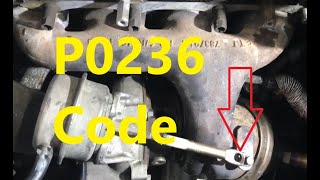
- Read Fault Codes: Use an OBD-II scanner (like VCDS or OBDeleven for VW/Audi) to confirm P0236 is present. Note any other codes, especially P0106, P0299, or P0068, and review freeze frame data. 🎬 See this breakdown of P0236 causes and common fixes.
- Inspect G31 Sensor Wiring: This is the most crucial first step. Locate the G31 boost pressure sensor on the charge pipe near the throttle body. Disconnect the connector. Carefully inspect the wires where they enter the back of the connector. Gently but firmly tug on the yellow wire; it will likely pull out, revealing a break. Check other wires as well.
- Repair Wiring if Needed: If a broken wire is found, perform a repair using a quality butt connector with heat shrink or the official Audi repair wire (Part # 000979025EA). After repair, wrap the harness with textile tape (N 105 920 02) to ensure slack and prevent a repeat failure.
- Check Live Data: If wiring appears intact, reconnect it and use a capable scan tool to monitor the live data block for 'Charge Pressure'. With Key On, Engine Off, the reading should match atmospheric pressure. While driving, the 'specified' and 'actual' values should track each other closely. A non-responsive or erratic 'actual' value points to a bad sensor.
- Perform a Boost Leak (Smoke) Test: If live data seems plausible but the issue persists, pressurize the intake system with a smoke machine to identify any leaks from hoses, the intercooler, or connection points.
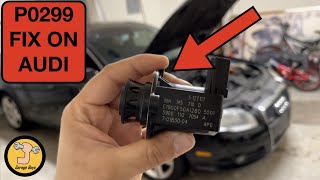
- Inspect the Diverter Valve: If no wiring or leak issues are found, remove and inspect the turbocharger diverter valve 🎬 Watch: How to fix diverter valve and underboost issues. for a torn diaphragm.
- Test the Sensor Circuit: If all else fails, use a multimeter to check for a 5V reference signal and a good ground at the G31 connector. If power and ground are good, but the signal wire (when back-probed) shows an erratic voltage, the sensor has failed.
- Replace Parts: Based on the diagnosis, replace the faulty component. Clear all fault codes and perform a test drive to ensure the repair was successful.
Parts You'll Likely Need
- Wiring Harness Repair Kit
(OEM #000979025EA)— This is the specific gold-plated wire cited in the Audi TSB to properly repair the damaged wires at the G31 sensor connector, which is the most common cause of P0236 on this vehicle.
Trusted brands: Genuine Audi/VW
OEM price range: $15-$40
Aftermarket price range: N/A - Turbocharger Boost Pressure Sensor (G31)
(OEM #04L906051C)— This sensor is the primary component related to the code. If wiring is confirmed to be good, the sensor itself is the next most likely part to have failed.
Trusted brands: Bosch, Genuine VW/Audi
OEM price range: $60-$90
Aftermarket price range: $40-$70
Related Codes That Often Appear With This One
- P0106 — This code for 'Manifold Absolute Pressure (MAP)/Barometric Pressure Sensor Circuit Range/Performance' is often stored alongside P0236 because the ECM compares the readings from both the MAP sensor and the G31 boost sensor to check for plausibility. The same wiring issue noted in the TSB is listed as a direct cause for P0106 as well.
- P0299 — This code for 'Turbocharger Underboost' can occur if the root cause of P0236 is a physical issue like a significant boost leak or a failed diverter valve, leading to the system being unable to achieve its target boost pressure.
- P0068 — MAP/MAF - Throttle Position Correlation. This code can also be triggered by the same wiring fault at the G31 sensor, as noted in TSB 2062323/3, because the faulty boost reading creates a discrepancy with the data from the MAF and throttle position sensors.
Technical Service Bulletins (TSBs) & Recalls
- TSB 01 24 11 2062323/3: Addresses hesitation, low power, and DTCs P0236/P0106. It identifies the root cause as a damaged yellow wire at the G31 charge pressure sender connector due to engine vibrations. The prescribed fix is to repair the wire with a specific gold-plated contact repair wire.
Platform-Specific Known Issues
- A Technical Service Bulletin (TSB 01 24 11 2062323/3) exists for related models, indicating a high likelihood of the P0236 code being caused by a broken wire at the G31 boost pressure sensor connector due to engine vibration.
Mechanic-Grade Diagnostic Values
- G31 Sensor Connector Voltage (Key On, Engine Off) — expected: Approximately 5V between Pin 1 (Ground) and Pin 3 (5V Reference).. Failure: Voltage significantly below 4.5V or absent indicates a problem with the ECM or wiring harness power supply.
- G31 Sensor Signal Voltage Range — expected: 0.5V to 4.5V. Voltage changes in proportion to boost pressure.. Failure: Voltage is stuck at a specific value (e.g., 0.2V or 4.8V) or does not change with engine RPM/load, indicating a faulty sensor or wiring short/open.
- G31 Sensor Wiring Resistance to ECM — expected: Maximum of 1.5 Ohms.. Failure: Resistance higher than 1.5 Ohms (or an open circuit) indicates a break or corrosion in the wire between the sensor connector and the ECM.
- Live Data - Charge Air Pressure (Key On, Engine Off) — expected: Should be close to atmospheric pressure, around 970-1000 mbar depending on altitude.. Failure: A value that is wildly different (e.g., stuck at 2.57 mbar or 2500 mbar) points to a sensor or wiring fault.
Hidden / Shadow Codes Worth Checking
- P023600: This is the VAG-specific extended version of the generic P0236 code, often displayed on scanners like VCDS or ODBeleven. It specifies 'Manifold Pressure / Boost Sensor (G31): Implausible Signal'. The fault triggers when the ECM sees a pressure difference greater than 75.0 mBar between the boost sensor and other pressure sensors (like the MAP or Barometric sensor) under certain conditions. (see via VAG-specific diagnostic tools like VCDS by Ross-Tech or ODBeleven.)
Wiring & Ground Locations
- G31 Sensor Connector Pinout (4-pin) — On the charge pipe between the intercooler and throttle body.. Knowing the pinout is essential for testing. Pin 1 is Ground, Pin 3 is the 5V reference from the ECM, and Pin 4 is the pressure signal wire. The TSB specifically identifies the wire at Pin 4 (yellow) as the most common failure point.
- G12 Ground Connection — Located at the center of the firewall in the engine compartment.. This point grounds the Engine Control Module (ECM). A poor connection here can cause a wide range of erratic sensor readings and engine management faults, including P0236.
- G615 Ground Connection — On the left strut tower in the engine bay.. This is another primary engine bay ground point. Verifying it is clean and secure is a fundamental step in diagnosing any electrical fault on the engine.
Real Owner Repair Stories
- YouTube user comment on a P0236 diagnostic video (Audi A4 (similar EA888 engine)) — Car losing power, hesitation on acceleration, EPC and Check Engine lights on.
❌ Tried (didn't work) Initial diagnosis pointed to the boost pressure sensor.
✅ What actually fixed it The user found a small crack in one of the wires going to the boost pressure sensor, causing an intermittent connection. Replacing the damaged section of the wire and clearing the code resolved the issue completely. - Ross-Tech Forum User (2016 Audi A6 2.0T) — P0236 code, charge pressure sensor (G31) reading gets stuck at a very low value (2.57 mbar). Unplugging and replugging the sensor temporarily restores the reading.
❌ Tried (didn't work) Swapping with another known-good MAP sensor did not fix the issue., Verifying 5V reference and checking wire resistance to the ECM showed no obvious faults.
✅ What actually fixed it The final resolution posted by the user was that the wiring harness was rubbing against the engine block. The insulation on one wire was worn through, causing it to ground out intermittently. Repairing the wire and securing the harness away from the block fixed the problem.
OEM Part Supersession History
04L906051B→04L906051C— Part revision for improved reliability or manufacturing process change. The sensor is often made by Bosch.N/A→N 105 920 02— This is the part number for the textile tape specified in TSB 2062323/3 to wrap the repaired harness to prevent future wire breaks.
Diagnostic Flowchart
Other Known Issues on This Vehicle
Issues unrelated to this code that are worth knowing about as an owner of this generation:
- Water Pump & Thermostat Housing Failure 🔴 High — Very common. Can occur as early as 40,000 miles. The plastic housing cracks, leading to coolant leaks. If not addressed, it can cause engine overheating.
- PCV Valve Failure 🟠 Medium — Common failure item leading to excessive oil consumption, rough idle, and potential boost leaks.
- Intake Valve Carbon Buildup 🟠 Medium — A known issue for all direct-injection engines, including the EA888. Typically requires cleaning every 60,000-80,000 miles to prevent misfires and performance loss.
- Rocker Arm/Follower Failure 🔴 High — Less common on the Gen3 engine than previous generations, but there are still reports of failures that can cause significant engine damage if not caught early.
Used vs. New Parts: Buying Guide for This Vehicle
When a used part is the smart pick: For this specific repair, using used parts is generally not recommended. The primary cause is a wiring failure, which requires new repair wires and connectors. The secondary cause, a failed sensor, is also best addressed with a new part due to the electronic nature and exposure to heat and pressure.
OEM-only on this vehicle (don't cheap out):
- Wiring Harness Repair Wire (000979025EA) - The TSB specifically calls for this gold-plated wire to ensure a lasting, corrosion-resistant repair. Using generic connectors may lead to a repeat failure.
Aftermarket brands forum-validated for this vehicle:
- Bosch (for the Boost Pressure Sensor G31) - Bosch is the original equipment manufacturer (OEM) for many Audi sensors, offering OEM quality at a potentially lower price than dealer-branded parts.
Brands owners have reported issues with on this vehicle:
- Unbranded/generic sensors - Forum users often report that very cheap, unbranded electronic sensors can be dead-on-arrival, have incorrect calibration, or fail prematurely, leading to the code returning.
Real Owner Stories
Aggregated from forums and TSBs cited above. Mileages and costs reflect what owners reported in those sources.
2018 Audi A5 2.0L Turbo
Symptoms: Hesitation and low power, accompanied by DTCs P0236 and/or P0106.
What fixed it: Repairing the damaged yellow wire at the G31 charge pressure sender connector using the specified gold-plated contact repair wire.
Source hint: TSB 01 24 11 2062323/3
Audi A4 (B9 Platform)
Symptoms: Intermittent power loss with P0236 and P0106 codes present.
What fixed it: The common fix discussed for these symptoms is repairing the broken wire at the G31 boost pressure sensor, as detailed in the related TSB.
Source hint: AudiWorld.com forum thread titled 'P0236 & P0106 - Intermittent Power Loss'
Volkswagen GTI/Golf R (Mk7)
Symptoms: Check Engine Light illuminated with fault code P0236.
What fixed it: Diagnosis typically leads to checking the boost sensor wiring for breaks or replacing the boost pressure sensor itself.
Source hint: GOLFMK7.com forum thread titled 'P0236 code boost sensor'
Related OBD-II Codes
Frequently Asked Questions
I have a P0236 code on my 2018 A5. Is there a known TSB or recall for this specific issue?
My mechanic wants to replace the boost pressure sensor first. Is this the right approach for my A5?
What parts does the Audi TSB recommend for fixing the P0236 wiring issue?
Where is the G31 boost pressure sensor located on my 2.0L Turbo engine?
My car is in 'limp mode' with the EPC light on. Could P0236 be the cause?
I have a 2017 Audi A4 with the same engine. Does this wiring problem apply to my car as well?
Helpful Videos
Used OEM Parts in Stock
New Aftermarket Parts Available


The information in this article is provided for general reference and educational purposes only. Vehicle specifications, procedures, and part compatibility can vary by production date, trim level, and region. Always consult your vehicle's factory service manual and verify part numbers before purchasing or performing repairs. Safety-critical components such as airbags, seat belts, and braking systems should be installed by a qualified professional.
- Audi A5:
- 🧭 Diagnostic Flowchart
- 🎬 Helpful Videos
- 🛍️ Shop This Part
- What's Unique About the 2018-2018 Audi A5
- Symptoms You May Notice
- Most Likely Causes
- Rare But Worth Checking
- Diagnosis Steps
- Parts You'll Likely Need
- Related Codes That Often Appear With This One
- Technical Service Bulletins (TSBs) & Recalls
- Platform-Specific Known Issues
- Mechanic-Grade Diagnostic Values
- Hidden / Shadow Codes Worth Checking
- Wiring & Ground Locations
- Real Owner Repair Stories
- OEM Part Supersession History
- Other Known Issues on This Vehicle
- Used vs. New Parts: Buying Guide for This Vehicle
- Real Owner Stories
- 2018 Audi A5 2.0L Turbo
- Audi A4 (B9 Platform)
- Volkswagen GTI/Golf R (Mk7)
- Related OBD-II Codes
- Frequently Asked Questions
- 🎟️ Get 5% Off