

P0236 on 2013-2018 Ford Focus ST: Turbo Boost Sensor Causes and Fixes
On a 2013-2018 Focus ST, code P0236 is most often caused by a faulty MAP sensor, especially the one on the intercooler outlet which is exposed to road debris. Replacing the failed sensor with an OEM Motorcraft part is the most likely fix. Expect to pay $40-$80 for the part.
- P0236 on a Focus ST almost always points to a problem with one of the three MAP sensors or their wiring.
- The most likely culprit is the MAP sensor on the intercooler outlet; check it first for damage.
- Do not use aftermarket sensors. Buy a genuine Motorcraft sensor with the correct part number to ensure the code is fixed.
- If a new OEM sensor doesn't fix the issue, carefully inspect the wiring harness for damage before suspecting a larger mechanical problem.
What's Unique About the 2013-2018 Ford Focus ST
The 2.0L EcoBoost engine in the Focus ST uses a 'speed density' system, which relies on three MAP sensors for its primary fueling and boost calculations instead of a traditional Mass Airflow (MAF) sensor. One sensor is particularly vulnerable: the Boost Pressure Sensor mounted low on the intercooler outlet, which is exposed to road salt, water, and debris, leading to a high failure rate. Owner and mechanic experiences overwhelmingly show that using aftermarket sensors often fails to fix the issue due to incorrect electronic scaling, making OEM parts a necessity.
Symptoms You May Notice
- Check Engine Light (CEL) is on
- "Engine Fault Service Now" message on the dashboard
- Vehicle enters 'limp mode,' resulting in a major loss of power
- No boost from the turbocharger
- Sluggish or hesitant acceleration
- Rough idle or stalling
- Jerky or rough shifting
- Replacing a MAP sensor with a non-OEM (aftermarket) part. Many owners report that only genuine Ford/Motorcraft sensors with the correct part number will work, as the voltage scaling is critical for the ECU.
- Replacing the wrong MAP sensor. Since there are three, it's important to use a scan tool to identify which one is providing the faulty reading before replacing parts.
- Replacing a sensor when the actual fault is a cracked charge pipe or a wiring issue.
Most Likely Causes
- Faulty MAP/Boost Pressure Sensor 🔴 High Probability The Focus ST has three MAP sensors, and the one on the intercooler outlet (cold side charge pipe) is in a location prone to damage from road debris, salt, and moisture, causing it to fail frequently.
How to confirm: With a scan tool, monitor the live data for all three MAP sensors with the key on and engine off. All three should read nearly identical values (atmospheric pressure, ~14.7 PSI at sea level). The sensor that provides a skewed reading is faulty. A variance over 0.5 PSI is a strong indicator of a bad sensor. An incorrect aftermarket sensor may read as high as 37-40 PSI with the key on, engine off.
Typical fix: Replace the faulty MAP sensor. It is highly recommended to use an OEM Motorcraft sensor, as aftermarket versions (e.g., from AutoZone) are known to have incorrect scaling that will not resolve the code.
Est. part cost: $40-$80 - Damaged Wiring or Corroded Connector 🟡 Medium Probability The engine wiring harness can be subject to heat and vibration, leading to chafed wires or loose pins in the sensor connectors. Forum discussions frequently mention wiring issues, sometimes near the battery box or where the harness can rub against the transmission. A known issue on similar Ford EcoBoost engines is a faulty VREF circuit splice (S129) which can also cause this code.
How to confirm: Visually inspect the wiring going to all three MAP sensors for any signs of chafing, melting, or corrosion. Unplug each connector and check for bent or corroded pins. A multimeter can be used to check for 5V reference, ground, and signal continuity. The 5V reference should be between 4.8V and 5.2V.
Typical fix: Repair the damaged section of the harness. Clean corroded connectors with electrical contact cleaner. In some cases, a connector pigtail may need to be spliced in. If the VREF splice is faulty, it will need to be located and re-soldered.
Est. part cost: $10-$30 - Boost or Vacuum Leak ⚪ Low Probability Plastic and rubber components in the charge pipe system can crack or become loose over time, especially on modified vehicles. Aftermarket blow-off valves can also be a source of leaks.
How to confirm: Visually inspect all charge pipes and couplers between the turbo, intercooler, and throttle body for cracks or loose connections. A smoke test is the most effective way to find small, hard-to-see leaks.
Typical fix: Tighten loose clamps or replace the cracked charge pipe or leaking coupler.
Est. part cost: $20-$300
Rare But Worth Checking
- Faulty Wastegate Actuator: → Shop Turbocharger The electronic wastegate actuator on the turbo can fail or the internal wastegate bushing can wear out, causing improper boost control that may trigger a sensor rationality code like P0236.
- Incorrect ECU Tune: An aggressive aftermarket tune that requests boost levels beyond the sensor's factory limits can sometimes trigger this performance code.
- Faulty Powertrain Control Module (PCM): In very rare cases, the PCM itself can be the source of the problem, but all other possibilities should be exhausted before considering PCM replacement.
Diagnosis Steps
- Scan the PCM for P0236 and any other related codes. Note the freeze frame data.
- With the key on and engine off, use a scan tool to view live data from all three MAP sensors (often labeled MAP, TIP, and Boost Pressure). Their pressure readings should be nearly identical and match the local barometric pressure.
- Visually inspect all three MAP sensors and their electrical connectors for physical damage, corrosion, or loose connections.
- Trace the wiring harness for each sensor, looking for signs of chafing, melting, or breaks, particularly where the harness might rub against the engine or other components. Pay attention to the VREF circuit splice (S129) area.
- Inspect the entire air intake path, including the charge pipes from the turbo to the intercooler and from the intercooler to the throttle body. Check for cracks, loose clamps, or disconnected hoses.
- If a sensor reading was clearly incorrect in step 2, replace that sensor with an OEM part.
- If sensor readings seem plausible, perform a smoke test to check for hard-to-find boost leaks.
- If no leaks or sensor faults are found, the issue may be more complex, such as a failing wastegate actuator or a PCM problem.
Parts You'll Likely Need
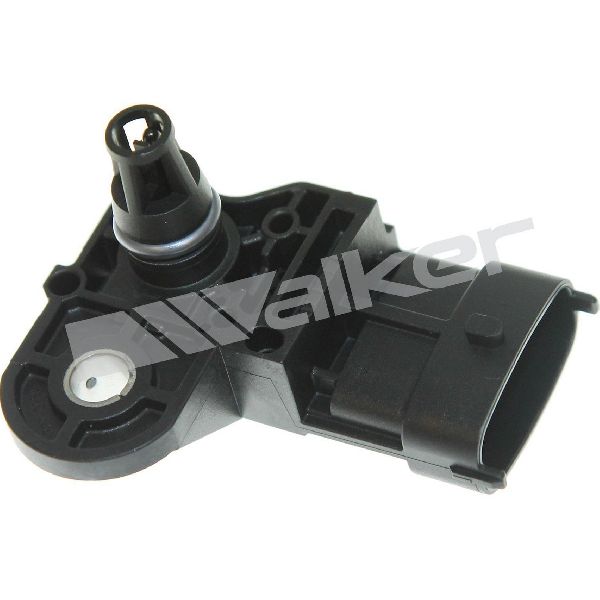
- Manifold Absolute Pressure (MAP) Sensor (Intercooler Outlet)
(OEM #BV6Z-9F479-C (Verify with VIN))— This is the most common failure part for code P0236 on this vehicle, due to its low mounting position. The base part number is 9F479, but the prefix (BV6Z) and suffix (-C) are critical.
Trusted brands: Motorcraft
OEM price range: $40-$80
Aftermarket price range: $25-$60 - Manifold Absolute Pressure (MAP) Sensor (Intake Manifold)
(OEM #AG91-9F479-AC (Verify with VIN))— This is the sensor located on top of the intake manifold. While less common to fail than the intercooler sensor, it is the second most likely sensor culprit.
Trusted brands: Motorcraft
OEM price range: $50-$90
Aftermarket price range: $30-$60 - Manifold Absolute Pressure (MAP) Sensor (Pre-Intercooler)
(OEM #BV61-9F479-AA (Verify with VIN))— This sensor is located on the charge pipe before the intercooler. It fails less frequently but is still part of the three-sensor system that can trigger P0236.
Trusted brands: Motorcraft
OEM price range: $50-$90
Aftermarket price range: $30-$60
Related Codes That Often Appear With This One
- P0299 — If the P0236 is caused by a large boost leak, the PCM may also log a P0299 (Turbo Underboost) code.
- P0234 — If the fault is related to a stuck wastegate or an incorrectly scaled sensor reading high, the PCM may also log a P0234 (Turbo Overboost) code.
- P0106 — This code for MAP Sensor Performance can appear alongside P0236 because the system relies on comparing the readings of multiple pressure sensors.
- P26DE — This code, related to the sound symposer, sometimes appears with P0236, though the direct relationship is unclear, it may be triggered by the same erratic manifold pressure conditions.
Technical Service Bulletins (TSBs) & Recalls
- TSB 16-0161: While written for the 1.6L GTDI engine in the Ford Escape, this TSB is relevant as it addresses DTC P0236 caused by a faulty wiring splice (S129) in the reference voltage (VREF) circuit. This highlights a known potential for wiring harness issues in Ford EcoBoost engines of the same era, which can be a root cause for P0236 on the 2.0L as well.
Platform-Specific Known Issues
- The MAP sensor on the intercooler outlet is highly susceptible to failure from road debris and corrosion due to its low mounting position.
- There are widespread reports of aftermarket MAP sensors not working correctly, making the use of genuine OEM Ford/Motorcraft parts essential for a successful repair.
Mechanic-Grade Diagnostic Values
- MAP/TCBP/BARO Sensor Pressure Comparison (Key On, Engine Off) — expected: All three pressure sensors should read within 0.5 PSI of each other and match local atmospheric pressure (~14.7 PSI at sea level).. Failure: One sensor reading deviates significantly. An incorrect aftermarket sensor may read as high as 37-40 PSI.
- MAP Sensor 5-Volt Reference (VREF) — expected: 4.8V to 5.2V with key on, engine off.. Failure: Voltage is outside of the expected range, indicating a wiring issue, a problem with the VREF splice, or a faulty PCM.
- MAP Sensor Signal Voltage Range — expected: Typically 0.5V at low pressure/vacuum to 4.5V at full boost pressure.. Failure: Voltage is stuck high, low, or does not change with engine load/boost, indicating a failed sensor or circuit fault.
Hidden / Shadow Codes Worth Checking
- Mode 6, Test ID $53 (and others): Mode 6 data can reveal misfire counts per cylinder before a P030x code is set. While not directly for P0236, it's a powerful diagnostic feature on Fords for ruling out related engine performance issues. Specific Test IDs for boost sensor rationality may exist but are not widely documented. (see via A professional scan tool with Generic Functions or Mode 6 capability.)
Wiring & Ground Locations
- Splice S129 — In the engine wiring harness, often near where the harness is retained by the transmission side pan stud bolts.. This is a known failure point for the 5V Reference (VREF) circuit that supplies multiple sensors, including the boost pressure sensors. A corroded or failed splice here can cause P0236 and other sensor codes. This is documented in TSB 16-0161 for a similar engine.
- MAP Sensor Connector Pins — At each of the three MAP sensor connectors.. The 4-pin sensors have a 5V reference, ground, a pressure signal wire, and a temperature signal wire. Testing for correct voltage at the VREF pin (4.8-5.2V) and continuity to ground are key diagnostic steps.
Real Owner Repair Stories
- Reddit user fmspat on r/FocusST (2014 Ford Focus ST) — Intermittent 'Engine Fault Service Now' message, limp mode, and P0236 code.
❌ Tried (didn't work) Dealer replaced the TIP sensor.
✅ What actually fixed it After the sensor replacement failed, the dealer replaced the entire engine wiring harness, which resolved the issue for a time (though it reportedly returned weeks later, suggesting an intermittent or recurring problem). - YouTube channel GAPPerformance / Casual Car Talk (2013 Ford Focus ST (Minnesota car, high salt exposure)) — P0236 code, limp mode.
❌ Tried (didn't work) Inspecting for boost leaks., Replacing the faulty intercooler MAP sensor with an aftermarket Bosch sensor from AutoZone.
✅ What actually fixed it Replacing the aftermarket sensor with a genuine OEM Ford Motorcraft sensor immediately cleared the code and restored function.
When the Usual Fixes Don't Work
- While faulty sensors are the most common cause, there are multiple documented cases where replacing one or more sensors did not fix the problem. In one instance on Reddit, a dealership ultimately had to replace the entire engine wiring harness to resolve a persistent P0236 after a sensor replacement failed. This highlights that for intermittent or hard-to-diagnose cases, the root cause is often in the wiring harness itself, either from chafing or an internal splice failure like the one described in TSB 16-0161.
OEM Part Supersession History
AG91-9F479-AA, AG91-9F479-AB→AG91-9F479-AC— Part revision and consolidation for the intake manifold MAP sensor.
Heads up: The different suffixes (AA, AB, AC) indicate these parts are likely interchangeable for the same application, with the latest suffix being the most current revision.
Diagnostic Flowchart
Other Known Issues on This Vehicle
Issues unrelated to this code that are worth knowing about as an owner of this generation:
- Canister Purge Valve (CPV) Failure 🔴 High — Extremely common. Can fail at any mileage. Symptoms include rough idle, stalling after refueling, and erratic fuel gauge readings. (Ref: Ford Safety Recall 18S32 / NHTSA 18V735.)
- Weak Rear Motor Mount (RMM) 🟠 Medium — The stock RMM is a known weak point, with the rubber bushing often failing prematurely, causing excessive engine movement, wheel hop, and a 'thunk' noise when shifting. Many owners upgrade it as a preventative measure.
- Low-Speed Pre-Ignition (LSPI) 🔴 High — A risk inherent to many turbocharged direct-injection engines. It occurs during high-load, low-RPM situations ('lugging' the engine) and can cause catastrophic engine damage. Prevention involves avoiding wide-open throttle below 3,000 RPM and using high-quality, API SP-rated oil.
- Wiring Harness Chafing (Pre-facelift) 🟠 Medium — Some pre-facelift (2013-2014) models experienced issues with the main engine wiring harness, leading to fluctuating revs or stalling. A recall was issued in the US, and some vehicles received new looms under warranty. (Ref: US recall was issued, but not a formal TSB for all regions.)
Used vs. New Parts: Buying Guide for This Vehicle
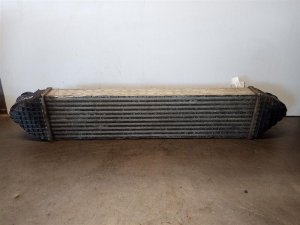
When a used part is the smart pick: For this specific code, used parts are generally not recommended for the primary failure components (sensors). However, if the cause is a cracked charge pipe, a used OEM pipe from a low-mileage donor vehicle can be a cost-effective and reliable alternative to a new one.
Donor-vehicle mileage cap: roughly under 60000 miles for the part to have meaningful remaining life.
What to inspect on the donor part:
- For a charge pipe, inspect thoroughly for any hairline cracks, especially near mounting points and welds.
- Ensure all mounting tabs are intact.
- Check that the plastic is not brittle or discolored from excessive heat.
- Verify the part number matches the original part exactly.
OEM-only on this vehicle (don't cheap out):
- Manifold Absolute Pressure (MAP) Sensors: The consensus from forums and mechanic videos is that only OEM Ford/Motorcraft sensors have the correct electronic scaling. Aftermarket sensors are a very common cause of a failed repair.
Brands owners have reported issues with on this vehicle:
- Bosch (when purchased from generic parts stores for this application, as reported by users).
Real Owner Stories
Aggregated from forums and TSBs cited above. Mileages and costs reflect what owners reported in those sources.
2014 Ford Focus ST 2.0L EcoBoost
Symptoms: The owner just picked up the car and it immediately threw a P0236 code.
What fixed it: The owner is currently investigating the issue based on community advice to check the intercooler MAP sensor and wiring.
Source hint: r/FocusST source_quote: 'So I just picked up my ST last week(2014...'
Ford Focus ST 2.0L EcoBoost
Symptoms: Experienced P0236 and limp mode. Replaced the intercooler MAP sensor with an aftermarket part, but it did not fix the issue.
What fixed it: Replacing the faulty intercooler MAP sensor with a genuine Ford sensor.
Source hint: focusst.org - Thread: 'P0236, limp mode, and a lesson learned.'
Ford Focus ST 2.0L EcoBoost
Symptoms: Vehicle stayed in limp mode even after the owner tried replacing the boost sensor.
What fixed it: Using an OEM Motorcraft sensor instead of an aftermarket one and checking the wiring harness for chafing near the transmission.
Source hint: reddit.com/r/FocusST - Thread: 'P0236 Help! Tried replacing sensor, still in limp mode.'
Ford Focus ST 2.0L EcoBoost
Symptoms: Check Engine Light with code P0236.
What fixed it: Replacing the intercooler sensor with an OEM Ford part after an aftermarket version failed to work.
Source hint: YouTube - 'Focus ST - CEL P0236' by Casual Car Talk
Related OBD-II Codes
Frequently Asked Questions
I bought a replacement boost sensor from AutoZone but the P0236 code is still there. Why?
Does TSB 16-0161 apply to my 2.0L Focus ST even though it mentions the 1.6L engine?
Where is the MAP sensor located that usually fails on the Focus ST?
How can I tell if my Focus ST MAP sensor is actually bad without just replacing it?
Could my aftermarket blow-off valve be causing the P0236 code?
Is there a specific wiring area I should check for chafing on my 2014 Focus ST?
Helpful Videos
Used OEM Parts in Stock
New Aftermarket Parts Available



The information in this article is provided for general reference and educational purposes only. Vehicle specifications, procedures, and part compatibility can vary by production date, trim level, and region. Always consult your vehicle's factory service manual and verify part numbers before purchasing or performing repairs. Safety-critical components such as airbags, seat belts, and braking systems should be installed by a qualified professional.
- Ford Focus ST:
- 🧭 Diagnostic Flowchart
- 🎬 Helpful Videos
- 🛍️ Shop This Part
- What's Unique About the 2013-2018 Ford Focus ST
- Symptoms You May Notice
- Most Likely Causes
- Rare But Worth Checking
- Diagnosis Steps
- Parts You'll Likely Need
- Related Codes That Often Appear With This One
- Technical Service Bulletins (TSBs) & Recalls
- Platform-Specific Known Issues
- Mechanic-Grade Diagnostic Values
- Hidden / Shadow Codes Worth Checking
- Wiring & Ground Locations
- Real Owner Repair Stories
- When the Usual Fixes Don't Work
- OEM Part Supersession History
- Other Known Issues on This Vehicle
- Used vs. New Parts: Buying Guide for This Vehicle
- Real Owner Stories
- 2014 Ford Focus ST 2.0L EcoBoost
- Ford Focus ST 2.0L EcoBoost
- Ford Focus ST 2.0L EcoBoost
- Ford Focus ST 2.0L EcoBoost
- Related OBD-II Codes
- Frequently Asked Questions
- 🎟️ Get 5% Off