

P0261 on 2009-2013 Chevrolet Malibu: Cylinder 1 Injector Circuit Low Causes and Fixes
P0261 on a Chevy Malibu indicates a low voltage problem in the cylinder 1 fuel injector circuit. The most common causes are a bad fuel injector or a wiring issue. A wiring problem is especially possible on these models per GM Technical Service Bulletins, which point to the harness chafing against engine components.
- P0261 on your Malibu means there's an electrical problem with the cylinder 1 fuel injector, most likely a low voltage condition.
- Before buying a new injector, thoroughly inspect the wiring harness for damage or corrosion, especially where it might rub against the engine, as this is a known issue on this car per GM service bulletins.
- A simple 'swap test' by moving the cylinder 1 injector to another cylinder is a great way to confirm if the injector itself is the faulty part.
- Do not ignore this code; continued driving with a misfire can quickly damage your expensive catalytic converter.
What's Unique About the 2009-2013 Chevrolet MALIBU
For the 2009-2013 Malibu, this code spans two different vehicle generations (7th gen: 2009-2012; 8th gen: 2013). Multiple GM Technical Service Bulletins (TSBs) for this platform specifically point to the engine wiring harness chafing through as a primary cause for P0261 and other injector codes. TSB PIP4924C notes common chafe points are against the intake plenum, valve cover bolts, and fuel lines. This makes a wiring fault a more probable first cause than on a typical vehicle, where the injector itself is often the primary suspect.
Diagnostic Flowchart
Tap your situation to follow the diagnostic path that matches what you're seeing on this vehicle.
Generation note: The 2009-2012 models belong to the 7th generation of the Malibu, while the 2013 model year marks the beginning of the redesigned 8th generation. The provided TSBs #PIP4924C and #PI0296 are most relevant to the 7th generation models with the 2.4L and 3.6L engines.
Symptoms You May Notice
- Check Engine Light is on (may be flashing in severe cases)
- Rough or shaking idle
- Engine misfire, which may feel like a stumble or hesitation
- Poor acceleration and loss of power
- Reduced fuel economy
- Engine may stall when coming to a stop
- Replacing the fuel injector without first thoroughly testing the wiring and connector. Given the multiple TSBs for this platform, a wiring issue is a very high probability and checking it first can save money and time.
Most Likely Causes
- Damaged Wiring or Corroded Connector 🔴 High Probability GM TSB #PIP4924C explicitly lists this as a cause for P0261. It advises technicians to inspect the harness for rubbing against the intake plenum, valve cover bolts, fuel lines, and the side of the cylinder head. TSB #PI0296 (for 2.4L engines) specifically points to chafing in the area of the alternator and the upper radiator hose.
How to confirm: Visually inspect the entire fuel injector wiring harness, paying close attention to the chafe points mentioned in the TSBs. Unplug the connector at the injector and ECM to check for corrosion (green or white powder) or bent/damaged pins.
Typical fix: Repair the damaged section of wire by soldering and using heat-shrink tubing. Protect the repaired area with high-quality electrical tape or new convoluted tubing and re-route it away from sharp edges with zip ties. If the connector is damaged, replace the pigtail.
Est. part cost: $10-$40 - Faulty Fuel Injector 🟡 Medium Probability → Shop Fuel Injector
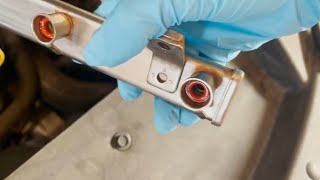
How to confirm: Swap the cylinder 1 injector with an injector from another cylinder (e.g., cylinder 2). Clear the codes and drive the vehicle. If the code changes to P0264 (Cylinder 2 Injector Circuit Low), the injector is faulty. You can also test the injector's internal resistance with a multimeter; it should typically be between 12-16 ohms for these port-injected engines. An open circuit (infinite resistance) or a short (near-zero resistance) indicates a bad injector.
Typical fix: Replace the faulty fuel injector. It is often recommended to replace all injectors as a set if they are high mileage.
Est. part cost: $40-$150 - Faulty Powertrain Control Module (PCM) ⚪ Low Probability → Shop Engine Control Module (ECM)
How to confirm: This should be the last resort after all other possibilities (wiring and injector) have been definitively ruled out by thorough testing. A professional shop can perform advanced tests on the PCM's injector driver circuit to confirm it has failed.
Typical fix: Replace and reprogram the Powertrain Control Module.
Est. part cost: $400-$800
Rare But Worth Checking
- Weak Internal Injector Return Spring:
Diagnosis Steps
- Scan the vehicle for all stored trouble codes and review freeze frame data to see the conditions when the code was set.
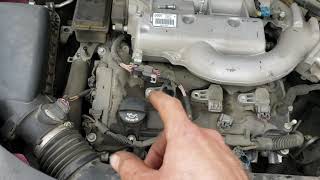
- Locate the fuel injector for cylinder #1. On the 2.4L I4, it's the first cylinder from the driver's side. On the V6 engines, it's the front-most cylinder on the cylinder bank further from the firewall.
- Thoroughly inspect the engine wiring harness for chafing, especially near the alternator, upper radiator hose, intake plenum, and valve cover bolts, as per TSBs PIP4924C and PI0296. Manipulate the harness with the engine running to see if it induces a misfire.
- Inspect the electrical connector at the injector. Check for a secure fit, corrosion, or damaged pins.
- With the engine running, use a long screwdriver or mechanic's stethoscope on the body of the injector to listen for a consistent clicking sound, which indicates it's operating. Compare the sound to an adjacent injector.
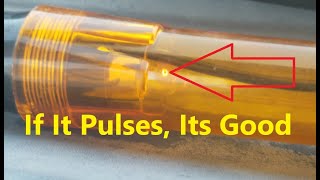
- If no clicking is heard, use a 'noid light' on the injector connector to verify the ECM is sending a pulse signal. If the noid light flashes, the signal is good, and the injector is the likely culprit. If it doesn't flash (or is dim/erratic), the problem is in the wiring or ECM.
- If the wiring appears intact, disconnect the injector and measure its resistance with a multimeter. Compare the reading to the manufacturer's specification (typically 12-16 ohms for port injection). An out-of-spec reading confirms a bad injector.
- As a final confirmation, swap the cylinder 1 injector with another one (e.g., cylinder 2). Clear codes, run the engine, and see if the code follows the injector (e.g., P0264 is now set). If it does, the injector is faulty. If P0261 returns, the problem is in the wiring or ECM.
Parts You'll Likely Need
- Fuel Injector
(OEM #ACDelco 217-3158 (for 2.4L) or ACDelco 217-3445 / GM 12638530 (for 3.6L V6))— The internal coil of the fuel injector can fail (short or open), causing a low voltage condition in the circuit.
Trusted brands: ACDelco, Bosch, Delphi
OEM price range: $80-$150
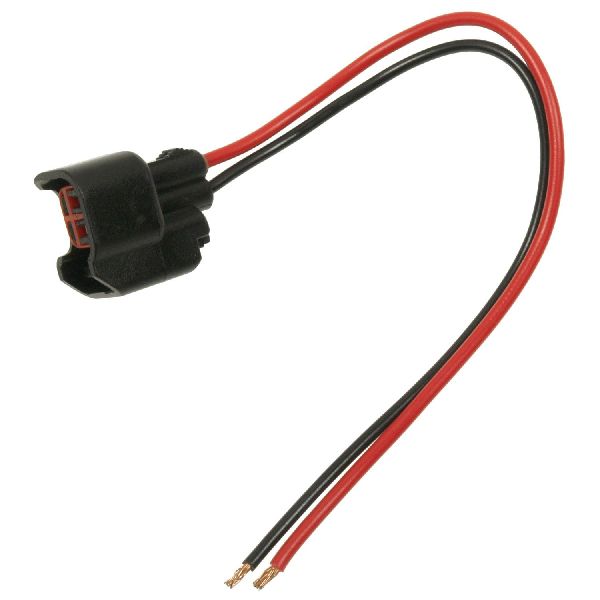
Aftermarket price range: $40-$90 - Fuel Injector Connector Pigtail
(OEM #Dorman 645-207)— If the wiring or connector itself is corroded or damaged at the injector, replacing the pigtail is the standard repair.
Trusted brands: Dorman, ACDelco
OEM price range: $25-$45
Aftermarket price range: $15-$30 - Wiring Harness Repair Supplies — To repair chafed wires found during inspection. Includes convoluted tubing, high-temperature cloth tape, and heat-shrink connectors.
Trusted brands: Tesa, 3M, Dorman
OEM price range: $10-$30
Aftermarket price range: $10-$30
Related Codes That Often Appear With This One
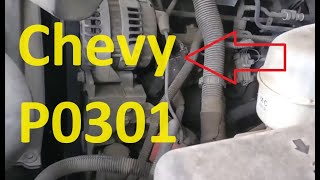
- P0301 — P0301 means "Cylinder 1 Misfire Detected." Since P0261 indicates a problem with fuel delivery to cylinder 1, a misfire in that same cylinder is a direct and common consequence.
- P0201 — P0201 is a more generic "Injector Circuit/Open - Cylinder 1" code. It often appears with P0261 as they both point to an electrical fault in the same circuit.
- P0264, P0267, P0270 — These are the equivalent 'Circuit Low' codes for cylinders 2, 3, and 4. Seeing multiple injector codes simultaneously strongly suggests a common wiring harness problem where several wires have chafed through in the same location.
Technical Service Bulletins (TSBs) & Recalls
- PIP4924C: SES Light And Misfire With Injector Codes. Details multiple injector circuit codes (including P0261) caused by the wiring harness rubbing through on various engine parts like the intake, valve cover bolts, or fuel lines.
- PI0296: Malfunction Indicator Lamp (MIL) Illuminated, DTC P0201, P0300 and/or P0301 Set. Specific to 2.4L engines, this bulletin directs inspection of the fuel injector #1 wiring harness for chafing near the alternator and upper radiator cooling hose.
Platform-Specific Known Issues
- A known issue documented in TSB #PIP4924C for 2009-2013 models involves the injector wiring harness rubbing through against components like the intake plenum, valve cover bolts, or fuel lines, triggering P0261.
- For 2.4L engines specifically, TSB #PI0296 points to the harness for injector #1 chafing near the alternator and upper radiator hose.
Mechanic-Grade Diagnostic Values
- Fuel Injector Coil Resistance — expected: 12 to 16 Ohms. Failure: A reading of 0 Ohms (short circuit) or infinite/OL (open circuit) indicates a failed injector coil.
- Fuel Injector Connector Voltage (Key On, Engine Off) — expected: ~12 Volts on the power supply wire (typically Pink). Failure: Significantly less than 12V suggests a problem in the power supply circuit from the fuse block.
- Injector Pulse Width at Idle — expected: Typically 2-3 milliseconds (ms) on a warm engine.. Failure: An erratic or zero reading for a specific cylinder while others are normal points to a control circuit or driver issue.
Scan Tool Commands That Help
- GM Tech2 / GDS2 or equivalent professional scan tool: Fuel Injector Balance Test — This command allows the technician to individually disable injectors to check for a drop in RPMs or to measure the pressure drop caused by each injector firing. If disabling cylinder 1 has no effect on engine operation, it confirms that cylinder is not contributing, pointing towards a fuel or spark issue. It can also be used to identify a leaking or underperforming injector.
- Kent Moore AFIT (Active Fuel Injector Tester): Injector Flow Test — This is a specialized GM tool that performs a more advanced flow test on the injectors while they are on the vehicle. It can identify injectors with poor flow that might otherwise pass a simple resistance test.
Wiring & Ground Locations
- G106 — On the left rear of the engine (for 2.4L models).. A poor engine ground can cause a variety of electrical issues, including erratic sensor readings and incorrect voltage levels in component circuits like the fuel injectors.
- G107 — On the lower left side of the engine (2.4L) or center rear of the engine (3.6L).. This is a primary engine ground. Corrosion or a loose connection here can lead to floating ground issues, potentially causing the ECM to misinterpret the injector circuit voltage and set a P0261 code.
- ECM (Engine Control Module) — Located in the left front of the engine compartment.. This is the source of the control signal for the injector. All wiring tests for the control circuit will ultimately lead back to the connectors on this module.
- Injector Power Feed — Power is supplied via a Pink (PNK) wire from the underhood fuse block, often from a fuse labeled 'INJ/COIL ODD FUSE 43'.. While P0261 is a 'low circuit' code typically pointing to the control side, a high-resistance fault on the power feed could also potentially cause voltage issues.
OEM Part Supersession History
12611545, 12632255→12638530 (also referenced as ACDelco 217-3445)— Standard part evolution for improved performance, reliability, or manufacturing efficiency.
Heads up: An aftermarket seller notes that genuine and aftermarket injectors should not be mixed in the same engine due to potential differences in flow rate and atomization.
Model Year Variations Within This Range
- 2009-2012: These 7th generation models primarily used the 2.4L LE5 port-injected I4 and the 3.6L LY7 V6. The TSBs regarding harness chafing are highly relevant to these models.
- 2013: This was the first year of the 8th generation. The V6 was dropped, and new 2.5L I4 and 2.0L Turbo I4 engines were introduced. However, a 2.4L engine was still available in the 'ECO' trim level. P0261 on a 2013 model is most likely to occur on an ECO trim with the 2.4L engine, as the other engines were all-new designs.
Helpful Videos

We Have This Part in Stock


The information in this article is provided for general reference and educational purposes only. Vehicle specifications, procedures, and part compatibility can vary by production date, trim level, and region. Always consult your vehicle's factory service manual and verify part numbers before purchasing or performing repairs. Safety-critical components such as airbags, seat belts, and braking systems should be installed by a qualified professional.
- Chevrolet MALIBU:
- 🧭 Diagnostic Flowchart
- 🎬 Helpful Videos
- 🛍️ Shop This Part
- What's Unique About the 2009-2013 Chevrolet MALIBU
- Symptoms You May Notice
- Most Likely Causes
- Rare But Worth Checking
- Diagnosis Steps
- Parts You'll Likely Need
- Related Codes That Often Appear With This One
- Technical Service Bulletins (TSBs) & Recalls
- Platform-Specific Known Issues
- Mechanic-Grade Diagnostic Values
- Scan Tool Commands That Help
- Wiring & Ground Locations
- OEM Part Supersession History
- Model Year Variations Within This Range
- 🎟️ Get 5% Off