

P0267 on 2009-2014 Buick LaCrosse: Cylinder 3 Injector Circuit Low Causes and Fixes
P0267 on a Buick LaCrosse indicates an electrical issue with the fuel injector in cylinder #3. The most common causes are a faulty fuel injector, a damaged wiring connector, or a chafed wiring harness. A new injector costs between $95 and $155, but labor can be significant on V6 models.
- P0267 specifically points to an electrical problem with the cylinder 3 injector circuit, not a mechanical one.
- The two most likely fixes are replacing the cylinder 3 fuel injector or repairing a chafed wire in the harness.
- A GM Service Bulletin (PIP4924D) confirms that the wiring harness rubbing on engine parts is a known cause for this code.
- A simple way to confirm a bad injector is to swap it with another cylinder and see if the trouble code follows it.
- On the common 3.6L V6 engine, accessing cylinder 3 is an involved job because it's on the rear bank against the firewall, requiring intake manifold removal.
- Do not ignore this code, as continued driving can cause expensive damage to the catalytic converter.
What's Unique About the 2009-2014 Buick LACROSSE
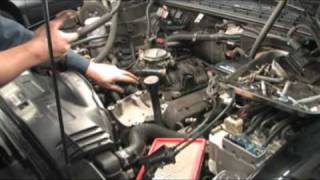
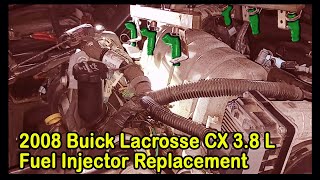
This year range covers the end of the first-generation LaCrosse (2009) and the majority of the second generation (2010-2014). While the code's meaning is consistent, the engines and their layouts differ. On the popular 3.6L V6 engine, cylinder #3 is in the rear bank (firewall side), making access more difficult as it requires removing the upper intake manifold. 🎬 See this walkthrough for 3.6L intake and injector replacement. A critical GM Technical Service Bulletin (PIP4924D) for these models and their platform mates specifically directs technicians to inspect the fuel injector wiring harness for rubbing or chafing against other engine components, indicating this is a known failure point.
🎬 Watch: A mechanic explains common GM injector wiring faults.Diagnostic Flowchart
Tap your situation to follow the diagnostic path that matches what you're seeing on this vehicle.
Generation note: The 2009 model is the last of the first generation, while 2010-2014 models are the second generation. They feature different engines, including the 2.4L I4, 3.0L V6 (LF1), and 3.6L V6 (LLT/LFX). The location of cylinder #3 and the procedure to access the injector will vary depending on the engine. The V6 models, in particular, are noted for having wiring harnesses prone to chafing.
Symptoms You May Notice
- Check Engine Light is on.
- Rough or shaking idle.
- Engine misfire, which may feel like a stumble or hesitation during acceleration.
- Reduced engine power.
- Poor fuel economy.
- Engine may stall or be hard to start.
- Replacing the spark plug or ignition coil for cylinder 3. While these parts can cause a misfire (code P0303), the P0267 code specifically points to an electrical fault in the injector circuit, not a spark or combustion issue.
Most Likely Causes
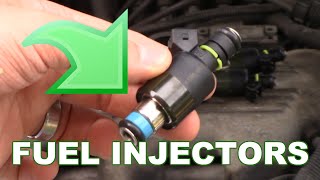
- Faulty Cylinder 3 Fuel Injector 🔴 High Probability → Shop Fuel Injector Injectors can fail electrically over time due to internal winding shorts or breaks. The provided TSB for these models points directly to inspecting the injector circuit, and the injector itself is the most common component to fail within that circuit.
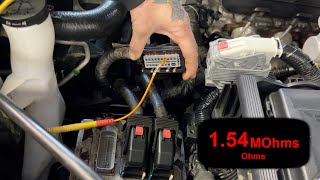
How to confirm: Swap the cylinder 3 fuel injector with one from an adjacent cylinder (e.g., cylinder 1). Clear the codes and run the engine. If the code changes to P0261 (Cylinder 1 Injector Circuit Low), the injector is faulty. Alternatively, a multimeter can be used to check the injector's resistance; an out-of-spec reading confirms failure. For 3.6L LFX engines (2012+), the spec is 1.9-2.3 ohms, while earlier 3.0L/3.6L LLT engines use injectors around 11-14 ohms.
Typical fix: Replace the cylinder 3 fuel injector. If it's a high-mileage vehicle, consider replacing all injectors on that bank for reliability. For the 3.6L V6, this requires replacing the Teflon seal on the injector tip.
Est. part cost: $95-$155 - Wiring Harness or Connector Issue 🔴 High Probability GM issued TSB PIP4924D specifically because the injector wiring harness is known to chafe and short out. Common rub points include against the intake plenum, at valve cover bolts, against a fuel line, or on the side of the cylinder head under the plenum. Engine vibration and heat can also make the plastic injector connector brittle, leading to a poor connection or broken locking tab. Rodent damage is also a possible cause.
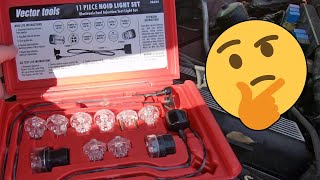
How to confirm: Visually inspect the wiring going to the cylinder 3 injector, paying close attention to the chafe points listed in TSB PIP4924D. Unplug the connector and check for corrosion, backed-out, or bent pins. Use a 'noid light' to verify the ECM is sending a pulse signal to the connector; no flash points to a wiring or ECM issue.
Typical fix: Repair the damaged section of wiring with solder and heat-shrink tubing or replace the injector connector pigtail. If chafing is found, re-route or protect the harness with loom to prevent recurrence.
Est. part cost: $15-$40 - Powertrain Control Module (PCM) Failure ⚪ Low Probability → Shop Engine Control Module (ECM) While rare, the internal driver circuit in the PCM that controls the injector can fail, preventing it from sending the signal to fire the injector. This can sometimes be caused by a short in the injector or wiring harness that damages the driver.
How to confirm: This is a diagnosis of last resort. If the injector and wiring have been proven to be good (e.g., injector swap test fails and noid light shows no pulse), the PCM is the likely culprit. This requires professional-level diagnostics to confirm, often by testing the control circuit directly at the PCM connector pin.
Typical fix: The PCM must be replaced and programmed for the vehicle.
Est. part cost: $200-$500+
Diagnosis Steps
- Read the trouble codes with an OBD-II scanner and confirm P0267 is present.
- Visually inspect the wiring harness and electrical connector at the cylinder 3 fuel injector. Per TSB PIP4924D, pay close attention to potential chafe points: against the intake plenum, valve cover bolts, fuel lines, and the side of the cylinder head.
- Locate cylinder #3. On the 3.6L V6, it is the middle cylinder on the rear bank (firewall side).
- Test the circuit with a 'noid light'. Disconnect the injector and plug in the noid light. Start the engine. A flashing light indicates the ECM and wiring are sending a signal, pointing to a bad injector. No light or a steady light points to a wiring or ECM problem.
- If the noid light flashes, perform an injector swap. Exchange the cylinder 3 injector with the cylinder 1 injector. Clear codes and run the engine. If the code returns as P0261, you have confirmed the injector is faulty.
- If the noid light does not flash, use a multimeter to check for battery voltage on one wire of the connector (key on, engine off). Then check the other (control) wire for continuity back to the ECM. A resistance reading greater than 1 ohm indicates a problem in the wire.
- If both the injector and wiring test good, the problem is likely the injector driver inside the ECM, which requires professional diagnosis or replacement.
Parts You'll Likely Need
- Fuel Injector
(OEM #12669384 (supersedes 12638530, 12632255, 12611545))— This is the most common failure point for a P0267 code, either due to an internal electrical short or open circuit.
Trusted brands: ACDelco (OEM), Bosch, Standard Motor Products
OEM price range: $110-$155
Aftermarket price range: $95-$130 - Fuel Injector Connector
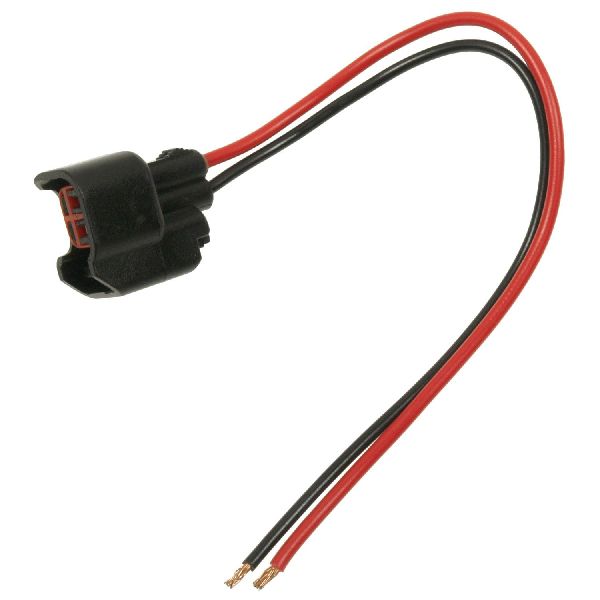
(OEM #ACDelco PT2384 / GM 88862303)— The connector's locking tab can break, or the terminals can corrode or back out. The wiring harness is also a known failure point due to chafing, often requiring a new pigtail to be spliced in.
Trusted brands: ACDelco, Dorman, Standard Motor Products (S-824)
OEM price range: $25-$40
Aftermarket price range: $15-$25 - Upper Intake Manifold Gaskets — For V6 engines, the upper intake manifold must be removed to access the rear bank of injectors (including cylinder #3). The gaskets are single-use and must be replaced.
Trusted brands: ACDelco, Fel-Pro
OEM price range: $25-$40
Aftermarket price range: $15-$30
Related Codes That Often Appear With This One
- P0303 — This code means 'Cylinder 3 Misfire Detected'. It is a direct result of the injector circuit failing, which prevents proper fueling and causes a misfire in that cylinder.
- P0203 — This code for 'Injector Circuit/Open - Cylinder 3' can sometimes appear with P0267, as they both relate to electrical faults in the same circuit.
- P0200 — This code for 'Injector Circuit Malfunction' may be set alongside P0267 if the electrical fault is intermittent or affects the entire injector bank driver.
Technical Service Bulletins (TSBs) & Recalls
- PIP4924D: This is the most relevant TSB. It states that a Check Engine Light with a misfire and injector codes (including P0267) is often caused by the fuel injector wiring harness rubbing through on engine components. It advises careful inspection of the harness in several key locations before replacing parts.
Platform-Specific Known Issues
- A GM Technical Service Bulletin (PIP4924D) for 2009-2014 models lists P0267 among a group of injector codes that can cause a misfire. It explicitly directs technicians to 'Carefully inspect the fuel injector wiring harness for rub through or internal wire opens.' Common chafe spots are against the intake plenum, valve cover bolts, and fuel lines.
Mechanic-Grade Diagnostic Values
- Fuel Injector Resistance (3.6L LFX V6, 2012+) — expected: 1.9 - 2.3 Ohms at 68°F (20°C). Failure: A reading outside this range, or OL (open circuit), indicates a failed injector.
- Fuel Injector Resistance (3.0L LF1 / 3.6L LLT V6, 2009-2011) — expected: 11 - 14 Ohms. Failure: A significant deviation from this range, an open circuit (OL), or a short (near 0 Ohms) indicates a failed injector.
- Injector Circuit Voltage (Key On, Engine Off) — expected: ~12 Volts (Battery Voltage). Failure: Low or no voltage on the power supply wire points to a problem with the fuse, relay, or the wire from the fuse block.
- Injector Circuit Continuity — expected: Less than 1.0 Ohm. Failure: Resistance greater than 1.0 Ohm (or OL) from the ECM connector pin to the injector connector pin indicates a break or high resistance in the wiring harness.
Scan Tool Commands That Help
- GDS2 (GM Factory Scan Tool): Fuel System > Fuel Injector Balance Test — This automated test disables each injector one by one and measures the corresponding drop in fuel rail pressure to determine if an injector is flowing correctly. It's a definitive way to identify a mechanically faulty (clogged or stuck) injector after electrical tests have passed.
- Tech2 or high-end bidirectional scanner: Cylinder Power Balance / Injector Kill Test — This function allows the technician to manually disable one cylinder at a time. If disabling cylinder #3 causes little or no change in engine RPM or smoothness, it confirms that cylinder was not contributing, pointing to a fault in its fuel (or spark) delivery.
Wiring & Ground Locations
- ECM Connector X1 — The main 56-pin or 72-pin connector at the Engine Control Module (ECM), located on the engine or in the engine bay.. The control circuit for the cylinder 3 injector originates here. Back-probing the specific pin for the cylinder 3 injector control wire at this connector is the final step to confirm if the ECM's internal driver has failed.
- G109 / G112 — On the 3.6L LFX, G109 is on the right front of the engine block. On the 3.0L LF1, G112 is at the left rear of the engine.. These are primary engine block grounds. A loose or corroded connection here can create a voltage offset and cause a variety of difficult-to-diagnose electrical faults, including intermittent injector circuit codes.
- G103 — Located on the cowl panel in the engine compartment, often above the brake booster.. This is a major chassis ground point. While less likely to cause a single injector code, a poor connection here can lead to widespread communication and module errors that could potentially manifest as an injector fault.
Real Owner Repair Stories
- CorvetteForum user (GM vehicle with similar engine architecture) — Intermittent P0200 (Injector Circuit Malfunction), rough running, and smoke from one exhaust bank.
❌ Tried (didn't work) Replacing all fuel injectors.
✅ What actually fixed it The user found a spot where the injector wiring harness was rubbing against a fuel rail bracket at the rear of the engine. Protecting this area with a wire loom temporarily fixed it, but the issue returned intermittently, suggesting the wire was already damaged internally. The final fix discussed was replacing the entire engine harness, as GM had updated the part with a longer version to prevent this exact chafing issue.
OEM Part Supersession History
12611545, 12632255, 12638530→12669384— Standard part evolution for improved reliability or manufacturing process changes.
Heads up: Part number 12669384 is specified for the 3.6L V6 engines (LLT/LFX) in this vehicle range. It is critical not to use injectors from the 2.4L I4 or other GM engines, as flow rates and impedance will differ.
Model Year Variations Within This Range
- 2009-2011: These models primarily used the 3.0L LF1 and 3.6L LLT V6 engines. These engines use higher impedance fuel injectors (approx. 11-14 Ohms) and a Bosch ECM.
- 2012-2014: The V6 engine was updated to the 3.6L LFX. This engine features a composite intake manifold, integrated exhaust manifolds, and different fuel injectors. The LFX injectors are low impedance (approx. 1.9-2.3 Ohms) and are controlled by a Delphi ECM. The parts are not interchangeable with earlier models.
Helpful Videos

We Have This Part in Stock


The information in this article is provided for general reference and educational purposes only. Vehicle specifications, procedures, and part compatibility can vary by production date, trim level, and region. Always consult your vehicle's factory service manual and verify part numbers before purchasing or performing repairs. Safety-critical components such as airbags, seat belts, and braking systems should be installed by a qualified professional.
- Buick LACROSSE:
- 🧭 Diagnostic Flowchart
- 🎬 Helpful Videos
- 🛍️ Shop This Part
- What's Unique About the 2009-2014 Buick LACROSSE
- Symptoms You May Notice
- Most Likely Causes
- Diagnosis Steps
- Parts You'll Likely Need
- Related Codes That Often Appear With This One
- Technical Service Bulletins (TSBs) & Recalls
- Platform-Specific Known Issues
- Mechanic-Grade Diagnostic Values
- Scan Tool Commands That Help
- Wiring & Ground Locations
- Real Owner Repair Stories
- OEM Part Supersession History
- Model Year Variations Within This Range
- 🎟️ Get 5% Off