

P0268 on 2009-2014 Buick LaCrosse: Cylinder 3 Injector Circuit High Causes and Fixes
This code indicates a high voltage condition in the cylinder 3 fuel injector circuit. The most common cause, per GM Technical Service Bulletin #PIP4924D, is a damaged fuel injector wiring harness chafing against engine components. A failed fuel injector is also a common culprit. Expect to pay $50-$150 for a new injector or a similar amount for wiring repair. For DIY, cylinder 3 is on the front bank (radiator side), closest to the passenger side.
- P0268 on a 2009-2014 LaCrosse means there's an electrical problem with the cylinder 3 fuel injector circuit, specifically a high voltage condition.
- The most likely cause is a damaged wiring harness, as identified in a GM service bulletin. Inspect the wiring to the injector carefully before buying parts.
- A failed fuel injector is the second most common cause. Swapping the injector with another cylinder is a reliable way to confirm if it's bad.
- Driving with this code can lead to a constant misfire, which will reduce engine power and can damage your catalytic converter over time.
What's Unique About the 2009-2014 Buick LACROSSE
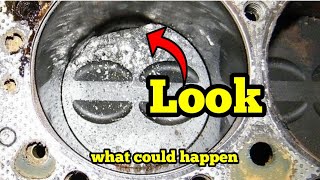
For this generation of Buick LaCrosse and many other GM vehicles with the 3.0L and 3.6L V6 engines, the fuel injector wiring harness is a known weak point. A widely circulated General Motors TSB (#PIP4924D) specifically instructs technicians to inspect the fuel injector wiring harness for damage when a P0268 code is present. 🎬 Watch: How a P0268 injector short can cause engine damage. The bulletin notes that common chafe points are against the intake plenum, valve cover bolts, fuel lines, and the side of the cylinder head under the plenum. This makes a wiring issue a higher probability on this platform compared to others where the injector itself is the default primary suspect.
Diagnostic Flowchart
Tap your situation to follow the diagnostic path that matches what you're seeing on this vehicle.
Generation note: This range covers the end of the first generation (2009) and the beginning of the second generation (2010-2014) LaCrosse. The code applies to the V6 engine options (3.8L in 2009; 3.0L LF1 and 3.6L LLT/LFX in 2010-2014), as they have a cylinder #3. The underlying causes, especially the wiring harness issue cited in TSB PIP4924D, are common across these V6 engines.
Symptoms You May Notice
- Check Engine Light is on.
- Engine runs rough, especially at idle.
- Noticeable engine misfire, which may feel like a bucking or jerking.
- Loss of power and poor acceleration.
- Reduced fuel economy.
- Engine may stall in some cases.
- Strong fuel smell from the engine bay or exhaust.
- Replacing the spark plug or ignition coil for cylinder 3. While these parts can cause a misfire (P0303), they will not cause a P0268 injector circuit code. Always diagnose the specific code that is present first.
Most Likely Causes
- Damaged Fuel Injector Wiring Harness 🔴 High Probability → Shop Engine Wiring Harness A GM Technical Service Bulletin (PIP4924D) specifically points to the fuel injector wiring harness rubbing through or having internal wire opens as a cause for this and related codes. Common chafe points are against the intake plenum, valve cover bolts, and fuel lines.
How to confirm: Visually inspect the wiring harness leading to the cylinder 3 fuel injector. Look for any signs of chafing, melting, or breaks, particularly where the harness might contact the engine or other components. A continuity test with a multimeter can also confirm an open or short in the circuit. A 'wiggle test' on the harness while the engine is running may induce the misfire.
Typical fix: Repair the damaged section of the wire or replace the fuel injector connector pigtail.
Est. part cost: $15-$50 - Failed Fuel Injector 🟡 Medium Probability → Shop Fuel Injector Injectors can fail electrically over time. The direct injection (DI) injectors on the 3.0L and 3.6L engines operate under high pressure and can be susceptible to internal shorts.
How to confirm: Swap the cylinder 3 fuel injector with one from another cylinder (e.g., cylinder 1). Clear the codes and drive the vehicle. If the code changes to P0262 (Cylinder 1 Injector Circuit High), the injector is faulty. You can also test the injector's internal resistance with a multimeter; for many port-injected cars it's 10-16 ohms, but direct injectors like those on the 3.6L LFX have much lower resistance, so consult the specific service manual for your engine.
Typical fix: Replace the faulty fuel injector. It is often recommended to replace all injectors on the same bank for balanced performance.
Est. part cost: $50-$150 - Poor Connection at Injector or ECM ⚪ Low Probability
How to confirm: Disconnect and inspect the electrical connector at the fuel injector and at the ECM. Look for corrosion, bent or broken pins, or a loose fit. A real-world repair on a 2010 LaCrosse with a 3.6L engine traced multiple fuel system codes to a loose wire in the fuel pressure sensor connector, which is also located under the intake manifold.
Typical fix: Clean or repair the connector. If the terminals are badly damaged, the connector pigtail may need to be replaced. Apply dielectric grease before reconnecting to ensure a good seal.
Est. part cost: $15-$50
Rare But Worth Checking
- Faulty Engine Control Module (ECM): → Shop Engine Control Module (ECM) This is the least likely cause. The internal driver circuit for the cylinder 3 injector can fail. This should only be considered after all wiring and the injector itself have been proven to be good. A forum post noted that a bad ECM was the ultimate cause after extensive testing. A ScannerDanner forum thread on a 2011 LaCrosse with multiple injector codes also pointed towards a potential ECM driver issue after wiring and injectors were checked.
Diagnosis Steps
- Scan for Codes: Read the DTCs with an OBD-II scanner to confirm P0268 and note any other codes present, like P0303.
- Locate Cylinder 3: On the transverse mounted V6 engines in the LaCrosse, Cylinder 3 is part of the front bank (Bank 1), which is closer to the radiator. It is the middle cylinder on that bank.
- Inspect Wiring: Following TSB PIP4924D, perform a thorough visual inspection of the fuel injector wiring harness. Pay close attention to areas where it might rub against the intake plenum, valve cover bolts, or fuel lines.
- Check the Connector: Disconnect the electrical connector at the cylinder 3 injector. Inspect for corrosion, bent pins, or damage. Ensure it fits securely.
- Swap the Injector: To rule out a bad injector, swap the cylinder 3 injector with an injector from another cylinder (e.g., cylinder 1). Clear the codes. If the fault code 'follows' the injector to the new cylinder (e.g., P0262 for cylinder 1), the injector is bad.
- Test the Circuit: If the code remains on cylinder 3 after the swap, the issue is in the wiring or ECM. Use a multimeter to check for voltage at the injector connector. You should have battery voltage on the power wire with the key on.
- Use a Noid Light: A noid light is a simple tool that plugs into the injector connector and flashes to indicate if the ECM is sending the pulse signal. If the noid light doesn't flash or stays on continuously, the problem is in the wiring or the ECM itself.
- Check for Shorts: With the injector and ECM disconnected, check for continuity to ground and for shorts between the two wires in the injector harness. There should be no continuity in either test.
- Suspect the ECM: If the injector and wiring have all been tested and are good, the final possibility is a failed injector driver in the ECM.
Parts You'll Likely Need
- Fuel Injector
(OEM #12634126 (For 3.6L LFX V6, check VIN))— An internal short circuit in the injector can cause the high voltage condition, triggering the code.
Trusted brands: ACDelco, Bosch, Standard Motor Products
OEM price range: $90-$150
Aftermarket price range: $50-$100 - Fuel Injector Connector Pigtail — If the wiring is damaged right at the connector, replacing the pigtail is the most effective repair.
Trusted brands: ACDelco, Dorman
OEM price range: $25-$50
Aftermarket price range: $15-$30
Related Codes That Often Appear With This One
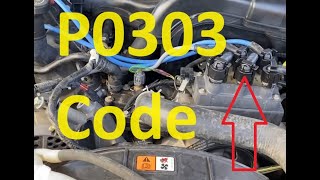
- P0303 — P0303 means 'Cylinder 3 Misfire Detected'. Since P0268 causes the cylinder 3 injector to malfunction, the cylinder will not fire correctly, logging a misfire code.
- P0203 — This is the generic code for 'Injector Circuit/Open - Cylinder 3'. It can appear alongside P0268 as they both point to an electrical fault in the same circuit.
- P2152 — This code for 'Cylinder 3 Injector High Control Circuit' is also listed in TSB PIP4924D and points to the same family of wiring or injector faults.
Technical Service Bulletins (TSBs) & Recalls
- PIP4924D: Advises technicians to inspect the fuel injector wiring harness for damage when various injector circuit DTCs, including P0268, are present. Lists common chafe points.
- 20-NA-098: Provides guidelines for fuel injector replacement, noting that injectors are flow-matched at the factory and that replacement part numbers may differ from the original part number on the injector body.
Platform-Specific Known Issues
- A known issue, documented in GM TSB #PIP4924D, involves the fuel injector wiring harness rubbing through or developing an internal open, which can trigger a wide range of injector circuit codes, including P0268. Specific chafe points to check are against the intake plenum, valve cover bolts, and fuel lines.
- For direct injection engines (3.0L, 3.6L), improper injector orientation after a repair can cause cold start misfires and popping noises. The injector connectors on Bank 1 (front) should aim toward the rear of the engine.
Mechanic-Grade Diagnostic Values
- Fuel Injector Resistance (2009 3.8L Port-Injected V6) — expected: 11-13 Ohms. Failure: A reading significantly higher or lower than this range indicates a failed injector coil.
- Fuel Injector Resistance (2010-2014 3.0L/3.6L Direct-Injected V6) — expected: Not a standard test; values are very low.. Failure: A simple resistance test is not a reliable method for diagnosing DI injectors; an injector balance test is the preferred method.
- Low-Pressure Fuel System (All V6 Engines) — expected: 50-65 PSI (345-448 kPa) with Key On, Engine Off (KOEO).. Failure: Pressure below this range indicates a weak in-tank fuel pump, but would likely cause issues on multiple cylinders, not just one.
- High-Pressure Fuel System (3.0L/3.6L DI Engines) — expected: 300-500 PSI at idle, increasing to over 2,000 PSI under load.. Failure: Inability to reach target pressure can indicate a failing high-pressure fuel pump (HPFP), but would typically set fuel pressure codes.
Scan Tool Commands That Help
- GDS2 / Tech 2 / High-End Aftermarket: Fuel Injector Balance Test — This is the most effective test for all engines, especially the Direct Injection (3.0L/3.6L) models. The tool individually pulses each injector and measures the corresponding drop in fuel rail pressure. If the pressure drop for cylinder 3 is significantly different (typically >20%) from the others, the injector is faulty or clogged.
- GDS2 / High-End Aftermarket: Injector Kill / Disable — While the engine is idling, you can command the ECM to stop firing the cylinder 3 injector. If there is no change in engine RPM or sound, it confirms the cylinder was not contributing, pointing to a problem in that injector's circuit or the injector itself.
Wiring & Ground Locations
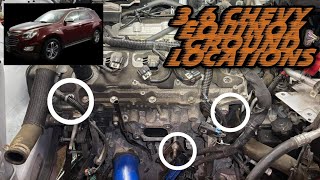
- G103 — Located at the rear of the left-hand (front) cylinder head.. This is a primary engine-related ground. A poor connection here can cause erratic sensor readings and incorrect voltage references for modules, potentially leading to false circuit codes.
- G105 / G106 — G105 is at the left front of the engine compartment; G106 is on the front frame cross rail.. These are major chassis and engine block grounds. A service bulletin highlights that improper grounding is a known cause of various electrical DTCs, making inspection of these points critical.
- ECM Connector Pins — At the Engine Control Module (ECM).. The two wires for the cylinder 3 injector run from the injector directly to the ECM. A technician would use a wiring diagram to identify the specific pins for the injector's power feed and ground control circuit to test for continuity and shorts directly at the source.
Real Owner Repair Stories
- ScannerDanner Forum (2011 Buick LaCrosse 3.6L V6) — Misfire on cylinders 3, 4, and 6. Check Engine Light on.
❌ Tried (didn't work) Cleaned all fuel injectors., Performed resistance test on injectors (all tested good)., Performed continuity test on injector wiring harness (all tested good).
✅ What actually fixed it The ECM was not providing the ground signal to fire the injectors on the affected cylinders. Replacing the Engine Control Module (ECM) resolved the issue.
When the Usual Fixes Don't Work
- While wiring and the injector itself are the most common culprits, a confirmed repair story for a 2011 LaCrosse showed that after all wiring and injector tests passed, the root cause was a failed injector driver inside the ECM. This highlights that in some cases, the fault lies with the control module itself, even when it's considered a rare cause.
OEM Part Supersession History
12642128→12634126— Likely an updated design for improved performance or durability.12638530 / 12632255 / 12611545→12669384— Represents design improvements for durability and to address potential leak issues in early DI injectors.
Heads up: Always verify the correct part number by VIN, as injectors for LLT and LFX engines may differ.
Model Year Variations Within This Range
- 2009: The 2009 model used a 3.8L V6 with traditional port fuel injection. Its injectors have a resistance of approximately 12 ohms and are diagnosed differently than the later direct injection models.
- 2010-2011: V6 models used the 3.0L LF1 or 3.6L LLT direct injection engines. These feature an aluminum intake manifold and use a Bosch ECM. The TSB regarding wiring chafe is highly relevant to these engines.
- 2012-2014: The 3.6L V6 was updated to the LFX design. This engine has cylinder heads with integrated exhaust manifolds, a lighter composite intake manifold, and uses a Delphi ECM. Fuel injectors and the high-pressure fuel pump were also updated from the LLT.
Helpful Videos
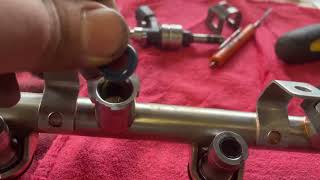
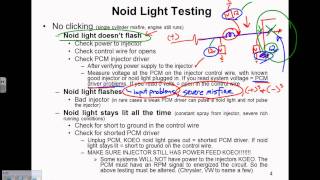
We Have This Part in Stock



The information in this article is provided for general reference and educational purposes only. Vehicle specifications, procedures, and part compatibility can vary by production date, trim level, and region. Always consult your vehicle's factory service manual and verify part numbers before purchasing or performing repairs. Safety-critical components such as airbags, seat belts, and braking systems should be installed by a qualified professional.
- Buick LACROSSE:
- 🧭 Diagnostic Flowchart
- 🎬 Helpful Videos
- 🛍️ Shop This Part
- What's Unique About the 2009-2014 Buick LACROSSE
- Symptoms You May Notice
- Most Likely Causes
- Rare But Worth Checking
- Diagnosis Steps
- Parts You'll Likely Need
- Related Codes That Often Appear With This One
- Technical Service Bulletins (TSBs) & Recalls
- Platform-Specific Known Issues
- Mechanic-Grade Diagnostic Values
- Scan Tool Commands That Help
- Wiring & Ground Locations
- Real Owner Repair Stories
- When the Usual Fixes Don't Work
- OEM Part Supersession History
- Model Year Variations Within This Range
- 🎟️ Get 5% Off