

P0272 on 2016-2023 Ford Transit 2.0L EcoBlue: Cylinder 4 Imbalance Causes and Fixes
Code P0272 on a 2.0L EcoBlue Transit almost always means the fuel injector for cylinder #4 is failing. A bad batch of Continental/VDO injectors affected some 2019 models, causing a dealer service action. Diagnosis involves swapping the injector to another cylinder to see if the fault follows. Expect to pay $250-$500 for a new OEM injector plus 1-2 hours of labor for replacement and coding.
- P0272 on your Transit almost always points to a problem with the fuel injector in cylinder #4.
- The most reliable diagnostic step is to swap the suspect injector with one from another cylinder and see if the fault code follows it.
- Due to known quality issues, especially on 2019 models, the injector itself is the most likely culprit.
- If an injector swap doesn't move the fault, the wiring harness or PCM are the next logical suspects.
- Be aware of the separate, more serious issue of premature 'wet belt' failure on this engine, which can cause catastrophic damage.
What's Unique About the 2016-2023 Ford Transit

The 2.0L EcoBlue diesel engine is known for fuel injector issues across multiple vehicle platforms, including the Transit, Ranger, and Everest. Ford acknowledged a quality problem with a batch of Continental-supplied injectors that affected some 2019 Transit models built between March 20 and May 23, leading to symptoms like rough running, misfires, and reduced power. This was due to an internal coating on the injector coming loose and causing a blockage. While the code points to a cylinder imbalance, the high likelihood of a failing injector on this specific engine often makes it the primary suspect over other potential causes.
Symptoms You May Notice

- Rough or uneven idle
- Engine hesitation or lack of power, especially during acceleration
- Noticeable engine vibration or shaking
- Increased fuel consumption
- Black smoke from the exhaust
- Check Engine Light is on
- Engine goes into 'limp home' mode
- Difficulty starting the engine
- Replacing other fuel system components like the fuel filter or fuel pumps. While a clogged fuel filter can cause performance issues, it typically affects all cylinders and would set different codes (e.g., low fuel pressure codes).
Most Likely Causes

- Failing Fuel Injector (Cylinder #4) 🔴 High Probability → Shop Fuel Injector A known bad batch of injectors from supplier Continental affected some 2019 models. Generally, the piezoelectric injectors on this common-rail diesel engine are a frequent failure point across the EcoBlue lineup. Failures can be sequential; it's not uncommon for another injector to fail shortly after one is replaced.
How to confirm: The most definitive method is to swap the cylinder 4 injector with another cylinder (e.g., cylinder 2). If the fault code moves to the new cylinder (e.g., P0266), the injector is bad. A professional can also perform an injector leak-off test; a significantly higher return flow from one injector compared to others indicates it's faulty. A resistance test on the injector's electrical pins can also identify an electrical failure within the injector. A known good injector should measure around 200 kΩ, while a faulty one may show a much lower reading, such as 1 kΩ.
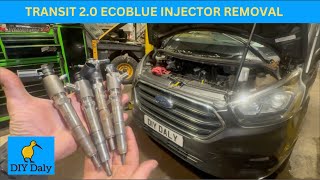
Typical fix: Replace the faulty fuel injector for cylinder #4. The new injector must be coded to the vehicle's ECU using a compatible diagnostic tool to input its specific calibration code. 🎬 Watch: How to fit and program injectors using FORScan. It is critical to maintain cleanliness to avoid contaminating 🎬 Watch: Step-by-step guide to removing and replacing EcoBlue injectors. the fuel system.
Est. part cost: $250-$500 - Injector Wiring Harness or Connector Fault 🟡 Medium Probability → Shop Engine Wiring Harness Engine vibrations and heat cycles can cause wiring to chafe or connectors to become loose or corroded over time, which is common in commercial vehicles. Water ingress into connectors can also cause issues.
How to confirm: After confirming the injector is not the cause (by swapping it), visually inspect the wiring harness going to the cylinder 4 injector. Check for chafed insulation, broken wires, or corrosion on the connector pins. Perform a continuity test ('wiggle test') from the injector connector back to the ECU plug to check for intermittent breaks.
Typical fix: Repair the damaged section of the wiring harness or replace the injector pigtail connector.
Est. part cost: $20-$100
Rare But Worth Checking
- Low Engine Compression in Cylinder #4: This indicates a more serious mechanical engine problem, such as worn piston rings, a failing valve, or a head gasket issue. A compression test is needed to confirm. A forum user with this code had compression checked and it was fine, pointing away from this as a common cause.
- Powertrain Control Module (PCM/ECU) Fault: → Shop Engine Control Module (ECM) In rare cases, the internal driver circuit for the cylinder 4 injector can fail within the PCM. This is usually only suspected after injectors and wiring have been ruled out. On 2016-2019 models with the SID211 ECU, this is a known, albeit uncommon, failure point that can sometimes present with injector-related codes. One owner reported a wet PCM connector led to a cascade of injector codes.
Diagnosis Steps

- Read all stored fault codes with an OBD-II scanner.
- Check live data to view fuel trims and injector balance rates for all cylinders. Cylinder 4 will likely show a significant deviation.
- Perform a visual inspection of the cylinder 4 injector and its wiring connector for any obvious damage, leaks, or corrosion.
- The most common professional diagnostic step is to swap the cylinder 4 fuel injector with another cylinder (e.g., cylinder 2).
- Clear the codes, recode the swapped injectors in the ECU, and run the engine. If the code returns as P0266 (Cylinder 2 Contribution/Balance), the injector is confirmed to be faulty.
- If the code remains P0272, the problem lies in the wiring or the PCM. Inspect the wiring harness for continuity and shorts.
- If the injector and wiring are good, perform a compression test on cylinder 4 to rule out mechanical engine issues.
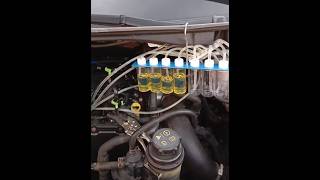
- As an alternative or additional test, perform an injector leak-off test. Run the engine at idle for 3-4 minutes and compare the amount of fuel returned from each injector. 🎬 See how to perform a professional injector leak-off test. A faulty injector will typically return significantly more fuel than the others.
- If all else fails, the PCM may be the culprit, which requires specialized testing or substitution.
Parts You'll Likely Need
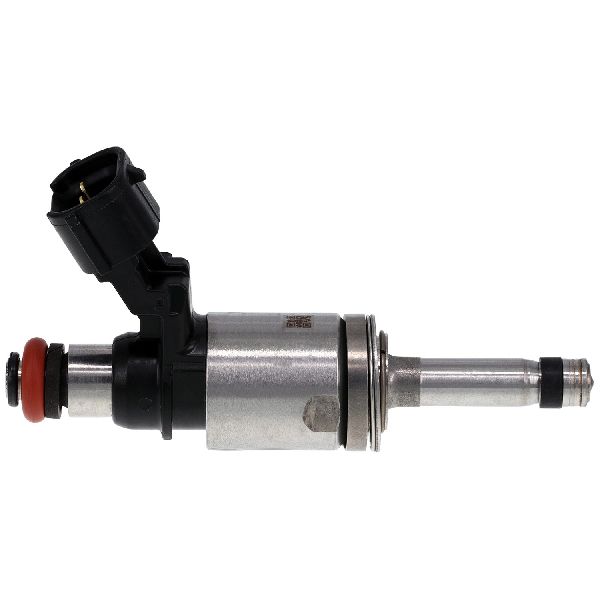
- Diesel Fuel Injector
(OEM #GK2Q-9K546-AC / A2C9303500080 (Verify with VIN). Superseded by GK2Q-9K546-AD.)— This is the most common cause of P0272 on the 2.0L EcoBlue engine, due to both general wear and specific manufacturing defects in certain model years.
Trusted brands: Ford (Motorcraft), Continental/VDO (OEM supplier)
OEM price range: $250-$500
Aftermarket price range: $200-$400
Related Codes That Often Appear With This One
- P0304 — P0304 means 'Cylinder 4 Misfire Detected'. A cylinder that is not contributing enough power (P0272) will often misfire completely, logging both codes.
- P0263, P0266, P0269 — These are the contribution/balance fault codes for cylinders 1, 2, and 3. Seeing multiple injector codes together can point to a wider issue like contaminated fuel, a failing high-pressure fuel pump, or a major electrical problem.
- P126D — This code indicates a 'Cylinder 4 Injector Input Circuit' fault, pointing more specifically to an electrical problem with the injector or its wiring, rather than just a performance imbalance.
Technical Service Bulletins (TSBs) & Recalls
- While no specific TSB number for the P0272 code is widely published, a dealer-notified service action was initiated in 2019 to address faulty injectors on multiple 2.0L EcoBlue vehicles, including the Transit.
- Manufacturer TSB Bulletin #16-0056 notes that a malfunction indicator lamp (MIL) may illuminate with diagnostic trouble codes P0263, P0266, P0269, and P0272 during PTO operation.
- According to Manufacturer TSB Bulletin #16-0064, vehicles equipped with a diesel engine may exhibit a fuel knock type noise at idle along with an illuminated MIL and codes including P0272.
- Manufacturer TSB Bulletin #TSB18-2015 describes a fuel knock type noise at idle and an illuminated MIL with codes P0263, P0266, P0269, and P0272, which may be due to incorrect learning of the injector timing.
Platform-Specific Known Issues
- A stop-sale and dealer service action was issued for some Ford Transit models built between March 20 and May 23, 2019, due to a batch of defective high-pressure fuel injectors from Continental.
- The 2.0L EcoBlue engine uses a 'wet belt' (timing belt that runs in oil). Over time, belt degradation can contaminate the oil and clog the oil pump pickup strainer, leading to oil starvation and catastrophic engine failure. This is the most significant known issue with this engine.
Mechanic-Grade Diagnostic Values
- Fuel Injector Coil Resistance — expected: Approx. 200 kΩ (kilo-ohms). Failure: A significantly lower reading, such as 1 kΩ, indicates an internal short or failure.
- Low-Pressure Fuel System (Lift Pump) — expected: Desired pressure around 4.5 bar (65 psi); actual reading should be close, between 4.5 and 5.5 bar.. Failure: Actual pressure significantly higher or lower than desired pressure can indicate a blockage (like a fuel filter) or a failing lift pump.
- High-Pressure Fuel Rail (Cranking) — expected: Approx. 220-250 bar (3190-3625 psi) is required for the engine to start.. Failure: Failure to reach this pressure during cranking points to issues with the high-pressure fuel pump, leaks in the system, or a faulty rail pressure sensor.
- Injector Leak-Off Volume (at idle) — expected: For a 4-minute idle test, expect between 25-40ml of return fuel from each healthy injector on a similar generation Transit (Mk7). All injectors should have similar volumes (within 10%).. Failure: One injector returning a significantly higher volume of fuel indicates it is internally worn or leaking, failing to deliver the correct amount to the cylinder.
Scan Tool Commands That Help
- FORScan / Ford IDS: Fuel Injector Correction Factors (or Injector Coding) — This function is mandatory after replacing a fuel injector or swapping their positions for diagnosis. It writes the injector's specific 16-digit calibration code to the PCM to ensure correct fuel delivery.
- FORScan / Ford IDS: Injector Buzz Test — This is a quick electrical test to see if the PCM can actuate the solenoid in each injector. While a 'pass' doesn't rule out a mechanical injector fault, a 'fail' immediately points to an electrical issue in the injector or its circuit.
- FORScan / Ford IDS: View Live PID Data (e.g., INJ_BAL_#) — Use this to monitor the PCM's real-time adjustments for each injector. For P0272, the value for cylinder 4 (INJ_BAL_4) will show a significant positive correction factor as the PCM tries to compensate for the lack of contribution.
Wiring & Ground Locations

- Engine/Gearbox to Chassis Ground Strap — On the FWD models, a key ground strap runs from the gearbox to the inner wing area, typically below the under-hood fuse box.. A poor engine ground can cause a host of intermittent electrical issues, including erratic sensor readings and incorrect injector firing, which could potentially trigger balance faults. Ensuring this connection is clean and tight is a crucial step in ruling out electrical causes.
- PCM/ECU Connector — The SID211 ECU is located in the engine bay. The injector wiring runs from the top of the engine directly to the main ECU connectors.. Corrosion or water ingress at the ECU connector pins for the cylinder 4 injector driver can cause an open or shorted circuit, leading to P0272 or related circuit codes like P126D. This was reported as a cause after multiple injectors were replaced without success.
Real Owner Repair Stories
- MHH AUTO Forum Thread (2016 Ford Transit 2.0L Duratorq EcoBlue) — P0272-00-6c fault code, injector correction value for cylinder 4 was over +2.
❌ Tried (didn't work) Replaced all fuel injectors., Swapped the new injector from cylinder 4 with the new injector from cylinder 2., Coded injectors using FORScan., Checked for voltage drops in the wiring.
✅ What actually fixed it The fault remained on cylinder 4 after swapping the injector, definitively proving the injector was not the cause. The final diagnosis pointed to a fault in the wiring harness between the ECU and the injector, or a fault in the ECU's internal injector driver for cylinder 4. The user was advised to perform a continuity check on the wiring back to the ECU. - MHH AUTO Forum Thread (2016 Ford Transit 2.0 TDCI with SID211 ECU) — Intermittent limp mode under high load, with random injector circuit codes (P126A, P126B, P126C, P126D) appearing for different cylinders.
❌ Tried (didn't work) Checked all wiring from ECU to injectors., Inspected ECU connectors for corrosion (none found)., Logged live data (fuel pressure, boost, etc.) which all appeared normal., Replaced all four fuel injectors with a brand new set, twice (8 new injectors in total).
✅ What actually fixed it After two sets of new injectors and extensive wiring checks failed to resolve the highly intermittent issue, the conclusion was a failing injector driver within the ECU (PCM). The problem was so elusive that two Ford dealers were unable to fix it, and the owner was planning to send it to a dealer in another country for a potential ECU replacement.
OEM Part Supersession History
GK2Q-9K546-AB→GK2Q-9K546-AC, then GK2Q-9K546-AD— Standard part evolution and revisions to address quality and performance issues, including the internal coating failure noted in the 2019 service action.
Heads up: All listed part numbers (AB, AC, AD) are generally interchangeable for the 2016-2023 2.0L EcoBlue, but it is always best practice to install the latest revision (GK2Q-9K546-AD) to benefit from the most recent manufacturing improvements.
Model Year Variations Within This Range
- 2019 (specifically March 20 - May 23 builds): A specific batch of Continental injectors with an internal coating defect was installed at the factory, leading to a high rate of premature failure and a dealer service action. Vehicles outside this range can still experience injector failure, but are not part of this specific known-defective batch.
- Approx. 2016-2019: These earlier models are typically equipped with the Continental/Siemens SID211 ECU. While capable, some forum reports suggest this ECU model can be prone to intermittent injector driver faults after high mileage or in cases of water ingress.
Diagnostic Flowchart
Other Known Issues on This Vehicle
Issues unrelated to this code that are worth knowing about as an owner of this generation:
- Premature 'Wet Belt' Failure 🔴 High — Failures are widely reported, sometimes as early as 60,000-70,000 miles, well before the original 150,000 mile / 10-year interval. The interval has since been revised downwards by Ford. (Ref: No official recall, but service interval recommendations have been shortened by Ford. Independent shops recommend proactive replacement around 80,000-90,000 miles.)
- Fuel Injector Failure (All Cylinders) 🔴 High → Shop Fuel Injector — Very common across all model years of the 2.0L EcoBlue. A specific bad batch affected 2019 models, but failures occur on other years as well. It is common for injectors to fail sequentially. (Ref: A 'dealer-notified service action' and 'stop sale' was issued for specific 2019 models.)
- Oil Contamination from Wet Belt Debris 🔴 High — This is a direct consequence of wet belt degradation. Rubber particles from the belt enter the oil, clogging the oil pump pickup strainer and leading to oil starvation and catastrophic engine damage.
- Cracked Camshaft Housing on Wet Belt Failure 🔴 High — Occurs as a direct result of the timing belt slipping or snapping. The impact of pistons on valves can transfer force up through the valvetrain and crack the camshaft carrier housing, requiring a much more extensive repair.
Used vs. New Parts: Buying Guide for This Vehicle
When a used part is the smart pick: For this specific repair, buying a used injector is NOT recommended. The high failure rate, known manufacturing defects, and sensitivity of common-rail injectors mean a used part carries a significant risk of being faulty or having a very short service life.
What to inspect on the donor part:
- Not applicable, as used injectors are not advised.
OEM-only on this vehicle (don't cheap out):
- Diesel Fuel Injector
Aftermarket brands forum-validated for this vehicle:
- Ford (Motorcraft)
- Continental/VDO (This is the Original Equipment Manufacturer)
Brands owners have reported issues with on this vehicle:
- Unnamed 'white box' or non-brand Chinese injectors. Forum and specialist consensus is that non-OEM new or remanufactured injectors have poor quality control and durability, often failing quickly or not performing to specification.
- Refurbished/Repaired Injectors. These are distinct from 'remanufactured' injectors. A refurbished part is simply cleaned and has only the clearly broken components replaced. A quality remanufactured injector is fully disassembled and rebuilt to OEM specs. For this application, even remanufactured units are risky unless from a highly reputable specialist using genuine OEM internal parts. New OEM is the safest choice.
Real Owner Stories
Aggregated from forums and TSBs cited above. Mileages and costs reflect what owners reported in those sources.
2016 Ford Transit 2.0L Duratorq EcoBlue
Symptoms: The primary symptom was the P0272 fault code. The owner performed a diagnostic swap of the injectors.
What fixed it: The diagnosis concluded the issue was likely the wiring harness or ECU, as swapping the cylinder 4 injector with another did not move the P0272 fault code to the new cylinder.
Source hint: MHH AUTO - Ford Transit 2016 2.0 Duratorq ecoblue p0272
Ford Transit Mk8 2.0L EcoBlue
Symptoms: A cascading failure occurred. A P0204 code (injector 4 circuit) appeared, and after replacing that injector, a new P0201 code appeared for injector 1.
What fixed it: The owner replaced the injector for cylinder 4, but this revealed another failing injector on cylinder 1, highlighting the sequential nature of these failures.
Source hint: Ford Transit Forum - Mk8 transit crew cab ecoblue 2.0l injector issue
2021 Ford Ranger 2.0L EcoBlue Diesel
Symptoms: The owner experienced a faulty injector, which is a known quality issue with the VDO/Continental injectors used in the EcoBlue engine family.
What fixed it: The faulty injectors were being replaced by Ford under warranty.
Source hint: Reddit r/MechanicAdvice - Faulty injectors? Ford Ranger diesel 2021
Related OBD-II Codes
Frequently Asked Questions
Was there a recall for the fuel injectors on my 2019 Ford Transit?
I replaced the fuel injector on cylinder 4, but the P0272 code came back. What should I check next?
Is it common for other injectors to fail right after I replace one?
Do I need a special tool to code the new injector to my van?
Could the 'wet belt' issue on my EcoBlue engine cause the P0272 code?
My van is a 2020 model. Could it still have the faulty injector issue?
Helpful Videos
We Have This Part in Stock


The information in this article is provided for general reference and educational purposes only. Vehicle specifications, procedures, and part compatibility can vary by production date, trim level, and region. Always consult your vehicle's factory service manual and verify part numbers before purchasing or performing repairs. Safety-critical components such as airbags, seat belts, and braking systems should be installed by a qualified professional.
- Ford Transit:
- 🧭 Diagnostic Flowchart
- 🎬 Helpful Videos
- 🛍️ Shop This Part
- What's Unique About the 2016-2023 Ford Transit
- Symptoms You May Notice
- Most Likely Causes
- Rare But Worth Checking
- Diagnosis Steps
- Parts You'll Likely Need
- Related Codes That Often Appear With This One
- Technical Service Bulletins (TSBs) & Recalls
- Platform-Specific Known Issues
- Mechanic-Grade Diagnostic Values
- Scan Tool Commands That Help
- Wiring & Ground Locations
- Real Owner Repair Stories
- OEM Part Supersession History
- Model Year Variations Within This Range
- Other Known Issues on This Vehicle
- Used vs. New Parts: Buying Guide for This Vehicle
- Real Owner Stories
- 2016 Ford Transit 2.0L Duratorq EcoBlue
- Ford Transit Mk8 2.0L EcoBlue
- 2021 Ford Ranger 2.0L EcoBlue Diesel
- Related OBD-II Codes
- Frequently Asked Questions
- 🎟️ Get 5% Off