

P0274 on 2009-2014 Buick LaCrosse: Cylinder 5 Injector Circuit High Causes and Fixes
On a V6 LaCrosse, P0274 is most often caused by a damaged fuel injector wiring harness rubbing against the engine, as noted in GM Technical Service Bulletin #PIP4924D. Inspect the harness for chafing before replacing the cylinder 5 fuel injector.
- For code P0274 on a 2009-2014 V6 LaCrosse, always inspect the wiring harness for damage before buying parts. This is a known issue documented by GM.
- The code refers to an electrical problem in the cylinder 5 injector circuit, not a mechanical one.
- Symptoms typically include a rough idle, engine misfire, and a steady Check Engine Light.
- If the wiring is intact, the most likely culprit is a failed fuel injector in cylinder 5.
- This code only applies to V6 models (3.0L, 3.6L, 3.8L), not the 4-cylinder versions of the LaCrosse.
What's Unique About the 2009-2014 Buick LACROSSE
For this generation of Buick LaCrosse and other contemporary GM V6 vehicles, the P0274 code is strongly associated with a known wiring harness issue. GM issued a Technical Service Bulletin (TSB #PIP4924D) highlighting that the fuel injector wiring harness is prone to rubbing through its insulation at several common points on the engine. This creates a short to voltage, triggering the 'circuit high' fault, making a thorough harness inspection the critical first step before condemning the injector itself. This issue is so prevalent across GM's High Feature V6 (LLT/LFX) lineup that checking the harness is the primary diagnostic step.
Diagnostic Flowchart
Tap your situation to follow the diagnostic path that matches what you're seeing on this vehicle.
Generation note: The 2009-2014 range covers two LaCrosse generations: the first generation (ending in 2009) and the second generation (starting in 2010). The 2009 model primarily used a 3.8L V6, while 2010-2014 models used 3.0L (LF1) or 3.6L (LLT, LFX) V6 engines. The TSB regarding the primary cause—a chafed wiring harness—covers the entire 2009-2014 range, indicating this is a persistent issue across both generations with V6 engines. This code only applies to V6 models, as the 4-cylinder engine does not have a cylinder 5.
Symptoms You May Notice
- Check Engine Light is on
- Rough or shaking idle
- Engine misfire or stumbling
- Noticeable loss of power during acceleration
- Reduced fuel economy
- Hesitation from the engine
- Strong fuel smell from the exhaust
- Replacing the fuel injector without first inspecting the wiring harness. The TSB strongly suggests the wiring is a more common failure point for this specific code on this vehicle.
- Replacing the spark plug or ignition coil for cylinder 5. While these can cause a misfire (P0305), they do not cause an injector circuit code like P0274.
Most Likely Causes
- Fuel Injector Wiring Harness Chafed or Shorted 🔴 High Probability → Shop Engine Wiring Harness As documented in GM TSB #PIP4924D, the harness routing on these V6 engines makes it susceptible to rubbing against engine components. The constant vibration of the engine wears through the protective conduit and wire insulation.
How to confirm: Carefully inspect the entire fuel injector harness, especially where it runs against the intake plenum, near valve cover bolts, against fuel lines, and on the side of the cylinder head under the plenum. A common chafe point is where the harness may contact a sharp edge on a metal bracket. Look for bare or damaged wires that could be shorting to a power source or another wire.
Typical fix: Repair the damaged section of the wire with a new piece of wire, solder, and heat-shrink tubing. Protect the repaired area with high-quality electrical tape or a new piece of wire loom. If damage is extensive, the harness section (pigtail) or the entire engine harness may need to be replaced.
Est. part cost: $5-$150 - Faulty Cylinder 5 Fuel Injector 🟡 Medium Probability → Shop Fuel Injector The direct injection injectors used in the 3.0L and 3.6L engines operate under high pressure and can fail internally, causing an electrical short.
How to confirm: After ruling out wiring, swap the cylinder 5 injector with an adjacent one (e.g., cylinder 3). Clear codes and drive. If the code changes to P0268 (Cylinder 3 Injector Circuit High), the injector is faulty. You can also test the injector's internal resistance with a multimeter. For the 3.6L LFX V6, a good injector should read between 1.2 and 1.8 Ohms. For the 3.0L V6 and 3.8L V6, the spec is around 11-14 Ohms. A reading of 0 ohms, infinity (OL), or significantly outside the specified range indicates a failure.
Typical fix: Replace the faulty fuel injector. It is highly recommended to replace the Teflon seal and O-ring whenever an injector is removed. It is also good practice to replace all injectors on the same bank if they are high mileage.
Est. part cost: $40-$120 - Faulty Powertrain Control Module (PCM) ⚪ Low Probability → Shop Engine Control Module (ECM)
How to confirm: This is the last resort after all wiring and the injector itself have been proven to be good. Requires advanced diagnostics, such as using an oscilloscope to check the driver signal from the PCM, to confirm the injector driver circuit inside the PCM has failed.
Typical fix: Replace and reprogram the PCM. This must be done by a dealer or a qualified shop with the correct programming tools.
Est. part cost: $200-$800
Rare But Worth Checking
- Corroded or Damaged Injector Connector:
Diagnosis Steps
- Verify the Check Engine Light is on and scan for codes. Confirm P0274 is present and note any other codes, especially P0305.
- Begin with a thorough visual inspection of the fuel injector wiring harness, paying close attention to the chafe points listed in TSB #PIP4924D: against the intake plenum, valve cover bolts, fuel lines, and on the side of the cylinder head. Wiggle the harness in these areas while the engine is running to see if the misfire changes.
- If no visible damage is found, disconnect the harness at the cylinder 5 injector. Use a noid light to check for a pulse signal from the PCM while cranking the engine. This confirms the PCM driver is attempting to fire the injector.
- Turn the ignition off and use a multimeter set to Ohms to measure the resistance across the two terminals of the injector itself. For a 3.6L LFX V6, it should be 1.2-1.8 Ohms; for a 3.0L or 3.8L V6, it should be around 11-14 Ohms. Compare to an adjacent injector to verify.
- If the resistance is out of spec, the injector is bad. If the resistance is good, the most definitive test is to swap the cylinder 5 fuel injector with another one (e.g., from cylinder 3). Clear the codes and run the engine. If the fault code moves to the other cylinder (e.g., P0268 for cylinder 3), the injector is confirmed to be the problem.
- If the code P0274 returns after swapping the injector, the problem lies in the wiring. Disconnect the harness at the injector and the PCM. Check for continuity on both wires and for any short to voltage or ground.
- If all wiring and the injector have been ruled out, the final step is to suspect a faulty injector driver in the PCM, which requires professional-level diagnostics to confirm.
Parts You'll Likely Need
- Fuel Injector
(OEM #12638530 (superseded by 12669384 for some 3.6L models))— If the injector has an internal short, it must be replaced. This is a common failure point after wiring issues are ruled out.
Trusted brands: ACDelco, Bosch, Standard Motor Products
OEM price range: $80-$150
Aftermarket price range: $40-$90 - Fuel Injector Seal Kit
(OEM #217-3399)— Whenever a direct fuel injector is removed and reinstalled, it is mandatory to replace the Teflon seal and rubber O-rings to prevent high-pressure fuel leaks.
Trusted brands: ACDelco, Mahle, Fel-Pro
OEM price range: $15-$30
Aftermarket price range: $5-$15 - Fuel Injector Wiring Harness (Bank 1)
(OEM #12621096 (Passenger side for many 3.6L applications))— If the wiring harness is extensively damaged or chafed in multiple locations, replacing the entire bank's harness is often a more reliable repair than patching individual wires.
Trusted brands: ACDelco (GM Genuine)
OEM price range: $100-$160
Aftermarket price range: N/A
Related Codes That Often Appear With This One
- P0305 — P0305 means 'Cylinder 5 Misfire Detected'. Since P0274 indicates an electrical problem with the cylinder 5 injector, it will almost always result in a misfire on that same cylinder.
- P0205 — P0205 is 'Injector Circuit/Open - Cylinder 5'. This is another injector circuit code for the same cylinder and can be triggered by similar wiring faults, such as a broken wire instead of a short.
- P2149, P2152, etc. — These codes relate to Fuel Injector Group B or D voltage supply. A short in one injector harness can sometimes affect the entire bank, causing these related codes to appear alongside the specific cylinder code.
Technical Service Bulletins (TSBs) & Recalls
- PIP4924D: Addresses a Service Engine Soon light and misfire with various injector codes, including P0274. Recommends inspecting the fuel injector wiring harness for rub through or internal opens.
Platform-Specific Known Issues
- The fuel injector wiring harness is known to chafe against engine components, causing a short circuit. GM Technical Service Bulletin #PIP4924D was issued to address this exact problem, listing common rub-through locations as the intake plenum, valve cover bolts, and fuel lines.
Mechanic-Grade Diagnostic Values
- Fuel Injector Resistance (3.6L LFX V6, 2012-2014) — expected: 1.2 - 1.8 Ohms. Failure: A reading outside this range, near 0 (short), or OL (open) indicates a failed injector.
- Fuel Injector Resistance (3.0L LF1 V6 & 3.6L LLT V6, 2010-2011) — expected: ~12 Ohms. Failure: A significant deviation from 12 Ohms indicates a failed injector.
- Fuel Injector Resistance (3.8L V6, 2009) — expected: 11 - 14 Ohms. Failure: A reading significantly outside this range indicates a failed injector.
- Injector Pulse Width (at idle, warmed up) — expected: 2 - 4 milliseconds (ms). Failure: A value of 0 ms on cylinder 5 while others are pulsing indicates the ECM has disabled the injector.
- Injector Circuit Voltage Spike (on oscilloscope) — expected: A sharp spike to ~65-80 Volts as the injector coil field collapses.. Failure: Absence of this sharp voltage spike indicates a problem with the injector coil or the PCM driver circuit.
Scan Tool Commands That Help
- GM GDS2 / High-End Bidirectional Scanner: Fuel Injector Balance Test — This test is used after electrical checks are confirmed good. It commands each injector to fire and measures the fuel pressure drop, helping to identify a mechanically sticking or clogged injector that might not have an electrical fault. For older models like the 3.8L, the test checks for a consistent PSI drop (e.g., within 1.5 PSI of the average) across all injectors.
Wiring & Ground Locations
- Cylinder 5 Location — On the transverse mounted V6, cylinder 5 is on the rear cylinder bank (firewall side), on the driver's side of the engine.. Correctly identifying cylinder 5 is the first step to testing the correct injector and wiring.
- G122 — Located on the left rear corner of the right engine cylinder head (rear bank).. This is the specific ground for the bank 1 ignition coils (cylinders 1, 3, 5). While the bulletin mentions ignition coils, a loose or corroded ground here can cause electrical noise and issues for the entire bank, potentially affecting injector circuits that share nearby grounding paths.
- ECM Connectors (X1/X2) — Located on the Engine Control Module (ECM) in the engine bay.. To perform definitive wiring tests (continuity, short to ground/power), you must test from the injector connector pin back to the corresponding pin at the ECM connector. This isolates the fault to the harness itself.
Real Owner Repair Stories
- Acadia/Traverse/Enclave Forum Users (Shared 3.6L Platform) (Multiple 2009-2014 GM vehicles with 3.6L V6) — Rough idle, Check Engine Light with P0274 and related misfire code P0305.
❌ Tried (didn't work) Replacing the cylinder 5 spark plug and ignition coil., Swapping the cylinder 5 fuel injector with another cylinder (code did not move).
✅ What actually fixed it The fuel injector wiring harness was found chafed and shorting against a sharp edge on a metal engine bracket or the intake plenum, as described in TSB PIP4924D. The damaged wire was cut, repaired with a new section of wire using a solder sleeve, and protected with friction tape or loom. The codes were cleared and did not return.
OEM Part Supersession History
12638530→12669384— Standard part lifecycle update and potential design revision.
Heads up: CRITICAL: Part number 12638530 is for the 3.6L LLT engine (2009-2011) and has a high impedance (~12 Ohms). Part number 12669384 is for the 3.6L LFX engine (2012+) and has a low impedance (~1.2-1.8 Ohms). These injectors are NOT interchangeable. Installing a low-impedance LFX injector in a vehicle designed for a high-impedance LLT injector will cause immediate circuit codes and could potentially damage the PCM injector driver.
Model Year Variations Within This Range
- 2009: The primary V6 was the 3.8L (port injection). It uses high-impedance fuel injectors (~11-14 Ohms). Diagnosis is similar, but the injector part numbers and resistance values are different from later direct-injection models.
- 2010-2011: These years used the 3.0L LF1 and 3.6L LLT direct-injection engines. Both use high-impedance injectors (~12 Ohms), with the LLT using part number 12638530.
- 2012-2014: These years primarily used the updated 3.6L LFX V6. This engine uses low-impedance injectors (~1.2-1.8 Ohms), such as part number 12669384. Using the wrong resistance value for testing will lead to misdiagnosis.
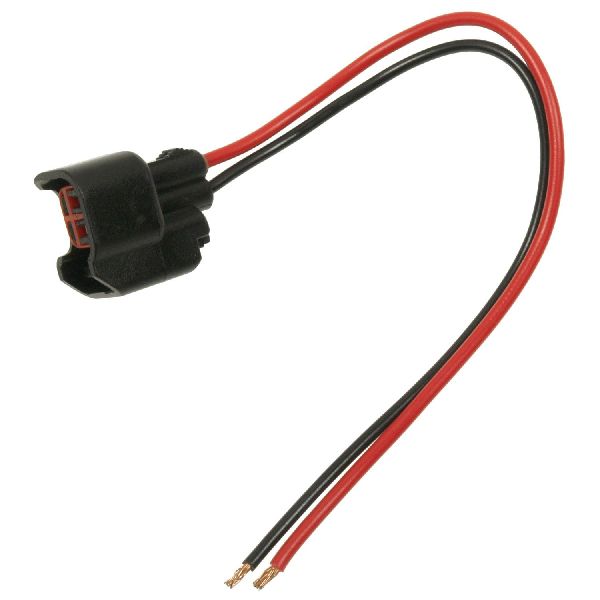
We Have This Part in Stock


The information in this article is provided for general reference and educational purposes only. Vehicle specifications, procedures, and part compatibility can vary by production date, trim level, and region. Always consult your vehicle's factory service manual and verify part numbers before purchasing or performing repairs. Safety-critical components such as airbags, seat belts, and braking systems should be installed by a qualified professional.
- Buick LACROSSE:
- 🧭 Diagnostic Flowchart
- 🛍️ Shop This Part
- What's Unique About the 2009-2014 Buick LACROSSE
- Symptoms You May Notice
- Most Likely Causes
- Rare But Worth Checking
- Diagnosis Steps
- Parts You'll Likely Need
- Related Codes That Often Appear With This One
- Technical Service Bulletins (TSBs) & Recalls
- Platform-Specific Known Issues
- Mechanic-Grade Diagnostic Values
- Scan Tool Commands That Help
- Wiring & Ground Locations
- Real Owner Repair Stories
- OEM Part Supersession History
- Model Year Variations Within This Range
- 🎟️ Get 5% Off