

P0277 on 2009-2014 Buick LaCrosse: Cylinder 6 Injector Circuit High Causes and Fixes
This code indicates a high voltage condition in the cylinder 6 fuel injector circuit. On this specific vehicle, the most likely cause is a damaged fuel injector wiring harness, as noted in GM Technical Service Bulletin #PIP4924D. Inspect the harness for chafing against the intake plenum, valve cover bolts, or fuel lines before replacing any parts.
- P0277 on a 2009-2014 LaCrosse means there's a high voltage fault in the cylinder 6 injector circuit.
- The most likely cause is a damaged wiring harness, as per GM TSB #PIP4924D. Always inspect the wiring thoroughly before buying parts.
- Other possible causes include a failed fuel injector or, more rarely, a bad ECM.
- Driving with this code can lead to a rough running engine, poor fuel economy, and potential damage to the catalytic converter.
- This code will only appear on V6 models (3.0L or 3.6L), not the 4-cylinder versions.
What's Unique About the 2009-2014 Buick LACROSSE
For the V6-equipped Buick LaCrosse from this era, the P0277 code is frequently linked to a specific, documented issue. General Motors issued a Technical Service Bulletin (TSB #PIP4924D) highlighting a problem where the fuel injector wiring harness can rub through, causing shorts or other electrical faults. The TSB specifically calls out common chafe points against the intake plenum, valve cover bolts, fuel lines, and the side of the cylinder head under the plenum. This makes a thorough inspection of the wiring harness the critical first step in diagnosis, potentially saving you from unnecessarily replacing a good fuel injector.
Diagnostic Flowchart
Tap your situation to follow the diagnostic path that matches what you're seeing on this vehicle.
Generation note: The 2009-2014 range covers the end of the first generation (2009) and the beginning of the second generation (2010-2014) LaCrosse. The V6 engines (3.0L LF1, 3.6L LLT/LFX) and associated wiring harnesses share similar designs and are both susceptible to the issues causing this code, as confirmed by TSB #PIP4924D which applies across these years and to many other GM models with these engines.
Symptoms You May Notice
- Check Engine Light is on
- Rough or shaking idle
- Engine misfire, sometimes causing a flashing Check Engine Light
- Noticeable loss of power and poor acceleration
- Reduced fuel economy
- Engine may hesitate or stumble
- Black smoke from exhaust under load (reported in some cases)
- Replacing the fuel injector without first inspecting the wiring harness. The TSB for this vehicle makes the harness the primary suspect.
Most Likely Causes
- Damaged Fuel Injector Wiring Harness 🔴 High Probability → Shop Engine Wiring Harness As documented in GM TSB #PIP4924D, the fuel injector wiring harness is known to chafe or rub through. Specific problem areas are where the harness contacts the intake plenum, valve cover bolts, fuel lines, or the side of the cylinder head. This can cause a wire to short to a voltage source, triggering the 'Circuit High' fault.
How to confirm: Visually inspect the entire wiring harness leading to the fuel injectors, paying close attention to the specific contact points mentioned in the TSB. Look for worn insulation, exposed copper wires, or signs of heat damage. Gently wiggle the harness in these areas while the engine is running (if safe to do so) to see if it affects the idle.
Typical fix: Repair the damaged section of wire using a quality butt connector with heat shrink. In some cases, a new connector pigtail may need to be spliced in. If the damage is extensive, the harness may need replacement.
Est. part cost: $15-$50 for a pigtail, $200+ for a full harness section - Faulty Cylinder 6 Fuel Injector 🟡 Medium Probability → Shop Fuel Injector
How to confirm: After confirming the wiring is good, check the injector's internal resistance with a multimeter. This value is critical and differs by engine: for the 3.6L LFX (2012-2014), expect 1.2-2.5 Ohms; for the 3.0L LF1 and 3.6L LLT (2009-2011), expect 11-14 Ohms. You can also swap the cylinder 6 injector with another cylinder (e.g., cylinder 4) and see if the fault code moves to P0271 (Cylinder 4 Injector Circuit High). If it does, the injector is bad.
Typical fix: Replace the faulty fuel injector. It is often recommended to replace the O-rings and seals at the same time.
Est. part cost: $40-$120 - Faulty Engine Control Module (ECM) ⚪ Low Probability → Shop Engine Control Module (ECM)
How to confirm: This should be the last resort after definitively ruling out wiring and the injector itself. A professional diagnosis with an advanced scan tool is needed to confirm the ECM's injector driver has failed. This is an uncommon failure.
Typical fix: Replace and reprogram the Engine Control Module. This typically requires a professional shop or specialized tools.
Est. part cost: $600-$900
Rare But Worth Checking
- Corroded or Loose Injector Connector: Before condemning the harness or injector, ensure the connector at the cylinder 6 fuel injector is clean, free of corrosion, and securely plugged in. A poor connection can cause erratic voltage readings.
Diagnosis Steps
- Scan the ECM for all stored trouble codes and review freeze frame data to understand the conditions when the code was set.
- Crucial Step: Perform a detailed visual inspection of the fuel injector wiring harness for cylinder 6. Focus on the known chafe points listed in TSB #PIP4924D: against the intake plenum, valve cover bolts, fuel lines, and the side of the head under the plenum.
- Inspect the electrical connector at the cylinder 6 fuel injector for loose pins, corrosion, or damage. Ensure it is fully seated.
- Use a noid light to test for a pulse signal at the injector connector while cranking the engine. A steady light (indicating constant voltage) or no light points to a problem in the circuit or with the ECM driver. Note: For direct injection LFX engines (2012+), the circuit operates at ~65V and a standard noid light may not be effective; a lab scope is the proper tool.
- Disconnect the injector and use a multimeter to check the resistance of the injector coil. Compare the reading to the manufacturer's specification. For 2012-2014 LFX engines, it's 1.2-2.5 Ohms. For 2009-2011 LLT/LF1 engines, it's 11-14 Ohms. A reading that is significantly higher, lower, or open indicates a faulty injector.
- If wiring and the injector seem okay, consider swapping the cylinder 6 injector with one from another cylinder (e.g., cylinder 4). Clear the codes and run the engine to see if the fault code follows the injector (e.g., changes to P0271).
- If the problem persists in cylinder 6 after swapping the injector, perform a continuity test on the wiring between the ECM connector (X1) and the injector connector to rule out an open or short in the harness that wasn't visible.
- If all other tests pass, the fault may lie with the injector driver inside the ECM, which requires advanced diagnostics to confirm.
Parts You'll Likely Need
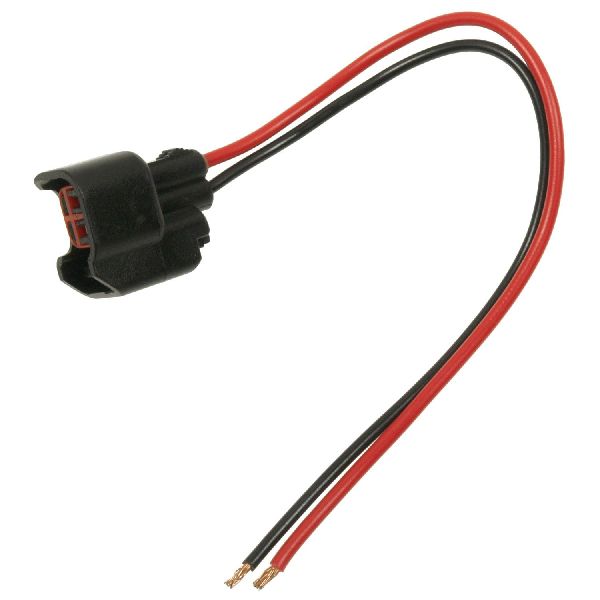
- Fuel Injector Wiring Connector Pigtail
(OEM #ACDelco PT2712 (GM 13584094), ACDelco PT2618 (GM 13580230) - verify by VIN)— If the wiring is damaged right at the connector, splicing in a new pigtail is the standard repair. This is a high-probability fix due to the known harness chafing issue.
Trusted brands: ACDelco, Dorman
OEM price range: $30-$60
Aftermarket price range: $15-$40 - Fuel Injector
(OEM #ACDelco 217-3444 (GM 12634126) for 3.6L LFX; ACDelco 217-3449 (GM 12638530) for 3.6L LLT - verify by VIN)— If the injector itself has an internal electrical fault (short), it must be replaced. This is the second most likely cause after wiring issues. It is critical to use the correct part for your specific engine (LLT vs LFX).
Trusted brands: ACDelco, Bosch, Standard Motor Products
OEM price range: $80-$150
Aftermarket price range: $40-$90
Related Codes That Often Appear With This One
- P0306 — P0306 means 'Cylinder 6 Misfire Detected'. Since P0277 indicates a problem with the fuel injector circuit for that same cylinder, the cylinder isn't getting the right amount of fuel, which directly causes a misfire.
- P0206 — P0206 means 'Injector Circuit/Open - Cylinder 6'. This and other injector codes (P0276 - Circuit Low) can appear alongside P0277 if the wiring harness damage is causing multiple or intermittent electrical issues.
Technical Service Bulletins (TSBs) & Recalls
- PIP4924D: Mentions a long list of fuel injector circuit codes, including P0277, and advises technicians to inspect the fuel injector wiring harness for rub through or internal wire damage at several specific locations. This TSB applies to a wide range of GM vehicles with the 3.0L and 3.6L V6 engines.
Platform-Specific Known Issues
- A known issue documented in GM Technical Service Bulletin #PIP4924D involves the fuel injector wiring harness rubbing through or developing an internal wire short. This makes a wiring fault a more likely cause for P0277 on this vehicle than on others. The specific chafe points to check are against the intake plenum, valve cover bolts, fuel lines, and the side of the cylinder head.
Mechanic-Grade Diagnostic Values
- Fuel Injector Coil Resistance (3.6L LFX V6, 2012-2014) — expected: 1.2 - 2.5 Ohms. Failure: A reading of OL (open), near zero (short), or outside this range indicates a failed injector.
- Fuel Injector Coil Resistance (3.0L LF1 / 3.6L LLT V6, 2009-2011) — expected: 11 - 14 Ohms. Failure: A significant deviation from this range, OL, or near zero indicates a failed injector.
- Injector Pulse Width (at idle, warmed up) — expected: 2 - 4 milliseconds (ms). Failure: A value of 0 ms on cylinder 6 while others are pulsing indicates the ECM is not commanding the injector due to a detected fault.
- Injector Circuit Voltage (LFX Direct Injection) — expected: ~65V capacitively charged pulse. Failure: This cannot be accurately measured with a multimeter or noid light. A lab scope is required to analyze the waveform. Absence of the correct waveform indicates a circuit or driver fault.
- Injector Circuit Voltage (KOEO, LLT/LF1 Port Injection) — expected: Battery Voltage (approx. 12.6V). Failure: Checking the power feed wire at the injector connector should show battery voltage. If voltage is absent, there is an open in the power supply side of the circuit.
Scan Tool Commands That Help
- GDS2 / Tech2: Injector Balance Test — This is a crucial bidirectional test to use when an injector's resistance measures correctly but it is still suspected of being faulty. The tool commands the injector to fire for a set duration and measures the corresponding drop in fuel rail pressure. If the pressure drop for cylinder 6 is significantly different (typically >1.5 PSI variance) from the other cylinders, it confirms a functional problem like clogging or sticking that an electrical test would miss.
Wiring & Ground Locations
- ECM Connector X1 — On the Engine Control Module (ECM). For V6 engines, this is the main engine-side connector.. The wires for the fuel injectors are twisted pairs running to this connector. For the 3.6L engine, the cylinder 6 injector control wire (low side) is a solid color, while the high-side driver wire has a white tracer. Probing for continuity between this connector and the injector can test the entire circuit without accessing the middle of the harness.
- G101 — Located on the lower front of the engine block.. This is a primary ground for the Engine Control Module (ECM). A loose or corroded connection at G101 can cause a variety of erratic electrical issues, including false injector circuit codes, due to an unstable ground reference for the ECM's driver circuits.
- TSB Chafe Locations — Where the injector wiring harness may contact: the intake plenum, valve cover bolts, the fuel line, and the side of the cylinder head under the plenum.. These are the most common failure points for this specific code on this platform, as documented by GM TSB #PIP4924D. A visual and physical inspection of these areas is the highest priority diagnostic step.
Real Owner Repair Stories
- ScannerDanner Forum (2008 GMC Acadia 3.6L (Same LLT engine family)) — Engine runs for 30-45 minutes then starts misfiring. Codes P0300, P0202, P0204, and P0206 (entire bank 2) all appear at once.
❌ Tried (didn't work) Cleaning a corroded ground on the cylinder head.
✅ What actually fixed it A 'wiggle test' of the main wiring harness near the underhood fuse box caused the engine to misfire, confirming a wiring integrity problem. The problem was an internal break/chafe within the main harness loom, not at the specific TSB chafe points or at a ground stud.
OEM Part Supersession History
12638530→12669384— Standard part revision and replacement by the manufacturer.
Heads up: This part number is for the 3.0L LF1 and 3.6L LLT engines (approx. 2009-2011). It is not compatible with the 3.6L LFX engine (2012-2014).
Model Year Variations Within This Range
- 2009-2011 (approx.): These models primarily used the 3.0L LF1 or 3.6L LLT V6 engines. They use high-impedance fuel injectors (approx. 11-14 Ohms) and a Bosch family ECM. Diagnostic values and parts are not interchangeable with later models.
- 2012-2014 (approx.): These models used the updated 3.6L LFX direct-injected V6. This engine uses low-impedance direct injectors (approx. 1.2-2.5 Ohms) and a Delphi family ECM. The injector circuit is capacitively charged to ~65V, requiring a lab scope for accurate diagnosis.
Helpful Videos

We Have This Part in Stock


The information in this article is provided for general reference and educational purposes only. Vehicle specifications, procedures, and part compatibility can vary by production date, trim level, and region. Always consult your vehicle's factory service manual and verify part numbers before purchasing or performing repairs. Safety-critical components such as airbags, seat belts, and braking systems should be installed by a qualified professional.
- Buick LACROSSE:
- 🧭 Diagnostic Flowchart
- 🎬 Helpful Videos
- 🛍️ Shop This Part
- What's Unique About the 2009-2014 Buick LACROSSE
- Symptoms You May Notice
- Most Likely Causes
- Rare But Worth Checking
- Diagnosis Steps
- Parts You'll Likely Need
- Related Codes That Often Appear With This One
- Technical Service Bulletins (TSBs) & Recalls
- Platform-Specific Known Issues
- Mechanic-Grade Diagnostic Values
- Scan Tool Commands That Help
- Wiring & Ground Locations
- Real Owner Repair Stories
- OEM Part Supersession History
- Model Year Variations Within This Range
- 🎟️ Get 5% Off