

P0277 on 2010-2014 Chevrolet Equinox V6: Cylinder 6 Injector Circuit Causes and Fixes
This code means there's an electrical problem with the fuel injector circuit for cylinder #6 on V6 engines. The most likely cause is a damaged wiring harness, as noted in a GM Technical Service Bulletin. A faulty fuel injector is the second most common cause. Inspect the harness where it may rub near the engine hoist bracket or other components before replacing parts.
- P0277 on a 2010-2014 Equinox V6 almost always points to an electrical issue, not a fuel delivery problem.
- A GM Technical Service Bulletin (PIP4924D) makes the wiring harness the #1 suspect. Inspect it for chafing near brackets before buying any parts.
- A faulty injector is the second most likely cause. Swapping the injector to another cylinder is a definitive way to confirm if it's bad.
- Driving with this code can cause long-term damage to the catalytic converter due to unburned fuel, leading to a much more expensive repair.
What's Unique About the 2010-2014 Chevrolet EQUINOX
For the second-generation Equinox and its platform mates (like the GMC Terrain and Cadillac SRX) with a V6 engine, this code is frequently linked to a known issue with the fuel injector wiring harness. General Motors issued a Technical Service Bulletin (TSB #PIP4924D) advising technicians to inspect this specific harness for damage. The harness is often found chafed or rubbed through where it passes near engine components, particularly the engine lift/hoist bracket. This makes a wiring inspection the most critical first step, potentially saving you from replacing a perfectly good fuel injector.
Diagnostic Flowchart
Tap your situation to follow the diagnostic path that matches what you're seeing on this vehicle.
Symptoms You May Notice
- Check Engine Light is on
- Rough or unstable idle
- Engine misfire, which may feel like a shake or stumble
- Hesitation during acceleration
- Reduced engine power
- Poor fuel economy
- Replacing the fuel injector before thoroughly inspecting the wiring harness. The TSB for this platform makes the wiring the primary suspect.
- Replacing the ECM without ruling out all wiring and component faults first.
Most Likely Causes
- Damaged Fuel Injector Wiring Harness 🔴 High Probability → Shop Engine Wiring Harness As documented in GM TSB #PIP4924D, the injector wiring harness is known to be susceptible to rubbing through or developing internal wire breaks, causing a short or open circuit. Forum discussions often point to the area around the engine hoist bracket as a common point of failure.
How to confirm: Carefully inspect the entire wiring harness leading to the fuel injectors, paying close attention to any points where it contacts the engine block, brackets, or other components. Look for chafed, melted, or broken wires. Un-tape or remove loom material in suspect areas for a closer look.
Typical fix: Repair the damaged section of the wire or replace the fuel injector connector pigtail. In severe cases, the entire engine harness may need replacement.
Est. part cost: $15-$50 for a pigtail connector - Faulty Cylinder 6 Fuel Injector 🟡 Medium Probability → Shop Fuel Injector Direct injection fuel injectors on these engines can fail internally over time, leading to an electrical short or open circuit that triggers the code.
How to confirm: After confirming the wiring is good, swap the cylinder 6 fuel injector with one from another cylinder (e.g., cylinder 4). Clear the codes and drive the vehicle. If the code changes to P0271 (Cylinder 4 Injector Circuit Low), the injector is faulty. You can also test the injector's internal resistance with a multimeter; it should typically be between 10-16 ohms. A reading far outside this range indicates a bad injector.
Typical fix: Replace the faulty fuel injector. It is often recommended to replace all fuel injectors on that bank or as a set if the vehicle has high mileage, especially on direct injection engines.
Est. part cost: $50-$120 for a single injector - Faulty Engine Control Module (ECM) ⚪ Low Probability → Shop Engine Control Module (ECM)
How to confirm: This should only be considered after all wiring and the fuel injector itself have been tested and proven to be good. Diagnosis requires advanced tools to check the injector driver circuit within the ECM.
Typical fix: Replace and reprogram the Engine Control Module. This must be done by a qualified shop or dealer.
Est. part cost: $300-$800
Rare But Worth Checking
- Bent or corroded pins in the fuel injector harness connector or at the ECM connector.
- A blown fuse related to the injector circuit, although this would likely affect multiple injectors. 🎬 Watch: How to find and replace the fuel injector fuse.
Diagnosis Steps
- Verify the Check Engine Light is on and scan for codes. Confirm P0277 is present, and note any other codes like P0306.
- Perform a thorough visual inspection of the fuel injector wiring harness, specifically looking for signs of rubbing, melting, or damage as indicated by TSB #PIP4924D. Pay special attention to the area where the harness passes the engine lifting eye/bracket.
- Inspect the electrical connector at the cylinder 6 fuel injector for corrosion, damage, or loose pins.
- If the wiring appears intact, disconnect the injector and use a multimeter to measure its internal resistance. Compare the reading to the manufacturer's specification (typically 10-16 ohms). A reading far outside this range indicates a bad injector.
- Use a 'noid light' on the injector connector. Crank the engine and check if the light flashes, which confirms the ECM is sending a signal. No flash points to a wiring or ECM issue.
- If you have the tools and confidence, swap the cylinder 6 injector with another one (e.g., cylinder 4). If the code moves to P0271, the injector is confirmed to be the fault. If P0277 returns, the problem is in the wiring or ECM.
- If the injector is good and a signal is present, perform a continuity test on the wiring between the injector connector and the ECM to find any breaks or shorts. Wiggle the harness during the test to expose intermittent faults.
- If all other tests pass, the ECM is the likely culprit, which requires professional diagnosis and replacement.
Parts You'll Likely Need
- Fuel Injector Wiring Harness Connector Pigtail
(OEM #ACDelco PT2183 (GM 88988963))— This is needed to repair a damaged connector or wire near the injector, a common failure point identified in a TSB.
Trusted brands: ACDelco, Dorman
OEM price range: $30-$60
Aftermarket price range: $15-$30 - Fuel Injector (Cylinder 6)
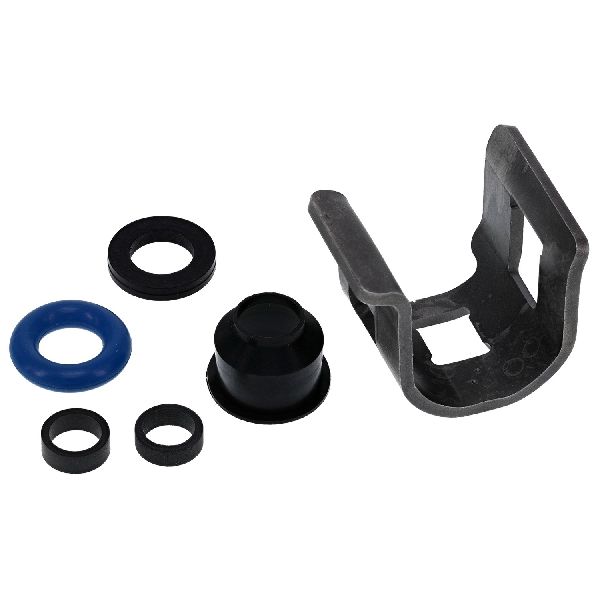
(OEM #GM 12638530 (superseded by 12669384))— If the injector itself has an internal short or failure, it must be replaced. This is the second most likely cause after wiring issues.
Trusted brands: ACDelco, Bosch, Delphi
OEM price range: $90-$150
Aftermarket price range: $50-$120
Related Codes That Often Appear With This One
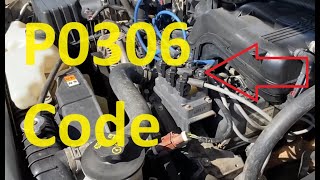
- P0306 — P0306 means 'Cylinder 6 Misfire Detected'. Since P0277 indicates a problem with the fuel injector circuit for cylinder 6, that cylinder cannot get the correct amount of fuel, leading directly to a misfire. 🎬 Watch: A simple guide to diagnosing a cylinder 6 misfire.
- P0206 — P0206 is a more general 'Injector Circuit/Open - Cylinder 6' code. It often appears with P0277 as they both point to an electrical fault in the same circuit.
- P0276 — P0276 is 'Cylinder 6 Injector Circuit High', the opposite of P0277. They can sometimes appear together or be set intermittently if the wiring fault is erratic.
Technical Service Bulletins (TSBs) & Recalls
- PIP4924D: Recommends inspecting the fuel injector wiring harness for rub-through or internal wire opens when various injector circuit codes, including P0277, are present. This TSB applies to a wide range of GM vehicles with V6 engines from this era.
Platform-Specific Known Issues
- A known issue documented in GM Technical Service Bulletin #PIP4924D points to the fuel injector wiring harness being prone to rubbing through or having internal wire breaks, which can trigger P0277 and other related injector codes.
- Owners on forums for the Equinox and its platform-mate, the GMC Terrain, frequently report this issue. The harness chafe is often located where it routes near the engine hoist bracket on the V6 engines.
Mechanic-Grade Diagnostic Values
- Fuel Injector Coil Resistance — expected: 10-16 Ohms (high-impedance type). A more specific range of 11.4-13.4 Ohms has been noted for similar GM V6 engines.. Failure: A reading of 0 Ohms (short circuit) or OL/infinity (open circuit).
- Injector Connector Voltage (Key On, Engine Off) — expected: Battery voltage (approx. 12.6V) on the power supply wire.. Failure: Low or no voltage indicates a problem with the power supply circuit, fuse, or relay.
- Injector Pulse Width (at idle) — expected: Typically 2-3 milliseconds (ms). One example showed 2.45ms.. Failure: A significantly different pulse width on cylinder 6 compared to others could indicate the ECM is attempting to compensate for a fault.
- Injector Inductive Kick (Voltage Spike) — expected: A sharp voltage spike of 50-60V or higher when the injector field collapses. The exact voltage is less important than its presence and consistency compared to other cylinders.. Failure: A missing or significantly lower inductive kick on cylinder 6 points to a problem in the injector coil or the control circuit.
- Fuel Injector Balance Test (Pressure Drop) — expected: The pressure drop for each injector should be within 20 kPa (3 psi) of the average of all cylinders.. Failure: If cylinder 6 shows a pressure drop significantly different from the others, the injector is likely flowing incorrectly or has an intermittent electrical fault.
Scan Tool Commands That Help
- GDS2 (GM) or advanced aftermarket scan tool: Fuel Injector Balance Test / Automated Injector Test — Use this after confirming the wiring is physically intact. This test commands the ECM to pulse each injector individually while monitoring the drop in fuel rail pressure. It can definitively identify a poorly flowing or electrically weak injector without needing to physically swap it with another cylinder, saving significant labor time.
- GDS2 (GM) or advanced aftermarket scan tool: Fuel Trim Reset — After repairing the fault (e.g., fixing a wire or replacing an injector), reset the fuel trims. This forces the ECM to relearn the fuel delivery strategy immediately with the new/repaired component, rather than slowly adapting over time, which can resolve lingering performance issues.
Wiring & Ground Locations
- TSB Chafe Area — The engine wiring harness where it passes near the engine hoist/lift bracket, the corner of the cylinder head, or other metallic components.. This is the most probable cause of P0277 according to GM TSB #PIP4924D. Engine vibration causes the harness to rub against a sharp edge, eventually shorting the cylinder 6 injector control wire to ground.
- G101 / G102 / G104 — These are primary engine and ECM ground points. G101 is often on the lower engine block, while G102 and G104 are typically located on the rear of the cylinder heads.. The ECM controls the injector by switching the ground side of the circuit. A poor or corroded main engine ground can create a floating ground, causing erratic voltage drops and potentially triggering a 'Circuit Low' code. Ensuring these grounds are clean and tight is a critical step if a direct wiring fault isn't found.
- ECM Connector (X1/X2/X3) — The large multi-pin connectors at the Engine Control Module itself.. A pushed-back pin, corrosion from water intrusion, or a damaged connector lock can cause an intermittent connection for the cylinder 6 injector driver circuit right at the source. This should be inspected after the harness and injector have been ruled out.
OEM Part Supersession History
12638530, 12632255, 12611545→12669384— Standard part consolidation and potential design improvements by the manufacturer.
Heads up: No incompatibility is noted. Part number 12669384 is the correct current service replacement for the listed original parts on this platform.
Model Year Variations Within This Range
- 2010-2012 vs 2013-2014: The V6 engine option changed. 2010-2012 models used the 3.0L LF1 V6, while 2013-2014 models used the 3.6L LFX V6. While both engines are covered by TSB #PIP4924D for harness chafing, the exact routing of the harness and the specific location of the chafe point against a bracket or engine component may vary slightly between the two engine designs.
Helpful Videos
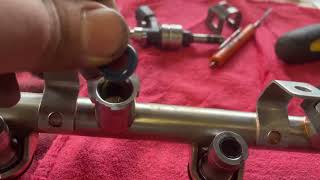
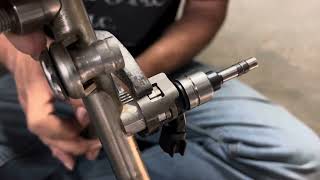

We Have This Part in Stock



The information in this article is provided for general reference and educational purposes only. Vehicle specifications, procedures, and part compatibility can vary by production date, trim level, and region. Always consult your vehicle's factory service manual and verify part numbers before purchasing or performing repairs. Safety-critical components such as airbags, seat belts, and braking systems should be installed by a qualified professional.
- Chevrolet EQUINOX:
- 🧭 Diagnostic Flowchart
- 🎬 Helpful Videos
- 🛍️ Shop This Part
- What's Unique About the 2010-2014 Chevrolet EQUINOX
- Symptoms You May Notice
- Most Likely Causes
- Rare But Worth Checking
- Diagnosis Steps
- Parts You'll Likely Need
- Related Codes That Often Appear With This One
- Technical Service Bulletins (TSBs) & Recalls
- Platform-Specific Known Issues
- Mechanic-Grade Diagnostic Values
- Scan Tool Commands That Help
- Wiring & Ground Locations
- OEM Part Supersession History
- Model Year Variations Within This Range
- 🎟️ Get 5% Off