

P0300 on 2012-2019 Chevrolet Suburban: Random Misfire Causes and Fixes
P0300 on a 2012-2019 Suburban indicates random cylinder misfires. Common causes include worn spark plugs and ignition coils, faulty fuel injectors, or failed Active Fuel Management (AFM) lifters. A basic ignition tune-up can cost $200-$400, while AFM lifter repair is a major job costing over $2,000.
- P0300 means your engine is misfiring on multiple cylinders, which can cause serious engine or exhaust damage if ignored.
- For all 2012-2019 Suburbans, a very common cause is a failed Active Fuel Management (AFM) lifter, which is a major mechanical repair.
- For 2015 and newer models with direct injection, faulty fuel injectors are a frequent cause, often appearing with a P050D code on cold starts.
- Always start diagnosis with the basics: check for other codes and inspect spark plugs, wires, and coils, as these are common wear items.
- A flashing check engine light indicates a severe misfire; pull over safely and have the vehicle towed to prevent expensive catalytic converter damage.
What's Unique About the 2012-2019 Chevrolet SUBURBAN

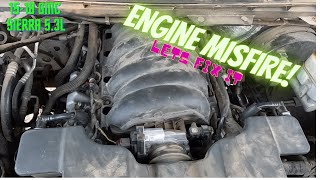
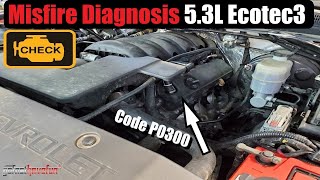
The 2012-2019 Suburban spans two generations, with a major powertrain update in 2015. Both generations use V8 engines with Active Fuel Management (AFM), a system notorious for lifter failures that directly cause a P0300 code and ticking noises. The 2015+ models with EcoTec3 engines (5.3L L83, 6.2L L86 🎬 See this guide for diagnosing misfires on 2015+ EcoTec3 engines.) introduced direct injection, making them prone to carbon buildup on intake valves and high-pressure fuel injector issues, often paired with a P050D code on cold starts. Furthermore, specific TSBs for this platform point to internal coolant leaks into the cylinders as a cause for cold start misfires, a unique and serious issue to consider.
Diagnostic Flowchart

Tap your situation to follow the diagnostic path that matches what you're seeing on this vehicle.
Generation note: This range covers the end of the 10th generation (GMT900, 2012-2014 🎬 Watch: Step-by-step AFM lifter replacement for 2012-2014 models.) and the beginning of the 11th generation (K2XX, 2015-2019). The 2015 model year introduced the new EcoTec3 engine family (5.3L L83, 6.2L L86) with direct injection and updated AFM systems. This change means fuel system diagnosis (injectors, high-pressure fuel pump) is significantly different for 2015+ models compared to the earlier port-injected engines.
Symptoms You May Notice
- Rough or shaking idle.
- Hesitation or stumbling during acceleration.
- Noticeable loss of engine power.
- Flashing or solid Check Engine Light.
- Reduced fuel economy.
- Engine ticking or tapping noise, especially consistent with a failed lifter.
- White smoke or coolant smell from exhaust on cold starts, indicating a possible internal coolant leak.
- Replacing only one spark plug or coil when multiple are worn.
- Replacing oxygen sensors, which are more often a symptom than the cause of a misfire.
- Assuming it's a simple tune-up when the underlying cause is a more serious mechanical issue like AFM lifters.
- Replacing fuel injectors when the issue is carbon buildup on the intake valves, a common problem on direct-injected 2015+ models.
Most Likely Causes

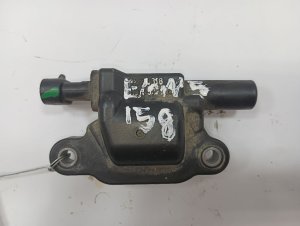
- Worn Spark Plugs, Wires, or Ignition Coils 🔴 High Probability → Shop Ignition Coil These are standard maintenance items that wear out over time. Given the V8 configuration, heat and mileage take their toll. A P0300 can appear immediately after a tune-up if plugs are gapped incorrectly or a wire isn't seated properly.
How to confirm: Inspect spark plugs for wear, fouling, or carbon tracking. Test ignition coils by swapping a suspected bad coil with a known good one and seeing if the misfire follows. A scan tool with live data can help identify which cylinders are misfiring most frequently. Resistance tests can also be performed; a typical primary resistance is 0.4-2 ohms, and secondary resistance is 6,000-10,000 ohms.
Typical fix: Replace all spark plugs and wires as a set. Replace failing ignition coils. Using quality OEM brands like ACDelco is recommended. Ensure spark plugs are gapped to the correct specification (e.g., 0.040 inches for many 5.3L models, though some supercharged applications recommend a tighter gap like 0.032").
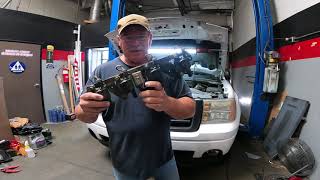
Est. part cost: $100-$300 - Failed Active Fuel Management (AFM) Lifters 🔴 High Probability → Shop Engine Valve Lifter The 5.3L and 6.2L engines in these Suburbans use AFM to deactivate cylinders to save fuel. The lifters in this system are a known major failure point, often collapsing or getting stuck due to issues like oil aeration, leading to a misfire and ticking noise. 🎬 Watch: How to identify a failed AFM lifter misfire. GM has issued multiple technical service bulletins regarding this issue, such as TSB #15-06-01-002F.
How to confirm: A tell-tale sign is a persistent ticking or tapping noise from the engine that corresponds with the misfire. A mechanic can confirm by removing the valve cover and observing if the rocker arms for the AFM cylinders are moving correctly. A scan tool can monitor misfire data per cylinder to isolate the issue. If a lifter is stuck in the bore, it may require a slide hammer or pry bar to remove; if that fails, engine replacement may be necessary.
Typical fix: This is an extensive and expensive repair. It involves replacing the failed lifters, lifter guides, and often the camshaft, which can be damaged by the failed lifter. The Valve Lifter Oil Manifold (VLOM) may also need replacement. Many owners opt to install an AFM-delete kit, which involves replacing the AFM lifters with standard lifters, a new camshaft, and tuning the ECM to disable the system. During reassembly, it is critical to ensure head bolt holes are clean and dry to prevent snapping the new torque-to-yield bolts.
Est. part cost: $500-$1200 for parts, with kits including a new camshaft and lifters (e.g., GM #12645725). - Faulty or Clogged Fuel Injectors 🟡 Medium Probability → Shop Fuel Injector On 2015+ models with direct injection (DI), injectors are under high pressure and more prone to failure or clogging from carbon buildup. This is often seen with code P050D for cold start misfires, as noted in an owner complaint where all 8 injectors were replaced. [ODI #11110902] Multiple forum users and TSBs confirm that replacing injectors, especially on the cylinder with the highest misfire counts, often resolves the P0300/P050D combination.
How to confirm: Use a scan tool to perform a fuel injector balance test, especially when the engine is cold. Misfire counters on a scan tool can pinpoint a specific cylinder; a 2016 Suburban owner reported over 3,000 misfires on cylinder 8, which was resolved by replacing the injector.
Typical fix: Replace the faulty fuel injector(s). On DI engines, this is labor-intensive as it requires removing the intake manifold. Due to this, it's often recommended to replace all injectors on the affected bank or all eight at once. The high-pressure fuel lines are typically one-time use and must also be replaced.
Est. part cost: $50-$250 per injector - Internal Coolant Leak ⚪ Low Probability A specific issue documented in TSB #PIP5498M and its successor, 20-NA-166, involves coolant leaking into the cylinders, causing a misfire (P0300) and rough idle (P050D) on cold starts. This can be due to a porous spot in the cylinder head casting or a leak at the cylinder liner.
How to confirm: Symptoms include white smoke and a coolant smell from the exhaust at startup. A technician can add dye to the coolant, run the engine, let it cool overnight with the system pressurized, and then use a borescope to check for dye inside the cylinders. The top of the piston may appear 'steam cleaned'.
Typical fix: This requires major engine work. If the leak is from the cylinder head, the head must be replaced. If it's from the cylinder liner, TSB #PIP5498M advises that the entire engine should be replaced.
Est. part cost: $800-$2000+ for a cylinder head, significantly more for an engine replacement. - Vacuum Leak ⚪ Low Probability Intake manifold gaskets, PCV hoses, and brake booster lines can crack or degrade over time, allowing unmetered air into the engine and disrupting the air-fuel ratio. A leaking intake manifold gasket is a common cause on higher mileage vehicles.
How to confirm: Listen for a hissing sound at idle. A mechanic will use a smoke machine to feed smoke into the intake system and watch for where it escapes. Spraying carburetor cleaner around suspected areas and listening for a change in engine idle can also pinpoint a leak.
Typical fix: Replace the leaking gasket or hose.
Est. part cost: $20-$200
Rare But Worth Checking
- Poor Engine Ground Connection: On K2XX platform trucks (2015+), a poor ground connection, particularly G103 at the rear of the left-hand engine head, can cause intermittent electrical issues, including misfires. It's a simple and free check to ensure the ground strap is clean and tight.
- Restricted Catalytic Converter: → Shop Catalytic Converter If the engine has been misfiring for a long time, unburnt fuel can overheat and melt the internal structure of the catalytic converter, creating a blockage that causes backpressure and leads to a P0300 code.
- Crankshaft Position Sensor Relearn: → Shop Engine Crankshaft Position Sensor In some cases, especially after other repairs like engine or transmission replacement, the ECM may incorrectly report misfires. A crankshaft position sensor variation relearn procedure, performed with a capable scan tool, can resolve a 'phantom' P0300 code where no actual misfire is felt.
- Cracked Flexplate or Torque Converter Issue: A cracked flexplate or a failing torque converter can cause engine RPM to fluctuate in a way that the crankshaft position sensor interprets as a misfire, setting a P0300 code. This is often accompanied by a shuddering sensation or noise during deceleration or at certain speeds.
Diagnosis Steps

- Read all stored fault codes with an OBD-II scanner. Note any codes accompanying P0300, like P050D or specific cylinder misfires.
- Check the freeze-frame data to see the engine conditions (RPM, load, temperature) when the misfire occurred.
- Use the scanner's live data function to view misfire counts for each cylinder. This can help narrow down the problem even if only a P0300 is present. A high misfire count on a single cylinder is a key diagnostic clue.
- Perform a visual inspection of the engine bay. Look for obvious issues like loose vacuum hoses, damaged wiring, or signs of leaks.
- Inspect the spark plugs. Their condition can reveal a lot about the health of the cylinder (e.g., oil-fouled, fuel-soaked, white from running lean, or carbon tracked).
- Test the ignition system. Swap ignition coils between cylinders and see if the misfire count follows the coil. Test coil resistance with a multimeter.
- Check fuel pressure. For pre-2015 models, check the low-pressure rail (should be around 43-60 PSI). For 2015+ models, check both the low-pressure feed pump (around 84-90 PSI) and the high-pressure system.
- If a specific cylinder is misfiring, especially on a 2015+ model with a P050D code, suspect a fuel injector and consider performing an injector balance test.
- Listen for engine noises. A distinct ticking or tapping sound is a strong indicator of a collapsed AFM lifter.
- If symptoms point to an internal coolant leak (white smoke, coolant loss), perform a cooling system pressure test and use a borescope to inspect cylinders for coolant.
- Check for vacuum leaks using a smoke machine.
- Inspect engine grounds, particularly G103 on the cylinder head for 2015+ models.
Parts You'll Likely Need
- Spark Plugs — This is the most common and basic maintenance item that causes misfires. They should be replaced as a full set.
Trusted brands: ACDelco, NGK
OEM price range: $8-$15 per plug
Aftermarket price range: $5-$12 per plug - Ignition Coil Pack — Coils provide the high voltage for the spark plugs and can fail with age and heat, causing misfires.
Trusted brands: ACDelco, Delphi
OEM price range: $60-$90
Aftermarket price range: $30-$60 - Fuel Injector (Direct Injection, 2015+) — A very common cause for P0300, especially when paired with P050D on cold starts. The ODI complaint #11110902 also points to injector failure.
Trusted brands: ACDelco, Bosch
OEM price range: $100-$180
Aftermarket price range: $70-$120 - AFM Lifter Kit — A widespread and documented mechanical failure on these engines that directly causes P0300. The repair requires replacing the lifters and often the camshaft.
Trusted brands: ACDelco, General Motors
OEM price range: $400-$800 for a full kit
Aftermarket price range: $300-$600 for a full kit
Related Codes That Often Appear With This One
- P0301-P0308 — These codes indicate a misfire on a specific cylinder (e.g., P0301 for Cylinder 1). A P0300 may eventually be joined by or turn into one of these codes as the computer isolates the primary offender.
- P050D — This code means "Cold Start Rough Idle." It is very commonly seen with P0300 on these Suburbans, often pointing towards a failing fuel injector or an internal coolant leak, as documented in TSBs #PIP5498M and #20-NA-166.
- P06DD — This code for "Engine Oil Pressure Control Solenoid Valve Stuck Off" can appear alongside a P0300. Low or incorrect oil pressure can directly cause AFM lifter failure, making this code a strong indicator of a developing mechanical issue.
Technical Service Bulletins (TSBs) & Recalls
- PIP5498M: Documents cold start misfires (P0300/P050D) caused by internal coolant leaks from the cylinder head or liner.
- PIP5628G: Provides a diagnostic template for technicians to follow when diagnosing P0300-P0308 and P050D, emphasizing the need to gather specific data before contacting technical assistance.
- 19-NA-219 (replaces PIP4138R): Details diagnosis for engine noises and misfires (P0300-P0308) related to worn camshaft lobes or failed AFM lifters.
- 15-06-01-002H: Predecessor to a newer TSB, addresses engine misfire/tick noise with P0300 caused by stuck or collapsed AFM lifters.
Platform-Specific Known Issues

- AFM/DOD Lifter Failure: → Shop Engine Valve Lifter The most notorious issue for this platform. The complex hydraulic lifters used for Active Fuel Management are prone to failure, leading to a P0300 code, often with a distinct ticking noise. Low oil levels or poor oil quality can accelerate this failure. The repair is labor-intensive and costly.
- Direct Injection Issues (2015+): The switch to direct injection on the EcoTec3 engines brought issues with high-pressure fuel injectors failing and carbon buildup on intake valves, as fuel no longer cleans the back of the valves. Both can cause a P0300, often accompanied by a P050D on cold starts.
- Internal Coolant Leaks (2015+): As documented in TSB PIP5498M, some engines can develop microscopic cracks in the cylinder head or block, allowing coolant to seep into a cylinder overnight. This causes a severe misfire and white smoke on a cold start.
Mechanic-Grade Diagnostic Values
- Ignition Coil Primary Resistance — expected: 0.4 - 2.0 Ohms. Failure: A reading outside this range suggests a faulty primary winding.
- Ignition Coil Secondary Resistance — expected: 5,000 - 10,000 Ohms (5-10 kOhms). Failure: A reading outside this range suggests a faulty secondary winding.
- Low-Pressure Fuel Pump (2015+ L83) — expected: 84.1 - 89.9 PSI. Failure: Pressure below this range indicates a weak in-tank fuel pump or clogged filter.
- Low-Pressure Fuel Pump (Pre-2015) — expected: Starts at ~60 PSI, runs at ~43 PSI when warm. Failure: Significantly lower pressure suggests a failing fuel pump or clogged filter.
- High-Pressure Fuel Pump (2015+ L83/L86) — expected: Up to 15 MPa (approx. 2,175 PSI). Failure: Inability to reach commanded pressure under load points to a failing high-pressure pump.
- Engine Temperature for Crankshaft Relearn — expected: Must be at normal operating temperature, typically above 158°F (70°C).. Failure: The ECM will reject the relearn command if the engine is cold.
Hidden / Shadow Codes Worth Checking
- Mode $06 Misfire Data: This is not a DTC but a diagnostic monitoring function accessible with advanced scan tools. It provides raw misfire counts for each individual cylinder, even if the count isn't high enough to set a specific P030x code. It is invaluable for identifying the offending cylinder(s) when only a general P0300 is present. (see via A professional scan tool (like GM's GDS2, Autel, Snap-on) with Mode $06 capability.)
- P1336: Crankshaft Position (CKP) System Variation Not Learned. This code will set if a crankshaft variation relearn procedure is required but has not been completed, or if it failed. It often appears after major engine work and can be the root cause of a phantom P0300. (see via Standard OBD-II scanner.)
Scan Tool Commands That Help
- GDS2 / Professional Scan Tool: Crankshaft Position Variation Learn (CASE Relearn) — Use after replacing the crankshaft position sensor, ECM, engine, or flexplate. This procedure synchronizes the sensor with the actual rotational variations of the crankshaft, which is critical for accurate misfire detection. Failure to perform this can cause a false P0300.
- GDS2 / Professional Scan Tool: Injector Balance Test — Use to identify a clogged or failing fuel injector. The test commands each injector to fire for a set duration and measures the corresponding pressure drop in the fuel rail. A smaller pressure drop for one cylinder indicates a restricted injector. This is particularly useful for diagnosing P0300 with P050D on cold starts.
- GDS2 / Professional Scan Tool: Cylinder Deactivation (AFM Control) — This bidirectional command allows a technician to manually activate and deactivate the AFM system while monitoring engine performance. It can help confirm if the Valve Lifter Oil Manifold (VLOM) solenoids are responding and if the misfire is directly related to AFM operation.
Wiring & Ground Locations
- G103 — Located at the rear of the left (driver's side) cylinder head.. This is a critical ground point for the ECM and other modules. A loose or corroded G103 ground on the K2XX platform (2015+) is a known cause of erratic sensor readings and can lead to phantom misfire codes.
- G102 — Located at the left rear of the engine.. This ground is specifically for the eight ignition coils. A poor connection here can cause weak spark and random misfires across multiple cylinders.
- Ignition Coil Connector — On each individual ignition coil.. When testing coil resistance, the primary resistance is measured between the positive (often black wire) and negative (often green wire) terminals on the coil's electrical connector.
Real Owner Repair Stories
- Tahoe Yukon Forum user (2016 Chevrolet Suburban) — P050D and P0300 codes, flashing CEL on cold starts, poor running when light flashes. Misfire counter on scan tool showed over 3,000 misfires on cylinder #8.
❌ Tried (didn't work) The user suspected a fuel issue but had not yet replaced parts.
✅ What actually fixed it Another user confirmed the same symptoms were fixed by replacing a faulty fuel injector. They recommended replacing all four injectors on the same bank due to the labor involved, along with the 'S' shaped fuel line under the intake manifold as per GM's recommendation. - Chevrolet Forum user 'Corey1987' (2012 Chevrolet Suburban Z71) — P0300, flashing check engine light, and a noticeable shudder during deceleration. Also had previous lean codes and specific cylinder misfire codes.
❌ Tried (didn't work) Replaced injectors, Replaced spark plugs and wires, Replaced all O2 sensors, Replaced vacuum lines, Replaced two coil packs, Replaced MAF sensor
✅ What actually fixed it The user was advised by a transmission shop that the torque converter felt like it was failing, which matched the shudder symptom. The unresolved thread points to the strong possibility that a failing torque converter was causing RPM fluctuations that the ECU interpreted as a P0300 misfire, a known edge-case scenario.
"I Checked Everything" — The Actual Cause
- In cases where a smoke test reveals no vacuum leaks and ignition components test good, the P0300 could be caused by a failing torque converter or a cracked flexplate. The resulting engine speed fluctuation is picked up by the crankshaft position sensor and misinterpreted as a misfire, even though the fuel and ignition systems are functioning correctly.
OEM Part Supersession History
12571595, 12619820, 12632143, 12639516→12645725, 12680871— Updated design for Active Fuel Management (AFM) lifters to improve reliability and prevent collapse.
Heads up: When replacing failed AFM lifters, it is highly recommended to use the latest part number available from GM/ACDelco and to replace them as a bank or full set.N/A→N/A— When replacing the high-pressure fuel pump on 2015+ DI engines, GM specifies that the associated fuel feed pipe (e.g., Part #12673077) must also be replaced at the same time.
Heads up: Reusing the old high-pressure fuel line can lead to leaks due to the one-time-use nature of its fittings.
Model Year Variations Within This Range
- 2015-2019: Introduction of the EcoTec3 engine family (L83, L86) with direct injection. This makes the high-pressure fuel pump and direct injectors primary suspects for fuel-related P0300 codes, a problem not present in the 2012-2014 port-injected engines.
- 2019 (some models): Some 2019 models introduced the L84 engine, which uses Dynamic Fuel Management (DFM) instead of Active Fuel Management (AFM). While both are cylinder deactivation systems, their components and control strategies differ, which may affect diagnosis.
- 2015-2018 vs 2018+: There can be subtle differences in engine components even within the same generation. For example, a user swapping a 2018 engine into a 2015 Suburban reported running issues, highlighting that while mechanically similar, sensor calibrations or minor wiring differences may exist that require ECU tuning to resolve.
Helpful Videos
We Have This Part in Stock

The information in this article is provided for general reference and educational purposes only. Vehicle specifications, procedures, and part compatibility can vary by production date, trim level, and region. Always consult your vehicle's factory service manual and verify part numbers before purchasing or performing repairs. Safety-critical components such as airbags, seat belts, and braking systems should be installed by a qualified professional.
- Chevrolet SUBURBAN:
- 🧭 Diagnostic Flowchart
- 🎬 Helpful Videos
- 🛍️ Shop This Part
- What's Unique About the 2012-2019 Chevrolet SUBURBAN
- Symptoms You May Notice
- Most Likely Causes
- Rare But Worth Checking
- Diagnosis Steps
- Parts You'll Likely Need
- Related Codes That Often Appear With This One
- Technical Service Bulletins (TSBs) & Recalls
- Platform-Specific Known Issues
- Mechanic-Grade Diagnostic Values
- Hidden / Shadow Codes Worth Checking
- Scan Tool Commands That Help
- Wiring & Ground Locations
- Real Owner Repair Stories
- "I Checked Everything" — The Actual Cause
- OEM Part Supersession History
- Model Year Variations Within This Range
- 🎟️ Get 5% Off