

P0300 on 2010-2014 GMC Yukon Denali: Random Misfire Causes & Fixes
Code P0300 on a 2010-2014 GMC Yukon Denali indicates a random or multiple cylinder misfire. Common causes include worn spark plugs and wires, a vacuum leak from a cracked PCV baffle on the driver's side valve cover, or faulty ignition coils. More serious, platform-specific issues include failed Active Fuel Management (AFM) lifters, which can get stuck or collapse, often leading to camshaft damage.
- P0300 indicates a random misfire affecting multiple cylinders, often caused by an issue common to the whole engine.
- Start diagnostics with the basics: inspect and replace worn spark plugs and wires.
- On this specific vehicle, a vacuum leak from the driver's side valve cover (PCV baffle) is a known issue (TSB #PIP5161) and should be checked early.
- Be aware of more serious, platform-specific problems like failed AFM lifters or a worn camshaft, especially if a ticking noise is present.
- If the check engine light is flashing, pull over immediately to prevent expensive damage to the catalytic converters.
What's Unique About the 2010-2014 Gmc YUKON DENALI

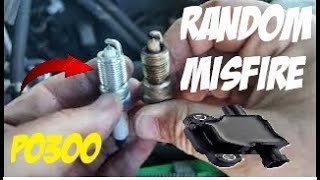
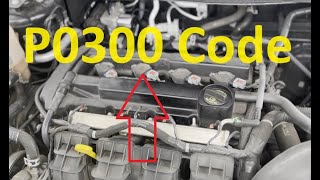
The 2010-2014 Yukon Denali, equipped with the 6.2L L94 V8, is prone to specific issues that cause a P0300 code. 🎬 Watch: Step-by-step diagnosis and repair for the P0300 misfire code. Beyond typical tune-up parts, these engines have well-documented problems with the Active Fuel Management (AFM) system, where specialized lifters can mechanically collapse, get stuck, or suffer internal damage. This failure is a primary cause of misfires, often accompanied by a distinct ticking noise. Additionally, a known issue detailed in TSB #PIP5161 involves vacuum leaks from a cracked PCV baffle on the driver's side valve cover, which introduces unmetered air and disrupts the air-fuel mixture for all cylinders. In severe cases, a failed lifter can wipe out a camshaft lobe, turning a top-end repair into a much larger engine-out service.
🎬 Watch: How to disable V4 mode to prevent future engine failure.Diagnostic Flowchart

Tap your situation to follow the diagnostic path that matches what you're seeing on this vehicle.
Symptoms You May Notice

- Rough or shaking idle
- Hesitation or stumbling during acceleration
- Flashing Check Engine Light
- Reduced engine power
- Poor fuel economy
- Engine noise (ticking, tapping, or knocking, especially on cold start).
- Smell of unburnt fuel from the exhaust
- "Service StabiliTrak" message appearing with the Check Engine Light.
- Replacing only one spark plug or coil when a full tune-up is needed.
- Replacing oxygen (O2) sensors, which are more likely to be a symptom of the misfire (due to unburnt fuel) rather than the cause.
- After an engine repair, crossed fuel injector connectors for cylinders 5-7 and 6-8 can cause a P0300 code, as warned in TSB #PIP5169.
- Assuming a tune-up will fix the issue when a mechanical ticking noise is present, which strongly points to AFM lifter failure.
Most Likely Causes

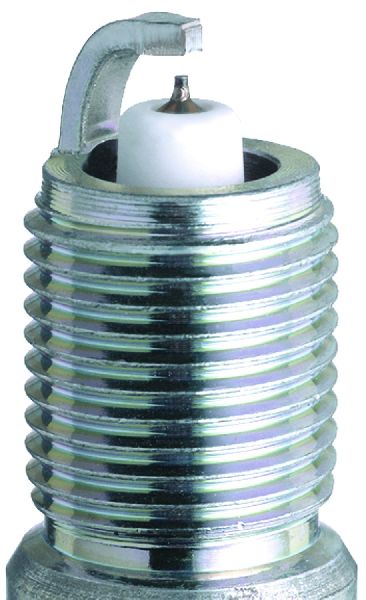
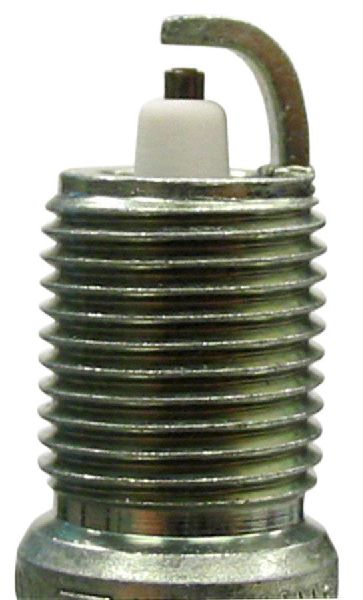
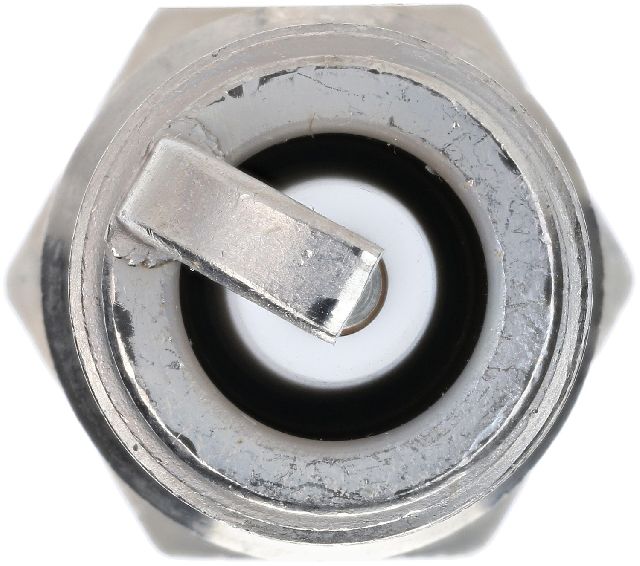
- Worn Spark Plugs or Defective Spark Plug Wires 🔴 High Probability → Shop Spark Plug These are standard maintenance items that wear out. The original ACDelco iridium plugs have a service life of around 100,000 miles. Wires can degrade from high engine bay temperatures, causing weak spark.
How to confirm: Inspect spark plugs for wear, damage, or heavy deposits like oil or carbon. Check spark plug wires for cracks, burns, or corrosion on the contacts. A scan tool with live data can help identify which cylinders have the highest misfire counts, pointing to where to inspect first.
Typical fix: Replace all eight spark plugs and spark plug wires as a set. Use high-quality replacements like ACDelco Iridium plugs (P/N 41-162). It is recommended not to re-gap these plugs as the fine iridium tip can be damaged.
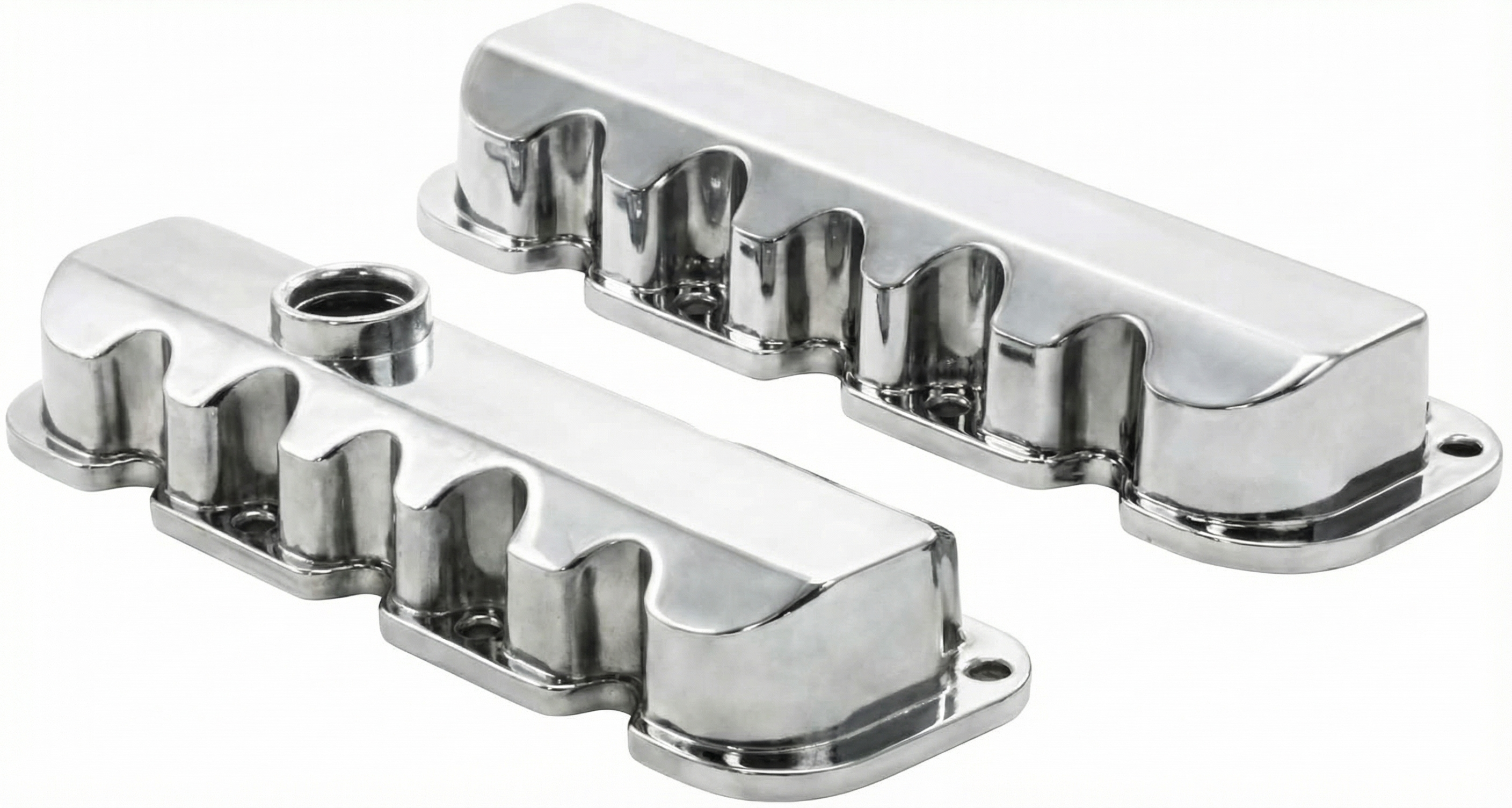
Est. part cost: $70-$150 - PCV System / Valve Cover Vacuum Leak 🟡 Medium Probability → Shop Engine Valve Cover TSB #PIP5161 specifically calls out a rough running engine with code P0300 due to a leak where the PCV baffle meets the driver's side valve cover. This introduces unmetered air, creating a lean condition and causing random misfires.
How to confirm: As per TSB #PIP5161, remove the driver's side valve cover. Plug the baffle's small hole and square vent, then apply regulated air pressure through the PCV pipe and spray the baffle/cover seam with soapy water. Bubbles indicate a leak. A smoke test on the intake system may also reveal the leak.
Typical fix: The official fix requires replacing the entire valve cover assembly, as the baffle is not serviced separately. The updated part is intended to resolve the defect. It is recommended to test the new valve cover for leaks before installation.
Est. part cost: $100-$250 - Failed Active Fuel Management (AFM) Lifter 🟡 Medium Probability → Shop Engine Valve Lifter The 6.2L L94 engine uses AFM, which deactivates cylinders 1, 4, 6, and 7 to save fuel. The specialized lifters for this system are a notorious failure point. They can become mechanically stuck, collapse, or suffer internal pin damage, often due to oil pressure or aeration issues, leading to a persistent misfire on one or more of the AFM cylinders.
How to confirm: Diagnosis starts with a distinct ticking noise from the top of the engine. A technician will remove the valve cover(s) to inspect valve operation while the engine is running. If a rocker arm is not moving, the lifter has collapsed. A compression test on the suspect cylinder will also show low compression.
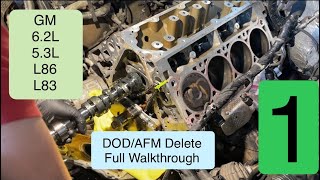
Typical fix: This is a labor-intensive repair. It requires replacing the faulty bank of AFM lifters (P/N 12645725), the four lifter guides, and the Valve Lifter Oil Manifold (VLOM). Crucially, the camshaft must be inspected for damage; a failed lifter often scores or flattens the cam lobe, necessitating camshaft replacement as well. Some owners opt to perform an "AFM delete," replacing all AFM components with standard lifters and tuning the ECM to disable the system permanently.
Est. part cost: $400-$1200 - Worn Camshaft Lobe ⚪ Low Probability → Shop Engine Camshaft This is almost always a direct consequence of a failed AFM lifter. The roller on a collapsed or seized lifter stops spinning and grinds against the camshaft lobe, wearing it down. TSB #PIP4138R identifies worn camshaft lobes as a potential cause for P0300-P0308 codes when other diagnostics fail.
How to confirm: This is diagnosed after confirming a collapsed lifter. With the lifters removed, a visual and tactile inspection of the camshaft lobes is required. A damaged lobe will have visible scoring or a flattened profile.
Typical fix: Replacement of the camshaft and all 16 lifters (both AFM and standard). This is a major engine repair.
Est. part cost: $500-$1500 - Faulty Ignition Coil(s) ⚪ Low Probability → Shop Ignition Coil While coils can fail from heat and age, it's more common for one coil to fail and cause a specific cylinder code (e.g., P0301). A P0300 from a coil issue is less common but can happen if multiple coils are weak or if a ground wire common to a bank of coils is faulty.
How to confirm: Use a scan tool to check misfire data and identify which cylinders are misfiring. Swap a suspected bad coil with a known good one from another cylinder and see if the misfire follows the coil.
Typical fix: Replace the faulty ignition coil. ACDelco P/N D510C is a common replacement.
Est. part cost: $40-$80 per coil
Rare But Worth Checking
- Clogged or Leaking Fuel Injectors: → Shop Fuel Injector Injectors can become clogged over time, leading to a lean misfire, or can leak fuel, causing a rich misfire. Using a quality fuel system cleaner like Seafoam or Techron can sometimes resolve minor clogging issues before resorting to replacement. Leaking injectors on some GM engines have been known to hydrolock cylinders, causing severe mechanical damage.
- Low Fuel Pressure: A weak fuel pump, clogged fuel filter, or failing Fuel Pump Driver Module (FPDM) can starve the engine for fuel, causing random misfires under load. The FPDM is located on the rear chassis crossmember and is exposed to the elements, making it a potential failure point. Fuel pressure should be tested at the fuel rail.
- Intake Manifold Gasket Leak: → Shop Engine Intake Manifold Similar to the PCV leak, a bad intake gasket can cause a vacuum leak, leading to a lean condition and misfires. This can be checked with a smoke machine or by carefully spraying starter fluid around the gasket sealing surface and listening for a change in engine idle.
Diagnosis Steps
- Read all stored fault codes with an OBD-II scanner. Note any other codes besides P0300, as they can point to the root cause.
- Use a scanner with live data to monitor misfire counts per cylinder (Mode $06 data is helpful). This helps determine if the misfire is truly random or concentrated on specific cylinders.
- Perform a full visual inspection of the engine bay. Look for disconnected vacuum hoses, damaged wiring, or obvious signs of problems.
- If a distinct ticking noise is present, prioritize diagnosis of the AFM lifters. Remove valve covers and observe rocker arm movement while the engine is running.
- Inspect spark plugs and spark plug wires. Replace them if they are old, worn, or fouled. Ensure new plugs are gapped correctly (or not re-gapped, per manufacturer advice).
- Test for a vacuum leak at the PCV baffle on the driver's side valve cover using soapy water and compressed air, as described in TSB #PIP5161.
- Test fuel pressure at the rail to rule out a weak fuel pump or clogged filter.
Parts You'll Likely Need
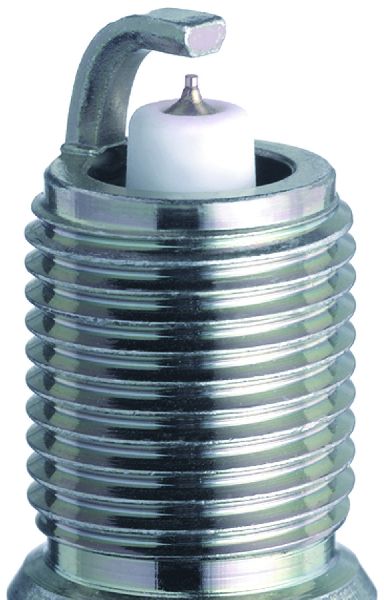
- Spark Plugs
(OEM #41-162)— Worn spark plugs are a primary cause of misfires and are a routine maintenance item.
Trusted brands: ACDelco
OEM price range: $10-$15 per plug
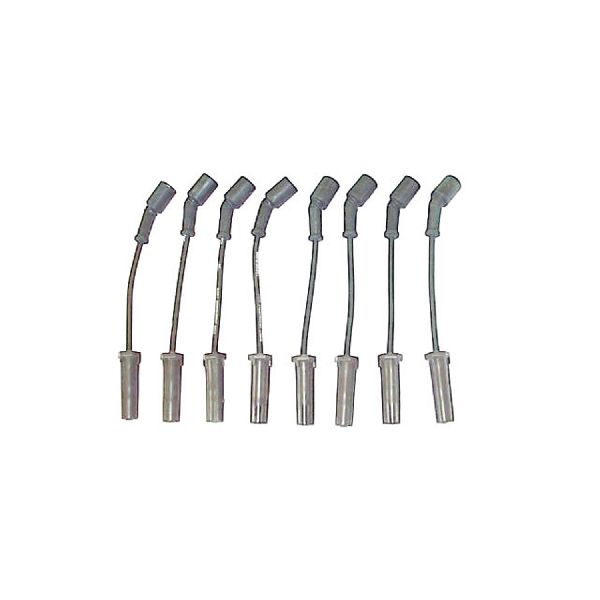
Aftermarket price range: $7-$12 per plug - Spark Plug Wires
(OEM #9748RR)— Wires degrade over time, causing weak spark and misfires. TSB #PIP4819A points to inspecting wires for this code.
Trusted brands: ACDelco
OEM price range: $60-$90
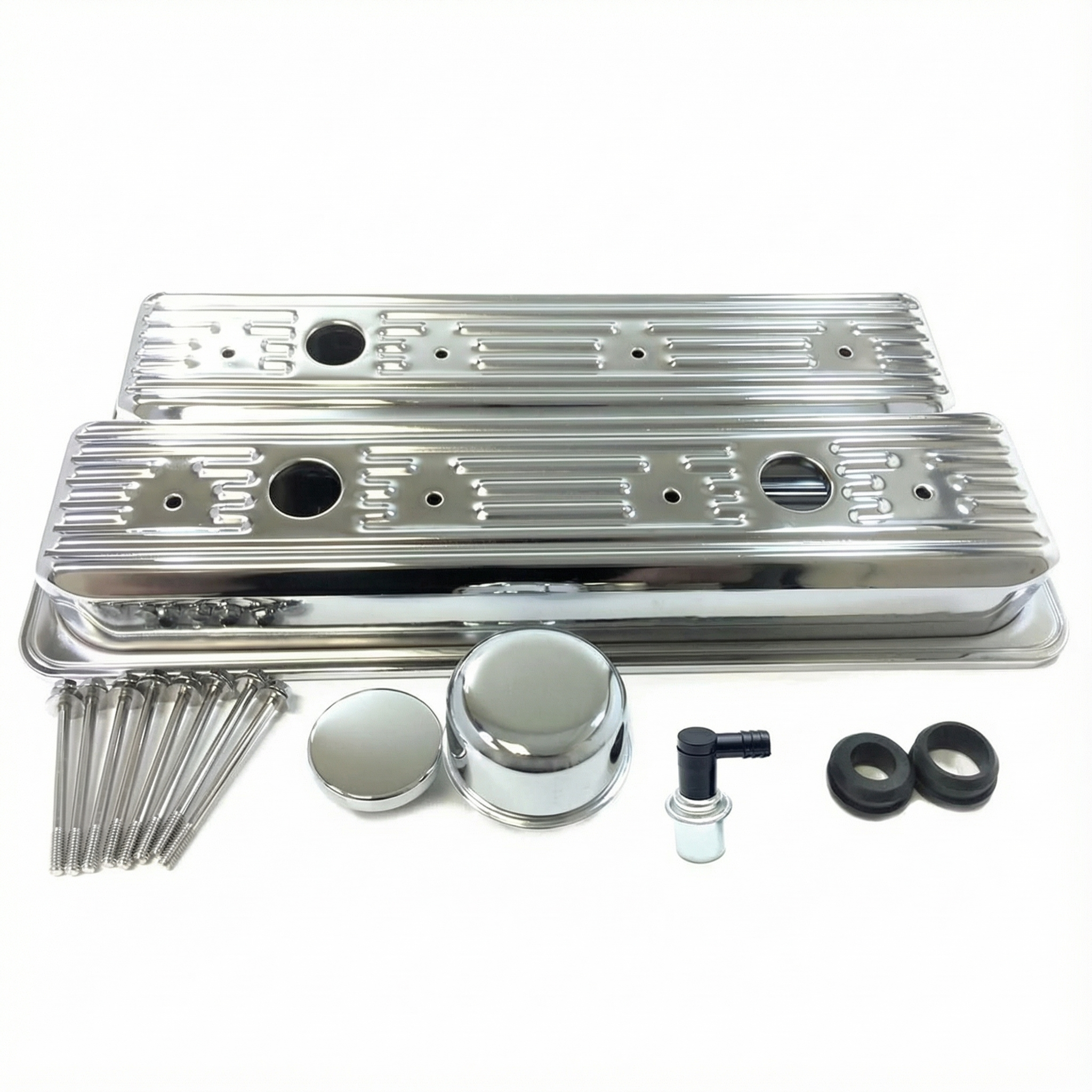
Aftermarket price range: $40-$70 - Valve Cover (Driver Side)
(OEM #12642655)— Required to fix the PCV baffle vacuum leak described in TSB #PIP5161.
Trusted brands: ACDelco GM Genuine
OEM price range: $120-$200
Aftermarket price range: $80-$150 - AFM Lifters
(OEM #12645725)— The specialized AFM lifters are a common failure point leading to misfires and potential camshaft damage.
Trusted brands: ACDelco
OEM price range: $60-$80 per lifter
Aftermarket price range: $30-$50 per lifter
Related Codes That Often Appear With This One
- P0301-P0308 — If the random misfire becomes consistent on one or more specific cylinders, the PCM will set a cylinder-specific code. This is common with AFM lifter failure on cylinders 1, 4, 6, or 7.
- P0171 / P0174 — These codes indicate a "System Too Lean" condition on Bank 1 and Bank 2, respectively. They often appear with P0300 if the root cause is a vacuum leak (e.g., from the PCV system or intake manifold gasket).
- P050D — TSB #PIP5628C links this code, "Rough Idle During Cold Start," with P0300 codes, suggesting they can appear together during complex misfire diagnostics, sometimes related to leaking fuel injectors.
- P0420 / P0430 — These codes for "Catalyst System Efficiency Below Threshold" can appear after a prolonged misfire condition, as unburnt fuel damages the catalytic converters.
Technical Service Bulletins (TSBs) & Recalls
- PIP5161: Oil Consumption, Rough Idle, P0300 due to PCV baffle leak on valve cover.
- PIP4138R: Identifies worn camshaft lobes as a cause for P0300-P0308 codes.
- PIP5628C: Links P0300 with P050D (Rough Idle During Cold Start).
- PIP5169: Warns of crossed injector connectors (5-7, 6-8) causing P0300 after engine repairs.
- PIP4819A: Recommends inspecting spark plug wires for P0300 codes.
Platform-Specific Known Issues
- PCV Baffle Vacuum Leak: TSB #PIP5161 highlights that a rough running engine with a P0300 may be caused by a vacuum leak where the PCV baffle meets the valve cover.
- Worn Camshaft Lobe: TSB #PIP4138R notes that after exhausting other diagnostic paths, a worn camshaft lobe could be the root cause of P0300-P0308 misfires.
- Failed AFM Lifters: The Active Fuel Management lifters are a well-documented weak point on this engine, with failures causing ticking noises and persistent misfires.
- Crossed Injector Connectors: TSB #PIP5169 warns that after engine service, a P0300 can be set if the fuel injector connectors for cylinders 5-7 and 6-8 are accidentally swapped.
Mechanic-Grade Diagnostic Values
- Ignition Coil Primary Resistance (ACDelco D510C) — expected: 1.2 Ohms. Failure: A reading significantly higher or lower than 1.2 Ohms indicates a faulty coil.
- Ignition Coil Secondary Resistance (ACDelco D510C) — expected: 13.7k Ohms. Failure: A reading significantly outside this value suggests an internal coil winding issue.
- Fuel Pressure (Low-Pressure Feed) — expected: 51 ±7 psi (0.35 ±0.05 MPa) during engine starting. Failure: Pressure below this range indicates a weak fuel pump, clogged filter, or failing FPDM.
- Fuel Injector Balance Test (Pressure Drop) — expected: The pressure drop across all injectors should be within 1.5 PSI (10 kPa) of each other.. Failure: An injector with a pressure drop significantly different from the others is likely clogged or leaking.
Scan Tool Commands That Help
- GDS2 / Tech2: Fuel Injector Balance Test — To isolate a faulty fuel injector when a misfire is suspected to be fuel-related. The test commands the ECM to fire each injector individually while monitoring the drop in fuel rail pressure, allowing a comparison of flow rates between cylinders.
- GDS2 / Tech2: Crankshaft Position (CKP) Variation Learn Procedure — After replacing a crankshaft position sensor, flywheel, or ECM. Failure to perform this relearn can cause the ECM to inaccurately detect misfires and set a P0300 code.
- GDS2: Camshaft Position Actuator Solenoid Valve Control — In cases of a no-start or rough running with P0300, this function allows a technician to cycle the VVT solenoid to check if it is stuck, which can throw off cam timing and cause misfires.
Wiring & Ground Locations
- G102 / G103 — On the left (driver's) side of the engine block, below the exhaust manifold.. These are primary engine block grounds. A loose or corroded connection here can cause erratic behavior in sensors and ignition components, leading to random misfires.
- G108 — On the rear side of the cylinder heads.. This ground is critical for the ignition system. Technicians have noted that a poor connection at G108 is a common source of difficult-to-diagnose drivability problems, including misfires.
- Injector Harness (Cylinders 5-7 and 6-8) — The fuel injector wiring harness connectors, particularly for cylinders on the passenger side of the engine.. TSB #PIP5169 specifically warns that after engine repairs, it is easy to cross the connectors for injectors 5 & 7 and 6 & 8. This will cause immediate and persistent misfires on those cylinders, logging a P0300 code.
Real Owner Repair Stories
- Reddit user on r/MechanicAdvice (2012 GMC Yukon SLE 5.3L (High Miles)) — Started with P0300, progressed to a no-start, then a specific P0304 (cylinder 4 misfire) with a rich fuel condition, long crank times, and a flashing check engine light under acceleration.
❌ Tried (didn't work) Replaced spark plugs and wires (found #4 wet)., Replaced Mass Airflow (MAF) sensor., Replaced ignition coils., Replaced #4 fuel injector., Performed compression test (160 psi) and cylinder leak-down test (3%), both of which passed.
✅ What actually fixed it The user's diagnostic path ultimately led to a P0335 (Crankshaft Position Sensor 'A' Circuit) code. The final resolution was not posted, but the evidence strongly pointed to a wiring issue or a faulty ECM, as the CKP sensor itself had been replaced and the circuit checked out intermittently. The P0300 was a symptom of the deeper electrical fault related to the crank sensor circuit.
OEM Part Supersession History
12645725→12740071— This is the part number for the Active Fuel Management (AFM) lifter. The part has been updated by GM over time to improve reliability and address the common failure issues that lead to collapse and camshaft damage.
Heads up: When replacing failed AFM lifters, it is highly recommended to also replace the Valve Lifter Oil Manifold (VLOM) with the updated design (P/N 12571609) to ensure proper oil pressure and prevent repeat failures.
Model Year Variations Within This Range
- 2009 (Pre-dates specified range but relevant): The 2009 Yukon Denali could be equipped with the 6.2L L9H engine, which did not have Active Fuel Management (AFM). This engine is considered more robust by some enthusiasts as it is not susceptible to AFM lifter failure, a primary cause of P0300 on the 2010-2014 L94 engine.
- 2011-2014: GM reportedly improved the AFM lifter components starting in 2011 to reduce failure rates. While still a potential issue, later models in this range may have a slightly lower risk of lifter failure compared to the 2010 models.
Helpful Videos

Used OEM Parts in Stock
New Aftermarket Parts Available

The information in this article is provided for general reference and educational purposes only. Vehicle specifications, procedures, and part compatibility can vary by production date, trim level, and region. Always consult your vehicle's factory service manual and verify part numbers before purchasing or performing repairs. Safety-critical components such as airbags, seat belts, and braking systems should be installed by a qualified professional.
- Gmc YUKON DENALI:
- 🧭 Diagnostic Flowchart
- 🎬 Helpful Videos
- 🛍️ Shop This Part
- What's Unique About the 2010-2014 Gmc YUKON DENALI
- Symptoms You May Notice
- Most Likely Causes
- Rare But Worth Checking
- Diagnosis Steps
- Parts You'll Likely Need
- Related Codes That Often Appear With This One
- Technical Service Bulletins (TSBs) & Recalls
- Platform-Specific Known Issues
- Mechanic-Grade Diagnostic Values
- Scan Tool Commands That Help
- Wiring & Ground Locations
- Real Owner Repair Stories
- OEM Part Supersession History
- Model Year Variations Within This Range
- 🎟️ Get 5% Off