

P0301 on 2010-2016 Audi S4 3.0L: Cylinder 1 Misfire Causes and Fixes
P0301 on a 2010-2016 Audi S4 most commonly indicates a failed ignition coil or a worn spark plug in cylinder 1. This is a relatively inexpensive and straightforward DIY fix, with a coil costing around $40-$80 and a set of plugs around $90-$150. If the issue persists after addressing plugs and coils, platform-specific issues like carbon buildup on the intake valves, a failed PCV valve, or a leaking supercharger intercooler are the next likely culprits.
- P0301 on this Audi S4 points to a misfire in the front passenger-side cylinder.
- Always start diagnosis by swapping the cylinder 1 ignition coil with another cylinder. This is a free, 5-minute test that often finds the culprit.
- If the Check Engine Light is flashing, do not drive the vehicle. Pull over immediately to prevent expensive catalytic converter damage.
- If new spark plugs and ignition coils do not fix the misfire, the problem is likely a platform-specific issue: carbon buildup on the intake valves or a failed PCV valve.
- Use only high-quality, OEM-spec spark plugs and ignition coils. This engine is sensitive to incorrect parts.
What's Unique About the 2010-2016 Audi S4
The B8/B8.5 generation S4's EA837 supercharged engine is robust but has specific weak points that lead to misfires. As a direct-injection engine, it's highly susceptible to carbon buildup on the intake valves, which can impede airflow and cause misfires that new plugs and coils won't fix. Additionally, the PCV valve (oil separator) located under the supercharger is a known failure point, with a typical life of 60,000-80,000 miles. Its failure can cause vacuum leaks and high oil consumption that fouls spark plugs. Finally, the two liquid-to-air intercoolers housed under the supercharger can develop internal leaks, dripping coolant directly into the intake ports and causing misfires.
Generation note: The 2010-2016 year range covers both the B8 (2010-2012) and B8.5 (2013-2016) generations of the Audi S4. Both use the same EA837 3.0L supercharged V6 engine, so the causes and fixes for P0301 are virtually identical. Some later B8.5 models received an updated PCV design (e.g., part number ending in AC) and revised water pumps, but the fundamental failure modes remain the same across the generation. The B8.5 models also feature a different power steering system (electromagnetic) which is unrelated to this engine code.
Symptoms You May Notice
- Rough or shaky idle
- Hesitation or stumbling during acceleration
- Noticeable loss of engine power
- Flashing Check Engine Light (CEL)
- Engine running poorly, may sound 'cammed' or have a ticking noise.
- Increased fuel consumption
- Smell of unburnt fuel from the exhaust
- Replacing the Mass Air Flow (MAF) sensor. The MAF is rarely the cause of a single-cylinder misfire and would typically affect all cylinders.
- Replacing oxygen (O2) sensors. A faulty O2 sensor will typically cause bank-specific fuel trim issues or random misfire codes (P0300), not a single-cylinder code like P0301.
Most Likely Causes
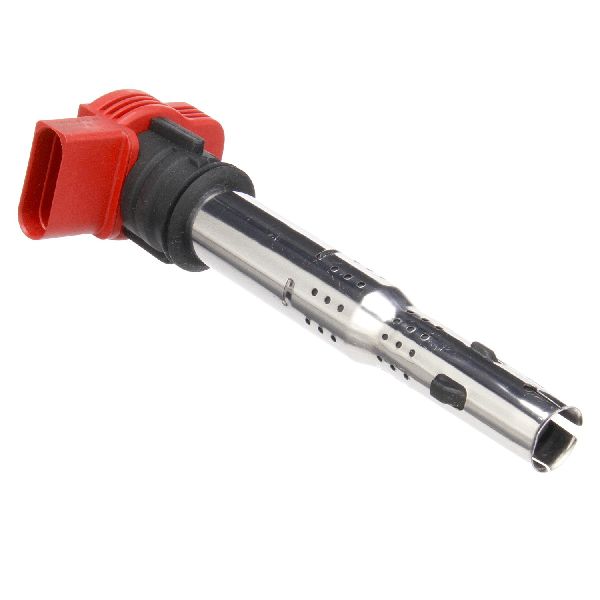
- Faulty Ignition Coil 🔴 High Probability → Shop Ignition Coil Ignition coils on modern Audi engines are a common wear item due to high heat and electrical stress. While more reliable than on the 2.0T engines, they are often the first component to fail when a single-cylinder misfire occurs.
How to confirm: Swap the ignition coil from cylinder 1 with another cylinder (e.g., cylinder 2). Clear the codes and drive. If the misfire code changes to P0302, the coil is bad. This is the definitive diagnostic step.
Typical fix: Replace the faulty ignition coil. It is often recommended to replace them as a full set if they are original and high-mileage. Many owners upgrade to the red-top coils from the Audi R8 for aesthetics and perceived reliability.
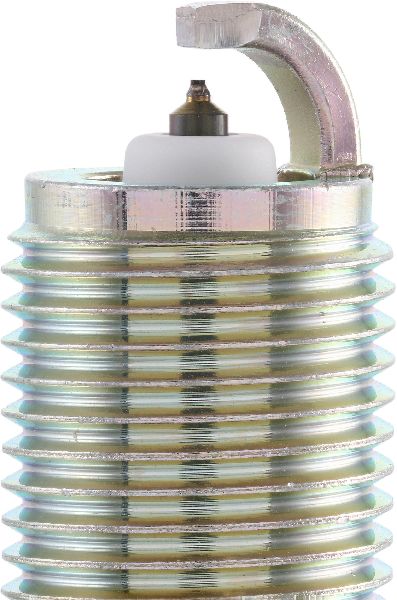
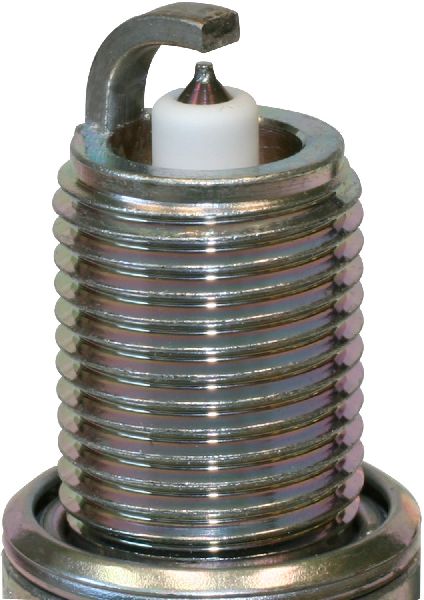
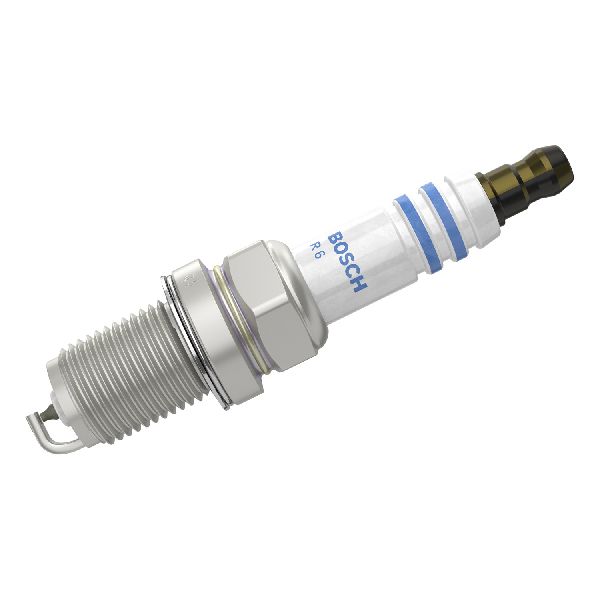
Est. part cost: $40-$80 per coil - Worn or Fouled Spark Plug 🔴 High Probability → Shop Spark Plug Spark plugs are a regular maintenance item with a service interval of 40,000-55,000 miles on this engine. A worn electrode, incorrect gap, or fouling from oil or carbon can prevent a strong spark. Tuned vehicles require a shorter interval and may use a colder plug.
How to confirm: After ruling out the coil, remove the spark plug from cylinder 1. Inspect it for wear (rounded electrode), carbon tracking (black lines on the ceramic), oil (wet black deposits), or coolant fouling (white, crusty residue). Compare it to a new plug.
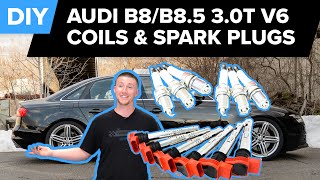
Typical fix: Replace the spark plug. It is critical to replace all six spark plugs as a set 🎬 Watch: Step-by-step guide to replacing your coils and spark plugs. with the correct OEM-spec plugs (e.g., NGK PFR8S8EG) and gap to ensure proper performance.
Est. part cost: $15-$30 per plug - Carbon Buildup on Intake Valves 🟡 Medium Probability As a direct-injection engine, fuel is sprayed directly into the cylinder, so it never washes over the intake valves. Oil vapor from the PCV system bakes onto the hot valves, forming hard carbon deposits that restrict airflow and cause misfires, especially when the engine is cold or under heavy load.
How to confirm: This requires a visual inspection with a borescope inserted into the intake ports after removing the supercharger. Misfires that occur primarily on cold starts or only at high RPM are strong indicators. The presence of Audi-specific code P130A ('Cylinder Disabling') alongside P0301 is also a strong clue, as the ECU may shut down the cylinder due to the poor combustion caused by restricted airflow.
Typical fix: The intake manifold and supercharger must be removed to perform a manual cleaning of the valves, typically through walnut blasting. 🎬 Watch: How to perform a professional walnut blasting carbon cleaning. This is a labor-intensive process often costing $800-$1500 professionally.
Est. part cost: $0 (if DIY), $800-$1500 for professional service - Failed PCV Valve / Oil Separator 🟡 Medium Probability → Shop PCV Valve The PCV valve diaphragm is a known weak point on the EA837 engine, often failing between 60,000-80,000 miles. When it fails, it creates a significant vacuum leak, leading to a lean condition, high oil consumption (1 liter every 1,500-2,000 miles), and misfires as oil fouls the spark plugs.
How to confirm: A high-pitched whistling noise at idle is a common symptom. You can also test for excessive vacuum by trying to remove the oil filler cap with the engine running; if it's held down by strong suction, the PCV has likely failed. Coolant and oil mixing can also occur in some failure modes.
Typical fix: Replace the PCV valve assembly. This is a labor-intensive job as the PCV valve is located under the supercharger. It is highly recommended to perform other 'while you're in there' services like carbon cleaning and thermostat replacement at the same time.
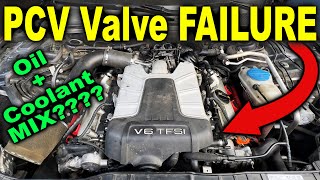
Est. part cost: $150-$250 for the part, with multiple revisions available (e.g., 06E103547AC). 🎬 See this walkthrough on how to replace the PCV valve.
Rare But Worth Checking
- Leaking Supercharger Intercooler: → Shop Turbocharger The supercharger houses two liquid-to-air intercooler cores. These can develop internal leaks, dripping coolant directly into the intake ports. This causes misfires and mysterious coolant loss with no external drips. While cylinders 3 and 6 are most commonly affected due to their location, a leak can still cause a misfire on cylinder 1. A visual inspection after removing the supercharger will show pink/white crusty residue from dried coolant.
- Clogged or Faulty Fuel Injector: → Shop Fuel Injector Less common than ignition issues, but a fuel injector can become clogged or fail electronically, preventing the correct amount of fuel from being delivered to cylinder 1. This can sometimes be diagnosed by swapping injectors between cylinders, but this is a much more labor-intensive task than swapping coils.
- Low Engine Compression: A mechanical issue such as a burnt valve, damaged piston, or worn piston rings can cause a loss of compression in cylinder 1. This would result in a persistent misfire that is not resolved by replacing ignition or fuel components. A compression test is needed to confirm. This is a rare but severe cause.
- Catalytic Converter Failure: While usually a result of misfires, a failing or clogged catalytic converter can increase exhaust backpressure, leading to misfires. This is more likely to cause multiple misfire codes (P0300) but can begin with a single cylinder. Owners sometimes report hesitation during acceleration as a symptom.
Diagnosis Steps
- Read the fault codes using an OBD-II scanner (like VCDS or OBDeleven for detailed Audi info) to confirm P0301 and note any other codes present.
- To test the ignition coil, swap the coil from cylinder 1 (front passenger side) with the coil from cylinder 2 (middle passenger side).
- Clear the codes, start the engine, and perform a test drive to see if the misfire returns.
- Re-scan for codes. If P0302 appears, the ignition coil from cylinder 1 is faulty and must be replaced.
- If the code remains P0301, the coil is likely good. Proceed to inspect the spark plug in cylinder 1.
- Remove the spark plug and check for wear, fouling (black soot, oil, or white coolant residue), or an incorrect gap. If it's old or fouled, replace all six spark plugs as a set with OEM-spec plugs.
- If plugs and coils are good, investigate platform-specific issues. Check for PCV failure by listening for a whistle at idle or checking for strong vacuum at the oil cap with the engine running.
- Monitor coolant levels. If you are slowly losing coolant with no visible leaks, suspect a leaking supercharger intercooler.
- If the misfire persists, especially on a high-mileage engine, suspect carbon buildup and consider a borescope inspection of the intake valves.
Parts You'll Likely Need
- Ignition Coil
(OEM #06E905115G)— This is the most common failure point for a single-cylinder misfire on the 3.0T engine. Part number 06E905115G is the latest revision, often in a red color.
Trusted brands: Bosch (OEM), NGK, Genuine Audi/VW - Spark Plugs (Set of 6)
(OEM #NGK PFR8S8EG)— Regular maintenance item. Worn or fouled plugs are a very common cause of misfires. Must be replaced as a set.
Trusted brands: NGK (OEM), Bosch - PCV Valve / Oil Separator
(OEM #06E103547AC)— Common failure item under the supercharger. Causes vacuum leaks and oil consumption leading to misfires. Part has many revisions (F, H, Q, AC, S).
Trusted brands: Genuine Audi/VW, Vaico
Related Codes That Often Appear With This One
- P130A — This Audi-specific code for 'Cylinder Disabling' is often stored with a misfire code. It means the ECM has intentionally shut off the fuel injector to the misfiring cylinder to protect the catalytic converter from damage. It's a result of the P0301, not a separate problem.
- P0300 — If 'Random/Multiple Cylinder Misfire' is present, it suggests the root cause (like a large vacuum leak from a failed PCV, severe carbon buildup, or a failing catalytic converter) is affecting more than just cylinder 1.
- P0302, P0303, P0304, P0305, P0306 — Misfire codes for other cylinders, especially on the same bank (passenger side), can indicate a systemic issue like a leaking intercooler core or clogged catalytic converter for that bank.
Technical Service Bulletins (TSBs) & Recalls
- Misfire DTCs P0300, P0301-P0306, and/or P130A Stored in ECM: This Technical Service Bulletin addresses misfires under load, particularly at high RPMs. The official solution directs technicians to contact Audi's Technical Assistance Center (TAC), but the underlying cause is widely understood in the community to be severe carbon buildup on the intake valves restricting airflow.
- Bulletin #01138920337681: This manufacturer bulletin notes that a cylinder misfire fault (DTC P0301 – P0306) with DTC P130A may be stored in the engine control module (ECM), J623 (address word 01).
Platform-Specific Known Issues
- TSB 2033768/1 / NHTSA #01138920337681 notes that misfire codes (P0301-P0306) appearing with P130A are often related to carbon buildup causing misfires under heavy load.
- Several TSBs (e.g., 2069038, 2058038) have been issued for software updates to the ECM to correct overly sensitive misfire detection under certain conditions, sometimes related to winter-blend fuel.
Mechanic-Grade Diagnostic Values
- High-Pressure Fuel Rail Pressure (Stock) — expected: Exceeding 1500 PSI / ~100 Bar under load. Upgraded pumps can exceed 200 Bar (2900 PSI).. Failure: Pressure dropping significantly under load, especially in the 3000-5000 RPM range, can indicate a failing High Pressure Fuel Pump (HPFP).
- Misfire Counter (Live Data) — expected: 0 at idle and under load.. Failure: Any count incrementing in the specific field for cylinder 1 indicates a misfire event, even if it's not frequent enough to set a CEL immediately.
Hidden / Shadow Codes Worth Checking
- Misfire Counter in Measuring Blocks: VCDS and other advanced scanners can access live misfire counters for each cylinder before a fault code is officially stored. This is invaluable for diagnosing intermittent misfires. A few counts may be logged without triggering the CEL. (see via In VCDS for non-UDS controllers, navigate to Engine (01) -> Measuring Blocks (08) and check groups 014, 015, and 016. For newer UDS controllers, use Advanced Measuring Values and search for 'misfire'.)
Scan Tool Commands That Help
- VCDS (VAG-COM): Output Test: Fuel Injector N30 (Cylinder 1) — After ruling out ignition problems, this test can be used to cycle the fuel injector for cylinder 1. A technician can listen for an audible click from the injector to confirm it's receiving a signal from the ECM, helping to distinguish a wiring issue from a mechanically failed injector.
- VCDS (VAG-COM): Read Misfire Counters (Measuring Blocks 014, 015, 016) — Use this to monitor for intermittent misfires in real-time under different load and temperature conditions. This can reveal if misfires are happening on cold starts, at high RPM, or only on cylinder 1, which helps narrow down the cause (e.g., carbon buildup vs. fuel injector).
Real Owner Repair Stories
- Audizine Forums (2014 Audi S4) — Persistent P0301 misfire at idle and part throttle, even after extensive part replacement.
❌ Tried (didn't work) Replaced all spark plugs, Replaced all ignition coils, Performed carbon cleaning (walnut blasting), Replaced PCV valve
✅ What actually fixed it The thermostat, which was located under the supercharger and replaced as a 'while you're in there' item during the PCV service, was faulty. A leaking seal on the new thermostat was allowing a small amount of coolant to be drawn into the intake system under vacuum, causing the misfire on cylinder 1. Replacing the thermostat again with a properly sealed unit resolved the issue. - Reddit r/AudiS4 (2014 B8.5 Audi S4) — Intermittent P0301, shaky idle, ticking noise, engine sounds 'cammed'.
❌ Tried (didn't work) Replacing spark plugs (this fixed a separate P0304 code, but P0301 returned)
✅ What actually fixed it The user was still in the process of diagnosing, but the community consensus after plugs and coils were ruled out pointed toward a faulty fuel injector or a leaking supercharger intercooler core as the next most likely culprits.
"I Checked Everything" — The Actual Cause
- A common scenario on the 3.0T engine is a smoke test showing no vacuum leaks, yet the misfire is caused by a leaking supercharger intercooler. Coolant is drawn directly into the intake port from an internal leak within the supercharger assembly, which a smoke test of the intake tract will not detect. The key symptom is slow, mysterious coolant loss with no external drips.
When the Usual Fixes Don't Work
- In one documented case, a persistent P0301 misfire on a 2014 S4 was not resolved by replacing plugs, coils, the PCV valve, or even performing a carbon cleaning service. The ultimate cause was found to be a faulty seal on a brand-new thermostat that was installed during the PCV service. The internal coolant leak was being drawn into the cylinder 1 intake runner, demonstrating that even new parts installed during a related repair can be the root cause.
OEM Part Supersession History
06E103547 (with early revisions like F, Q, C)→06E103547AC (or later, always verify by VIN)— The diaphragm inside the PCV (oil separator) was prone to tearing, causing a massive vacuum leak, whistling noises, and oil consumption issues leading to misfires.
Heads up: Some revisions altered the internal crankcase pressure regulation. Using an incorrect version for your specific engine code and ECU software can potentially lead to oil consumption or other seal issues. It is critical to use a part number confirmed for your VIN.
Model Year Variations Within This Range
- 2016+: Some late-production EA837 engines, specifically the 'CREC' variant found in some A6/A7 models but less common in the S4, featured a dual-injection system (both direct and port injection). The port injectors spray fuel onto the intake valves, largely eliminating the carbon buildup issue that plagues earlier direct-injection-only versions.
Diagnostic Flowchart
Other Known Issues on This Vehicle
Issues unrelated to this code that are worth knowing about as an owner of this generation:
- Premature Water Pump & Thermostat Failure 🔴 High — Common on early B8 models (2010-2012), but can occur on all models, often between 50,000-80,000 miles. The original plastic water pump was a key failure point. (Ref: Subject of multiple service actions and a class-action lawsuit investigation.)
- DSG (S-Tronic) Mechatronic Unit Failure 🔴 High — More prevalent on B8 models (2010-2012). Can cause jerky shifting, transmission errors on the dash, or failure to engage gears. A very expensive repair. (Ref: Several TSBs exist for software updates and repairs, but full unit failure often requires replacement.)
- Excessive Oil Consumption 🟠 Medium — More common on first-generation 3.0T engines. Can be caused by PCV failure or, in more severe cases, piston ring issues. Consumption of up to 1-1.5 quarts between oil changes is considered 'normal' by some owners.
- Leaking Upper Timing Chain Cover Gaskets 🟡 Low — The gaskets for the upper timing chain covers at the rear of the engine have a tendency to leak oil as the engine ages. It's a relatively minor leak but can be messy and requires replacement of the covers and gaskets.
- Failed Engine Mounts 🟠 Medium — The hydraulic engine mounts are a common wear item and can fail, leading to excessive engine movement during acceleration and gear changes, and a 'clunking' noise.
Used vs. New Parts: Buying Guide for This Vehicle
When a used part is the smart pick: Complete, low-mileage engine assemblies or a complete supercharger unit can be a cost-effective choice if a major mechanical failure (like low compression) or a cracked intercooler housing is diagnosed. Individual electronic sensors or actuators are generally not recommended to be purchased used.
Donor-vehicle mileage cap: roughly under 60000 miles for the part to have meaningful remaining life.
What to inspect on the donor part:
- For a supercharger: check the intercooler cores for any signs of white/pink crusty residue indicating a past leak. Spin the pulley by hand to feel for smooth bearing operation.
- For an engine: obtain a video of it running if possible, and always get compression test numbers before purchase.
- Check for service history, particularly for PCV valve and thermostat replacement.
OEM-only on this vehicle (don't cheap out):
- PCV Valve / Oil Separator: Due to multiple revisions and the high-labor cost to access it, using a genuine OEM or OEM-supplier part is critical to avoid premature failure.
- Thermostat: Similar to the PCV, this is a high-labor part located under the supercharger; an OEM part is recommended for reliability.
- Fuel Injectors: While expensive, remanufactured or new OEM injectors are recommended over used ones due to the risk of clogging or inconsistent flow rates.
Aftermarket brands forum-validated for this vehicle:
- Ignition Coils: Bosch, NGK, Eldor are reliable OEM suppliers. Upgraded 'R8-style' red coils from brands like APR or 034Motorsport are popular and generally considered reliable.
- Spark Plugs: NGK (e.g., PFR8S8EG) is the most commonly recommended OEM-spec plug.
- High-Pressure Fuel Pump (HPFP) Upgrades: 034Motorsport, Integrated Engineering, and VIS Motorsport are well-regarded brands for upgraded HPFP internals or complete pumps for tuned applications.
Brands owners have reported issues with on this vehicle:
- Unnamed/generic ignition coils and sensors from online marketplaces. These often have a high failure rate and can cause persistent issues that are difficult to diagnose.
Real Owner Stories
Aggregated from forums and TSBs cited above. Mileages and costs reflect what owners reported in those sources.
2014 Audi S4 3.0T (B8.5)
Symptoms: Recurring P0301 after changing spark plugs, shaky idle, engine sounding 'cammed', and a noticeable ticking noise.
What fixed it: The owner noted that the issue persisted beyond simple plug changes, suggesting deeper diagnostic needs like coil or injector inspection.
Source hint: Reddit r/AudiS4: P0301 Cylinder 1 misfire b8.5
2010-2012 Audi S4 3.0T (B8)
Symptoms: Persistent misfire codes P0301 and P0300.
What fixed it: After replacing both spark plugs and ignition coils without success, the cause was eventually identified as a faulty fuel injector.
Source hint: Audizine: B8 S4 Misfire P0301 & P0300
2011 Audi S4 3.0T — 65000 miles
Symptoms: Thermostat failure requiring supercharger removal.
What fixed it: Replacement of the thermostat; the owner recommended proactive replacement of the PCV and carbon cleaning while the supercharger is removed.
Source hint: AudiWorld: Warning: 3.0T Thermostat
Related OBD-II Codes
Frequently Asked Questions
My B8.5 S4 is throwing P0301 and P130A; does TSB 2026995/10 apply to me?
Can I use the 'Red Top' coils from the Audi R8 to fix my P0301 misfire?
Is there a software update for the ECM to fix sensitive misfire detection on the 2010-2016 S4?
I have a P0301 and a whistling noise at idle; is this a vacuum leak?
What spark plugs should I use for my 2012 Audi S4 to resolve a P0301?
How can I tell if my P0301 is caused by the PCV valve without taking the supercharger off?
Helpful Videos

We Have This Part in Stock


The information in this article is provided for general reference and educational purposes only. Vehicle specifications, procedures, and part compatibility can vary by production date, trim level, and region. Always consult your vehicle's factory service manual and verify part numbers before purchasing or performing repairs. Safety-critical components such as airbags, seat belts, and braking systems should be installed by a qualified professional.
- Audi S4:
- 🧭 Diagnostic Flowchart
- 🎬 Helpful Videos
- 🛍️ Shop This Part
- What's Unique About the 2010-2016 Audi S4
- Symptoms You May Notice
- Most Likely Causes
- Rare But Worth Checking
- Diagnosis Steps
- Parts You'll Likely Need
- Related Codes That Often Appear With This One
- Technical Service Bulletins (TSBs) & Recalls
- Platform-Specific Known Issues
- Mechanic-Grade Diagnostic Values
- Hidden / Shadow Codes Worth Checking
- Scan Tool Commands That Help
- Real Owner Repair Stories
- "I Checked Everything" — The Actual Cause
- When the Usual Fixes Don't Work
- OEM Part Supersession History
- Model Year Variations Within This Range
- Other Known Issues on This Vehicle
- Used vs. New Parts: Buying Guide for This Vehicle
- Real Owner Stories
- 2014 Audi S4 3.0T (B8.5)
- 2010-2012 Audi S4 3.0T (B8)
- 2011 Audi S4 3.0T — 65000 miles
- Related OBD-II Codes
- Frequently Asked Questions
- 🎟️ Get 5% Off