

P0301 on 2010-2012 Chevrolet Colorado: Cylinder 1 Misfire Causes and Fixes
A P0301 code on a 2010-2012 Chevrolet Colorado indicates a misfire in cylinder 1. The most common causes are a faulty ignition coil or a worn spark plug. A Technical Service Bulletin also points to loose spark plug wires on V8 models. For the I4 and I5 engines, a failing camshaft actuator solenoid is another known issue that can trigger misfire codes. Expect to spend $50-$150 for a common DIY fix.
- P0301 on a 2010-2012 Colorado means cylinder 1 is misfiring.
- The most likely culprit is a bad ignition coil, a very common failure on the 2.9L and 3.7L engines.
- A worn-out spark plug is the second most likely cause.
- A simple diagnostic test is to swap the ignition coil from cylinder 1 to cylinder 2 and see if the trouble code follows it (changing to P0302).
- Do not ignore a flashing check engine light, as it can lead to expensive catalytic converter damage.
What's Unique About the 2010-2012 Chevrolet COLORADO
For this generation of the Colorado (and its sibling, the GMC Canyon), ignition coil failure on the Atlas series inline engines (2.9L I4 and 3.7L I5) is an extremely common issue that leads to misfire codes like P0301. Additionally, a manufacturer TSB for the 2010 model year specifically calls out inspecting for loose spark plug wires as a potential cause for this code on V8 models. [NHTSA] While the infamous cylinder head valve seat issue plagued earlier 2004-2007 models, it is considered largely resolved by the 2010-2012 model years, making it a much less likely cause. A more relevant secondary cause for these later models is a failing Camshaft Position Actuator Solenoid, which was known to have defective screens that could break apart.
Diagnostic Flowchart
Tap your situation to follow the diagnostic path that matches what you're seeing on this vehicle.
Symptoms You May Notice
- Flashing or solid Check Engine Light
- Rough or shaky idle
- Engine hesitation or stumbling during acceleration
- Reduced engine power
- Decreased fuel economy
- A smell of raw gasoline from the exhaust
- Engine shaking, especially noticeable at idle or under load.
- Replacing the fuel pump when only a single cylinder is misfiring. A fuel pump issue would typically affect multiple cylinders and trigger a P0300 (random misfire) code or other fuel system codes.
- Jumping to the conclusion of a bad cylinder head/valve issue without first performing a compression test and ruling out all ignition and fuel system causes.
Most Likely Causes
- Faulty Ignition Coil 🔴 High Probability → Shop Ignition Coil Ignition coil failure is an extremely common problem on the 2.9L and 3.7L Atlas engines used in this generation of the Colorado and its platform mates.
How to confirm: Use a scanner to confirm the P0301 code. Swap the ignition coil from cylinder 1 with another cylinder (e.g., cylinder 2). Clear the codes and drive the vehicle. If the code changes to P0302 (Cylinder 2 Misfire), the coil is faulty. This is a widely accepted diagnostic step.
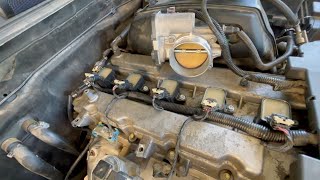
Typical fix: Replace the failed ignition coil. It is often recommended to replace all coils and spark plugs 🎬 Watch: 3.7L engine spark plug and coil replacement walkthrough at the same time for longevity, especially if they are original and have high mileage.
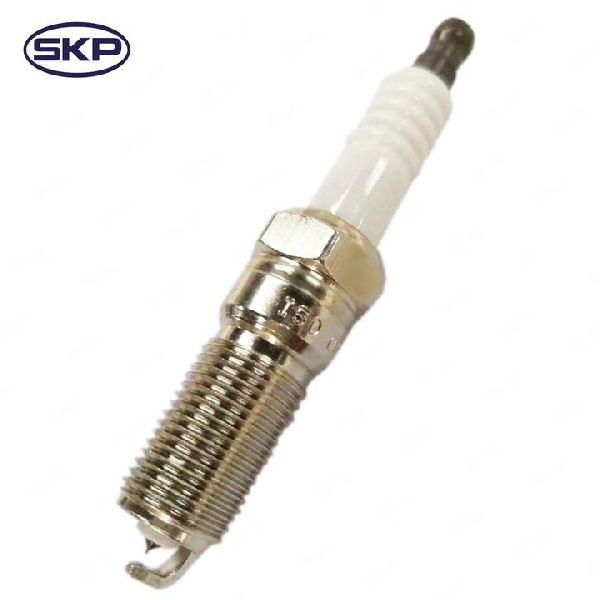
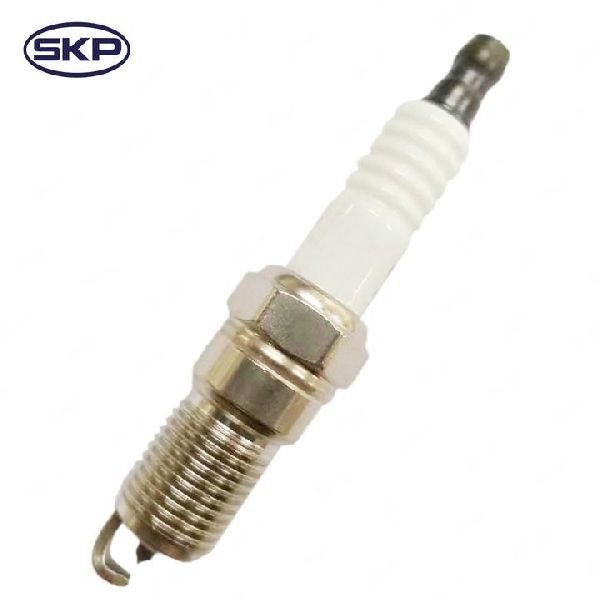
Est. part cost: $40-$105 per coil - Worn or Fouled Spark Plug 🔴 High Probability → Shop Spark Plug Spark plugs are a standard maintenance item that wear out over time, leading to a weak or inconsistent spark. Using non-OEM plugs (brands other than AC Delco) has been reported by some owners to cause misfires.
How to confirm: After confirming the P0301 code, remove the spark plug from cylinder 1. Inspect it for wear, carbon buildup, oil fouling, or damage to the electrode or ceramic insulator. A cracked ceramic insulator is a definitive sign of failure.
Typical fix: Replace the spark plug in cylinder 1. It is best practice to replace all spark plugs as a set at the same time using OEM-spec plugs (ACDelco Iridium for this model).
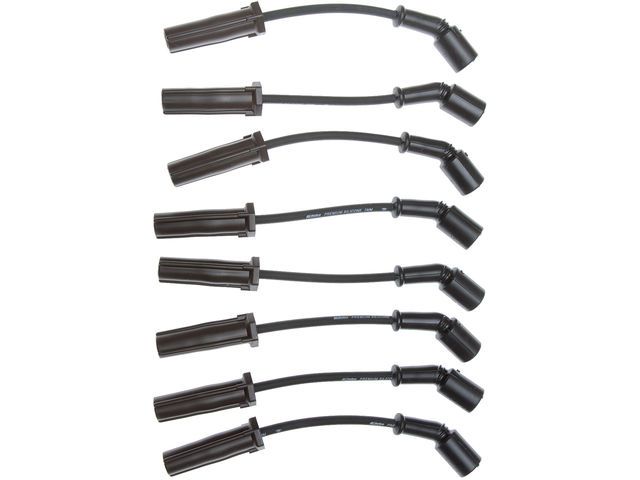
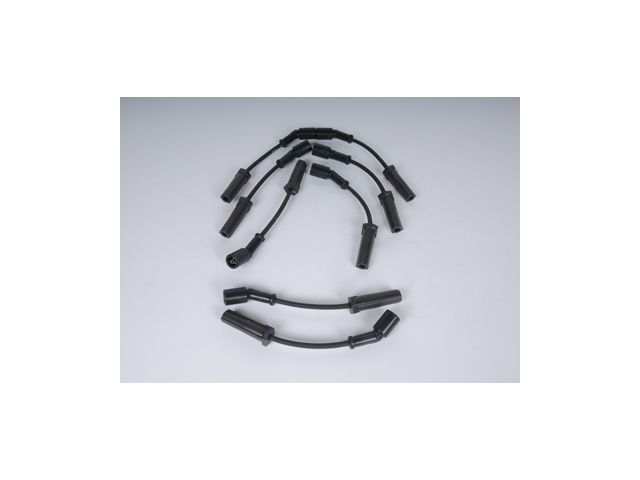
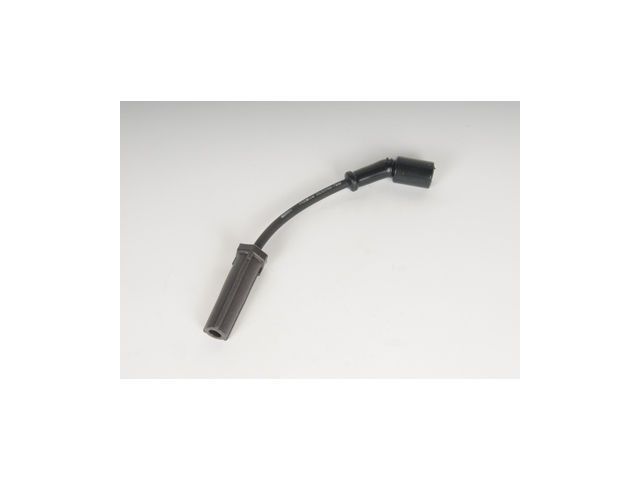
Est. part cost: $5-$25 per plug - Loose or Damaged Spark Plug Wires (5.3L V8 Only) 🟡 Medium Probability → Shop Spark Plug A specific Technical Service Bulletin (PIP4819A) was issued for 2010 models mentioning that loose spark plug wires can cause misfire codes, including P0301. [NHTSA]
How to confirm: Visually inspect the spark plug wire for cylinder 1, checking for a secure connection at both the ignition coil and the spark plug. Look for any signs of damage, arcing (white marks), or corrosion.
Typical fix: Secure the loose connection or replace the damaged spark plug wire. It's often recommended to replace the full set if they are old.
Est. part cost: $10-$30 for a single wire, $50-$100 for a set - Clogged or Faulty Fuel Injector ⚪ Low Probability → Shop Fuel Injector Fuel injectors can become clogged with deposits over time, leading to an improper fuel spray pattern or insufficient fuel delivery to a single cylinder.
How to confirm: If ignition components are confirmed to be good, you can swap the fuel injector from cylinder 1 with another cylinder. If the misfire code moves to the new cylinder, the injector is the problem. This is more labor-intensive than swapping a coil.
Typical fix: Replace the faulty fuel injector. Sometimes, professional fuel system cleaning can resolve a clog, or a bottle of quality fuel injector cleaner (like Techron) can help if the clog is minor.
Est. part cost: $50-$120
Rare But Worth Checking
- Low Engine Compression: On earlier models of this generation (especially 2004-2007), a P0300-series code could indicate a serious internal engine issue with valve seats in the cylinder head. While GM reportedly fixed the issue for the 2007+ 3.7L LLR engine, some owner reports of failures on later models still exist. A compression test is a crucial step if ignition and fuel issues are ruled out.
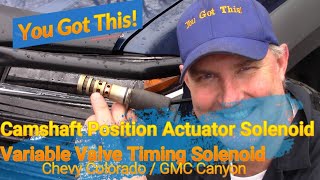
- Faulty Camshaft Position Actuator Solenoid (VVT Solenoid): → Shop Engine Camshaft A failing VVT solenoid can cause rough idling, stalling, and misfires, and can trigger a P0301 code among others. The mesh screens on the original solenoids were known to degrade and break off, which can clog oil passages. GM released an updated part with a reinforced screen design to fix this problem. 🎬 See how this defective solenoid can ruin your engine
- Intake Manifold Gasket Leak: → Shop Engine Intake Manifold A vacuum leak from a failed intake manifold gasket near cylinder 1 can lean out the air/fuel mixture for that specific cylinder, causing a misfire. This can sometimes be diagnosed by spraying brake cleaner near the gasket with the engine running and listening for a change in engine RPM.
Diagnosis Steps
- Read the trouble codes with an OBD-II scanner to confirm P0301 is present and check for any other codes. 🎬 Watch: A mechanic's guide to P0301 causes and fixes
- Locate cylinder 1. On the 2.9L I4 and 3.7L I5 engines, it is the cylinder closest to the front of the truck.
- Inspect the ignition components for cylinder 1. On 5.3L V8 models, check the spark plug wire for looseness or damage, as noted in TSB PIP4819A. [NHTSA]
- Swap the ignition coil from cylinder 1 with the coil from cylinder 2. Clear the codes and run the engine. If the code changes to P0302, the ignition coil is bad and needs replacement. This is the most common fix.
- If the code remains P0301, remove and inspect the spark plug from cylinder 1. Look for cracks, fouling, or excessive wear. Even if it looks okay, consider swapping it with the plug from cylinder 2. If the code then changes to P0302, the spark plug was the issue.
- If the misfire still remains on cylinder 1, inspect the wiring harness and connector for the ignition coil and fuel injector on cylinder 1. Check for damage or corrosion.
- Consider the Camshaft Position Actuator Solenoid. Inspect it for damaged screens. This is a known failure point that can cause misfires.
- If ignition components are good, the next step is to check the fuel injector. You can listen for a 'clicking' sound from the injector with a mechanic's stethoscope or swap it with another cylinder's injector (more advanced).
- If all else fails, perform a cylinder compression test to check for mechanical engine problems like a bad valve, worn piston rings, or a head gasket leak.
Parts You'll Likely Need
- Ignition Coil
(OEM #12631132 (ACDelco D510C))— This is the most common failure point causing a P0301 code on the I4 and I5 engines in this truck. Delphi (GN10309) is considered an OEM equivalent.
Trusted brands: ACDelco, Delphi, Standard Motor Products
OEM price range: $42-$92
Aftermarket price range: $20-$60 - Spark Plug
(OEM #41-103 (ACDelco Iridium))— Spark plugs are a routine maintenance part and a frequent cause of single-cylinder misfires. Owners strongly recommend sticking with the OEM ACDelco plugs to avoid issues.
Trusted brands: ACDelco, NGK
OEM price range: $10-$22
Aftermarket price range: $5-$15 - Camshaft Position Actuator Solenoid
(OEM #12615873 (Updated ACDelco part))— A known failure item on the Atlas engines. The original part had screens that could disintegrate, causing oiling issues and misfires. The updated part has reinforced screens.
Trusted brands: ACDelco
Related Codes That Often Appear With This One
- P0300 — If the misfire is intermittent or begins to affect other cylinders, a P0300 (Random/Multiple Cylinder Misfire) may be stored alongside P0301. This was reported by several owners who initially had a P0301 that later became a P0300.
- P0302, P0303, P0304, P0305 — If multiple ignition coils or spark plugs are failing, you may see misfire codes for other specific cylinders. It's also the code you will see after performing a 'coil swap' diagnostic test.
- P0014, P0017 — These codes, related to Camshaft Position timing, may appear alongside a misfire code if the root cause is a failing VVT solenoid.
Technical Service Bulletins (TSBs) & Recalls
- PIP4819A: Malfunction Indicator Lamp on, engine misfires, DTCs P0300-P0308 may be set. Technicians are advised to inspect and replace loose spark plug wires.
- 07123 / PIP4013D: These bulletins refer to the valve seat failure on earlier 2004-2007 models, which caused misfire codes. While not directly applicable to 2010-2012, they provide context for the platform's history.
Platform-Specific Known Issues
- TSB #PIP4819A: For 2010 models, the manufacturer issued a bulletin regarding misfire codes (including P0301) that advises technicians to inspect for and replace any loose spark plug wires on 5.3L V8 engines.
- VVT Solenoid Failure: The Camshaft Position Actuator Solenoid is a well-documented weak point on the 2.9L and 3.7L engines. The original design's screens can fail, leading to various engine running problems including misfires. An updated part from GM/ACDelco resolves this.
- Cylinder Head Valve Seats (Early Models): → Shop Engine Cylinder Head Though primarily an issue on 2004-2007 models, it's a significant part of the platform's history. Improperly hardened valve seats would wear prematurely, causing loss of compression and misfires. This is an unlikely, but not impossible, cause on 2010-2012 models.
Mechanic-Grade Diagnostic Values
- Fuel Injector Resistance — expected: Approximately 12.6 Ohms for the OEM Delphi Multec II injectors.. Failure: A reading that is significantly different (e.g., more than 0.5 ohms off) from the other injectors, or an open/infinite reading.
- Ignition Coil Resistance (Primary) — expected: Typically between 0.4 and 2.0 Ohms.. Failure: A reading outside the specified range.
- Ignition Coil Resistance (Secondary) — expected: Typically between 6,000 and 10,000 Ohms.. Failure: A reading outside the specified range.
- Fuel Pressure (Key On, Engine Off) — expected: Should hold steady at approximately 50-60 PSI.. Failure: Pressure that is significantly lower or fails to hold and drops quickly.
- Fuel Pressure (Engine Running at Idle) — expected: Approximately 56-60 PSI. The needle on an analog gauge may vibrate rapidly in this range as injectors fire.. Failure: Pressure that is significantly lower than spec, which could indicate a weak fuel pump.
- Mode $06 Misfire Counters — expected: Zero or very low counts for cylinder 1.. Failure: A high number of misfire events logged for cylinder 1 compared to other cylinders. This confirms the misfire is isolated to that cylinder.
Scan Tool Commands That Help
- Tech 2 / GDS2: Fuel Injector Balance Test — Use this function after spark and compression have been ruled out. It precisely pulses each injector and measures the corresponding drop in fuel pressure to identify a clogged or weak injector without having to physically remove it.
- Tech 2 / GDS2: Cylinder Power Balance — This function allows the user to disable one cylinder at a time and observe the drop in engine RPM. If disabling cylinder 1 causes little or no change in RPM, it confirms that cylinder is not contributing power, verifying the misfire.
Wiring & Ground Locations
- SP-105 — Driver's side of the engine bay, near the battery and underhood fuse block.. This is a ground splice pack, not a single ground point. It is known to corrode and cause intermittent electrical issues. It provides the ground path for the fuel pump, fuel-level sender, and the Run/Crank relay. A poor connection here can mimic a failing fuel pump or relay, leading to misfires.
- SP-106 — Passenger side of the engine bay, behind the engine airbox.. This second ground splice pack provides the ground for the HVAC control module and Data Link Connector (DLC). While less likely to cause a single cylinder misfire, corrosion here can cause a variety of confusing electrical symptoms that can complicate diagnosis.
- G103 — Lower left side of the engine block.. This is a primary engine ground. A loose or corroded connection here can affect the performance of various engine sensors and actuators, potentially leading to misfire codes.
- Ignition Coil Connector — On top of the valve cover, plugged into the ignition coil for cylinder 1.. The connector itself or its wiring can become brittle from heat and vibration, leading to a poor connection. Wiggling this connector while the engine is running may induce or change the misfire, indicating a wiring or terminal issue rather than a faulty coil.
OEM Part Supersession History
Unknown (Original-fitment VVT Solenoid)→12615873 (ACDelco)— The original VVT solenoids were manufactured with mesh screens that were prone to breaking apart, sending debris into oil passages and causing performance issues, including misfires.
Helpful Videos
Used OEM Parts in Stock
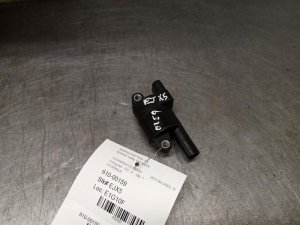
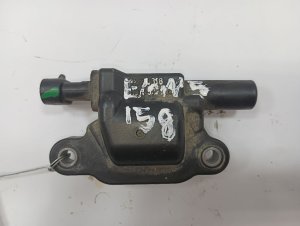
New Aftermarket Parts Available
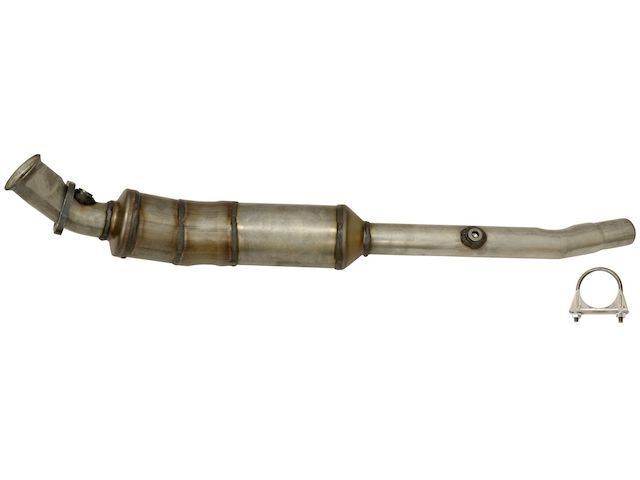

The information in this article is provided for general reference and educational purposes only. Vehicle specifications, procedures, and part compatibility can vary by production date, trim level, and region. Always consult your vehicle's factory service manual and verify part numbers before purchasing or performing repairs. Safety-critical components such as airbags, seat belts, and braking systems should be installed by a qualified professional.
- Chevrolet COLORADO:
- 🧭 Diagnostic Flowchart
- 🎬 Helpful Videos
- 🛍️ Shop This Part
- What's Unique About the 2010-2012 Chevrolet COLORADO
- Symptoms You May Notice
- Most Likely Causes
- Rare But Worth Checking
- Diagnosis Steps
- Parts You'll Likely Need
- Related Codes That Often Appear With This One
- Technical Service Bulletins (TSBs) & Recalls
- Platform-Specific Known Issues
- Mechanic-Grade Diagnostic Values
- Scan Tool Commands That Help
- Wiring & Ground Locations
- OEM Part Supersession History
- 🎟️ Get 5% Off