

P0301 on 2008-2015 Chevrolet Silverado 1500: Cylinder 1 Misfire Causes and Fixes
P0301 means cylinder 1 is misfiring. On 2008-2015 Silverados, this is often a simple fix like a spark plug or ignition coil. However, it can also be the first sign of a more serious, common issue with the Active Fuel Management (AFM) lifters, which is a much more expensive repair. A ticking noise accompanying the misfire is a strong indicator of the more severe lifter failure.
- P0301 on a 2008-2015 Silverado means cylinder 1 (front, driver's side) is misfiring.
- Always start with the simple, inexpensive checks: swap the ignition coil, inspect the spark plug wire, and inspect/replace the spark plug.
- Be highly aware that this code is a classic symptom of a failing Active Fuel Management (AFM) lifter, a common and expensive problem on these trucks.
- A ticking engine noise combined with a P0301 code strongly suggests a mechanical lifter problem, not just an ignition issue.
- If the Check Engine Light is flashing, pull over. Driving can cause rapid and costly damage to the catalytic converter.
What's Unique About the 2008-2015 Chevrolet SILVERADO 1500
The V8 engines in this generation of Silverado are known for issues with the Active Fuel Management (AFM) system, also called Displacement on Demand (DOD). This system deactivates cylinders (including cylinder 1) to save fuel, but the specialized hydraulic lifters are a common failure point. A P0301 code is often the first symptom of a collapsed or stuck AFM lifter, a problem far more specific and serious than a simple spark plug issue. The AFM lifters can fail to unlock, get stuck in the collapsed position, or suffer internal locking pin damage. This makes proper diagnosis crucial to avoid unnecessary simple repairs when a major mechanical problem is looming.
Diagnostic Flowchart
Tap your situation to follow the diagnostic path that matches what you're seeing on this vehicle.
Generation note: This range covers two Silverado generations: the GMT900 (2008-2013) and the K2XX (2014-2015). While both share the P0301 code and are prone to AFM lifter issues, the 2014-2015 models feature the newer EcoTec3 engine family with direct injection. These newer engines can also suffer from misfires due to carbon buildup on intake valves or issues with the high-pressure fuel system seals, adding another potential cause to investigate. GM TSB #16-NA-383 discusses methods for decarbonizing intake valves to address misfires on these direct-injected engines.
Symptoms You May Notice
- Rough or shaking idle
- Hesitation or stumbling during acceleration
- Flashing or solid Check Engine Light
- Noticeable loss of engine power
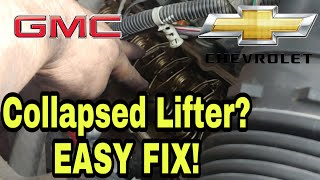
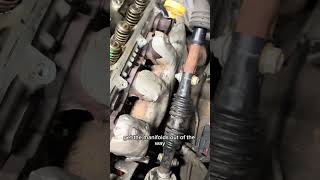
- Engine ticking or chirping noise, especially on cold start 🎬 Watch: How to diagnose and hear a collapsed AFM lifter
- Decreased fuel economy
- Smell of unburned fuel from the exhaust
- Erratic RPMs at idle.
- Replacing only the spark plug when the underlying cause is a failing AFM lifter. The misfire will return, often accompanied by a ticking noise and eventually more severe engine damage.
- Replacing a fuel injector when the actual cause is a mechanical failure like a collapsed lifter or damaged camshaft lobe.
Most Likely Causes
- Failed Active Fuel Management (AFM) Lifter 🔴 High Probability → Shop Engine Valve Lifter The AFM system's hydraulic lifters are a well-documented, widespread failure point on these GM V8 engines. They can get stuck or collapse, preventing the valve from opening and causing a dead misfire. Cylinders 1, 4, 6, and 7 are the AFM cylinders, making P0301 a common code for this failure. Multiple TSBs, including #15-06-01-002K, address this issue.
How to confirm: After ruling out ignition and fuel, a distinct ticking noise from the top-end of the engine is a strong clue. A compression test on cylinder 1 will show low or zero compression if the lifter has failed. A mechanic can also use a borescope to inspect for a damaged piston or cylinder wall. If the lifter is stuck in its bore, it may require special tools like a slide hammer to remove.
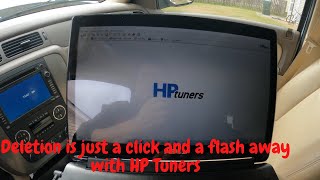
Typical fix: This is a major repair requiring removal of the cylinder head to replace all lifters on the affected bank. The Valve 🎬 See this step-by-step teardown to remove failed lifters Lifter Oil Manifold (VLOM) is also often replaced. Due to the high failure rate, many owners opt for an 'AFM delete kit' which replaces the AFM lifters with standard LS7-style lifters and may include a non-AFM camshaft. This prevents future failures but requires an ECU tune to disable the AFM system. This is not a simple DIY job.
Est. part cost: $400-$1800 - Worn or Fouled Spark Plug 🔴 High Probability → Shop Spark Plug As with any engine, spark plugs are a routine wear item. Oil consumption, another common issue on these trucks, can foul the plugs. A TSB (#PIP4525D) specifically notes to check for oil-fouled or cracked spark plugs for this code.
How to confirm: Remove the spark plug from cylinder 1 and inspect it for wear, carbon tracking, oil fouling, or a cracked porcelain insulator. Compare it to a new plug. An oil-soaked plug is a strong indicator of a more serious problem.
Typical fix: Replace the spark plug. It is recommended to replace all 8 plugs at the same time with high-quality Iridium plugs like the ACDelco 41-162.
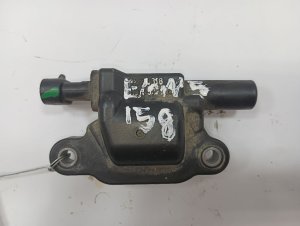
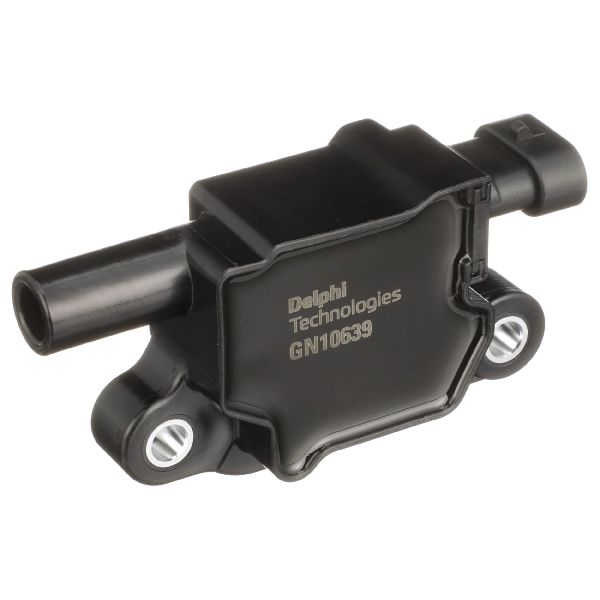
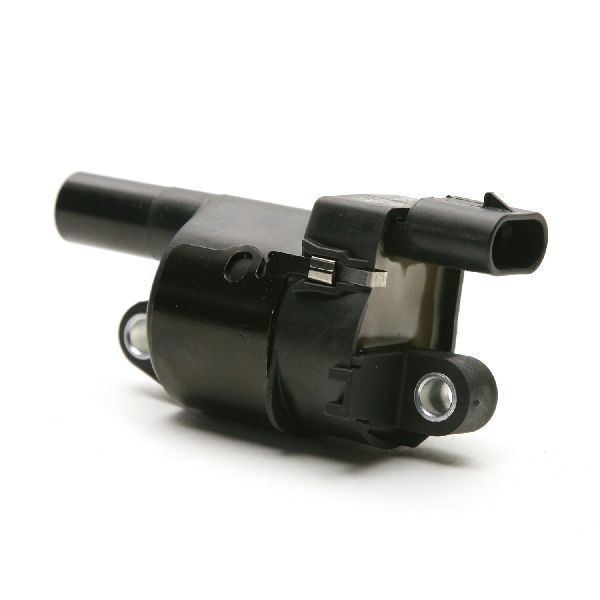
Est. part cost: $10-$25 per plug - Faulty Ignition Coil 🟡 Medium Probability → Shop Ignition Coil Coils are subjected to high heat and vibration and can fail over time, resulting in a weak or no-spark condition.
How to confirm: Swap the ignition coil from cylinder 1 with another cylinder (e.g., cylinder 3). Clear the codes and drive the truck. If the code changes to P0303, the coil is bad.
Typical fix: Replace the faulty ignition coil. It is best to use a quality OEM replacement like ACDelco.
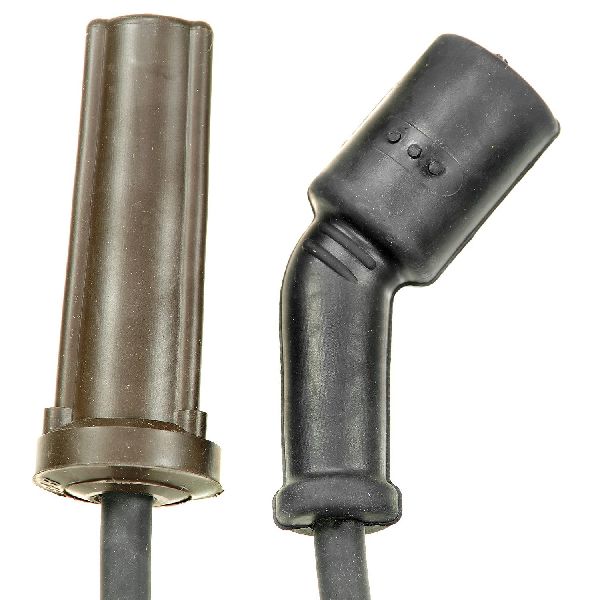
Est. part cost: $40-$80 - Bad Spark Plug Wire 🟡 Medium Probability → Shop Spark Plug Wires can degrade over time, causing high resistance or allowing the spark to arc to the engine block instead of reaching the plug. A TSB (#PIP4819A) specifically calls out inspecting and replacing loose spark plug wires for this code.
How to confirm: Visually inspect the wire for cracks, burns, or corrosion. With the engine running in the dark, you can sometimes see the spark arcing from the wire to a metal surface. Check for a secure connection at both the coil and the spark plug.
Typical fix: Replace the spark plug wire. It is best practice to replace the full set.
Est. part cost: $50-$100 for a set - Clogged or Faulty Fuel Injector ⚪ Low Probability → Shop Fuel Injector Fuel injectors can become clogged with deposits over time, preventing them from delivering the correct amount of fuel to the cylinder. GM does not recommend injector cleaning as preventative maintenance but does approve it as a diagnostic step.
How to confirm: After ruling out ignition issues, you can test the injector's electrical circuit with a 'noid light'. A more definitive test is to swap the injector with another cylinder, but this is more labor-intensive. A professional can use an AFIT (Active Fuel Injector Tester) for a more thorough diagnosis.
Typical fix: Replace the faulty fuel injector. It's recommended to replace the O-rings when the injector is serviced.
Est. part cost: $50-$150
Rare But Worth Checking
- Intake Manifold Gasket Leak: → Shop Engine Intake Manifold The intake manifold gaskets on these engines can fail, creating a vacuum leak that leans out the air/fuel mixture for a specific cylinder, causing a misfire. This is often more noticeable on a cold start and may improve as the engine warms up and the gasket expands. The replacement gaskets are often an improved design.
- Excessive Carbon Buildup on Valves: Especially on the direct-injected 2014+ models, carbon can build up on the back of the intake valves, restricting airflow and causing misfires. GM has issued a TSB (#16-NA-383) related to this issue, which recommends a top engine cleaning procedure.
- Damaged Piston/Rings: In some forum-documented cases, a piece of hard carbon buildup has broken off, damaging the piston rings and leading to a dead cylinder with high oil consumption. This is a catastrophic failure requiring engine replacement or rebuilding.
Diagnosis Steps
- Read the code with an OBD-II scanner and check for any other stored codes.
- Note if the Check Engine Light is solid or flashing. A flashing light means stop driving as soon as safely possible to prevent catalytic converter damage.
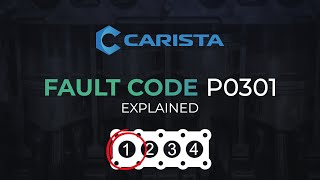
- Locate cylinder 1 (front 🎬 Watch: A mechanic's guide to diagnosing a P0301 misfire cylinder on the driver's side).
- Listen for a distinct ticking or tapping sound from the valve cover area, which could indicate a lifter problem. This is a critical step for this platform.
- Swap the ignition coil from cylinder 1 to cylinder 3. Clear the codes and run the engine. If the code changes to P0303, the coil is faulty.
- If the code remains P0301, inspect the spark plug wire for damage and proper connection as per TSB #PIP4819A.
- Remove and inspect the spark plug from cylinder 1. Look for wear, damage, or oil fouling as noted in TSB #PIP4525D. An oil-soaked plug is a major red flag.
- If ignition components are good, the next step is to check for a fuel delivery problem (injector) or a mechanical problem (compression).
- Perform a compression test on cylinder 1. A significantly lower reading compared to other cylinders points towards a mechanical issue like a valve problem or, most commonly, a failed AFM lifter.
- If compression is good, consider testing the fuel injector using a noid light or by swapping it with another cylinder.
- If compression is low, a cylinder leak-down test can help pinpoint if the leak is from intake valves, exhaust valves, or piston rings.
Parts You'll Likely Need
- Spark Plug
(OEM #12621258 (superseded by 41-162))— This is a common wear item and one of the most frequent causes of a single-cylinder misfire. TSB #PIP4525D points directly to checking the spark plug.
Trusted brands: ACDelco, NGK
OEM price range: $15-$25
Aftermarket price range: $8-$15 - Ignition Coil
(OEM #12611424 (or D510C))— Ignition coils are a common failure point that prevents spark delivery to the plug.
Trusted brands: ACDelco, Delphi
OEM price range: $60-$90
Aftermarket price range: $35-$60 - Active Fuel Management (AFM) Lifters
(OEM #12645725)— This is the most common major mechanical failure on this platform that presents as a P0301 code. The lifter collapses and fails to open the valve, often damaging the camshaft in the process.
Trusted brands: ACDelco, General Motors
OEM price range: $30-$50 per lifter
Aftermarket price range: $20-$40 per lifter - Spark Plug Wires
(OEM #9748RR)— Wires degrade over time and can cause a weak or misdirected spark. TSB #PIP4819A specifically mentions checking them for misfire codes.
Trusted brands: ACDelco, NGK
OEM price range: $60-$120 for a set
Aftermarket price range: $40-$80 for a set - AFM Delete Kit
(OEM #N/A (Aftermarket))— For a permanent solution to recurring AFM lifter failures, many owners install a delete kit. This typically includes a non-AFM camshaft, standard LS7 lifters, new lifter trays, a new valley cover, and required gaskets.
Trusted brands: Texas Speed & Performance, Brian Tooley Racing
OEM price range: N/A
Aftermarket price range: $500-$1500 for a complete kit
Related Codes That Often Appear With This One
- P0300 — If the misfire is intermittent or other cylinders are also beginning to misfire, a P0300 (Random/Multiple Cylinder Misfire) code may appear alongside P0301. This is common with AFM lifter issues as the problem can affect multiple AFM cylinders.
- P0201 — This code indicates a fault in the cylinder 1 injector circuit. It can appear with P0301 if the injector itself is failing or if there is a wiring issue, leading to both an electrical fault and a misfire.
Technical Service Bulletins (TSBs) & Recalls
- Advises technicians to inspect spark plug wires for looseness when diagnosing various misfire codes, including P0301.
- Directs technicians to inspect spark plugs for oil fouling and cracks when diagnosing P0300 or P0301, often in relation to oil consumption issues.
- Provides information on diagnosing and correcting rough idle or misfire conditions on direct-injected engines due to carbon buildup on intake valves, recommending a top engine cleaning procedure.
- Addresses engine misfire/tick noise (P0300) caused by collapsed or stuck AFM lifters, damaged locking pins, or bent pushrods.
Platform-Specific Known Issues
- A P0301 code is a very common precursor to a complete AFM lifter failure, which is a known, widespread issue on the 5.3L and 6.2L V8 engines from this era.
- High oil consumption can lead to oil-fouled spark plugs, which is a specific condition mentioned in TSB #PIP4525D as a cause for misfires.
Mechanic-Grade Diagnostic Values
- Low-Side Fuel Pressure (2014+ EcoTec3 5.3L) — expected: 58 PSI at idle, rising to ~67 PSI at wide-open throttle.. Failure: Pressure below the 45-55 PSI range under load can indicate a weak fuel pump.
- Fuel Injector Circuit Voltage (Key On, Engine Off) — expected: Approximately 12V (battery voltage) on BOTH wires at the injector connector.. Failure: The PCM supplies a pulsed ground to activate the injector. With the engine off, the circuit is open at the PCM driver, so voltage passes through the injector's coil, resulting in 12V on both the power (pink) wire and the control wire. Zero volts on the pink wire indicates a power supply issue.
Scan Tool Commands That Help
- GDS2 / Tech2: AFM (Active Fuel Management) System Disable — If an AFM lifter failure is suspected (e.g., ticking noise), a technician can use this command to force the engine into V8 mode. If the ticking noise changes or disappears, it strongly suggests the issue is within the AFM system.
- GDS2 / Tech2: Injector Balance Test — This function allows a technician to fire each injector individually and measure the corresponding pressure drop in the fuel rail. It can identify a clogged or weak injector without having to physically remove it from the engine.
- GDS2 / Tech2: Misfire History Data — While not a command, dealer-level scan tools can display detailed misfire counters for each cylinder over a history of drive cycles. This is more granular than a simple DTC and can help identify an intermittent misfire that isn't severe enough to constantly trigger the light.
Wiring & Ground Locations
- G103 — On the front corner of the passenger side cylinder head, just below the valve cover.. This is a primary engine control ground. Poor contact here can cause erratic sensor readings and misfire detection.
- G102 — On the driver's side of the engine block, above the pan rail and in front of the motor mount.. Another critical engine ground. Corrosion or looseness can lead to various electrical issues, including misfires.
- Injector Power Feed — A common PINK wire supplies 12V+ to all eight fuel injectors.. A fault in this single power feed wire or its fuse can cause multiple cylinders to misfire. For a single cylinder misfire, the issue is more likely the pulsed ground wire from the PCM or the injector itself.
- Engine Block to Chassis Ground — A ground strap connecting the back of the engine block to the vehicle's chassis/firewall.. This is a main ground path. If it's corroded or broken, the electrical system may try to ground through other paths, causing voltage drops and unpredictable behavior in the ignition and fuel systems.
Real Owner Repair Stories
- Reddit user cr04070 (2015 Silverado 5.3L with 103,000 miles) — Cylinder 7 misfire (P0307). No ticking or knocking was audible.
❌ Tried (didn't work) Replacing the spark plug, Replacing the ignition coil, Replacing the fuel injector, Replacing the spark plug wires
✅ What actually fixed it A dealership diagnosis confirmed a collapsed AFM lifter, which had also damaged the camshaft lobe. The final repair was a full AFM delete, installing LS7 lifters and a Texas Speed Stage 2 low-lift camshaft. - CarComplaints.com user (Silverado 1500 LT 5.3L V8) — Cylinder 7 misfire (P0307), zero compression in the cylinder.
❌ Tried (didn't work) Initial OBD scan and compression check pointed to a major issue.
✅ What actually fixed it Dealer diagnosed failed lifters which had scored the camshaft. The engine was rebuilt at a cost of $6,300.
"I Checked Everything" — The Actual Cause
- A common scenario for P0301 on this platform is for a technician to perform a smoke test to check for vacuum leaks and find none. The code persists because the root cause is not a leak but a purely mechanical failure of an Active Fuel Management (AFM) lifter collapsing, which a smoke test cannot detect. This leads to misdiagnosis if the technician stops at the clean smoke test and doesn't proceed to mechanical checks like a compression test.
OEM Part Supersession History
GM 10457730 (Also sold as ACDelco D585)→GM 19418992— Standard part lifecycle update.
Heads up: The original D585 'round' style coil is a well-regarded design; ensure aftermarket replacements are from a reputable OE-level brand.AFM Lifter (e.g., Elgin HL-7011)→DFM Lifter (e.g., Elgin HL-7025)— Updated design for newer Dynamic Fuel Management (DFM) engines.
Heads up: The newer DFM lifter (HL-7025) IS backward-compatible and can be used in 2008-2015 AFM engines. However, the original AFM lifter (HL-7011) is NOT forward-compatible with newer DFM engines.
Model Year Variations Within This Range
- 2014-2015: These model years use the newer EcoTec3 engine family with direct injection. This makes them susceptible to misfires from heavy carbon buildup on the intake valves, an issue less common on the port-injected 2008-2013 engines. GM TSB 16-NA-383 addresses this specific issue and recommends a chemical cleaning procedure.
- 2008-2013 (GMT900): These models use port fuel injection. While still prone to AFM lifter failure, they are less likely to have misfires caused by carbon on intake valves. Their fuel system diagnostics are also simpler, as they lack the high-pressure direct injection pump and related components of the 2014+ models.
Helpful Videos

Used OEM Parts in Stock
New Aftermarket Parts Available


The information in this article is provided for general reference and educational purposes only. Vehicle specifications, procedures, and part compatibility can vary by production date, trim level, and region. Always consult your vehicle's factory service manual and verify part numbers before purchasing or performing repairs. Safety-critical components such as airbags, seat belts, and braking systems should be installed by a qualified professional.
- Chevrolet SILVERADO 1500:
- 🧭 Diagnostic Flowchart
- 🎬 Helpful Videos
- 🛍️ Shop This Part
- What's Unique About the 2008-2015 Chevrolet SILVERADO 1500
- Symptoms You May Notice
- Most Likely Causes
- Rare But Worth Checking
- Diagnosis Steps
- Parts You'll Likely Need
- Related Codes That Often Appear With This One
- Technical Service Bulletins (TSBs) & Recalls
- Platform-Specific Known Issues
- Mechanic-Grade Diagnostic Values
- Scan Tool Commands That Help
- Wiring & Ground Locations
- Real Owner Repair Stories
- "I Checked Everything" — The Actual Cause
- OEM Part Supersession History
- Model Year Variations Within This Range
- 🎟️ Get 5% Off