

P0301 on 2017-2018 Kia Forte: Cylinder 1 Misfire Causes and Fixes
On a 2017-2018 Kia Forte, the P0301 code is almost always caused by a faulty ignition coil on cylinder 1, a known issue addressed by Kia TSB SA321. Replacing the coil is a simple DIY fix, with a new OEM part costing around $75-$110. For long-term reliability, it is highly recommended to replace all four coils and spark plugs at the same time.
- P0301 on a 2017-2018 Forte is most likely a bad ignition coil, a known weak point addressed by Kia TSB SA321.
- Always use the 'swap test' to diagnose the ignition coil and spark plug before buying parts. It's a free and definitive diagnostic step.
- Due to the known issues, it is best practice to replace all four ignition coils and spark plugs at the same time for long-term reliability.
- If new ignition parts don't fix the code, ask a Kia dealer about the ECU software update (TSB ENG208) before pursuing more expensive repairs.
- Do not drive with a flashing check engine light, as you risk destroying your catalytic converter, turning a cheap fix into a very expensive one.
What's Unique About the 2017-2018 Kia Forte
The 2017-2018 Forte with the 2.0L Nu MPI engine has a well-documented history of ignition system problems that trigger P030x codes. Kia acknowledged a high failure rate of the original ignition coils and their internal RFI springs by issuing Technical Service Bulletin SA321 (also known as TSBENG181_R1) for vehicles produced from May 16, 2016, through September 7, 2017. This TSB instructs dealers to replace all four ignition coils if a P030x code is present. Kia also released software updates under TSB ENG208 to make the misfire detection less sensitive, which should be performed after the coil issue is addressed. This means a P0301 code on this specific vehicle is far more likely to be a known component defect than a random failure.
Symptoms You May Notice
- Rough or shaking idle
- Hesitation or stumbling during acceleration
- Flashing or solid Check Engine Light
- Reduced engine power
- Difficulty starting the engine
- Decreased fuel economy
- Engine stalls at stoplights.
- Replacing only the spark plug when the underlying issue is the well-known faulty ignition coil.
- Replacing the fuel injector before thoroughly testing the ignition system (coils and plugs).
- Assuming a major mechanical failure before checking for the TSB-related ignition coil and ECU software issues.
- Replacing the catalytic converter. A misfire can destroy a catalytic converter, but the converter itself does not cause the misfire. The misfire must be fixed first.
Most Likely Causes
- Faulty Ignition Coil 🔴 High Probability → Shop Ignition Coil Kia issued TSB SA321 for 2017-2018 models due to a high failure rate of the original ignition coils or their internal RFI springs. This is the most common cause, with owner experiences confirming repeated failures every 30-40k miles.
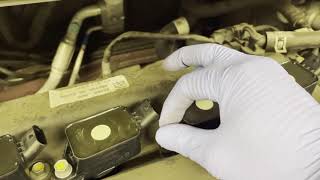
How to confirm: Swap the ignition coil from cylinder 1 with the coil from cylinder 2. Clear the codes and drive. If the code changes to P0302, the coil is faulty. This is the most common and effective DIY diagnostic step. 🎬 Watch: How to swap coils to confirm a misfire.
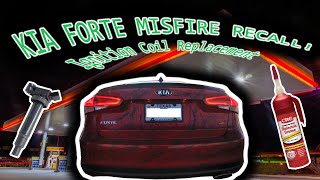
Typical fix: Replace the faulty ignition coil. Due to the known high failure rate documented in TSB SA321, it is highly recommended to replace all four ignition coils at the same time.
Est. part cost: $45-$110 per coil - Worn or Defective Spark Plug 🔴 High Probability → Shop Spark Plug Spark plugs are a standard wear item with a replacement interval of 60,000 to 100,000 miles. Additionally, TSB ENG186 was issued for some 2018 models due to factory spark plugs with cracked porcelain insulators.
How to confirm: After confirming the ignition coil is good, swap the spark plug from cylinder 1 with the plug from cylinder 2. If the code changes to P0302, the spark plug is bad. Visually inspect the plug for a worn electrode, carbon buildup, or oil fouling.
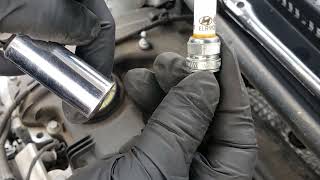
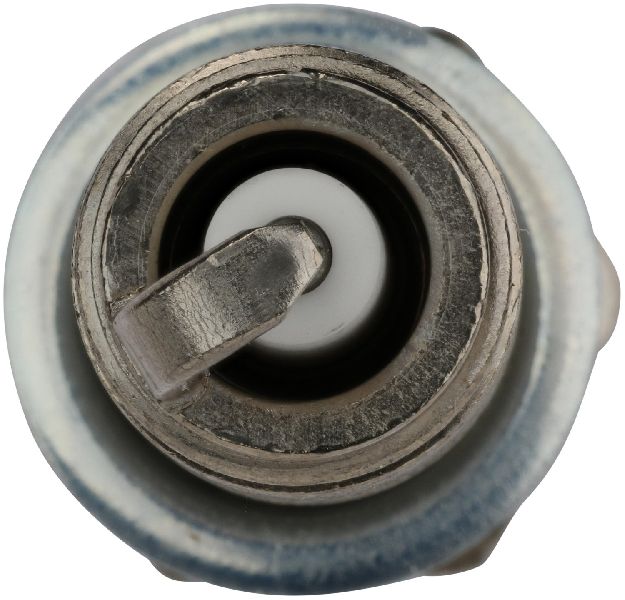
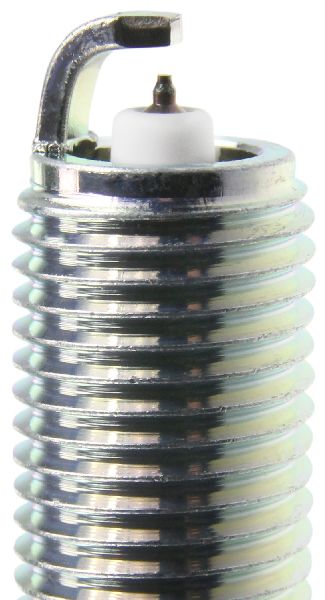
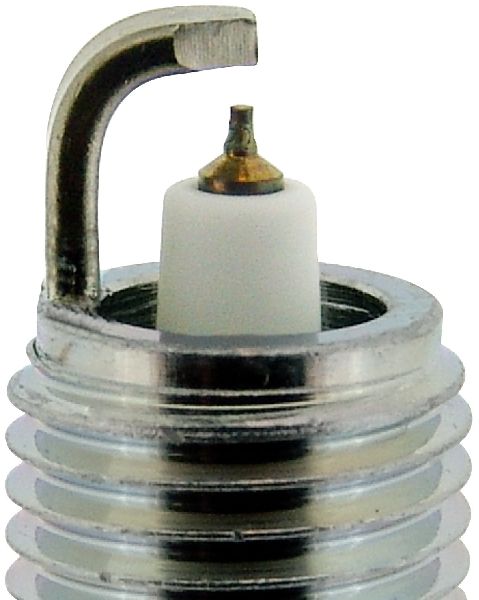
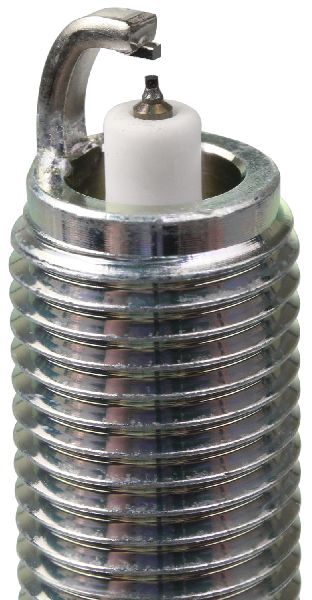
Typical fix: Replace the faulty spark plug. It is best practice to replace all four spark plugs as a set with pre-gapped Iridium plugs (e.g., NGK SILZKR7B11).
Est. part cost: $15-$25 per plug - ECU Software Update Needed 🟡 Medium Probability Kia released TSB ENG208 because the original ECU software was overly sensitive and could falsely trigger misfire codes (P0301-P0304) and air-fuel imbalance codes (P219x).
How to confirm: If new coils and plugs do not resolve the P0301 code, contact a Kia dealership and inquire if TSB ENG208 (or SA285/SA378) has been performed on your vehicle's VIN. TSB ENG208 explicitly states that the coil service action (SA321) should be performed first.
Typical fix: A Kia dealer needs to apply the ECU logic update using their proprietary diagnostic system (KDS). In some cases, owners have reported that a 'hard reset' of the computer by an independent shop resolved the issue after new parts were installed.
Est. part cost: $0-$200 (cost varies by dealer if not covered) - Clogged or Faulty Fuel Injector ⚪ Low Probability → Shop Fuel Injector
How to confirm: If ignition and spark are confirmed good, listen to the injector with a mechanic's stethoscope for a consistent clicking sound. A more advanced test is to swap the fuel injector from cylinder 1 with another cylinder and see if the misfire code follows.
Typical fix: Clean or replace the fuel injector for cylinder 1.
Est. part cost: $50-$150
Rare But Worth Checking
- Low Engine Compression: This indicates a more serious mechanical engine problem, such as worn piston rings, a bad valve, or a leaking head gasket. A compression test is needed to diagnose this. One owner reported good compression (160-180 PSI) but still had a misfire, which was ultimately a computer issue.
- Carbon Buildup on Intake Valves: While more common on GDI engines, carbon deposits can still form over time on MPI engines, disrupting airflow into the cylinder and causing misfires. A chemical intake cleaning (e.g., CRC Intake Valve Cleaner) can sometimes resolve this.
Diagnosis Steps
- Read the trouble codes with an OBD-II scanner and confirm P0301 is present. Note any other codes.
- Check if the Check Engine Light is flashing. If so, avoid heavy acceleration or prolonged driving to protect the catalytic converter.
- Locate cylinder 1 (far left/passenger side). Swap the ignition coil from cylinder 1 with the coil from cylinder 2.
- Clear the codes and drive the vehicle until the light returns. If the code is now P0302, the ignition coil is bad.
- If the code remains P0301, swap the spark plug from cylinder 1 to cylinder 2. Clear codes and repeat the test. If the code changes to P0302, the spark plug is bad.
- If the code is still P0301, inspect the wiring and connector for the ignition coil and fuel injector on cylinder 1. The plastic clips can become brittle.
- If parts and wiring seem okay, contact a Kia dealer to check if TSB SA321 (coil replacement) or TSB ENG208 (ECU update) apply to your VIN and have not been completed.
- If all else fails, consider more advanced diagnostics like checking the fuel injector, testing for vacuum leaks, or performing an engine compression test.
Parts You'll Likely Need
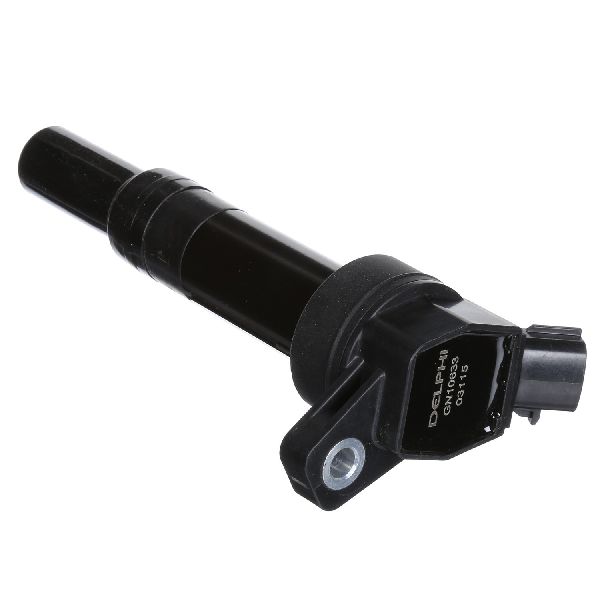
- Ignition Coil
(OEM #27300-2E601)— This is the most common failure part for P0301 on this vehicle, as confirmed by Kia's own Technical Service Bulletin SA321. It is highly recommended to replace all four at once.
Trusted brands: Kia (OEM), NGK, Delphi, Bosch, Duralast (C1824-DL)
OEM price range: $75-$110
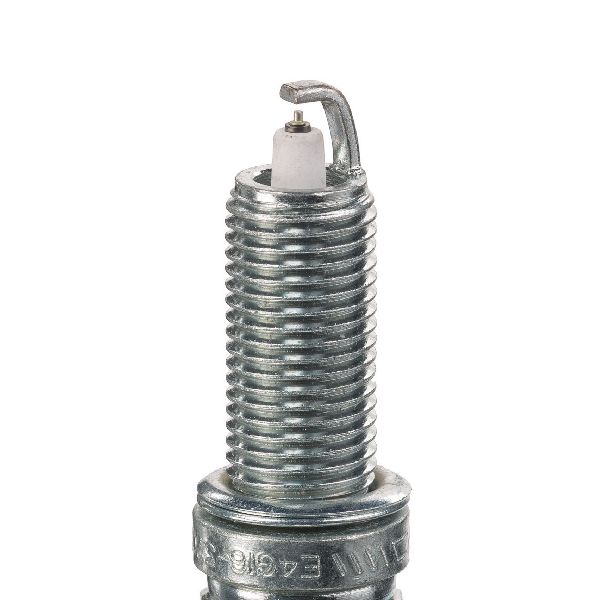
Aftermarket price range: $45-$80 - Iridium Spark Plug
(OEM #18846-11070 (NGK SILZKR7B11))— A worn spark plug is the second most likely cause. Some 2018 models were also subject to a TSB for defective plugs from the factory (TSB ENG186).
Trusted brands: NGK (OEM supplier), Denso
OEM price range: $17-$25
Aftermarket price range: $10-$18
Related Codes That Often Appear With This One
- P0300 — If multiple ignition coils are failing, a random/multiple cylinder misfire code may be triggered.
- P0302, P0303, P0304 — These codes will appear if you are performing a 'swap test' to diagnose a bad coil/plug, or if other cylinders are also misfiring due to the same common component failures.
- P219C00, P219D00 — These air-fuel ratio imbalance codes are mentioned alongside misfire codes in TSB ENG208, which provides an ECU software update for both issues.
Technical Service Bulletins (TSBs) & Recalls
- SA321 (TSBENG181_R1): Ignition Coil or Coil RFI Spring Replacement for P030x codes.
- ENG208 (Rev 2): ECU Logic Improvement for P030x and P219x codes.
- ENG186: Addresses cracked spark plug porcelain on some 2018 models.
- 20-FL-001H: Hyundai's equivalent TSB for the Elantra 2.0L Nu, addressing P030x with an ECU update and coil inspection.
Platform-Specific Known Issues
- TSB SA321 / TSBENG181_R1: For 2017-2018 models (produced May 2016 - Sep 2017), Kia acknowledged a high failure rate of ignition coils or their internal RFI springs. This 'Service Action' instructs dealers to replace all four coils if a P030x code is present, or just the RFI springs if no misfire code is stored.
- TSB ENG208 (Rev 2): For 2017-2018 models (produced May 2016 - Jul 2018), Kia released an ECU software update to improve misfire detection logic and prevent false codes. The TSB flowchart confirms that SA321 should be performed *before* this update is applied.
- TSB ENG186: Affects certain 2018 models, pointing to cracked porcelain on the factory spark plugs, requiring replacement.
- Recall SC210 (NHTSA 21V260000): Addresses potential oil pump failure due to foreign particles, which could lead to engine seizure. The fix involves replacing the oil pan.
Mechanic-Grade Diagnostic Values
- Ignition Coil Primary Resistance — expected: 0.75 Ω ± 15% at 20°C (68°F). Failure: A reading significantly outside this range, or an open/short circuit.
- Ignition Coil Secondary Resistance — expected: 5.9 kΩ ± 15% at 20°C (68°F). Failure: A reading significantly outside this range (e.g., open circuit).
- Fuel Injector Resistance (MPI Engine) — expected: 8 - 16 Ohms. Failure: A reading outside this range indicates a faulty injector coil winding.
- Low-Pressure Fuel System — expected: Approx. 71.8 PSI. Failure: Pressure drops significantly below specification, especially during hesitation.
Hidden / Shadow Codes Worth Checking
- Mode 6, Test ID $A2: This is not a stored trouble code, but a live data monitor for misfire counts on Cylinder 1. Test IDs $A3, $A4, and $A5 correspond to cylinders 2, 3, and 4. A count that is climbing on cylinder 1, even without a P0301 code, confirms a real-time misfire. (see via A professional-grade scan tool or an advanced OBD-II app that can access Mode $06 diagnostic data.)
Scan Tool Commands That Help
- Kia GDS / KDS: Live Misfire Data / Misfire Counter — To view the exact number of misfire events per cylinder in real-time. This is more sensitive than waiting for a DTC to set and can confirm an intermittent issue.
- Kia GDS / KDS: Actuation Test / Functional Test (Fuel Injector) — After confirming spark is good, this command can be used to manually cycle the fuel injector for cylinder 1. This helps verify if the injector's solenoid is functioning and if the control circuit is working.
Wiring & Ground Locations
- ECM Pin 6 — At the main Engine Control Module (ECM) connector.. This is the 'Ignition Coil Control 1' pin. A technician can back-probe this pin to check for the control signal (a square wave) from the ECM to the cylinder 1 ignition coil, helping to diagnose a wiring or ECM driver issue if the coil itself is good.
Real Owner Repair Stories
- Reddit user in r/AskMechanics (2017 Kia Forte LX, 2.0L Nu MPI Engine) — Repeated ignition coil failures at 38.5k, 60k, and 108k miles. Symptoms included misfire codes, rough idle, feeling 'gutless' when accelerating, and random RPM drops at idle.
❌ Tried (didn't work) First two failures were fixed under recall/warranty by the dealer. The problem recurred every 30-40k miles.
✅ What actually fixed it At 108k miles, after confirming the code followed the bad coil by swapping it, the owner replaced all four ignition coils with a Duralast set from a local auto parts store, which resolved the idle and misfire issues. - Reddit user platinumboba in r/kia (2012 Kia Soul+ (similar 2.0L engine)) — Initially had a P0302 (Cylinder 2 Misfire). After replacing the coil and moving it to cylinder 1 as a test, a P0301 appeared after 10-15 minutes of driving.
❌ Tried (didn't work) Replacing all 4 spark plugs and a single aftermarket (Duralast) ignition coil. The new coil was faulty or incompatible, causing the misfire to move with it.
✅ What actually fixed it The user ultimately replaced all four coils with a new set, which resolved the issue. This highlights the potential for faulty new aftermarket parts.
When the Usual Fixes Don't Work
- While replacing the coils and plugs is the standard fix, the chronic nature of the ignition coil failures on this platform means it may not be a one-time repair. One owner documented failures at 38.5k, 60k, and 108k miles, with the first two repairs being performed by a dealer under warranty/recall. This suggests the replacement OEM parts may also have a limited lifespan, leading some owners to opt for aftermarket brands with lifetime warranties as a long-term strategy.
OEM Part Supersession History
27300-2E000→27300-2E601— The supersession was likely to address the high failure rate of the original coils, improving reliability and thermal resistance.
Heads up: While the older part may fit, the newest revision (27300-2E601) is the correct and recommended replacement for this vehicle to align with the TSB fixes.
Model Year Variations Within This Range
- 2017-2018: This specific range is covered by TSBs SA321 (coils), ENG186 (plugs), and ENG208 (ECU logic). Models from 2019 onward use a different engine management system and are not subject to these specific hardware-related service actions, though they may have their own software updates.
Diagnostic Flowchart
Other Known Issues on This Vehicle
Issues unrelated to this code that are worth knowing about as an owner of this generation:
- Engine Connecting Rod Bearing Failure 🔴 High — Affects a percentage of Nu GDI and Theta II engines, but Kia extended warranties and issued recalls for many models. The 2.0L Nu MPI in the Forte is less frequently cited than the GDI version, but the issue is prevalent in the engine family. (Ref: Multiple recalls (e.g., NHTSA 21V844) and a class-action settlement led to the creation of the Knock Sensor Detection System (KSDS) software update and lifetime engine warranties for affected vehicles.)
- Oil Pump Failure 🔴 High — A small number of vehicles are affected, but failure can lead to catastrophic engine damage. (Ref: NHTSA Recall SC210 (21V260000) was issued for 2017-2018 Forte models with the 2.0L Nu MPI engine because foreign particles could cause the oil pump to fail, leading to engine damage and stalling. The remedy was to replace the oil pan.)
- Air Bag Control Unit (ACU) Malfunction 🔴 High — Affects a wide range of 2017-2019 Kia models, including the Forte. (Ref: NHTSA Recall SC226 (22V031000) was issued because the ACU cover could contact a memory chip, damaging the circuit and preventing airbags from deploying in a crash.)
- High Rate of Vehicle Theft 🔴 High — Extremely common for Kia/Hyundai models of this era that use a physical key and lack an engine immobilizer. (Ref: Not a traditional recall, but Kia has offered a software update and steering wheel locks to affected owners to mitigate theft risk spurred by social media trends (the 'Kia Boyz' challenge).)
- Excessive Oil Consumption 🟠 Medium — Reported by some owners, particularly on Nu, Gamma, and Theta engines. (Ref: TSB ENG222_R4 addresses a procedure for diagnosing excessive oil consumption on various Kia engines.)
Used vs. New Parts: Buying Guide for This Vehicle
When a used part is the smart pick: For this specific P0301 repair, using a used ignition coil is strongly discouraged due to the well-documented high failure rate of the original parts. A used part is likely to have the same defect or a very limited remaining lifespan. A used ECM could be a cost-effective option if it is damaged, but only if the part number (e.g., 39171-2EXM0) is an exact match and it is professionally reprogrammed to the vehicle.
Donor-vehicle mileage cap: roughly under 30000 miles for the part to have meaningful remaining life.
What to inspect on the donor part:
- For an ignition coil: Avoid. There are no reliable visual cues to determine remaining life.
- For an ECM: Verify no bent pins on the connector, no signs of water intrusion (corrosion, water marks), and no cracks in the casing.
OEM-only on this vehicle (don't cheap out):
- ECU Software Update: This can only be performed by a Kia dealer with their proprietary KDS system.
Aftermarket brands forum-validated for this vehicle:
- Ignition Coils: NGK, Delphi, Denso, Bosch.
- Spark Plugs: NGK (OEM supplier), Denso.
Brands owners have reported issues with on this vehicle:
- Unbranded, no-name ignition coils from online marketplaces have a high rate of being dead-on-arrival or failing prematurely. One owner reported a new Duralast coil was faulty out of the box, indicating that even store brands can have quality control issues.
Real Owner Stories
Aggregated from forums and TSBs cited above. Mileages and costs reflect what owners reported in those sources.
2018 Kia Forte 2.0L
Symptoms: Persistent P0301 misfire; replacing spark plugs, a new coil, and swapping coils between cylinders did not resolve the issue.
What fixed it: A 'hard reset' of the vehicle's computer by an independent shop to make the system recognize the new parts.
Source hint: Reddit r/kia: Cylinder misfire Forte 2018
2017-2018 Kia Forte 2.0L Nu MPI — ~35000 miles
Symptoms: Misfire codes P030x; high failure rate of original ignition coils.
What fixed it: Replacement of all four ignition coils or internal RFI springs as per Service Action instructions.
Source hint: TSB SA321 (TSBENG181_R1)
Related OBD-II Codes
Frequently Asked Questions
Does TSB SA321 apply to my 2017-2018 Kia Forte?
What spark plugs should I use for my 2017-2018 Kia Forte 2.0L Nu engine?
I replaced my coils and plugs but still have a P0301 code. Is there a software fix?
Is there a recall for engine stalling or oil issues on this model?
How can I tell if my 2018 Forte has the spark plug issue mentioned in TSB ENG186?
Can a 'hard reset' of the computer fix a persistent P0301?
Helpful Videos
We Have This Part in Stock

The information in this article is provided for general reference and educational purposes only. Vehicle specifications, procedures, and part compatibility can vary by production date, trim level, and region. Always consult your vehicle's factory service manual and verify part numbers before purchasing or performing repairs. Safety-critical components such as airbags, seat belts, and braking systems should be installed by a qualified professional.
- Kia Forte:
- 🧭 Diagnostic Flowchart
- 🎬 Helpful Videos
- 🛍️ Shop This Part
- What's Unique About the 2017-2018 Kia Forte
- Symptoms You May Notice
- Most Likely Causes
- Rare But Worth Checking
- Diagnosis Steps
- Parts You'll Likely Need
- Related Codes That Often Appear With This One
- Technical Service Bulletins (TSBs) & Recalls
- Platform-Specific Known Issues
- Mechanic-Grade Diagnostic Values
- Hidden / Shadow Codes Worth Checking
- Scan Tool Commands That Help
- Wiring & Ground Locations
- Real Owner Repair Stories
- When the Usual Fixes Don't Work
- OEM Part Supersession History
- Model Year Variations Within This Range
- Other Known Issues on This Vehicle
- Used vs. New Parts: Buying Guide for This Vehicle
- Real Owner Stories
- 2018 Kia Forte 2.0L
- 2017-2018 Kia Forte 2.0L Nu MPI — ~35000 miles
- Related OBD-II Codes
- Frequently Asked Questions
- 🎟️ Get 5% Off