

P0302 on 2010-2017 GMC Yukon XL: Cylinder 2 Misfire Causes and Fixes
P0302 indicates a misfire on cylinder #2. The most common fixes are replacing the spark plug, ignition coil, or spark plug wire. However, on these V8 engines, this code can also be an early sign of a more serious Active Fuel Management (AFM) lifter failure, which is a known, widespread issue that often requires major engine repair.
- P0302 is a misfire on the front passenger-side cylinder.
- Always start diagnosis with the cheapest and easiest parts: the spark plug, ignition coil, and spark plug wire for cylinder #2.
- Use the 'swap test' to diagnose a faulty ignition coil for free before buying a new one.
- A flashing check engine light is a serious warning. Minimize driving to avoid destroying your catalytic converter.
- Listen for a loud, rhythmic ticking noise. If you hear one, the cause is likely a more serious (and expensive) AFM lifter failure, a known problem on these trucks.
What's Unique About the 2010-2017 Gmc YUKON XL
The GMC Yukon XL's V8 engines from this era use an Active Fuel Management (AFM) or Displacement on Demand (DOD) system to improve fuel economy. This system is a well-documented weak point and is prone to lifter failure. While a P0302 code is often a simple ignition issue, it can also be a symptom of a collapsed or stuck AFM lifter, which is a much more serious and expensive repair. An owner complaint filed with the NHTSA specifically mentions a "loud mortar ticking" sound along with a P0302 code, which is a classic sign of lifter failure. GM has released multiple technical service bulletins (like #15-06-01-002D) acknowledging that engine misfires and ticking noises are often the result of a mechanically collapsed or stuck AFM lifter.
Diagnostic Flowchart
Tap your situation to follow the diagnostic path that matches what you're seeing on this vehicle.
Generation note: This range covers two generations: the third (2010-2014, GMT900) and the fourth (2015-2017, K2XX). While most causes are similar, the 2015+ K2XX models feature direct injection engines (L83, L86). This makes a clogged or failing fuel injector a slightly more common cause on the newer models. Additionally, TSBs like 15-06-01-002F specifically address AFM lifter issues in the 2015-2017 models.
Symptoms You May Notice
- Solid or flashing Check Engine Light
- Rough or vibrating idle
- Engine hesitation or stumbling on acceleration
- Noticeable loss of engine power
- Loud ticking or knocking noise from the engine bay, particularly the passenger side.
- Abrupt jumping or lurching.
- Replacing the oxygen (O2) sensors before diagnosing the root cause of the misfire.
- Replacing the catalytic converter when it has been damaged by the misfire, but not fixing the misfire itself.
- Assuming the issue is a simple tune-up part when a ticking noise is present, which strongly suggests a more serious mechanical issue like a failed lifter.
Most Likely Causes
- Worn or Fouled Spark Plug 🔴 High Probability → Shop Spark Plug Spark plugs are a routine maintenance item. Oil consumption related to the AFM system can also foul plugs prematurely.
How to confirm: Visually inspect the spark plug for cylinder #2. Look for a cracked porcelain insulator, heavy carbon buildup, oil fouling, or a worn electrode. Compare its condition to a plug from a working cylinder.
Typical fix: Replace the spark plug. It is best practice to replace all 8 spark plugs at the same time for balanced performance. Use ACDelco Iridium plugs for best results. 🎬 See this walkthrough for replacing spark plugs and ignition wires.
Est. part cost: $10-$25 per plug - Faulty Ignition Coil 🔴 High Probability → Shop Ignition Coil
How to confirm: Swap the ignition coil from cylinder #2 with another cylinder (e.g., cylinder #4, the next one back on the passenger side). Clear the codes and drive. If the code changes to P0304, the ignition coil is the culprit.
Typical fix: Replace the faulty ignition coil. It is a simple, one-bolt replacement.
Est. part cost: $40-$100 - Loose or Damaged Spark Plug Wire 🟡 Medium Probability → Shop Spark Plug GM Technical Service Bulletin #PIP4819A specifically mentions that misfire codes (P0300-P0308) can be caused by loose spark plug wires that have not been fully seated on the spark plug or coil.
How to confirm: Visually inspect the spark plug wire for cylinder #2. Check for cracks, burns, or corrosion. Ensure it is securely clicked onto both the spark plug and the ignition coil by pushing firmly until a 'click' is felt.
Typical fix: Replace the spark plug wire. It's often recommended to replace the full set.
Est. part cost: $50-$120 for a set - Collapsed or Stuck AFM Lifter 🟡 Medium Probability → Shop Engine Valve Lifter The Active Fuel Management (AFM) system on the 5.3L and 6.2L V8s is a notorious failure point. The complex lifters used for cylinder deactivation can become mechanically stuck, collapse internally, or get stuck in their bores, preventing the valve from opening and causing a persistent misfire.
How to confirm: A persistent ticking or knocking noise is a strong indicator. A mechanic can confirm by removing the valve cover to observe valvetrain movement (a collapsed lifter will result in a pushrod/rocker arm that is not moving) or by performing a compression test, which will show low or zero compression on the affected cylinder.
Typical fix: This is a major repair requiring the cylinder head(s) to be removed to replace the faulty lifters, lifter guides, and often the camshaft if it has been damaged by the failed lifter. Many owners opt to install an AFM-delete kit at this time, which replaces all AFM-specific components with standard, more robust parts for a permanent solution. 🎬 Watch: How to permanently fix AFM lifter failure issues. A simple, but less permanent, preventative measure is an OBD-II plug-in device that disables the AFM system from activating.
Est. part cost: $400-$1500+ for parts, with shop repairs often quoted between $3,500 and $8,000. - Clogged or Faulty Fuel Injector ⚪ Low Probability → Shop Fuel Injector More common on the 2015+ direct injection engines (L83/L86). Debris can clog the injector, or the internal electronics can fail. Some TSBs also point to issues with the injector wiring connector.
How to confirm: Can be tested by listening for a consistent clicking sound with a mechanic's stethoscope. A more advanced method involves swapping the injector with another cylinder (similar to the coil swap test) or having a shop perform a flow test.
Typical fix: Replace the faulty fuel injector. On direct injection models, this is a more involved job.
Est. part cost: $70-$200
Rare But Worth Checking
- Intake Manifold Gasket Leak: → Shop Engine Intake Manifold A vacuum leak near the cylinder #2 intake runner can lean out the air-fuel mixture, causing a misfire. This can sometimes be detected by spraying brake cleaner near the gasket with the engine running and listening for a change in idle speed.
- Low Engine Compression: Internal engine damage such as a bent valve, worn piston rings, or a damaged cylinder wall can cause a loss of compression, leading to a misfire. A compression test is required to diagnose this.
- Broken Valve Spring: These engines can suffer from broken valve springs, a defect mentioned in class-action lawsuits regarding the valvetrain. This will prevent the valve from closing properly, causing a complete loss of compression and a persistent misfire on the affected cylinder. A compression test would show zero PSI, and visual inspection under the valve cover would reveal the broken spring.
Diagnosis Steps
- Read the code with an OBD-II scanner to confirm P0302 and check for any other codes. 🎬 Watch: A quick guide to understanding the P0302 misfire code. Note if the Check Engine Light is flashing.
- Listen to the engine for a rhythmic ticking or knocking sound from the passenger side, a strong indicator of lifter failure.
- Inspect the spark plug wire for cylinder #2. Ensure it is fully seated on the plug and coil. Per TSB #PIP4819A, loose wires are a known issue.
- Swap the ignition coil from cylinder #2 with cylinder #4 (the next cylinder back on the same bank). Clear the codes. If the misfire code changes to P0304, the coil has failed.
- If the code remains P0302, inspect the spark plug. Look for damage, wear, or fouling. Replace if necessary. You can also swap the plug with another cylinder to see if the misfire follows.
- If simple ignition components are ruled out, check the fuel injector for cylinder #2. Listen for its clicking operation with a mechanic's stethoscope. Check the wiring harness for any damage, paying close attention to the connector itself per TSB #21-NA-283.
- If the problem persists and especially if a ticking noise is present, a mechanical issue is likely. Perform a compression test on cylinder #2. A reading of 0 PSI could indicate a broken valve spring, while a low reading could be a bad valve, piston ring, or failed AFM lifter.
- If compression is low or there is a loud tick, remove the passenger-side valve cover. With the engine off, check for a broken valve spring. With the engine cranking, observe the rocker arms for cylinder #2. If one is not moving or has excessive play, a collapsed/stuck AFM lifter is the confirmed cause.
Parts You'll Likely Need
- Ignition Coil
(OEM #25198623 (ACDelco D521C))— Ignition coils are a common failure item that directly causes a misfire on a single cylinder. The swap test is a definitive diagnostic.
Trusted brands: ACDelco, Delphi, DENSO
OEM price range: $60-$100
Aftermarket price range: $40-$75 - Iridium Spark Plug
(OEM #12680072 (ACDelco 41-110))— Spark plugs are a routine maintenance item and the most frequent cause of a single-cylinder misfire. The OEM part number 12621258 may also be referenced but has been superseded by 12680072. Some owners report better performance with the older 41-110 spec plugs.
Trusted brands: ACDelco, NGK
OEM price range: $15-$25
Aftermarket price range: $10-$20 - Spark Plug Wire Set — A damaged or loose wire prevents spark delivery. TSB #PIP4819A specifically calls out loose wires as a cause for misfires on these engines.
Trusted brands: ACDelco, NGK/NTK
OEM price range: $80-$150
Aftermarket price range: $50-$120
Related Codes That Often Appear With This One
- P0300 — If the misfire is intermittent or starting to affect other cylinders, a P0300 (Random/Multiple Cylinder Misfire) may be stored as well. Often, a single-cylinder misfire will start as a P0300 before the PCM isolates it.
Technical Service Bulletins (TSBs) & Recalls
- Bulletin #PIP4819A: Mentions that misfire codes (P0300-P0308) can be caused by loose spark plug wires and advises technicians to inspect and ensure they are fully seated.
- Bulletin #15-06-01-002 (and its revisions D, E, F, etc.): A critical TSB that directly addresses engine misfires (P0300) and ticking noises caused by mechanically collapsed or stuck Active Fuel Management (AFM) lifters. It provides diagnostic and repair procedures.
- Bulletin #19-NA-219: Provides information on various engine noises and misfires, pointing to potential causes including collapsed AFM lifters and broken valve springs.
Platform-Specific Known Issues
- Active Fuel Management (AFM) lifter failure is a significant and well-documented issue on these V8 engines. A collapsed lifter will cause a persistent misfire and often produces a loud ticking noise. NHTSA complaint #11691466 for a 2017 model describes a P0302 code with a "loud mortar ticking," indicating this exact failure mode. GM has issued numerous TSBs (e.g., 15-06-01-002 series, 19-NA-219) that detail the diagnosis and repair of misfires caused by stuck, collapsed, or damaged AFM lifters.
Mechanic-Grade Diagnostic Values
- Fuel Injector Resistance — expected: 11-14 Ohms. Failure: A reading outside this range indicates a faulty injector coil.
- Ignition Coil Primary Resistance — expected: 0.49—0.57 ohms. Failure: Readings outside this range suggest a faulty primary winding.
- Ignition Coil Secondary Resistance — expected: 9.5—11.1 kilohms. Failure: Readings outside this range suggest a faulty secondary winding.
Scan Tool Commands That Help
- GDS2/Tech2: Cylinder Power Balance Test — This is a primary diagnostic step to graphically confirm that cylinder #2 is contributing less power than the others, verifying the misfire before replacing parts.
- GDS2/Tech2: Injector Balance Test — Use this when a fuel injector is suspected. The tool commands each injector to fire and measures the corresponding drop in fuel rail pressure. If cylinder #2's pressure drop differs from the others, it confirms a flow issue.
- GDS2/Tech2: AFM System Test — If an AFM lifter failure is suspected, this function can help diagnose the system by monitoring its activation and checking for faults within the Valve Lifter Oil Manifold (VLOM).
Wiring & Ground Locations
- G102 — Located at the left rear of the engine; grounds all 8 ignition coils.. A poor ground at G102 can cause weak or inconsistent spark across all cylinders, potentially leading to random misfires (P0300) or a single-cylinder misfire if the connection for one bank is worse than the other.
- G103 — On the cowl, above the brake booster. This grounds the BCM and ECM. Another primary engine ground is located on the left front of the engine block as part of the main battery negative cable harness.. A faulty ECM ground can cause a wide range of erratic engine behavior, including incorrect sensor readings and misfire detection.
- Cylinder 2 Injector Wiring — The signal wire for the cylinder #2 injector is Light Green/Black and terminates at pin A19 of the ECM connector. The power wire is Pink/Black and is fused by the INJ2 fuse.. Knowing the specific wire colors and pin location allows for precise continuity and voltage testing between the ECM and the injector, which is necessary to rule out a wiring fault.
Real Owner Repair Stories
- Tahoe Yukon Forum user 'Phantom911' (2007 Yukon (GMT900 platform, similar to 2010-2014 models)) — Check Engine Light with code P0302, rough idle.
❌ Tried (didn't work) Replaced the spark plug for cylinder 2, Replaced the ignition coil for cylinder 2 (swapped with another cylinder, code did not move)
✅ What actually fixed it The owner did not perform the fix due to cost, but the dealership diagnosed the root cause as a failure related to the Displacement on Demand (DOD/AFM) system, quoting a $3,500 repair. This confirms a real-world case where basic ignition parts were not the cause, and the issue was the known lifter problem.
"I Checked Everything" — The Actual Cause
- While no specific stories matched this pattern, a common diagnostic dead-end occurs when ignition parts are replaced and a vacuum smoke test shows no leaks. In these cases, the root cause is often a mechanical or electrical component not detectable by a smoke test, such as a failing AFM lifter, a partially clogged fuel injector, or a wiring issue like a broken pin inside the injector connector as noted in TSB 21-NA-283.
When the Usual Fixes Don't Work
- In many documented cases, owners who experienced a P0302 code, especially when accompanied by a ticking noise, found that replacing the spark plug, wire, and ignition coil did not solve the problem. The misfire would persist on cylinder #2, leading to a more in-depth diagnosis that ultimately pointed to a failed AFM lifter. One owner on a public forum reported this exact scenario, where after replacing ignition components himself, a dealer diagnosed the problem as an internal AFM system failure requiring a multi-thousand dollar repair. This highlights that while ignition components are the most common cause, they are not the only cause, and symptoms should be carefully considered to avoid wasting money on incorrect parts.
OEM Part Supersession History
AFM Lifter (e.g., Elgin HL-7011)→DFM Lifter (e.g., Elgin HL-7025)— The newer DFM (Dynamic Fuel Management) lifter was introduced on 2019+ models but is backward-compatible with older AFM engines.
Heads up: The original AFM lifter (HL-7011) will ONLY fit AFM applications. The newer DFM lifter (HL-7025) will fit BOTH AFM and DFM applications. This is critical when ordering replacement parts for a lifter repair.ACDelco 41-110 Spark Plug→ACDelco 41-162 Spark Plug— Standard part update and revision by the manufacturer.
Heads up: While 41-162 is the official replacement, some owners and mechanics report better performance and quality with the older 41-110 specification plugs where available.
Model Year Variations Within This Range
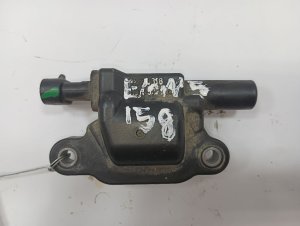
- 2010-2014 vs 2015-2017: The ignition coil style changed between generations. The 2010-2014 (GMT900) models typically use a 'round' style coil, while the 2015-2017 (K2XX) models use a 'square' or 'rectangular' style coil. Visual confirmation is required before ordering.
- 2015-2017: The 2015+ models with L83 and L86 engines use direct injection. This makes issues like carbon buildup on intake valves and high-pressure fuel system faults a more likely cause for misfires compared to the port-injected 2010-2014 models.
Helpful Videos

We Have This Part in Stock

The information in this article is provided for general reference and educational purposes only. Vehicle specifications, procedures, and part compatibility can vary by production date, trim level, and region. Always consult your vehicle's factory service manual and verify part numbers before purchasing or performing repairs. Safety-critical components such as airbags, seat belts, and braking systems should be installed by a qualified professional.
- Gmc YUKON XL:
- 🧭 Diagnostic Flowchart
- 🎬 Helpful Videos
- 🛍️ Shop This Part
- What's Unique About the 2010-2017 Gmc YUKON XL
- Symptoms You May Notice
- Most Likely Causes
- Rare But Worth Checking
- Diagnosis Steps
- Parts You'll Likely Need
- Related Codes That Often Appear With This One
- Technical Service Bulletins (TSBs) & Recalls
- Platform-Specific Known Issues
- Mechanic-Grade Diagnostic Values
- Scan Tool Commands That Help
- Wiring & Ground Locations
- Real Owner Repair Stories
- "I Checked Everything" — The Actual Cause
- When the Usual Fixes Don't Work
- OEM Part Supersession History
- Model Year Variations Within This Range
- 🎟️ Get 5% Off