

P0302 on 2008-2016 Volvo XC70 3.2L: Cylinder 2 Misfire Causes and Fixes
On a 2008-2016 Volvo XC70 with the 3.2L engine, a P0302 code is most often caused by a failed ignition coil or a worn spark plug in cylinder 2. A coil replacement costs about $40-$90 and is a 1/5 difficulty DIY job. However, a failed PCV system or faulty fuel injector are also common platform-specific causes.
- P0302 on this Volvo means cylinder 2 is misfiring. Start your diagnosis with the ignition coil.
- The easiest and most definitive test is to swap the ignition coil from cylinder 2 to cylinder 3. If the code changes to P0303, you've found the problem.
- If the coil and spark plug are good, listen for a loud whistling sound, which points to a common failure of the PCV system.
- Do not drive if the check engine light is flashing, as this can cause rapid and expensive damage to your catalytic converter.
What's Unique About the 2008-2016 Volvo XC70
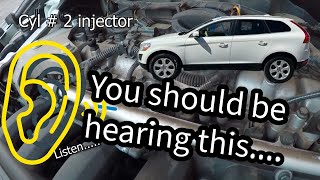
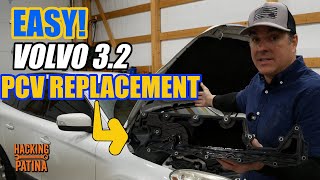
The Volvo 3.2L 'SI6' engine, also used in other Volvos and the Land Rover LR2, has very common and predictable failure points for a P0302 code. While ignition coils and spark plugs are the primary suspects on any car, this engine platform also has a known weakness in the PCV system (oil trap) where the internal diaphragm tears, causing a massive vacuum leak and a distinct whistling noise. 🎬 Watch: Hear the distinct whistling sound of a failed PCV. Furthermore, a Technical Service Bulletin (SSM71894) issued for the identical engine in the Land Rover LR2 points to faulty fuel injectors as a notable cause of misfires, making it a more significant possibility than on other vehicles. This is especially noted during cold starts.
Symptoms You May Notice
- Rough or shaking idle
- Engine hesitation or stumbling during acceleration
- Flashing or solid Check Engine Light
- Reduced engine power
- Poor fuel economy
- A noticeable fuel smell from the exhaust
- Replacing the oxygen (O2) sensors. The sensors are likely functioning correctly and reporting the effects of the misfire, not causing it.
- Replacing the Mass Airflow (MAF) sensor. A faulty MAF sensor would typically cause random misfires on multiple cylinders (P0300), not a consistent misfire on a single cylinder.
Most Likely Causes
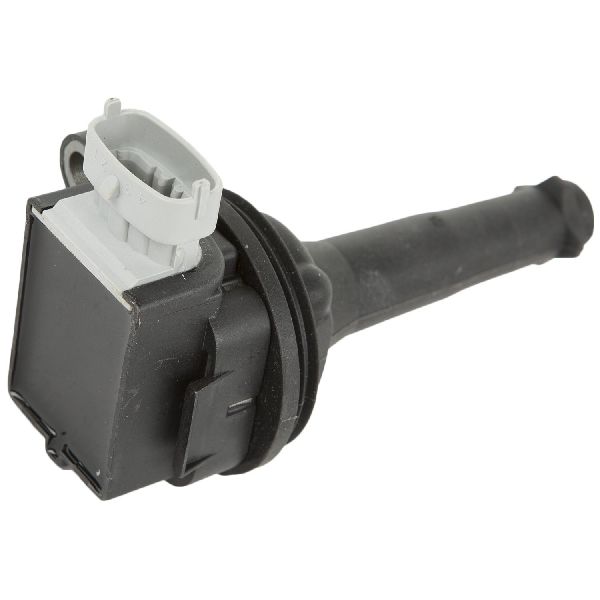
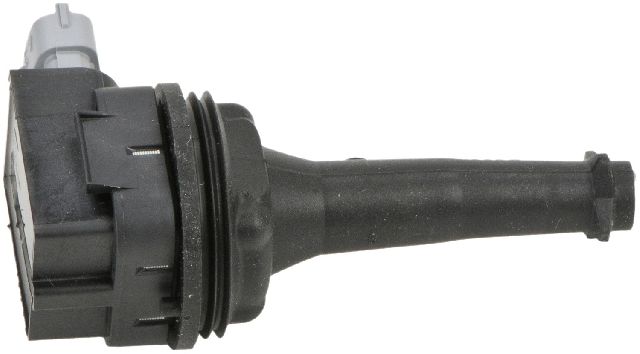
- Faulty Ignition Coil 🔴 High Probability → Shop Ignition Coil Coil-on-plug units are exposed to significant heat and vibration, making them a common wear item on the 3.2L I6 engine. Oil leaks from the valve cover gasket or PCV system can also pool in the spark plug wells and saturate the coil boot, causing failure.
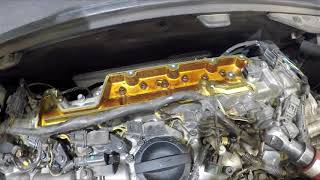
How to confirm: Swap the ignition coil from cylinder 2 with another cylinder (e.g., cylinder 3). Clear the codes and drive. If the code changes to P0303, the coil is definitively bad. This is the standard first diagnostic step. 🎬 See a mechanic's walkthrough for diagnosing a persistent misfire.
Typical fix: Replace the faulty ignition coil. It is often recommended to replace all six if they are original and have high mileage to ensure reliability.
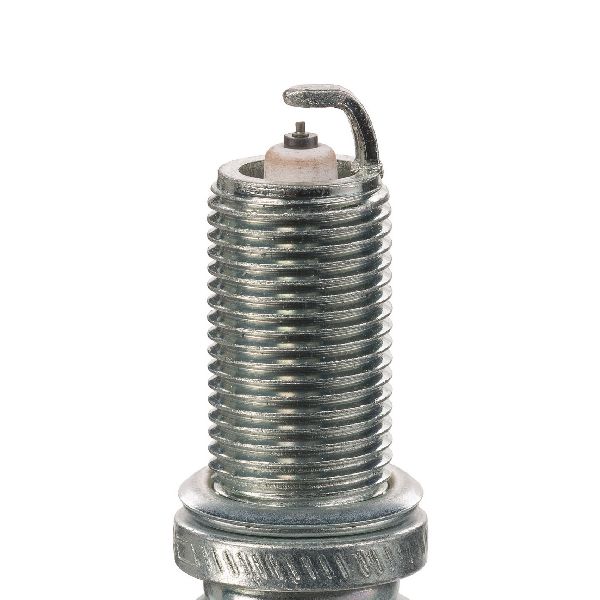
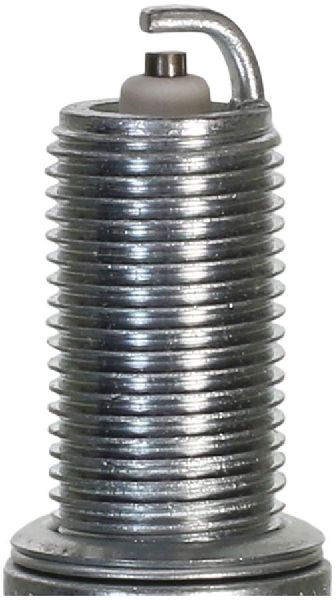
Est. part cost: $40 - $90 per coil - Worn or Fouled Spark Plug 🔴 High Probability → Shop Spark Plug Spark plugs are a standard maintenance item with a service interval of around 75,000 miles. On this engine, a failing PCV system or valve cover gasket can cause oil to leak into the spark plug wells, fouling the plug and causing a misfire.
How to confirm: After confirming the coil is good, remove the spark plug from cylinder 2. Inspect it for wear on the electrode, carbon buildup, or oil fouling. Compare it to a plug from another cylinder. The correct plug is often a Denso IKH20TT or equivalent.
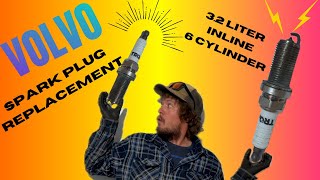
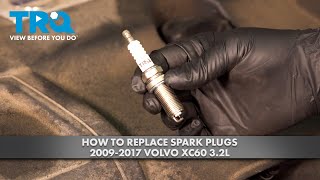
Typical fix: Replace the spark plug. It is best practice to replace all six at the same time with high-quality Iridium plugs, ensuring they are gapped correctly (e.g., to 0.031" or 0.8mm for the B6324S engine). 🎬 Watch: Step-by-step guide to replacing spark plugs on this engine.
Est. part cost: $10 - $25 per plug - Failed PCV System (Oil Trap/Breather Box) 🟡 Medium Probability The diaphragm in the PCV assembly is a known failure point on the 3.2L I6. When it tears, it creates a massive vacuum leak that the engine cannot compensate for, leading to misfires, often random (P0300) but sometimes isolated to one cylinder.
How to confirm: A classic symptom is a loud whistling or hissing noise from the engine at idle. You can also check for very strong suction at the oil filler cap when the engine is running; it will be difficult to remove. A torn diaphragm is often visibly confirmed upon removal.
Typical fix: The entire PCV assembly (oil trap) can be replaced. Alternatively, a more economical repair is to replace only the diaphragm itself, which is available as a separate part (e.g., LR023777 for the diaphragm kit).
Est. part cost: $150 - $250 for the full assembly, $15 - $30 for the diaphragm kit. - Clogged or Faulty Fuel Injector 🟡 Medium Probability → Shop Fuel Injector The identical engine used in the Land Rover LR2 was subject to TSB #SSM71894 for fuel injector failures causing misfires, making this a known issue for the platform. These failures are often noted during cold starts.
How to confirm: After ruling out ignition and vacuum issues, listen to the injector with a mechanic's stethoscope for a steady clicking sound. For a more definitive test, swap the injector with another cylinder (a more involved job) to see if the misfire code follows. Resistance should be between 10-16 Ohms.
Typical fix: Replace the faulty fuel injector. Some shops may recommend replacing all six on a high-mileage vehicle to ensure balanced fuel delivery. Cleaning is sometimes an option but replacement is more definitive.
Est. part cost: $50 - $200 per injector
Rare But Worth Checking
- Low Engine Compression: If all ignition and fuel-related causes have been ruled out, a mechanical issue like a burnt valve, worn piston rings, or a leaking head gasket could be the cause. This requires a compression test to confirm and is a major engine repair. A reading below 100 PSI on a cylinder is a strong indicator of a problem.
- Damaged Coil Wiring Connector: The plastic connectors and wiring for the ignition coils can become brittle over time from heat cycles. Check the connector for cylinder 2 for any cracks, loose pins, or damaged wiring.
- Vacuum Leak (other than PCV): A leak in a vacuum hose, intake manifold gasket, or other related component could cause a lean condition and misfires. While a large leak usually causes a P0300, a smaller, localized leak could theoretically affect a single cylinder.
Diagnosis Steps
- Read the trouble codes with an OBD-II scanner to confirm P0302 and check for any other codes.
- Locate cylinder 2, which is the second ignition coil from the front of the engine (belt side).
- Swap the ignition coil from cylinder 2 with the coil from cylinder 3. Use an 8mm socket to remove the single bolt holding each coil.
- Clear the codes with the scanner, start the engine, and drive until the check engine light returns.
- Re-scan the codes. If the code is now P0303, the ignition coil is faulty and must be replaced.
- If the code remains P0302, the coil is good. Proceed to inspect the spark plug. Remove the plug from cylinder 2 and check for excessive wear, damage, or oil fouling. If oil is present, the source (e.g., valve cover gasket, PCV) must be addressed.
- If the spark plug is suspect, replace it. It is best practice to replace all six.
- If the plug and coil are good, check for a failed PCV system. Listen for a loud whistle at idle or check for strong vacuum at the oil fill cap with the engine running.
- If no vacuum leak is found, the fuel injector is the next likely suspect. Listen for its operation or consider having it professionally tested or swapped with another cylinder.
- If all else fails, a mechanical compression test is needed to check for internal engine problems like worn rings or valves.
Parts You'll Likely Need
- Ignition Coil
(OEM #30684245)— This is the most common failure point for a single-cylinder misfire on this engine due to constant heat and vibration.
Trusted brands: Bosch, Denso, Genuine Volvo
OEM price range: $70-$100
Aftermarket price range: $40-$80 - Spark Plug
(OEM #31286359)— Spark plugs are a routine maintenance item that wear out over time. Oil fouling from other common engine issues can also cause them to fail prematurely.
Trusted brands: NGK, Denso (IKH20TT), Bosch, Genuine Volvo
OEM price range: $20-$30
Aftermarket price range: $10-$20 - PCV Oil Trap / Breather Box
(OEM #31319643 (Full Assembly, verify by VIN))— The diaphragm inside this assembly is a known weak point on the 3.2L engine. Its failure causes a large vacuum leak that leads to misfires.
Trusted brands: Genuine Volvo, Aftermarket Diaphragm Kits
OEM price range: $200-$260
Aftermarket price range: $150-$200 (Assembly), $15-$30 (Diaphragm only)
Related Codes That Often Appear With This One
- P0300 — If the misfire is intermittent or begins to affect other cylinders, a P0300 (Random/Multiple Cylinder Misfire) may appear. This often points to a systemic issue like a large vacuum leak from the PCV system or widespread fuel delivery problems.
- P0301, P0303, P0304, P0305, P0306 — These codes will appear during diagnosis if you swap a faulty component (like an ignition coil) from cylinder 2 to another cylinder to confirm the failure.
- P0171/P0174 — System Too Lean (Bank 1/2). These codes can accompany a misfire code if the root cause is a significant vacuum leak, such as a failed PCV system, which introduces unmetered air into the engine.
Technical Service Bulletins (TSBs) & Recalls
- Land Rover TSB #SSM71894: While not a Volvo TSB, it was issued for the identical 3.2L I6 engine in the Land Rover LR2. It was created to investigate a high number of fuel injector failures causing cold start misfires and rough running, which is directly relevant to diagnosing P030x codes on this engine platform.
Platform-Specific Known Issues
- Oil in the spark plug wells is a frequent finding, usually caused by a leaking valve cover gasket or a failed PCV system creating excessive crankcase pressure. This oil can saturate the ignition coil boot and cause a misfire.
- A user on SwedeSpeed forums reported chasing a P0302 misfire. After replacing plugs and coils with no success, they discovered the spark plug in cylinder 2 was loose, allowing compression to escape. Re-torquing the plug solved the issue.
Mechanic-Grade Diagnostic Values
- Fuel Injector Resistance — expected: 10-16 Ohms, with all injectors within 0.5 Ohms of each other. Another source suggests a more precise 11.8-12.3 ohms.. Failure: A reading of infinite resistance (open circuit), near zero (short circuit), or a value that is an outlier compared to the other injectors.
- Fuel Rail Pressure (at idle) — expected: Approximately 55 PSI (3.8 bar).. Failure: Pressure consistently below 50 PSI can contribute to misfires.
- Injector Pulse Width (at idle, warm engine) — expected: 1.5 ms - 2.9 ms.. Failure: Values significantly outside this range for a single injector (viewable on an advanced scan tool) indicate a problem with the injector or its control circuit.
- Engine Compression (cold) — expected: Approximately 155 PSI, with minimal variation between cylinders.. Failure: A reading of 105 PSI is low enough to cause a misfire. A cylinder should have at least 100 PSI to fire properly.
Scan Tool Commands That Help
- Volvo VIDA: Injector Cut-out Test — To confirm a misfire is related to a specific cylinder's fuel delivery. The technician can use VIDA to command individual injectors to stop firing one by one. If cutting out cylinder 2's injector causes no change in engine roughness, but cutting out other injectors does, it confirms cylinder 2 was not contributing, pointing towards a fuel, spark, or compression issue on that cylinder.
- Volvo VIDA: Read individual cylinder misfire counters — While a standard OBD-II scanner shows the P0302 code, VIDA can show a live count of misfire events per cylinder. This is useful for confirming the misfire is isolated to cylinder 2 and for verifying a repair is successful by observing if the counter for cylinder 2 stops incrementing during a test drive.
Wiring & Ground Locations
- Ignition Coil Connector — On top of the engine, plugged into the ignition coil for cylinder 2 (second from the front/belt side).. The wiring and plastic connector can become brittle from engine heat. A poor connection, broken wire, or damaged locking tab can interrupt the signal to the coil, causing a misfire on only that cylinder. One owner found a bad ground wire within the coil pack wiring loom that caused multiple misfires.
Real Owner Repair Stories
- Volvo Forums user (2004 Volvo XC70, ~170k miles) — Rough running, Check Engine Light with P0302.
❌ Tried (didn't work) Initial diagnosis assumed spark plugs or ignition coils.
✅ What actually fixed it A compression test revealed low compression in cylinder 2 (105 PSI vs. 155 PSI in healthy cylinders). The likely cause was determined to be a burnt valve, a serious mechanical issue. - Reddit user (2008 Volvo V50 2.4i (related platform)) — P0302 misfire code.
❌ Tried (didn't work) The user had already replaced all spark plugs and ignition coils a few months prior.
✅ What actually fixed it The thread did not have a final resolution from the original poster, but a key suggestion was that a new coil or plug could be faulty from the box or have a loose connection.
OEM Part Supersession History
30757664, 30788442, 30788484→31319643— Revisions and improvements to the PCV Oil Trap / Breather Box assembly.
Heads up: The latest part number, 31319643, is the correct replacement for all earlier versions and should be used for all 2008-2016 models.LR002954 (Land Rover equivalent)→30684245 (Volvo)— Part consolidation and branding. The engines are identical.
Heads up: The Land Rover part number LR002954 is interchangeable with the Volvo part number 30684245 for the ignition coil.
Model Year Variations Within This Range
- 2010/2011 and newer: A recalibration of the automatic transmission software was reportedly done around the 2010/2011 model years to improve throttle response on the 3.2L engine. While not a direct cause of P0302, owners of earlier models (2008-2010) sometimes describe the engine as sluggish, which could be related to this earlier transmission mapping.
- 2012+: A facelift occurred in 2012 which updated bumpers and lights, and the infotainment system was updated in 2011. These changes did not fundamentally alter the 3.2L engine or the common causes of a P0302 misfire.
Diagnostic Flowchart
Other Known Issues on This Vehicle
Issues unrelated to this code that are worth knowing about as an owner of this generation:
- Rear End Accessory Drive (READ) Unit Failure 🔴 High — Uncommon but catastrophic. A whining or grinding noise from the transmission-side of the engine is a key symptom. Failure of the internal bearings can destroy the engine.
- Accessory Drive Belt Tensioner/Pulley Failure 🔴 High — Common failure item. The decoupler pulley can seize or fail, and the tensioner can weaken. A failing tensioner can cause the belt to shred and get ingested by the timing components, leading to engine failure.
- Vacuum Pump Oil Leak 🟠 Medium — A very common issue where the seals on the vacuum pump, driven by the READ unit, begin to leak oil. It's typically a noticeable leak onto the passenger side of the engine/transmission area. (Ref: Volvo offers a seal replacement kit to address this without replacing the entire pump.)
- Oil Consumption (Early Models) 🟠 Medium — Some earlier models (approx. 2010-2012) were noted for higher than average oil consumption, potentially related to piston ring design. Not as widespread as on other Volvo engines, but documented.
Used vs. New Parts: Buying Guide for This Vehicle
When a used part is the smart pick: Used parts can be a cost-effective option for ignition coils and fuel injectors, provided they are sourced from a reputable seller with a warranty or from a low-mileage donor vehicle.
Donor-vehicle mileage cap: roughly under 80000 miles for the part to have meaningful remaining life.
What to inspect on the donor part:
- For ignition coils, check for cracks in the plastic housing and ensure the rubber boot is pliable and not oil-soaked or brittle.
- For fuel injectors, inspect the plastic connector for cracks and ensure the o-rings are present and not degraded (though they should always be replaced before installation).
- Avoid any parts from a donor vehicle that shows signs of fire, flood, or a severe frontal impact.
OEM-only on this vehicle (don't cheap out):
- PCV Oil Trap Assembly: While aftermarket diaphragm kits exist for a cheap repair, the quality can be inconsistent. The full OEM assembly is often recommended for long-term reliability, as a failure can cause other oil leaks.
Aftermarket brands forum-validated for this vehicle:
- Ignition Coils: Bosch, Denso (often the original supplier)
- Spark Plugs: NGK, Denso, Bosch
- PCV Assembly: Genuine Volvo is preferred, but Pro-Parts Sweden is a known aftermarket supplier.
Brands owners have reported issues with on this vehicle:
- Unbranded, no-name ignition coils and sensors from online marketplaces are frequently reported to fail prematurely.
- Some owners report that this engine family is sensitive to spark plug brands, with some having issues with plugs other than Genuine Volvo or the specific recommended NGK/Denso equivalent.
Real Owner Stories
Aggregated from forums and TSBs cited above. Mileages and costs reflect what owners reported in those sources.
2008 Volvo XC70 3.2L I6
Symptoms: Loud whistling noise and misfire codes.
What fixed it: The owner confirmed a torn PCV diaphragm and opted to replace only the diaphragm, which resolved the issue.
Source hint: https://www.volvoforums.org.uk/showthread.php?t=284433
Volvo XC70 3.2L I6
Symptoms: P0302 misfire code; owner found oil in the #2 spark plug well.
What fixed it: The community identified a failed PCV oil trap as the cause for increased crankcase pressure forcing oil past the seals into the well.
Source hint: https://www.swedespeed.com/threads/p0302-and-oil-in-spark-plug-well.634123/
Volvo XC70 3.2L I6
Symptoms: Chasing a P0302 misfire; already replaced plugs and coils with no success.
What fixed it: Discovered the spark plug in cylinder 2 was loose, allowing compression to escape. Re-torquing the plug solved the issue.
Source hint: vehicle_specific_issues
Related OBD-II Codes
Frequently Asked Questions
I have a P0302 on my XC70; how do I know if it's the ignition coil or the fuel injector?
My engine is making a loud whistling noise at idle along with the P0302 code. What is wrong?
Is there a specific spark plug recommended for the 3.2L I6 engine to prevent misfires?
I found oil in the spark plug well while checking my P0302 code. Is this common?
Can I repair the PCV system without replacing the entire expensive assembly?
Does the fuel injector issue on the Land Rover LR2 apply to my Volvo XC70?
Helpful Videos
We Have This Part in Stock


The information in this article is provided for general reference and educational purposes only. Vehicle specifications, procedures, and part compatibility can vary by production date, trim level, and region. Always consult your vehicle's factory service manual and verify part numbers before purchasing or performing repairs. Safety-critical components such as airbags, seat belts, and braking systems should be installed by a qualified professional.
- Volvo XC70:
- 🧭 Diagnostic Flowchart
- 🎬 Helpful Videos
- 🛍️ Shop This Part
- What's Unique About the 2008-2016 Volvo XC70
- Symptoms You May Notice
- Most Likely Causes
- Rare But Worth Checking
- Diagnosis Steps
- Parts You'll Likely Need
- Related Codes That Often Appear With This One
- Technical Service Bulletins (TSBs) & Recalls
- Platform-Specific Known Issues
- Mechanic-Grade Diagnostic Values
- Scan Tool Commands That Help
- Wiring & Ground Locations
- Real Owner Repair Stories
- OEM Part Supersession History
- Model Year Variations Within This Range
- Other Known Issues on This Vehicle
- Used vs. New Parts: Buying Guide for This Vehicle
- Real Owner Stories
- 2008 Volvo XC70 3.2L I6
- Volvo XC70 3.2L I6
- Volvo XC70 3.2L I6
- Related OBD-II Codes
- Frequently Asked Questions
- 🎟️ Get 5% Off