

P0303 on 2009-2012 Audi Q5 3.2L V6: Cylinder 3 Misfire Causes and Fixes
For a P0303 code on an Audi Q5 with the 3.2L V6 engine, the most likely cause is a failed ignition coil or a worn spark plug. If replacing these doesn't work, heavy carbon buildup on the intake valves is the next most common culprit, a known issue with this engine that may require professional cleaning every 40,000-80,000 miles.
- P0303 on the Audi Q5 3.2L means cylinder 3 is misfiring. Start your diagnosis with the simple and common failures: the ignition coil and spark plug.
- The easiest and cheapest diagnostic step is to swap the cylinder 3 ignition coil with one from another cylinder. If the code 'moves' to the new cylinder, you've found the faulty part.
- This engine is a direct-injection (FSI) design and is very prone to carbon buildup on the intake valves. If new coils and plugs don't fix the misfire, carbon cleaning is the most likely necessary repair.
- Do not drive if the check engine light is flashing, as you can cause rapid and expensive damage to your catalytic converter.
What's Unique About the 2009-2017 Audi Q5
The Audi Q5's 3.2L V6 is a Fuel Stratified Injection (FSI) engine, a type of gasoline direct injection. While efficient, this design is highly susceptible to heavy carbon buildup on the intake valves. Unlike traditional port-injected engines, gasoline doesn't wash over the valves to keep them clean. Oil vapor from the PCV system bakes onto the hot valves, forming hard carbon deposits that restrict airflow and cause misfires, especially on cold starts. This buildup eventually restricts airflow, leading to misfires that are often mistaken for ignition or fuel injector failures. Many owners of this specific engine report chasing a P0303 code by replacing coils and plugs, only to find the root cause was carbon deposits requiring a professional cleaning, a service recommended as early as every 40,000 miles.
Generation note: The 2009-2017 year range covers the entire first generation of the Audi Q5 (Type 8R). However, the specific CALB 3.2L V6 engine was only offered in North America from model years 2009 through 2012. This guide is only applicable to those specific years and engine.
Symptoms You May Notice
- Rough or shaking idle
- Hesitation or stumbling during acceleration
- Noticeable loss of engine power
- Flashing Check Engine Light (if the misfire is severe)
- Solid (non-flashing) Check Engine Light
- Smell of unburnt gasoline from the exhaust
- Reduced fuel economy
- Replacing only the spark plugs when the ignition coil is the actual point of failure.
- Replacing fuel injectors before checking for and addressing significant carbon buildup on the intake valves. Many owners report this expensive misstep in forums.
- Using fuel additives in an attempt to clean intake valve carbon deposits; this is ineffective on direct-injection engines.
- Replacing a single ignition coil instead of the full set, leading to subsequent failures of the other original coils shortly after.
Most Likely Causes
- Faulty Ignition Coil 🔴 High Probability → Shop Ignition Coil Ignition coils are a common failure item on many Volkswagen and Audi products of this era. The plastic housings can develop cracks over time from heat cycles, allowing spark to arc to the cylinder head instead of the spark plug.
How to confirm: Swap the ignition coil from cylinder 3 with another cylinder (e.g., cylinder 1). Clear the codes and drive the vehicle. If the misfire code changes to P0301, the ignition coil is confirmed to be faulty.
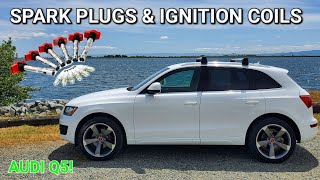
Typical fix: Replace the failed ignition coil. It is best practice to replace all six coils at the same time with the latest revision part (06E905115G) to prevent future failures.
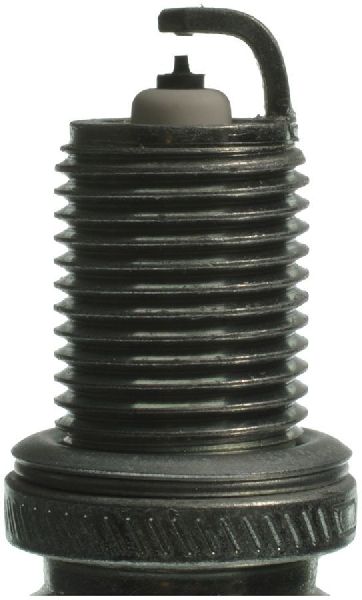
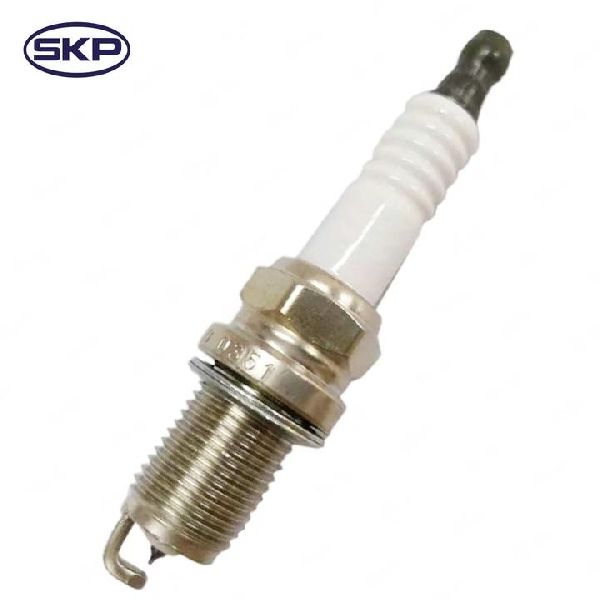
Est. part cost: $30-$70 per coil - Worn or Fouled Spark Plug 🔴 High Probability → Shop Spark Plug
How to confirm: After confirming the ignition coil is good, move the spark plug from cylinder 3 to another cylinder. If the misfire code follows the spark plug, the plug is the issue. Visually inspect the plug for wear, oil fouling, or carbon tracking. A wet, fuel-smelling plug indicates a lack of spark. Also check for cracked porcelain, which can cause an invisible arc.
Typical fix: Replace the spark plug. It is recommended to replace all six spark plugs as a set at the manufacturer's recommended service interval (typically 35,000-55,000 miles). Ensure new plugs are gapped correctly; an incorrect gap on new plugs can cause misfires.
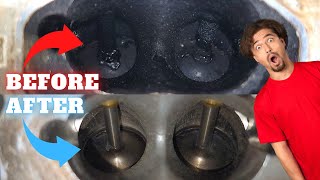
Est. part cost: $15-$30 per plug - Carbon Buildup on Intake Valves 🟡 Medium Probability This is a direct-injection (FSI) engine. Fuel is injected directly into the cylinder, so it never washes over the intake valves. Oil vapor from the PCV system bakes onto the hot valves, forming hard carbon deposits that restrict airflow and cause misfires, especially on cold starts. This is an inevitable issue with this engine design.
How to confirm: This requires visual inspection. A technician must remove the intake manifold and use a borescope to view the condition of the valves. This is typically done after ignition and fuel delivery issues have been ruled out. Symptoms often worsen on cold starts and improve as the engine warms up.
Typical fix: The intake manifold must be removed, and the carbon deposits must be manually cleaned from the intake ports and valves. The most effective method is media blasting with walnut shells. 🎬 See how to perform a DIY walnut blasting carbon cleaning. Some DIY methods involve soaking the valves in a solvent and using picks and brushes. Fuel additives are completely ineffective for this type of deposit. This service may be needed every 40,000-80,000 miles. Audi has previously offered an extended warranty (10 years/120k miles) for this issue on some 3.2L engines.
Est. part cost: $50-$100 for gaskets and seals if performing a cleaning. - Failed Fuel Injector ⚪ Low Probability → Shop Fuel Injector
How to confirm: If ignition parts and carbon buildup are not the cause, the fuel injector is the next suspect. A technician can perform a fuel injector balance test or observe fuel trim data with a diagnostic tool. A leaking injector may also be identified by checking fuel pressure bleed-down after the engine is shut off. Swapping injectors between cylinders is possible but labor-intensive. A borescope inspection may reveal a dripping injector.
Typical fix: Replace the faulty fuel injector. It's often recommended to replace the set, especially on higher mileage vehicles. The Teflon seals must be replaced anytime an injector is removed.
Est. part cost: $100-$200 per injector
Rare But Worth Checking
- Low Compression: If all else fails, a mechanical issue could be the cause. This could be due to worn piston rings, a burnt valve, or issues with the timing chain system causing improper valve timing. A compression test and a cylinder leak-down test are required to diagnose this.
- Worn Cam Follower / Roller Rocker: → Shop Engine Rocker Arm There are forum reports of worn roller rockers on the 3.2L CALB engine leading to persistent single-cylinder misfires after all other common causes were ruled out. This requires removing the valve cover for inspection.
- ECM Software: Audi has released Technical Service Bulletins (TSBs) for various models that address misfire detection. The ECM software can be overly sensitive and may need an update to correctly interpret crankshaft fluctuations, especially at low RPM or during cold starts.
Diagnosis Steps
- Read the fault codes with an OBD-II scanner to confirm P0303 and note any other codes present (e.g., P0300).
- If the Check Engine Light is flashing, avoid driving the vehicle to prevent catalytic converter damage.
- Locate cylinder 3. On the 3.2L V6, Bank 1 is the passenger side (cylinders 1, 2, 3 from front to back) and Bank 2 is the driver's side (cylinders 4, 5, 6 from front to back). Cylinder 3 is the rearmost cylinder on the passenger side, closest to the firewall. Always verify the cylinder layout for your specific vehicle.
- Swap the ignition coil from cylinder 3 with the coil from cylinder 1. Clear the codes, run the engine, and re-scan. If the code is now P0301, the ignition coil is bad.
- If the code remains P0303, swap the spark plug from cylinder 3 with cylinder 1. Clear codes, run the engine, and re-scan. If the code is now P0301, the spark plug is bad.
- If the code remains P0303, inspect the wiring and connector for the cylinder 3 ignition coil for damage, corrosion, or loose connection.
- If ignition components are good, the next step is to investigate for carbon buildup. This is best done with a borescope through the intake manifold to visually inspect the intake valves. This is a very common cause of persistent misfires on this engine after coils/plugs are addressed.
- If there is no significant carbon buildup, investigate the cylinder 3 fuel injector. Check fuel trim data and consider performing an injector balance test. A dripping injector might be visible with a borescope.
- If all else fails, perform a compression test and a cylinder leak-down test on cylinder 3 to rule out mechanical engine problems.
- Check with an Audi dealer for any open recalls or applicable TSBs related to ECM software updates for misfire detection.
Parts You'll Likely Need
- Ignition Coil
(OEM #06E905115G)— This is the most common failure part for a single-cylinder misfire. Part number 06E905115E was superseded by F, and the latest version is G.
Trusted brands: Bosch, NGK, Eldor, Genuine Audi
OEM price range: $50-$70
Aftermarket price range: $25-$50 - Spark Plug
(OEM #101905611A)— A worn or fouled spark plug is the second most likely cause of a misfire and is a standard maintenance item.
Trusted brands: NGK (PFR8S8EG), Bosch
OEM price range: $20-$30
Aftermarket price range: $15-$25 - Intake Manifold Gasket Set
(OEM #06E129717B)— These gaskets must be replaced when the intake manifold is removed for a carbon cleaning service.
Trusted brands: Victor Reinz, Elring, Genuine Audi
Related Codes That Often Appear With This One
- P0300 — If the underlying issue, like severe carbon buildup or a vacuum leak, begins to affect multiple cylinders, a 'Random/Multiple Cylinder Misfire' code will appear.
- P0301, P0302, P0304, P0305, P0306 — These codes indicate misfires in other cylinders. They may appear alongside P0303 if the cause is systemic (like carbon buildup) or during diagnosis when a faulty component is swapped to another cylinder.
Technical Service Bulletins (TSBs) & Recalls
- TSB 2069038 / 01-23-80: Addresses P0300-P0306 misfire DTCs on various models, pointing to a required ECM software update to optimize misfire detection.
- TSB 2026203 / 24-14-54: An older TSB for 3.2L engines that mentions misfires on cold starts and links it to carbon deposits on intake valves, recommending cleaning.
- TSB 2027948: Relates to updating ECM software for misfire detection under specific low-RPM, low-load conditions.
- Bulletin #A0124212069038_5: Provides information for when the MIL is illuminated with cylinder misfire codes P0300 through P0306.
- Bulletin #A0123912069038_5: A manufacturer bulletin addressing illuminated MILs and DTCs P0300, P0301, P0302, P0303, P0304, P0305, and P0306.
Platform-Specific Known Issues
- The 3.2L FSI engine is known for requiring intake valve carbon cleaning service, typically between 60,000 and 100,000 miles, to resolve misfire issues.
- The timing chain tensioners can wear out, often indicated by a brief rattling sound from the back of the engine on a cold start. While this usually causes multiple misfire codes, it's a critical issue for this engine to be aware of.
Mechanic-Grade Diagnostic Values
- High-Pressure Fuel Rail Pressure (at idle) — expected: 30 to 50 bar (435 to 725 PSI), depending on engine temperature.. Failure: Pressure that is significantly below specified value or that bleeds off quickly after engine shut down can indicate a leaking injector or failing high-pressure fuel pump (HPFP).
- Low-Pressure Fuel System Pressure — expected: 3.0 to 6.0 bar (43 to 87 PSI).. Failure: Pressure below this range indicates a problem with the in-tank fuel pump or a clogged fuel filter, which can starve the HPFP.
- Fuel Trim at Idle (VCDS Measuring Block 032, Field 1 - Additive) — expected: Within +/- 10%.. Failure: A large negative value (e.g., -20% or more) on Bank 1 suggests a rich condition, which could be caused by a leaking fuel injector on cylinder 1, 2, or 3.
- Spark Plug Gap — expected: 0.027" - 0.030" (0.7mm - 0.8mm).. Failure: New plugs can come with an incorrect gap (e.g., 0.040"), which is too wide and can cause misfires under load. Always verify the gap before installation.
Scan Tool Commands That Help
- VCDS (VAG-COM): Measuring Value Blocks (MVB) - Groups 014, 015, 016 — Use these groups to view live misfire counters for each individual cylinder. Group 014 shows cylinders 1-3. An increasing count in the field for cylinder 3 confirms an active misfire, which is useful for verifying the fault and checking if it moves after swapping parts.
- VCDS (VAG-COM): Advanced Measuring Values (for UDS controllers) — On newer control modules using the UDS protocol, use the 'Advanced Measuring Values' function and search for 'Misfire' to find the per-cylinder counters, as the classic measuring blocks may not be available.
- VCDS (VAG-COM): Measuring Value Block 106 (or Advanced Measuring Value 'Fuel high pressure') — Used to monitor the actual fuel rail pressure from the high-pressure fuel pump. This is critical for diagnosing fuel delivery issues. A pressure bleed-down test can be performed by monitoring this value after shutting the engine off to check for leaking injectors.
Wiring & Ground Locations
- 12 - Ground Connection — In the engine compartment on the left side, near the suspension strut tower.. This is a primary engine ground. A loose or corroded connection here can cause a weak spark and intermittent misfires that are difficult to diagnose.
- 671 / 672 - Ground Connection 1 & 2 — On the left front longitudinal member of the frame.. These are chassis grounds for the engine harness. Poor contact can lead to various electrical issues, including unstable voltage for the ignition coils and injectors.
- J623 - Engine Control Unit (ECU) — Located in the plenum chamber (the area under the windshield wipers).. The wiring harness for the cylinder 3 ignition coil and fuel injector runs from the engine to the ECU. Water ingress into the plenum chamber is a known issue and can corrode ECU pins, causing misfires.
Real Owner Repair Stories
- Ross-Tech Forums user (2009 Audi A5 3.2L CALB engine) — Persistent, intermittent misfire on a single cylinder.
❌ Tried (didn't work) Replaced ignition coils, Replaced spark plugs, Performed carbon cleaning (media blasting), Replaced the entire bank of fuel injectors
✅ What actually fixed it The owner used a borescope to inspect the valvetrain and found a roller rocker with worn rollers. Replacing the faulty roller rocker with an updated part completely resolved the misfire. - YouTube user 'hosea bembury' (2010 Audi Q5 3.2L) — Random misfire codes on multiple cylinders (1, 2, 3, 5) that would cause the engine to run rough continuously until the codes were cleared. Misfires occurred mostly under significant throttle.
❌ Tried (didn't work) Assuming the new spark plugs were not the issue.
✅ What actually fixed it The owner discovered the brand new spark plugs he had installed were incorrectly gapped at around 0.040". After re-gapping them to the correct specification (0.027" - 0.030"), the misfires were completely resolved. - Ross-Tech Forums user (2009 Audi Q5 3.2L with 120k miles) — Rough running on startup, Check Engine Light on with misfires on multiple cylinders including #3, and a very rich condition on Bank 1 (fuel trim -20% to -29% at idle).
❌ Tried (didn't work) Performed a smoke test for vacuum leaks (none found).
✅ What actually fixed it After inspecting the spark plugs and finding cylinder 3's plug black with carbon, a borescope was used to inspect the injector. It was found to be dripping fuel into the cylinder. Replacing the leaking fuel injector fixed the rich condition and the misfires.
"I Checked Everything" — The Actual Cause
- In one documented case, a 2009 Q5 3.2L passed a smoke test with no vacuum leaks found, but continued to have a severe rich condition and misfires on Bank 1. The actual cause was a leaking fuel injector on cylinder 3, which was diagnosed using a borescope to see it dripping fuel.
When the Usual Fixes Don't Work
- While carbon buildup is a primary suspect for misfires on the 3.2L FSI engine, multiple owners have performed a full carbon cleaning service only to have the misfire persist. In one well-documented case, after replacing coils, plugs, injectors, and performing a carbon clean, the final root cause was a worn roller rocker arm on the exhaust camshaft, a purely mechanical failure that was only found upon physical inspection under the valve cover.
OEM Part Supersession History
06E905115A, B, C, D, E, F→06E905115G— Progressive updates to improve reliability and prevent premature failure from heat and vibration. The red-top coils (often associated with later revisions like E, F, and G) are generally considered more robust.
Heads up: All listed part numbers are interchangeable, but it is highly recommended to use the latest 'G' revision and to replace all six coils as a set to ensure consistent performance and prevent future failures of older-revision coils.
Diagnostic Flowchart
Other Known Issues on This Vehicle
Issues unrelated to this code that are worth knowing about as an owner of this generation:
- Premature Water Pump & Thermostat Failure 🔴 High — Common failure item, often between 60,000 and 100,000 miles. The original pump uses a plastic housing which can become brittle and leak, leading to coolant loss and potential overheating. (Ref: Multiple recalls on other Audi models (e.g., 2.0T engines) for similar issues, but less formal coverage for the 3.2L V6.)
- Timing Chain Tensioner Wear 🔴 High — Less common on the 3.2L V6 than the 2.0T, but still a significant concern. A rattling noise on startup is a key symptom. The timing components are on the rear of the engine, requiring engine or transmission removal for service, making it an extremely expensive repair.
- MMI Infotainment System Failure 🟠 Medium — Owners report issues ranging from the screen freezing (requiring a soft reset) to complete black-screen failure of the MMI module, which can be caused by internal hardware failure.
- Leaking Sunroof Drains 🟠 Medium — Clogged sunroof drains can cause water to leak into the cabin, potentially damaging electronics, including the MMI system components located in the trunk area.
Used vs. New Parts: Buying Guide for This Vehicle
When a used part is the smart pick: For this repair, using used parts is generally not recommended for the primary failure components. Ignition coils, spark plugs, and fuel injector seals are wear items and should always be purchased new. A used intake manifold or valve cover could be considered if the original is physically cracked, but this is rare.
Donor-vehicle mileage cap: roughly under 60000 miles for the part to have meaningful remaining life.
What to inspect on the donor part:
- For major components like a cylinder head, verify the donor vehicle had no overheating or timing chain issues.
- Check for service history if possible, specifically looking for recent carbon cleaning or timing chain service.
- Avoid parts from vehicles that show signs of severe oil leaks or coolant contamination.
OEM-only on this vehicle (don't cheap out):
- Fuel Injectors: While aftermarket injectors exist, OEM or OEM-supplier (Bosch) injectors are strongly recommended to ensure correct flow rates and spray patterns.
- PCV Valve Assembly: Aftermarket PCV diaphragms are known to fail quickly. Using a Genuine Audi part is advised for longevity.
- Sensors (Crankshaft, Camshaft): OEM or OEM-supplier sensors (e.g., Bosch) are recommended to avoid compatibility and performance issues.
Aftermarket brands forum-validated for this vehicle:
- Ignition Coils: Bosch, NGK, Eldor.
- Spark Plugs: NGK, Bosch.
- Gaskets: Victor Reinz, Elring.
Brands owners have reported issues with on this vehicle:
- Unbranded 'no-name' ignition coils and sensors from online marketplaces are frequently reported to fail prematurely or be dead-on-arrival.
Real Owner Stories
Aggregated from forums and TSBs cited above. Mileages and costs reflect what owners reported in those sources.
2013 Audi Q5 3.2L V6
Symptoms: Owner experienced a P0303 fault code and began troubleshooting by replacing spark plugs first.
What fixed it: The owner sought advice on injector location and diagnostic steps after initial plug replacement.
Source hint: https://www.audiworld.com/forums/q5-sq5-mki-8r-discussion-129/p0303-fault-code-2013-q5-premium-plus-3037243/
Audi Q5 3.2L V6
Symptoms: Misfire codes P0303 and P0300.
What fixed it: Discussion points to a progression of replacing coils and plugs, with carbon cleaning identified as the likely final resolution.
Source hint: https://www.audizine.com/forum/showthread.php/779893-Misfire-P0303-and-P0300-on-3-2-Q5
Audi Q5 2.0T
Symptoms: Persistent P0303 code despite replacing numerous parts.
What fixed it: The issue was finally resolved by replacing the fuel injectors and performing a carbon cleaning.
Source hint: https://www.reddit.com/r/AudiQ5/comments/w0p44p/cant_figure_out_issue/
Related OBD-II Codes
Frequently Asked Questions
Where is cylinder 3 located on my 3.2L V6 engine?
Is there a specific ignition coil part number I should use for my Q5?
Does Audi have any TSBs regarding misfire detection software for the 3.2L engine?
Can I use fuel additives to clean the carbon buildup causing my P0303 code?
Is there an extended warranty for the carbon buildup issue on the 3.2L engine?
How often does the 3.2L FSI engine typically need carbon cleaning?
Helpful Videos


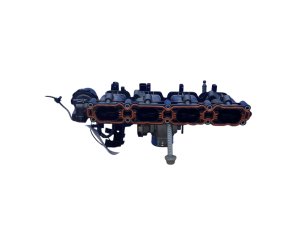
Used OEM Parts in Stock
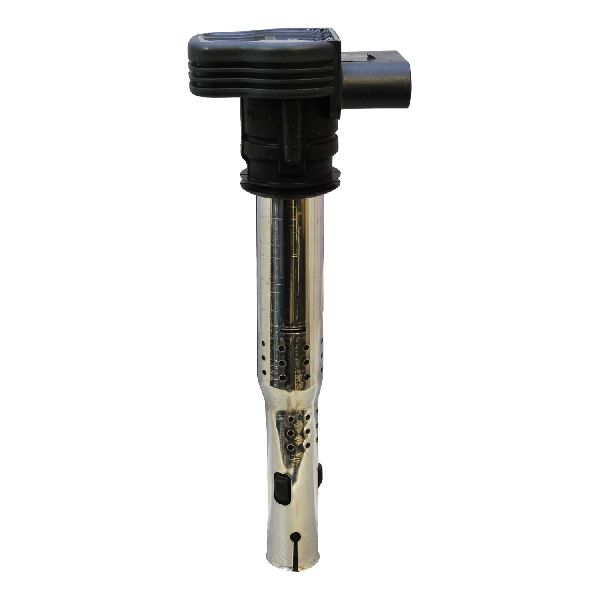
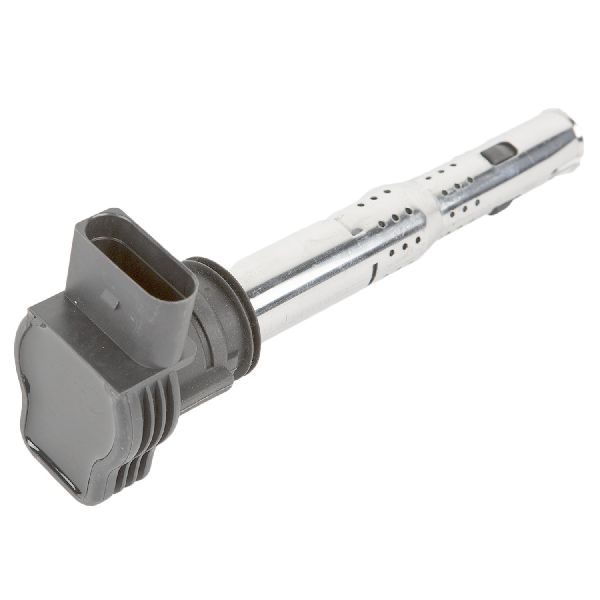
New Aftermarket Parts Available


The information in this article is provided for general reference and educational purposes only. Vehicle specifications, procedures, and part compatibility can vary by production date, trim level, and region. Always consult your vehicle's factory service manual and verify part numbers before purchasing or performing repairs. Safety-critical components such as airbags, seat belts, and braking systems should be installed by a qualified professional.
- Audi Q5:
- 🧭 Diagnostic Flowchart
- 🎬 Helpful Videos
- 🛍️ Shop This Part
- What's Unique About the 2009-2017 Audi Q5
- Symptoms You May Notice
- Most Likely Causes
- Rare But Worth Checking
- Diagnosis Steps
- Parts You'll Likely Need
- Related Codes That Often Appear With This One
- Technical Service Bulletins (TSBs) & Recalls
- Platform-Specific Known Issues
- Mechanic-Grade Diagnostic Values
- Scan Tool Commands That Help
- Wiring & Ground Locations
- Real Owner Repair Stories
- "I Checked Everything" — The Actual Cause
- When the Usual Fixes Don't Work
- OEM Part Supersession History
- Other Known Issues on This Vehicle
- Used vs. New Parts: Buying Guide for This Vehicle
- Real Owner Stories
- 2013 Audi Q5 3.2L V6
- Audi Q5 3.2L V6
- Audi Q5 2.0T
- Related OBD-II Codes
- Frequently Asked Questions
- 🎟️ Get 5% Off