

P0303 on 2021-2025 Ford Bronco: Cylinder 3 Misfire Causes and Fixes
On a 2021-2025 Ford Bronco, a P0303 code is most often caused by a faulty ignition coil or a worn spark plug in cylinder 3. This is especially true for the 2.3L EcoBoost engine, which has known ignition component issues highlighted in Ford TSBs. For the 2.7L EcoBoost, while still likely an ignition issue, rare but serious mechanical problems like lifter or rocker arm failure have been reported by owners. The fix is usually a straightforward DIY replacement of the coil and/or plug, with parts cos
- P0303 on a 2021-2025 Bronco almost always points to a problem in cylinder 3's ignition system.
- The most likely culprits are a bad ignition coil or a worn spark plug, both of which are inexpensive and easy to replace.
- Always start diagnosis by swapping the ignition coil from cylinder 3 to another cylinder to see if the misfire code follows.
- Ford has issued multiple TSBs for this issue on the 2.3L engine, confirming it's a known problem.
- Do not drive with a flashing check engine light, as this can quickly destroy your catalytic converter.
What's Unique About the 2021-2025 Ford BRONCO

For the 2021-2025 Ford Bronco, particularly those with the 2.3L EcoBoost engine, Ford has issued several Technical Service Bulletins (TSBs) related to misfire codes, including P0303. These bulletins point directly to issues with spark plugs, ignition coils, and even the PCM's software calibration for fuel injectors. This indicates a known pattern of ignition-related weaknesses on this platform, making these components the first place to look. For the 2.7L EcoBoost, while sharing the common ignition culprits, there are documented owner reports on forums like Bronco6G.com of P0303 codes ultimately being caused by internal mechanical engine failures, such as lifters or rocker arms, even on very low-mileage vehicles. Furthermore, 2021-2022 models with the 2.7L engine are subject to a recall (24S55) for defective intake valves that can fracture and cause catastrophic engine failure, which may present initially as a misfire.
Diagnostic Flowchart

Tap your situation to follow the diagnostic path that matches what you're seeing on this vehicle.
Symptoms You May Notice

- Check engine light is on or flashing
- Rough or shaky idle
- Engine hesitation or stumbling during acceleration
- Noticeable loss of power
- Bucking or jerking sensation while driving, particularly between 35-55 mph (as noted in TSB SSM 53869)
- Reduced fuel economy
- Fuel smell from the exhaust
- Replacing oxygen sensors. While an O2 sensor can be affected by a misfire (and may set its own codes), it is almost never the root cause of a single-cylinder misfire code like P0303.
- Replacing the catalytic converter. A misfire can destroy a catalytic converter with unburnt fuel, but a bad converter does not cause a specific cylinder to misfire.
Most Likely Causes

- Faulty Ignition Coil 🔴 High Probability → Shop Ignition Coil Ford TSB #SSM 53971 directly identifies ignition coils as a primary cause of misfires on the 2.3L EcoBoost engine. Forum discussions on Bronco6G and Reddit frequently cite coil failure as the fix for P0303 on these vehicles. Aftermarket coils have also been reported to fail prematurely.
How to confirm: The easiest way to confirm a bad coil is to swap it. Move the ignition coil from cylinder 3 to another cylinder (e.g., cylinder 2). Clear the codes and drive the vehicle. If the code changes to P0302, the coil is faulty and needs to be replaced. Visually inspect the coil for cracks in the plastic housing or boot.
Typical fix: Replace the faulty ignition coil. It is often recommended to replace all coils at the same time for preventative maintenance, especially if they are original and have high mileage.
Est. part cost: $25-$60 per coil - Worn or Fouled Spark Plug 🔴 High Probability → Shop Spark Plug TSB #SSM 53971 also lists spark plugs as a likely culprit. EcoBoost engines are known to be hard on spark plugs due to high cylinder pressures, and a worn plug, incorrect gap, or cracked ceramic can easily cause a misfire.
How to confirm: After confirming the coil is good, remove the spark plug from cylinder 3. Inspect it for wear, carbon fouling, oil, or damage to the ceramic insulator or electrode. A wet or soot-covered plug is a strong indicator it's not firing. Compare it to a new plug.
Typical fix: Replace the spark plug in cylinder 3. It is best practice to replace all spark plugs as a set to ensure even performance and prevent future misfires. 🎬 Watch: Step-by-step spark plug installation for your 2.3L Bronco. Ensure new plugs are gapped correctly for the EcoBoost engine.
Est. part cost: $10-$25 per plug - PCM Software/Configuration 🟡 Medium Probability TSB 21-2262 specifically states that on 2021 2.3L engines, misfire codes (P0300-P0304) can be caused by the PCM configuration related to the fuel injector operation. Additionally, a separate issue on 2025 2.3L models can cause false P0300/P0316 codes on cold starts, 🎬 Watch: How to diagnose common EcoBoost cold start misfires. for which Ford is developing a software fix.
How to confirm: This must be confirmed by a Ford dealership or a qualified shop with access to Ford's diagnostic software (FDRS). They can check if the vehicle's PCM software is up to date against the latest calibrations and TSBs.
Typical fix: Reprogramming the Powertrain Control Module (PCM) with the latest calibration per the TSB.
Est. part cost: $0 if under warranty, otherwise typically 1-1.5 hours of labor cost for reprogramming. - Faulty Fuel Injector ⚪ Low Probability → Shop Fuel Injector While less common than ignition issues, a clogged or failing fuel injector can prevent the correct amount of fuel from entering cylinder 3, causing a misfire. This is a potential cause on any modern direct-injection engine. Some owners of 2.7L engines have reported injector failure as the cause of misfires across an entire bank.
How to confirm: This is a more advanced diagnostic step. It can involve swapping the injector with another cylinder (similar to the coil swap, but more labor-intensive) or using a high-end scan tool to perform a fuel injector balance test and monitor fuel trims. A stuck-open injector may also cause a strong fuel smell and white smoke from the exhaust.
Typical fix: Replace the faulty fuel injector. It's often recommended to replace all injectors on the affected bank at the same time.
Est. part cost: $50-$150 per injector
Rare But Worth Checking
- Internal Engine Mechanical Failure (2.7L V6): In a forum post on Bronco6G.com, an owner with a P0303 on a 2.7L engine with only 600 miles reported that after replacing plugs and coils, the dealer diagnosed a failed lifter/rocker arm, requiring a significant engine teardown. This highlights that for the 2.7L engine, a persistent P0303 not solved by ignition or fuel parts could indicate a serious mechanical problem, even on a new vehicle.
- Vacuum Leak: A vacuum leak near the intake manifold runner for cylinder 3 could lean out the air/fuel mixture and cause a misfire. This is less common for a single-cylinder misfire but worth considering if ignition and fuel system checks pass.
- Low Compression: In a high-mileage 2.3L EcoBoost (in a Ford Ranger), a P0303 code was accompanied by low compression in cylinder 3, ultimately requiring engine replacement. This is a worst-case scenario and should be investigated with a compression test only after all other common causes are ruled out.
Diagnosis Steps
- Read the code using an OBD-II scanner to confirm P0303 is the primary code. Note any other codes present.
- Note if the check engine light is steady or flashing. A flashing light indicates a severe, catalyst-damaging misfire.
- Locate cylinder 3. On the 2.3L I4, the cylinders are numbered 1-2-3-4 from front (radiator) to back (firewall). On the 2.7L V6, the passenger side bank is 1-2-3 (front to back), and the driver's side is 4-5-6 (front to back). Cylinder 3 is the rearmost cylinder on the passenger side.
- Swap the ignition coil from cylinder 3 with the coil from cylinder 2. This is the easiest and most common diagnostic step. Clear the codes and test drive.
- Re-scan for codes. If P0302 appears, the ignition coil is bad. Replace it. 🎬 See this walkthrough for troubleshooting EcoBoost misfire codes.
- If the code remains P0303, swap the spark plug from cylinder 3 with cylinder 2. Clear codes and test drive again. If the code moves to P0302, the spark plug is bad.
- If the plug and coil are good, inspect the wiring connector for the coil and fuel injector on cylinder 3 for any damage, corrosion, or loose connections.
- If the problem persists, the issue may be a faulty fuel injector or a software issue. A dealer visit is recommended to check for PCM updates per TSB 21-2262.
- For persistent issues, especially on the 2.7L V6, a compression test is warranted to rule out mechanical engine problems like a bad valve, piston ring, or lifter issue.
Parts You'll Likely Need
- Ignition Coil
(OEM #JX6Z-12029-B (Supersedes DG-576))— This is one of the most common failure points for a P0303 code on this platform, as identified by Ford's own service bulletins and extensive owner reports.
Trusted brands: Motorcraft
OEM price range: $40-$85
Aftermarket price range: $25-$45 - Spark Plug
(OEM #SP-594 (Motorcraft))— Worn or fouled spark plugs are a very common cause of misfires and are considered a routine maintenance item on EcoBoost engines.
Trusted brands: Motorcraft, NGK
OEM price range: $10-$25
Aftermarket price range: $8-$18
Related Codes That Often Appear With This One
- P0300 — If the misfire is intermittent or affects multiple cylinders, a P0300 (Random/Multiple Cylinder Misfire Detected) may be stored alongside P0303.
- P0301, P0302, P0304 — If other cylinders are also misfiring due to a common cause like bad fuel, a vacuum leak, or a systemic issue like the PCM software bug, their respective codes will appear. Seeing a full bank of misfire codes (e.g., P0301, P0302, P0303 on the 2.7L) could point to a shared problem on that bank.
- P0316 — This code indicates a misfire was detected within the first 1,000 engine revolutions after startup. It is often seen with other P030x codes and is specifically mentioned in a Ford bulletin regarding cold-start misfires on 2025 2.3L models.
Technical Service Bulletins (TSBs) & Recalls
- SSM 53971
- SSM 53869
- TSB 21-2262
Platform-Specific Known Issues

- TSB #SSM 53971: Explicitly notes that 2.3L EcoBoost engines may exhibit P0301-P0304 misfire codes due to faulty spark plugs and/or ignition coils.
- TSB #SSM 53869: Links P0300-P0304 codes on the 2.3L EcoBoost with the 10R60 transmission to a buck/jerk sensation at highway speeds (35-55 mph).
- TSB #TSB 21-2262: States that misfire codes on 2021 2.3L engines can be caused by a PCM configuration related to fuel injector operation, requiring a software update to correct.
- 2.7L V6 Mechanical Failure: Multiple owner reports on forums describe a P0303 code (or other single-cylinder misfires) that were not resolved by plugs/coils, and were ultimately traced to internal engine issues like failed lifters or rocker arms, even at extremely low mileage.
Mechanic-Grade Diagnostic Values
- Ignition Coil Primary Resistance — expected: 0.4 - 2.0 Ohms. Failure: A reading outside this range, especially an open circuit (infinite resistance) or short (near zero).
- Ignition Coil Secondary Resistance — expected: 6,000 - 15,000 Ohms (6k - 15k Ω). Failure: A reading significantly outside this range.
- GDI Fuel Injector Resistance — expected: 1.0 - 2.0 Ohms. Failure: A reading outside this range.
- Low-Side Fuel Pressure (at HPFP inlet) — expected: 50 - 60 psi. Failure: Pressure significantly below this range can starve the high-pressure pump.
- High-Side Fuel Pressure (at fuel rail) — expected: 65 - 2175 psi (depending on engine load). Failure: Pressure that is drastically below specification under load, or does not build from its base pressure.
Scan Tool Commands That Help
- Ford IDS/FDRS (or equivalent high-end scanner): Misfire Monitor Neutral Profile Correction — This relearn procedure is critical after any major engine repair, PCM replacement, or crankshaft position sensor replacement. Failure to perform it can cause persistent, false misfire codes (like P0303) even when no mechanical fault exists.
- Professional Scan Tool: Power Balance Test — Use this live data function to view the real-time power contribution of each cylinder. A cylinder with a misfire will show a significant drop in performance compared to the others, confirming which cylinder is at fault before swapping parts.
Wiring & Ground Locations
- Engine Bay Body Grounds — Along the seam between the cowl and the firewall, there are factory body grounds screwed into welded nuts on both the driver and passenger sides of the engine compartment.. A poor ground connection for the PCM or ignition system can cause erratic behavior, including misfires. These are easily accessible points to check for corrosion and tightness if electrical issues are suspected.
Real Owner Repair Stories
- Ford F150 Forum (2018 Ford F-150 3.5L EcoBoost (GDI system diagnosis is highly relevant)) — P0303, P00C6 (Fuel Rail Pressure Too Low), white smoke from exhaust, and raw gasoline dripping from the exhaust pipe.
❌ Tried (didn't work) Initial diagnosis was unclear.
✅ What actually fixed it A high-pressure direct fuel injector on cylinder 3 was stuck open, flooding the cylinder with fuel.
"I Checked Everything" — The Actual Cause
- In cases where misfire codes persist after engine work (like timing chain replacement, engine/transmission replacement), and all standard tests like coil/plug swaps, compression tests, and smoke tests are clean, the root cause can be a failure to perform the 'Misfire Monitor Neutral Profile Correction' procedure. The PCM retains an old crankshaft position sensor profile and incorrectly flags misfires until the profile is relearned using a Ford-specific scan tool function.
OEM Part Supersession History
DG-576→JX6Z-12029-B— Standard part revision and update by the manufacturer.
Model Year Variations Within This Range
- 2021-2025: The 2.7L EcoBoost V6 uses a stronger Compacted Graphite Iron (CGI) engine block, the same material family used in Ford's Power Stroke diesel engines, while the 2.3L I4 uses an aluminum block.
- 2021-2025: The 2.7L EcoBoost in the Bronco features a dual fuel system with both port and direct injection. The port injectors help clean intake valves, reducing the likelihood of carbon buildup compared to the 2.3L EcoBoost, which is direct-injection only.
- 2021-2022: Models equipped with the 2.7L V6 may have defective intake valves from a specific supplier batch, leading to Ford recall 24S55. This can cause misfires and eventual engine failure.
Helpful Videos
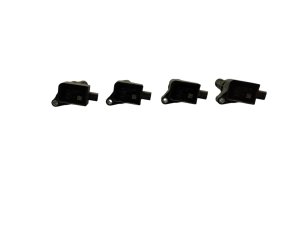
We Have This Part in Stock

The information in this article is provided for general reference and educational purposes only. Vehicle specifications, procedures, and part compatibility can vary by production date, trim level, and region. Always consult your vehicle's factory service manual and verify part numbers before purchasing or performing repairs. Safety-critical components such as airbags, seat belts, and braking systems should be installed by a qualified professional.
- Ford BRONCO:
- 🧭 Diagnostic Flowchart
- 🎬 Helpful Videos
- 🛍️ Shop This Part
- What's Unique About the 2021-2025 Ford BRONCO
- Symptoms You May Notice
- Most Likely Causes
- Rare But Worth Checking
- Diagnosis Steps
- Parts You'll Likely Need
- Related Codes That Often Appear With This One
- Technical Service Bulletins (TSBs) & Recalls
- Platform-Specific Known Issues
- Mechanic-Grade Diagnostic Values
- Scan Tool Commands That Help
- Wiring & Ground Locations
- Real Owner Repair Stories
- "I Checked Everything" — The Actual Cause
- OEM Part Supersession History
- Model Year Variations Within This Range
- 🎟️ Get 5% Off