

P0303 on 2015-2018 Ford Edge: Cylinder 3 Misfire Causes and Fixes
On the 2.0L EcoBoost, P0303 is a major red flag for coolant leaking into the cylinder due to a known engine block defect. While it could be a simple spark plug or ignition coil, check your coolant level immediately. A basic fix is under $100, but the engine issue can cost over $7,000.
- On a 2015-2018 Edge with the 2.0L EcoBoost, P0303 is not a typical misfire code; it is a strong warning sign of a major, known engine defect.
- Your first step should be to check the engine coolant level. If it's low without any visible leaks, do not drive the vehicle.
- While the cause could be a simple ignition coil or spark plug, these are low-probability fixes. Do not replace parts without diagnosing the potential for coolant intrusion first.
- The official Ford-recommended repair for this issue is a complete engine replacement, which is a very expensive job.
- If you experience this code, it is critical to have it diagnosed by a professional who is aware of Ford TSB 19-2346 or its successors.
What's Unique About the 2015-2018 Ford Edge
For the 2015-2018 Ford Edge with the 2.0L EcoBoost engine, a P0303 code is uniquely alarming. Unlike a typical misfire from a bad spark plug, it is a primary symptom of a well-documented engine design flaw where coolant intrudes into the cylinders. This problem stems from the engine block's 'open-deck' design, which has insufficient support between the cylinders, allowing a crack to form and coolant to leak, most commonly into cylinders 2 and 3. This serious issue is detailed in Ford's Technical Service Bulletin (TSB) 19-2346 and its successor, TSB 22-2229. Manufacturer service bulletin SSM 47204 also notes that this "runs rough" condition and P0303 code may be due to coolant intrusion caused by corrosion on the engine block.
Symptoms You May Notice
- Rough idle, especially on cold startup
- Hesitation or stumbling during acceleration
- Noticeable loss of power
- Flashing or solid Check Engine Light
- White smoke from the exhaust, especially on startup
- Unexplained coolant loss, requiring frequent top-offs
- Engine temperature gauge running higher than normal or overheating warnings
- Replacing only the spark plug or ignition coil without checking for coolant loss. If coolant intrusion is the root cause, a new plug/coil will soon fail or be fouled, and the misfire will return.
Most Likely Causes
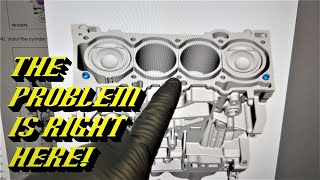
- Coolant Intrusion into Cylinder 🔴 High Probability A known design flaw in the 2.0L EcoBoost engine block can cause a crack to form between cylinders, allowing coolant to leak into the combustion chamber. This issue is documented in Ford TSB 19-2346 and later TSB 22-2229. 🎬 Watch: A deep dive into the EcoBoost coolant consumption fix. Cylinders 2 and 3 are most commonly affected. This defect has led to multiple class-action lawsuits.
How to confirm: Check for a low coolant level with no visible external leaks. A 'steam-cleaned' or unusually clean spark plug in cylinder 3 is a strong indicator. A professional diagnosis involves a cooling system pressure test to confirm the leak and using a borescope to look for coolant inside the cylinder, as mandated by the TSB. NHTSA ODI #11653051 describes a case where a technician used a camera to confirm coolant was leaking into the engine after a P0303 code appeared.
Typical fix: The only permanent fix recommended by Ford is a complete long block engine replacement with an updated engine design. The revised long block part number is often cited as a J2GZ-6006-E or similar, superseding the original faulty design.
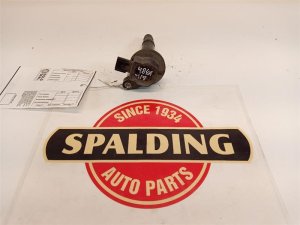
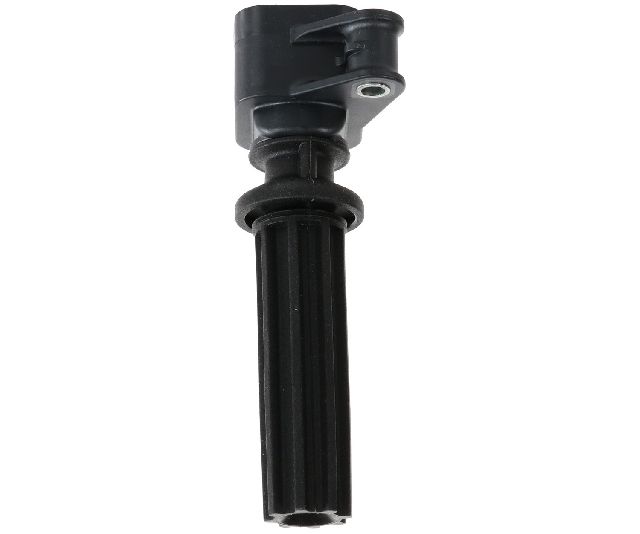
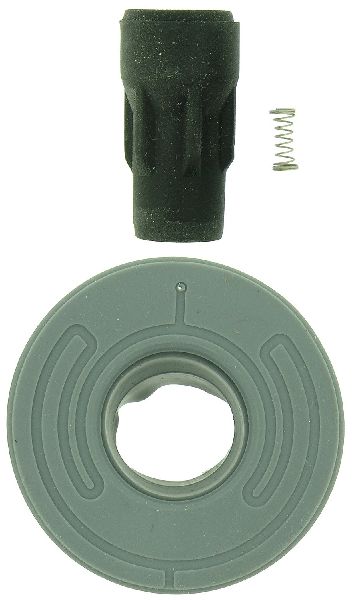
Est. part cost: $4000-$7000 - Failed Ignition Coil 🟡 Medium Probability → Shop Ignition Coil Ignition coils are common wear items that can fail and cause a single-cylinder misfire. Heat and vibration contribute to their eventual failure.
How to confirm: Swap the ignition coil from cylinder 3 with another cylinder (e.g., cylinder 2). On the 2.0L I4, the cylinders are numbered 1-2-3-4 from the passenger side (belt side) to the driver side. Clear the codes and drive the vehicle. If the code changes to P0302, the ignition coil is faulty. 🎬 See this walkthrough on how to replace your ignition coils.
Typical fix: Replace the faulty ignition coil. It is often recommended to replace all four coils and spark plugs if they are original.
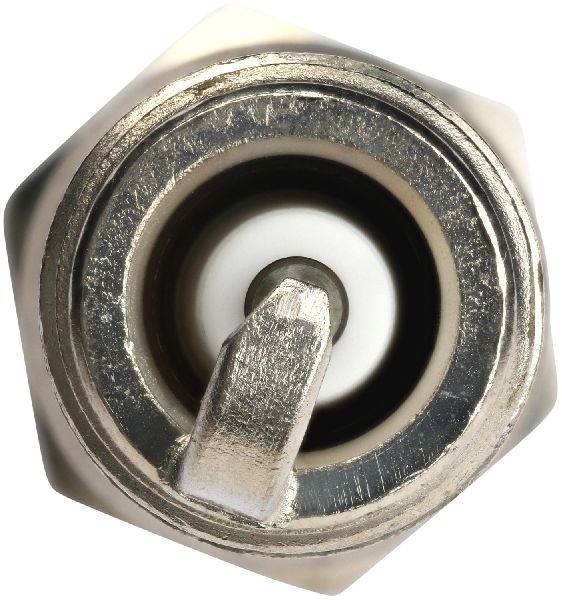
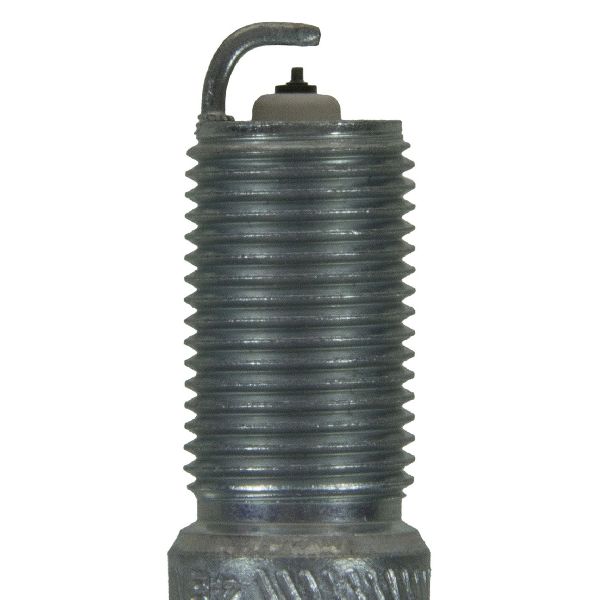
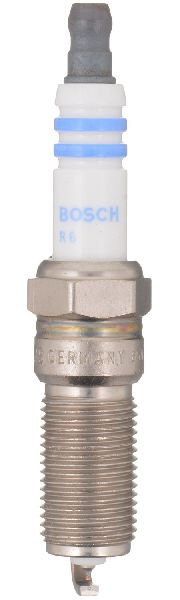
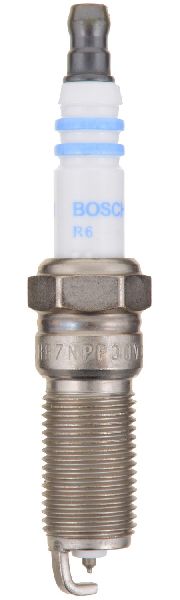
Est. part cost: $40-$90 - Worn or Fouled Spark Plug 🟡 Medium Probability → Shop Spark Plug Spark plugs are a routine maintenance item. A plug can become fouled by coolant from the more serious issue, or simply fail from age and wear. The gap can also widen over time, leading to a weak spark. In NHTSA ODI #11616179, an owner reported a misfire during acceleration where a mechanic found a cracked spark plug in the 3rd cylinder.
How to confirm: Remove the spark plug from cylinder 3 and inspect it. Look for wear, damage, or fouling. A wet or 'steam-cleaned' appearance indicates coolant intrusion. Heavy black soot indicates a rich fuel mixture, while white, crusty deposits also point to coolant.
Typical fix: Replace the spark plug. It is best practice to replace all four spark plugs at the same time 🎬 Watch: Easy step-by-step guide to replacing your spark plugs. to ensure consistent performance.
Est. part cost: $15-$25 - Faulty Fuel Injector ⚪ Low Probability → Shop Fuel Injector
How to confirm: If ignition system checks out, the fuel injector may be clogged or have failed. This can be tested by swapping the injector to another cylinder (a more involved job) or by having a professional perform a fuel injector balance test.
Typical fix: Clean or replace the faulty fuel injector.
Est. part cost: $50-$150
Rare But Worth Checking
- Loss of Engine Compression: This is a serious mechanical issue (e.g., bad valve, piston ring failure) that would require a mechanical compression test to confirm and significant engine work to repair. This can be a consequence of overheating from the coolant intrusion issue.
Diagnosis Steps
- Check the coolant reservoir. If it is low and there are no visible leaks under the car, suspect coolant intrusion. This is the most critical first step for this specific vehicle.
- Scan for any other diagnostic trouble codes. Codes like P0316, P0302, P1299, or P0217 strongly point towards the coolant intrusion issue.
- Swap the ignition coil from cylinder 3 to another cylinder (e.g., cylinder 2). The cylinders are numbered 1-2-3-4 from passenger to driver side. Clear the codes and see if the misfire code changes to P0302. If it does, the coil is bad.
- If the misfire remains on cylinder 3, remove the spark plug. Inspect it for damage, wear, or signs of coolant (a wet or steam-cleaned appearance). Replace the spark plugs if they are worn or fouled.
- If the spark plug and ignition coil are good, but you have coolant loss, a professional diagnosis is required. This will involve a cooling system pressure test and a borescope inspection to confirm coolant in the cylinder, as per TSB 22-2229.
- If coolant intrusion is ruled out, further diagnosis will focus on the fuel injector and mechanical engine health (compression test).
Parts You'll Likely Need
- Engine Long Block Assembly
(OEM #J2GZ-6006-A (or superseding part like J2GZ-6006-E))— This is the official Ford-mandated fix for the P0303 code when caused by the coolant intrusion defect, as outlined in TSB 19-2346 and its successor, TSB 22-2229.
Trusted brands: Motorcraft
OEM price range: $4000-$7000
Aftermarket price range: $3500-$5500 - Ignition Coil
(OEM #CM5Z-12029-K (also known as DG-562))— A common cause for an isolated cylinder misfire if the coolant intrusion issue is not present.
Trusted brands: Motorcraft, NGK, Denso, Delphi
OEM price range: $60-$90
Aftermarket price range: $40-$70 - Spark Plug
(OEM #CYFS-12Y-PCT (superseded by CYFS-12Y-PCTX, also known as SP-550))— A routine maintenance part that can fail. A coolant-fouled plug is also a key symptom of the larger engine issue.
Trusted brands: Motorcraft, NGK, Bosch
OEM price range: $15-$25
Aftermarket price range: $8-$15
Related Codes That Often Appear With This One
- P0316 — Indicates 'Misfire Detected on Startup (First 1000 Revolutions)'. This is very common with coolant intrusion, as coolant pools in the cylinder overnight and causes an immediate misfire on a cold start.
- P0300 — Indicates 'Random/Multiple Cylinder Misfire'. This may appear if the coolant leak begins to affect adjacent cylinders (like cylinder 2) or if the misfire is severe.
- P0302 — Indicates a misfire in cylinder 2. The engine block flaw often creates a crack between cylinders 2 and 3, so it is very common to see misfires on both cylinders simultaneously or in succession.
- P1299 — Indicates 'Cylinder Head Over Temperature Protection Active'. This code can be triggered as the coolant level drops due to the internal leak, leading to overheating.
- P0217 — Indicates 'Engine Overtemperature Condition'. This is a direct result of the coolant loss caused by the internal leak into the cylinder.
Technical Service Bulletins (TSBs) & Recalls
- TSB 22-2229: Supersedes TSB 19-2346. Addresses low coolant, white smoke, and rough running conditions with DTCs P0301-P0304 and P0316. It confirms the cause is coolant intrusion and the repair is to replace the long block engine assembly on affected 2015-2018 Edge, 2017-2019 Escape/Fusion, and 2017-2019 Lincoln MKC/MKZ.
- TSB 19-2346: An earlier version of the bulletin confirming the same coolant intrusion issue and recommending long block replacement.
- SSM 47204: An earlier Special Service Message that noted the rough run condition and P030x codes due to coolant intrusion, which was later superseded by the more detailed TSBs.
Platform-Specific Known Issues
- 2.0L EcoBoost Coolant Intrusion: The most critical issue for this vehicle. A design flaw in the engine block allows coolant to leak into cylinders, most commonly cylinders 2 and 3. This causes misfires, white smoke, and eventual engine failure. Ford TSB 19-2346 and its successor TSB 22-2229 confirm this issue and state the only fix is a complete long block replacement. This issue has also led to multiple class-action lawsuits against Ford.
Mechanic-Grade Diagnostic Values
- High-Pressure Fuel System Pressure (GDI) — expected: Varies with load, from 65 PSI up to 2,150 PSI or higher.. Failure: Actual pressure significantly lagging behind desired pressure under load may indicate a weak High-Pressure Fuel Pump (HPFP), though this is a rare cause for P0303.
- Low-Pressure Fuel System Pressure (KOEO) — expected: 55-85 PSI.. Failure: Pressure below this range could indicate a failing in-tank fuel pump, but this is not a primary cause of a single-cylinder misfire.
- Ignition Coil Primary Resistance — expected: Approximately 0.4 to 2.0 ohms (general specification).. Failure: A reading significantly outside this range. However, a coil swap is a more practical field test.
- GDI Fuel Injector Resistance — expected: Approximately 1.0 to 2.0 ohms.. Failure: A reading outside this range indicates a faulty injector. Note: These are low-impedance injectors requiring a specific driver in the PCM.
- Cooling System Pressure Test (per TSB) — expected: System holds ~20 PSI for 5 hours with less than a 4 PSI drop.. Failure: A pressure drop of more than 4 PSI in 5 hours strongly indicates an internal leak, likely into a cylinder.
Hidden / Shadow Codes Worth Checking
- Mode $06, TID $A2-$A7: Represents misfire counts for each cylinder (e.g., TID $A4 for Cylinder 3). Even if a P0303 code isn't set, a high count here can indicate an intermittent misfire. (see via A professional scan tool capable of viewing Mode $06 data.)
Scan Tool Commands That Help
- Ford IDS (or compatible high-end scanner like Launch, Autel, Snap-on): Power Balance Test — This is the definitive test for identifying a misfiring cylinder. The tool disables one cylinder at a time and displays a graph of the RPM drop. A cylinder that shows little to no RPM drop when disabled is not contributing power. This is more precise than just reading codes and can identify weak cylinders that haven't yet triggered a hard fault.
Wiring & Ground Locations
- Ignition Coil Connector (Cylinder 3) — On top of the valve cover, third from the passenger (belt) side.. The connector has two wires. A technician can check for battery voltage on one pin and a pulsing ground signal from the PCM on the other pin with the engine running to verify the control circuit is intact.
- PCM (Powertrain Control Module) — Located in the engine bay, often near the battery or firewall.. In rare cases where the coil, plug, and wiring are good, the driver circuit within the PCM for cylinder 3 can fail. This would require testing continuity of the control wire from the PCM connector to the coil connector.
Real Owner Repair Stories
- Reddit r/MechanicAdvice (2017 Ford Escape 2.0L EcoBoost (same engine and issue)) — P0303, low coolant.
❌ Tried (didn't work) Owner attempted to remove the spark plug and broke it, requiring a tow.
✅ What actually fixed it The dealer confirmed coolant was leaking into the engine. After negotiation with Ford corporate, a new long block engine was installed, which was the ultimate fix for the coolant intrusion causing the P0303. - Ford Edge Forum (2016 Ford Edge SEL AWD 2.0L, 66,500 miles) — Rough idle for ~15 seconds on cold start, then smooths out. Check Engine Light with code P0303.
❌ Tried (didn't work) The user posted seeking advice, no failed attempts were listed.
✅ What actually fixed it The user did not post a final resolution, but the symptoms (cold start rough idle, P0303) are classic signs of the coolant intrusion issue, which other forum members would point towards. - NHTSA ODI #11384096 — An owner reported that when the vehicle was started cold, it would chug and stall out at times, with a check engine light showing codes P0303 and P0316.
- NHTSA ODI #11548978 — After replacing spark plugs and coils, the check engine light returned with code P0303. Air pockets were found in the coolant, and a coolant test confirmed coolant in cylinder 3, leading to a recommendation for a new motor.
OEM Part Supersession History
JS7Z-6006-A, JS7Z-6006-C, JJ7Z-6006-B→J2GZ-6006-E (and subsequent revisions like K2GZ-6006-E)— The original engine block design used long, thin slits for coolant passages between the cylinders. This created a weak point. The revised block (J2GZ-6006-E and newer) replaces the slits with small, drilled, angled holes, providing more surface area for the head gasket to seal, thus preventing the coolant intrusion failure.
Heads up: Using an engine with one of the original part numbers for a replacement will re-introduce the same coolant intrusion flaw. Only the revised long block should be used.
Model Year Variations Within This Range
- 2015-2018: The 2015 model year marked the introduction of the second-generation Edge and the new, Ford-designed 2.0L twin-scroll EcoBoost engine. This engine, used through 2019 models, features the 'open-deck' block design with slits between the cylinders that is prone to coolant intrusion. Pre-2015 2.0L EcoBoost engines were a different design based on a Mazda block and are not affected by this specific issue.
- 2019-2020: Ford began phasing in a revised engine block design in mid-2019 for the 2020 model year. This new block eliminates the problematic slits between cylinders and replaces them with small, drilled holes, effectively fixing the coolant intrusion issue. Therefore, a 2019 model could have either the old or new engine design depending on its build date.
Diagnostic Flowchart
Other Known Issues on This Vehicle
Issues unrelated to this code that are worth knowing about as an owner of this generation:
- Torque Converter Failure 🔴 High — Affects 10-15% of 2015-2018 models, causing shuddering, harsh shifting, and potential transmission failure.
- Leaking Auxiliary Vacuum Pump 🟠 Medium — A common issue where the pump's seal fails, causing an oil leak onto the side of the engine. Often occurs after 60,000 miles.
- Intake Valve Carbon Buildup 🟠 Medium — Nearly universal on direct-injection engines. Becomes noticeable after 60,000-80,000 miles, causing rough idle, hesitation, and reduced fuel economy.
- Cracked Flexplate 🔴 High — Reported in 2015-2018 models, causing a rattling engine noise that can lead to stalling or transmission damage if not addressed. This has prompted at least one class-action lawsuit.
- Premature Brake Rotor Wear 🟡 Low — Owners report needing to replace brake rotors and pads as frequently as every 20,000-30,000 miles due to warping and pulsation.
Used vs. New Parts: Buying Guide for This Vehicle
When a used part is the smart pick: A used ignition coil or fuel injector from a low-mileage donor vehicle is a reasonable cost-saving measure. A used engine is a high-risk but potentially cost-effective option ONLY if it can be verified as the updated design from a 2020 or newer donor vehicle.
Donor-vehicle mileage cap: roughly under 80000 miles for the part to have meaningful remaining life.
What to inspect on the donor part:
- For a used engine, visually inspect the block deck. The revised (good) block has small drilled holes between cylinders; the original (bad) block has long slits.
- Obtain the VIN of the donor vehicle to confirm it is a 2020+ model year.
- Check for external signs of damage, corrosion, or leaking gaskets.
- Ask for compression test numbers from the seller if possible.
OEM-only on this vehicle (don't cheap out):
- Engine Long Block Assembly: If buying a new engine, only an OEM Motorcraft part guarantees you receive the latest revised block design that corrects the coolant intrusion flaw.
Aftermarket brands forum-validated for this vehicle:
- Ignition Coils: Motorcraft (OEM), NGK, Denso
- Spark Plugs: Motorcraft (OEM), NGK
Brands owners have reported issues with on this vehicle:
- Unbranded or 'white-box' ignition coils and sensors often have high failure rates and are best avoided.
Real Owner Stories
Aggregated from forums and TSBs cited above. Mileages and costs reflect what owners reported in those sources.
2017 Ford Escape 2.0L EcoBoost I4
Symptoms: The owner reported a P0303 code on this platform mate which shares the same engine block design prone to coolant intrusion.
What fixed it: According to TSB 22-2229, the required repair for this condition is a complete long block engine assembly replacement.
Source hint: Reddit r/MechanicAdvice (2017 Ford Escape 2.0L EcoBoost)
Related OBD-II Codes
Frequently Asked Questions
My 2016 Ford Edge 2.0L has a P0303 code and white smoke on startup. Does TSB 22-2229 apply to me?
What is the permanent fix for the coolant intrusion issue causing my P0303 code?
How can I tell if my P0303 misfire is just a bad coil or the engine block defect?
Are there any other mechanical issues on the 2015-2018 Edge that might cause rough idling besides the engine block?
Is there a specific cylinder numbering I should follow when diagnosing P0303 on the 2.0L EcoBoost?
I'm seeing a P0303 and my engine temperature is running high. Is this related?
Helpful Videos

Used OEM Parts in Stock
New Aftermarket Parts Available

The information in this article is provided for general reference and educational purposes only. Vehicle specifications, procedures, and part compatibility can vary by production date, trim level, and region. Always consult your vehicle's factory service manual and verify part numbers before purchasing or performing repairs. Safety-critical components such as airbags, seat belts, and braking systems should be installed by a qualified professional.
- Ford Edge:
- 🧭 Diagnostic Flowchart
- 🎬 Helpful Videos
- 🛍️ Shop This Part
- What's Unique About the 2015-2018 Ford Edge
- Symptoms You May Notice
- Most Likely Causes
- Rare But Worth Checking
- Diagnosis Steps
- Parts You'll Likely Need
- Related Codes That Often Appear With This One
- Technical Service Bulletins (TSBs) & Recalls
- Platform-Specific Known Issues
- Mechanic-Grade Diagnostic Values
- Hidden / Shadow Codes Worth Checking
- Scan Tool Commands That Help
- Wiring & Ground Locations
- Real Owner Repair Stories
- OEM Part Supersession History
- Model Year Variations Within This Range
- Other Known Issues on This Vehicle
- Used vs. New Parts: Buying Guide for This Vehicle
- Real Owner Stories
- 2017 Ford Escape 2.0L EcoBoost I4
- Related OBD-II Codes
- Frequently Asked Questions
- 🎟️ Get 5% Off