

P0303 on 2009-2019 Toyota Corolla: Cylinder 3 Misfire Causes and Fixes
P0303 on a Toyota Corolla almost always points to a failed ignition coil or a worn/fouled spark plug for cylinder 3. Swapping the coil from cylinder 3 to another cylinder is the fastest way to confirm the issue. Another common culprit is a leaking valve cover gasket allowing oil to pool in the spark plug tube, shorting the coil. A new coil costs around $30-$75.
- P0303 means your Corolla's third cylinder is misfiring.
- The most likely cause is a bad ignition coil, followed by a worn spark plug.
- The easiest way to diagnose this is to swap the ignition coil from cylinder 3 with another cylinder and see if the code follows.
- Do not drive if the check engine light is flashing, as this can cause expensive damage to your catalytic converter.
- This is a very DIY-friendly repair that requires basic hand tools and can be completed in under 30 minutes.
What's Unique About the 2009-2019 Toyota Corolla
The 2ZR-FE engine in this generation of Corolla is known for its reliability, and misfire codes are straightforward. The cylinders are numbered 1-2-3-4 sequentially from the passenger side (timing chain/belt side) to the driver side. There are no widespread, unique design flaws that make P0303 particularly difficult to diagnose. The causes are almost always related to the basic ignition components—coil packs and spark plugs. The coil-on-plug ignition system makes diagnosis simple, as components can be easily swapped between cylinders.
Generation note: This guide covers the 10th generation (2009-2013) and 11th generation (2014-2019) Toyota Corolla in North America. Both generations use the 2ZR-FE 1.8L engine with a similar coil-on-plug ignition setup, making the diagnostic process nearly identical. Part numbers for ignition coils and spark plugs may vary slightly, so always verify with your vehicle's VIN. Some later models may feature the 2ZR-FAE engine with Valvematic, which could have additional diagnostic considerations.
Symptoms You May Notice
- Rough or shaky idle
- Hesitation or stumbling during acceleration
- Reduced engine power
- Decreased fuel economy
- Check engine light is on or flashing
- Smell of unburnt fuel from the exhaust
- Engine sounds like it's choking or surging on a cold start
- Replacing the fuel pump when only a single cylinder is misfiring. A fuel pump issue would typically cause random misfires on multiple cylinders (P0300).
- Replacing oxygen sensors. While a misfire can affect O2 sensor readings, the sensors themselves are rarely the cause of a single-cylinder misfire code.
Most Likely Causes
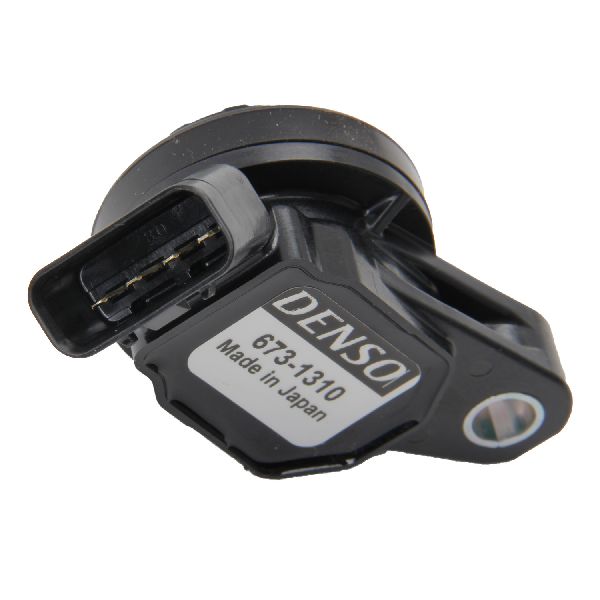
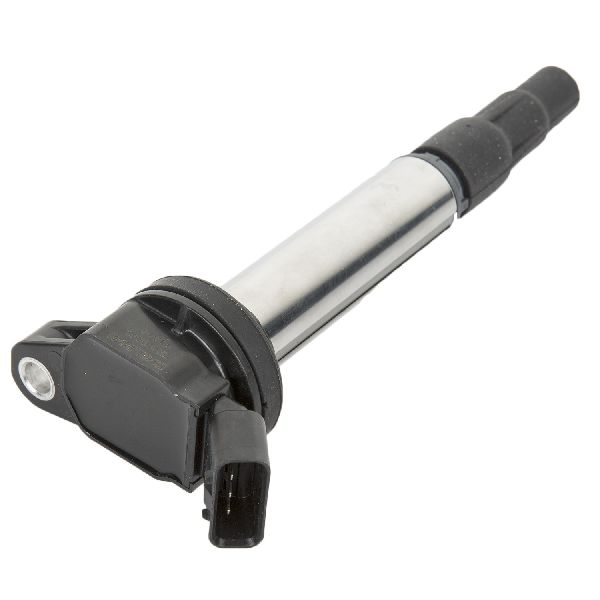
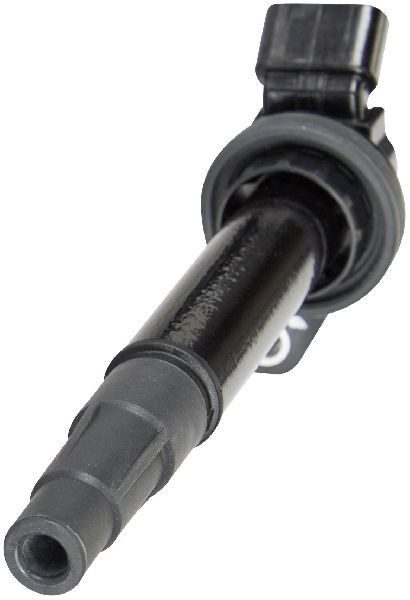
- Failed Ignition Coil 🔴 High Probability → Shop Ignition Coil Ignition coils are a common wear item. Heat cycles and age cause the internal windings to fail, leading to a weak or no-spark condition. The original equipment manufacturer is typically Denso.
How to confirm: Swap the ignition coil from cylinder 3 with another cylinder (e.g., cylinder 2). Clear the codes and drive the vehicle. If the code changes to P0302, the ignition coil is faulty.
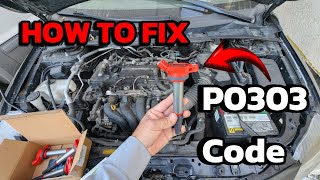
Typical fix: Replace the faulty ignition coil. It is held in by a single 10mm bolt. 🎬 Watch this step-by-step guide to fixing a P0303 misfire.
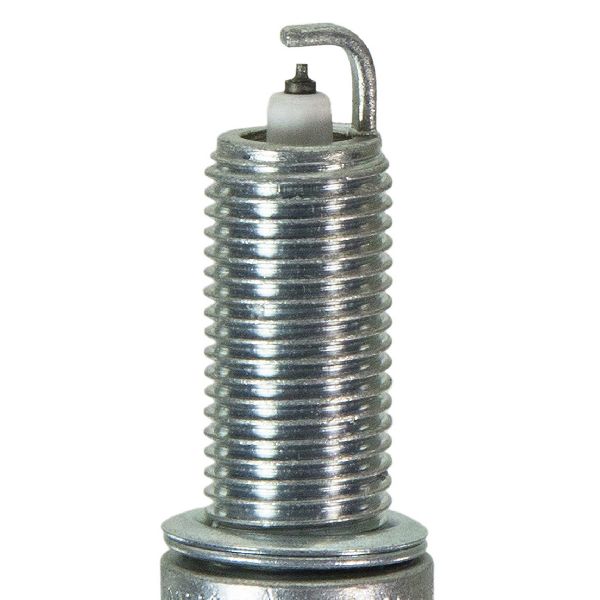
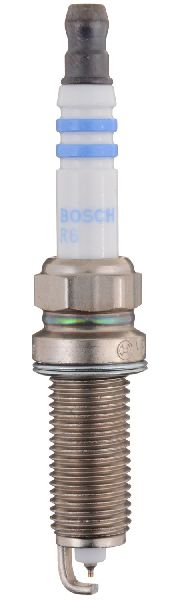
Est. part cost: $30 - $75 - Worn or Fouled Spark Plug 🟡 Medium Probability → Shop Spark Plug Spark plugs have a finite service life (typically 100,000-120,000 miles for iridium plugs). A worn electrode increases the gap, requiring more voltage to create a spark, which can lead to a misfire. Oil from a leaking valve cover gasket can also foul the plug, causing it to fail.
How to confirm: After confirming the coil is good, remove the spark plug from cylinder 3. Inspect it for wear, damage, or fouling (black soot, oil, etc.). The standard gap should be 1.0 to 1.1 mm (0.0394 to 0.0433 in.). A user on ScionLife confirmed a bad plug was their issue by swapping it to another cylinder and seeing the code follow.
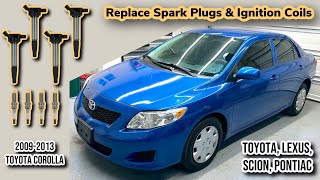
Typical fix: Replace the spark plug. It is recommended to replace all four spark plugs at the same time 🎬 See how to replace your spark plugs and coils correctly. for even performance.
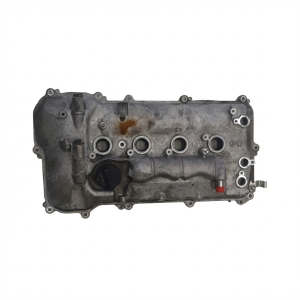
Est. part cost: $10 - $25 per plug - Leaking Valve Cover Gasket / Spark Plug Tube Seal 🟡 Medium Probability → Shop Engine Valve Cover With age and heat cycles, the rubber valve cover gasket and integrated spark plug tube seals become hard and brittle. This allows oil to leak from the valvetrain area directly into the spark plug tubes. This is a very common issue on high-mileage 2ZR-FE engines.
How to confirm: When you remove the ignition coil for cylinder 3, inspect the coil boot and the spark plug well for the presence of liquid engine oil. If oil is present, the seals have failed.
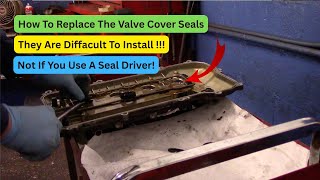
Typical fix: Replace the valve cover gasket and the spark plug tube seals (they usually come as a set). While in there, clean the oil off the ignition coil boot 🎬 Watch this walkthrough on replacing a leaking valve cover gasket. and out of the spark plug well before installing the new plug.
Est. part cost: $25 - $60 for the gasket set - Faulty Fuel Injector ⚪ Low Probability → Shop Fuel Injector
How to confirm: If the misfire remains on cylinder 3 after swapping the coil and plug, the fuel injector is the next suspect. An injector can be tested with a 'noid light' to check for an electrical signal or swapped with another cylinder (a more involved job) to see if the misfire moves.
Typical fix: Replace the faulty fuel injector.
Est. part cost: $50 - $150
Rare But Worth Checking
- Low Engine Compression: This indicates a more serious internal engine problem. If ignition and fuel components are confirmed to be good, a compression test should be performed to check for issues with valves, piston rings, or the head gasket. A service technician noted the minimum spec is 156 PSI for this engine.
- Intake Manifold Gasket Leak: → Shop Engine Intake Manifold A vacuum leak near the intake runner for cylinder 3 can lean out the air/fuel mixture enough to cause a misfire. This can be diagnosed with a smoke test.
- Wiring Harness Damage: Damage to the wiring or connector for the ignition coil or fuel injector on cylinder 3 can cause an intermittent or constant misfire. Check for brittle plastic, chafed wires, or loose pins.
- Loose Spark Plug: → Shop Spark Plug In at least one documented case, a P0303 code on a 2009 Corolla was caused by spark plugs that had become loose over time. Simply re-torquing the spark plugs to specification resolved the issue.
Diagnosis Steps
- Read the code with an OBD-II scanner to confirm P0303 is the primary code. Note any other codes present and check freeze frame data.
- Locate cylinder 3. On the 2ZR-FE engine, the cylinders are numbered 1-2-3-4 from the passenger side (timing chain side) to the driver side.
- Swap the ignition coil from cylinder 3 with the coil from cylinder 2.
- Clear the trouble codes using the scanner.
- Start the engine and let it run for a few minutes. Re-scan for codes.
- If the code is now P0302, the ignition coil from cylinder 3 is bad and must be replaced.
- If the code remains P0303, the coil is likely good. Pull the coil back out and inspect the spark plug tube for any standing oil. If oil is present, your valve cover/tube seals are leaking and must be replaced.
- If no oil is present, proceed to swap the spark plug from cylinder 3 with cylinder 2 and repeat the process. Check that the spark plugs are torqued correctly and not loose.
- If the code changes to P0302 after swapping plugs, the spark plug is the culprit.
- If all else fails, perform an engine compression test to rule out mechanical issues like bad piston rings or valves.
Parts You'll Likely Need
- Ignition Coil
(OEM #90919-02258)— This is the most frequent cause of a single-cylinder misfire on the 2ZR-FE engine.
Trusted brands: Denso (OEM), NGK
OEM price range: $75-$100
Aftermarket price range: $30-$60 - Iridium Spark Plug
(OEM #90919-01253 (Denso SC20HR11))— A worn or fouled spark plug is the second most common cause. It's a routine maintenance item that can cause misfires when its service life is exceeded.
Trusted brands: Denso (OEM), NGK
OEM price range: $15-$25
Aftermarket price range: $10-$18 - Valve Cover Gasket Set
(OEM #11213-37020)— A very common failure on higher-mileage engines, leading to oil in the spark plug wells which causes misfires.
Trusted brands: Toyota (OEM), Fel-Pro, Mahle
OEM price range: $40-$60
Aftermarket price range: $20-$40
Related Codes That Often Appear With This One
- P0300 — If the misfire becomes more widespread or is intermittent across multiple cylinders, a P0300 (Random/Multiple Cylinder Misfire) may be stored alongside P0303.
- P0301, P0302, P0304 — If you swap a faulty component from cylinder 3 to another cylinder for diagnosis, the code will follow. For example, swapping a bad coil to cylinder 1 will cause a P0301 to appear.
Technical Service Bulletins (TSBs) & Recalls
- source_type: tsb | id_or_name: TSB SB0030-15R1 / Warranty Enhancement ZE7 | relevance: Addresses excessive oil consumption on 2009-2011 Corollas due to piston ring design. While not a direct cause of a single-cylinder misfire, excessive oil burning can foul spark plugs over time, potentially leading to a P0303 code.
Mechanic-Grade Diagnostic Values
- Fuel Injector Resistance — expected: 11.6 to 12.4 Ω at 20°C (68°F). Failure: A reading outside this range indicates an internal injector fault. All injectors should have similar readings.
- Ignition Coil Primary Resistance — expected: 0.49 - 0.57 Ω. Failure: A reading outside this range indicates a faulty coil.
- Ignition Coil Secondary Resistance — expected: 9.5 - 11.1 kΩ. Failure: A reading outside this range indicates a faulty coil.
- Fuel Pressure (Key On, Engine Off) — expected: 44 - 50 psi (303 - 345 kPa). Failure: Pressure below this range indicates a weak fuel pump or a leak in the system.
- Ignition Trigger (IGT) Signal Voltage at ECM — expected: 0.1 - 4.5 volts while cranking. Failure: No voltage or incorrect voltage suggests a problem with the ECM or the wiring between the ECM and the igniter.
Hidden / Shadow Codes Worth Checking
- Mode $06, TID $0A, CID $01-$04: This refers to the onboard misfire monitor counts for each cylinder. Even before a P030x code is set, a technician can view the raw misfire count for each cylinder in Mode $06 data to see if cylinder 3 is accumulating misfires at a higher rate than others. (see via A professional OBD-II scan tool with Mode $06 capability.)
Scan Tool Commands That Help
- Toyota Techstream: Active Test: Control the Injector Cut — This function allows a technician to individually disable each fuel injector. When the injector for cylinder 3 is cut, if there is no change in engine RPM, it confirms that cylinder 3 was not contributing, pointing towards a fuel, spark, or compression issue on that specific cylinder.
- Toyota Techstream: Data List: Misfire RPM — This live data parameter shows the engine RPM at which the last misfire occurred. This can help diagnose if the misfire is load-dependent (e.g., only happening at high RPM) or consistent across the RPM range.
Wiring & Ground Locations
- Engine Harness Ground (Cylinder Head) — There are key ground points for the engine harness on the cylinder head. One is located on the side of the head, underneath the throttle body. Another is on the front of the head near the timing cover.. A loose or corroded ground at these locations can cause erratic behavior in the ignition system, including weak spark or inconsistent coil operation, leading to misfires.
- Ignition Coil Connector (Cylinder 3) — The 4-pin connector on top of the ignition coil for cylinder 3.. This is where voltage and the trigger signal are supplied to the coil. Technicians test for 12V power, ground, and the IGT (trigger) signal from the ECM at these pins to rule out wiring issues.
- Ground Points BA, BB — On LHD models, these ground points are located on the driver's side of the engine compartment, on the chassis frame rail near the battery.. These are primary chassis grounds. While not directly for the ignition coils, a poor connection here can cause a host of electrical issues that could manifest as a misfire.
OEM Part Supersession History
90919-02252→90919-02258— Standard part revision and update by the manufacturer.
Heads up: The parts are interchangeable; 90919-02258 is the current replacement for the original.
Model Year Variations Within This Range
- 2014-2019 (Primarily non-US markets, but some US trims): Some later Corollas are equipped with the 2ZR-FAE engine, which adds the Valvematic system for variable intake valve lift. While the basic ignition system is similar, a misfire could potentially be related to a fault in the Valvematic controller or mechanism affecting cylinder 3, adding a layer of diagnostic complexity not present on the standard 2ZR-FE.
- 2009-2011: Early 2ZR-FE engines in this range were more susceptible to an oil consumption issue related to piston ring design, covered under a warranty enhancement (TSB SB0030-15R1). This can lead to accelerated spark plug fouling from oil burning, making it a more likely cause for P0303 on these specific years.
Diagnostic Flowchart
Other Known Issues on This Vehicle
Issues unrelated to this code that are worth knowing about as an owner of this generation:
- Excessive Oil Consumption 🔴 High — Most common on earlier 2009-2011 models. Caused by faulty piston ring design. Can consume over 1 quart per 1,200 miles. (Ref: Toyota Warranty Enhancement Program ZE7; TSB SB0030-15R1)
- VVT-i Camshaft Gear Rattle at Cold Startup 🟡 Low → Shop Engine Camshaft — A common complaint across the 2ZR-FE engine line. A loud rattle for 1-2 seconds on cold start as the VVT gear fills with oil. Generally considered an annoyance that doesn't cause immediate damage.
- Premature Water Pump Failure 🟠 Medium — Relatively uncommon, but noted in some cases to fail early (as low as 30,000-60,000 miles), causing coolant leaks. Toyota recognized the issue and often covered it under warranty.
Used vs. New Parts: Buying Guide for This Vehicle
When a used part is the smart pick: A used ignition coil from a reputable salvage yard is a reasonable choice, especially if it's from a low-mileage, documented donor vehicle. This can be a cost-effective way to get an OEM Denso part instead of a questionable new aftermarket one.
Donor-vehicle mileage cap: roughly under 80000 miles for the part to have meaningful remaining life.
What to inspect on the donor part:
- Check for a clean, crack-free plastic housing.
- Ensure the electrical connector pins are not corroded or bent.
- The rubber boot should be pliable and free of tears or oil swelling.
- Ask for the donor vehicle's mileage if possible.
OEM-only on this vehicle (don't cheap out):
- Engine Control Module (ECM) - Due to programming and security requirements, a new or professionally refurbished OEM unit is strongly advised if replacement is necessary.
Aftermarket brands forum-validated for this vehicle:
- Denso (OEM supplier, often identical to the dealer part)
- NGK (Well-regarded for ignition components)
Brands owners have reported issues with on this vehicle:
- Unbranded, generic ignition coils from online marketplaces are frequently cited by owners for premature failure. It is better to buy a known brand like Denso or NGK, or even a used OEM coil, than a new no-name part.
Real Owner Stories
Aggregated from forums and TSBs cited above. Mileages and costs reflect what owners reported in those sources.
2009 Toyota Corolla 1.8L — 230000 miles
Symptoms: Intermittent rough ride, P0303 and P0304 codes appearing even after replacing all spark plugs and coils. Toyota dealership suggested a 'fuel induction' respiratory treatment.
What fixed it: The report indicates the owner was provided a fuel additive treatment by the dealership after previous part replacements failed to keep the light off.
Source hint: r/MechanicAdvice
2014 Toyota Corolla 1.8L — ~100000 miles
Symptoms: P0303 code occurred during cold weather.
What fixed it: Swapped spark plugs between cylinders 3 and 4 and cleaned them; the code did not return, suggesting minor plug fouling.
Source hint: Reddit r/AskMechanics - P0303 - Corolla Misfire
2008-2014 Scion xD 1.8L
Symptoms: Misfire code P0303.
What fixed it: Swapping the spark plug to another cylinder caused the code to follow the plug, confirming a faulty spark plug.
Source hint: ScionLife - Code P0303 (Ignition systems) & Code C1201/51 (Engine control system)
Related OBD-II Codes
Frequently Asked Questions
Does the Toyota Warranty Enhancement Program ZE7 apply to my 2009-2011 Corolla?
Where is cylinder 3 located on the 2ZR-FE engine?
Can I use the same diagnostic steps for my Pontiac Vibe or Scion xD?
What is the correct spark plug gap for the 1.8L Corolla engine?
Is the loud rattle I hear for two seconds on a cold start related to my P0303 misfire?
Could a leaking valve cover gasket cause my P0303 code?
Helpful Videos
![Diagnosing and fixing a misfire P0303 (2008 Toyota Corolla LE - Coil Pack Replacement) [E112]](https://img.youtube.com/vi/4k2t7Wk7BP8/mqdefault.jpg)
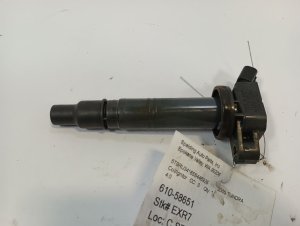
Used OEM Parts in Stock
New Aftermarket Parts Available


The information in this article is provided for general reference and educational purposes only. Vehicle specifications, procedures, and part compatibility can vary by production date, trim level, and region. Always consult your vehicle's factory service manual and verify part numbers before purchasing or performing repairs. Safety-critical components such as airbags, seat belts, and braking systems should be installed by a qualified professional.
- Toyota Corolla:
- 🧭 Diagnostic Flowchart
- 🎬 Helpful Videos
- 🛍️ Shop This Part
- What's Unique About the 2009-2019 Toyota Corolla
- Symptoms You May Notice
- Most Likely Causes
- Rare But Worth Checking
- Diagnosis Steps
- Parts You'll Likely Need
- Related Codes That Often Appear With This One
- Technical Service Bulletins (TSBs) & Recalls
- Mechanic-Grade Diagnostic Values
- Hidden / Shadow Codes Worth Checking
- Scan Tool Commands That Help
- Wiring & Ground Locations
- OEM Part Supersession History
- Model Year Variations Within This Range
- Other Known Issues on This Vehicle
- Used vs. New Parts: Buying Guide for This Vehicle
- Real Owner Stories
- 2009 Toyota Corolla 1.8L — 230000 miles
- 2014 Toyota Corolla 1.8L — ~100000 miles
- 2008-2014 Scion xD 1.8L
- Related OBD-II Codes
- Frequently Asked Questions
- 🎟️ Get 5% Off