

P0303 on 2010-2017 Volkswagen Golf: Cylinder 3 Misfire Causes and Fixes
On a 2010-2017 VW Golf, code P0303 is most often caused by a failed ignition coil on cylinder 3. A new coil costs between $30 and $70 and can be replaced in under 10 minutes, making it a simple and highly effective first diagnostic step. Many owners opt to replace all coils and spark plugs at the same time.
- P0303 on a VW Golf means cylinder #3 is misfiring.
- Start your diagnosis with the easiest and most likely fix: swap the cylinder 3 ignition coil with another cylinder to see if the fault code moves.
- If the coil is not the problem, inspect and likely replace the spark plugs, especially if they are due for service.
- For TSI engines (1.8T/2.0T), if ignition parts are good, the next most probable cause is carbon buildup on the intake valves.
- Avoid driving with a flashing Check Engine Light to prevent costly damage to your catalytic converter.
What's Unique About the 2010-2017 Volkswagen GOLF

The 2010-2017 Golf spans two generations (Mk6 and Mk7) with different primary engines. While ignition coils are a known weak point across all of them, the direct-injection TSI engines (2.0T and 1.8T) are also highly susceptible to carbon buildup on the intake valves. This buildup restricts airflow and is a very common cause of misfires on higher-mileage cars, an issue not found on the port-injected 2.5L engine in the earlier Mk6 models. Misfires from carbon buildup are often most noticeable during cold starts.
Diagnostic Flowchart

Tap your situation to follow the diagnostic path that matches what you're seeing on this vehicle.
Generation note: This range covers the Mk6 (2010-2014) and Mk7 (2015-2017) Golf generations. The Mk6 primarily used a 2.5L 5-cylinder or a 2.0T TSI engine. The Mk7 used 1.8T and 2.0T TSI engines. Ignition coils and spark plugs are common failure points on all engines. However, the TSI engines are also known for carbon buildup on intake valves causing misfires, which is not a concern for the port-injected 2.5L engine. This carbon issue on TSI engines can start causing noticeable problems, like cold start misfires, as early as 40,000-60,000 miles but is more common around 60,000-70,000 miles.
Symptoms You May Notice
- Flashing or solid Check Engine Light
- Rough or vibrating idle
- Engine hesitation or stumbling during acceleration
- Noticeable loss of power
- Reduced fuel economy
- Smell of raw fuel from the exhaust
- Engine stalling in severe cases
- Loud popping sounds from the exhaust during sputtering
- Replacing oxygen (O2) sensors or the Mass Air Flow (MAF) sensor before thoroughly checking the ignition system (coils and plugs), which are the most frequent culprits.
- For TSI engines, repeatedly replacing ignition components when the root cause is actually carbon buildup on the intake valves. If new plugs and coils don't fix a persistent misfire, carbon cleaning should be the next suspect.
Most Likely Causes

- Faulty Ignition Coil 🔴 High Probability → Shop Ignition Coil Ignition coils are a well-documented, common failure item on VW engines of this era, for both the 2.5L and TSI variants. They can fail suddenly, causing an immediate and rough misfire.
How to confirm: The easiest way to confirm is to swap the ignition coil from cylinder 3 with another cylinder (e.g., cylinder 2). Clear the codes and run the engine. If the code changes to P0302, the coil is faulty. Visually inspect the old coil for cracks in the plastic housing or white/black soot marks, which indicate it has failed.
Typical fix: Replace the faulty ignition coil. Many owners choose to replace all coils at the same time as a preventative measure, sometimes upgrading to the red-top coils from the Audi R8 for their perceived reliability.
Est. part cost: $30 - $70 - Worn or Fouled Spark Plug 🔴 High Probability → Shop Spark Plug Spark plugs are a standard maintenance item. If they are past their service interval or have become fouled by oil or carbon, they can fail to produce an adequate spark. Incorrectly gapped plugs, especially on tuned cars, can also cause misfires.
How to confirm: After ruling out the coil, remove the spark plug from cylinder 3. Inspect it for a worn electrode, cracks in the ceramic, or heavy deposits of carbon or oil. Compare its condition to a plug from another cylinder.
Typical fix: Replace the spark plug. It is best practice to replace all spark plugs as a set to ensure consistent performance. Ensure they are gapped correctly per manufacturer specifications.
Est. part cost: $10 - $25 per plug - Carbon Buildup on Intake Valves (TSI Engines Only) 🟡 Medium Probability The 1.8T and 2.0T TSI engines use direct injection, which sprays fuel directly into the cylinder. This means fuel doesn't wash over the intake valves, allowing oil and carbon deposits from the PCV system to bake onto them over time, restricting airflow and causing uneven air-fuel mixtures.
How to confirm: This requires a visual inspection, typically using a borescope inserted into the intake port with the manifold removed. This is often diagnosed after ignition components have been ruled out, especially on engines with over 60,000 miles. Symptoms are often worse on a cold start.
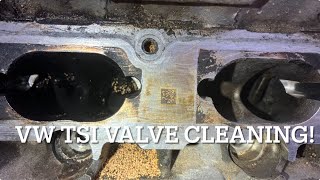
Typical fix: The valves must be cleaned manually. The most effective method is media blasting, often called 'walnut blasting', where crushed walnut shells are used to scour the valves clean without damaging the metal. 🎬 See how walnut blasting effectively removes heavy carbon buildup.
Est. part cost: $50 (for cleaning supplies/tool rental) - $600+ (for professional service) - Faulty Fuel Injector ⚪ Low Probability → Shop Fuel Injector While less common than ignition or carbon issues, fuel injectors can become clogged or fail electronically, preventing the correct amount of fuel from reaching cylinder 3.
How to confirm: A mechanic can check fuel trims with a scan tool. A more definitive, but labor-intensive, test is to swap the cylinder 3 injector with another cylinder and see if the misfire code follows. A multimeter can also be used to check the resistance of the injector; a healthy injector should read around 12 ohms, while a faulty one might show a much higher resistance, like 65 ohms.
Typical fix: Replace the faulty fuel injector. It's often recommended to have all injectors professionally cleaned and tested at the same time.
Est. part cost: $50 - $150
Rare But Worth Checking
- Vacuum Leak: A leak in a vacuum hose, PCV valve, or intake manifold gasket can introduce unmetered air, leaning out the air/fuel mixture and causing a misfire. A failed PCV valve on TSI engines is a very common source of vacuum leaks and can cause a loud whistling or screeching noise.
- Low Cylinder Compression: Internal engine damage, such as worn piston rings, a burnt valve, or even a failed timing chain causing valve-to-piston contact, can cause a loss of compression, leading to a persistent misfire. A compression test followed by a leak-down test can confirm this. On a healthy 2.0T TSI engine, compression should be around 175-180 PSI per cylinder.
- Poor Coil Grounding: On TSI engines, the ignition coils are grounded via small bolts. These can become loose or corroded, leading to a weak or intermittent spark. Checking that the ground connections are clean and tight is a valid diagnostic step.
Diagnosis Steps
- Read the code with an OBD-II scanner and confirm P0303 is present. Note if the Check Engine Light is steady or flashing.
- Identify cylinder 3. On VW's inline engines, this is the third cylinder from the front of the engine (the side with the belts).
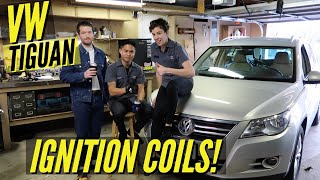
- Perform the 'Coil Swap Test': Swap the ignition coil from cylinder 3 with the coil from cylinder 2. Clear the codes, start the engine, and see if the misfire code moves to P0302. If it does, the coil is bad and needs replacement. This is the most common fix.
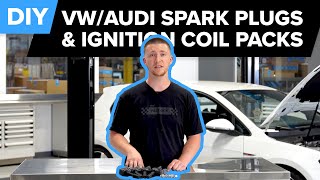
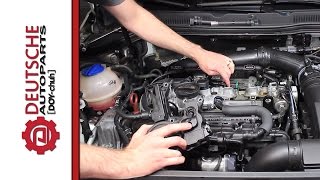
- If the code remains P0303, inspect the spark plug. Remove the plug from cylinder 3 and check for wear, damage, or fouling. Even if it looks okay, if it's near its service interval, replace all spark plugs as a set. 🎬 Watch: Step-by-step guide to replacing TSI coils and spark plugs.
- If coils and plugs are good, the next step depends on the engine. For 1.8T/2.0T TSI engines, especially over 60,000 miles, suspect carbon buildup on the intake valves. This requires a visual inspection with a borescope.
- Check for a clogged or leaking fuel injector. This can be tested by checking its resistance with a multimeter (expect ~12 ohms) or by swapping the injector to another cylinder to see if the fault follows.
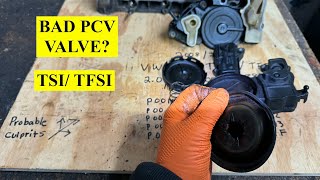
- Inspect for vacuum leaks, paying close attention to the PCV valve on TSI engines. A loud whistle or strong suction when removing the oil cap at idle are telltale signs of a failed PCV diaphragm. 🎬 Watch: How to identify and diagnose a failing PCV valve.
- As a final step for persistent misfires, perform a compression test and a leak-down test to rule out mechanical engine problems like bad rings or valves. A healthy TSI engine should show compression values around 175-180 PSI.
Parts You'll Likely Need

- Ignition Coil
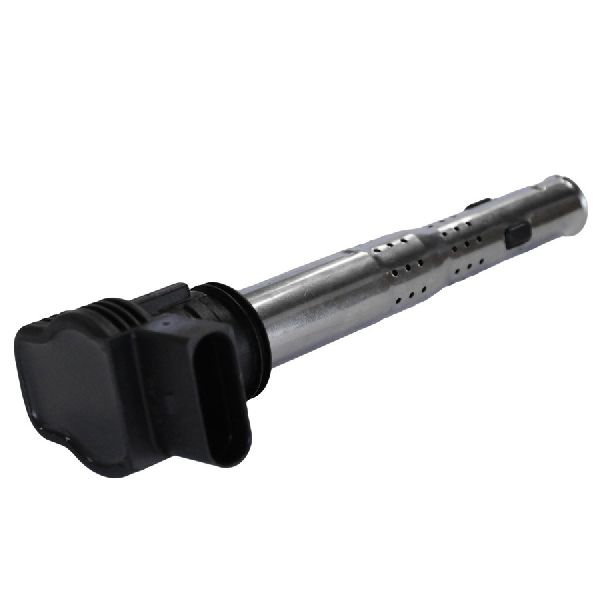
(OEM #07K905715G (for 2.5L) / 06H905110L or 06L905110H (for TSI, latest revisions))— This is the most common failure point for a P0303 code on these vehicles. They are known to fail electronically, causing a lack of spark. Part numbers have been revised multiple times; using the latest revision is recommended.
Trusted brands: Bosch, NGK, Eldor, Beru
OEM price range: $50 - $70
Aftermarket price range: $30 - $50 - Spark Plug
(OEM #06K905601B (example for TSI))— A worn or fouled spark plug is the second most likely cause. It's a routine maintenance item that directly impacts ignition performance. Using the correct heat range and gap is critical, especially on tuned vehicles.
Trusted brands: NGK, Bosch, Denso
OEM price range: $15 - $25 per plug
Aftermarket price range: $10 - $20 per plug
Related Codes That Often Appear With This One
- P0300 — This indicates a random or multiple cylinder misfire. It may appear alongside P0303 if the underlying issue, like a vacuum leak from a failed PCV valve, severe carbon buildup, or a fuel pressure problem, is affecting more than just cylinder 3.
- P0301, P0302, P0304 — These codes indicate misfires in other specific cylinders. Seeing them together often points to a common cause like bad fuel, carbon buildup across all cylinders, or multiple failed ignition components.
- P0087 — This code for 'Fuel Rail/System Pressure - Too Low' was mentioned in a TSB alongside misfire codes. It suggests that in some instances, a fuel delivery problem from a failing High Pressure Fuel Pump (HPFP) could be the root cause of the misfire. [VIN4APIN20220118, 8]
- P0353 — This code indicates a malfunction in the ignition coil primary/secondary circuit for cylinder 3. Seeing P0353 and P0303 together strongly points to a bad ignition coil or a problem in its wiring/connector.
- P0171, P2279, P0507 — These codes (System Too Lean, Intake Air System Leak, Idle RPM Higher Than Expected) often accompany misfire codes when the root cause is a failed PCV valve creating a large vacuum leak.
Technical Service Bulletins (TSBs) & Recalls
- Bulletin #VIN4APIN20220118: Mentions that P0303 can occur with other misfire codes and fuel pressure codes (P0087, P053F), indicating a possible, though less common, link to fuel delivery problems.
Platform-Specific Known Issues

- Ignition Coil Failure: → Shop Ignition Coil Ignition coils on both Mk6 and Mk7 Golf models are a frequent point of failure and can cause sudden misfires without prior warning. Many owners carry a spare coil and the tools to change it.
- TSI Engine Carbon Buildup: TSI engines (1.8T, 2.0T) are highly prone to carbon accumulation on the back of the intake valves, which can cause cold start misfires, rough idling, and hesitation, typically becoming noticeable after 60,000 miles. This is not an issue on the 2.5L port-injected engine.
- Owner Repair Story: Coil Pack Solves Sudden Misfire: → Shop Ignition Coil A user on Golfmk6.com reported stepping on the gas, hearing a 'clunk,' and the Check Engine Light immediately came on with code P0303. The car ran terribly. Another user confirmed this is a classic symptom of coil pack failure and recommended replacing it, with many suggesting an upgrade to Audi R8 'red top' coils and new NGK plugs as a permanent solution.
Mechanic-Grade Diagnostic Values
- Fuel Injector Resistance (TSI Engines) — expected: ~12 Ohms. Failure: A significantly higher reading, such as 65 Ohms, indicates a failed injector.
- Cylinder Compression (2.0T TSI Engine) — expected: 175-180 PSI across all cylinders. Failure: Significantly lower pressure in one cylinder, or large variance between cylinders, indicates a mechanical engine problem.
- High-Pressure Fuel System (TSI Engines) — expected: Up to 1,900+ PSI (130 bar) for earlier TSI, up to 2,900 PSI (200 bar) for later Gen 3 TSI.. Failure: A scan tool showing fuel rail pressure significantly below the requested value, often triggering code P0087.
- Camshaft Adaptation Phase Position (VCDS/OBD11) — expected: 0° +/- 5°. Failure: A value outside of this range can indicate a stretched timing chain or incorrect timing, which can cause misfires.
Hidden / Shadow Codes Worth Checking
- Mode $06 Misfire Counts: Most advanced OBD-II scanners can access Mode $06 data, which includes raw misfire counts for each cylinder for the current and previous driving cycles. This can reveal intermittent misfires on cylinder 3 (or other cylinders) that haven't yet met the threshold to trigger a formal P0303 code. (see via An OBD-II scan tool with Mode $06 capability (e.g., VCDS, OBDeleven, higher-end handheld scanners).)
Scan Tool Commands That Help
- VCDS or OBDeleven: Measuring Value Blocks (MVB) for Misfire Recognition — To monitor live misfire counts per cylinder while the engine is running. This helps confirm if the misfire is constant, intermittent, or only occurs under specific conditions (e.g., cold start, high load).
- VCDS or OBDeleven: Measuring Value Block for Camshaft Adaptation (Phase Position) — When a persistent misfire is not resolved by ignition or fuel component replacement, checking the cam phase position can help diagnose a potential timing chain issue without engine disassembly. A deviation greater than -5° is a strong indicator of a stretched chain.
Wiring & Ground Locations
- Engine Block Ground (Mk6) — On the engine block itself.. A poor engine ground can cause a host of electrical issues, including weak spark and erratic sensor readings that could lead to misfires.
- Transmission/Engine Ground Connection (Mk6) — Ground strap between the transmission/engine and the chassis.. This is a primary ground path for the powertrain. Corrosion or a loose connection here can cause widespread electrical problems, including misfires.
- Main Earth Point (Mk7) — A collection of brown wires at a grounding point located above the battery at the back of the engine bay.. This is a central grounding hub. Any issues here can affect multiple systems, including the ECU and ignition system, potentially causing misfires.
- Ignition Coil Connector — 4-pin connector on top of each ignition coil. Part number 4B0 973 724 is often associated with this connector.. A damaged connector, spread pins, or corroded terminals can prevent the ignition coil from receiving the correct power and trigger signal from the ECU, directly causing a misfire on that cylinder.
Real Owner Repair Stories
- Reddit user in r/GolfGTI (2018 VW GTI, 65k miles) — P0303 code returned a few months after replacing plugs and coils. Decreased MPG and bogging in 1st/2nd gear, but idle and startup were fine.
❌ Tried (didn't work) Replacing all ignition coils and spark plugs.
✅ What actually fixed it The user suspected carbon buildup was the likely next step, as is common for TSI engines at this mileage when ignition components are ruled out. - Reddit user in r/GolfGTI (2021 Mk7.5 GTI, 34,784 miles, Stage 1 EQT tune with one-step-colder NGK plugs.) — P0303 misfire code with hesitation/bogging under light throttle when cold, which went away after warming up.
❌ Tried (didn't work) Running one-step-colder spark plugs with an ECU tune.
✅ What actually fixed it The owner flashed the ECU back to the stock tune and installed new OEM spark plugs. The misfire was resolved and did not return for over 15,000 additional miles. This suggests an issue with the tune, plug heat range, or spark plug gap for that specific setup. - golfmk6.com forum user (2010 GTI with 53k miles) — Intermittent P0303 on cold starts only, accompanied by engine shake for the first 20-30 seconds.
❌ Tried (didn't work) New R8 'red top' coil packs, New stock spark plugs, Swapping coil pack from cylinder 3 to another cylinder (misfire stayed on cyl 3)
✅ What actually fixed it The user concluded the next logical steps were to investigate a potentially failing/clogged fuel injector on cylinder 3 or to perform a carbon cleaning on the intake valves, as these are the next most likely causes after the entire ignition system has been ruled out.
"I Checked Everything" — The Actual Cause
- In many cases with TSI engines, a smoke test for vacuum leaks will come back clean, and ignition components will be new, yet a misfire (especially on cold starts) persists. The actual cause is frequently carbon buildup on the back of the intake valves, which restricts airflow but does not create a 'leak' in the traditional sense.
- A user on a Reddit forum described a scenario where all standard checks (plugs, coils, vacuum leaks) failed to find the cause of a misfire. The problem was ultimately a faulty PCV valve that was creating an internal vacuum leak that is not always detectable with a smoke test. Disconnecting the hose from the intake manifold to the PCV and seeing the idle smooth out was the diagnostic key.
OEM Part Supersession History
06H905110D / E / F / G / H→06H905110L / P (and others)— Volkswagen and Audi have updated the ignition coil design multiple times to improve reliability and prevent premature failure.
Heads up: The latest black top coils (e.g., 06H905110L) are generally backward compatible with earlier TSI engines. However, Gen 3 EA888 engines (found in Mk7 Golfs) use a different bolt-down style coil and are not compatible with the push-in style coils from earlier generations.Various OEM black top coils→06E905115F / G (Audi R8 'Red Top' Coils)— This is a popular owner upgrade, not an official VW supersession. The R8 coils are perceived to offer a stronger, more reliable spark, making them a common choice for tuned cars or as a preventative replacement.
Heads up: These are compatible with the push-in style applications on 2.5L, and EA888 Gen 1 & 2 TSI engines. They are NOT compatible with the bolt-down coils on EA888 Gen 3 engines (approx. 2013+).
Model Year Variations Within This Range
- 2010-2014 (Mk6): The Mk6 generation offered the 2.5L 5-cylinder port-injected engine, which is not susceptible to misfires from carbon buildup on intake valves. It also used the EA888 Gen 1/2 TSI engines, which have a known issue with timing chain tensioner failure and use a cam-follower for the HPFP that is a wear item.
- 2015-2017 (Mk7): The Mk7 generation uses the updated EA888 Gen 3 TSI engine. This engine has a revised timing system, uses a roller-style cam follower for the HPFP (more durable), and features a different bolt-down style ignition coil, making earlier push-in style coils incompatible.
Helpful Videos
We Have This Part in Stock

The information in this article is provided for general reference and educational purposes only. Vehicle specifications, procedures, and part compatibility can vary by production date, trim level, and region. Always consult your vehicle's factory service manual and verify part numbers before purchasing or performing repairs. Safety-critical components such as airbags, seat belts, and braking systems should be installed by a qualified professional.
- Volkswagen GOLF:
- 🧭 Diagnostic Flowchart
- 🎬 Helpful Videos
- 🛍️ Shop This Part
- What's Unique About the 2010-2017 Volkswagen GOLF
- Symptoms You May Notice
- Most Likely Causes
- Rare But Worth Checking
- Diagnosis Steps
- Parts You'll Likely Need
- Related Codes That Often Appear With This One
- Technical Service Bulletins (TSBs) & Recalls
- Platform-Specific Known Issues
- Mechanic-Grade Diagnostic Values
- Hidden / Shadow Codes Worth Checking
- Scan Tool Commands That Help
- Wiring & Ground Locations
- Real Owner Repair Stories
- "I Checked Everything" — The Actual Cause
- OEM Part Supersession History
- Model Year Variations Within This Range
- 🎟️ Get 5% Off