

P0303 on 2017-2022 Volkswagen Jetta: Cylinder 3 Misfire Causes & Fixes
On a 2017-2022 VW Jetta, code P0303 is most often caused by a failed ignition coil on cylinder 3. A new coil costs around $30-$80 and is a simple 15-minute DIY replacement. The next most likely cause is a worn-out spark plug. Swapping the coil from cylinder 3 to another cylinder is the definitive first step in diagnosis.
- P0303 on a 2017-2022 Jetta indicates a misfire in cylinder 3.
- The most probable cause is a bad ignition coil, which is a common and easy-to-fix issue.
- The easiest way to diagnose a bad coil is to swap it with one from a neighboring cylinder and see if the fault code moves.
- If the coil isn't the problem, the next step is to inspect and likely replace the spark plugs.
- Do not ignore a flashing Check Engine Light, as it signals a severe misfire that can quickly damage your expensive catalytic converter.
What's Unique About the 2017-2022 Volkswagen JETTA
The 2017-2022 Jetta uses VW's modern turbocharged direct-injection (TSI) engines. While these engines are efficient, they are known for having a relatively high failure rate of ignition coils. Additionally, as with many direct-injection engines, carbon buildup on the intake valves can become a secondary cause for misfires over time, as fuel is no longer sprayed over the valves to keep them clean. This issue typically becomes more prevalent on vehicles with over 60,000-80,000 miles.
Diagnostic Flowchart
Tap your situation to follow the diagnostic path that matches what you're seeing on this vehicle.
Generation note: This range covers the end of the Jetta A6 (Mark 6, 2017-2018) and the Jetta A7 (Mark 7, 2019-2022). The primary engines (1.4T, 1.5T, 2.0T GLI) are all part of the same TSI family and share the same common causes for P0303. However, specific part numbers for ignition coils and spark plugs may differ between engine codes and model years, so always verify with your VIN. The 1.5T engine, introduced for 2022, features several updates over the 1.4T, including a variable geometry turbo and changes aimed at reducing carbon buildup.
Symptoms You May Notice
- Flashing or solid Check Engine Light
- Rough or vibrating idle
- Engine hesitation or stumbling during acceleration
- Noticeable loss of power
- Reduced fuel economy
- Smell of gasoline from the exhaust
- EPC (Electronic Power Control) light may illuminate in some cases
- Replacing oxygen (O2) sensors, as a misfire can disrupt exhaust readings but is not caused by the sensor itself.
- Replacing the mass airflow (MAF) sensor, which would typically cause issues across all cylinders (like P0300), not just one.
Most Likely Causes
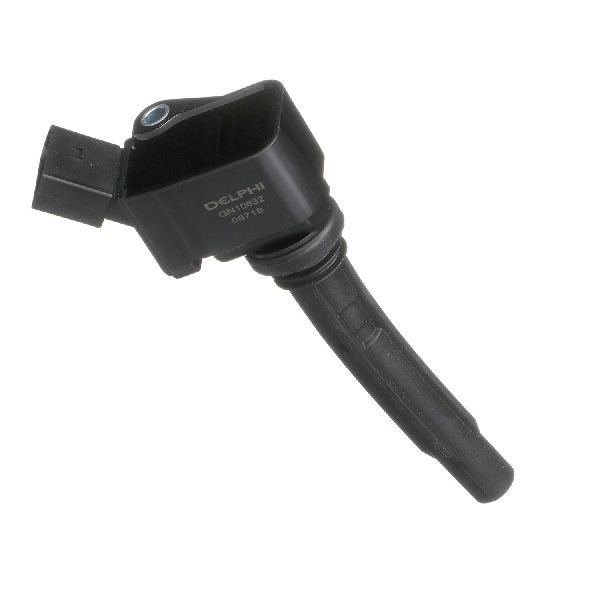
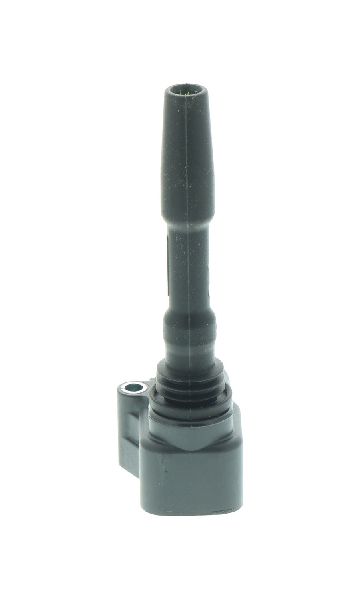
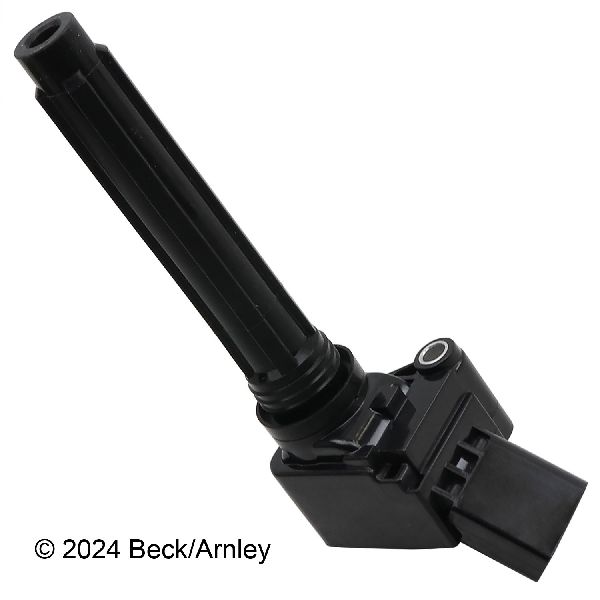
- Faulty Ignition Coil 🔴 High Probability → Shop Ignition Coil Ignition coils are a very common failure item on modern VW/Audi engines. Eldor and Bosch are frequent OEM suppliers.
How to confirm: Swap the ignition coil from cylinder 3 with another cylinder (e.g., cylinder 2). Clear the codes and run the engine. If the code changes to P0302 🎬 See how to quickly diagnose and fix the P0303 code., the ignition coil is confirmed to be faulty.
Typical fix: Replace the faulty ignition coil. It is located on top of the engine and is typically held in by a single connector and sometimes a small bolt. Many owners recommend replacing all four coils at once since they have similar service lives.
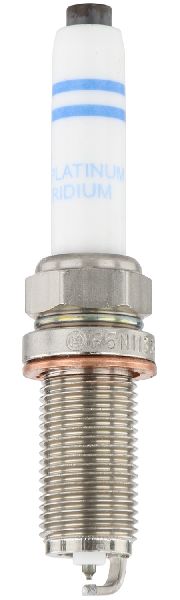
Est. part cost: $30 - $80 - Worn or Defective Spark Plug 🔴 High Probability → Shop Spark Plug Spark plugs are a regular maintenance item with a finite lifespan. A worn electrode, cracked porcelain, incorrect gap, or heavy fouling will prevent a proper spark.
How to confirm: After ruling out the coil, remove the spark plug from cylinder 3. Inspect it for wear, fouling (black, oily, or white deposits), or damage. Compare it to a plug from a healthy cylinder.
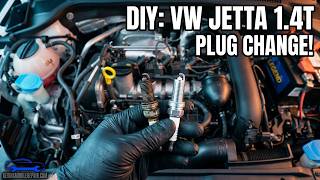
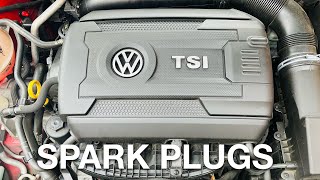
Typical fix: Replace the spark plugs. It is highly recommended to replace all four spark plugs as a set 🎬 Watch: Step-by-step spark plug replacement for the 1.4T engine. to ensure even performance.
Est. part cost: $15 - $30 per plug - Clogged or Faulty Fuel Injector 🟡 Medium Probability → Shop Fuel Injector On direct injection engines, injectors can become clogged with carbon deposits over time, affecting their spray pattern and fuel delivery. A stuck-open injector is also a possibility.
How to confirm: This is more difficult to diagnose. A professional can perform a fuel injector balance test. A DIY method involves swapping injectors between cylinders, but this is a more involved job. Before mechanical work, some owners attempt to use a high-quality fuel system cleaner with Polyetheramine (PEA) to see if it resolves the issue.
Typical fix: Clean or replace the fuel injector for cylinder 3. A borescope can sometimes be used to see if an injector is leaking when the key is on but the engine is off.
Est. part cost: $50 - $150 - Carbon Buildup on Intake Valves ⚪ Low Probability Direct injection (TSI) engines spray fuel directly into the cylinder, not over the intake valves. Over time, oil vapor from the crankcase ventilation system can bake onto the valves, restricting airflow and causing misfires, especially on cold starts or at idle. This is a well-documented issue on TSI engines, often appearing after 60,000 miles.
How to confirm: Requires a borescope inspection of the intake ports with the intake manifold removed. A fluctuating vacuum gauge reading at idle can also be an indicator.
Typical fix: The intake manifold must be removed and the valves must be cleaned manually, often through walnut blasting. 🎬 Watch: Professional carbon cleaning process for the Jetta GLI.
Est. part cost: $0 (if cleaning yourself) - $50 (walnut shells)
Rare But Worth Checking
- Low Engine Compression: This indicates a more serious internal engine problem, such as a burnt valve, worn piston rings, or a damaged cylinder head. A compression test is needed to confirm.
- Damaged Ignition Coil Wiring: → Shop Ignition Coil The wiring harness or connector for the cylinder 3 ignition coil could be damaged, preventing it from receiving a signal. Visually inspect the harness for any signs of fraying, melting, or corrosion.
- Failed PCV Valve: → Shop PCV Valve A failing Positive Crankcase Ventilation (PCV) valve can lead to incorrect crankcase pressure, allowing excess oil vapor into the intake and contributing to conditions that cause misfires. This is sometimes mentioned in forum discussions as a contributing factor.
Diagnosis Steps
- Read the fault codes with an OBD-II scanner to confirm P0303 is present.
- Identify cylinder 3. On the Jetta's transverse engine, cylinder 1 is on the passenger side (belt/chain side), and cylinder 4 is on the driver's side (transmission side). Cylinder 3 is the third from the right, or second from the driver's side.
- Swap the ignition coil from cylinder 3 with the coil from cylinder 2.
- Clear the codes, start the engine, and let it run for a few minutes or until the check engine light returns. Re-scan for codes.
- If the code is now P0302, the ignition coil is bad and needs to be replaced.
- If the code remains P0303, the coil is likely good. Proceed to inspect the spark plug.
- Remove the spark plug from cylinder 3. Check for excessive wear, damage, or fouling. If it looks bad or is near its service interval, replace all four spark plugs.
- If the plugs and coils are good, the next most likely culprits are the fuel injector or carbon buildup. These steps may require professional assistance or tools like a borescope.
- Inspect the wiring and connector to the cylinder 3 coil and injector for any visible damage.
- If all else fails, a compression test should be performed to check for mechanical engine issues like worn piston rings or a bad valve.
Parts You'll Likely Need
- Ignition Coil (1.4T/1.5T)
(OEM #04E905110K)— This is the most common failure point for a single-cylinder misfire on the 1.4T and 1.5T engines.
Trusted brands: Bosch, NGK, Eldor
OEM price range: $50-$80
Aftermarket price range: $30-$60 - Ignition Coil (2.0T GLI)
(OEM #06H905110L / 06K905110K)— The 2.0T engine in the GLI uses a different coil, which is also a common failure item for misfires.
Trusted brands: Bosch, NGK, APR
OEM price range: $55-$90
Aftermarket price range: $35-$70 - Spark Plug (1.4T/1.5T)
(OEM #04E905602D)— As a routine maintenance item, a worn or fouled spark plug is the second most likely cause of a misfire.
Trusted brands: NGK, Bosch
OEM price range: $20-$30
Aftermarket price range: $15-$25 - Spark Plug (2.0T GLI)
(OEM #06K905601D / 06K905601K)— The higher-performance 2.0T engine requires a specific spark plug. It's a regular wear item and a common cause of misfires.
Trusted brands: NGK, Bosch, Brisk
OEM price range: $25-$35
Aftermarket price range: $20-$30
Related Codes That Often Appear With This One
- P0300 — If the misfire is intermittent or starting to affect other cylinders, a P0300 (Random/Multiple Cylinder Misfire) code may appear alongside P0303.
- P0301, P0302, P0304 — Misfire codes for other cylinders. If seen together, it could point to a common problem like a bad fuel pump, vacuum leak, or timing issue.
Technical Service Bulletins (TSBs) & Recalls
- VIN4APIN20211116: A general manufacturer bulletin that acknowledges a MIL-on condition can occur with a combination of misfire codes (P0300-P0304), indicating it's a known issue.
Platform-Specific Known Issues
- The provided NHTSA TSB #VIN4APIN20211116 notes that a Check Engine Light can be caused by a combination of misfire codes, including P0303, among other issues.
- Owners on forums frequently report that after replacing spark plugs for a P0303 code, the issue returns within weeks or months, and is only resolved after replacing the ignition coil, confirming the coil as the more likely primary culprit.
Mechanic-Grade Diagnostic Values
- Ignition Coil Primary Winding Resistance — expected: 0.4 - 2.0 Ohms (general), with VW-specific coils often specified between 0.55 - 0.75 Ohms. Failure: A reading outside the specified range, especially an open circuit (infinite resistance) or a short (near zero resistance).
- Ignition Coil Secondary Winding Resistance — expected: 6,000 - 11,000 Ohms (general), with some older VW coils specified lower (2,500 - 3,500 Ohms). Failure: A reading significantly outside the expected range for the specific part number.
- Live Misfire Counter (per cylinder) — expected: 0 at idle and under normal load.. Failure: The counter for cylinder 3 increases, even if a full P0303 code has not been set yet.
Hidden / Shadow Codes Worth Checking
- Measuring Blocks 014, 015, 016: These are not fault codes, but live data blocks that show the running misfire count for each cylinder. Block 015 typically contains the counter for cylinders 1, 2, and 3. This allows a technician to see misfires as they happen, even before the count is high enough to trigger a Check Engine Light. (see via A VW-specific scan tool like VCDS (VAG-COM) or ODIS is required. Generic OBD-II scanners typically cannot access these manufacturer-specific measuring blocks.)
Scan Tool Commands That Help
- VCDS (VAG-COM) or ODIS: Engine -> Measuring Blocks -> Groups 014, 015, 016 — This is a primary diagnostic step for any VW misfire. It provides live data on which cylinder is misfiring and how frequently, confirming the issue is on cylinder 3 and helping to verify if a fix was successful after clearing codes.
Wiring & Ground Locations
- Main Engine Bay Ground Point — On the bulkhead (firewall) behind or above the battery. It is typically a stud with multiple brown wires attached to it.. A poor ground connection at this main point can cause a variety of electrical issues, including weak spark or erratic sensor readings that could lead to a misfire code. Checking that this connection is clean and tight is a valid, though less common, diagnostic step.
Real Owner Repair Stories
- Reddit user on r/jetta (2014 Jetta 1.8T (similar EA888 engine family)) — Initially had a P0302 (Cylinder 2 Misfire), which then changed to P0303 after hard acceleration. Engine was rumbling.
❌ Tried (didn't work) Replacing the spark plugs and ignition coils with aftermarket parts. The problem persisted and moved cylinders.
✅ What actually fixed it The user suspected a bad batch of aftermarket coils. A commenter reinforced this, stating they had a similar issue that was only resolved after replacing the aftermarket parts with OEM plugs and wires.
OEM Part Supersession History
Multiple, e.g., 04C905110D, 04E905110B→04E905110K— Part revisions by the manufacturer to improve reliability and performance. Using the latest revision is highly recommended.
Heads up: While older revisions may fit, they have been superseded for a reason, likely due to a higher failure rate. Part number 04E905110K is the widely accepted current replacement for the 1.4T/1.5T engines in this range.
Model Year Variations Within This Range
- 2022+: For the 2022 model year, the Jetta's base engine was updated from the 1.4T (EA211) to the 1.5T (EA211 Evo). While they share a core design, the 1.5T has significant changes including: a Variable Turbine Geometry (VTG) turbo to reduce lag, Miller cycle combustion for efficiency, and an active oil separator designed to reduce oil consumption and subsequent carbon buildup on intake valves.
- 2017-2021: These years use the 1.4T (EA211) engine, which has a plastic water pump housing and does not have the advanced features of the later 1.5T, potentially making it slightly more susceptible to carbon buildup over its lifespan.
Helpful Videos
![How to Fix VOLKSWAGEN P0303 Engine Code in 3 Minutes [2 DIY Methods / Only $4.11]](https://img.youtube.com/vi/DjftqHDnlt4/mqdefault.jpg)
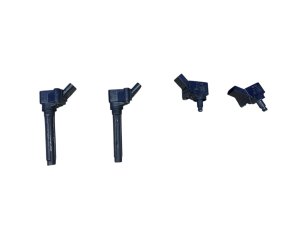
Used OEM Parts in Stock
New Aftermarket Parts Available


The information in this article is provided for general reference and educational purposes only. Vehicle specifications, procedures, and part compatibility can vary by production date, trim level, and region. Always consult your vehicle's factory service manual and verify part numbers before purchasing or performing repairs. Safety-critical components such as airbags, seat belts, and braking systems should be installed by a qualified professional.
- Volkswagen JETTA:
- 🧭 Diagnostic Flowchart
- 🎬 Helpful Videos
- 🛍️ Shop This Part
- What's Unique About the 2017-2022 Volkswagen JETTA
- Symptoms You May Notice
- Most Likely Causes
- Rare But Worth Checking
- Diagnosis Steps
- Parts You'll Likely Need
- Related Codes That Often Appear With This One
- Technical Service Bulletins (TSBs) & Recalls
- Platform-Specific Known Issues
- Mechanic-Grade Diagnostic Values
- Hidden / Shadow Codes Worth Checking
- Scan Tool Commands That Help
- Wiring & Ground Locations
- Real Owner Repair Stories
- OEM Part Supersession History
- Model Year Variations Within This Range
- 🎟️ Get 5% Off