

P0304 on 2011-2017 Chrysler 200 3.6L V6: Cylinder 4 Misfire Causes and Fixes
P0304 indicates a misfire on cylinder 4. The most common causes are a bad ignition coil or a worn-out spark plug. On 2011-2013 models, this code can also point to a serious cylinder head defect covered by an extended warranty (X56), while later models are known for rocker arm failures that cause a 'Pentastar tick'. Expect to pay $30-$70 for a new coil and $10-$25 for a spark plug.
- P0304 on this vehicle is a misfire on cylinder 4, the middle cylinder on the bank closest to the radiator.
- Always start diagnosis by swapping the ignition coil and then the spark plug with a neighboring cylinder to rule out these common, inexpensive parts.
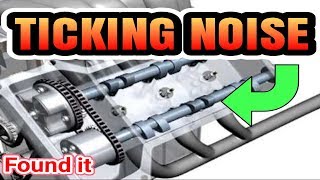
- Listen for a rhythmic ticking noise. This is a strong sign of the well-known Pentastar rocker arm failure, which is a more involved mechanical repair.
- If you have a 2011-2013 model, be aware of the potential for a defective cylinder head, a known issue that Chrysler addressed with an extended warranty.
- Do not drive with a flashing check engine light, as you risk destroying your catalytic converter, a very costly repair.
What's Unique About the 2011-2017 Chrysler 200
For the Chrysler 200 with the 3.6L Pentastar V6, a P0304 code is more than just a standard ignition issue. Early models (2011-2013) were part of a well-documented problem with the left cylinder head that could cause misfires on cylinders 2, 4, and 6. This led to Chrysler issuing Technical Service Bulletin 09-002-14 REV. B and an extended warranty (10 years/150,000 miles, code X56). Later models are not immune to trouble, as the Pentastar engine family is also known for a 'tick' that develops from failing rocker arm needle bearings, which can also cause a P0304 misfire.
Generation note: The 2011-2017 range covers two generations of the Chrysler 200: the first (JS) from 2011-2014 and the second (UF) from 2015-2017. The most notable platform-specific issue, the 3.6L V6 cylinder head defect, primarily affects the first-generation 2011-2013 models. The rocker arm failure can occur across all model years of the Pentastar engine.
Symptoms You May Notice
- Rough or shaking idle
- Hesitation or stumbling during acceleration
- Flashing or solid Check Engine Light
- Noticeable loss of engine power
- Decrease in fuel economy
- A ticking or tapping noise from the top of the engine, which can be very obvious.
- Replacing only the spark plug when the underlying cause is a failing ignition coil or a deeper mechanical issue like a rocker arm.
- Replacing camshaft or crankshaft position sensors, which typically cause multiple/random misfires (P0300) rather than a single-cylinder misfire.
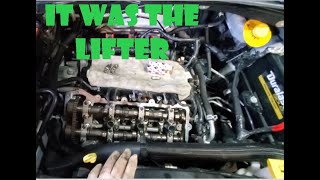
- Confusing the ticking noise from a rocker arm failure with a less severe lifter tick, delaying a necessary repair and leading to camshaft damage.
Most Likely Causes
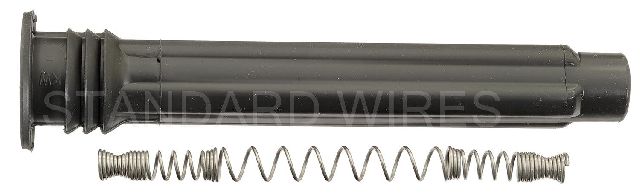
- Faulty Ignition Coil 🔴 High Probability → Shop Ignition Coil Coil-on-plug systems are common failure points due to constant exposure to high heat. Oil leaking from a failed valve cover gasket's spark plug tube seal can also saturate the coil boot and cause it to fail.
How to confirm: Swap the ignition coil from cylinder 4 with another cylinder (e.g., cylinder 2, which is on the same bank). Clear the codes and run the engine. If the code changes to P0302, the ignition coil is faulty. This is the most common and effective first diagnostic step.
Typical fix: Replace the faulty ignition coil. It is often recommended to replace the spark plug at the same time.
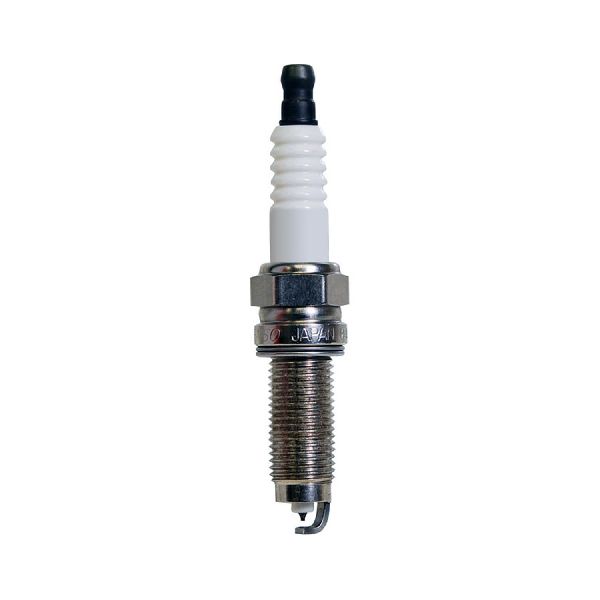
Est. part cost: $30 - $70 - Worn or Fouled Spark Plug 🔴 High Probability → Shop Spark Plug Spark plugs are a routine maintenance item. Accessing the plugs on the front bank (cylinders 2, 4, 6) is relatively easy, but the rear bank requires removing the upper intake manifold, a task that is sometimes deferred, leading to plugs being left in service past their lifespan.
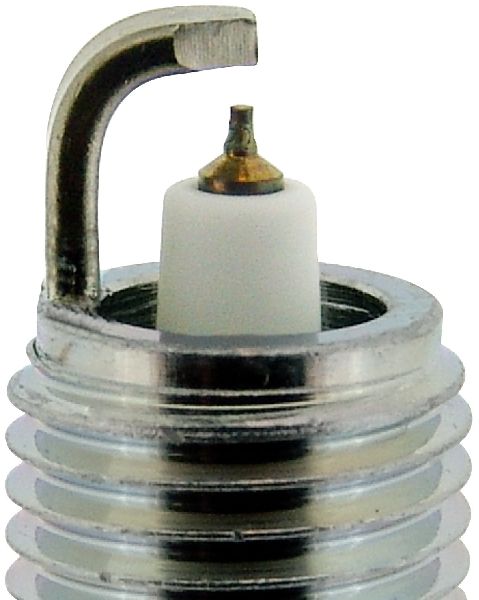
How to confirm: After confirming the coil is good, remove the spark plug from cylinder 4. Inspect it for wear (worn electrode), carbon fouling (black and sooty), or oil/coolant contamination. Check that the gap is correct.
Typical fix: Replace the spark plug. It is best practice to replace all six spark plugs at once, especially if the intake manifold has to be removed. 🎬 Watch: Step-by-step guide to accessing spark plugs and the intake.
Est. part cost: $10 - $25 per plug - Failed Rocker Arm / Lifter 🟡 Medium Probability → Shop Engine Rocker Arm The 3.6L Pentastar engine is widely known for premature failure of the rocker arm needle bearings. The bearings fall out, causing the roller to seize or develop excessive play, which scores the camshaft lobe and leads to improper valve lift, resulting in a misfire and a distinct ticking noise.
How to confirm: A persistent, loud ticking noise from the valve cover area is a strong indicator. A mechanic can confirm this by removing the valve cover for visual inspection of the rocker arms and camshaft lobes. A compression test may also show lower-than-normal readings for cylinder 4.
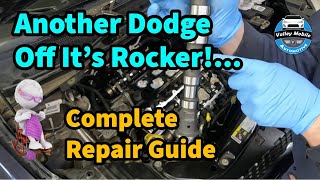
Typical fix: Replace all rocker arms and lifters on the affected cylinder head (all 12 for one bank). If the camshaft lobes are scored or damaged from the failed rocker, the camshaft must also be replaced. This is a common repair across all model years. 🎬 See this complete guided repair for replacing rocker arms.
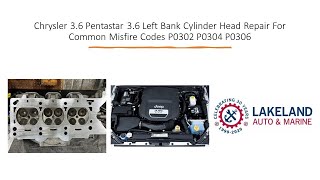
Est. part cost: $200 - $600 for a full set of arms, lifters, and gaskets for both heads. - Defective Left Cylinder Head (2011-2013 models) ⚪ Low Probability → Shop Engine Cylinder Head Early Pentastar V6 engines had a manufacturing defect in the left cylinder head that caused excessive valve guide and seat wear, leading to a loss of compression and misfires on cylinders 2, 4, and 6. Chrysler issued an extended warranty (10 years/150,000 miles, code X56) for this specific issue, though most vehicles are now past this coverage period.
How to confirm: This is typically diagnosed after ignition and fuel system causes are ruled out. A cylinder leak-down test is the definitive diagnostic step per TSB 09-002-14. Leakage of 25% or more confirms a bad cylinder head. The presence of codes P0302 or P0306 alongside P0304 is a strong indicator.
Typical fix: Replace the left cylinder head with the updated part (part numbers ending in 'AC' or later, such as RL141353AC). This is a major and expensive repair if not covered by the extended warranty.
Est. part cost: $800 - $1500 for a cylinder head assembly - Faulty Fuel Injector ⚪ Low Probability → Shop Fuel Injector
How to confirm: Listen to the injector with a mechanic's stethoscope; it should have a consistent clicking sound. Compare it to an adjacent injector. You can also swap the injector with another cylinder, but this is labor-intensive as it requires removing the fuel rail. An injector balance test can also be performed by a professional.
Typical fix: Replace the faulty fuel injector. Some recommend replacing all injectors on that bank at the same time.
Est. part cost: $50 - $120
Rare But Worth Checking
- Intake Manifold Gasket Leak: → Shop Engine Intake Manifold When the upper intake manifold is removed for other service (like spark plugs on the rear bank), reusing old gaskets can cause a vacuum leak affecting one or more cylinders on that bank.
- Low Compression: Beyond the common rocker arm or cylinder head issues, low compression could be caused by worn piston rings or a damaged valve, requiring more significant engine work.
Diagnosis Steps
- Read the code with an OBD-II scanner and confirm P0304 is present. Note any other codes, especially P0300, P0302, or P0306.
- Determine the location of cylinder 4. On the 3.6L Pentastar in a FWD Chrysler 200, the cylinders are numbered 1-3-5 on the rear bank (against the firewall) and 2-4-6 on the front bank (near the radiator). Cylinder 4 is the middle cylinder on the front bank.
- Swap the ignition coil from cylinder 4 with the coil from cylinder 2 (the front-most cylinder on the same bank). Clear the codes and drive the vehicle.
- Re-scan for codes. If P0302 appears, the ignition coil is the problem. Replace the bad coil.
- If P0304 returns, swap the spark plug from cylinder 4 with cylinder 2. Clear codes and drive. If P0302 appears, the spark plug was the issue. Replace the spark plug(s).
- If P0304 persists, inspect the wiring and connector for the cylinder 4 ignition coil and fuel injector for damage or corrosion.
- Listen to the cylinder 4 fuel injector with a stethoscope to ensure it is clicking. Compare the sound to cylinder 2's injector.
- If you hear a persistent ticking noise from the engine, especially when cold, suspect a failing rocker arm. This requires removing the valve cover for inspection of the rocker arms and camshaft lobes for scoring.
- For 2011-2013 models, if all else fails, a cylinder leak-down test is necessary to check for the known cylinder head issue. Per TSB 09-002-14, if leakage on cylinder 4 is 25% or greater, the cylinder head is defective. 🎬 Watch: How to diagnose and repair the left cylinder head.
Parts You'll Likely Need
- Ignition Coil
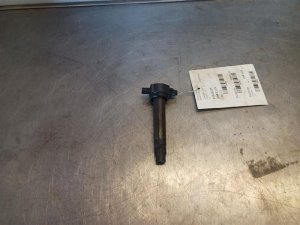
(OEM #5149168AJ)— This is the most frequent cause of a single-cylinder misfire and is the first part to check via the 'swap test'.
Trusted brands: Mopar, NGK, Denso, Delphi
OEM price range: $88 - $92
Aftermarket price range: $30 - $70 - Spark Plug
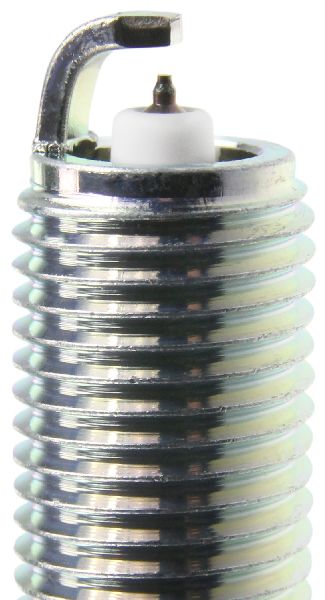
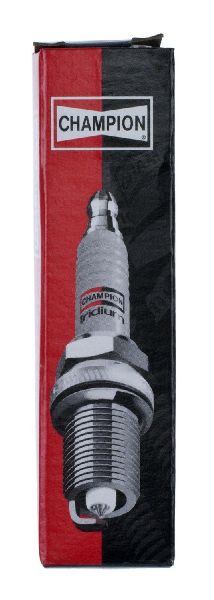
(OEM #SP149125AD)— Spark plugs are a wear item and the second most likely cause after the ignition coil. They should be inspected for wear or fouling.
Trusted brands: Mopar, Champion, NGK
OEM price range: $20 - $28
Aftermarket price range: $10 - $25 - Rocker Arm
(OEM #5184296AH)— A very common failure point on the 3.6L Pentastar engine, causing a ticking noise and misfire. The needle bearings in the roller fail.
Trusted brands: Mopar, ECCPP, DNJ
OEM price range: $15 - $25 per arm
Aftermarket price range: $5 - $15 per arm - Left Cylinder Head Assembly
(OEM #RL141353AC)— This is the specific fix for the known manufacturing defect on 2011-2013 models that causes misfires on cylinders 2, 4, and 6.
Trusted brands: Mopar
OEM price range: $1200 - $1500
Aftermarket price range: $800 - $1100
Related Codes That Often Appear With This One
- P0300 — If the misfire is intermittent or begins to affect other cylinders, a P0300 (Random/Multiple Misfire) code may appear. This is listed as a related code in TSB 09-002-14.
- P0302, P0306 — On 2011-2013 models, these codes often appear with P0304 as all three cylinders (2, 4, 6) are on the left bank affected by the cylinder head defect.
- P0204 — This code for the 'Cylinder 4 Injector Circuit' may appear alongside P0304 if the root cause is a faulty fuel injector or its wiring.
Technical Service Bulletins (TSBs) & Recalls
- TSB 09-002-14 REV. B: This is the key document related to the left cylinder head issue. It outlines the diagnostic procedure, which involves performing a cylinder leak-down test on cylinders 2, 4, and 6. If leakage is 25% or greater, the bulletin authorizes the replacement of the left cylinder head under the X56 warranty extension.
- Bulletin #0900214a: This manufacturer bulletin notes that MIL illumination for P0300, P0302, P0304, or P0306 involves checking for excessive cylinder leakage and replacing the cylinder head if necessary under the X56 Warranty Extension.
- Bulletin #0900214: A manufacturer service bulletin for early models confirms that P0304 is a primary indicator for the X56 Warranty Extension regarding engine cooling and cylinder head issues.
- TSB 18-102-16: A software update for the Powertrain Control Module (PCM) on 2012-2014 models that can address a range of misfire codes, including P0304, among other issues. This should be checked to see if it applies before extensive mechanical repairs.
- Bulletin #08-027-20: A manufacturer TSB for later models notes that customers may experience a rough running engine when DTCs such as P0304 are set.
- Warranty Extension D-14-12 (X56): This is the official Chrysler communication that extended the warranty on the left cylinder head for certain 2011-2013 vehicles with the 3.6L engine to 10 years or 150,000 miles.
Platform-Specific Known Issues
- Owner Experience: The Cylinder Head Defect (2012 JKU): → Shop Engine Cylinder Head A user on a Reddit forum discussed the difference between the cylinder head issue and the rocker arm tick. Their 2012 Jeep with 134k miles was experiencing issues related to the left bank (cylinders 2, 4, 6) and they were investigating the X56 warranty extension. A professional mechanic chimed in, clarifying that TSB 09-002-14 specifically addresses misfires from worn valve guides/seats (the head defect), which causes a rough idle and blinking check engine light, especially on cold starts. This is a distinct issue from the more common 'Pentastar tick' caused by rocker arm bearings.
- Owner Experience: Intermittent P0304 as an Early Warning: On a Jeep Gladiator forum, an owner reported an intermittent P0304 code that would appear occasionally on cold starts. Another user commented that this is a frequent early symptom of a failing passenger-side (right bank in RWD applications, front bank in FWD like the 200) rocker arm and/or camshaft. They noted a P0304 code appeared once, and a month later the characteristic engine tick of valvetrain failure began.
Mechanic-Grade Diagnostic Values
- Fuel Injector Resistance — expected: 12.0 - 12.5 Ohms. Failure: A significantly higher reading (e.g., over 20 Ohms) or an open/short circuit. One real-world failure showed a reading of 63.2 Ohms.
- Ignition Coil Primary Resistance — expected: 0.46 - 0.57 Ohms. Failure: Any reading outside of this narrow range indicates a faulty primary winding.
- Ignition Coil Secondary Resistance — expected: 6.0 - 15.7 kOhms. Failure: A reading outside this range suggests the coil cannot produce a strong enough spark.
- Fuel Pressure at Idle — expected: ~31 psi (214 kPa). Failure: Significantly lower pressure suggests a weak fuel pump or clogged filter.
- Live Data: Injector Pulse Width — expected: Normal operation shows consistent pulse width across all cylinders.. Failure: The PCM may visibly shorten the injector pulse width on cylinder 4 in response to a detected misfire.
Hidden / Shadow Codes Worth Checking
- Mode $06, TID $53: This is not a trouble code but a system monitor for misfire counts per cylinder. A technician can view the raw misfire count for cylinder 4 (and all others) even if the count is not high enough to trigger a P0304 code. This is invaluable for diagnosing intermittent misfires. (see via A professional-grade scan tool or an advanced consumer OBD-II app that can display Mode $06 data.)
Scan Tool Commands That Help
- wiTECH (or equivalent professional scanner): Cylinder Power Balance Test — Use this active test to confirm a misfire when symptoms are present but codes are intermittent. The tool sequentially disables the fuel injector for each cylinder and measures the RPM drop. If disabling cylinder 4 causes little or no RPM drop compared to other cylinders, it confirms cylinder 4 is not contributing power.
- wiTECH (or equivalent professional scanner): OBD II Monitors > 'Which cylinder is misfiring' — This function provides a live display of the misfire counters for all cylinders, making it easy to pinpoint the source of a P0300 (Random Misfire) or to confirm the activity on cylinder 4 for a P0304.
Wiring & Ground Locations
- PCM Connector — The Powertrain Control Module (PCM) is located in the engine bay. Tracing the specific wires for the cylinder 4 ignition coil and fuel injector requires a professional wiring diagram.. After ruling out the component itself (coil, plug, injector), a technician must test for correct voltage and continuity at the PCM connector pins for the cylinder 4 circuits to rule out a wiring harness break or short.
- Main Chassis Ground — A key ground point is located on the left front frame rail, inside the front bumper area.. While not specific to one cylinder, a corroded or loose main ground can cause a wide range of bizarre electrical issues, including weak spark across all cylinders, which could manifest as a misfire on the most vulnerable cylinder first.
Real Owner Repair Stories
- YouTube channel 'Mopar Tech' (2015 Jeep Wrangler 3.6L Pentastar (same engine and common issues)) — Persistent cylinder 3 misfire (P0303). Check engine light on. Previous shop had replaced coil and plug with no change.
❌ Tried (didn't work) Replacing ignition coil, Replacing spark plug, A different shop misdiagnosed it as a 'burnt valve' requiring a cylinder head job.
✅ What actually fixed it The technician performed a leak-down test which came back good, ruling out a burnt valve. He then removed the valve cover and found a failed rocker arm on the cylinder 3 exhaust lobe. The needle bearings had failed, causing excessive play. Replacing the faulty rocker arm resolved the misfire. - YouTube channel 'Jeepin' with Judd' (2015 Jeep Wrangler 3.6L Pentastar) — P0303 misfire on cylinder 3.
❌ Tried (didn't work) Swapping ignition coil (misfire stayed on cylinder 3), Swapping spark plug (misfire stayed on cylinder 3)
✅ What actually fixed it The owner tested the resistance of the fuel injectors. Good injectors read ~12 Ohms. The injector on the misfiring cylinder 3 read 63.2 Ohms, indicating it was electrically faulty. Replacing the fuel injector was the correct fix.
"I Checked Everything" — The Actual Cause
- A common scenario for a persistent P0304 on the 3.6L Pentastar is for all ignition, fuel, and vacuum leak tests (including a smoke test) to come back clean. The actual cause is often a mechanical failure of a rocker arm. Technicians unfamiliar with this engine's specific weakness may not know to remove the valve cover for a visual inspection of the valvetrain, leading to a misdiagnosis. One technician reported a case where another shop diagnosed a 'burnt valve' after basic tests failed, but the real cause was a visibly failed rocker arm bearing.
OEM Part Supersession History
5184296AD, 5184296AE, 5184296AF, 5184296AG→5184296AH— The rocker arms are a known failure point due to needle bearing failure. The part has been updated multiple times by Mopar to improve durability.Original Left Cylinder Head (various PNs on 2011-2013 models)→RL141353AC (and later revisions)— The original head design for early Pentastars had a defect causing excessive valve seat wear on the left bank (cylinders 2, 4, 6). The updated head uses improved materials.
Heads up: Using an old-style head as a replacement will lead to a repeat failure.
Model Year Variations Within This Range
- 2011-2013: Models built on or before July 25, 2012, are susceptible to the left cylinder head defect causing misfires on cylinders 2, 4, and 6. This was addressed by TSB 09-002-14 and an extended warranty.
- 2015-2017: The second generation (UF) Chrysler 200 featured a 9-speed automatic transmission and a slightly higher output 3.6L V6 (295 hp vs 283 hp). Some very late model year Pentastar engines (starting in 2016 in other platforms) were part of an engine update (PUG) that included two-stage valve lift and other efficiency improvements, though it's unclear if the 200 received the full update before production ended.
Diagnostic Flowchart
Real Owner Stories
Aggregated from forums and TSBs cited above. Mileages and costs reflect what owners reported in those sources.
2012 Jeep Wrangler (JKU) 3.6L — 134000 miles
Symptoms: Rough idle and blinking check engine light on cold starts related to the left bank (cylinders 2, 4, 6).
What fixed it: Investigated the X56 warranty extension for worn valve guides/seats (the cylinder head defect) per TSB 09-002-14.
Source hint: Reddit forum
Jeep Gladiator 3.6L
Symptoms: Intermittent P0304 code on cold starts, followed a month later by the characteristic engine tick of valvetrain failure.
What fixed it: Identified as a failing passenger-side rocker arm and/or camshaft.
Source hint: Jeep Gladiator forum
2015 Jeep Wrangler (JK) 3.6L
Symptoms: Persistent P0304 code accompanied by a distinct, loud rocker arm tick that could be heard from 50 feet away.
What fixed it: Ruled out coils and plugs; diagnosed as a rocker arm failure.
Source hint: JK-Forum.com - 'P0304 Troubleshooting'
Related OBD-II Codes
Frequently Asked Questions
Does TSB 09-002-14 apply to my Chrysler 200?
Will the X56 warranty extension cover my P0304 code?
Why is my 3.6L Pentastar engine making a loud ticking noise with a P0304 code?
Is there a software update for the P0304 code on the Chrysler 200?
Where exactly is cylinder 4 located on my FWD Chrysler 200?
How can I quickly test if the ignition coil is causing the P0304 code?
Helpful Videos


Used OEM Parts in Stock
New Aftermarket Parts Available


The information in this article is provided for general reference and educational purposes only. Vehicle specifications, procedures, and part compatibility can vary by production date, trim level, and region. Always consult your vehicle's factory service manual and verify part numbers before purchasing or performing repairs. Safety-critical components such as airbags, seat belts, and braking systems should be installed by a qualified professional.
- Chrysler 200:
- 🧭 Diagnostic Flowchart
- 🎬 Helpful Videos
- 🛍️ Shop This Part
- What's Unique About the 2011-2017 Chrysler 200
- Symptoms You May Notice
- Most Likely Causes
- Rare But Worth Checking
- Diagnosis Steps
- Parts You'll Likely Need
- Related Codes That Often Appear With This One
- Technical Service Bulletins (TSBs) & Recalls
- Platform-Specific Known Issues
- Mechanic-Grade Diagnostic Values
- Hidden / Shadow Codes Worth Checking
- Scan Tool Commands That Help
- Wiring & Ground Locations
- Real Owner Repair Stories
- "I Checked Everything" — The Actual Cause
- OEM Part Supersession History
- Model Year Variations Within This Range
- Real Owner Stories
- 2012 Jeep Wrangler (JKU) 3.6L — 134000 miles
- Jeep Gladiator 3.6L
- 2015 Jeep Wrangler (JK) 3.6L
- Related OBD-II Codes
- Frequently Asked Questions
- 🎟️ Get 5% Off