

P0304 on 2021-2025 Ford Bronco 2.3L: Cylinder 4 Misfire Causes and Fixes
On a 2021-2025 Ford Bronco with the 2.3L EcoBoost engine, code P0304 is most often caused by a faulty ignition coil or spark plug in the cylinder closest to the firewall. Ford has also issued Technical Service Bulletins (TSBs) indicating a PCM software update may be required to fix misfire detection logic. A DIY fix with a new coil and plug costs approximately $70-$120. On the platform-mate Ford Ranger, this code is frequently caused by water leaking into the spark plug well, an issue Bronco own
- P0304 on a 2.3L Bronco is a misfire in the cylinder closest to the firewall.
- The most likely cause is a bad ignition coil or spark plug, both of which are common failures noted in Ford TSBs.
- Always use the 'swap test' to confirm a bad coil or plug before buying parts.
- If ignition parts are good, the cause may be a known software issue that a Ford dealer must fix by reprogramming the PCM.
- Do not ignore a flashing check engine light, as it signals a severe misfire that can quickly destroy your catalytic converter.
What's Unique About the 2021-2025 Ford BRONCO
While a P0304 can happen on any vehicle, the 2021-2025 Bronco with the 2.3L EcoBoost has specific, documented reasons for this code. Ford has released multiple Technical Service Bulletins (TSBs) that point directly to faulty ignition coils, spark plugs, and incorrect PCM software calibration as primary causes. [SSM 53971, TSB 21-2262] Furthermore, the engine's use in the Ford Ranger has revealed a significant vulnerability to water intrusion in the #4 spark plug well, which is a highly relevant issue for Bronco owners to consider.
Diagnostic Flowchart
Tap your situation to follow the diagnostic path that matches what you're seeing on this vehicle.
Symptoms You May Notice
- Rough or shaking idle
- Engine hesitation or stumbling during acceleration
- Noticeable loss of power
- Solid or flashing Check Engine Light
- Buck/jerk sensation while driving between 35-55 mph in higher gears. [SSM 53869]
- Owner reports of a 'bucking a bit' sensation while the vehicle is in park, just before the check engine light illuminated.
- Replacing oxygen (O2) sensors. While an O2 sensor can affect the air-fuel mixture, it will typically trigger other codes and affect all cylinders, not just one.
- Assuming a major engine mechanical failure without first performing simple ignition component swaps and checking for TSBs.
Most Likely Causes
- Faulty Ignition Coil 🔴 High Probability → Shop Ignition Coil Ford TSB #SSM 53971 directly identifies ignition coils as a primary cause for misfires on the 2.3L EcoBoost engine. The coil for cylinder #4 is at the back of the engine and can be subjected to significant heat and potential moisture from the cowl area.
How to confirm: Swap the ignition coil from cylinder #4 with another cylinder (e.g., cylinder #3). Clear the codes and drive. If the trouble code changes to P0303, the ignition coil is confirmed to be faulty.
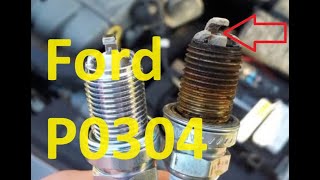
Typical fix: Replace the failed ignition coil. 🎬 Watch: A helpful guide on causes and fixes for P0304. It is held in by a single 8mm bolt. It is often recommended to replace the spark plug at the same time.
Est. part cost: $50 - $110 - Worn or Damaged Spark Plug 🔴 High Probability → Shop Spark Plug Also cited in TSB #SSM 53971. Turbocharged engines like the 2.3L EcoBoost are harder on spark plugs than naturally aspirated engines, leading to a shorter effective lifespan than the 100,000-mile official interval suggests.
How to confirm: After confirming the coil is good, swap the spark plug from cylinder #4 to another cylinder. If the misfire code follows the plug, the plug is bad. Visually inspect the plug for wear, carbon fouling, or cracks in the ceramic insulator.
Typical fix: Replace the spark plug. Many owners choose to replace all four plugs at once for preventative maintenance. The OEM plug is a Motorcraft Iridium.
Est. part cost: $15 - $25 per plug - Powertrain Control Module (PCM) Software 🟡 Medium Probability → Shop Engine Control Module (ECM) Ford TSB #21-2262 states that the PCM configuration related to fuel injector operation can cause misfire codes. TSB #24-2406 also notes incorrect cylinder-to-DTC mapping in the PCM software.
How to confirm: This can only be confirmed by a Ford dealership or a qualified shop with access to Ford's service software (FDRS). If ignition and fuel hardware checks out, a PCM update should be investigated.
Typical fix: Reprogram the PCM to the latest software version. This is a simple procedure done at the dealership and is typically covered under the vehicle's emissions warranty.
Est. part cost: $0 if under warranty, otherwise ~$100-$200 for labor - Faulty Fuel Injector ⚪ Low Probability → Shop Fuel Injector While less common than ignition issues, a clogged or failing fuel injector can prevent the proper amount of fuel from entering cylinder #4, causing a misfire. Owner reports have confirmed leaking injectors on the 2.3L EcoBoost in the Bronco.
How to confirm: This is more complex to diagnose. It involves checking the injector's electrical resistance or performing a flow test. A professional mechanic may be needed. A strong smell of fuel under the hood could also indicate a leaking injector.
Typical fix: Replace the faulty fuel injector.
Est. part cost: $80 - $150
Rare But Worth Checking
- Water Intrusion in Spark Plug Well: → Shop Spark Plug This is a well-documented, high-probability issue on the nearly identical 2.3L engine in the Ford Ranger, as detailed in TSB 23-2011. A poor cowl seam at the base of the windshield can allow water to drip directly onto the engine, where it pools in the rearmost spark plug well (cylinder #4). This causes the ignition coil and spark plug to corrode and fail. While not as widely confirmed on the Bronco itself, the shared engine design makes this a critical diagnostic check, especially after heavy rain or a car wash. Check for signs of water, rust, or corrosion in the spark plug tube for cylinder #4.
Diagnosis Steps
- Read the trouble codes with an OBD-II scanner. Confirm P0304 is present and check for any other codes like P0300 or P0316.
- Locate cylinder #4. It is the cylinder at the very back of the engine, closest to the firewall.
- Critical First Visual Check: Inspect the area around the cylinder #4 ignition coil and the spark plug well for any signs of water, rust, or corrosion. This is a known issue on the platform-mate Ford Ranger.
- Perform an 'ignition swap test'. Turn off the engine. Swap the ignition coil from cylinder #4 with the coil from cylinder #3.
- Clear the codes and drive the vehicle until the check engine light returns.
- Re-read the codes. If the code is now P0303, the ignition coil is faulty and needs replacement.
- If the code remains P0304, the coil is likely good. Swap the spark plugs between cylinders #4 and #3 and repeat the process.
- If the code changes to P0303 after the spark plug swap, the spark plug is the culprit.
- If the code remains P0304 after both swaps, inspect the ignition coil wiring and connector for damage. Also, re-inspect the spark plug well for any signs of water or oil.
- If all ignition components and wiring appear sound, the issue may be related to the fuel injector or a PCM software issue. Contact a Ford dealer to check for outstanding TSBs like #21-2262 or #24-2406.
Parts You'll Likely Need
- Ignition Coil
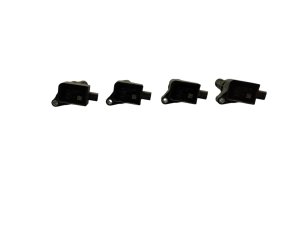
(OEM #DG544 / 1S7Z12029AD / 38629NB (Verify with VIN))— This is a primary failure point identified by Ford's own service bulletins for the P0304 code on this engine. [SSM 53971] It is also the part that fails due to the common water intrusion issue on the Ranger.
Trusted brands: Motorcraft, NGK, Delphi, MSD
OEM price range: $70 - $110
Aftermarket price range: $40 - $80 - Iridium Spark Plug
(OEM #CYFS12YRT3)— Also identified as a primary cause in TSBs. Turbocharged engines wear plugs faster, making them a common maintenance item to resolve misfires. [SSM 53971]
Trusted brands: Motorcraft, NGK, Bosch
OEM price range: $15 - $25
Aftermarket price range: $12 - $20
Related Codes That Often Appear With This One
- P0300 — If the misfire is intermittent or occurs on multiple cylinders, a P0300 (Random Misfire) may be stored alongside P0304. The TSBs for this engine often list P0300 with the individual cylinder codes. [TSB 21-2262]
- P0301, P0302, P0303 — These codes indicate misfires in other cylinders. Seeing them together can point towards a systemic issue like a PCM software problem, bad fuel, or a vacuum leak. [TSB 21-2262]
- P0316 — This code indicates a misfire detected within the first 1,000 engine revolutions. 🎬 See how to diagnose misfires that happen during cold starts. On the platform-mate Ranger, it often appears with P0300-P0304 codes caused by water intrusion shorting out a coil at startup.
Technical Service Bulletins (TSBs) & Recalls
- SSM 53971: Misfire condition may be due to spark plugs and/or ignition coils.
- SSM 53869: Misfire codes may be accompanied by a buck/jerk sensation at highway speeds.
- TSB 21-2262: Misfire DTCs may be caused by a PCM software configuration related to fuel injector operation.
Platform-Specific Known Issues
- TSB #SSM 53971: Notes that misfire codes P0301-P0304 on the 2.3L EcoBoost may be due to spark plugs and/or ignition coils.
- TSB #21-2262: States that misfire codes (including P0304) on the 2021 2.3L model can be caused by a PCM software configuration issue affecting fuel injectors, requiring a dealer re-program.
- TSB #SSM 53869: Connects misfire codes P0300-P0304 with a buck/jerk sensation at highway speeds (35-55 mph) in gears 7-10, pointing to a potential driveline or calibration issue.
- TSB #24-2406: Indicates that on 2021-2024 models with the 2.3L engine, various ignition system DTCs may be stored for the incorrect cylinder due to a software mapping error in the PCM, which requires an update.
- Platform-Mate TSB #23-2011 (for Ford Ranger): While not for the Bronco, this TSB is highly relevant as it details a fix for water intrusion into the spark plug wells causing misfires, a condition the Bronco may also be susceptible to. The fix involves replacing parts and adding an engine cover.
Mechanic-Grade Diagnostic Values
- Ignition Coil Primary Circuit Resistance — expected: ~0.410 Ohms. Failure: A significantly higher or lower reading indicates a faulty coil winding.
- Ignition Coil Secondary Circuit Resistance — expected: ~5,500 - 9,810 Ohms (5.5K - 9.81K Ohms). Failure: A reading outside of this range, or an open circuit (infinite resistance), points to a bad coil.
- Fuel Pressure, Key On Engine Off (KOEO) — expected: 40-43 PSI. Failure: Pressure significantly below this range could indicate a weak fuel pump or clogged filter, though this would likely affect all cylinders.
- Fuel Pressure, Key On Engine Running (KOER) — expected: 35-38 PSI (at idle). Failure: Low pressure at idle can contribute to lean misfires.
Hidden / Shadow Codes Worth Checking
- Mode $06, TID $53: This is not a DTC, but a specific monitor within the PCM's diagnostic data (Mode 6) that tracks misfire counts per cylinder. Accessing this data can show misfire events before they are frequent enough to trigger a P0304 code. (see via A professional scan tool like Ford IDS or an advanced DIY tool like FORScan can access Mode 6 data. The data will show raw misfire counts for each cylinder, allowing a technician to see if cylinder 4 has a higher count than others.)
Scan Tool Commands That Help
- Ford IDS / FORScan: Power Balance Test — This is a critical bidirectional test to confirm a misfire on a specific cylinder. The tool graphically displays the power contribution of each cylinder. A cylinder with a P0304 will show a significant dip in its graph compared to the others. The technician can also use this function to selectively disable injectors to see the effect on the engine.
- FORScan: Clear Transmission Adaptive Tables — While not a direct fix for a component-level misfire, TSB SSM 53869 links misfire codes with bucking/jerking sensations related to the transmission. If a misfire is repaired but a drivability issue persists, resetting the transmission's learned shift strategy can resolve related symptoms.
- Ford IDS: Misfire Monitor Neutral Profile Correction — This is a relearn procedure for the crankshaft position sensor's profile. If the sensor's learned profile is inaccurate, it can cause false misfire detection. This should be performed after major engine work or if all other physical causes have been ruled out, as it can resolve software-induced misfire codes.
Wiring & Ground Locations
- C175B, C175E, C175T — These are the three main connectors for the Powertrain Control Module (PCM), located on the passenger side firewall in the engine bay.. The ignition coil driver circuits originate from the PCM. A poor connection or corrosion at one of these main connectors could cause an intermittent signal to the cylinder 4 coil. Connector C175B is often referenced for ignition and starter circuits.
Real Owner Repair Stories
- YouTube video from a mechanic (2020 Ford Ranger 2.3L EcoBoost) — Check engine light on, running rough, codes P0304 (Cylinder 4 Misfire) and P0299 (Turbo Underboost).
❌ Tried (didn't work) Checked for water intrusion per TSB, but none was found., Swapped ignition coil from cylinder 4 to cylinder 2; the misfire code did not move and remained P0304.
✅ What actually fixed it The spark plug in cylinder #4 was found to be completely fouled and caked in oil, causing the misfire. Replacing the spark plug resolved the P0304 code.
OEM Part Supersession History
DG-544→Current OEM part number should always be verified by VIN with a Ford dealer.— DG-544 is a widely recognized part number for this application, fitting a range of 2.3L engines over many years. Part numbers are frequently updated for minor revisions or supplier changes. It's crucial to verify the latest part number for the specific vehicle.
Helpful Videos

We Have This Part in Stock

The information in this article is provided for general reference and educational purposes only. Vehicle specifications, procedures, and part compatibility can vary by production date, trim level, and region. Always consult your vehicle's factory service manual and verify part numbers before purchasing or performing repairs. Safety-critical components such as airbags, seat belts, and braking systems should be installed by a qualified professional.
- Ford BRONCO:
- 🧭 Diagnostic Flowchart
- 🎬 Helpful Videos
- 🛍️ Shop This Part
- What's Unique About the 2021-2025 Ford BRONCO
- Symptoms You May Notice
- Most Likely Causes
- Rare But Worth Checking
- Diagnosis Steps
- Parts You'll Likely Need
- Related Codes That Often Appear With This One
- Technical Service Bulletins (TSBs) & Recalls
- Platform-Specific Known Issues
- Mechanic-Grade Diagnostic Values
- Hidden / Shadow Codes Worth Checking
- Scan Tool Commands That Help
- Wiring & Ground Locations
- Real Owner Repair Stories
- OEM Part Supersession History
- 🎟️ Get 5% Off