

P0304 on 2014-2019 Kia Soul: Cylinder 4 Misfire Causes and Fixes
On a 2014-2019 Kia Soul, code P0304 is most often caused by a failed ignition coil or a worn-out spark plug in cylinder 4. Start by swapping the ignition coil from cylinder 4 to another cylinder to see if the fault follows. A single coil costs about $25-$75. This is a very common and well-documented issue.
- P0304 on a 2014-2019 Kia Soul is almost always a bad ignition coil or spark plug on cylinder 4.
- The easiest and cheapest first step is to swap the cylinder 4 ignition coil with another cylinder's coil to see if the misfire code follows it.
- If you replace one coil or plug, it's wise to replace the full set to prevent future misfires in other cylinders.
- Regularly check your engine oil. These engines can consume oil, and low levels can lead to serious problems, including misfires.
What's Unique About the 2014-2019 Kia Soul
The second-generation Kia Soul uses Gasoline Direct Injection (GDI) engines, which are efficient but can be susceptible to intake valve carbon buildup over time, a potential cause of misfires. However, for a single-cylinder misfire like P0304, the most common culprit by far on this platform is a faulty ignition coil. Owner forums are filled with reports of resolving this specific code by replacing the coil on cylinder 4, suggesting a high failure rate for these components. Kia issued TSB SA321 for the related Forte 2.0L engine, which explicitly recommends replacing all four ignition coils if any P030x code is present, providing strong evidence for the Soul's similar issue.
Symptoms You May Notice
- Flashing or solid Check Engine Light
- Rough or shaky engine idle
- Engine stumbling or hesitating during acceleration
- Noticeable loss of power
- Poor fuel economy
- Smell of gasoline from the exhaust
- Engine shaking noticeably at a stop
- Replacing the catalytic converter. A misfire will cause a P0420 (catalyst inefficiency) code to appear eventually, but the misfire is the root cause, not the converter.
- Replacing only one spark plug. If one plug is worn out, the others are likely near the end of their service life. Replacing them as a set is best practice and prevents future misfires.
Most Likely Causes
- Failed Ignition Coil 🔴 High Probability → Shop Ignition Coil Widespread owner reports and TSBs on similar Kia engines point to a high failure rate for the original ignition coils. Many owners report this as the definitive fix.
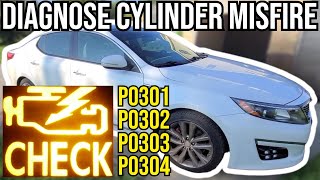
How to confirm: Swap the ignition coil from cylinder 4 with another cylinder (e.g., cylinder 2). Clear the codes. If the code changes to P0302, the coil is bad. This is the universally recommended first step. 🎬 See how to diagnose and fix these specific Kia misfire codes.
Typical fix: Replace the faulty ignition coil. It is often recommended to replace all four coils at the same time for preventative maintenance, as the others may fail soon.
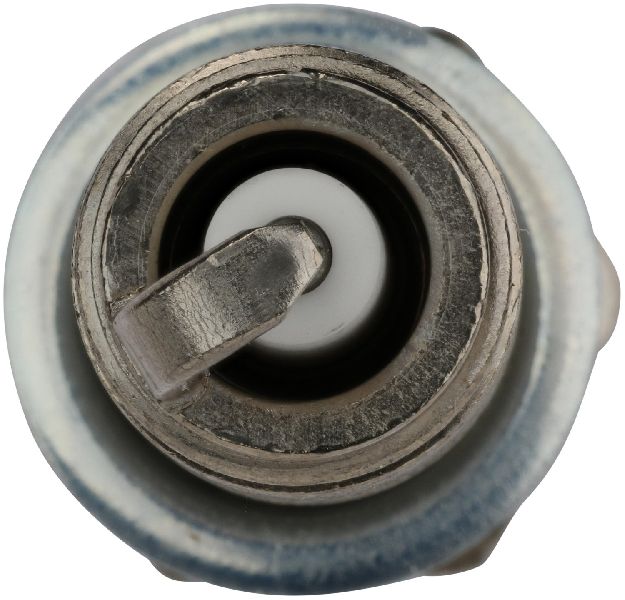
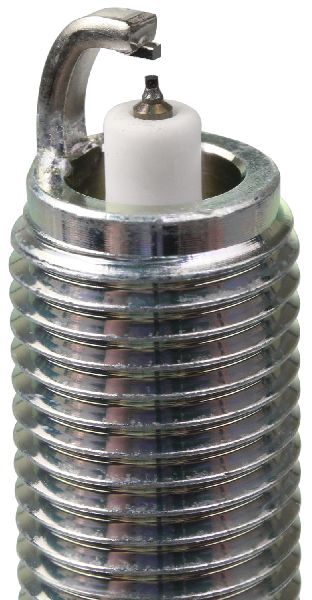
Est. part cost: $25 - $75 - Worn or Fouled Spark Plug 🔴 High Probability → Shop Spark Plug Spark plugs are a regular maintenance item with a finite life. The GDI engines in these Souls are also subject to oil consumption issues (per TSB ENG222_R5), which can cause oil to foul the plugs prematurely, leading to a misfire.
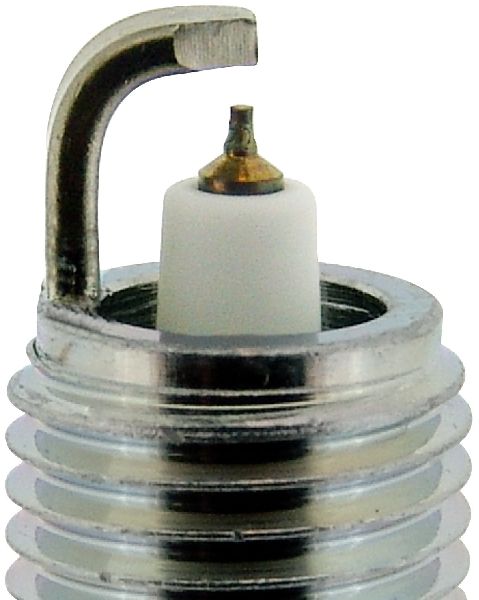
How to confirm: After ruling out the coil, remove the spark plug from cylinder 4. Inspect it for wear (worn electrode), carbon fouling (black and sooty), or oil fouling (wet and black). A user on Reddit reported fixing their P0304 code simply by replacing the plugs after finding the old ones were low on oil and worn.
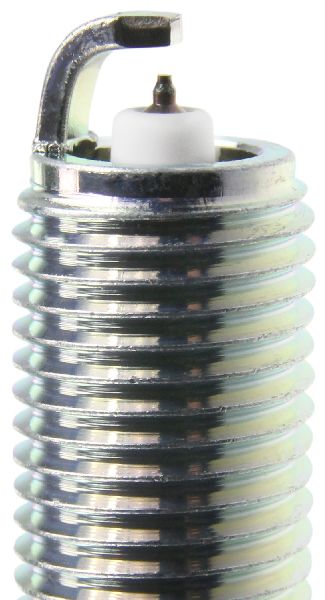
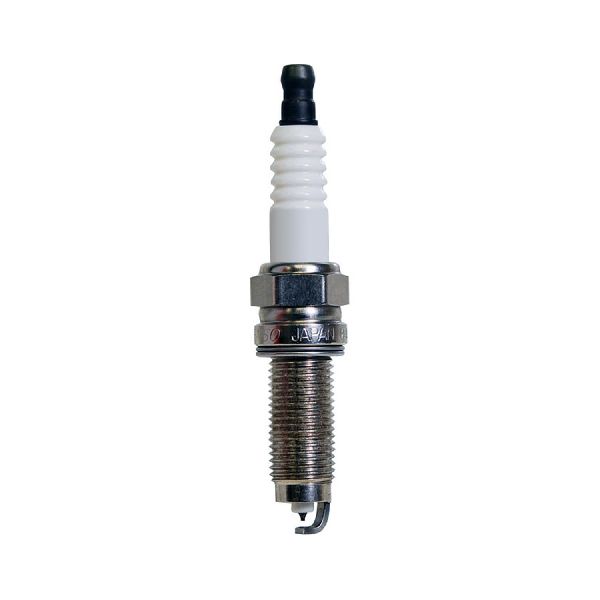
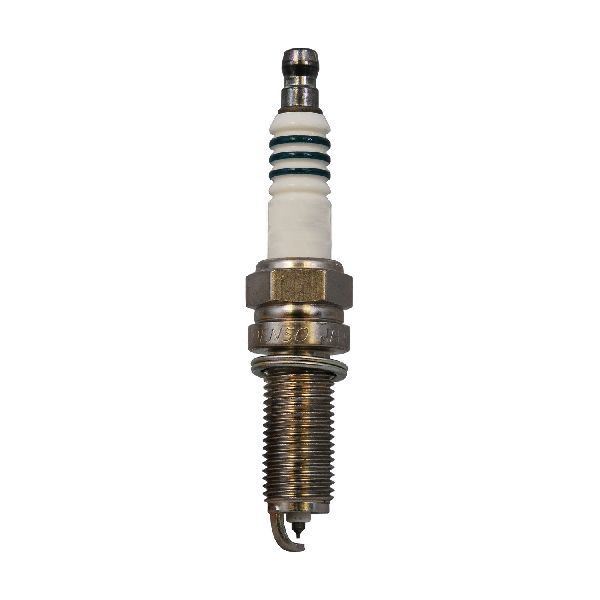
Typical fix: Replace the spark plug. It is best practice to replace all four spark plugs as a set with high-quality OEM-spec plugs (e.g., NGK or Denso Iridium) to ensure consistent performance.
Est. part cost: $10 - $25 per plug - Clogged Fuel Injector 🟡 Medium Probability → Shop Fuel Injector
How to confirm: If the misfire remains on cylinder 4 after swapping the coil and plug, the injector is the next suspect. A professional can perform a fuel injector balance test. A DIY method is to listen to the injector with a mechanic's stethoscope to check for a consistent clicking sound compared to the other injectors.
Typical fix: First, try a quality fuel system cleaner (e.g., Techron, SeaFoam). If that fails, the injector for cylinder 4 may need to be professionally cleaned or replaced.
Est. part cost: $50 - $150 - Intake Valve Carbon Buildup 🟡 Medium Probability As GDI engines, fuel is injected directly into the cylinder, so it never washes over the intake valves. Oil vapor from the PCV system bakes onto the hot valves, forming carbon deposits that can restrict airflow and cause misfires, especially at higher mileage (over 80,000 miles).
How to confirm: This requires a borescope inspection of the intake ports and valves. It is typically diagnosed after ruling out all ignition and fuel delivery issues.
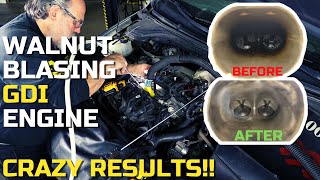
Typical fix: The intake manifold must be removed to perform a manual cleaning or a 'walnut blasting' service to clean the valves.
Est. part cost: $0 (if cleaning manually) - $400+ (for walnut blasting service)
Rare But Worth Checking
- Low Engine Compression: Some Kia Nu and Gamma engines of this era can suffer from excessive oil consumption (per TSB ENG222_R5) which can lead to piston ring wear, cylinder wall scoring, and loss of compression. This was the subject of a major class-action lawsuit. NHTSA ODI #11725093 describes a case where a vehicle stalled with codes P0300, P0302, P0303, and P0304, showing no pressure in cylinders 2 and 4. If ignition and fuel system checks do not solve the misfire, a compression test is a critical next step to check for a serious mechanical engine problem.
- Vacuum Leak: While a large vacuum leak typically causes a random misfire code (P0300), a leak isolated to one cylinder's intake runner gasket could potentially cause a single-cylinder misfire like P0304.
- Faulty Engine Control Module (ECM): → Shop Engine Control Module (ECM) In rare cases, the driver circuit within the ECM that controls the ignition coil can fail, causing a persistent misfire on one cylinder even with good coils and plugs.
Diagnosis Steps
- Read all stored fault codes with an OBD-II scanner. Note any other codes besides P0304.
- If only P0304 is present, perform an ignition coil swap. Move the coil from cylinder 4 to cylinder 2. Clear the codes and drive the vehicle until the check engine light returns.
- If the code changes to P0302, the ignition coil is faulty and needs replacement.
- If the code remains P0304, the coil is likely good. Proceed to swap the spark plug from cylinder 4 to cylinder 1. Clear codes and re-test.
- If the code now changes to P0301, the spark plug is the cause.
- If the code remains P0304 after both swaps, the issue is isolated to cylinder 4. Inspect the fuel injector wiring and listen for its operation with a stethoscope. A consistent clicking noise is normal.
- Check with a Kia dealer for any open service campaigns or ECU updates related to misfire detection, such as those mentioned in TSBs SA413/SA419 for similar models.
- If ignition and fuel injector tests are inconclusive, perform an engine compression test to check for mechanical problems like worn rings, leaking valves, or a bad head gasket. NHTSA ODI #11715590 notes a case where a certified technician diagnosed multi-cylinder misfires (P0300-P0304) alongside a seized short block and a hole in the exhaust valve.
- If compression is good, consider a cylinder leak-down test or having the fuel injector professionally tested for flow and spray pattern.
Parts You'll Likely Need
- Ignition Coil
(OEM #27300-2E000 (for 2.0L Nu), 27301-2B010 (for 1.6L Gamma))— This is the most common failure part for a P0304 code on this vehicle.
Trusted brands: Kia (OEM), Delphi, NGK, Denso
OEM price range: $55 - $80
Aftermarket price range: $25 - $60 - Spark Plug
(OEM #18846-11070 (NGK SILZKR7B11 for 2.0L Nu), 18847-11060 (for 1.6L Gamma))— A worn or fouled spark plug is the second most likely cause. It is a standard maintenance item that is often overlooked.
Trusted brands: NGK, Denso, Champion
OEM price range: $17 - $25
Aftermarket price range: $8 - $20
Related Codes That Often Appear With This One
- P0300 — If the misfire is intermittent or if other cylinders are also beginning to misfire, the more generic P0300 'Random/Multiple Cylinder Misfire' code may appear alongside P0304.
- P0420 — If driven for too long with a misfire, unburnt fuel will overheat and damage the catalytic converter, triggering the P0420 'Catalyst System Efficiency Below Threshold' code. This is a consequence, not the cause. An owner reported in NHTSA ODI #11321536 that while going up a hill, the vehicle lost power and an OBDII reader showed both P0304 and P0420.
- P1326 — This code is for the Knock Sensor Detection System (KSDS). It is often related to the underlying engine wear and bearing issues that plague these engines and can lead to misfires and eventual engine failure.
Technical Service Bulletins (TSBs) & Recalls
- TSB ENG222_R5: Documents potential for excessive oil consumption in Nu and Gamma engines, a potential root cause for fouling spark plugs and other internal issues that can lead to misfires.
- SA321 (for Forte): While not for the Soul, this TSB for the 2.0L Forte recommends replacing all four ignition coils for P030x codes, supporting the high failure rate of this part on similar Kia engines.
- SA413 / SA419 (for newer models): These service actions for newer Souls and Fortes involve ECU updates to improve misfire detection logic, showing a history of Kia refining this system.
Platform-Specific Known Issues
- Owners should be vigilant about checking the engine oil level frequently. Kia TSB ENG222_R5 acknowledges potential for excessive oil consumption in the Nu 2.0L and Gamma 1.6L engines. Chronically low oil can lead to carbon buildup, premature engine wear, and eventually, misfires and catastrophic failure. This defect was the subject of a massive class-action lawsuit against Hyundai/Kia.
Documented NHTSA Reports
- NHTSA ODI #11720416: An owner reported that a friend diagnosed their vehicle with a code reader and retrieved several codes including P0017, P0301, P0302, P0303, and P0304.
- NHTSA ODI #11715590: A certified Kia technician diagnosed a vehicle with multi-cylinder misfires (P0300-P0304) and a seized short block, noting the failure was identical to defects in Recall SC176.
- NHTSA ODI #11725093: A report describes the car stalling while driving with codes P0300, P0304, P0302, P219D, and P0303, with a subsequent finding of no pressure in cylinders 2 and 4.
Mechanic-Grade Diagnostic Values
- Low-Pressure Fuel System Pressure (In-tank pump) — expected: 1.6L Engine: 69.6 PSI; 2.0L Engine: 71.8 PSI. Failure: Pressure is significantly below specification, especially during acceleration.
- High-Pressure Fuel System Pressure (Scan tool, warm idle) — expected: Approx. 508-798 PSI (3.5-5.5 MPa). Failure: Actual pressure is significantly lower than desired pressure or does not increase with RPM.
- GDI Fuel Injector Coil Resistance — expected: 1.5 Ω ± 0.075 at 68°F (20°C). Failure: Resistance is outside of the specified range, indicating an internal injector fault.
- Engine Compression (GDI Engines) — expected: Approximately 185-195 PSI per cylinder, with minimal variation between cylinders.. Failure: A cylinder reading significantly lower than others, or a wet test that does not improve pressure (indicating valve issues) or significantly improves pressure (indicating ring issues).
Hidden / Shadow Codes Worth Checking
- Mode 6, Test ID $0A, Component ID $04: Misfire count for cylinder 4. This is not a DTC but raw data accessible with an advanced scan tool. It can show misfires that are occurring but are not yet frequent enough to set a P0304 code. (see via An OBD-II scan tool that supports Mode 6 data analysis.)
Scan Tool Commands That Help
- Kia GDS (Global Diagnostic System): Flight Record / Trigger Module — This function allows for recording vehicle data during a drive cycle when the misfire occurs. It is useful for capturing intermittent misfires under specific load or temperature conditions that are hard to replicate in the shop.
- Kia GDS: Injector Coding — When replacing a fuel injector on these GDI engines, the GDS tool may be required to input the new injector's calibration code into the ECM to ensure proper fuel delivery and performance.
- Kia GDS: ECU Reprogramming/Update — To apply software updates that may revise misfire detection logic or adjust fuel trim parameters, which can sometimes resolve persistent or intermittent misfire codes.
Wiring & Ground Locations
- Cylinder 4 Injector Connector — On the fuel rail, at the top of the fourth fuel injector from the timing belt side of the engine.. A loose or corroded connector here can interrupt the signal to the fuel injector, causing a fuel-related misfire on cylinder 4. The ECM sends a ground signal to fire the injector.
- Cylinder 4 Ignition Coil Connector — Directly on top of the ignition coil for cylinder 4.. A damaged connector or wiring can prevent the ignition coil from receiving the command to fire from the ECM, resulting in a spark-related misfire on cylinder 4.
- Main Engine Ground Strap — Typically located between the engine block and the chassis frame rail on the driver's side of the engine bay.. A poor engine ground can cause a host of electrical issues, including weak spark or erratic sensor readings, which can lead to misfires on one or more cylinders.
Real Owner Repair Stories
- Reddit user in r/KiaSoulClub (2016 Kia Soul, 65k miles) — Engine light came on and car started to stutter under load while on a road trip.
❌ Tried (didn't work) Initially suspected spark plugs or fuel injector.
✅ What actually fixed it It was the ignition coil on cylinder 4. The user confirmed this after the fact. - Reddit user in r/KiaSoulClub (2017 Kia Soul, 78k miles) — Flashing check engine light, sputtering engine.
❌ Tried (didn't work) Initially just topping up oil which was found to be low.
✅ What actually fixed it Replacing the spark plugs resolved the P0304 code and running issues. The user noted the car was low on oil, which is a known issue that can foul plugs. - Reddit user in r/KiaSoulClub (2014 Kia Soul, 240k miles) — Engine misfire.
❌ Tried (didn't work) Took it to a mechanic who said plugs, injectors, and coils were good., Using cheap, non-OEM spec spark plugs that failed after 40k miles.
✅ What actually fixed it Installing high-quality, OEM-recommended NGK spark plugs solved the misfire problem after the cheap plugs failed prematurely. - NHTSA ODI #11321536 — An owner reported that while driving up a hill, the vehicle started losing power. An OBDII reader identified a P0304 cylinder 4 misfire and a P0420 catalyst efficiency code.
OEM Part Supersession History
35320-2B130, 35320-2B140→35320-2B250— Updated design for the High-Pressure Fuel Pump (HPFP) for the 1.6L GDI engine.35320-2G730, 35320-2G740→35320-2G720— Updated design for the High-Pressure Fuel Pump (HPFP) for the 2.0L GDI engine.
Model Year Variations Within This Range
- 2017-2019: For the 2017 model year facelift, the top trim level (!/Exclaim) replaced the 2.0L Nu GDI engine with a 1.6L Turbo GDI engine mated to a 7-speed DCT. While the P0304 code's meaning is the same, diagnostic steps and parts (coils, injectors) will differ from the more common 2.0L and base 1.6L non-turbo engines.
- 2014-2016: The 2014-2016 models with GDI engines are particularly noted for potential oil consumption issues which can lead to fouled spark plugs and misfires. While this can affect all years in the range, the earlier models are more frequently cited in owner complaints and class-action lawsuits.
Diagnostic Flowchart
Other Known Issues on This Vehicle
Issues unrelated to this code that are worth knowing about as an owner of this generation:
- Catastrophic Engine Failure & Excessive Oil Consumption 🔴 High — Widespread across 1.6L Gamma and 2.0L Nu GDI engines, often appearing after 60,000 miles. It was the subject of major class-action lawsuits. (Ref: Recall SC176 (for 1.6L), TSB ENG222_R5, and multiple class-action settlements (e.g., In re: Kia Engine Litigation) address this.)
- Catalytic Converter Failure 🔴 High — Common on 1.6L GDI models, where high exhaust temperatures can destroy the converter, leading to debris entering the engine and causing failure. (Ref: Recall SC176 / NHTSA 19V120000 was issued to update ECU logic and replace the converter if damaged.)
- Degrading Flexible Steering Coupler 🟠 Medium — Very common across many Hyundai/Kia models of this era. The rubber coupler disintegrates, causing a distinct clicking or clunking noise in the steering column when turning the wheel. (Ref: While a recall existed for some models, many owners perform this inexpensive DIY repair. The part itself is under $10.)
Used vs. New Parts: Buying Guide for This Vehicle
When a used part is the smart pick: A used ignition coil from a low-mileage donor vehicle can be a cost-effective diagnostic tool. If swapping a used coil to cylinder 4 resolves the misfire, you have confirmed the diagnosis cheaply before buying a new part.
Donor-vehicle mileage cap: roughly under 60000 miles for the part to have meaningful remaining life.
What to inspect on the donor part:
- Check for cracks or damage to the plastic housing and boot.
- Ensure the electrical connector pins are clean and not corroded.
- Ask for the mileage of the donor vehicle if possible.
OEM-only on this vehicle (don't cheap out):
- Spark Plugs
- Fuel Injectors
Aftermarket brands forum-validated for this vehicle:
- Ignition Coils: Delphi, Denso, NGK
- Spark Plugs: NGK, Denso (use OEM-spec Iridium)
Brands owners have reported issues with on this vehicle:
- Unbranded, 'no-name' ignition coils and spark plugs from online marketplaces are frequently reported to fail prematurely, sometimes within thousands of miles, leading to a repeat of the P0304 code.
Real Owner Stories
Aggregated from forums and TSBs cited above. Mileages and costs reflect what owners reported in those sources.
2014-2019 Kia Soul
Symptoms: Flashing check engine light and P0304 code; found the engine oil level was low.
What fixed it: Topped up the oil and replaced the spark plugs.
Source hint: reddit.com/r/KiaSoulClub - Thread 'Flashing CEL/P0304 Code'
Related OBD-II Codes
Frequently Asked Questions
Does TSB ENG222_R5 apply to my 2014-2019 Kia Soul's misfire issue?
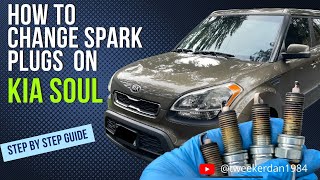
Should I replace all four ignition coils 🎬 Watch: Step-by-step guide to replacing your spark plugs and coils. if only cylinder 4 is misfiring?
Is there a recall for the catalytic converter failure that might be related to my misfire?
My Kia Soul is over 80,000 miles; could carbon buildup be causing P0304?
What spark plugs should I use for my 2014-2019 Kia Soul?
Is there an ECU update for misfire detection on the Kia Soul?
Helpful Videos

We Have This Part in Stock

The information in this article is provided for general reference and educational purposes only. Vehicle specifications, procedures, and part compatibility can vary by production date, trim level, and region. Always consult your vehicle's factory service manual and verify part numbers before purchasing or performing repairs. Safety-critical components such as airbags, seat belts, and braking systems should be installed by a qualified professional.
- Kia Soul:
- 🧭 Diagnostic Flowchart
- 🎬 Helpful Videos
- 🛍️ Shop This Part
- What's Unique About the 2014-2019 Kia Soul
- Symptoms You May Notice
- Most Likely Causes
- Rare But Worth Checking
- Diagnosis Steps
- Parts You'll Likely Need
- Related Codes That Often Appear With This One
- Technical Service Bulletins (TSBs) & Recalls
- Platform-Specific Known Issues
- Documented NHTSA Reports
- Mechanic-Grade Diagnostic Values
- Hidden / Shadow Codes Worth Checking
- Scan Tool Commands That Help
- Wiring & Ground Locations
- Real Owner Repair Stories
- OEM Part Supersession History
- Model Year Variations Within This Range
- Other Known Issues on This Vehicle
- Used vs. New Parts: Buying Guide for This Vehicle
- Real Owner Stories
- 2014-2019 Kia Soul
- Related OBD-II Codes
- Frequently Asked Questions
- 🎟️ Get 5% Off