

P0306 on 2020-2022 Audi A6 Allroad: Cylinder 6 Misfire Causes and Fixes
P0306 on your A6 Allroad indicates a misfire in cylinder 6. The most common culprits are a faulty ignition coil or a worn-out spark plug. A simple DIY diagnostic is to swap the ignition coil from cylinder 6 with another cylinder to see if the misfire code follows the coil.
- P0306 is a misfire on cylinder 6, the rearmost cylinder on the driver's side.
- The most likely cause is a bad ignition coil or spark plug, which are common DIY fixes.
- Always perform the ignition coil swap test before buying parts to accurately diagnose the problem.
- Driving with a flashing check engine light can cause expensive damage to your catalytic converter; pull over immediately.
- If ignition parts don't solve the issue, consider carbon buildup on the intake valves, a known characteristic of this engine type.
What's Unique About the 2020-2022 Audi A6 ALLROAD
The 2020-2022 A6 Allroad is equipped with the sophisticated 3.0L V6 TFSI EA839 engine (engine code DLZA). This engine features a 'hot-V' design, where the single turbocharger is nestled between the cylinder banks, a change from the previous generation's supercharger. While generally reliable, these direct-injection engines can be prone to carbon buildup on intake valves over time, which can impede airflow and cause misfires. While ignition components are still the primary suspect for a P0306 code, the possibility of carbon buildup or a failing fuel injector should be considered, especially at higher mileage. A less common but noted issue on the EA839 engine family is rocker arm failure, which can also lead to misfires.
Diagnostic Flowchart
Tap your situation to follow the diagnostic path that matches what you're seeing on this vehicle.
Symptoms You May Notice
- Rough or vibrating idle
- Hesitation or stumbling during acceleration
- Noticeable loss of engine power
- Flashing or solid Check Engine Light
- Reduced fuel economy
- Engine sounds like it's popping or backfiring
- Smell of unburnt fuel from the exhaust
- Replacing only the spark plug when the ignition coil is the actual culprit. The coil-swap test is crucial to avoid this.
- Assuming a major engine problem before thoroughly checking the ignition system, which is the most probable and easiest-to-fix cause.
- Replacing a fuel injector before confirming it's faulty, as it's a more expensive and labor-intensive job than ignition components.
Most Likely Causes
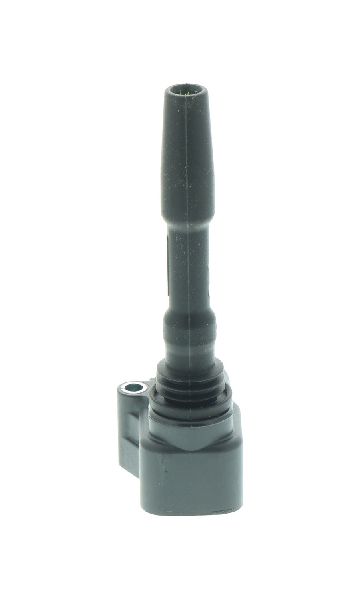
- Faulty Ignition Coil 🔴 High Probability → Shop Ignition Coil Ignition coils are a common wear item on most modern engines, including Audi's V6. Heat from the 'hot-V' turbo configuration and vibration eventually cause the internal windings to fail. Oil leaking from the valve cover gasket into the spark plug tube can also saturate and destroy the coil.
How to confirm: Swap the ignition coil from cylinder 6 with another cylinder (e.g., cylinder 5). Clear the codes and run the engine. If the code changes to P0305, the ignition coil is confirmed to be faulty.
Typical fix: Replace the faulty ignition coil. It is often recommended to replace all six coils at the same time for preventative maintenance, especially if they are original and the vehicle has high mileage.
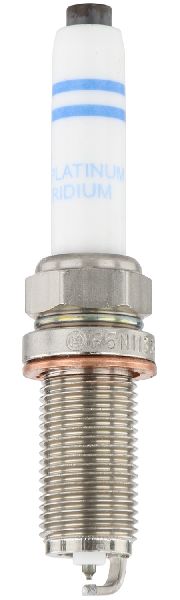
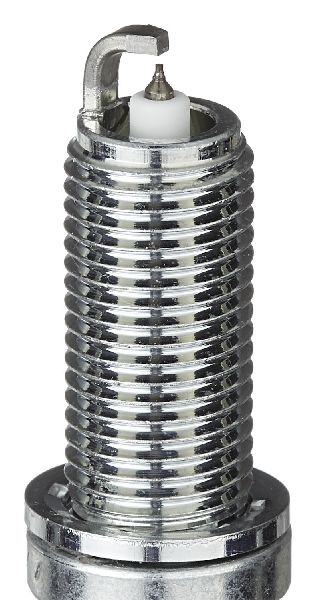
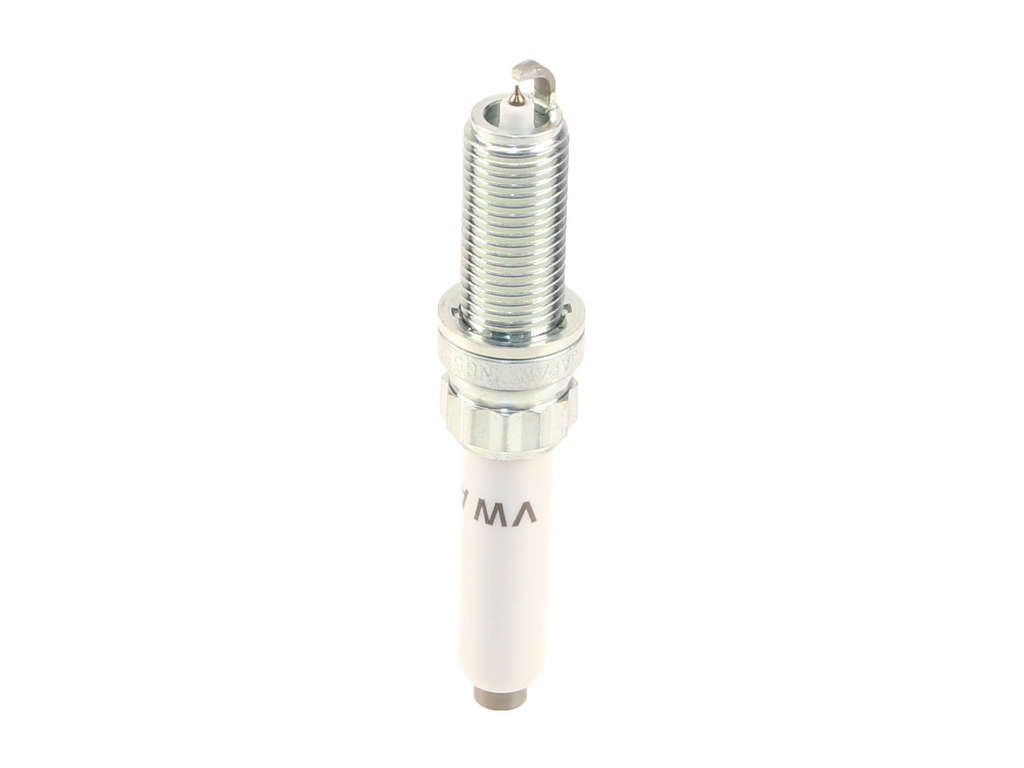
Est. part cost: $40-$80 per coil - Worn or Defective Spark Plug 🔴 High Probability → Shop Spark Plug Spark plugs have a finite service life. The recommended replacement interval is typically every 40,000-60,000 miles. A worn electrode, incorrect gap, or cracked insulator can prevent a proper spark, causing a misfire.
How to confirm: After ruling out the ignition coil, remove the spark plug from cylinder 6. Inspect it for wear (worn electrode), fouling (black, sooty, or oily deposits), or damage to the ceramic insulator. An oil-fouled plug may indicate a leaking valve cover or spark plug tube seal.
Typical fix: Replace the spark plug in cylinder 6. It is best practice to replace all six spark plugs as a set to ensure even performance and prevent future misfires.
Est. part cost: $25-$40 per plug - Clogged or Faulty Fuel Injector 🟡 Medium Probability → Shop Fuel Injector While less common than ignition issues, direct fuel injectors can become clogged with carbon deposits or fail electronically, preventing the correct amount of fuel from being delivered to cylinder 6.
How to confirm: This is more difficult to diagnose. A professional may use a scan tool to monitor fuel trims or perform a fuel injector balance test. Swapping injectors between cylinders is possible but is much more labor-intensive than swapping coils and is not a simple DIY task.
Typical fix: Replace the faulty fuel injector. This requires removing the fuel rail and should ideally be done by a professional or experienced DIYer.
Est. part cost: $150-$300 per injector - Carbon Buildup on Intake Valves 🟡 Medium Probability As a direct-injection (TFSI) engine, fuel is sprayed directly into the cylinder, not over the intake valves. This means there's no fuel to wash away carbon deposits from the PCV system, leading to buildup that can restrict airflow and cause misfires, especially at idle or during cold starts.
How to confirm: Requires a visual inspection of the intake ports and valves, typically using a borescope. This is usually done after ignition and fuel delivery issues have been ruled out.
Typical fix: The intake manifold must be removed and the valves cleaned, most effectively through a process called walnut shell blasting. 🎬 Watch: Why carbon buildup happens and how to clean it.
Est. part cost: $500-$1000 for professional service
Rare But Worth Checking
- Low Engine Compression: This is a serious mechanical issue caused by problems like a worn piston ring, a faulty valve, or a damaged cylinder head. A compression test is needed to confirm. This is an unlikely cause on a newer vehicle but possible.
- Rocker Arm / Needle Bearing Failure: → Shop Engine Rocker Arm The EA839 engine has had documented cases of rocker arm failure, where the needle bearings fall out and can cause misfires and potentially catastrophic engine damage if they enter the cylinder. This may present initially as a single-cylinder misfire. 🎬 See how to diagnose potential rocker arm failure on this engine.
Diagnosis Steps
- Confirm the code P0306 is present using an OBD-II scanner. Note if the check engine light is steady or flashing, and if any other codes like P0300 or P130A are present.
- Locate cylinder 6. On the Audi 3.0L V6 EA839 engine, the cylinders are numbered 1-2-3 on the passenger side (Bank 1, front to back) and 4-5-6 on the driver's side (Bank 2, front to back). Cylinder 6 is the rearmost cylinder on the driver's side (left side of the engine bay).
- To access the driver's side coils, the coolant expansion tank may need to be unbolted and moved aside.
- Swap the ignition coil from cylinder 6 with the coil from cylinder 5 (the middle cylinder on the driver's side).
- Clear the codes with the scanner, start the engine, and let it run for a few minutes. A short drive may be necessary to trigger the code again. Re-scan for codes.
- If the code is now P0305, the ignition coil is bad and needs to be replaced.
- If the code remains P0306, the coil is likely good. Proceed to inspect the spark plug.
- Remove the spark plug from cylinder 6. Check for signs of wear, damage, or deposits (oil or carbon). If it looks worn or fouled, replace it. It's best to replace all six plugs at once. 🎬 Watch: Step-by-step guide to replacing your coils and spark plugs.
- If the plug and coil are good, the issue may be with the fuel injector, carbon buildup, or a less common mechanical issue. At this stage, diagnosis may require professional tools like a borescope, compression tester, or advanced scan tool data analysis.
Parts You'll Likely Need
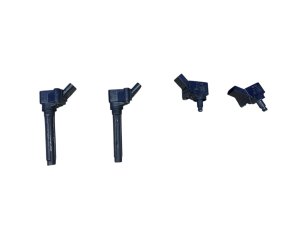
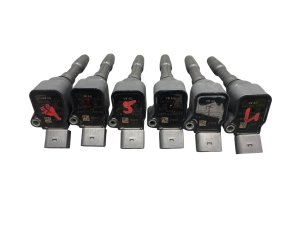
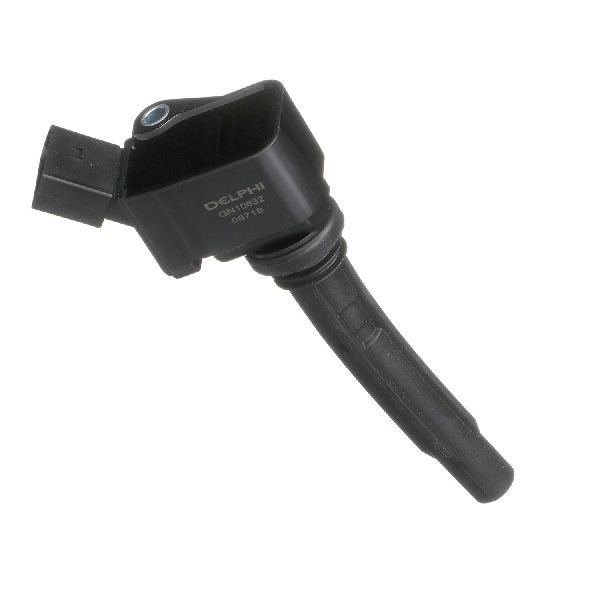
- Ignition Coil
(OEM #06L-905-110-K)— This is the most common cause of a single-cylinder misfire and is a relatively simple part to replace.
Trusted brands: Bosch, NGK, Eldor, APR
OEM price range: $60-$90
Aftermarket price range: $40-$70 - Spark Plug
(OEM #06M-905-606-F)— As a routine maintenance item, a worn spark plug is a very common cause for a misfire.
Trusted brands: NGK, Bosch
OEM price range: $25-$40
Aftermarket price range: $15-$25
Related Codes That Often Appear With This One
- P0300 — If multiple cylinders are misfiring randomly, you may see P0300 (Random/Multiple Cylinder Misfire) alongside P0306. This could point to a systemic issue like a vacuum leak or low fuel pressure.
- P0301, P0302, P0303, P0304, P0305 — Seeing other specific cylinder misfire codes along with P0306 indicates that more than one cylinder is affected. This might suggest a problem common to one cylinder bank (e.g., a bad catalytic converter on that bank) or a more widespread issue.
- P130A — This code for 'Cylinder Disabling' is often seen with a persistent misfire code like P0306. It means the ECU has intentionally shut off fuel to cylinder 6 to protect the catalytic converter from damage due to unburnt fuel.
Technical Service Bulletins (TSBs) & Recalls
- A0123852058038_5: Requests creation of a service record for misfires with DTCs P0300-P0306.
- A0124212069038_5: Provides information for when the MIL is illuminated for cylinder misfires P0300-P0306.
- A0123802069038_4: Provides information for when the MIL is illuminated for cylinder misfires DTCs P0300-P0306.
- A0123912069038_5: Provides information for when the MIL is illuminated for DTCs P0300-P0306.
- A0123362058038_4: Requests that technicians open a PSS record when the MIL is illuminated and DTCs P0300-P0306 may be stored.
Platform-Specific Known Issues
- Audi has issued several Technical Service Bulletins (TSBs) for the 2020-2022 A6, including A0123852058038_5, A0124212069038_5, and A0123362058038_4. These TSBs instruct technicians to create a detailed service record when encountering misfire codes from P0300 through P0306. This indicates that the manufacturer is actively monitoring misfire occurrences on this platform for data collection, rather than providing a specific fix.
- The 3.0T EA839 engine's direct injection design makes it susceptible to carbon accumulation on intake valves, which can lead to misfires over time. This is a well-documented characteristic of many modern direct-injection engines.
- Some EA839 engines have experienced rocker arm failures, where the needle bearings can dislodge. This is a significant mechanical issue that can manifest as a misfire code like P0306 before causing more severe damage.
Mechanic-Grade Diagnostic Values
- Fuel Injector Resistance — expected: Approximately 16 ohms. The most important factor is that all injectors are within 0.5 ohms of each other.. Failure: An injector that has a resistance reading significantly different (e.g., more than 1 ohm) from the others is likely faulty.
Scan Tool Commands That Help
- VCDS (VAG-COM) or ODIS: Misfire Counter / Recognition — To monitor misfire counts on each cylinder in real-time (in measuring blocks). This can help confirm if the misfire is exclusively on cylinder 6 or if other cylinders are misfiring intermittently without setting their own codes.
- VCDS (VAG-COM) or ODIS: Injector Output Test — After ruling out ignition components, a technician can use this function to command a specific injector to fire. Listening for an audible 'click' can help confirm if the injector is activating electronically. This is a common step before performing more invasive mechanical tests.
Wiring & Ground Locations
- Ignition Coil 6 Wiring — Part of the engine wiring harness that routes to the driver's side (Bank 2) of the engine.. A dedicated wiring diagram exists for ignition coils 4, 5, and 6, which is essential for tracing the circuit for cylinder 6 from the ECU to the coil to check for breaks, shorts, or high resistance.
- Engine Block Ground — There are multiple ground points in the engine bay. A primary engine-to-chassis ground is typically a braided strap connected from the engine block to the vehicle's frame rail.. A poor engine ground can cause a host of electrical issues, including weak spark and intermittent misfires across multiple cylinders. While less likely to cause a single-cylinder misfire, it should be inspected for corrosion and tightness if other electrical issues are present.
Real Owner Repair Stories
- Reddit user comment (Audi with EA839 engine (model not specified)) — Misfire on cylinder #3.
❌ Tried (didn't work) Swapped spark plug, Swapped ignition coil, Swapped fuel injector
✅ What actually fixed it The issue was diagnosed as a rocker arm failure after the dealership found metal 'glitter' in the oil filter housing. The proposed fix was to replace the cams and rockers. - YouTube video by 'Exotic car DIY' (2018-2019 B9 SQ5 with 95,000 miles (Stage 3+ tune)) — Horrible tapping/ticking noise from the engine, leading to a misfire.
❌ Tried (didn't work) The owner drove on the issue for an extended period before seeking professional diagnosis.
✅ What actually fixed it The engine was torn down and a single failed rocker arm was found to have lost one needle bearing. The fix was to replace all 24 rocker arms with the updated version to prevent future failures.
"I Checked Everything" — The Actual Cause
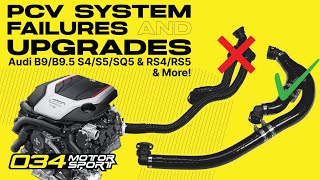
- A failed Positive Crankcase Ventilation (PCV) valve diaphragm can cause misfires. This may not present as a typical vacuum leak during a smoke test. A key symptom is a strong vacuum at the oil filler cap when the engine is idling; removing the cap may cause the engine to stumble or stall. On the EA839, a failed internal check valve in the PCV breather hose can also allow boost pressure to enter the crankcase, disrupting the air-fuel mixture and causing misfires or oil leaks.
OEM Part Supersession History
06L-905-110-C, D, E, F, H→06L-905-110-K— Likely for improved reliability, heat resistance, or manufacturing consistency.06M906036T→06M906036AE— Revision for improved performance or reliability of the direct fuel injector.
Heads up: When replacing, it is best practice to replace injectors in a full set to ensure matched flow rates. Always replace single-use Teflon and rubber seals on any direct injector before installation.
Model Year Variations Within This Range
- 2017-2020 (on related EA839 platforms): Earlier EA839 engines were fitted with rocker arms that had smaller needle bearings. These are more prone to lubrication-related failure. Later models (approx. 2020+) were fitted with revised rocker arms featuring larger/thicker needle bearings to improve durability.
Helpful Videos

Used OEM Parts in Stock
New Aftermarket Parts Available


The information in this article is provided for general reference and educational purposes only. Vehicle specifications, procedures, and part compatibility can vary by production date, trim level, and region. Always consult your vehicle's factory service manual and verify part numbers before purchasing or performing repairs. Safety-critical components such as airbags, seat belts, and braking systems should be installed by a qualified professional.
- Audi A6 ALLROAD:
- 🧭 Diagnostic Flowchart
- 🎬 Helpful Videos
- 🛍️ Shop This Part
- What's Unique About the 2020-2022 Audi A6 ALLROAD
- Symptoms You May Notice
- Most Likely Causes
- Rare But Worth Checking
- Diagnosis Steps
- Parts You'll Likely Need
- Related Codes That Often Appear With This One
- Technical Service Bulletins (TSBs) & Recalls
- Platform-Specific Known Issues
- Mechanic-Grade Diagnostic Values
- Scan Tool Commands That Help
- Wiring & Ground Locations
- Real Owner Repair Stories
- "I Checked Everything" — The Actual Cause
- OEM Part Supersession History
- Model Year Variations Within This Range
- 🎟️ Get 5% Off