

P0306 on 2010-2017 Chevrolet Suburban: Cylinder 6 Misfire Causes & Fixes
P0306 indicates a misfire on cylinder 6. On a 2010-2017 Suburban, this is most often caused by a bad spark plug, ignition coil, or spark plug wire. A more serious, but common, cause on these engines is a failed Active Fuel Management (AFM) lifter, which is a more expensive repair often accompanied by a distinct ticking noise.
- P0306 is a misfire on cylinder 6, the third cylinder back on the passenger side of the engine.
- Always start with the simplest fixes: check the spark plug wire connection, swap the ignition coil, and inspect the spark plug.
- Be aware that on the Suburban's V8 engines, a persistent P0306 is frequently caused by a failed AFM lifter, which is a more complex and costly repair.
- Driving with a flashing check engine light can cause rapid and expensive damage to your catalytic converter.
What's Unique About the 2010-2017 Chevrolet SUBURBAN
The V8 engines in this generation of Suburban (primarily the 5.3L and 6.2L) use an Active Fuel Management (AFM) system to improve fuel economy by deactivating cylinders, including cylinder 6. Unfortunately, the specialized hydraulic lifters used for this system are a known failure point. A collapsed or stuck AFM lifter is a very common cause for a single-cylinder misfire, like P0306, on these trucks. This issue often requires more in-depth engine work than a simple ignition component replacement and can lead to camshaft damage if ignored.
Diagnostic Flowchart
Tap your situation to follow the diagnostic path that matches what you're seeing on this vehicle.
Generation note: This range covers two Suburban generations: the 10th (GMT900, 2010-2014) and the 11th (K2XX, 2015-2017). The primary difference is the engine. The 2015+ models feature the newer EcoTec3 direct-injected engines. While both are prone to AFM lifter issues, the direct injection on the newer models can also lead to misfires from clogged fuel injectors or carbon buildup on intake valves, which is a less common issue on the port-injected GMT900 engines.
Symptoms You May Notice
- Flashing or solid Check Engine Light
- Rough or shaky idle
- Engine hesitation or stumbling during acceleration
- Noticeable loss of power
- Increased fuel consumption
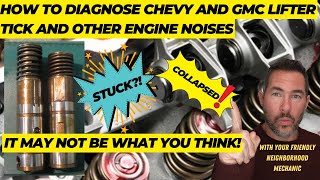
- Engine ticking or tapping noise, especially on a cold start, 🎬 See how to diagnose lifter tick versus other engine noises. that increases with engine RPM.
- Service StabiliTrak and/or Traction Control warning lights may appear along with the Check Engine Light.
- Replacing oxygen sensors. O2 sensors will report the effects of a misfire (like a rich or lean condition), but they are almost never the cause of a single-cylinder misfire code.
Most Likely Causes
- Worn Spark Plug or Faulty Spark Plug Wire 🔴 High Probability → Shop Spark Plug A GM Technical Service Bulletin (TSB #PIP4819A) specifically notes that loose spark plug wires can cause misfires on these engines. Over time, heat and vibration can degrade wires, and plugs wear out as a maintenance item.
How to confirm: Visually inspect the spark plug for wear, fouling, or damage. Check that the spark plug wire is securely connected at both the coil and the plug. Resistance-test the wire if tools are available. A visible crack or burn mark on the plug's porcelain is a clear sign of failure.
Typical fix: Replace the spark plug and/or spark plug wire for cylinder 6. It is best practice to replace all spark plugs and wires as a set if they are near the end of their service life.
Est. part cost: $10-$50 - Failed Ignition Coil 🔴 High Probability → Shop Ignition Coil
How to confirm: The easiest way to test is to swap the cylinder 6 ignition coil with one from another cylinder (e.g., cylinder 4). Clear the codes and drive the vehicle. If the code changes to P0304, the coil is bad. This is a definitive, no-cost diagnostic step. 🎬 Watch: A full troubleshooting process for a P0306 misfire code.
Typical fix: Replace the faulty ignition coil. It is generally recommended to use a quality OEM or equivalent brand like ACDelco for longevity.
Est. part cost: $40-$100 - Failed Active Fuel Management (AFM) Lifter 🔴 High Probability → Shop Engine Valve Lifter The AFM system deactivates cylinders (1, 4, 6, and 7 on V8s) by collapsing special lifters using controlled oil pressure from the Valve Lifter Oil Manifold (VLOM). These lifters are a well-documented weak point and can get stuck or fail mechanically, causing a persistent misfire. TSB 15-06-01-002H and others address this widespread issue.
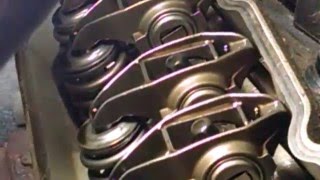
How to confirm: This is a more advanced diagnosis. A distinct ticking sound from the passenger side valve cover area is a strong clue. A compression test on cylinder 6 will often show low readings. The definitive test is to remove the valve cover to inspect for a bent pushrod or a rocker arm that is not moving, indicating a collapsed lifter underneath.
Typical fix: Requires replacing the failed lifter and often the camshaft if it has been damaged by the failed lifter roller. Due to the high failure rate, it is highly recommended to replace all AFM lifters, the VLOM, and lifter guides at the same time. Many owners opt for a full 'AFM delete', which involves replacing the AFM lifters, VLOM, and camshaft with standard, non-AFM components to permanently prevent future failures. This requires ECU reprogramming.
Est. part cost: $500-$2000 - Clogged or Faulty Fuel Injector 🟡 Medium Probability → Shop Fuel Injector
How to confirm: You can swap the fuel injector from cylinder 6 with another cylinder, similar to the ignition coil test. If the misfire code follows the injector, the injector is the problem. This is more labor-intensive than swapping a coil. A mechanic can also test the injector's flow rate and spray pattern.
Typical fix: Replace the faulty fuel injector. For 2015+ models with direct injection, carbon buildup on the injector tip can be a problem. GM has issued special coverage (N192281810, which addresses carbon tracking on plugs/coils but is related to combustion issues) for injector issues on some 2016-2017 models.
Est. part cost: $70-$150
Rare But Worth Checking
- Intake Manifold Gasket Leak: → Shop Engine Intake Manifold The intake manifold gaskets on these engines can fail, creating a vacuum leak that leans out the air/fuel mixture on a specific cylinder or bank, causing a misfire.
- Low Engine Compression: Beyond a failed lifter, low compression can be caused by worn piston rings or a poor valve seal (e.g., from a broken valve spring), requiring significant engine repair.
- Failed Valve Lifter Oil Manifold (VLOM): The VLOM itself can fail, with solenoids getting stuck or internal leaks causing oil pressure issues to the AFM lifters, leading to misfires. It is often replaced as part of any AFM lifter job.
Diagnosis Steps
- Read the codes with an OBD-II scanner and note any other codes present, especially P0300 or AFM-related codes.
- Check freeze frame data to see the engine conditions (RPM, load, temperature) when the misfire occurred.
- Listen for a rhythmic ticking/tapping noise from the engine bay, particularly the passenger side valve cover area.
- Swap the ignition coil from cylinder 6 with another cylinder (e.g., cylinder 2). Clear codes and see if the misfire moves to P0302. If it does, the coil is bad.
- If the misfire remains on cylinder 6, inspect the spark plug and wire. Replace the spark plug if it is worn or fouled. Look for carbon tracking on the porcelain.
- If the problem persists, test the fuel injector. This can be done by swapping it with another cylinder or by using a 'noid' light to check for an electrical pulse.
- Perform a compression test on cylinder 6 to check for mechanical engine problems. A significant loss of compression (below 100-120 PSI) points towards an internal issue.
- If compression is low, remove the passenger-side valve cover to inspect the valve train (rockers, pushrods, springs) for cylinder 6. Check if the rocker arms are moving properly while the engine is cranked. A stationary rocker indicates a collapsed lifter.
- If a lifter is confirmed as the cause, further engine disassembly is required for inspection and replacement of the lifters, lifter guides, and potentially the camshaft and VLOM.
Parts You'll Likely Need
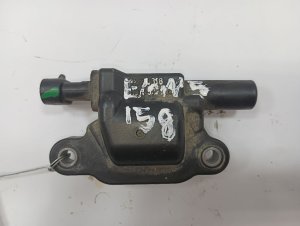
- Ignition Coil
(OEM #12611424)— Ignition coils are a common failure item that directly causes a lack of spark and a misfire on a single cylinder.
Trusted brands: ACDelco, Delphi
OEM price range: $60-$90
Aftermarket price range: $30-$60 - Spark Plug
(OEM #41-110 (for 2010-2014 5.3L/6.2L), 41-162 (supersedes 41-110), 41-114 (for 2015+ 5.3L EcoTec3))— Spark plugs are a routine maintenance item. A worn or fouled plug cannot create a strong enough spark for proper combustion. Part numbers have been updated over time.
Trusted brands: ACDelco, NGK
OEM price range: $10-$15
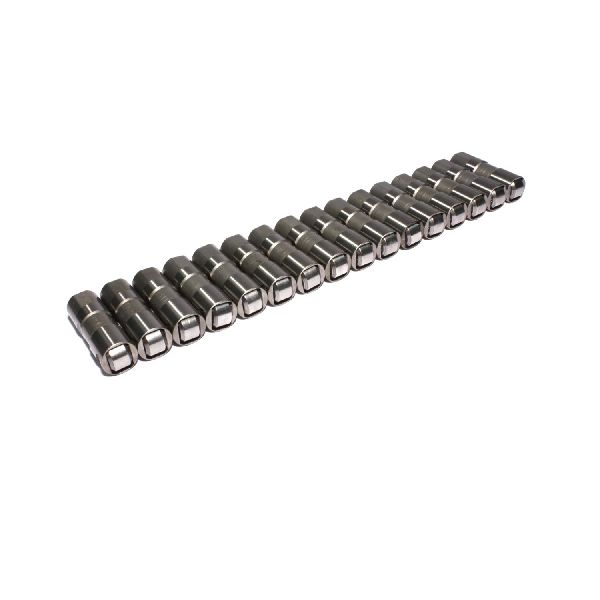
Aftermarket price range: $5-$10 - AFM Valve Lifter
(OEM #12648846)— This is a specific and very common point of failure for the 5.3L/6.2L engines, leading directly to misfires when the lifter collapses or sticks.
Trusted brands: ACDelco, General Motors
OEM price range: $40-$60
Aftermarket price range: $25-$45 - Valve Lifter Oil Manifold (VLOM)
(OEM #12571609 (Gen IV, pre-2014), 12697806 (Gen V, 2014+))— The VLOM controls the AFM lifters. Its internal solenoids or gaskets can fail, causing oil pressure problems that lead to lifter failure and misfires. It is recommended to be replaced during any AFM lifter service.
Trusted brands: ACDelco, General Motors
OEM price range: $150-$250
Aftermarket price range: $100-$180
Related Codes That Often Appear With This One
- P0300 — If the misfire is intermittent or affects multiple cylinders, a P0300 (Random Misfire Detected) may be stored alongside P0306. This is very common when an AFM lifter is beginning to fail.
- P050D — This code for 'Cold Start Rough Idle' often points towards a fuel injector or carbon buildup issue, which can also cause a P0306 misfire.
- P3441 — This code, 'Cylinder 6 Deactivation Solenoid Control Circuit', points directly to an electrical issue with the AFM system for cylinder 6, often related to the VLOM or its wiring.
Technical Service Bulletins (TSBs) & Recalls
- PIP4819A: Engine Misfire with DTCs P0300-P0308 due to loose spark plug wires.
- 15-06-01-002H: Addresses engine misfire/tick noise (P0300) caused by a mechanically collapsed or stuck AFM lifter or a bent pushrod.
- 19-NA-219: A diagnostic tip bulletin that lists a collapsed AFM lifter as a primary cause for single-cylinder misfires (P0301-P0308) and associated engine noises.
- N192281810: Special Coverage for misfires due to carbon tracking between the spark plug and ignition coil boot, requiring inspection and potential replacement of plugs and coils.
Platform-Specific Known Issues
- Active Fuel Management (AFM) Lifter Failure: This is the most significant known issue. The lifters used to deactivate cylinders can fail, causing misfires, ticking noises, and sometimes catastrophic engine damage if ignored. A forum user on tahoeyukonforum.com described having a P0306 code, performing all standard ignition and fuel fixes, only to find the cylinder 6 valves were not moving, pointing directly to a failed lifter. GM has issued multiple service bulletins related to this, including 15-06-01-002H.
- Loose Spark Plug Wires: TSB #PIP4819A specifically calls out inspecting and replacing loose spark plug wires as a fix for engine misfires, including P0306.
- Fuel Injector Problems (2015+): Special Coverage N192281810 was issued for some 2016-2017 models for issues that can cause misfires. While it focuses on carbon tracking between the plug and coil boot, it highlights combustion issues in this engine family. Direct injectors on the EcoTec3 engines are also susceptible to clogging over time.
- Carbon Buildup (2015+): The direct-injected EcoTec3 engines (2015-2017) are more prone to carbon buildup on the back of the intake valves. Since fuel is injected directly into the cylinder, it no longer washes over the valves, cleaning them. This buildup can disrupt airflow into the cylinder, leading to a misfire.
Mechanic-Grade Diagnostic Values
- Ignition Coil Primary Resistance — expected: 0.4 - 2.0 ohms. Failure: A reading outside this range indicates a faulty coil winding.
- Ignition Coil Secondary Resistance — expected: 6,000 - 10,000 ohms (2.0k ohms for some aftermarket coils). Failure: A reading significantly outside this range suggests the secondary winding is failing.
- Spark Plug Wire Resistance — expected: 40-50 Ohms per foot for high-performance wires.. Failure: Excessively high resistance (or an open circuit) means the wire needs replacement.
- Fuel Pressure (2010-2014 Port Injected 5.3L) — expected: 55-62 psi (Key On, Engine Off). Failure: Pressure below 55 psi can indicate a weak fuel pump or faulty regulator, potentially causing a lean misfire.
- Fuel Pressure (2015-2017 Direct Injected 5.3L/6.2L) — expected: Low side: 50-80 psi. High side (cranking): 300-400+ psi.. Failure: Low pressure on the high-pressure side during cranking can indicate a failing high-pressure fuel pump or stuck cam actuator, as noted in GM bulletins.
- PCM Ground Resistance — expected: 0.1 - 0.3 Ω. Failure: Values higher than this suggest a poor ground connection, which can corrupt driver circuits for coils or injectors and cause phantom misfires.
Hidden / Shadow Codes Worth Checking
- Misfire Counter (Live Data): Not a DTC, but a live data parameter (PID) showing the real-time count of misfire events for each specific cylinder. A rising count on cylinder 6 while others remain at or near zero is a definitive diagnostic clue. (see via A professional scan tool like GM's GDS2 or a high-end aftermarket scanner with live data capabilities is required.)
Scan Tool Commands That Help
- GDS2 (GM Dealer Software): Misfire Data / Misfire Graphic — To monitor the current and historical misfire counts for each cylinder to confirm the fault is isolated to cylinder 6. This is the primary data mechanics use to verify a misfire complaint.
- GDS2 (GM Dealer Software): Injector Test / Balance Test — To command the cylinder 6 fuel injector on and off to check for an audible click or to perform a flow balance test, helping to rule out a faulty injector without swapping it physically.
- GDS2 (GM Dealer Software): Camshaft Position Actuator System — For 2015+ direct injection models, this can be used to cycle the cam phaser solenoid to check if it is stuck, which can affect valve timing and cause misfires, sometimes related to code P00C6.
Wiring & Ground Locations
- Engine Harness Chafe Point 1 — Driver's side, near the ECM/TCM bracket.. GM has identified a potential for the engine harness to rub against the ECM/TCM bracket, the upper control arm, or the shock tower bolt. While on the driver's side, damage to this harness can affect circuits shared across the engine, potentially leading to erratic signals for components on the passenger side (Bank 2), where cylinder 6 is located.
- Engine Harness Chafe Point 2 — On 4.3L/5.3L/6.2L engines, the harness can rub on the front corner of the left-hand (driver's side) cylinder head or the drive belt idler pulley bracket.. Damage in this area can short various circuits to ground, causing a wide variety of symptoms, including misfires. A thorough visual inspection of the harness routing is crucial if electrical issues are suspected.
Real Owner Repair Stories
- YouTube channel 'We Can Fix it!' (2015 Chevrolet Tahoe PPV, 5.3L V8, 190,000 miles) — Flashing Check Engine Light, P0306 code for cylinder 6 misfire.
❌ Tried (didn't work) Swapped spark plug between cylinder 4 and 6, Swapped spark plug wire between cylinder 4 and 6, Replaced the ignition coil on cylinder 6 with a new one
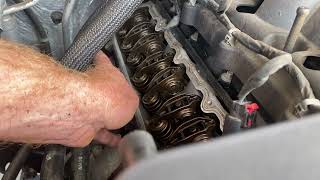
✅ What actually fixed it After removing the passenger side valve cover, the technician discovered the intake valve lifter for cylinder 6 was completely collapsed and not moving. The diagnosis confirmed a failed AFM lifter was the cause of the misfire.
OEM Part Supersession History
12571595, 12619820, 12639516→12648846 (for AFM lifter)— Improved design to address high failure rates of the original AFM lifters.
Heads up: The newest DFM (Dynamic Fuel Management) lifter, part number HL-7025 (GM 12698946), is reportedly backward compatible with older AFM systems, but original AFM lifters (like HL-7011) cannot be used in newer DFM engines.
Model Year Variations Within This Range
- 2010-2014 (GMT900): These models use port-injected 5.3L and 6.2L V8s. Misfires are overwhelmingly related to ignition components or AFM lifter failure. Fuel system issues are typically related to the single injector per cylinder or overall fuel pressure.
- 2015-2017 (K2XX): These models introduced the EcoTec3 engines with direct injection. While still highly prone to AFM lifter failure, they add new potential causes for P0306. These include a failing high-pressure fuel pump and significant carbon buildup on the back of the intake valves, which can restrict airflow to cylinder 6 and cause a misfire.
Helpful Videos
Used OEM Parts in Stock
New Aftermarket Parts Available

The information in this article is provided for general reference and educational purposes only. Vehicle specifications, procedures, and part compatibility can vary by production date, trim level, and region. Always consult your vehicle's factory service manual and verify part numbers before purchasing or performing repairs. Safety-critical components such as airbags, seat belts, and braking systems should be installed by a qualified professional.
- Chevrolet SUBURBAN:
- 🧭 Diagnostic Flowchart
- 🎬 Helpful Videos
- 🛍️ Shop This Part
- What's Unique About the 2010-2017 Chevrolet SUBURBAN
- Symptoms You May Notice
- Most Likely Causes
- Rare But Worth Checking
- Diagnosis Steps
- Parts You'll Likely Need
- Related Codes That Often Appear With This One
- Technical Service Bulletins (TSBs) & Recalls
- Platform-Specific Known Issues
- Mechanic-Grade Diagnostic Values
- Hidden / Shadow Codes Worth Checking
- Scan Tool Commands That Help
- Wiring & Ground Locations
- Real Owner Repair Stories
- OEM Part Supersession History
- Model Year Variations Within This Range
- 🎟️ Get 5% Off