

P0306 on 2020-2025 Hyundai Palisade: Cylinder 6 Misfire Causes and Fixes
P0306 means cylinder 6 is misfiring. On the 2020-2025 Palisade, this is most often caused by a failed ignition coil or a worn spark plug. A coil swap is the fastest way to diagnose the problem before buying parts. The issue is also common on its platform-mate, the Kia Telluride.
- P0306 on a Palisade is almost always a bad ignition coil or spark plug on cylinder 6.
- Cylinder 6 is located on the front bank (near the radiator), on the driver's side, making it relatively easy to access for diagnosis.
- The fastest and cheapest diagnostic step is to swap the ignition coil from cylinder 6 with another cylinder to see if the misfire code follows the coil.
- Do not ignore a flashing Check Engine Light, as continued driving can cause expensive damage to the catalytic converter.
What's Unique About the 2020-2025 Hyundai Palisade
The Palisade's Lambda II 3.8L is a Gasoline Direct Injection (GDI) engine. While efficient, this design can make it susceptible to carbon buildup on fuel injector tips and intake valves, which can contribute to misfires over time. Some owners have also reported misfire codes appearing during cold weather after a remote start, potentially due to a software quirk where the ECM does not account for extra fuel during a cold start enrichment cycle. Additionally, forum discussions include a Hyundai technician stating that ignition coils are a known failure point on this platform, a claim corroborated by numerous owner repair stories.
Symptoms You May Notice
- Rough or vibrating idle, sometimes causing the whole vehicle to shake.
- Hesitation, stumbling, or significant loss of power when accelerating.
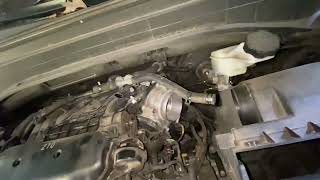
- Solid or flashing Check Engine Light. 🎬 Watch: A simple breakdown of the P0306 code and fix.
- Reduced fuel economy.
- Engine stalling, especially when coming to a stop or at low RPMs.
- Misfire occurring specifically during heavy rain, as reported by one owner, suggesting a moisture-related issue.
- A Reddit user noted their misfire issue started with rough idling and progressed to include P0304, P0305, and P0306, pointing to a potential failure across an entire cylinder bank.
- Replacing all fuel injectors when only one is bad.
- Replacing the catalytic converter due to misfire damage without first fixing the root cause of the misfire.
- Assuming a rough idle is a misfire when it could be related to the transmission logic addressed by TSB 22-01-002H.
Most Likely Causes
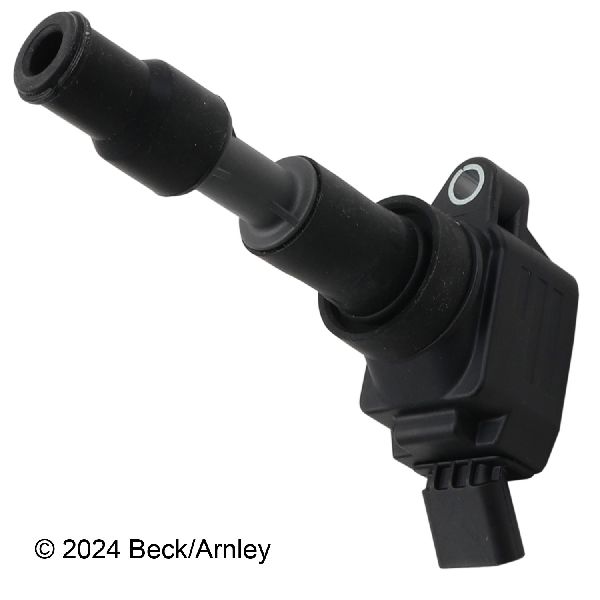
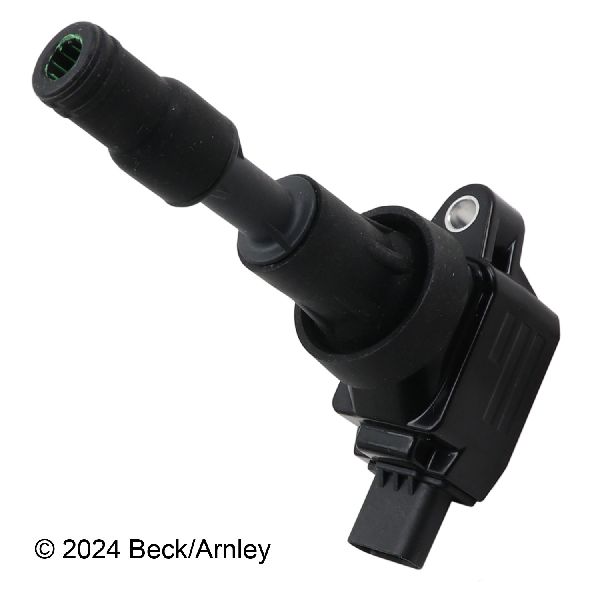
- Faulty Ignition Coil 🔴 High Probability → Shop Ignition Coil Ignition coils are a very common failure item on this engine. A Hyundai technician on Reddit explicitly called them out as a known issue, and multiple owners on forums for the Palisade and Kia Telluride have fixed P030X codes by replacing a coil.
How to confirm: Swap the ignition coil from cylinder 6 with another cylinder on the same bank (e.g., cylinder 4). Clear the codes and drive. If the code changes to P0304, the ignition coil is confirmed bad. This is the most common DIY diagnostic step.
Typical fix: Replace the faulty ignition coil. It is often recommended to replace the corresponding spark plug at the same time. Some owners choose to replace all three coils on the affected bank as a preventative measure.
Est. part cost: $98-$140 for one OEM coil. - Worn or Fouled Spark Plug 🔴 High Probability → Shop Spark Plug Spark plugs are a regular maintenance item with a finite lifespan. An incorrect gap, carbon fouling, or simple electrode wear can prevent a strong spark, causing a misfire.
How to confirm: After confirming the coil is good, swap the spark plug from cylinder 6 with another cylinder. If the misfire code moves to the new cylinder, the spark plug is the cause. Visually inspect the plug for heavy carbon deposits, oil fouling, or a worn electrode.
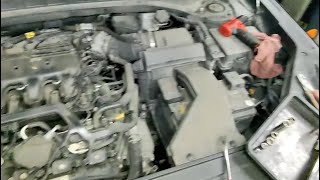
Typical fix: Replace the spark plug. It is best practice to replace all six spark plugs as a set if they are near the end of their service life (typically recommended around 100,000 miles). 🎬 See this step-by-step guide to removing the intake and plugs.
Est. part cost: $15-$30 per plug for OEM-spec Iridium plugs. - Clogged or Faulty Fuel Injector 🟡 Medium Probability → Shop Fuel Injector As a GDI engine, the injector tip is inside the combustion chamber and is prone to carbon buildup, which can disrupt the spray pattern and fuel delivery. Some owners have experienced rough cold starts that were traced to a sticking fuel injector.
How to confirm: This is best diagnosed after ruling out spark issues. A professional can perform a fuel injector balance test. Swapping injectors is possible but much more labor-intensive than swapping coils or plugs.
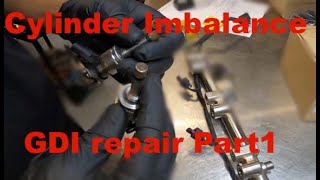
Typical fix: The injector may need to be professionally cleaned or replaced. Replacement requires removing the intake manifold. 🎬 Watch: How to replace a fuel injector on this engine.
Est. part cost: $243 for one OEM injector. - Intake Manifold Gasket Leak ⚪ Low Probability → Shop Engine Intake Manifold While not a widely reported issue, gaskets can degrade over time, causing a vacuum leak. A leak near the runner for cylinder 6 will lean out the air/fuel mixture for that cylinder only, causing a misfire.
How to confirm: A smoke test is the most effective way to find a vacuum leak. The technician will fill the intake with smoke and look for any escaping near the cylinder 6 intake runner.
Typical fix: Replace the intake manifold gaskets.
Est. part cost: $40-$80 for a gasket set
Rare But Worth Checking
- Low Engine Compression: This indicates a mechanical engine problem (e.g., worn piston rings, bad valves, or a failing head gasket). It's a serious issue that won't be fixed by replacing ignition or fuel parts. A compression test on cylinder 6 is needed to confirm.
- Damaged Wiring or Connector: The wiring harness or connector for the ignition coil or fuel injector on cylinder 6 could be damaged or have a poor connection, sometimes intermittently. One owner reported misfires only in heavy rain, suggesting water intrusion. The ignition coil harness is available as a separate part.
- Faulty Ignition Coil Wiring Harness: → Shop Ignition Coil In some cases, the issue may not be the coil itself but the short wiring harness that connects to it. This harness can become brittle or develop a bad connection. The OEM part number for this harness is 27312-3L200.
- Timing and Valve Train Components: While less common on the Palisade, other Hyundai models have seen P0306 alongside P0018, P0300, P0302, and P0304, where repairs required replacing the intake camshaft, CVVT, and timing chain tensioner (NHTSA ODI #11606626).
Diagnosis Steps
- Connect an OBD-II scanner to confirm the P0306 code and check for any other stored codes. Note any freeze-frame data which shows engine conditions when the code was set.
- Identify cylinder 6. On the Palisade's transverse 3.8L V6, the cylinders are numbered 1-3-5 on the rear bank (closest to the firewall) and 2-4-6 on the front bank (closest to the radiator), from passenger side to driver side. Cylinder 6 is on the front bank, driver's side.
- Swap the ignition coil from cylinder 6 with the coil from cylinder 4 (the middle cylinder on the same, easily accessible front bank).
- Clear the codes with the scanner and start the engine. Let it run and/or drive it to see if the Check Engine Light returns.
- If code P0304 appears, the ignition coil is faulty and must be replaced.
- If code P0306 returns, the coil is likely good. Move on to swapping the spark plug from cylinder 6 with cylinder 4. Repeat the process of clearing codes and running the engine.
- If code P0304 appears, the spark plug is faulty and should be replaced. Best practice is to replace all six.
- If code P0306 returns again, the problem is not the coil or plug. The next steps involve checking the fuel injector, wiring, and engine compression, which may require professional assistance.
- Visually inspect the wiring and connector to the cylinder 6 ignition coil and fuel injector for any visible damage, corrosion, or looseness.
- If the issue persists, a professional diagnosis is recommended. This would include a compression test to check for mechanical engine problems and a fuel injector balance test to check for a faulty injector.
Parts You'll Likely Need
- Ignition Coil
(OEM #27300-3L200 (replaces 27310-3L030))— This is the most probable cause of a single-cylinder misfire on this engine, confirmed by technician and owner reports.
Trusted brands: Hyundai OE, NGK, Delphi, TRQ
OEM price range: $98-$140
Aftermarket price range: $50-$100 - Iridium Spark Plug
(OEM #18863-08105 (NGK SILKR8A-S))— A worn or fouled spark plug is the second most likely cause and is a standard maintenance item.
Trusted brands: NGK (OEM supplier), Denso
OEM price range: $20-$30
Aftermarket price range: $15-$25 - GDI Fuel Injector
(OEM #35310-3L200)— If spark components are good, a clogged or failed GDI injector is the next logical culprit.
Trusted brands: Hyundai OE
OEM price range: $240-$280
Aftermarket price range: $150-$200
Related Codes That Often Appear With This One
- P0300 — If the misfire becomes more widespread or intermittent across multiple cylinders, a P0300 (Random/Multiple Cylinder Misfire) may be triggered along with other specific cylinder codes like P0304 and P0305.
Technical Service Bulletins (TSBs) & Recalls
- 24-01-039H-1: Describes the engine sub-assembly replacement procedure for the 2024 Palisade valve spring recall (Recall 255).
- 22-01-002H: An ECU and TCU software update to improve shift quality and reduce hesitation when accelerating from a stop. This symptom can sometimes be mistaken for an engine misfire.
Platform-Specific Known Issues
- A recall (NHTSA 23V651000 / Hyundai 251) was issued for an ABS module that could leak fluid and cause an electrical short, leading to a fire risk. While not a direct cause of P0306, it is a critical safety recall for owners to be aware of.
- A recall (NHTSA 24V-123 / Hyundai Recall 255) exists for defective engine valve springs on a specific production range of 2024 models, which can cause engine failure and misfire codes.
Mechanic-Grade Diagnostic Values
- GDI Fuel Injector Resistance — expected: ~1.9 - 2.2 ohms. Failure: A reading significantly outside this range, or a notable difference between the cylinder 6 injector and others, points to a failing injector. An infinite reading indicates an open circuit.
- Ignition Coil Primary Resistance — expected: ~0.660 ohms. Failure: A reading that is significantly higher (open circuit) or lower (shorted) suggests a faulty coil.
- Low-Pressure Fuel System Pressure (at idle) — expected: 69.6 - 75.3 psi (480 - 519 kPa). Failure: Pressure outside this range indicates a problem with the in-tank fuel pump or low-pressure fuel lines.
- Short-Term and Long-Term Fuel Trims (at steady RPM) — expected: Between -10% and +10%. Failure: Consistently high positive trims (>+10%) suggest a vacuum leak or under-reporting MAF. Consistently high negative trims (<-10%) suggest a leaking injector or other rich condition.
- Engine Compression Ratio (Static) — expected: 13.0:1. Failure: A compression test on cylinder 6 that shows significantly lower pressure than the other cylinders indicates a mechanical engine problem (e.g., bad rings, valves, or head gasket).
Hidden / Shadow Codes Worth Checking
- Mode 6 Misfire Counts: Before a P0306 code is officially set, the ECU tracks individual misfire events for each cylinder. This data can reveal a cylinder that is starting to fail even if the Check Engine Light is not yet on. (see via Using an advanced scan tool or the dealer-level Hyundai GDS, navigate to Mode 6 or the live engine data list to view misfire counts for the current and last 10 driving cycles. A high count on cylinder 6 is a strong early indicator of a problem.)
Scan Tool Commands That Help
- Hyundai GDS (or advanced bidirectional scanner): Cylinder Power Balance Test (or Fuel Cut) — To confirm if cylinder 6 is contributing less power than the others. The command disables the fuel injector for each cylinder one by one while monitoring the RPM drop. A smaller RPM drop on cylinder 6 compared to others confirms it's the weak cylinder.
- Hyundai GDS: Fuel Injector Balance Testing — After ruling out ignition problems, this test can identify a faulty injector without removing it. The GDS tool measures the pulse width variance for each injector, highlighting any that are performing differently from the rest.
- Hyundai GDS: Fuel Trim / Adaptive Value Reset — After replacing a fuel injector, O2 sensor, or fixing a major vacuum leak. This command clears the ECU's learned long-term fuel adjustments, forcing it to relearn from a clean slate with the new parts, which can prevent the old, incorrect values from causing persistent issues.
Wiring & Ground Locations
- Engine Block/Head Grounds — Key grounding points for the engine harness are typically bolted directly to the cylinder heads and the engine block. A poor ground connection at these points can cause erratic sensor readings and misfires.. The ignition coils and fuel injectors rely on a solid ground path to function correctly. An intermittent or high-resistance ground can weaken spark or disrupt injector signals, leading to a misfire that is difficult to diagnose as it may not be related to a specific component failure.
- Ignition Coil Connector — The 3-pin connector plugging into the ignition coil for cylinder 6.. A technician can perform a voltage test at this connector. With the key on, one pin should have 12V+ from the battery, another is the ground, and the third is the trigger signal from the ECM. Verifying these signals is crucial if a new coil doesn't fix the misfire, as it points to a wiring or ECM issue.
- Official Ground Distribution Diagrams — Available through paid services or official Hyundai service information.. These diagrams show the exact location of all chassis and engine ground points (e.g., G-points). For a persistent, hard-to-diagnose misfire, checking and cleaning the specific grounds associated with the engine control and ignition systems is a critical advanced step.
Real Owner Repair Stories
- Composite of multiple owner reports on Palisade/Telluride forums (2020-2022 Hyundai Palisade or Kia Telluride, typically between 40,000 and 80,000 miles) — Sudden rough idle and a flashing Check Engine Light, especially when stopped at a light or under light acceleration.
❌ Tried (didn't work) Adding a bottle of fuel injector cleaner., Clearing the code without performing any repairs (code returned quickly).
✅ What actually fixed it The owner identified cylinder 6 on the front bank (driver's side). They swapped the ignition coil from cylinder 6 with the coil from cylinder 4 (middle front). After clearing the codes, a new code P0304 appeared. This confirmed the original coil from cylinder 6 was faulty. Replacing the single bad ignition coil resolved the rough idle and the Check Engine Light.
OEM Part Supersession History
27310-3L030→27300-3L200— Part number consolidation and potential design update by Hyundai.
Heads up: Part number 27310-3L030 is for the FRONT bank of cylinders (2, 4, 6). Part number 27310-3L000 is for the REAR bank (1, 3, 5). They are not interchangeable. Ensure you are ordering the correct part for cylinder 6.
Model Year Variations Within This Range
- 2020-2025: The core powertrain, the Lambda II 3.8L GDI V6 engine with Atkinson cycle, remains unchanged across this model year range. Therefore, the causes and diagnostic procedures for a P0306 code are consistent. The only major variation is the 2024 model year valve spring recall, which is already noted.
Diagnostic Flowchart
Other Known Issues on This Vehicle
Issues unrelated to this code that are worth knowing about as an owner of this generation:
- Wind Noise from A-Pillar/Mirrors 🟡 Low — Common on 2020-2022 models. A whistling or buffeting sound is heard at highway speeds. (Ref: TSB 20-BD-005H)
- Unpleasant Interior Odor 🟠 Medium — Frequently reported on earlier models (2020-2021), often described as a chemical, garlic, or old sock smell, sometimes traced to headrests or seat materials. (Ref: TSB 20-BD-010H (for seat odor))
- Tow Hitch Wiring Harness Fire Risk 🔴 High — Affects vehicles with factory tow hitch wiring. Debris and moisture can cause a short circuit on the module, even when the vehicle is off. (Ref: NHTSA 22V703000)
- Slight Coolant Leak at Radiator 🟠 Medium — Affects 2020-2022 models produced between April 2019 and May 2022. A slow leak can develop at the radiator seams. (Ref: TSB 23-EM-003H)
- Hesitation/Jerking from a Stop 🟡 Low — Some owners report a lurch or hesitation when accelerating from a complete stop, which can be confused for a misfire. (Ref: TSB 22-01-002H (ECU/TCU software update))
- Defective Engine Valve Springs (2024 models) 🔴 High — Limited to a specific production range of 2024 models (Aug-Oct 2023). Can cause sudden loss of power and catastrophic engine failure. (Ref: NHTSA 24V-123 / Hyundai Recall 255)
Used vs. New Parts: Buying Guide for This Vehicle
When a used part is the smart pick: For this repair, using used parts is generally not recommended for the primary failure items. A used ignition coil is a significant gamble, as it's a known failure point and its remaining lifespan is unknown. A used fuel injector is also risky. Used parts are only a smart choice for non-wear items like the plastic engine cover or mounting brackets if they were damaged during the repair.
Donor-vehicle mileage cap: roughly under 30000 miles for the part to have meaningful remaining life.
What to inspect on the donor part:
- For an ignition coil, check for cracks in the plastic housing or corrosion on the electrical connector pins.
- For a fuel injector, ensure the tip is clean and free of obvious carbon chunks and that the O-rings are intact and pliable.
OEM-only on this vehicle (don't cheap out):
- GDI Fuel Injector: Due to the high pressures and precise spray patterns required, OEM injectors are strongly recommended to ensure proper performance and avoid introducing new issues.
- Engine Control Module (ECM): If the ECM is diagnosed as the fault, a new, correctly programmed OEM unit is the only reliable fix.
Aftermarket brands forum-validated for this vehicle:
- Ignition Coils: NGK, Delphi, and Bosch are reputable OEM suppliers and aftermarket brands that are generally considered reliable alternatives to Hyundai OE parts.
- Spark Plugs: NGK is the original equipment supplier and is the recommended choice.
Brands owners have reported issues with on this vehicle:
- Unbranded, no-name ignition coils from online marketplaces. While inexpensive, these parts have a very high failure rate and can cause repeat misfires, wasting time and money.
Real Owner Stories
Aggregated from forums and TSBs cited above. Mileages and costs reflect what owners reported in those sources.
2020 Hyundai Palisade 3.8L V6
Symptoms: The issue began with a P0304 code, which then escalated to include P0300, P0305, and P0306 after the spark plugs were changed, suggesting a potential failure across the entire cylinder bank.
What fixed it: The owner documented a troubleshooting journey involving spark plug replacement and monitoring cascading failures across multiple cylinders.
Source hint: r/AskMechanics on Reddit thread titled '2020 Hyundai Palisade misfiring/'
2023 Hyundai Palisade 3.8L V6
Symptoms: Experienced a P0301 misfire specifically after a failed remote start attempt.
What fixed it: Dealer service report suggested the ECM did not properly account for extra fuel during a cold start, pointing to a software quirk.
Source hint: r/HyundaiPalisade on Reddit thread titled '2023 Hyundai Palisade check engine light on p0301/'
2020-2025 Hyundai Palisade 3.8L V6
Symptoms: Rough cold starts that were traced to a sticking component.
What fixed it: The issue was identified as a sticking fuel injector valve, which causes poor fuel atomization when the engine is cold.
Source hint: Carly Community
Hyundai V6 Platform Report
Symptoms: A service writer verbally advised that misfires were detected across multiple cylinders, including P0303, P0304, P0305, and P0306.
What fixed it: Diagnostic records from NHTSA ODI #10508566 confirm that misfire codes can frequently cluster across an entire bank on this manufacturer's V6 engines.
Source hint: NHTSA ODI #10508566
Related OBD-II Codes
Frequently Asked Questions
Where is cylinder 6 located on my 2020-2025 Hyundai Palisade 3.8L V6?
Is there a recall for engine misfires on the 2024 Palisade?
Could my P0306 code be related to the ABS module recall?
My Palisade hesitates when accelerating from a stop; is this always a misfire?
Are the ignition coils a known problem on the Palisade?
When should I replace the spark plugs to prevent codes like P0306?
Helpful Videos

Used OEM Parts in Stock
New Aftermarket Parts Available


The information in this article is provided for general reference and educational purposes only. Vehicle specifications, procedures, and part compatibility can vary by production date, trim level, and region. Always consult your vehicle's factory service manual and verify part numbers before purchasing or performing repairs. Safety-critical components such as airbags, seat belts, and braking systems should be installed by a qualified professional.
- Hyundai Palisade:
- 🧭 Diagnostic Flowchart
- 🎬 Helpful Videos
- 🛍️ Shop This Part
- What's Unique About the 2020-2025 Hyundai Palisade
- Symptoms You May Notice
- Most Likely Causes
- Rare But Worth Checking
- Diagnosis Steps
- Parts You'll Likely Need
- Related Codes That Often Appear With This One
- Technical Service Bulletins (TSBs) & Recalls
- Platform-Specific Known Issues
- Mechanic-Grade Diagnostic Values
- Hidden / Shadow Codes Worth Checking
- Scan Tool Commands That Help
- Wiring & Ground Locations
- Real Owner Repair Stories
- OEM Part Supersession History
- Model Year Variations Within This Range
- Other Known Issues on This Vehicle
- Used vs. New Parts: Buying Guide for This Vehicle
- Real Owner Stories
- 2020 Hyundai Palisade 3.8L V6
- 2023 Hyundai Palisade 3.8L V6
- 2020-2025 Hyundai Palisade 3.8L V6
- Hyundai V6 Platform Report
- Related OBD-II Codes
- Frequently Asked Questions
- 🎟️ Get 5% Off